Spring Turkey Hunting in Alabama
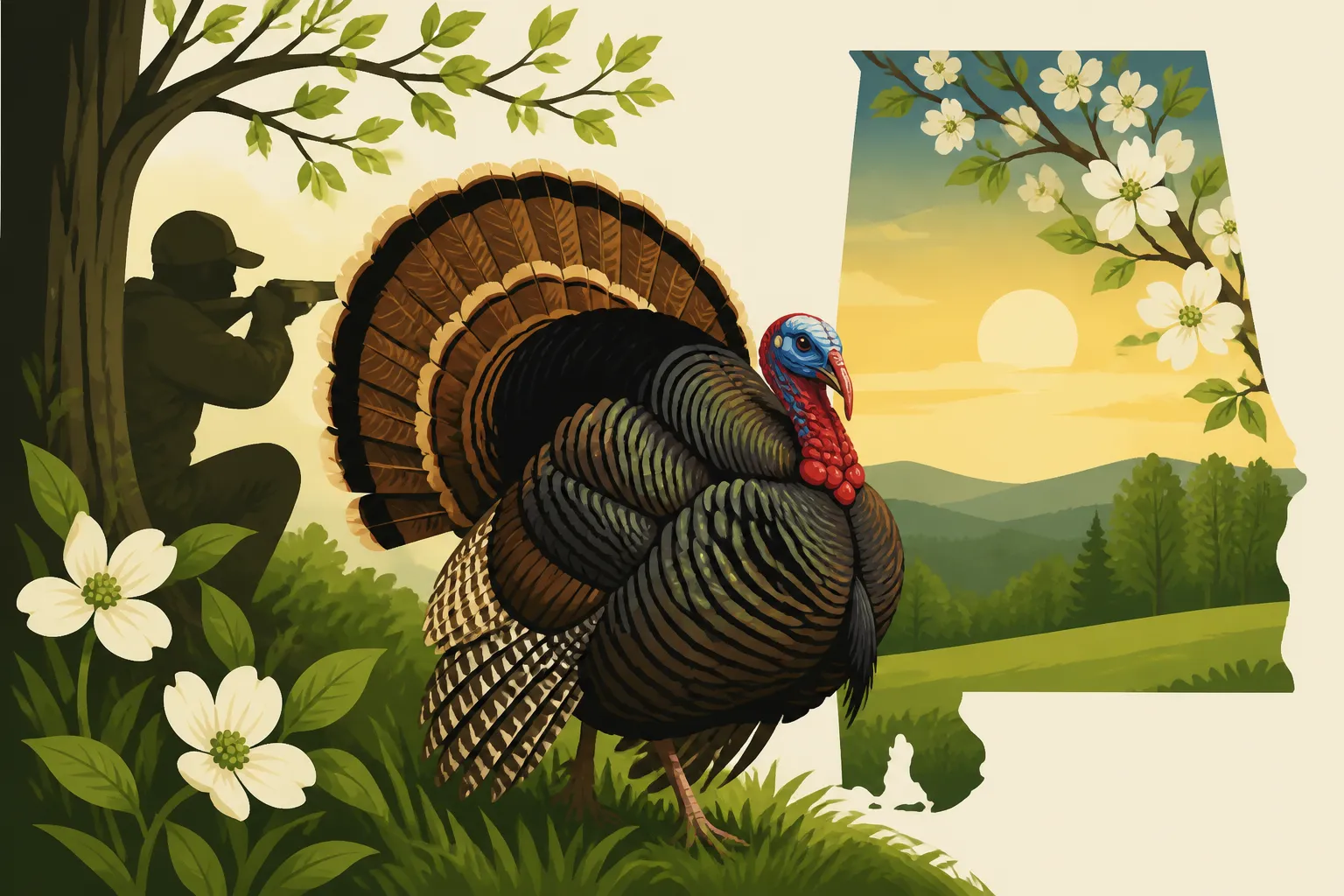
There's nothing quite like the sound of a booming gobble cutting through the crisp Alabama morning air. But let's be real, finding and coaxing one of those wily longbeards into range during the spring season can feel like trying to solve a complex puzzle, especially with all the variables Alabama's diverse landscapes and regulations throw at you. If you've ever felt frustrated by silent woods, hung-up Toms, or just plain confusion about where and when to go, this comprehensive guide is for you. We're going to break down everything you need to know to fill your tag and make unforgettable memories this spring.
Understanding Alabama's Spring Turkey Zones and Seasons
Alabama's spring turkey season isn't a one-size-fits-all affair, and understanding the nuances of our zone system is absolutely critical. It can be a real headache trying to keep up with the different dates, especially if you hunt across county lines, but once you get the hang of it, it makes a lot more sense in managing our turkey populations.
Zone 1 vs. Zone 2: Key Differences and Opening Dates
Our state is split into two primary zones for spring turkey season: Zone 1 and Zone 2. The main reason for this split is the varying timing of spring green-up and gobbling activity across the state. Generally, the southern parts of Alabama warm up earlier, leading to an earlier onset of breeding behavior, while the northern regions lag a bit.
Zone 1, which covers most of Central and South Alabama, typically opens a week or so earlier than Zone 2. This early start caters to those earlier developing gobblers and gives hunters in those areas a jump on the action. Think of the rich agricultural lands of the Black Belt or the deep river swamps further south – these are classic Zone 1 territories where gobblers might start sounding off even in late February. If you're eyeing an early season hunt, you'll need to confirm your specific county falls within Zone 1. For instance, counties like Dallas, Lowndes, or Clarke are generally in Zone 1. Understanding the specific Alabama Zone 1 Turkey Season Rules is paramount before you head out.
Zone 2, encompassing the northernmost counties, has a slightly later opening date. This delay is intentional, designed to align with the later spring conditions in the Appalachian foothills and Tennessee Valley. Turkeys in these colder regions might not be as active or responsive until the foliage really starts to pop and temperatures consistently rise. So, if your hunting grounds are up around Huntsville, Florence, or even near Anniston, you're likely in Zone 2, and you'll be waiting a bit longer to hit the woods. This allows birds to complete their breeding cycle more naturally before hunting pressure increases. Check out Alabama's Later Spring Turkey Zone Opener for more specific dates in these areas.
It's absolutely vital to double-check the current year's regulations on the Alabama Department of Conservation and Natural Resources (ADCNR) website or in their annual hunting digest. The zones and dates can sometimes see minor adjustments, and showing up on the wrong day in the wrong zone is a sure-fire way to ruin your hunt and potentially incur a fine.
Youth Hunting Weekends and Special Opportunities
Alabama is big on fostering the next generation of hunters, and our youth hunting weekends for turkey season are a fantastic opportunity to get young folks out in the woods. These special weekends, usually preceding the regular season opener in each zone, allow licensed youth hunters (typically 15 years of age and younger) to hunt with a licensed adult mentor.
These youth weekends are incredibly valuable for several reasons. Firstly, they offer a less pressured environment. With fewer adults in the woods, young hunters often have a better chance at hearing and working gobblers without competing calls or other hunters spooking birds. This can be less intimidating and more enjoyable for a beginner. Secondly, it's a dedicated time for mentorship. The focus shifts from the adult's harvest to teaching safe hunting practices, tracking, calling, and simply enjoying nature with a young person. The memories made on these hunts are often the most cherished. If you're planning on taking a young hunter out in Zone 1, make sure you're aware of the specific dates for the Hunting the Zone 1 Youth Turkey Weekend.
These youth hunts require the young hunter to be properly licensed, and the accompanying adult must also be licensed and adhere to all hunting regulations, even if they are not actively hunting themselves. It's truly a special time to pass on the tradition, and I've seen countless smiles from successful youth hunters who bagged their first gobbler on these dedicated weekends.
Bag Limits, Legal Hours, and Reporting Requirements
Beyond knowing when you can hunt, you absolutely need to know what you can harvest and how to legally document it. The regulations are in place for a reason – to ensure sustainable turkey populations for everyone.
Alabama's spring turkey season generally has a bag limit of one gobbler per day, and a total season limit. This can vary, so always confirm the current Alabama Turkey Bag Limit Rules. Typically, a gobbler must have at least one visible beard to be legal, meaning you're targeting mature birds. The last thing you want is to harvest a jake by mistake if the regulations specify a bearded gobbler.
Hunting hours are another critical detail. In Alabama, legal shooting hours for turkey typically begin 30 minutes before sunrise and end at sunset. This is different from some other states, so if you're a non-resident, be extra vigilant. You cannot hunt turkeys at night, and you cannot use artificial lights. Knowing these timings precisely is key, especially for those early morning roosters and late evening setups.
Perhaps one of the most important, and sometimes overlooked, aspects is harvest reporting. All harvested turkeys must be reported to the ADCNR Game Check system. This can usually be done online via the Outdoor Alabama website or app, or by phone, within 48 hours of harvest. This data is incredibly important for wildlife biologists to monitor harvest trends, assess population health, and make informed management decisions. Failing to report a harvest is a violation, so don't skip this crucial step! It's super easy to do these days with a smartphone right there in the field.
| Turkey Hunting Zone | General Opening Date | Youth Weekend Prior | Typical Counties Included | Considerations |
|---|---|---|---|---|
| Zone 1 (South/Central) | Early March | Late February | Dallas, Lowndes, Monroe, Clark, Marengo, Wilcox | Earlier green-up, potentially earlier gobbling peak. |
| Zone 2 (North) | Mid-March | Early March | Lauderdale, Madison, Jackson, Etowah, Talladega | Later green-up, later gobbling peak. |
Always verify current year's exact dates and county breakdowns with ADCNR.
Scouting and Locating Gobblers Before the Season
You've heard it a million times: "You can't kill a bird you haven't found." It's a cliché for a reason – it's absolutely true. Successful turkey hunting starts long before opening day with meticulous scouting. Walking into the woods blind, hoping to hear a gobble, is a recipe for frustration.
Pre-Season Reconnaissance: Reading the Landscape
Scouting isn't just about listening for gobbles; it's about understanding the entire ecosystem your target birds inhabit. Before the season, when hunting isn't allowed, is the perfect time to hike, observe, and learn. Look for signs of turkey activity: droppings, tracks in soft dirt or mud, shed feathers, and dusting bowls. Turkeys love to scratch for food, so pay attention to areas with disturbed leaves or pine straw, especially around oak ridges or creek bottoms where acorns might have been plentiful.
Identify key terrain features. Turkeys, like deer, use topography to their advantage. Look for open hardwood bottoms where they might feed, dense pine thickets for security cover, and clearings or logging roads where they might strut. Creek drainages and old logging roads often serve as natural travel corridors. When the leaves are off the trees, you can see much further, which helps you visualize how birds might move through the area. Take note of any areas with standing water or small streams, as turkeys need a water source. Areas where timber has been recently harvested or prescribed burns have taken place can be fantastic because they promote new growth that turkeys love to forage in. This is a great time to start your Scouting Alabama Public Land Before Season efforts.
Locating Roost Trees and Travel Corridors
Finding where gobblers fly up to roost at night is like finding the "X" on a treasure map. Turkeys are creatures of habit, and often use the same general areas, or even the same specific trees, for roosting night after night, especially in good weather.
During pre-season, or even on a clear evening just before the opener, get into the woods well before dark. Position yourself in an area where you can hear well and observe. Listen for wing beats as birds fly up, and of course, for those tell-tale tree gobbles just before they settle in for the night. Large, mature hardwoods with open understories, often near water or on ridge points, are classic roost tree locations. Once you've identified a likely roost area, you can plan your morning approach to get within calling distance before the bird even hits the ground. However, be extremely cautious not to spook them off the roost – that's a mistake you only make once! If you're Roost Hunting Alabama Gobblers, it takes stealth and patience.
Beyond roosts, identifying travel corridors is key. Where do gobblers go once they pitch down from the roost? Do they head straight for a nearby field to strut? Do they cross a logging road? Do they follow a ridge line? Look for choke points, saddles, and natural funnels that birds might use to move from bedding to feeding areas. These are prime locations to set up an ambush or intercept a bird.
Using Technology: Maps and Apps
Gone are the days when a paper map and compass were your only tools. While those are still valuable skills, modern technology has revolutionized scouting. Mapping apps like OnX Hunt, BaseMap, or even GoHunt, provide invaluable aerial imagery, topo maps, and property line data right on your phone.
These apps allow you to "scout" from your couch, identifying potential roosting areas, strut zones, and travel corridors without ever stepping foot in the woods. You can mark waypoints for potential setups, food sources, and property boundaries. Many even show public land ownership, which is crucial if you're hunting WMAs or National Forests. Before I head out, I always pull up my GoHunt app to check satellite imagery for changes in timber cuts, potential food plot locations, or new access trails that might have been added since my last visit. It really helps to visualize the terrain in 3D and understand the lay of the land.
When you are in the field, these apps use your phone's GPS to show your exact location on the map, helping you navigate confidently, especially in unfamiliar public land or dense timber. You can track your movements, mark where you heard a gobble, or where you found fresh sign. This digital scouting complements physical scouting perfectly, making you a much more efficient and informed hunter.
Calling Strategies for Alabama Spring Turkeys
Calling a wild turkey is an art form, a symphony of sounds designed to mimic the natural world and, hopefully, convince a gobbler that a lonely hen is nearby and ready to meet up. It's exhilarating when it works, and utterly frustrating when it doesn't.
Locator Calls: Getting a Shock Gobble
Before you even think about hen calls, you need to know if there's a gobbler in the vicinity, and that's where locator calls come in. These aren't meant to sound like a turkey but rather to elicit a "shock gobble" – a reflexive response from a tom.
Classic locator calls include owl hoots, crow calls, and even coyote howls. I've had great success with a simple barred owl hooter in the pre-dawn hours, especially when the woods are still quiet. That "Who cooks for you? Who cooks for you all?" often gets an immediate response from a roosted gobbler eager to announce his presence. Early morning is prime time for locator calls, just before fly down. During the day, crow calls can be effective, especially in more open timber.
The key with locator calls is not to overdo it. A few well-placed calls are usually enough. Once you get a gobble, pinpoint its general direction, then go silent and move in for a better setup. Sometimes, a distant train whistle or even a loud truck door slam can shock a gobbler into announcing himself. You're simply trying to locate, not engage, at this stage. Learning to use a Calling an Alabama Gobbler Off the Roost requires a delicate touch.
Hen Calls: The Language of Love and Deception
This is where the real nuance of turkey calling comes into play. You're trying to sound like a desirable hen, inviting a gobbler to come find you. There are dozens of different hen calls, each with a specific purpose and inflection.
- Yelps: This is the most common and versatile call, essentially a series of "kee-yuk, kee-yuk, kee-yuk" sounds. It communicates a hen's presence and availability. You can make them on a slate call, box call, or mouth call. Vary the volume and intensity based on the bird's response. A soft, subtle yelp can be deadly for a close bird; a louder, more aggressive series might be needed for a bird across a ridge.
- Clucks: Short, sharp "cluck" sounds often indicate contentment or a hen looking around. They can be good for drawing in a bird that's close but not quite committing. A series of clucks and soft purrs can sound incredibly realistic.
- Purrs: Soft, rolling "prrr" sounds signal a calm, feeding hen. They're excellent for close-in work when a gobbler is almost in range and you don't want to spook him with loud calls.
- Puts: These are alarm calls – sharp, loud "putt!" sounds. You usually don't want to make these intentionally unless you've spotted danger yourself and want to alert others. A gobbler will often flee if he hears a put.
- Cutting: Fast, sharp, and often aggressive yelps and clucks. This mimics an excited or bossy hen and can be very effective on call-shy or henned-up gobblers, challenging them to come investigate.
Mastering a few basic calls on one or two types of callers is better than being mediocre with many. I usually carry a slate call for versatility and a mouth call for hands-free operation. Listen to real turkeys, practice, and pay attention to the gobbler's response – he'll tell you what he wants to hear (or doesn't).
Reading the Gobbler's Mood and Adjusting Your Approach
This is probably the most challenging, yet most rewarding, aspect of turkey calling. Every gobbler is different, and their mood can change in an instant. The key is to listen and adapt.
Is the gobbler hammering back at every call you make, but staying put? He might be looking for you to come to him, or he might be henned-up. If he's with hens, he's less likely to commit. In this scenario, backing off, circling around, and trying to get ahead of him or between him and his hens might be the best tactic. Sometimes, going completely silent for a while can make him curious enough to come looking.
Is he gobbling weakly or infrequently? He might not be very interested, or he could be spooked. Tone down your calling, use softer, more subtle yelps and purrs. Maybe try a little cutting to pique his interest.
Is he gobbling his head off and closing the distance? Keep calling, but slowly decrease the volume and frequency as he gets closer. You want to sound like you're moving away slightly, drawing him in for the kill. The last thing you want is for him to walk into your setup and see nothing but an empty woods. A classic scenario is when a gobbler hangs up just out of range. He hears you, he sees your decoys (if you're using them), but he won't take those last few steps. This is where patience is key. Sometimes, a soft tree yelp or a few purrs can coax him in. Other times, you might need to try a "fade out" where your calls get softer and further apart, making him think the hen is leaving. This often works wonders. It's like playing a delicate game of cat and mouse.
Effective Setup and Decoy Tactics
Even the best calling in the world won't matter if your setup isn't right. Where you position yourself and how you use decoys are critical for safety, visibility, and closing the deal on a wary gobbler.
Choosing the Right Setup: Safety and Visibility
When a gobbler starts closing the distance, things can happen fast. Your setup needs to prioritize safety first, then provide you with good visibility and shooting lanes.
- Back Against a Big Tree: This is non-negotiable. Always, always set up with your back against a tree that's wider than your shoulders. This protects you from another hunter accidentally mistaking you for a turkey if they approach from behind. It's a fundamental turkey hunting safety rule. For a good read on this, check out Setting Up Against a Big Oak.
- Clear Shooting Lanes: Before you sit down, clear out any small sticks or brush that might impede your swing or deflect a shot. You want clear lanes in the direction you expect the gobbler to approach. However, don't over-clear; some light brush can help break up your outline.
- Elevated Position (Slightly): A slight rise or knoll can give you a better vantage point without making you silhouetted. This also helps you hear better and see birds approaching sooner.
- Shadows and Background: Use shadows to your advantage, especially in the morning or late afternoon. Breaking up your silhouette against a dark background, like a dense thicket or a shadowed bank, makes you less detectable.
- Minimize Movement: Once you're set up, become a statue. Any sudden movement will likely send a gobbler scurrying. Move slowly and deliberately only when the bird's head is behind an obstacle or obscured.
Think about the sun's position. If possible, have the sun at your back, shining into the gobbler's face. This makes it harder for him to see you and easier for you to see him.
Decoy Placement and Types: When and How to Use Them
Decoys can be a game-changer, but they can also work against you if used improperly. Their primary purpose is to give the gobbler something visual to focus on other than you, drawing him into an ethical shooting range. The Alabama's Ten-Day Decoy Restriction is important to remember as there are rules around when they become legal to use.
- Hen Decoys: The most common. A single hen decoy, especially a feeding or breeding posture, can be very effective. Place it about 15-20 yards in front of your position, slightly off-center. This ensures the gobbler will approach the decoy, ideally presenting a broadside or slightly quartering-away shot as he circles it. Don't place it too close, or the gobbler will be too near you to get a good shot when he gets there.
- J-Hook or Strutter Decoys: These can be incredibly effective, especially on dominant gobblers, as they challenge the bird's territorial instincts. However, they can also intimidate subordinate birds. If using a strutter, place it behind a hen decoy, facing you, so the gobbler approaches your position to challenge it. Be mindful of public land use with strutter decoys, as they increase the risk of another hunter mistaking your decoy for a real bird. Never carry a full strut decoy through the woods uncovered.
- Fan Decoys: Handheld fan decoys, used for "fanning" or "reaping," are a more aggressive tactic, often used to draw in curious or competitive gobblers. This involves slowly approaching a gobbler with the fan held in front of you. This is a highly effective, but high-risk tactic, especially on public land. Use extreme caution and ensure you have identified your target positively before attempting this.
Crucial Decoy Considerations:
- Realism: Choose decoys that look realistic. Oversized, poorly painted decoys can look unnatural.
- Movement: Decoys with slight movement (e.g., a fanning tail or head that swivels in the wind) can add realism.
- Less is Often More: Sometimes one hen is enough. Too many decoys can look unnatural or intimidate wary birds.
- Concealment: Ensure your position is well concealed behind your decoys, allowing the gobbler to focus solely on them.
Dealing with Hung-Up Gobblers and Challenging Situations
This is the ultimate test of a turkey hunter's patience and skill. A gobbler is strutting, gobbling, and showing off, but he's just out of range, refusing to take those last few steps. It happens more often than not.
- Patience, Patience, Patience: Your first instinct might be to call more aggressively, but often, silence is golden. Let him gobble, let him wonder where that hen went. He might eventually get curious enough to come investigate.
- Softening Your Calls: If he's still hanging up, try softening your calls. Switch to subtle clucks, purrs, or soft tree yelps. Make him think the hen is losing interest or feeding away. This can sometimes make him push that final distance.
- The "Trickle Away" Call: If you're hunting with a partner, one person can softly call while slowly moving away, making the gobbler think the hen is leaving. This can often pull him in. If you're alone, you can mimic this by calling very softly and moving your hand slightly to give the impression of movement.
- Redeploying: If he's truly stubborn and the situation allows, you might need to back out, circle wide, and try to get ahead of him or move to a completely different setup. This is often part of a Run-and-Gun Turkey Tactics on Public Land strategy.
- Give it Time: Don't give up too quickly. A gobbler might hang up for 15-20 minutes before suddenly deciding to commit. As long as he's gobbling and strutting, there's still a chance. Just stay still and be ready. This also applies When Alabama Gobblers Go Quiet in May. Sometimes, the silent approach is best.
Gear Essentials for Alabama Spring Turkey Hunting
Having the right gear won't guarantee a turkey, but it will make your hunt more comfortable, safer, and certainly more effective. You don't need to break the bank, but investing in quality, reliable equipment is always a good idea.
Shotguns, Ammunition, and Patterning for Success
Your shotgun is your primary tool, and knowing how it performs with your chosen ammunition is paramount.
- Shotgun Choice: Most turkey hunters opt for 12-gauge or 20-gauge shotguns. While 12-gauge offers a heavier payload, modern 20-gauge loads, especially with TSS shot, are incredibly effective and lighter to carry, which is a big plus on long walks. Pump-action, semi-automatic, and even single-shot models all work well. The key is a reliable firearm you are comfortable with.
- Choke Tube: A full or extra-full choke is almost universally recommended for turkey hunting. These chokes constrict the shot pattern, keeping it dense at longer ranges. Some hunters prefer specialized turkey chokes designed for specific loads, which can deliver even tighter patterns.
- Ammunition: This is where things have really evolved. Lead shot (like copper-plated lead) in sizes #4, #5, or #6 has been the standard for years. However, newer options like bismuth and tungsten super shot (TSS) have revolutionized turkey hunting. TSS is incredibly dense, allowing for smaller shot sizes (like #7 or #9) that carry tremendous energy and penetrate better at longer ranges. While more expensive, TSS can significantly extend your effective range and increase your pattern density.
- Patterning Your Shotgun: This is the most important step you can take. Do not go turkey hunting without patterning your shotgun with your chosen choke and ammunition.
- Set up targets: Use large paper targets (at least 2×2 feet) with a turkey head/neck silhouette.
- Shoot from various distances: Start at 20 yards, then 30, 40, and possibly 50 yards.
- Analyze your pattern: Count the number of pellets that hit the vital areas of the turkey's head and neck. You want a dense, even pattern.
- Know your effective range: Determine the maximum distance at which you can consistently place enough pellets in the kill zone. This is your ethical maximum range, and it will vary for every gun and load combination. Don't push it beyond what you've proven in practice.
Remember, a clean, ethical kill is always the goal. Patterning ensures you can achieve that.
Camouflage, Blinds, and Comfort in the Woods
Staying concealed and comfortable makes you a more patient and effective hunter.
- Camouflage: Full head-to-toe camouflage is essential. Choose patterns that match Alabama's spring woods – typically greens, browns, and tans that mimic hardwoods and undergrowth. Don't forget a face mask or face paint and gloves to cover all exposed skin. Turkeys have incredible eyesight and can pick up on even the slightest unnatural color or movement.
- Ground Blind: While not always necessary, a pop-up ground blind offers superior concealment, especially for youth hunters or those who find sitting still for long periods challenging. It also helps break up your scent profile. They are heavier to carry, so consider your hunting style and terrain. For setups like Using a Ground Blind on Alabama Public Land, they can be fantastic.
- Portable Seat/Cushion: A small, lightweight foam cushion or a folding stool can make hours of sitting much more bearable. A comfortable hunter is a patient hunter.
- Rain Gear: Alabama weather in spring is notoriously unpredictable. A lightweight, packable rain jacket and pants are a wise investment. Getting soaked early in the morning can quickly end a hunt.
- Water and Snacks: Staying hydrated and fueled is important, especially on warmer days or long hunts. Pack enough for the duration of your hunt.
- Insect Repellent: Ticks, mosquitoes, and gnats can be brutal in Alabama, especially in bottoms. Permethrin-treated clothing and a good skin repellent with DEET are highly recommended.
Navigational Tools and Safety Equipment
Beyond hunting gear, safety and navigation should always be top priorities.
- Mapping Device: As mentioned, a GPS-enabled app like GoHunt on your smartphone is invaluable. Download offline maps before you go, as cell service can be spotty in many remote hunting areas. A traditional compass and map are good backups, too.
- Headlamp/Flashlight: Essential for walking in before dawn and walking out after dark. Always have fresh batteries or a fully charged unit.
- First-Aid Kit: A small, basic kit for cuts, scrapes, blisters, and insect bites.
- Orange Safety Vest/Hat: While turkey hunting doesn't always require blaze orange while actively hunting, it is crucial to wear it when walking in or out of the woods, especially on public land. This identifies you as a human to other hunters. Always err on the side of safety.
- Emergency Whistle: Can be used to signal for help if you get lost or injured.
- Knife: For field dressing your bird.
- Game Bag: To carry your harvested turkey out of the woods cleanly.
Public Land vs. Private Land: Navigating Access
Finding a place to hunt is often the biggest hurdle for new and even experienced turkey hunters. Alabama offers diverse opportunities, but each comes with its own set of challenges and rewards.
Hunting Alabama's Wildlife Management Areas (WMAs)
Alabama is blessed with an extensive system of Wildlife Management Areas (WMAs) managed by the ADCNR, offering thousands of acres of public hunting ground. These areas are specifically managed for wildlife and provide fantastic opportunities for spring turkey hunting, but they come with their own rulebook.
- WMA Permits: In addition to your regular Alabama hunting license, you'll need an Alabama WMA license or permit to hunt on most WMAs. These are usually inexpensive and can be purchased online.
- Specific Regulations: Each WMA often has its own set of regulations regarding season dates, bag limits, check-in/check-out procedures, vehicle access, camping, and even which firearms are allowed. You must check the specific rules for the WMA you plan to hunt. Don't assume they are the same as statewide regulations. For instance, some WMAs might have an "antlered-only" window for deer, and similar restrictions can apply to turkeys.
- Hunting Pressure: WMAs, especially popular ones, can see significant hunting pressure, particularly on opening weekends. This means you might encounter other hunters, and birds can become "educated" quickly. To counter this, be willing to walk further, explore less accessible areas, or hunt on weekdays when pressure is lower.
- Scouting is Key: Just like private land, pre-season scouting on WMAs is crucial. Look for areas away from easy access points, thicker cover, and natural features that might hold birds. Tools like GoHunt or OnX are invaluable for identifying property lines and terrain features on public land.
- Success Stories: Despite the pressure, many hunters consistently take birds on Alabama WMAs. It often requires more effort, stealth, and adapting to pressured birds, but the reward of a public land gobbler is immense. For example, areas like Black Warrior WMA or Choccolocco WMA can hold good birds if you're willing to work for them. Consider learning more about Run-and-Gun Turkey Tactics on Public Land as this is often required.
Securing Private Land Permission
Hunting private land often offers less pressure and potentially higher success rates, but gaining access can be a challenge. It's all about respect, communication, and building relationships.
- Knocking on Doors: The old-fashioned way is often the most effective. Approach landowners respectfully, dressed cleanly, and at a non-inconvenient time (not during dinner or when they're busy farming). Explain who you are, what you're asking for (e.g., spring turkey access), and offer to share game or help with chores.
- Be a Good Steward: If you gain permission, treat the land better than your own. Close gates, don't leave trash, don't damage property, and always let the landowner know when you'll be hunting and when you're leaving. Sharing game meat is a great way to say thank you and reinforce the relationship.
- Offer Help: Farmers are often busy. Offer to help with mundane tasks like mending fences, clearing brush, or helping with harvest. This builds goodwill and can open doors to hunting opportunities.
- Written Permission: It's always a good idea, for your protection and the landowner's, to have written permission. A simple note stating your name, the dates you're allowed to hunt, and the landowner's signature can prevent misunderstandings.
- Hunting Leases/Clubs: Joining a hunting lease or club is another way to secure private land access. These can vary greatly in cost, size, and amenities. While more expensive, they often come with established rules and managed land. Check out Joining an Alabama Hunting Club if this sounds like a good fit.
- Respect "No Trespassing" Signs: If land is posted, respect it. Entering private land without permission is trespassing and illegal. This also means understanding Alabama Trespass and Permission Law.
Respecting Boundaries and Minimizing Pressure
Whether on public or private land, respecting boundaries and minimizing your impact are crucial for successful and ethical hunting.
- Know Your Boundaries: Use your mapping apps to know exactly where property lines lie. This is especially critical on private land to avoid accidentally trespassing, and on public land to stay within designated hunting areas.
- Avoid Over-Hunting: On private land, don't hunt the same spot day after day. Turkeys are smart and will quickly learn to avoid areas where they consistently encounter pressure. Rotate your hunting spots to keep birds guessing.
- Be Quiet and Stealthy: Minimize noise when entering and exiting the woods. Slamming truck doors, loud talking, or crashing through brush will spook birds.
- Leave No Trace: Pack out everything you pack in. Leave the woods cleaner than you found them. This helps maintain access for all hunters and demonstrates respect for the land.
- Consider Other Users: On public land, you might encounter hikers, birdwatchers, or mountain bikers. Be courteous and share the woods responsibly. If you know another hunter is working a gobbler, give them space. There's nothing worse than having another hunter accidentally (or intentionally) cut in on your setup.
- CWD Management Zone (CMZ): Be particularly mindful of regulations if you're hunting in or near the Chronic Wasting Disease (CWD) Management Zone in northwest Alabama. There are specific rules regarding carcass movement that impact how you transport a harvested deer or turkey. Stay informed to help prevent the spread of this devastating disease.
Common Challenges and Troubleshooting in the Field
Turkey hunting in Alabama is rarely a perfectly choreographed dance. More often, it's a test of patience, adaptability, and problem-solving skills. There will be frustrating moments, but learning to navigate them is part of the allure.
Weather Variables and Their Impact on Gobblers
Alabama's spring weather can swing wildly, and these changes significantly influence turkey behavior.
- Rain and Wind: Heavy rain and strong winds are generally a turkey hunter's nemesis. Gobblers tend to be less active and gobble less in these conditions. They often seek thicker cover and might not pitch down from the roost until later. In these situations, focus on sheltered areas, open timber where sound carries, or field edges where birds might still feed. A light drizzle, however, can sometimes make birds more active as it dampens sounds, making them feel safer.
- Cold Fronts: A sudden drop in temperature can temporarily shut down gobbling activity. Birds might become quiet and reluctant to move. After the initial shock, however, the days following a cold front can be excellent, as birds often become more active as conditions stabilize. Focus on food sources as they'll need to feed to maintain energy.
- Warm Ups: Conversely, rising temperatures and calm, clear mornings are often ideal. Gobblers tend to be more vocal and more willing to strut and breed. These are the days you want to be in the woods before first light. However, as the day progresses and temperatures soar, birds can become quiet and move to shaded areas.
- Fog and Dew: Fog can suppress gobbling, as sound doesn't travel as well. However, once the fog lifts, birds can become very active. Heavy dew means birds will likely hit fields or open areas to dry off before heading into wet woods. Understanding Warm-Weather Sitting Strategy in Alabama and Hunting Deer After a Cold Front (which applies to turkeys too) can be very helpful.
Always check the forecast, but be prepared for anything. Adapt your strategy to the conditions – sometimes that means being more aggressive, other times more patient.
Dealing with Hunting Pressure and Educated Birds
On heavily hunted public land or leases with many members, turkeys can quickly become "educated" or "call-shy." They've heard it all before, and they know what's up.
- Go Against the Grain: Most hunters walk in from easy access points. Be willing to walk further, deeper, or approach from an unconventional direction that other hunters might overlook. Often, the best birds are in the toughest spots.
- Subtle Calling: Forget aggressive cutting and loud yelps. Use softer, more realistic hen sounds. A series of soft clucks and purrs can sometimes be more enticing to a wary gobbler than a booming yelp. Try to sound like a lonesome hen, not a professional caller.
- Use the Terrain: Utilize topography to your advantage. A gobbler might be more willing to come over a ridge or around a bend if he can't see what's making the sound. Use natural barriers to force him into a specific approach.
- Less is More: Sometimes, the best calling is no calling at all. Set up in a good travel corridor, make a few soft calls, and then go silent. Let the bird's natural curiosity bring him in.
- Aggressive Tactics (When Appropriate): On occasion, an aggressive strategy like fanning (using a handheld fan decoy to draw in a challenging gobbler) can work, but this is high-risk, high-reward, especially on public land with other hunters.
- Focus on Later in the Day: Most hunters give up around mid-morning. The midday hours can be incredibly productive, especially if you find birds that have moved away from the pressure. Turkeys often become more active again in the late afternoon. This is a crucial element of Hunting Pressure on Alabama Public Land.
The Run-and-Gun Approach When Birds Go Quiet
When birds aren't gobbling on the roost, or they go quiet after fly down, a "run-and-gun" approach might be your best bet. This is essentially an active form of hunting, covering ground and looking for birds, rather than staying put and waiting.
- Walk and Listen: Move slowly and quietly through likely turkey habitat. Stop frequently to listen for subtle sounds: distant gobbles, hens clucking, or even the distinct sound of a gobbler drumming or spitting while strutting.
- Call Periodically: As you move, make a series of loud, attention-grabbing locator calls (crow or owl) every few hundred yards. If you get a response, then transition to a more strategic setup.
- Target Known Areas: Focus your movements on areas you've scouted that have good feed, strutting zones, or travel corridors. Don't just wander aimlessly.
- Look for Sign: Keep your eyes peeled for fresh tracks, droppings, and scratch marks. Fresh sign indicates birds are still using the area.
- Be Ready to Set Up: The moment you hear a gobble or spot a bird, be prepared to quickly (and quietly) find a good setup tree, get your gun up, and start calling. This is the essence of Run-and-Gun Turkey Tactics on Public Land. You might only have seconds.
- Midday Movement: Turkeys often move more in the midday hours, especially after being pressured in the morning. This is a great time to cover ground and look for birds that have slipped away. For those who hunt the rich farmlands, understanding Turkey Tactics for Black Belt Field Edges can be a great way to execute this style of hunting.
This method requires good physical conditioning and the ability to move stealthily, but it can be incredibly effective when traditional sit-and-call methods aren't producing.
Post-Harvest Considerations and Ethical Practices
Congratulations! You've successfully called in and harvested an Alabama gobbler. But the hunt isn't over yet. There are still critical steps to ensure your ethical responsibilities are met and your hard-earned meat is properly cared for.
Proper Field Dressing and Meat Care
Ensuring the quality of your wild turkey meat starts immediately after the harvest. Unlike deer, turkeys don't require extensive field dressing, but prompt action is key, especially in Alabama's often warm spring weather.
- Cooling Down: The most important step is to cool the bird down as quickly as possible. If it's a hot day, the meat can start to spoil rapidly.
- Remove entrails: Make a small incision just below the breastbone and carefully remove the internal organs. This allows air to circulate and cool the body cavity.
- Pluck or Skin: You have two main options for preparing the bird: plucking or skinning.
- Plucking: If you want to roast the bird whole or save the skin, plucking is the way to go. This is a messy, time-consuming process but yields the best presentation for a whole bird.
- Skinning and Breast Removal: Most hunters opt to skin the bird and simply remove the breast meat, legs, and thighs. Make an incision down the center of the breastbone, peel back the skin, and carefully fillet the breast meat off each side. Cut around the leg and thigh joints to remove them. This is much faster and cleaner in the field.
- Clean and Pack: Once the meat is removed (breasts, legs, thighs), wipe it clean with a damp cloth (not stream water if possible) and place it in a breathable game bag or a cooler with ice. Do not put it directly into a plastic bag without cooling first, as this can trap heat and bacteria.
- Feather Collection: If you plan to mount the bird or save the tail fan and beard, you'll need to handle those carefully.
- Tail Fan: Cut the fan off at the base, leaving a small piece of the backbone attached. Spread it open and pin it to a piece of cardboard to dry, sprinkling with borax or salt to prevent bug infestation.
- Beard: Simply cut the beard off at the base where it emerges from the chest.
- Spurs: If the gobbler has good spurs, you can carefully cut around them, keeping a small piece of leg bone attached, and dry them similarly.
Reporting Your Harvest and Following Regulations
As mentioned earlier, reporting your harvest is a legal and ethical responsibility in Alabama. This provides vital data for wildlife management.
- Game Check System: Alabama uses the Game Check system for reporting all harvested deer and turkeys. You can report your bird online via the Outdoor Alabama website or through the Outdoor Alabama mobile app. You can also call a toll-free number.
- Information Needed: Be ready to provide your license number, the date and county of harvest, the type of game (turkey), and sex (gobbler).
- Deadline: You usually have 48 hours to report your harvest. Don't procrastinate, especially if you're traveling or lose cell service. It's best to do it as soon as possible after returning from the hunt.
- Why it Matters: This data allows wildlife biologists to monitor harvest rates, track population trends, and make informed decisions about season dates, bag limits, and habitat management for future generations of turkeys and hunters. It's a small step that makes a huge difference.
Reflecting on the Hunt and Planning for Next Season
Beyond the meat and the trophy, spring turkey hunting is about the experience. Take time to reflect on your hunt, learn from it, and start planning for the future.
- Analyze Your Successes and Failures: What worked? What didn't? Did your calling entice the bird? Was your setup ideal? Did you make any mistakes you can learn from? Every hunt, successful or not, offers valuable lessons.
- Scout for Next Year: As you're packing out your bird, or even if you didn't get one, keep an eye out for future sign. Note new food sources, potential roosting areas, or overlooked spots. The scouting never truly ends.
- Share the Story: Relive the excitement! Share your story with friends, family, or fellow hunters. The camaraderie and shared experiences are a huge part of why we hunt.
- Practice Your Calls: Even in the off-season, keep practicing your turkey calls. It's a perishable skill, and staying sharp will give you an edge next spring.
- Consider a New Challenge: Maybe next year you'll try a new WMA, attempt a grand slam of turkey subspecies (though Alabama is primarily Easterns), or mentor a new hunter. The world of turkey hunting is vast and full of new challenges. This could be a good time to look into Spring Turkey Hunting in Alabama with a fresh perspective.
Turkey hunting is a journey, not just a destination. Each spring brings new opportunities, new lessons, and the chance to connect with nature in a truly profound way. Embrace the challenges, celebrate the successes, and always hunt ethically and safely.
Disclaimer
Please note: Hunting regulations can change annually. Always consult the official Alabama Department of Conservation and Natural Resources (ADCNR) website or the current year's hunting digest for the most up-to-date and accurate information on seasons, zones, bag limits, and licensing requirements before engaging in any hunting activities. This guide is for informational purposes only and does not supersede official state regulations. Safety should always be your number one priority while hunting.