Using a Ground Blind on Alabama Public Land
Hunting public land in Alabama often feels like a puzzle, especially when you're trying to outsmart wary whitetails or elusive gobblers in areas that see consistent pressure. Dragging a bulky treestand through thick timber only to find your perfect tree already claimed, or realizing the wind shifted and your elaborate setup is now compromised, can be a real disheartener. Ground blinds, when used strategically, offer a fantastic alternative, providing concealment and flexibility that fixed stands often can't, and this guide will show you how to leverage them effectively on Alabama's public hunting grounds.
Understanding Alabama's Rules for Ground Blinds on Public Land
Before you even think about purchasing or deploying a ground blind, it's absolutely crucial to understand the specific regulations governing their use on public land in Alabama. Unlike private land where you largely set your own rules (within state hunting laws, of course), public lands have strict guidelines designed to manage resources, ensure fair chase, and prevent habitat damage. Ignoring these rules can lead to fines, confiscation of your gear, or worse, losing your hunting privileges entirely.
ADCNR Regulations on Blind Placement and Duration
The Alabama Department of Conservation and Natural Resources (ADCNR) has clear stipulations regarding ground blinds, particularly on Wildlife Management Areas (WMAs) and National Forests. Generally speaking, temporary ground blinds are permitted, but there’s a big difference between a temporary blind and one that becomes a semi-permanent fixture. Most public lands allow you to set up a blind for the day, and then you're expected to remove it completely when you leave. Leaving a ground blind unattended overnight, or for extended periods, is often prohibited. This isn't just about litter; it's about preventing a "land claim" scenario and ensuring everyone has equal access to hunting spots.
For example, on many WMAs, any blind that isn't constructed solely of natural materials found on-site and integrated without cutting live vegetation usually needs to be removed daily. If you're using a manufactured pop-up blind, you must take it down with you. Some areas might have specific rules for identifying your blind if you are allowed to leave it for a short period (like during a multi-day hunt), requiring your name, address, and hunting license number to be clearly visible on it. Always consult the specific WMA regulations or National Forest guidelines for the area you plan to hunt, as they can vary. A little pre-hunt research on the Outdoor Alabama website or a quick call to the local conservation office can save you a lot of headache and potential trouble.
Respecting Fellow Hunters and Property Lines
Public land hunting is a shared experience, and respecting your fellow hunters is paramount. Setting up your ground blind too close to another hunter's established spot, or in a way that blocks their access to a trail or area, is not only poor etiquette but can also be dangerous. Always maintain a reasonable distance from other hunters you might encounter. If you arrive at a spot and see a vehicle, a hanging stand, or even another ground blind, it's best to move on and find another location. There's plenty of public land in Alabama, and Finding Ground That Sees Fewer Hunters is often key to success.
Equally important is understanding property lines. Many public land boundaries abut private land, and accidentally trespassing, even with a ground blind, is a serious offense. This is where modern mapping technology becomes your best friend. Before you head into the woods, use a robust mapping app like GoHunt on your phone to identify public/private land boundaries with precision. These apps overlay property lines onto satellite imagery, making it incredibly clear where public land ends and private land begins. This information is vital not only for blind placement but also for planning your entry and exit routes. It prevents accidental trespass and helps you identify prime hunting spots along public land edges where deer might be moving to or from private agricultural fields.
Choosing the Right Ground Blind for Alabama's Terrain
Once you're clear on the rules, the next step is selecting a ground blind that suits Alabama's diverse landscapes and your hunting style. The "perfect" blind isn't one-size-fits-all; it depends on whether you prioritize mobility, ultimate concealment, or specific weather protection.
Portable Pop-Up Blinds Versus Natural Cover Blinds
The debate between portable pop-up blinds and blinds made from natural cover often comes down to convenience versus ultimate discretion.
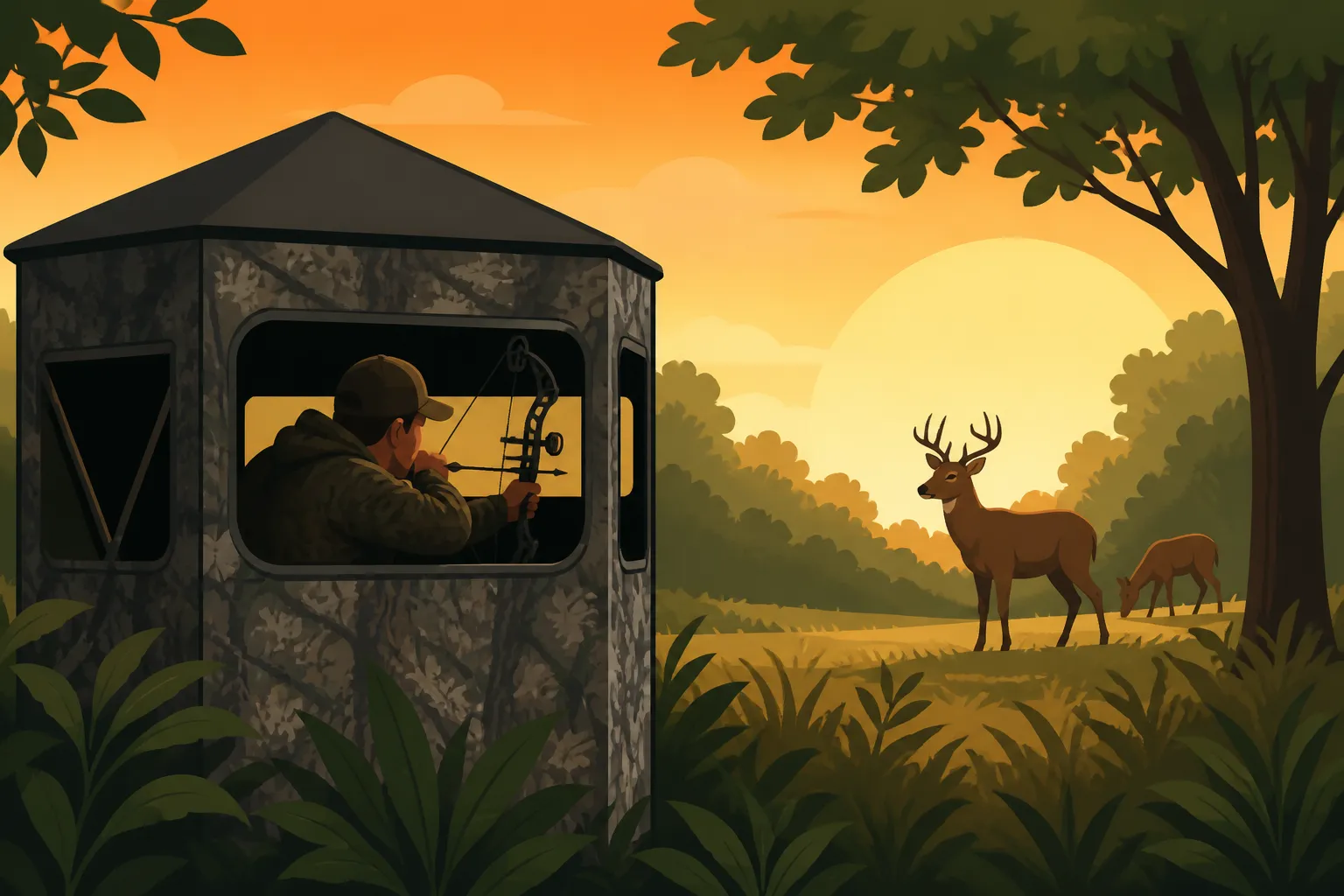
- Portable Pop-Up Blinds: These are the most common manufactured ground blinds. They set up and tear down in minutes, offer decent weather protection, and provide a full enclosure, helping to contain your scent and movements. Brands like Primos and Ameristep offer robust options. Their portability is a huge plus, especially when you're hiking into public land. You can pack them in, set them up in a strategic spot, hunt, and then pack them out without leaving a trace. However, they can be somewhat bulky and heavy for long treks, and their synthetic material requires diligent brushing in to break up their geometric shape, which can stick out like a sore thumb if not done right. They also tend to be warmer in mild weather, which is often the case during much of Alabama Deer Season Structure Explained.
- Natural Cover Blinds: These blinds are constructed using materials found on-site – fallen branches, dead palmetto fronds, pine boughs, and dense thickets. The main advantage is that they blend seamlessly into the environment, looking completely natural. They are also free, and you don't have to pack them in or out. The downside is they offer no weather protection (unless you get really creative), require more time and effort to build, and often demand a permanent or semi-permanent commitment to a spot (though remember the rules about leaving them!). For public land, strictly temporary natural blinds are best, meaning you only use downed materials and don't cut live vegetation. They excel in situations where you want absolute minimal impact and maximum blend-in, such as still-hunting a ridge or working a creek bottom.
| Blind Type | Pros (Public Land) | Cons (Public Land) | Best Use Case |
|---|---|---|---|
| Portable Pop-Up | Quick setup/takedown, weather protection, full concealment of movement/scent, high mobility. | Bulkier/heavier to carry, distinct geometric shape needs extensive brushing in, can get warm. | Ambush hunting near food plots, field edges, or pinch points where quick setup is needed. |
| Natural Cover Blind | Seamless blend with environment, cost-free, no pack-in/out, zero impact (if done correctly). | No weather protection, less concealment for movement, time-consuming to build, ethical concerns if live vegetation is cut. | Stalking/still-hunting, quick improvised concealment in dense woods, areas with abundant downed materials. |
Camouflage Patterns and Scent Control Considerations
When using a manufactured ground blind in Alabama, the camouflage pattern matters. Instead of highly specific tree patterns, aim for a versatile pattern that breaks up your outline and mimics the general forest floor or underbrush. A pattern with good greens, browns, and grays will serve you well across diverse Alabama habitats, from pine plantations to mixed hardwoods. The key is disruption, not perfect replication. Think about how the light plays on the blind's surface and how it looks from an animal's perspective.
Scent control is another critical factor, especially for whitetails. While a ground blind offers some containment, it's not a hermetically sealed unit. Your scent will still escape. Pay attention to wind direction at all times. Even with a blind, hunting with the wind in your favor is non-negotiable. Use scent-eliminating sprays on your blind fabric, clothing, and gear. Store your hunting clothes in scent-free bags. Consider using an ozone generator if you're concerned about lingering odors in the blind. Remember, deer have an incredible sense of smell, and a ground blind that reeks of human scent is just a big, camouflaged red flag.
Strategic Placement and Setup on Public Land
The most expensive, best-camouflaged ground blind is useless if it's set up in the wrong spot or poorly integrated into the environment. Strategic placement and meticulous setup are where the real magic happens, particularly on public land where deer are often more educated.
Scouting for Ideal Locations
Before you even carry your blind into the woods, your boots need to be on the ground, or your eyes on a map. Scouting Alabama Public Land Before Season is absolutely essential. Look for natural funnels – narrow strips of woods between open fields, creek bottoms that act as travel corridors, or saddles on ridges where deer cross from one drainage to another. These are prime ambush points. Identify key food sources in the area, whether it's an oak flat dropping acorns, a clear-cut with regenerating browse, or a field edge along private land where deer might feed.
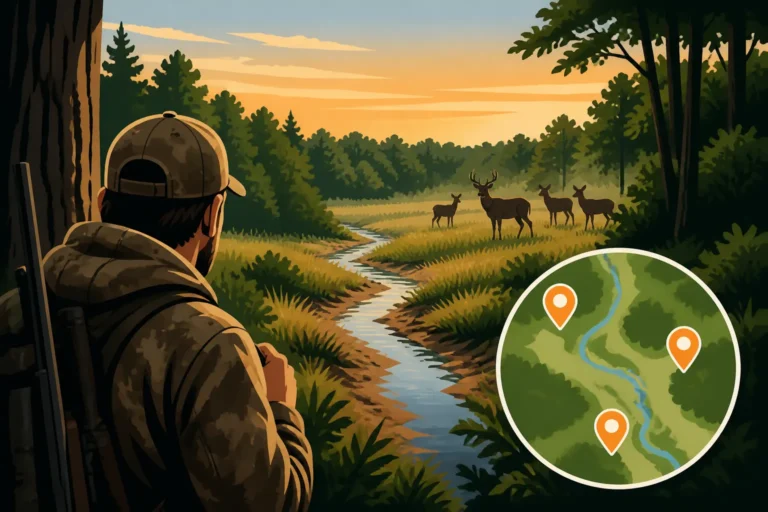
Using a good mapping tool, like GoHunt or the Outdoor Alabama app, is invaluable here. You can identify potential pinch points, travel routes, and bedding areas by studying aerial photos. Look for changes in timber type, old logging roads, and subtle terrain features that might concentrate deer movement. For example, Reading Aerial Photos for Piedmont Deer can reveal hidden draws and thickets that serve as daytime cover, and your blind can be set up along the subtle transition zones. Once you've identified potential spots on the map, physically walk the area to confirm sign – tracks, rubs, scrapes, and droppings – to pinpoint the exact location for your blind.
Brushing In for Maximum Concealment
Once you've picked your spot, it's time to make that blind disappear. Simply setting up a pop-up blind in the open is a recipe for failure. Brushing In a Blind on a Field Edge or anywhere else on public land is a critical step. Collect natural materials from the surrounding area – dead branches, pine boughs, palmetto fronds, tall grasses – and strategically place them around your blind. The goal is to break up the hard lines and geometric shape of the blind, making it look like a natural part of the landscape.
Don't overdo it and create an obvious fortress. Aim for a blend that still allows you clear shooting lanes. Pay particular attention to the corners and top of the blind. Consider the sun's angle throughout the day; harsh sunlight can make a synthetic blind glow or create obvious shadows. Brush in the blind a few days or even a week before your hunt if regulations allow you to leave it (always double-check!), giving game animals time to get used to its presence. Even better, set it up and leave it for a few weeks if you can, letting it "air out" and become part of the scenery. If you're setting it up fresh on the morning of your hunt, be extra diligent with natural brush and scent control.
Entry and Exit Routes Without Spooking Game
This is often overlooked but is arguably one of the most important aspects of using a ground blind on public land. Wary public land animals are easily spooked. Your entry and exit routes must be carefully planned to avoid alerting them. Always approach your blind with the wind in your face or crosswind, never with the wind at your back, pushing your scent into your hunting area. Use terrain features like creek beds, drainage ditches, or dense thickets for cover during your approach.
Consider the time of day. For a morning hunt, plan to arrive at your blind well before first light, moving slowly and quietly. For an evening hunt, get in early enough to settle down before deer start moving. When leaving, wait until well after dark if hunting deer, or until all game has cleared the area. If you spook deer on your way out, you've potentially educated them and compromised that spot for future hunts. A mapping app can help you identify quiet, low-impact paths that minimize disturbance to bedding areas or active feeding zones.
Hunting Effectively from a Ground Blind
You've done the scouting, followed the rules, chosen the right blind, and brushed it in perfectly. Now, it's time to actually hunt. Being effective from a ground blind requires a different mindset than hunting from a treestand.
Managing Your Draw and Shooting Lanes
One of the primary benefits of a ground blind is the ability to move more freely and silently within it, which is fantastic for bowhunters. However, you still need to manage your shooting lanes. Before your hunt, sit in your blind and visualize shots in all directions. Trim any small branches or tall grasses that would impede an arrow or bullet. Don't create huge, obvious clearings; instead, make precise cuts that give you just enough clearance. If you're bowhunting, practice drawing your bow from a seated or kneeling position within the blind, ensuring your limbs don't hit the ceiling or walls. Understand your effective range from the blind, especially if shooting through mesh windows.
For gun hunters, make sure you have a stable rest for your rifle. Many blinds have shooting rails or sturdy window sills that work well. Remember that Alabama Legal Firearms for Deer Hunting specifies caliber and weapon types, so ensure your chosen firearm is appropriate and you're comfortable shooting it from your blind setup. Always be aware of your backdrop and what's beyond your target, as safety is paramount in any hunting scenario.
Patience and Adapting to Conditions
Hunting from a ground blind, especially on public land, demands patience. You're at eye level with the animals, and they are acutely aware of their surroundings. Any fidgeting, excessive noise, or movement will likely be picked up. Dress in layers to stay comfortable, as Alabama weather can change quickly. A cold front rolling through can drastically alter deer movement, and knowing how to adjust your strategy for Hunting Deer After a Cold Front can make all the difference.
Be prepared for rain or unexpected showers; while blinds offer protection, intense downpours can still make for a long sit. Bring snacks, water, and anything else you need to remain motionless and comfortable for extended periods. Sometimes, the best strategy is simply to sit still, observe, and let the woods come alive around you. Don't be afraid to adjust your plans if conditions change significantly. If the wind shifts unexpectedly, it might be time to quietly pack up and relocate, rather than spoiling your hunt by broadcasting your scent. Flexibility is key to success on public land.
Disclaimer
Always consult the current Alabama Department of Conservation and Natural Resources (ADCNR) regulations and local WMA or National Forest rules before hunting. Hunting laws and regulations can change, and it is the hunter's responsibility to stay informed and compliant. This guide is for informational purposes only and does not supersede official hunting regulations.