Finding Ground That Sees Fewer Hunters
There's nothing quite as frustrating as heading into your favorite patch of public land in Alabama, full of high hopes and scouting intel, only to find fresh boot tracks, an unexpected pop-up blind, or worse, a whole line of orange-clad hunters marching through. It can really suck the wind right out of your sails. This guide is all about helping you understand why some spots get hammered, and more importantly, how to consistently find and hunt those often-overlooked pockets of ground where you're far less likely to bump into another hunter, allowing you to focus on the deer, not the crowd.
Understanding Hunter Pressure in Alabama
Let's be real, Alabama's public hunting lands are a precious resource, and with more people getting into hunting, some spots are bound to feel a bit like Grand Central Station on opening day. It's not a conspiracy; it's just human nature, and knowing why it happens is the first step to avoiding it.
Why Public Lands Get Crowded
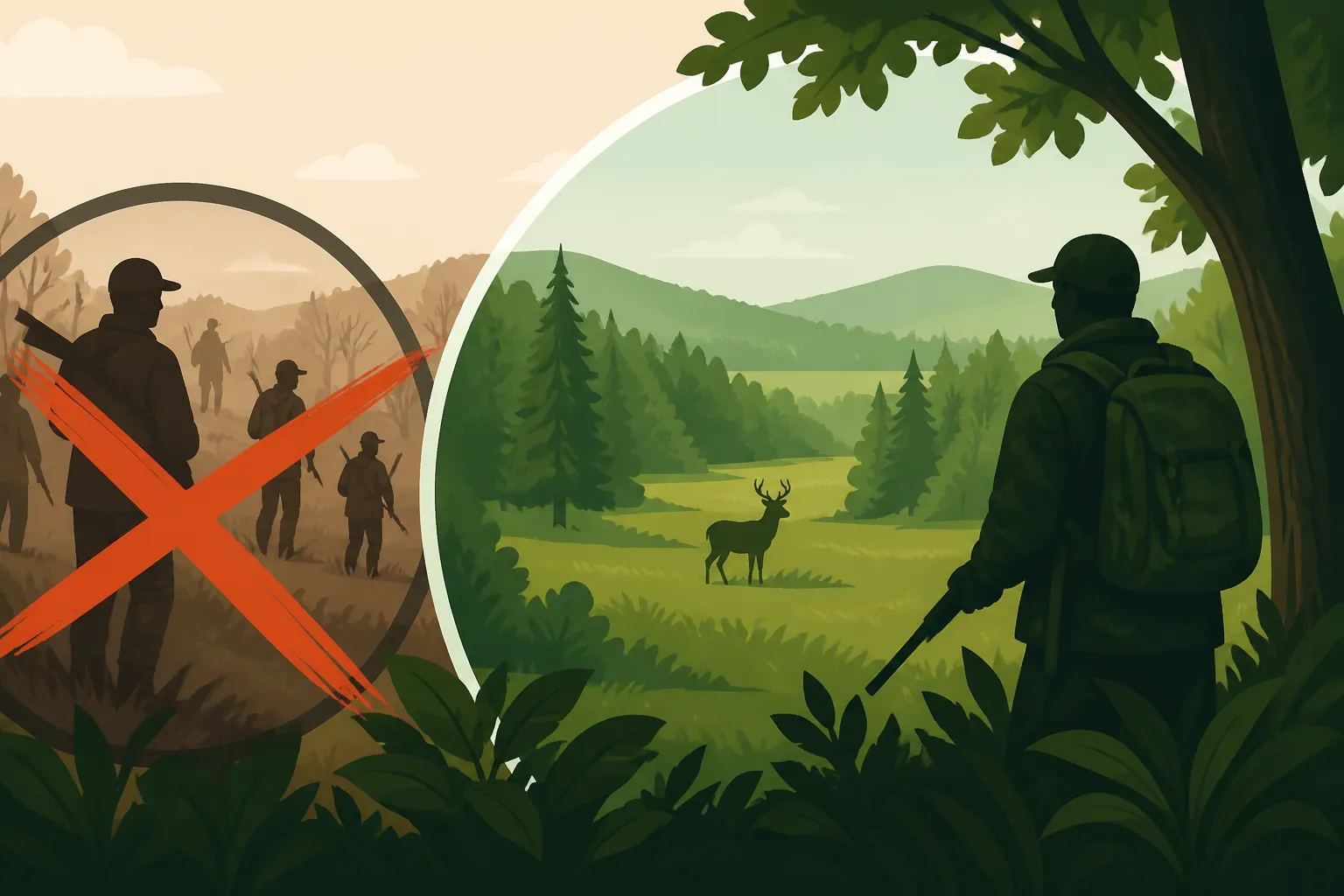
Think about it: most hunters are looking for the easiest path to success. That often means sticking close to vehicle access, finding well-worn trails, or hitting up areas known for past success that are easily visible on a map. Access points like parking lots, gated roads, and clear-cut edges are natural magnets. It's simple logistics – people will typically go where it's easiest to get to and where they've heard or seen others have success. This creates a cycle where these "easy" spots get hunted repeatedly, pushing deer into thicker, less accessible cover. We all have limited time to hunt, so the temptation to go to the known, easy spot is strong. But if you want to find ground that sees fewer hunters, you have to be willing to do something different. For a deeper dive into the overall challenge, check out Hunting Pressure on Alabama Public Land.
Another factor is perceived "hot spots." Maybe someone posts a picture of a big buck from a specific WMA, or word gets around about a new food plot installation. Suddenly, everyone's flocking to that area. Social media, while a great tool for sharing successes, can also unintentionally contribute to concentrating pressure. Hunters are also creatures of habit, often returning to the same general areas year after year, reinforcing the pressure on those specific locations.
Identifying High-Pressure Areas
Spotting these high-pressure zones isn't rocket science once you know what to look for. Beyond the obvious signs of trash, abundant boot prints, and well-worn trails near parking areas, you need to think about the terrain. Any area that's easy to get to, features obvious deer sign (like heavy trails crossing a flat or a large scrape line near a road), or has easily identifiable cover is going to draw a crowd.
Digital Scouting Tools: This is where tools like onX Hunt or GoHunt really shine. Open up your app and look at the satellite imagery. What do you see?
- Proximity to Roads/Parking: Any public land parcel that has roads cutting through it, or a lot of designated parking, is likely to see higher traffic. Hunters often don't venture far from their trucks.
- Linear Features: Power lines, gas lines, major creek banks, or clear-cut edges that are easily followed are often hunted heavily because they offer clear travel lanes and easy navigation.
- Obvious Funnels/Bottlenecks: If a piece of timber narrows significantly between two fields, or a hard-to-cross creek funnels deer to one crossing, these spots are like neon signs for hunters.
- Open Timber/Easy Walking: Areas with sparse undergrowth or relatively flat terrain are inherently more inviting to hunters who want to cover ground quickly.
By looking for these patterns on your map, you can start to predict where others will likely hunt, and then consciously choose to go elsewhere. You're looking for the un-obvious.
Strategies for Finding Unpressured Ground
Once you can identify what attracts hunters, you can start doing the opposite. It's about thinking like a deer trying to escape pressure, and then putting yourself in those places.
Walking Further and Deeper
This is probably the most fundamental and effective strategy there is. The vast majority of hunters on public land don't venture more than a quarter to a half-mile from their vehicle. Seriously, most stop even closer. This creates a "donut hole" effect, where the edges near access points are pressured, but the interior, even just a little further in, can be significantly less disturbed.
The "Mile Rule": Try to push at least a mile, if not more, from any designated parking or public access road. The further you get, the exponential drop-off in hunter traffic is truly amazing. This might mean starting in the dark earlier, carrying more gear, or being prepared for a longer drag, but the reward of undisturbed deer can be well worth it. Consider the advice in How Far to Walk From a Forest Road – it's often further than you think!
Navigating the Unknown: Don't be afraid of areas that look "complicated" on a map. Swamps, thick stands of briars, tangled clear-cuts, or areas with steep, broken terrain are often natural deterrents for many hunters. These are exactly the places deer will retreat to when pressured. Embrace the challenge; deer don't mind thickets, they thrive in them.
Utilizing Overlooked Habitat
Deer, especially mature deer, are experts at finding security. When hunting pressure is high, they won't just move further from people, they'll move into the nastiest cover they can find.
Creek Bottoms and Swamps: Alabama is laced with countless creek bottoms and swampy areas. While these can be tough to navigate, especially after a heavy rain, they are often overlooked. Hunters tend to stick to dry ground and ridges. Deer, however, will use these damp, tangled areas as bedding sanctuaries and travel corridors. Look for high spots within these bottoms, small islands, or dense thickets where they can bed down and feel safe, even during legal shooting hours. Hunting a Funnel Between Two Creek Bottoms can offer more specific tactics for these areas.
Thickets and Young Clear-Cuts: A clear-cut that's grown up for 5-10 years can be an impenetrable jungle of briars, saplings, and dense pines. Most hunters will skirt the edges, or avoid it altogether. But for deer, this is prime bedding cover and provides excellent thermal and escape cover. Don't be afraid to slowly still-hunt or even set up a ground blind within the edges of these thickets. It's hard hunting, but it's where the deer are hiding from the pressure.
Table: Hunter Habits vs. Finding Unpressured Ground
| Hunter Habits (Common) | Strategy for Less Pressure (Uncommon) |
|---|---|
| Hunts near roads/parking | Walks 1+ mile into remote areas |
| Sticks to well-worn trails | Busts through thickets and dense cover |
| Hunts obvious food sources/green fields | Focuses on overlooked bedding areas |
| Hunts open, easy-to-walk timber | Navigates swamps, steep hills, tangled woods |
| Hunts weekends/peak times | Hunts mid-week, rainy days, or late season |
| Relies on past success of others | Scouts digitally and on foot for fresh sign |
Hunting Mid-Week and Off-Peak Hours
This is a simple yet incredibly effective strategy. Most hunters are constrained by work and family schedules, leading to concentrated pressure on weekends, particularly Saturday mornings.
The Mid-Week Advantage: If you have the flexibility, take a day off during the week. Tuesday, Wednesday, or Thursday hunts can feel like you have the entire forest to yourself. The deer will also be more relaxed, having had a couple of days to settle down after the weekend rush.
Weather as Your Ally: Don't shy away from less-than-ideal weather. A light drizzle, a steady rain, or a cold, windy day will deter many fair-weather hunters. While it might not be as comfortable, these conditions often get deer on their feet and can greatly reduce human disturbance. Just be sure to dress appropriately for the conditions and prioritize safety.
Late Season Opportunities: As the season progresses, many hunters tag out or lose motivation. The late season, especially after the rut has wound down, can offer some fantastic, low-pressure hunting. While deer patterns might shift, targeting late-season food sources can be very productive on unpressured ground. Hunting Into the Late February Either-Sex Window can provide valuable insights for this time of year.
Leveraging Technology and Scouting
In today's hunting world, smart use of technology combined with good old-fashioned boots-on-the-ground scouting is your secret weapon to finding those hidden gems.
Digital Tools for Recon
Beyond just looking for roads, a detailed map app like onX Hunt or GoHunt allows you to dive deep into the topography and habitat features that might deter other hunters but attract deer.
Topo Lines and Terrain Shading: Look for areas with steep elevation changes, particularly those that form benches or saddles that are hard to access. While a steep climb might put off many, deer often use these features to travel and bed, as they offer commanding views and security. Identify tight contour lines that indicate ravines or draws that are difficult to walk but could be excellent travel corridors. Reading Aerial Photos for Piedmont Deer can show you how to interpret these nuances.
Habitat Layers: Many apps offer different habitat layers or the ability to toggle between satellite and topo views. Look for transitions between different timber types – pines meeting hardwoods, old clear-cuts bordering mature timber. These "edge" habitats are often favored by deer. Also, identify areas that appear extra thick or swampy. Don't just dismiss them; mark them as potential low-pressure sanctuaries.
Boundary Lines: Pay close attention to property lines. Sometimes, a small public parcel borders a large private tract. The deer on the public side of that line might be experiencing less pressure if the private land isn't hunted heavily, or if it acts as a large bedding area. Always be mindful of boundaries, but use them to your advantage in predicting deer movement and hunter activity.
Interpreting Sign and Terrain Features
Digital scouting gets you in the ballpark, but nothing beats putting your boots on the ground and confirming your theories. When scouting for low-pressure spots, you're looking for evidence of deer, but lack of human activity.
Fresh vs. Old Sign: Once you're in a potential low-pressure area, look for fresh deer sign: recent tracks, droppings, rubs, and scrapes. Crucially, pay attention to how fresh this sign is compared to any human sign you might encounter. If you find old boot prints but fresh deer tracks, you're on the right track. Reading Alabama Mud for Fresh Deer Movement can help you discern new vs. old.
Undisturbed Cover: Areas that consistently hold less pressured deer will often show less evidence of human disturbance. Trees won't have old stand straps, there won't be discarded hand warmers, and game trails won't look like hiking paths. You might find more spiderwebs, less broken underbrush, and an overall sense of wildness. These are good indicators that you've found a spot others are overlooking.
Thermal Hubs and Escape Routes: Use your knowledge of wind and thermals. In deep, unpressured areas, deer will often bed in spots that give them a scent advantage. Look for ridges or points where the wind swirls or carries scent from multiple directions. Identify obvious escape routes that deer would use to disappear into thicker cover if pressured. This understanding, combined with less human disturbance, can make a huge difference. For more on this, check out Wind and Thermals on a Piedmont Ridge.
Post-Season and Pre-Season Scouting
Scouting is a year-round endeavor for finding unpressured ground.
Post-Season: After the deer season closes, take advantage of the lack of foliage. This is an ideal time to explore those super thick, hard-to-access areas you identified on your map. You can see further into the cover, identify old rub lines and bedding areas, and get a lay of the land without worrying about spooking deer during the hunt. This is also a great time for Shed Hunting on Alabama Public Land, which can directly show you where bucks were spending their time during the season.
Pre-Season: As spring turns to summer, and then fall, revisit your planned spots. Check for new obstacles like downed trees or new growth. Observe how water levels change in creek bottoms. Pay attention to mast crops – are the oaks producing heavily in your spot, or did a late frost kill the crop? This intel will allow you to adapt your plans and still target unpressured deer by focusing on what's available in their secluded sanctuaries. Don't forget to use tools like Scouting With the Outdoor Alabama App to mark key features and routes.
Accessing Less-Traveled Private Lands
While the focus has been on public ground, sometimes the absolute best "unpressured ground" can be found right under your nose on small, overlooked private tracts.
Building Relationships and Gaining Permission
This isn't about getting access to a trophy managed lease; it's about finding those small landowners who might have a few acres of woods and don't hunt it themselves, or who are tired of dealing with larger hunting clubs.
Knocking on Doors (Respectfully): This is old school, but it still works. Look for smaller landowners near public land boundaries, or those with parcels that might seem too small or too inconvenient for a hunting club to bother with. Approach them politely, explain your intentions, and offer to help with chores or provide venison. Be incredibly respectful of their property and time. You might be surprised at how many people are open to the idea, especially if you promise to be a good steward of their land. Asking an Alabama Farmer for Permission offers more tips on this process.
Targeting Overlooked Tracts: Think about the "ugly" ground on private land. Is there a small, odd-shaped woodlot tucked behind someone's house? Is there a creek bottom that’s too thick for farming and too small for a big lease? Deer will absolutely use these smaller, undisturbed pockets, especially if they are close to larger food sources like agricultural fields. These spots might not look like prime hunting territory, but precisely because of that, they see almost no pressure.
By combining these strategies – walking further, hunting smarter, leveraging technology, and thinking outside the box for access – you can dramatically increase your chances of finding ground that sees fewer hunters and more deer, making your Alabama hunting experiences more rewarding.
Disclaimer
This article is for general informational purposes only and does not constitute professional advice. Laws, prices and regulations vary by location and change over time. Consult a qualified professional for guidance on your specific situation.