Habitat Work on Alabama WMAs
For those of us who spend countless hours scouting, hanging stands, and dreaming of deer and turkey season, there's nothing more frustrating than arriving at your favorite public hunting spot on an Alabama WMA only to find the habitat isn't quite what you remember, or worse, doesn't seem to be holding game. It can feel like a roll of the dice sometimes. But behind the scenes, dedicated wildlife biologists and land managers are constantly working to improve these public lands, often through intensive habitat work that directly impacts your hunting success. This guide will take a deep dive into the various habitat management practices used on Alabama Wildlife Management Areas (WMAs) and how these efforts shape the landscape and the opportunities available to you.
The "Why" Behind WMA Habitat Management
It's easy to look at a prescribed burn or a new clearcut on a WMA and wonder what in the world the game wardens are doing. But every action, every management decision, is carefully planned with specific goals in mind. These aren't just random acts; they're part of a comprehensive strategy to create better hunting experiences and healthier wildlife populations across our state.
Supporting Diverse Game Populations
Alabama is home to a fantastic array of game animals, from our iconic white-tailed deer and wild turkeys to a host of small game like squirrels and rabbits, and even migratory waterfowl. The challenge for WMA managers is that each of these species has unique habitat needs. A dense, mature pine forest might be great for timber production, but it's a biological desert for deer looking for browse or turkeys needing open areas for bugging.
Think about a healthy deer population. They need a mix of things: woody browse and forbs for food, thick cover for bedding and security, and reliable water sources. If a WMA is dominated by one type of habitat, say, mature hardwoods, deer might have plenty of acorns for a few months but then struggle to find year-round forage. Habitat management aims to create a patchwork of different successional stages – from young clearcuts bursting with new growth to more mature timber – providing a buffet of options throughout the year. For turkeys, good habitat means open woodlands for strutting, dense nesting cover, and areas rich in insects for poults. Squirrels, of course, rely heavily on mast-producing trees like oaks and hickories, while rabbits thrive in brushy edges and thickets. White-Tailed Deer Across Alabama and Wild Turkeys in Alabama are prime examples of species whose populations directly benefit from thoughtful habitat work. Without actively managing these areas, many WMAs would gradually shift towards less productive, uniform habitats that couldn't support the robust game numbers we all hope to encounter.
Enhancing Hunter Success and Experience
Ultimately, the goal of a Wildlife Management Area is right there in the name: to manage wildlife, not just for the animals themselves, but for the people who enjoy them, primarily hunters. When habitat is managed effectively, it naturally leads to better hunting. Healthier animals are more abundant, often larger, and in better condition. When browse is plentiful and cover is well-distributed, deer don't have to travel as far or expose themselves as much, which can concentrate them in certain areas. This makes scouting more productive and increases the chances of encountering game.
Consider a WMA that consistently implements prescribed burns. These burns open up the understory, allowing sunlight to reach the forest floor and stimulating the growth of tender, nutritious forage that deer absolutely crave. Hunters who understand this can look for areas recently burned, knowing that deer will be drawn to that fresh growth. Similarly, a well-placed food plot can act like a magnet, pulling deer out of dense cover, especially in the late season when natural food sources are scarcer. Late-Season Food Sources for Alabama Whitetails are often a direct result of management efforts. When you combine improved habitat with effective scouting tools like mapping apps, you can really begin to connect the dots between the work being done on the land and where you should focus your efforts. A well-managed WMA provides a more aesthetically pleasing hunting environment too, with diverse landscapes that enhance the overall outdoor experience, even if you don't fill your tag every time.
Common Habitat Practices on Alabama WMAs
Alabama's WMA system is incredibly diverse, encompassing everything from coastal swamps to northern mountain ridges. This means the specific habitat work varies greatly by location, but there are some core practices you'll see repeated across many of our public lands.
Prescribed Burning for Forest Health and Game
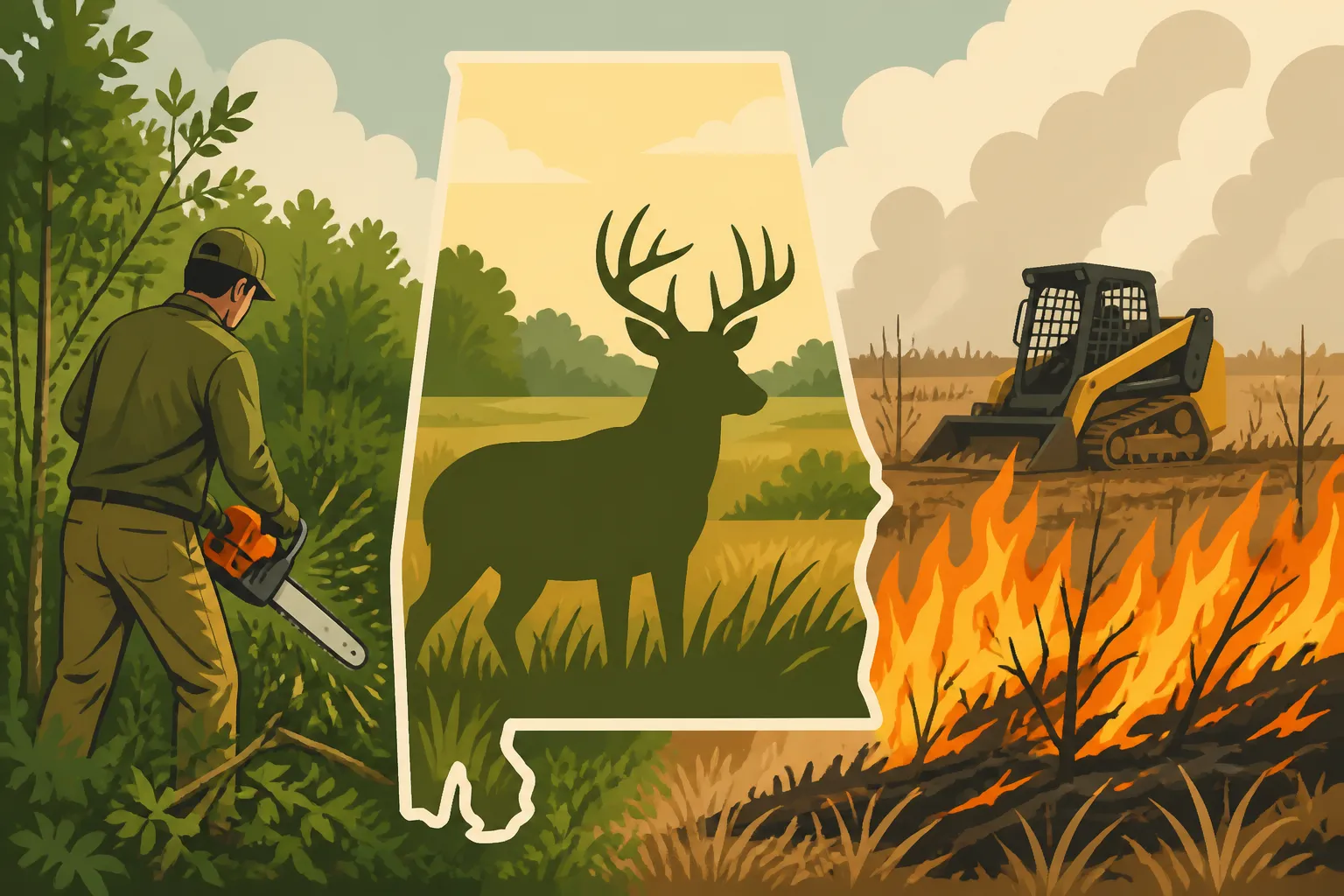
Prescribed fire, often called controlled burning, is arguably one of the most powerful and widely used habitat management tools in Alabama, especially on our WMAs. It's the intentional application of fire under specific weather conditions to achieve desired ecological goals. For a hunter stumbling upon a recently burned tract, it might look desolate at first, but this controlled chaos is vital for ecosystem health and game production.
The primary reasons for prescribed burning are multifaceted. It reduces hazardous fuel loads, preventing catastrophic wildfires that can devastate forests and wildlife. More importantly for hunters, it rejuvenates the forest understory. When fire moves through an area, it clears out thick, woody brush and dead litter, allowing sunlight to penetrate to the forest floor. This sunlight stimulates the growth of tender, herbaceous plants, forbs, and legumes – all highly palatable and nutritious forage for deer. It also exposes bare ground, which is crucial for ground-nesting birds like turkeys and quail, providing them with areas to dust bathe and for poults to find insects more easily. After a burn, you'll often see deer browsing on the fresh shoots within days or weeks. For turkey hunters, a recently burned area can be a fantastic place to find birds scratching for insects or strutting in the more open conditions. If you want to dive deeper into this topic, check out Why Alabama Foresters Burn Longleaf Pine. These burns are often conducted in late winter or early spring, setting the stage for an explosion of new growth just in time for spring and summer.
Timber Stand Improvement and Selective Cutting
When you see logging activity or clearcuts on a WMA, it can be easy to assume the worst. However, timber harvesting, when done with wildlife in mind, is another critical tool for habitat improvement. It's not just about selling lumber; it's about creating conditions that benefit specific game species.
Timber stand improvement (TSI) often involves thinning existing timber stands. This process removes less desirable trees, giving the remaining, healthier trees more sunlight, water, and nutrients. For mast-producing trees like oaks, this can lead to larger, more consistent acorn crops, which are vital food sources for deer, turkeys, and squirrels. Selective cutting, where only certain trees are removed, can also create small openings in the canopy, allowing sunlight to reach the forest floor and stimulating understory growth. Clearcuts, while initially stark, are incredibly beneficial for early successional habitat. The explosion of briars, vines, and young saplings that follows a clearcut provides a dense, nutritious food source and security cover for deer, rabbits, and many other species. These areas become bedding havens and feeding hotspots for years after the cut. Hunters should definitely pay attention to Timber Cuts and Where Deer Move After because these areas often concentrate game. Understanding the rotation cycles of these timber management practices can give you a significant advantage in predicting where game will be.
Food Plots and Supplemental Forage
While natural forage is the backbone of any healthy ecosystem, food plots play a significant supplementary role on many Alabama WMAs. These are planted agricultural fields or openings within the forest designed to provide additional, high-quality nutrition for wildlife, particularly deer and turkeys.
Managers might plant a variety of crops depending on the season and the target species. Cool-season plots, like those planted with wheat, oats, clover, or winter peas, provide essential nutrition for deer during the fall and winter months when natural browse can be scarce. These are often heavily utilized during hunting season and can be excellent locations for deer. For turkeys, chufa is a favorite, as they relish digging up the tubers. Warm-season plots, such as those with corn, soybeans, or various sorghums, provide summer nutrition and can hold game through the hotter months. Food plots aren't just about providing calories; they also concentrate animals, making them easier for hunters to locate and observe. On a WMA, where natural food sources might be spread thin, a well-maintained food plot can be a game-changer. For those who want to compare with private land practices, read up on Food Plots on Alabama Private Land. Knowing what crops are planted and when can help you plan your hunts strategically, especially when considering Hunting a Green Field Planted for Deer.
Water Management and Wetlands Restoration
Water is life, and that holds true for wildlife on Alabama's WMAs. Beyond just providing drinking sources, managing water levels and wetlands is a specialized form of habitat work that often targets specific species, most notably waterfowl.
Enhancing Waterfowl Habitat
For the avid duck and goose hunter, the water management efforts on WMAs located in river deltas or near major reservoirs are incredibly important. These areas often feature sophisticated water control structures, dikes, and impoundments designed to create ideal conditions for migratory birds.
Managers will often employ "moist soil management," which involves manipulating water levels to encourage the growth of specific native plants that produce seeds, tubers, and invertebrates – all prime food sources for ducks. Fields might be flooded in the fall, creating shallow feeding areas, and then drained in the spring to allow desirable vegetation to grow. This precise control over water levels and plant communities can turn a relatively unproductive area into a waterfowl magnet. Some WMAs also manage "green tree reservoirs," which are tracts of bottomland hardwoods that are intentionally flooded during the winter. This provides ducks with flooded timber habitat, a natural environment where they can feed on acorns and other mast. These managed wetlands are crucial for supporting migrating populations along the Mississippi Flyway. If you've ever enjoyed Hunting Flooded Timber for Mallards or Layout Blind Hunting a Cut Cornfield, you've directly benefited from these dedicated water management efforts.
Creating Water Sources for Upland Game
While large-scale wetland projects are often focused on waterfowl, providing consistent water sources is important for all game animals, especially in regions prone to dry spells. Upland game, including deer, turkeys, and small game, need access to water for hydration, especially during the hotter months or periods of drought.
WMA managers might work to enhance existing natural springs, create small wildlife ponds, or maintain temporary water holes. These smaller water sources become vital during late summer and early fall when many creeks and seeps might dry up. For deer, having a reliable water source close to bedding and feeding areas reduces stress and travel, keeping them in a more concentrated range. For turkeys, accessible water is critical, especially for hens with poults who need to stay hydrated. Even small game like rabbits and squirrels benefit from readily available water. While these efforts might not be as dramatic as a prescribed burn or a new food plot, they are fundamental to supporting healthy, localized populations of game animals throughout the year, making those areas more attractive to wildlife and, by extension, to hunters.
How Hunters Can Understand and Benefit from WMA Work
Knowing that habitat work is happening is one thing, but actively using that knowledge to improve your hunting strategy on Alabama WMAs is another. It takes a little homework and a lot of boots-on-the-ground scouting, but the payoff can be huge.
Using Technology to Scout Managed Areas
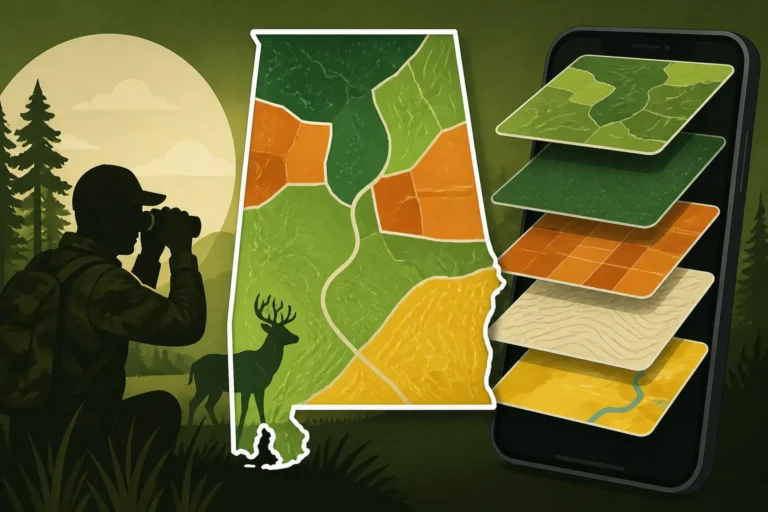
In today's world, technology gives hunters an incredible advantage in understanding and locating areas affected by WMA habitat work. Mapping applications like onX Hunt and GoHunt are indispensable tools for identifying prime hunting spots.
Before you even step foot on a WMA, you can pull up satellite imagery and analyze the landscape. Look for recent clearcuts – these will appear as stark, light-colored blocks compared to mature timber. Over time, as vegetation grows, you can track the successional stage, identifying areas that are now waist-high cover versus older cuts that might be transitioning to denser woods. Prescribed burns can sometimes be identified by darker, scorched earth patterns, or more subtly by the lighter, newer growth that pops up afterward. Apps like onX Hunt often have layers that show recent timber operations or even public land boundaries and WMA designations, making it easier to see where management has occurred. Combine this with the Scouting With the Outdoor Alabama App to verify regulations and obtain WMA maps. By digitally scouting, you can pinpoint transition lines between different habitat types, identify potential bedding areas in dense cover, and locate food plot openings – all indicators of where game might be concentrated due to habitat management. Even if you're not able to visit a WMA in person before the season, a careful study using onX Layers for Alabama Land Status can give you a powerful head start.
Respecting and Supporting WMA Efforts
While WMA habitat work benefits hunters, it's also crucial that hunters respect and support these efforts. These areas are managed for everyone, and responsible behavior ensures their long-term health and accessibility.
Always be aware of and adhere to the specific rules and regulations of the WMA you're hunting. This includes understanding Alabama WMA Permit Requirement and checking for any temporary closures due to ongoing habitat work, such as active prescribed burns, timber operations, or road closures for maintenance. Entering an area undergoing active management can be dangerous for you and can interfere with the work being done. Another key aspect is ethical hunting practices. When habitat is improving, game populations often thrive, but over-harvesting or disregard for bag limits can undermine years of careful management. Report any suspicious activity or violations you witness; this helps protect the resources we all value. Finally, remember that your hunting license fees, and often specific WMA permits, directly fund these vital habitat management programs. By purchasing your licenses and following the rules, you are directly contributing to the conservation and enhancement of Alabama's public hunting lands, ensuring that future generations can enjoy the same, if not better, opportunities.
Here's a quick summary of common WMA habitat practices and their benefits:
| Habitat Practice | Primary Goal | Key Game Benefited | Visual Cues for Hunters |
|---|---|---|---|
| Prescribed Burning | Rejuvenate understory, reduce fuel loads | Deer, Turkey, Quail | Charred ground, new green sprouts, open understory |
| Timber Thinning | Promote tree health, increase mast production | Deer, Squirrel, Turkey | More spaced-out mature trees, some stump fields |
| Clearcutting | Create early successional habitat, browse | Deer, Rabbit, Furbearers | Open areas with young saplings, briars, thickets |
| Food Plots | Provide supplemental forage | Deer, Turkey, Doves | Planted fields (clover, wheat, corn, chufa) |
| Moist Soil Management | Grow waterfowl food plants | Ducks, Geese | Impoundments, flooded fields with emergent vegetation |
| Pond/Seep Creation | Provide consistent water sources | All upland game | Small ponds, damp areas, improved springs |
Disclaimer
This article is for general informational purposes only and does not constitute professional advice. Laws, prices and regulations vary by location and change over time. Consult a qualified professional for guidance on your specific situation.