Prescribed Burns and Alabama Hunting Closures
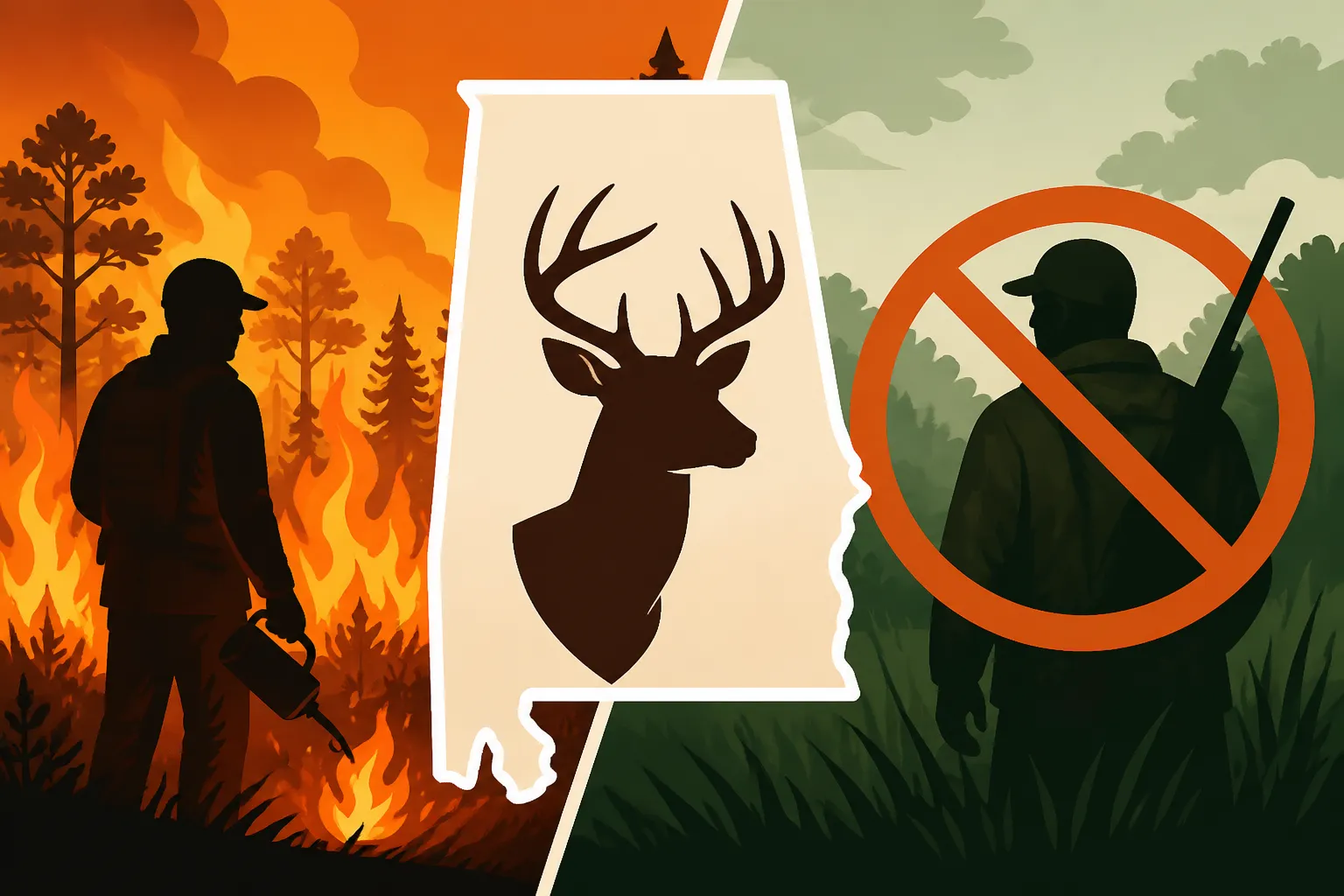
It’s a scenario many Alabama hunters have faced: you wake up early, gear loaded, coffee in hand, excited for a morning in your favorite public land spot, only to arrive and see signs that the area is closed, perhaps even smoldering, due to a prescribed burn. It’s frustrating, sure, but understanding why these burns happen and how to navigate them can actually turn a potential setback into a strategic advantage, often leading to better hunting opportunities down the line. This guide will walk you through what prescribed burns mean for Alabama hunting, how to stay informed, and how to adapt your strategies for success in these dynamic landscapes.
Understanding Prescribed Burns in Alabama's Ecosystems
For those of us who spend time in Alabama's diverse wild places, the sight of smoke columns in the distance, or even actively burning timber, can be a bit unsettling if you're not familiar with the practice. However, prescribed burning is a critical land management tool, deeply rooted in the history of our Southern forests, and absolutely vital for healthy wildlife populations and forest resilience.
Why Alabama Wildlife Benefits from Controlled Fire
Think about the longleaf pine forests that once dominated much of Alabama – they evolved with fire. Without regular, low-intensity burns, these ecosystems become choked with dense underbrush, invasive species, and an unnatural accumulation of fuel. This dense growth not only increases the risk of catastrophic wildfires, but it also creates poor habitat for many of our beloved game species.
Prescribed burns clear out this thick understory, allowing sunlight to reach the forest floor. This stimulates the growth of native grasses, forbs, and legumes that provide crucial forage for deer. It also exposes fallen acorns and seeds, making them accessible to turkeys and quail, which often struggle to find food in overly dense woods. For ground-nesting birds like wild turkeys and bobwhite quail, the open understory created by fire is essential for bugging, nesting, and brood-rearing. Without fire, these areas become too thick for poults and chicks to navigate, leaving them vulnerable to predators. It’s a natural reset button that promotes healthier, more open woodlands, which is exactly what our game animals thrive in. Why Alabama Foresters Burn Longleaf Pine delves deeper into the specifics of this ecological process.
How Burns Are Planned and Executed by Land Managers
These aren't just random fires set in the woods. Prescribed burns are meticulously planned operations, often involving teams of specialists from the Alabama Department of Conservation and Natural Resources (ADCNR), the U.S. Forest Service, or private land management companies. They consider a complex array of factors:
- Weather Conditions: Wind speed and direction, humidity levels, and recent rainfall are critical. Burning on a day that's too dry or too windy can lead to a fire getting out of control, while conditions that are too wet might prevent the burn from achieving its objectives.
- Fuel Loads: Managers assess the amount of combustible material (pine needles, dead leaves, downed branches) on the forest floor. The goal is often to reduce this fuel to prevent hotter, more destructive fires in the future.
- Firebreaks: Natural features like creeks and roads, or constructed lines cleared of vegetation, are used to contain the fire within a specific boundary.
- Burn Objectives: Is the goal to reduce fuel, enhance wildlife habitat, prepare a site for planting, or control invasive plants? The objective dictates the type and intensity of the burn.
Land managers invest significant time and resources into these burns because they understand their long-term benefits. These controlled fires are a proactive approach to maintaining ecological balance and improving the very habitat we rely on for hunting. Habitat Work on Alabama WMAs often includes prescribed burning as a key strategy.
Navigating Hunting Closures Due to Prescribed Burns
When a burn is actively happening or has just concluded, you'll almost certainly encounter closures. It's not just an inconvenience; these closures are put in place for very important reasons that protect both you and the land management teams.
Why Closures Are Necessary for Safety and Effectiveness
Imagine walking through a forest where a prescribed burn has just taken place. The ground is still smoldering, visibility might be low due to lingering smoke, and standing dead trees (often called "snags") can unpredictably fall, especially with wind. It’s a hazardous environment. Closures ensure that hunters and other recreational users aren't exposed to these dangers.
Beyond immediate safety, closures also allow the burn to achieve its objectives without interference. Fire crews need to move freely, monitor conditions, and ensure the fire stays within its intended boundaries. A hunter unexpectedly walking into an active burn unit could disrupt operations, divert resources, or even put themselves and the crew in harm's way. Respecting these closures is paramount for everyone involved.
How to Find Out About Active and Planned Burn Closures
This is where a little proactive research can save you a lot of frustration and wasted gas. Relying on official sources is key, as information can change rapidly.
Here’s how you can stay informed:
- Alabama Department of Conservation and Natural Resources (ADCNR) Website: This is your primary source for public land information. Many Wildlife Management Areas (WMAs) have specific pages that will list planned or active closures. It’s a good habit to check the WMA's specific page before any trip.
- U.S. Forest Service Websites: For hunting in national forests like Talladega, Bankhead, or Conecuh, check the relevant forest service district website. They often post alerts and maps of active prescribed burn units.
- Local Office Calls: If you're planning a trip to a specific WMA or national forest district, a quick call to the local office can often provide the most up-to-date information on burn activity.
- Mapping Applications: Tools like onX Hunt and GoHunt can be invaluable. While they might not show active burn closures in real-time, they can help you understand land ownership, property lines, and potential access points. If you see signs of private land adjacent to public areas that might be undergoing a burn, it's a good heads-up to check official sources. Regularly using resources like Scouting With the Outdoor Alabama App in conjunction with these mapping tools can give you a comprehensive picture.
Think of it this way: instead of just heading out blind, take five minutes the night before your hunt to check for alerts. It's a small investment of time that can prevent a big disappointment.
Hunting Strategies in Burned and Adjacent Areas
Once an area has been burned, the landscape changes, and with it, the behavior of the game. This means you, as a hunter, need to adapt your strategy. It’s not just about avoiding closed areas; it’s about understanding how the burn will influence deer, turkey, and other animals.
Immediate Post-Burn Opportunities and Challenges
In the immediate aftermath of a prescribed burn, usually within the first few days to weeks, the hunting environment can be both tough and surprisingly rewarding.
Challenges:
- Soot and Ash: The ground will be covered in soot and ash, which can cling to your clothing, make tracking difficult, and potentially impact scent control.
- Lack of Immediate Cover: The dense understory you might have relied on for concealment is gone, making you more visible. Game animals, too, will be more exposed.
- Temporary Displacement: In the immediate hours and days following a burn, animals might temporarily move out of the burned unit to seek cover and security in unburned areas.
Opportunities:
- Improved Visibility: While a challenge for your concealment, this can be a huge advantage for spotting game at greater distances, especially if you're still-hunting or using optics. You might be able to glass an area that was previously impenetrable.
- Exposed Food Sources: The fire clears away leaf litter, exposing acorns, seeds, and even small invertebrates that were previously buried. Turkeys will often move into burned areas quickly to scratch for these newfound treats.
- Fresh Browse: Within days or a few weeks, tender green shoots will begin to emerge from the blackened earth. This fresh, highly palatable browse can be a huge draw for deer and other herbivores, almost like a natural food plot. Late-Season Food Sources for Alabama Whitetails are often found in these green-up zones.
- Tracks: While fresh ash can make old tracks harder to discern, new tracks made after the burn are often very easy to spot against the dark background, giving you clear indications of recent animal movement.
A good approach might be to scout the edges of recently burned areas, looking for trails where deer are entering to browse on new growth.
Long-Term Habitat Improvement and Shifting Game Patterns
As weeks turn into months, the burned area undergoes a more profound transformation. This long-term habitat improvement has significant impacts on game patterns.
- Diverse Forage: Over time, the fire encourages a more diverse array of native plants, leading to a richer and more varied diet for deer. This isn't just a temporary browse increase; it's a fundamental improvement in the carrying capacity of the land.
- Enhanced Travel Corridors: With the underbrush thinned, animals can move more freely and quietly through the woods. This can change how they use the landscape, potentially opening up new travel routes or making existing ones more pronounced.
- Improved Bedding and Roosting: While the immediate aftermath might lack cover, the subsequent regeneration creates excellent bedding cover for deer and crucial bugging areas for turkeys. Turkeys often favor areas with an open understory but mature trees for roosting, making burn units highly attractive. Run-and-Gun Turkey Tactics on Public Land can be highly effective in these more open, yet food-rich, environments.
- Quail and Small Game: Bobwhite quail thrive in open, grassy habitats created by fire. Rabbit and squirrel populations also benefit from the diverse vegetation and cover that emerge. Squirrel Hunting Alabama Bottomland Hardwoods might see improved conditions in areas that have undergone controlled burns, depending on the specific tree species.
Game animals quickly adapt to these changes, often returning to burned areas as soon as the initial shock subsides and new growth begins. The key is understanding this cycle and timing your hunts accordingly. Sometimes, a poor acorn crop means deer shift their feeding habits, and freshly burned areas with new growth can become a primary food source. Hunting After a Poor Acorn Year can highlight the importance of these alternative food sources.
Hunting Near Burn Perimeters and Unburned Pockets
When an area is burned, it's rarely a perfectly uniform landscape. There are often unburned pockets, finger-like inclusions of thick cover, and, of course, the burn perimeter itself. These transition zones are often prime hunting locations.
- Burn Edges as Funnels: Animals moving from the burned area to seek more secure cover, or vice-versa to feed, will often travel along the edge of the burn. These perimeters act as natural funnels, making them excellent places for stand setups. Look for trails crossing in and out of the burned area.
- Unburned Islands: Within a larger burn unit, there might be small patches of unburned timber or thickets. These "islands" become temporary sanctuaries for displaced game, offering cover and security in an otherwise open landscape. Setting up downwind of these pockets, or on travel routes leading to and from them, can be very productive.
- Adjacent Unburned Cover: If a large area has been burned, the dense, unburned woods immediately adjacent to it will likely see an increase in animal activity, particularly for bedding and security cover. Deer might browse in the burned area at night or during low-pressure times, then retreat to the safety of thick cover during the day. Consider areas with dense clear-cut regrowth or river bottoms as potential refuges. Treestand Setups in Talladega National Forest might need to be adjusted based on new cover patterns created by burns.
Hunters who understand how to read the landscape, especially after a burn, can often find success by focusing on these strategic points where game transitions between food, water, and cover.
Practical Tips for Hunting in Burn Country
Hunting in or around areas affected by prescribed burns requires a few practical adjustments to your gear and mindset. It's not just about knowing where the deer are; it's about being prepared for the environment.
Gear Considerations for Soot, Ash, and Increased Visibility
The post-burn environment can be messy and more open than you’re used to.
- Clothing Care and Scent Control: Ash and soot can be surprisingly difficult to clean off, and they can carry scent. Wear older hunting clothes you don't mind getting dirty. Pay extra attention to your scent control regimen; even if the ash itself isn't a strong scent, anything it picks up from you will be.
- Footwear for Uneven, Sooty Ground: The ground in a burned area can be soft, uneven, and covered in a layer of fine ash. This can make for dusty, dirty trekking. Good waterproof boots with ankle support are essential. Be aware that the ground might be unstable in places where roots have burned out, creating hidden holes.
- Spotting Scope or Quality Binoculars: With the understory cleared, your visibility is often greatly improved. Invest in a good pair of binoculars or even a spotting scope to scan distant areas. You might be able to spot game at ranges that were impossible before the burn, giving you more time to plan your approach.
- Navigation Tools: While mapping apps like onX Hunt are always useful, they become even more critical in a burned landscape where familiar landmarks might be gone. Ensure your phone is charged, or carry a handheld GPS unit.
Respecting Burn Boundaries and Forest Service Regulations
This is non-negotiable. Public safety and responsible land management depend on hunters adhering to regulations.
- Legal Implications: Entering an area that has been officially closed due to a prescribed burn is not only dangerous but illegal. You could face fines, lose your hunting privileges, or worse. Always check for closures before you go. Remember to check for specific Alabama WMA Permit Requirement and follow those guidelines, as they often include details about closures.
- Ethical Responsibility: As hunters, we are stewards of the land. Disregarding burn closures undermines the efforts of land managers who are working to create better habitat for the very animals we pursue. It shows a lack of respect for the land, the wildlife, and the people dedicated to their management.
- Personal Safety: Beyond legal repercussions, the risks to your personal safety in an active or recently burned area are significant. Smoke inhalation, unstable ground, falling trees, and residual heat are all serious concerns. It's simply not worth the risk.
Understanding prescribed burns as a beneficial management tool, rather than just an inconvenience, helps us become better, more informed hunters. By staying aware of closures and adapting our strategies to the post-burn environment, we can actually leverage these vital conservation efforts for more successful and rewarding experiences in Alabama's wild places.
| Characteristic | Before Prescribed Burn | After Prescribed Burn | Hunting Implications |
|---|---|---|---|
| Understory | Dense, thick brush; limited visibility; invasive plants. | Open, cleared; new herbaceous growth; exposed soil. | Visibility: Increased for hunter, less cover for game. Access: Easier to traverse. |
| Forage | Limited native grasses/forbs; choked by brush. | Abundant new growth; exposed seeds/acorns; diverse plants. | Attraction: Deer, turkey, quail drawn to fresh browse and exposed food. Timing: Best a few weeks to months post-burn. |
| Bedding/Cover | Dense thickets for security; difficult to penetrate. | Initial lack of cover; new growth provides evolving cover. | Security: Game may move to unburned pockets or adjacent dense cover. Edges: Focus on burn perimeters for movement. |
| Travel Routes | Hindered by dense growth; animals follow established trails. | Easier, more diverse movement; new routes may emerge. | Funnels: Burn edges become natural funnels. Predictability: Game adapts to new, efficient travel paths. |
| Fire Risk | High accumulation of fuel; risk of catastrophic wildfire. | Reduced fuel load; lower risk of severe, uncontrolled fire. | Closures: Necessary for safety during and immediately after burn. |
Disclaimer
This article is for general informational purposes only and does not constitute professional advice. Laws, prices and regulations vary by location and change over time. Consult a qualified professional for guidance on your specific situation.