Wheeler Refuge Quota Deer Hunts
For many Alabama hunters, the dream of taking a mature buck on public land often feels just out of reach, especially when faced with heavy hunting pressure or limited access. The truth is, securing a high-quality deer hunt on public ground can be a real challenge, but opportunities like the quota deer hunts at Wheeler National Wildlife Refuge offer a unique solution to this common frustration. This guide is here to walk you through everything you need to know about navigating these special hunts, from understanding the application process to perfecting your in-the-field tactics, helping you increase your chances of a successful and memorable experience.
Understanding Quota Hunts in Alabama's National Wildlife Refuges
Quota hunts, sometimes called draw hunts, are a fantastic way to experience prime hunting opportunities on public lands that are often managed for quality deer. Unlike general public land access where anyone with a license can hunt during open seasons, quota hunts limit the number of hunters allowed into a specific area during a set timeframe. This reduced pressure often translates into a better hunting experience, with less competition and a higher likelihood of encountering mature game. It's not just about luck; it's about smart wildlife management.
The Alabama Department of Conservation and Natural Resources (ADCNR), in conjunction with federal agencies like the U.S. Fish and Wildlife Service, designs these hunts to balance recreational opportunities with conservation goals. By controlling hunter density, they can better manage the deer herd, ensure healthy populations, and provide a superior outdoor experience. For hunters, it means a chance to hunt areas that might otherwise be inaccessible or overrun, offering a taste of what private land hunting can be like without the hefty lease fees.
These hunts are highly sought after precisely because of the potential for quality. While there’s no guarantee, the lower hunter numbers mean deer are less disturbed, allowing them to follow more natural patterns. This can dramatically change the game, moving from simply trying to find a deer to strategically hunting a specific animal or pattern. It's a different rhythm, one that rewards patience, scouting, and a deeper understanding of deer behavior.
Why Wheeler National Wildlife Refuge Stands Out
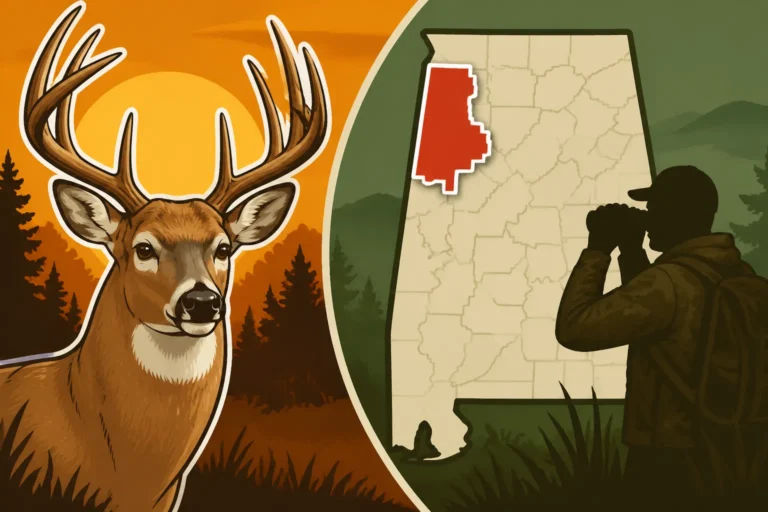
Wheeler National Wildlife Refuge, nestled along the Tennessee River near Decatur, is a truly special place in Alabama. Established in 1938 as the first national wildlife refuge in Alabama, its primary purpose was to provide wintering habitat for migratory waterfowl. Over the decades, it has blossomed into a diverse ecosystem supporting not only ducks and geese but also a thriving population of white-tailed deer, a testament to its rich habitat.
The refuge’s landscape is a mosaic of habitats: bottomland hardwoods, agricultural fields, pine forests, and extensive wetlands and river frontage. This variety provides deer with everything they need – abundant food sources, thick cover for bedding, and easy access to water. The combination of agricultural lands (often planted in corn, soybeans, or winter wheat) and dense timber makes it an ideal environment for deer to grow large and healthy. It's this high-quality habitat that often produces impressive bucks, making a Wheeler hunt a coveted tag.
Because it's a refuge, the area generally experiences less pressure than other public lands outside of these special quota hunts. This means the deer are often less wary and can grow to older age classes. For hunters drawn in the quota system, this translates into a unique chance to pursue deer in an environment where they haven't been constantly harassed, offering a more natural and challenging hunt. The history of the refuge and its consistent dedication to wildlife conservation is what makes it such a jewel for Alabama hunters.
Navigating the Application Process for Wheeler Quota Hunts
Getting a spot on a Wheeler Refuge quota hunt isn't as simple as showing up, but the process is well-defined and accessible through the Outdoor Alabama platform. The key is understanding the timeline and ensuring you meet all requirements. Generally, applications open in late summer, giving hunters a window to submit their choices for various hunts across the state, including Wheeler. It's critical to pay close attention to these application deadlines because there are no exceptions for late entries.
The process typically involves purchasing a specific "Wildlife Management Area License" or "Wildlife Heritage License" (if applicable) and then applying for the individual quota hunts you're interested in through the ADCNR's online system. You'll usually rank your preferences, and sometimes you can apply as a group. Remember, this is a draw system, so success isn't guaranteed every year, but consistent application increases your chances over time. It’s a bit like playing the lottery, but with a much better prize: a unique hunting experience.
Once the application period closes, the drawing occurs, and hunters are notified of their results. If you're lucky enough to be drawn, you'll receive specific instructions regarding hunt dates, check-in procedures, and special regulations unique to Wheeler Refuge. Don't take this lightly; the rules are often very specific to ensure safety and proper management, and non-compliance can lead to severe penalties. Always double-check the current year's regulations on the official Outdoor Alabama website or directly from the refuge office for the most up-to-date information.
| Step | Description | Timing (General) | Key Actions |
|---|---|---|---|
| 1. License Purchase | Ensure you have the required Alabama hunting licenses. | Annually, pre-application | Buy All-Game or WMA License. |
| 2. Application Period | Submit your entry for preferred quota hunts. | Late Summer (e.g., July-August) | Apply online via Outdoor Alabama portal. |
| 3. Draw Results | Check if you were selected for a hunt. | Early Fall (e.g., September) | Notifications sent via email/online portal. |
| 4. Permit Confirmation | Confirm your spot if drawn and receive details. | Shortly after draw | Review specific hunt dates and rules. |
| 5. Pre-Hunt Preparation | Study maps, scout (if allowed), gather gear. | Weeks leading up to hunt | Utilize tools like onX Hunt for map study. |
| 6. Hunt Execution | Follow all refuge rules, hunt ethically, report harvest. | Specific hunt dates | Adhere to check-in/check-out procedures. |
Preparing for Your Wheeler Refuge Hunt
Drawing a tag for a Wheeler Refuge quota hunt is an exciting accomplishment, but the real work begins long before opening day. Successful public land hunting, especially in a unique environment like a wildlife refuge, demands thorough preparation. This isn't just about packing your gear; it's about understanding the terrain, the deer, and the specific rules that govern your hunt. Taking the time to prepare will not only increase your odds of success but also make the entire experience more enjoyable.
Remember that these are not your typical everyday hunting scenarios. The management intensity, the specific regulations, and the unique habitat all combine to create a distinct challenge and opportunity. Ignoring these nuances is a surefire way to come home empty-handed and frustrated. Instead, lean into the challenge, do your homework, and arrive ready to adapt. This proactive approach is what separates consistently successful public land hunters from those who struggle.
Beyond the physical preparations, there's a mental game to playing the quota hunt lottery. Don't let the excitement overshadow the need for careful planning. Talk to hunters who have been drawn before, read past hunt summaries if available, and immerse yourself in all the information you can gather. Tools like GoHunt might offer insights into draw statistics or general strategies for managed hunts, even if specific Wheeler data is harder to come by, allowing you to refine your overall hunt planning approach.
Scouting the Refuge: Your Pre-Hunt Homework
Before you even step foot in the refuge, a mapping app like onX Hunt can be your best friend. It allows you to digitally scout the property, identifying potential entry points, thick cover, food sources, and natural funnels. Look for pinch points where deer movement might be concentrated, especially near transitions between agricultural fields and dense timber, or along creek bottoms and sloughs. Remember that Wheeler is largely flat, but subtle elevation changes or drainage features can still be significant travel corridors.
If pre-season scouting is allowed (always check the specific refuge regulations for the current year, as rules can change), take full advantage. Walk the property, looking for deer sign like rubs, scrapes, and tracks. Pay attention to how deer are using the terrain and the current food sources. Are they hitting acorns in the hardwoods, or are they feeding heavily in the standing corn? Understanding current deer patterns is paramount. Walk silently, observe, and try to visualize how deer might move through the area during hunting hours.
Pay particular attention to the boundaries of the hunting areas. Sometimes, a deer that feels pressure will slip just outside the huntable zone. Understanding these escape routes can help you anticipate where deer might be coming from or going to. Note bedding areas—often dense thickets or river bottom cover—and plan your approach and exit routes to avoid disturbing them, especially on the mornings and evenings of your hunt. Consider the wind direction and thermals for each potential stand site, as Alabama weather can be fickle.
Gear Considerations for Wheeler's Diverse Habitat
The diverse habitat of Wheeler Refuge means your gear needs to be versatile. Given the potential for wet conditions, especially near the Tennessee River and its associated sloughs, waterproof boots are non-negotiable. Waders might even be necessary if your drawn area involves navigating substantial wetland areas, particularly for retrieving game. Layered clothing is also key, as Alabama mornings can be chilly, but midday can warm up quickly, even in the late season.
Your choice of weapon should align with Alabama's legal firearms for deer hunting, but also consider the terrain. If you're hunting dense hardwoods or thickets, a shorter, more maneuverable rifle or a shotgun with slugs might be preferable to a long-barreled magnum. For those pursuing archery opportunities, ensure your bow is tuned and you're comfortable shooting from various positions, including from a tree stand or ground blind. Don't forget a good pair of binoculars; glassing those open agricultural fields or hardwood bottoms can be incredibly effective.
Consider how you'll get your deer out. If you're fortunate enough to tag a big buck, dragging it through swampy ground or thick timber can be a monumental task. A good deer cart, a sturdy rope, or even a game sled can make a huge difference. Ensure you have a reliable headlamp for early morning entries and late evening exits, and a compass or GPS (like the one built into onX Hunt) is essential for navigating unfamiliar terrain, especially in the dark. Don't underestimate the importance of carrying enough water and snacks for a full day afield, as you might be a long way from your vehicle.
Strategies for Success on a Quota Hunt
Successfully filling your tag on a Wheeler Refuge quota hunt isn't just about being in the woods; it's about employing smart, adaptable tactics that leverage the unique environment and reduced pressure. While every hunt is different, certain strategies tend to shine in managed areas where deer can grow older and often follow more predictable patterns than in heavily pressured public tracts. This is where your scouting and preparation truly pay off.
Remember that these deer, while potentially less pressured than those on general access public lands, are still wild animals. They will react to human intrusion, changes in weather, and the presence of other hunters, even if those numbers are limited. The goal is to hunt intelligently, minimizing your impact while maximizing your time in high-potential areas. It’s a delicate balance of aggression and stealth, observation and action.
Don't be afraid to adjust your plans. If your initial stand location isn't producing, or if conditions change dramatically, be ready to move. Public land hunting, especially in managed areas, often rewards the flexible hunter. Sometimes, moving just a few hundred yards can put you into a completely different scenario with fresh deer movement.
Understanding Deer Behavior in Managed Areas
Deer in managed areas, like Wheeler Refuge, often behave differently than those constantly pressured on open public land. With fewer hunters, they might be more apt to move during daylight hours, especially mature bucks. Their patterns can be more consistent, relying on established travel corridors between bedding and feeding areas. This is where your pre-hunt scouting becomes invaluable—you're looking for these undisturbed patterns.
Another key aspect is understanding how deer utilize sanctuary areas within the refuge. While the entire refuge is managed, certain zones might be completely off-limits to hunting, acting as de facto sanctuaries. Deer will often bed in these areas and move into huntable zones to feed or during the rut. Identifying these transition zones and setting up strategically along them can be highly effective. Look for natural funnels, like narrow strips of timber between a field and a sanctuary, or subtle ridges that deer use to avoid open areas.
Also, be mindful of the rut timing in your specific part of Alabama. Even within a refuge, deer activity will surge during the breeding season. Knowing When the Alabama Rut Peaks by Zone can help you time your hunt for maximum action. During the rut, bucks will be more actively cruising for does, making them more visible and less cautious. However, they will still use cover and scent to their advantage, so smart stand placement and wind management remain critical.
Effective Hunting Tactics for Quota Hunts
When hunting Wheeler Refuge, a blend of patience and strategic aggression can be highly effective. Still-hunting, moving slowly and deliberately through timber, pausing frequently to observe, can be fruitful, especially in the bottomland hardwoods. This allows you to cover ground while being stealthy, potentially ambushing a deer on the move or in its bedding area. Always hunt into the wind, taking advantage of terrain features to break up your silhouette.
For stand hunting, consider both tree stands and ground blinds. In areas bordering open fields, a well-brushed-in ground blind can offer excellent concealment, especially if you anticipate deer entering the field at dawn or dusk. For thicker timber, a mobile tree stand allows you to adapt to fresh sign. Focus your stand placement on key travel corridors, feeding areas (like oak flats or planted fields), or pinch points. Treestand Setups in Talladega National Forest principles, focusing on wind direction, cover, and deer trails, are universally applicable.
Don't be afraid to use calls. Rattling antlers or grunt calls can be particularly effective during the rut, as bucks might be more responsive to challenging rivals or investigating does. However, use them judiciously; in managed areas, less is often more. A few soft grunts or a short rattling sequence might be all it takes to pique a buck's interest without alerting him to your exact location. Always be ready for an immediate shot after calling, as deer can approach quickly and silently.
Post-Hunt Logistics and Mandatory Reporting
Congratulations! You've successfully completed your Wheeler Refuge quota hunt, and hopefully, you're looking at a harvested deer. But the hunt isn't truly over until all post-harvest logistics are handled and legal reporting requirements are met. Failing to follow these steps can negate your successful hunt and even lead to fines. Knowing what to do after the shot is just as important as the shot itself.
This phase often requires quick, efficient work, especially in Alabama's often warm climate. The sooner you can get your game processed and cooled, the better the quality of the meat will be. Planning for this in advance will save you a lot of stress and ensure that your hard-earned venison is taken care of properly.
Remember to always prioritize safety, especially when recovering game in challenging terrain or after dark. A harvested deer is a heavy animal, and attempting to move it alone or without proper equipment can lead to injury. If you're with a hunting partner, make sure you communicate clearly and work together safely.
Game Recovery and Processing
Once you've made a successful shot, give the animal time before beginning your recovery. Even a well-hit deer can travel a surprising distance. After an appropriate wait, begin your track, looking for blood, tracks, and disturbed vegetation. Having a tracking light for low-light conditions is extremely helpful. If you lose the trail, back out and reassess, perhaps bringing in additional help. Patience here is key to avoiding bumping a wounded animal. Blood Trailing After Dark in Alabama is a skill worth honing, especially if you hunt mornings and evenings.
Once you recover your deer, field dressing it quickly is paramount, especially in warmer Alabama weather. This cools the carcass down rapidly, preserving the meat. Be prepared with a sharp knife, gloves, and a means to hang the deer if possible, even if temporarily. After field dressing, you'll need a plan to get the deer out of the refuge. As mentioned before, a deer cart or game sled can be a lifesaver. You might have a specific exit route or check-out point depending on refuge rules.
Following extraction, your options for processing include doing it yourself, taking it to a local processor, or bringing it back to camp for butchering. If you use a processor, research reputable ones in the area before your hunt. If you're processing it yourself, ensure you have the necessary tools and a clean, cool workspace. Remember to keep the head and evidence of sex attached as required by law until processing is complete or the deer is at its final destination.
Mandatory Harvest Reporting
Alabama has a mandatory game check system for all legally harvested deer and turkeys, and this requirement absolutely applies to Wheeler Refuge quota hunts. It's not just a suggestion; it's a legal obligation. You must report your deer harvest through the Game Check system within 48 hours of the kill and before any processing begins that would remove the head or alter the sex of the deer.
The reporting system is typically done online via the Outdoor Alabama website or through their mobile app. You'll need to provide information such as your license number, the date of harvest, the county of harvest (which will be the county Wheeler Refuge is in), the specific game species (deer), and whether it was antlered or unantlered. Upon successful submission, you'll receive a confirmation number. While you don't need to tag the deer physically, carrying this confirmation number (either digitally or a printed copy) is crucial, especially if you're transporting the deer.
This reporting system is vital for wildlife management. The data collected helps ADCNR biologists monitor deer populations, track harvest trends, and make informed decisions about future season structures and quotas. By diligently reporting your harvest, you're not just complying with the law; you're contributing directly to the conservation efforts that make hunts like those at Wheeler Refuge possible. Make sure you understand Alabama Deer Reporting Rules fully before you head afield.
Disclaimer
This article is for general informational purposes only and does not constitute professional advice. Laws, prices and regulations vary by location and change over time. Consult a qualified professional for guidance on your specific situation.