Hunting Alabama’s Black Belt Prairie
The Black Belt Prairie in Alabama offers some of the most unique and often challenging hunting experiences in the Southeast. Many hunters hear whispers of its legendary deer and quail, but arriving unprepared can lead to frustration with its vast, often private, agricultural landscapes and dense thickets. This guide will walk you through everything you need to know to successfully plan and execute a hunt in this iconic Alabama region, from understanding its distinct habitat to navigating land access and specific hunting strategies for its diverse game.
What Makes the Black Belt Prairie Unique for Hunting?
The Black Belt Prairie isn't just a catchy name; it's a geological and ecological wonder that profoundly influences hunting opportunities. Named for its rich, dark, fertile soil, this crescent-shaped band stretches across central Alabama, forming a distinct landscape unlike any other in the state. This unique soil, derived from cretaceous chalk, fosters an incredibly productive ecosystem that translates directly into exceptional wildlife habitat.
The Geological Story Behind the Rich Soil
Imagine ancient seabeds, teeming with microscopic marine life. Over millions of years, the remains of these organisms compacted and fossilized, creating a thick layer of chalk. As time wore on, this chalk weathered down into the characteristic black, calcareous clay that defines the Black Belt. This soil, rich in nutrients, creates a distinct alkaline environment, which is perfect for certain types of vegetation, notably native grasses and legumes that are highly palatable and nutritious for deer and other game. You can literally see the difference in soil color as you drive across its boundaries, moving from the red clay hills to the deep, dark fields.
This unique geology means that the land naturally produces abundant forage. You’ll find lush clovers, vetch, and various native browse species thriving here, providing deer with a high-protein diet that supports impressive antler growth and overall herd health. It's one of the primary reasons why the region has a reputation for Why the Black Belt Grows Big Bucks. The calcium content in the soil is also thought to contribute to stronger bone and antler development, giving those bucks a real edge.
Distinctive Landscape and Habitat Features
Beyond the soil, the Black Belt's landscape is characterized by a mix of large agricultural fields, dense hardwood bottoms along creek and river drainages, scattered pine plantations, and expansive native prairie remnants. It's a patchwork quilt where open fields meet impenetrable thickets, creating a haven for wildlife. Deer often use the security of the thick cover for bedding during the day, emerging into the sprawling fields to feed under the cloak of darkness.
The prevalence of large-scale farming operations also plays a significant role. Fields of corn, soybeans, cotton, and peanuts provide seasonal food sources that attract and hold game, especially deer and doves. However, these fields can also be vast, making scouting and stand placement crucial. The lack of significant elevation changes, compared to the hillier regions of North Alabama, means hunters must rely heavily on understanding subtle terrain features like drainage ditches, fencerows, and isolated woodlots to predict animal movement. The low, rolling topography often means wind plays a different role here than in mountainous regions, requiring a keen understanding of local air currents, particularly around creek bottoms.
Historical Hunting Significance
The Black Belt has a long and storied history of hunting, dating back to Native American tribes who recognized its rich game resources. In more recent centuries, it became known for its plantations and large landholdings, where deer and quail hunting became a tradition among landowners and their guests. This history has led to a culture of land management focused on wildlife, particularly deer and bobwhite quail. Many of these vast tracts are managed year-round for optimal game populations, leading to some truly exceptional hunting opportunities.
While much of this land remains privately held, the legacy of wildlife management continues to influence hunting practices. Modern landowners and hunting clubs in the Black Belt often employ advanced habitat management techniques, including prescribed burning, food plots, and timber stand improvement, all aimed at enhancing the quality and quantity of game. This sustained effort helps maintain the region's reputation as a premier hunting destination, drawing enthusiasts from across the country.
Key Game Species and What Draws Them Here
The Black Belt Prairie is renowned for its diverse hunting opportunities, primarily driven by its rich habitat. While deer might be the biggest draw, the region also offers fantastic hunting for wild turkeys, feral hogs, bobwhite quail, and mourning doves, each benefiting from the unique agricultural and natural landscapes.
White-Tailed Deer: The Black Belt's Crown Jewel
When you talk about hunting the Black Belt, white-tailed deer are almost always the first species that come to mind. The combination of nutrient-rich soils and extensive agricultural fields provides an unparalleled food source, leading to a deer population known for its size and antler quality. Deer in the Black Belt typically have access to an abundance of natural forage like honeysuckle, greenbriar, and various native legumes, supplemented by readily available crops such as soybeans, corn, and peanuts. This consistent, high-quality diet translates into healthy deer with impressive body weights and often large, robust antlers.
Hunters in this region frequently target mature bucks, many of which can reach Boone and Crockett scores thanks to years of good nutrition and selective harvesting practices on managed properties. The challenge often lies in accessing these prime areas, as much of the trophy potential is concentrated on private lands. Understanding deer movement patterns between thick cover and open fields is paramount, especially during the rut, which can peak at varying times across Alabama's different zones, but often sees intense activity in the Black Belt in mid-to-late January. Hunting the Rut in the Southern Zones can be particularly exciting in these areas.
Wild Turkeys: Gobblers on the Prairie Edge
Alabama's turkey population thrives in many parts of the state, and the Black Belt offers prime habitat, especially where mature hardwoods meet agricultural fields. These birds benefit from the same fertile soils and abundant food sources as deer, finding insects, seeds, and soft mast like acorns and berries. The open nature of many Black Belt properties, with scattered timber blocks and extensive field edges, creates ideal strutting zones and excellent visibility for both the birds and the hunter.
Hunting turkeys in the Black Belt often involves a mix of setting up on field edges at first light to call in gobblers off the roost, or employing run-and-gun tactics to cover ground and locate birds throughout the day. The large, flat fields and scattered timber can make calling challenging, as sound carries far but birds also have a wide field of view. Decoy placement, particularly once the state's initial ten-day restriction on decoys lifts, becomes incredibly effective in these open settings. Turkey Tactics for Black Belt Field Edges can be a game-changer when those longbeards are henned up or holding just out of range.
Feral Hogs: A Year-Round Challenge and Opportunity
Feral hogs are a pervasive species across much of Alabama, and the Black Belt is no exception. These destructive animals thrive in the region's productive agricultural landscapes, finding abundant food in crop fields and secure cover in dense creek bottoms and swamps. While often viewed as a nuisance due to the extensive damage they cause to crops and natural habitats, they also provide a thrilling year-round hunting opportunity, with no closed season or bag limits on private land.
Hog hunting in the Black Belt can take many forms, from setting up over bait sites at night with thermal optics to spot-and-stalk tactics in fields, or even organized hog drives. Trapping is also a popular and effective method for managing larger populations. Many landowners welcome hunters willing to help control hog numbers, making them a potential gateway to private land access. The sheer number of hogs and their rapid reproductive rate mean there's always an opportunity to pursue them, often as an add-on to a deer or turkey hunt. Trapping Alabama Feral Hogs is a common practice for serious land managers.
Bobwhite Quail: A Legacy of Gentleman's Hunting
Historically, the Black Belt was the epicenter of bobwhite quail hunting in Alabama. While wild quail populations have faced significant challenges across the Southeast, the Black Belt still harbors some of the best remaining wild quail populations, particularly on large, intensively managed properties. The mixture of open prairie remnants, pine savanna, and agricultural edges creates ideal quail habitat, offering the dense cover and abundant insect populations these birds need.
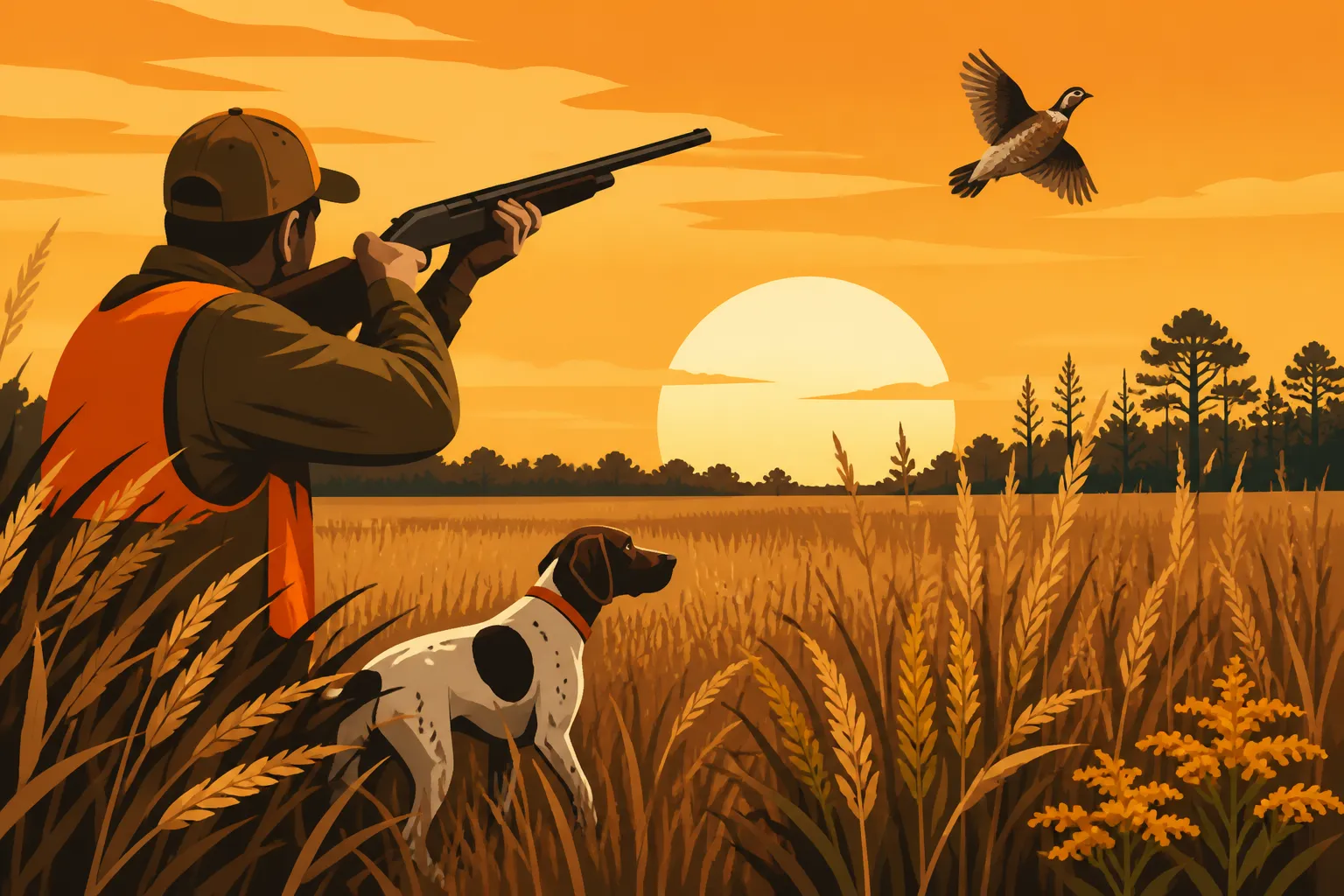
Hunting bobwhite quail in the Black Belt is often a more traditional experience, involving pointing dogs working through fields and thickets. The thrill of a covey rise, with birds exploding from underfoot, is a classic Southern hunting experience. Many plantations in the Black Belt dedicate significant resources to habitat restoration and management to sustain wild quail, often through controlled burns and planting native grasses. While accessing these prime wild quail properties often requires Booking a Black Belt Quail Plantation Hunt, the experience of Working a Black Belt Quail Covey Rise is unmatched for many bird hunters.
Mourning Doves: Fall Field Action
As summer wanes and fall approaches, the Black Belt's agricultural fields become magnets for mourning doves. The expansive cut corn, wheat, sunflower, or peanut fields provide ideal feeding grounds, drawing in thousands of migrating and resident doves. Dove hunting is a social and exciting way to kick off the fall hunting season, often involving groups of hunters positioned around a field edge or water source.
Successful dove hunting in the Black Belt hinges on securing access to well-prepared fields, often planted specifically to attract doves or harvested in a way that leaves ample waste grain. Proper scouting of flight paths and staging areas is key to setting up effectively. The fast-paced action and the challenge of hitting these acrobatic birds make dove hunting a beloved tradition. Many properties offer dedicated dove fields, and sometimes day leases are available for opening weekend or during the early splits. Setting Up a Dove Field Before Opening Day involves careful planning and knowing the rules around baiting.
Understanding Land Ownership and Access
Hunting in Alabama's Black Belt Prairie presents a unique challenge and opportunity when it comes to land access. Unlike some regions with vast public lands, the Black Belt is predominantly composed of private property, often held in large tracts by families or corporations. Navigating this landscape requires understanding the different avenues for access, from seeking permission to joining hunting clubs or leasing land.
The Dominance of Private Land
The historical context of the Black Belt, with its agricultural wealth, has resulted in a landscape where private landholdings are the norm. Generations of families have owned and managed these properties, often with a strong tradition of hunting. This means that while the habitat is prime, simply showing up with a hunting license and a map won't get you far. The majority of prime deer, turkey, and quail hunting is done on land that is either owned, leased, or accessed through personal permission.
This private land dominance contributes to the region's reputation for quality game. Landowners and clubs often implement strict management practices, including quality deer management (QDM), habitat improvements, and controlled harvest quotas. These efforts, while limiting public access, contribute significantly to the health and trophy potential of the Black Belt's deer herd. It's a double-edged sword: exceptional hunting, but with a higher barrier to entry for the average hunter.
Seeking Private Land Permission
For many Alabama hunters, gaining permission to hunt private land is the most traditional and cost-effective route. In the Black Belt, this often involves "knocking on doors" or networking within the community. Farmers and landowners, particularly those experiencing crop damage from feral hogs or overpopulation of deer, may be amenable to granting permission, especially for species like hogs, which have no season restrictions on private land.
When seeking permission, always be respectful, well-groomed, and offer to help with chores or provide venison. Clearly state your intentions and the species you wish to hunt. Offering to help with hog control can often open doors, as these animals cause significant economic damage. Remember, Do Feral Hogs Need Landowner Permission? even on private property – you absolutely need permission to be there. A written agreement, even a simple one, outlining what, when, and where you can hunt, is always advisable to avoid misunderstandings. Building a relationship based on trust and respect is key to long-term access.
Hunting Clubs and Leases: The Common Approach
Given the extensive private land, joining a hunting club or leasing your own tract is a very common way to gain consistent access in the Black Belt. Hunting clubs pool resources to lease large properties, sharing costs and responsibilities for stand maintenance, food plots, and habitat work. These clubs can vary widely in size, rules, and amenities, from rustic camps to sophisticated lodges. Membership in a reputable club often provides access to excellent hunting opportunities and a supportive community of fellow hunters.
Leasing land independently, or with a small group of friends, offers more control over management decisions and hunting pressure. However, it also comes with a higher financial commitment and the responsibility for all land management activities. Lease costs in the Black Belt can be substantial, reflecting the quality of the hunting. When considering either option, thoroughly vet the club or lease, inspect the property, and understand all associated costs and rules. Asking about Alabama Hunting Lease Costs is a good starting point, as prices can fluctuate significantly based on location, acreage, and game potential.
Limited Public Land Opportunities
While private land dominates, there are some limited public hunting opportunities in and around the Black Belt region, primarily through Wildlife Management Areas (WMAs). These WMAs offer accessible hunting for a variety of species, but they are often smaller, can experience significant hunting pressure, and may not offer the same trophy potential as well-managed private lands.
Examples like the Barbour Wildlife Management Area, though not directly in the heart of the "Black Belt soil," are on its fringes and offer a public land experience. Hunters interested in public land in this region should consult the Outdoor Alabama website for detailed maps and regulations. Utilizing mapping tools like onX Hunt is invaluable for identifying public land boundaries, understanding property ownership, and scouting potential access points, especially when cell service might be spotty. Always be aware of specific WMA rules, which can include antler restrictions, sign-in procedures, and special dates.
Strategic Hunting Approaches for the Black Belt
Hunting the Black Belt Prairie demands a keen understanding of the local landscape and animal behavior. The combination of vast agricultural fields, dense creek bottom cover, and specific rut timing requires a strategic approach for consistent success, whether you're chasing a trophy buck or a wary gobbler.
Scouting for Success: Reading the Landscape
Effective scouting is paramount in the Black Belt. Unlike timbered mountains where elevation changes dictate travel, here you'll be looking for subtle features. Focus on identifying pinch points, funnels, and transition zones where deer move between bedding areas (often dense thickets in creek bottoms or overgrown fencerows) and feeding areas (the vast crop fields). Old logging roads, drainage ditches, and isolated tree lines cutting through fields can act as natural travel corridors. Even a slight elevation change, a few feet higher than the surrounding flatland, can be a key observation point.
Before the season, spend time glassing fields from a distance, noting where deer enter and exit. Look for fresh tracks, rub lines, and active scrapes along field edges or within the transition cover. Pay close attention to current crop rotations; a standing cornfield will attract different patterns than a cut soybean field. Aerial maps from resources like onX Hunt or GoHunt are incredibly useful for identifying these key features and planning your approach. They allow you to virtually scout potential stand locations, map out silent entry and exit routes, and understand the surrounding land ownership.
Stand Placement and Entry/Exit Strategies
Given the open nature of much of the Black Belt, strategic stand placement and silent entry/exit routes are critical, especially for deer. Deer in these areas are highly accustomed to human activity, but they are also incredibly wary. Treestands overlooking field edges or funnels are common, but consider how your scent will be carried by the prevailing winds, which can be fickle across large, flat areas. Always try to hunt with the wind in your favor, avoiding situations where your scent blows directly into known bedding or travel corridors.
Ground blinds can be very effective, particularly brushed in along a field edge or in a thicket. They offer concealment and help contain scent, which can be a huge advantage. For turkeys, setting up against a large, solitary oak tree on a field edge, or in a patch of thick cover overlooking a strut zone, can be deadly. Remember, during the spring turkey season, birds have incredible eyesight. Minimize movement and use natural cover to break up your silhouette. Setting Up Against a Big Oak can be a classic and effective tactic for wary gobblers.
Rut Tactics and Timing for Whitetails
The Black Belt is known for its later rut compared to northern Alabama, often peaking in mid-to-late January. This means deer behavior is influenced by colder temperatures, which can make deer more active during daylight hours, and the frantic pursuit of does by bucks. During this period, rattling and grunting can be highly effective, especially when paired with patience in a well-scouted area. Bucks are often covering significant ground, cruising field edges and thickets in search of receptive does.
Setting up on a funnel between two known doe bedding areas, or along a major travel corridor that bucks use to move through a property, can put you in a prime position. Hunting the Rut in the Southern Zones requires adapting your tactics from early season feeding patterns to seeking-phase buck behavior. Focus on areas that offer good visibility into open areas while still providing adequate cover for your setup. All-day sits can be productive during the peak of the rut, as bucks can move at any time.
Adapting to Agricultural Changes and Weather
The Black Belt's agricultural landscape is dynamic. What was a standing cornfield in September might be a cut field by November, or even planted in a winter crop. Staying informed about local farming practices and harvest schedules is crucial. Deer patterns will shift dramatically as food sources change. After a harvest, deer will often focus on waste grain, making those fields prime hunting spots. Later in the season, winter food plots like clover or brassicas become key attractants.
Weather also plays a significant role. Warm, rainy conditions can make deer movement sluggish, while a sudden cold front can ignite activity. Pay attention to fronts and hunt the periods of transition. Muddy conditions can make tracking easier but also make silent travel more challenging. Use any available weather data, combined with local knowledge, to predict when and where game will be most active.
Essential Gear and Preparations for the Black Belt
Hunting in Alabama's Black Belt Prairie means being prepared for a unique environment. From the tools you use to scout to the clothing on your back, having the right gear and making proper preparations can significantly impact your success and comfort.
Mapping and Navigation Tools: Your Digital Compass
Given the vastness and often repetitive nature of the Black Belt's landscape, a reliable mapping and navigation tool is an absolute non-negotiable. Forget outdated paper maps; modern digital apps are your best friend here. Services like onX Hunt and GoHunt provide detailed aerial imagery, topo maps, public and private land ownership boundaries, and the ability to mark waypoints, track your movement, and measure distances. This is crucial for understanding who owns what, planning your entry and exit routes to avoid trespassing, and finding specific features like creek crossings, old roadbeds, or isolated clumps of trees.
Even if you have good cell service, download offline maps for your hunting area. There will inevitably be spots in the bottomlands or denser cover where your signal drops, and you don't want to get turned around. Use these apps to mark your stand locations, trail camera sites, and any fresh sign you find during scouting trips. They are also incredibly helpful for visualizing Reading Aerial Photos for Piedmont Deer, or any deer for that matter, allowing you to see how different cover types and fields connect. Being able to confirm property lines with confidence, especially when hunting near boundaries or public lands, provides immense peace of mind.
Clothing and Footwear for Varied Conditions
Alabama weather can be notoriously unpredictable, especially during hunting season. You might start a November morning in freezing temperatures, only for it to be 70 degrees by midday. Layers are essential. Lightweight, breathable, moisture-wicking base layers are key, with heavier mid-layers and an outer shell that can be shed or added as needed. Early season hunts can be very warm, necessitating lightweight camo and insect repellent. Late-season hunts, especially in January, can bring bitter cold, requiring insulated bibs, jackets, and hand warmers.
Footwear should be comfortable, waterproof, and provide good support. You'll be doing a lot of walking, potentially through muddy fields, wet creek bottoms, or dense underbrush. Rubber boots are often preferred for their scent control and ability to handle wet conditions, especially around low-lying areas or standing water. A comfortable backpack to carry extra layers, water, snacks, and other essentials is also vital.
Calls, Decoys, and Optics
For deer hunting, a good set of binoculars (10×42 or 12×50 are common choices) is invaluable for glassing vast fields and identifying deer at a distance without giving away your position. Rangefinders are also critical for ethical shots, especially when judging distances across open terrain. During the rut, various deer calls – grunt tubes, doe bleat cans, and rattling antlers – can be highly effective. Practice with these calls before you hit the woods to build confidence.
For turkey hunting, a variety of calls (slate, box, diaphragm) will help you adapt to different situations and bird moods. Decoys, especially realistic hen or gobbler setups, can be incredibly effective in the open environments of the Black Belt, particularly after the state's ten-day decoy restriction lifts. Quality optics, again, are paramount for spotting distant gobblers in expansive fields. For hog hunting, especially at night, thermal optics or night vision can turn a frustrating pursuit into a successful one.
Emergency and Safety Gear
No matter where you hunt, safety should always be your top priority. Carry a well-stocked first-aid kit, a headlamp or flashlight (even during daylight hunts), and a fully charged cell phone. Inform someone of your hunting plans, including your exact location and expected return time. A whistle can be useful for signaling in an emergency. If hunting from a treestand, a full-body harness is non-negotiable.
Additionally, always be aware of the specific blaze orange requirements in Alabama, especially during gun seasons on public lands. While less common in the Black Belt's predominantly private land hunting culture, it's critical to know the law and protect yourself, especially if hunting near property lines or in areas where drives might occur. How Much Blaze Orange Alabama Requires is a detail every hunter should commit to memory.
Challenges and Considerations When Hunting the Black Belt
While the Black Belt Prairie offers exceptional hunting, it's not without its unique challenges. From navigating the physical environment to understanding specific regulations and managing expectations, being aware of these considerations beforehand can help you prepare more effectively for a successful and enjoyable hunt.
The Heat and Humidity: A Persistent Foe
One of the most persistent challenges in Alabama hunting, particularly in the Black Belt, is the heat and humidity. Early season deer and dove hunts, as well as the entire spring turkey season, often occur in temperatures that can range from warm to downright sweltering. This impacts both hunter and game. Hunters need to stay hydrated, wear appropriate lightweight clothing, and be mindful of exertion.
The heat also affects game processing. When temperatures are high, swift and efficient field dressing is critical to prevent meat spoilage. Having a plan for quickly cooling down a harvested animal, whether it's through ice chests or prompt delivery to a processor, is crucial. Field Dressing a Deer in Warm Weather is a skill every Alabama hunter must master, especially in the Black Belt. Insects, particularly mosquitoes and ticks, are also abundant in warm, humid conditions, necessitating effective repellents and vigilance for tick checks.
Hunting Pressure and Land Access Competition
Despite its vastness, the quality of hunting in the Black Belt means there's significant competition for access. Prime hunting leases can be expensive and difficult to secure, and hunting clubs often have waiting lists. Even on existing leases, hunters need to manage pressure to ensure quality hunting throughout the season. Over-hunting a specific area can quickly push wary deer into nocturnal patterns or off the property entirely.
On the limited public lands available in the Black Belt's vicinity, hunting pressure can be even more pronounced. Opening weekends, in particular, can draw crowds. Hunters need to be prepared to walk further, scout harder, and potentially employ different tactics to find ground that sees less human disturbance. Finding Ground Others Walk Past often means going where others won't, wading through a slough, or pushing into a dense, briar-choked thicket.
Chronic Wasting Disease (CWD) Management
Chronic Wasting Disease (CWD) is a serious concern for deer herds across the country, and Alabama has established a CWD Management Zone (CMZ) in its northwest region, including parts of Lauderdale, Colbert, and Franklin counties. While the heart of the Black Belt is not currently within the CMZ, any hunter pursuing deer in Alabama needs to be aware of the disease, its implications, and the regulations designed to prevent its spread.
This includes mandatory reporting of all harvested deer through the Game Check system, restrictions on moving deer carcasses out of the CMZ, and recommendations for testing deer if hunting near known positive areas. Staying informed through the Alabama Department of Conservation and Natural Resources (ADCNR) is vital. Understanding Alabama's Chronic Wasting Disease Management Zone and the Alabama Carcass Movement Restrictions is not just about compliance; it's about protecting the long-term health of the state's deer herd, including the prized Black Belt population.
Navigating Local Ethics and Traditions
The Black Belt has a rich hunting heritage, often characterized by strong community ties and deeply ingrained traditions, especially on private land and within hunting clubs. Respecting these local ethics and traditions is paramount. This includes understanding unwritten rules about stand etiquette, game recovery, and sharing responsibilities within a club. Many hunting camps in the Black Belt have specific rituals or ways of doing things that have been passed down for generations.
Whether you're a guest on a private farm or a new member of a club, observing and asking questions about local customs will help you integrate smoothly and ensure a positive experience. Building good relationships with landowners, fellow club members, and local residents is key to long-term hunting success and enjoyment in this unique part of Alabama. Remember that many landowners cherish their land and its wildlife, and demonstrating respect for both will go a long way.
Conservation and the Future of Black Belt Hunting
The Black Belt Prairie, with its deep historical ties to hunting, also stands at the forefront of conservation efforts aimed at preserving its unique ecosystems and ensuring sustainable hunting opportunities for future generations. Hunters, landowners, and conservation organizations all play vital roles in shaping the future of this iconic region.
Habitat Restoration and Management Efforts
The health of the Black Belt's game populations is directly linked to the quality and extent of its habitat. Recognizing this, numerous initiatives are focused on restoring and enhancing the native prairie ecosystems and associated woodlands. This includes planting native grasses and wildflowers, conducting prescribed burns to mimic natural fire regimes, and managing timber stands to promote diverse understory growth. These efforts not only benefit deer by providing superior browse but are also critical for the recovery of bobwhite quail and wild turkeys.
Many private landowners, often driven by a passion for hunting, are leaders in these habitat management practices. Organizations like the National Wild Turkey Federation, Quail Forever, and the Alabama Wildlife Federation also work with private landowners and government agencies to implement conservation projects across the Black Belt. These concerted efforts help create a more resilient ecosystem that can support robust wildlife populations, directly contributing to the quality of hunting experiences.
The Role of Hunters in Conservation
Hunters are, by their very nature, conservationists. Through the purchase of hunting licenses and stamps, hunters provide significant funding for state wildlife agencies, which are responsible for managing game populations, acquiring and maintaining public lands, and conducting vital research. In the Black Belt, hunters' participation in programs like Game Check, where harvests are reported, provides critical data to biologists monitoring deer population trends, buck-to-doe ratios, and overall herd health. This information is indispensable for making informed management decisions.
Beyond financial contributions, hunters often actively participate in habitat projects, from planting food plots to clearing invasive species. Ethical hunting practices, such as selective harvesting, adhering to bag limits, and respecting private land boundaries, are also fundamental to sustainable wildlife management. By being responsible stewards of the land and its resources, hunters ensure that the traditions and opportunities of Black Belt hunting will continue for generations to come.
Balancing Agriculture, Development, and Wildlife
The Black Belt faces ongoing challenges from agricultural intensification and potential development pressures. As farming operations become larger and more efficient, habitats can be fragmented or altered. Balancing the economic needs of agriculture with the ecological needs of wildlife is a delicate dance. Conservation easements, which are legal agreements that limit certain land uses to protect conservation values, are becoming an increasingly important tool for landowners looking to preserve their properties for wildlife while potentially receiving financial benefits.
Organizations and land trusts are working to secure these easements, ensuring that critical habitat remains intact for perpetuity. Education and outreach programs also help farmers and landowners adopt wildlife-friendly practices that can coexist with agricultural production. The future of Black Belt hunting depends on continued collaboration between landowners, hunters, conservation groups, and government agencies to find sustainable solutions that benefit both people and wildlife.
The Hunt Table: Black Belt Species at a Glance
To help you visualize the opportunities, here's a quick overview of the primary game species you might encounter in Alabama's Black Belt Prairie.
| Species | Primary Draw | Best Habitat Types | Common Hunting Methods | Seasonality (General) |
|---|---|---|---|---|
| White-tailed Deer | Trophy potential, Abundance | Large agricultural fields, hardwood bottoms, thickets | Treestand, Ground blind, Spot-and-stalk | Fall/Winter |
| Wild Turkey | Gobblers in open country | Field edges, scattered hardwoods, creek bottoms | Calling (roost/run-and-gun), Decoys | Spring |
| Feral Hog | Year-round opportunity | Crop fields, dense swamps, creek bottoms | Baiting (night/thermal), Spot-and-stalk, Trapping, Dogs | Year-round (private land) |
| Bobwhite Quail | Traditional upland bird hunt | Native prairie, managed pine savanna, field edges | Pointing dogs, Walking | Late Fall/Winter |
| Mourning Dove | Fast-paced wing shooting | Cut crop fields, water holes | Pass shooting, Decoys | Early Fall (splits) |
This table provides a quick reference, but always consult the most current Alabama hunting regulations for specific dates, bag limits, and rules for each species and zone.
Navigating Outfitters and Guides in the Black Belt
While many hunters prefer the self-guided approach, securing the services of a reputable outfitter or guide can be a game-changer, especially in an area like the Black Belt where private land dominates. For non-residents or those new to the region, a guide can provide invaluable access, expertise, and a higher probability of success.
When a Guide Makes Sense
If you're looking for a specific quality deer hunt, a guided turkey hunt on prime ground, or a traditional quail hunt with dogs, an outfitter can open doors that are otherwise closed. Black Belt outfitters often have exclusive leases on thousands of acres of highly managed private land, offering opportunities that would be impossible to access on your own. They typically have years, if not decades, of experience in the region, intimately knowing game patterns, preferred feeding and bedding areas, and the most effective tactics for their properties.
For hunters from out of state, the logistical challenges of travel, scouting, and securing accommodation can be daunting. A guided hunt often includes lodging, meals, transportation around the property, and expert guidance, simplifying the entire experience. If you're targeting a specific species, like a trophy buck or a wild quail covey, and want to maximize your chances, a guide's local knowledge and access to prime real estate can be well worth the investment. Do You Need a Guide to Hunt Alabama? for a successful experience in the Black Belt, the answer is often "it helps immensely."
Vetting and Booking an Outfitter
Choosing the right outfitter is a critical step. Start by researching reputable operations that specialize in the Black Belt region. Look for outfitters with a long track record, positive client testimonials, and a clear understanding of conservation ethics. Don't be shy about asking for references from past clients, and follow up with them. Inquire about the specific properties they hunt, their management practices, success rates, and what exactly is included in the package (e.g., meals, lodging, guide fees, field transportation, game recovery, basic processing).
Understand the costs involved. What a Guided Alabama Deer Hunt Costs can vary greatly depending on the length of the hunt, the species, and the amenities offered. Ensure you get a detailed written contract outlining all services, dates, payment schedules, and cancellation policies. A transparent outfitter will be happy to answer all your questions and provide clear expectations. It's also wise to inquire about their licensing and insurance. Remember, a good guide is not just a person who leads you to game, but someone who enhances your entire hunting experience through their knowledge, professionalism, and commitment to client satisfaction.
What to Expect on a Guided Black Belt Hunt
On a guided hunt, expect to be placed in well-scouted stands or blinds, often strategically located over food plots, along major travel corridors, or overlooking feeding fields. Your guide will likely drop you off before daylight and pick you up after dark, providing insights into game movement and advising on shot placement. For turkey or quail, the hunt will be more active, involving walking, calling, and working dogs.
Communication with your guide is key. Be clear about your expectations and preferences. If you prefer still-hunting over sitting in a blind, or if you have specific physical limitations, communicate these upfront. Many Black Belt lodges offer comfortable accommodations and hearty Southern meals, adding to the overall experience. At the end of a successful hunt, remember that tipping your guide for their hard work and dedication is customary, usually based on the quality of the service and the success of the hunt.
Disclaimer
This article is for general informational purposes only and does not constitute professional advice. Laws, prices and regulations vary by location and change over time. Consult a qualified professional for guidance on your specific situation.