Barbour Wildlife Management Area
Finding reliable public hunting land in Alabama, especially with unique management strategies, can sometimes feel like searching for a needle in a haystack. Many hunters get frustrated with overcrowded spots or regulations that don't quite fit their goals. This guide is here to cut through that noise, diving deep into Barbour Wildlife Management Area (WMA) to help you understand its unique rules, prime hunting opportunities, and how to plan a successful trip to this special Black Belt gem.
Barbour WMA at a Glance: What Makes It Unique
Barbour WMA isn't just another piece of public hunting ground; it's a testament to dedicated wildlife management and offers a distinct experience within Alabama's diverse hunting landscape. Located in a region renowned for its rich soils, it combines varied terrain with specific regulations that make it stand out.
Location and Landscape: Heart of the Black Belt
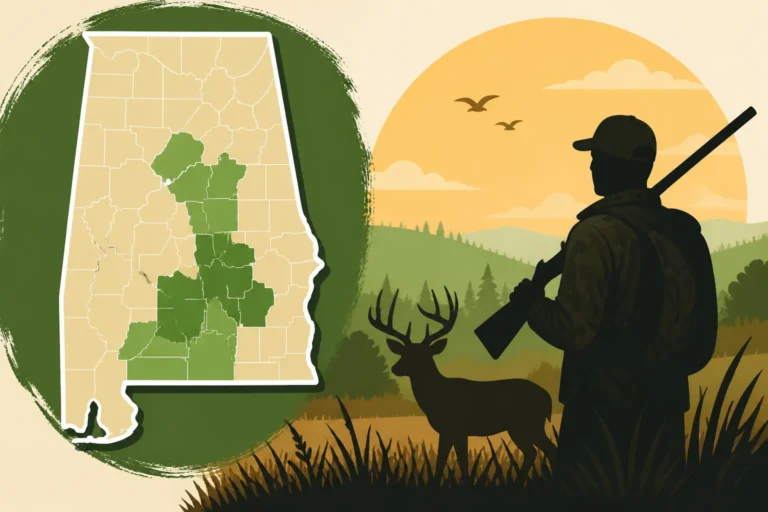
Barbour WMA is nestled within Barbour County, a true heartland of Alabama's famed Black Belt region. When you think of rolling hills, fertile fields, and dense hardwood bottoms, you're picturing the kind of landscape that defines this WMA. It’s easily accessible from towns like Eufaula, Clayton, and even closer to small communities, offering a blend of secluded hunting experience without being completely cut off from amenities. The rich, dark soils characteristic of the Black Belt contribute to lush vegetation and productive habitat, which in turn supports a thriving ecosystem for game animals.
Driving through or hiking into Barbour WMA, you'll encounter a mosaic of habitat types. There are sprawling pine plantations, managed for timber but also providing excellent cover and bedding areas for deer. Interspersed are mature hardwood stands, particularly along creek drainages and low-lying areas, which are critical for producing acorns and other mast crops—a deer and turkey magnet. Open fields, often planted in various food plots by the WMA staff or previously agricultural, break up the timbered sections, offering prime feeding grounds and excellent visibility for hunters. This diversity isn't just pretty; it's the engine that drives the WMA's productivity for various game species, providing everything from dense security cover to abundant forage. Reading Aerial Photos for Piedmont Deer can offer some useful tips on how to scout these varied habitats, even though Barbour leans more Black Belt than Piedmont.
The "Four-Point Rule Exception": A Key Deer Management Strategy
One of the most defining characteristics of Barbour WMA, and what often draws particular attention, is its historic association with specific antler restrictions, notably the "four-point rule exception." While Alabama generally allows hunters to harvest any legal buck with visible antlers, Barbour WMA has had specific rules in place over the years designed to enhance the age structure and quality of its deer herd. These regulations are designed to allow younger bucks to mature, leading to an older age class of deer with potentially larger antlers. This strategy means hunters visiting Barbour WMA need to be acutely aware of what constitutes a legal buck under the WMA's specific guidelines, which can sometimes differ from general statewide rules.
The purpose of such a specific rule is to improve the overall health and quality of the deer herd by allowing younger, genetically promising bucks to survive and breed for more seasons. For hunters, this translates into a unique challenge: patience and careful antler assessment become paramount. It forces a hunter to truly identify their target, often passing up smaller-antlered deer that might be legal elsewhere, in hopes of encountering a more mature animal that meets the WMA's specific criteria. This rule is a key part of The Four-Point Rule Exception in Barbour County discussion and understanding it is crucial for anyone planning a deer hunt here. Always check the very latest regulations before your hunt, as these rules can be refined.
Game Species and Habitat Diversity
Barbour WMA is a truly versatile hunting destination, supporting a robust population of several key game species. Deer, of course, are the main draw for many, thriving in the mix of hardwoods, pines, and agricultural openings. The rich Black Belt soils contribute to good forage, which in turn helps produce healthy deer. Hunters often report seeing significant deer activity throughout the WMA.
Beyond deer, Barbour WMA is an excellent location for wild turkeys. The mature hardwood forests provide ideal roosting sites, and the mosaic of fields and timber offers ample foraging opportunities. Come spring, the woods often echo with the sounds of gobblers, making it a popular spot for turkey enthusiasts. Furthermore, feral hogs are present across the WMA, offering additional hunting opportunities, often year-round, which is a big bonus for those looking to extend their time in the woods. Hunting Alabama's Year-Round Feral Hogs can give you some great pointers if you're looking to target these destructive but exciting animals. Small game like squirrels and rabbits are also abundant in the appropriate habitats—squirrels in the hickory and oak bottoms, and rabbits in the brushier edges and fencerows—providing yet another enjoyable hunting experience, especially for younger hunters or during the off-season.
Planning Your Hunt at Barbour WMA
A successful hunt at Barbour WMA, like any public land, hinges on thorough preparation. Knowing the rules, understanding the seasons, and mastering navigation are your best tools for a productive and enjoyable experience.
Essential Permits and Licenses
Before you even think about setting foot in Barbour WMA with a weapon, you need to ensure all your paperwork is in order. Every hunter, regardless of age (with some exceptions for very young hunters), needs a valid Alabama hunting license. This includes both resident and non-resident options, depending on your home state. You'll typically choose between an all-game license or a small-game license, depending on what you plan to pursue.
Crucially, in addition to your statewide hunting license, anyone hunting on an Alabama Wildlife Management Area, including Barbour WMA, must purchase a separate WMA license or permit. This WMA privilege license is a small additional cost but is absolutely mandatory. For specific fees and to purchase your licenses, the Outdoor Alabama website is your go-to resource. It's also vital to remember that these licenses need to be current for the hunting season. Always carry proof of your license while hunting, whether it's a physical card or a digital copy on your phone. Checking Alabama WMA Permit Requirement will give you the most up-to-date information on what you need.
Season Dates and Specific Regulations
While Barbour WMA generally falls under Alabama's Zone C for deer season, it often has specific opening and closing dates, legal weapons, and bag limits that can differ from the broader zone regulations. This is precisely why obtaining a current Barbour WMA map and regulation sheet is non-negotiable. These are usually available online through the Outdoor Alabama website or at designated check stations. For instance, while Alabama Deer Season Structure Explained provides a statewide overview, Barbour WMA might have shorter gun seasons, archery-only periods, or different antlerless deer days than surrounding private lands or other WMAs.
Turkey season also follows a similar pattern. Although Alabama has Alabama Spring Turkey Zones and Dates, Barbour WMA will have its own specific opening and closing dates for spring gobbler hunting, along with rules regarding calling, decoy use, and bag limits. Some WMAs even implement quota hunts for certain species or seasons, requiring pre-application and a draw. Always verify if Barbour WMA is hosting any quota hunts for your target species and be sure to apply within the specified windows if it is. Familiarize yourself with legal shooting hours, specific weapon restrictions (e.g., centerfire rifles vs. shotguns vs. archery), and any mandatory check-in/check-out procedures for the WMA.
Access Points and Navigating the WMA
Understanding how to access and move within Barbour WMA is fundamental to your hunting success. The WMA typically has designated public access points, often marked with official WMA signage. These will usually lead to gravel roads and designated parking areas. While some of these roads might penetrate deeper into the property, many areas require foot travel. The terrain in Barbour County can be rolling, with some steep drainages and creek bottoms, so be prepared for a good walk.
This is where modern mapping technology becomes your best friend. Applications like onX Hunt are incredibly valuable for navigating large public land tracts. You can download maps for offline use, which is crucial as cell service can be spotty in remote parts of the WMA. These apps allow you to see the WMA boundaries, internal roads, food plots, topography, and even property lines, ensuring you stay within legal hunting areas. Using satellite imagery layers can help you identify different habitat types—hardwood drains, pine thickets, open fields—before you even set foot on the ground. GoHunt also offers robust mapping and information, providing another layer of detail for planning your approach. The Black Belt region, while rich in wildlife, can be challenging for public access, making the marked roads and boundaries of Barbour WMA a real asset. Always be respectful of private property bordering the WMA, and use your mapping tools to ensure you don't inadvertently cross onto posted land.
Strategies for Success at Barbour WMA
Hunting Barbour WMA is rewarding, but it demands smart strategies tailored to its unique environment and specific regulations. Whether you're after a mature buck or a spring gobbler, understanding how to approach this WMA will boost your odds.
Deer Hunting Tactics and Scouting
When it comes to deer hunting at Barbour WMA, effective scouting is your most potent weapon. Before the season opens, dedicate time to walking the property. Look for key deer sign: rubs, scrapes, heavily used trails, and most importantly, food sources. In the early season, acorns in the hardwood bottoms or persimmons can be major draws. As the season progresses, deer will focus on green browse, food plots planted by the WMA, or remaining agricultural fields. Understanding where deer are feeding and bedding will help you pinpoint travel corridors they use to move between these areas.
Stand placement is critical. Consider setting up treestands or ground blinds along natural funnels, such as saddles between ridges, pinch points where thick cover meets open timber, or along creek edges. Always factor in wind direction and thermals, especially in the mornings and evenings when they can shift significantly in the rolling terrain. The Alabama Rut by Zone typically puts Barbour County in a later rutting period, so timing your hunts during this peak can be highly productive for encountering bucks actively seeking does. Remember that unique four-point rule (or whatever specific antler regulation is in place) for bucks. This often means being patient, observing deer for longer, and being prepared to pass on younger bucks to target more mature animals. Treestand Setups in Talladega National Forest offers excellent principles for stand placement that can be adapted to Barbour's varied landscape, focusing on identifying key terrain features and deer movement.
Turkey Hunting Approaches
Spring turkey hunting in Barbour WMA can be an exhilarating experience. The mixed habitat of mature hardwoods and open fields provides excellent opportunities for gobblers. Early morning is prime time for locating birds on the roost. Get into the WMA well before dawn, find a good listening spot on a ridge or overlooking a hardwood bottom, and listen for the first gobble. Once you've located a bird, strategic movement is key.
Many hunters employ a "run-and-gun" tactic, especially on public land. This involves moving, calling, and listening until a gobbler responds, then quickly setting up to intercept him. Run-and-Gun Turkey Tactics on Public Land details this approach perfectly. When setting up, always ensure you have good back cover and clear shooting lanes. Decoy use can be highly effective, especially a lone hen or a jake/hen combination, but always check Barbour WMA's specific regulations regarding decoys. Alabama generally has a ten-day restriction on decoys early in the season, so knowing when those restrictions lift for the WMA is important. Be patient, persistent, and adaptable to the birds' moods; some days they'll be chatty, others silent.
Hog and Small Game Opportunities
Barbour WMA also offers excellent opportunities for hunting feral hogs, which are often considered an invasive nuisance species and are present in significant numbers. Hog hunting can be a year-round pursuit, and on public land like a WMA, it often involves spot-and-stalk tactics or ambushing them along established travel routes to food or water. Look for signs of rooting and wallows, especially near creek bottoms and around agricultural fields. Hogs can be incredibly destructive to habitat and crops, so harvesting them is often encouraged. Again, refer to the WMA's specific regulations for hog hunting, including legal hours and methods. Hunting Alabama's Year-Round Feral Hogs provides a comprehensive guide to targeting these animals.
For a more relaxed hunt, or to introduce new hunters to the sport, Barbour WMA's abundant small game populations are fantastic. Squirrel hunting is excellent in the mature hardwood sections, especially during good mast years. Focus on areas with oak and hickory trees, and listen for the tell-tale cutting of nuts or rustling in the leaves. Rabbit hunting can be productive in the brushier edges, fencerows, and clear-cuts, often with the aid of beagles, though always check WMA rules on dog use. These hunts are a great way to enjoy the outdoors, hone your shooting skills, and put some delicious meat in the freezer.
Overcoming Challenges and Maximizing Your Experience
Hunting public land is never without its unique set of challenges, and Barbour WMA is no exception. However, with the right mindset and preparation, you can turn potential frustrations into rewarding experiences.
Dealing with Hunting Pressure
As with any well-known WMA, Barbour can experience hunting pressure, especially on opening weekends and during peak season dates. It's a reality of public land hunting, but it doesn't have to ruin your hunt. One of the best ways to mitigate pressure is to be willing to walk further than most hunters. While many will stick to areas close to parking lots and main roads, deer and turkeys often gravitate towards the deeper, harder-to-reach pockets of the WMA. Utilize those mapping apps like onX Hunt or GoHunt to identify areas that are a mile or more from common access points – these often see significantly less human disturbance.
Consider hunting during weekdays if your schedule allows, as the crowds typically thin out considerably. Bad weather days, while less comfortable, can also clear out many fair-weather hunters, leaving you with more solitude and potentially more active game. Also, don't overlook areas that might seem less appealing at first glance, like dense thickets or small, overlooked drainages; these can often serve as daytime bedding or security cover for pressured animals. Hunting Pressure on Alabama Public Land offers more insights into strategies for navigating busy public hunting areas.
Terrain and Navigational Considerations
The terrain at Barbour WMA, while beautiful, can be deceptively challenging. You'll encounter rolling hills, steep creek banks, and low-lying areas that can become muddy or boggy after rain. Good quality, waterproof hiking boots are absolutely essential for comfort and safety. Prepare for long walks, sometimes through dense undergrowth, so wearing durable hunting clothing is also a must.
Always carry a reliable navigation system. While your phone with onX Hunt is invaluable, a physical compass and map are smart backups in case of battery failure. Mark your vehicle's location and key waypoints as you go. Hydration is also paramount, especially during warmer early seasons or if you're putting in a lot of miles; carry enough water to last your entire outing. Be aware of the weather forecast; heavy rains can make roads impassable or create dangerous conditions in creek bottoms. By anticipating these terrain and weather factors, you can stay safe and focus on the hunt.
Respecting the Resource and Regulations
Ultimately, the longevity and quality of hunting at Barbour WMA depend on every hunter's commitment to ethical conduct and strict adherence to regulations. Always verify the most current WMA regulations before each hunt, as rules can occasionally change between seasons. This includes specific bag limits, legal weapon types, check-in/check-out procedures, and any special antler restrictions or reporting requirements. Using the Game Check system for deer and turkey harvests is mandatory statewide and crucial for wildlife management data.
Practicing "leave no trace" principles is also vital. Pack out everything you pack in, including spent shell casings, food wrappers, and any trash. Respect the WMA's infrastructure, such as gates, signs, and food plots. When field dressing an animal, do so in a way that minimizes impact, and know the rules for carcass disposal, especially if you're not in the CWD Management Zone, but still want to practice good hygiene and prevent disease spread. Field Dressing a Deer in Warm Weather provides practical tips that are always relevant. By being a responsible steward of the land and its wildlife, you ensure that Barbour WMA remains a premier hunting destination for generations to come.
Here's a comparison table summarizing some key aspects of Barbour WMA:
| Feature | Barbour WMA Specifics | General Alabama Public Land (e.g., National Forest) |
|---|---|---|
| Location | Primarily Black Belt region, fertile soils, rolling terrain near Eufaula. | Varied, from mountainous north to coastal plain, often less fertile than Black Belt. |
| Deer Management | Often features specific antler restrictions (e.g., historical four-point rule exception) to improve herd quality. | Statewide regulations often apply (e.g., three-buck limit, no antler restriction on first). |
| Habitat Type | Mix of mature hardwoods, managed pine plantations, and open/agricultural fields. | Predominantly timbered, less agricultural influence, can be rugged. |
| Hunting Pressure | Can be significant, especially during peak seasons; often concentrated near access points. | Varies greatly; large tracts can offer solitude if willing to walk. |
| Special Regulations | Requires a WMA permit; specific season dates, bag limits, and weapon restrictions apply. | Requires WMA permit if applicable; general state regulations, potentially zone-specific. |
| Game Species Focus | Deer, Turkey, Hogs, Squirrel, Rabbit. | Deer, Turkey, Hogs, Squirrel, Rabbit (Waterfowl possible in appropriate areas). |
Disclaimer
This article is for general informational purposes only and does not constitute professional advice. Laws, prices and regulations vary by location and change over time. Consult a qualified professional for guidance on your specific situation.