Alabama Spring Turkey Zones and Dates
It's no secret that figuring out Alabama's spring turkey season dates can feel like trying to untangle a stubborn fishing knot. We've all been there, squinting at the regulation book or scrolling through forums, just trying to confirm if our favorite hunting spot falls into Zone 1 or Zone 2, and what that actually means for opening day. This guide is designed to cut through that confusion, breaking down Alabama's spring turkey zones and their specific dates so you can plan your hunts with confidence and focus on what truly matters: those thrilling morning gobblers.
The Frustration of Alabama's Split Turkey Seasons
For many states, turkey season is a straightforward affair: one opening day, one closing day, statewide. But here in Alabama, we do things a little differently, and it can certainly lead to some head-scratching moments. Our split-zone system, while rooted in biological reasons, often leaves hunters wondering if they've got their dates straight, especially if they hunt in different parts of the state or close to a zone line.
Why Zones Matter for Your Spring Hunt
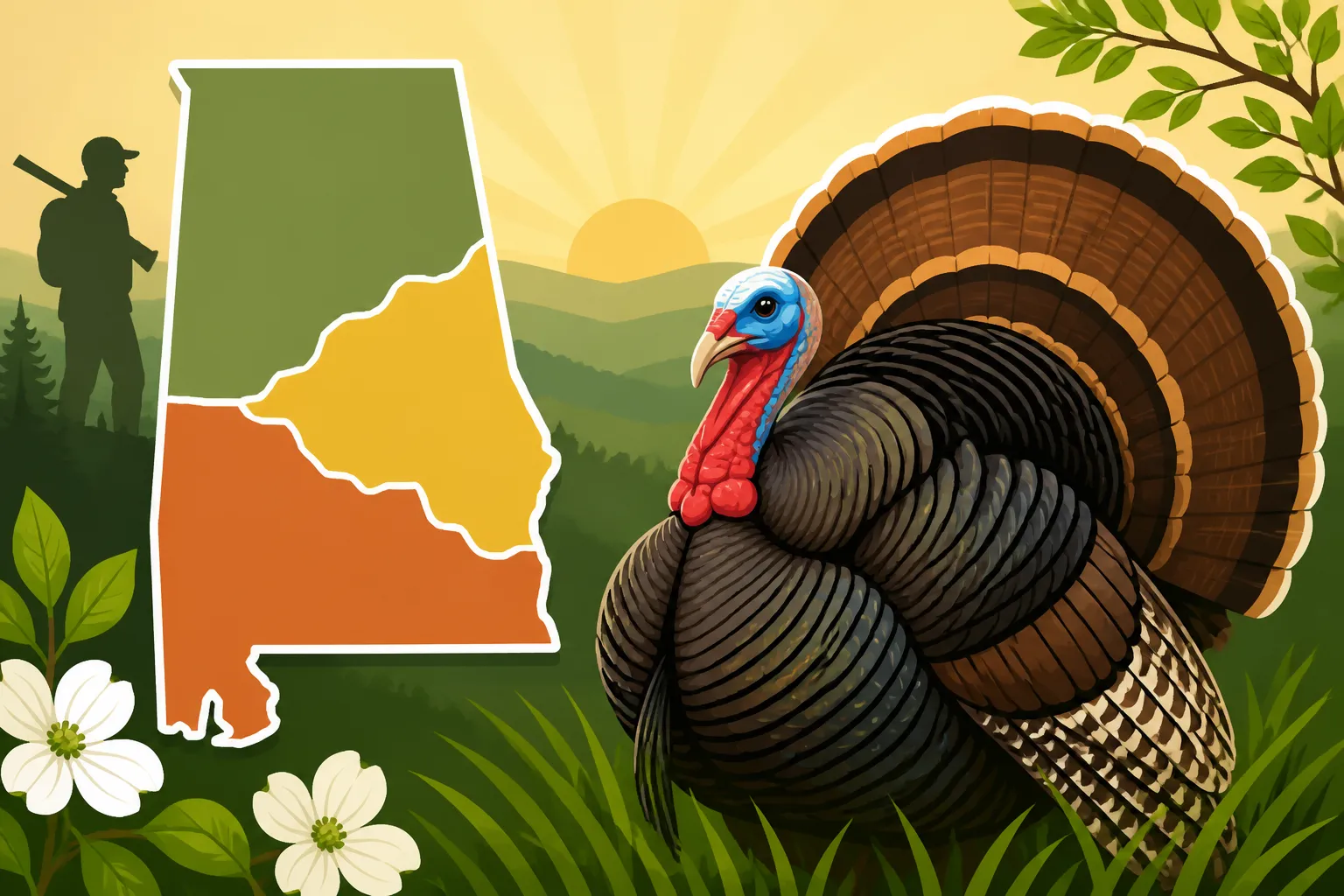
The primary reason Alabama divides the state into two turkey zones – Zone 1 and Zone 2 – is biological. Turkey populations, their breeding cycles, and the timing of spring green-up can vary significantly from the northern Appalachian foothills to the southern coastal plains. To ensure hunters have the best opportunity while also protecting the turkey resource, the Alabama Department of Conservation and Natural Resources (ADCNR) adjusts opening and closing dates accordingly. Zone 1, generally the southern and central parts of the state, typically opens earlier, while Zone 2, encompassing the northern counties, opens a week later.
This zonal distinction isn't just an administrative detail; it has real implications for your hunt. If you misinterpret which zone you're in, you could be hunting illegally or, just as frustratingly, miss out on valuable hunting days. For instance, imagine showing up to your lease on what you think is opening day, only to realize you're a week early because you're actually in Zone 2. That's a wasted trip, lost vacation days, and pure disappointment. Conversely, if you wait until the Zone 2 opener but your property is in Zone 1, you've just given other hunters a week's head start on those early-season gobblers.
Understanding the Zone Line – A Common Headache
So, where exactly does this mystical zone line run? It's the critical piece of information that can make or break your spring turkey planning. Generally, the dividing line runs roughly along Interstate 20/59 from the Mississippi line to Birmingham, then follows I-59 north to the Georgia line, with some adjustments. However, it's not a perfectly straight line, and it doesn't always follow major highways precisely for every inch.
To clarify, Zone 1 typically includes counties south of a line formed by I-20 and I-59, extending south and east. Zone 2 encompasses counties north of that line, generally covering the upper half of the state. But here's the kicker: some counties are split by the line, meaning one part of the county might be in Zone 1 and another in Zone 2. This is where the real headaches begin, especially if your hunting land is right on the cusp. Counties like Tuscaloosa, Jefferson, Shelby, and St. Clair often have hunters needing to verify their exact location. To confirm your specific zone, you need to consult the official ADCNR Outdoor Alabama regulations map, which provides the most accurate and up-to-date boundary information. Using a reliable mapping application like GoHunt can also be incredibly helpful here, as you can often overlay hunting zone boundaries with your exact GPS location, taking the guesswork out of it. This attention to detail will prevent any nasty surprises or inadvertent violations, allowing you to focus on Hunting the Zone 1 Turkey Opener or Hunting Alabama's Later Turkey Zone Opener with confidence.
Diving Deep into Zone 1 Turkey Dates
Zone 1 represents the earliest opportunity for Alabama turkey hunters to hit the woods each spring. Covering the southern and central portions of the state, this zone typically kicks off the season when the first hints of green begin to emerge and gobblers are just starting to get serious about their strutting and drumming.
The Earliest Opportunities for Gobblers
The standard opening date for spring turkey season in Zone 1 is March 15th. This early opener means hunters are often facing a mixed bag of weather, from crisp, cool mornings that give way to warm, sunny afternoons, to sudden cold snaps that can quiet the woods temporarily. During this period, gobblers are highly responsive, often still grouped up with hens but actively seeking to establish dominance and breeding territories. They might not be fully "henned up" yet, making calling strategies particularly effective early on.
Hunting in mid-March often means navigating thicker undergrowth than later in the season, but it also presents the opportunity to catch birds before they've been heavily pressured. You might find gobblers roosted closer to accessible areas, or hear them sounding off more readily on field edges or along creek bottoms. For many, this early window is a cherished tradition, a chance to shake off the winter blues and immerse themselves in the sights and sounds of spring. There’s a special thrill that comes with Alabama Zone 1 Spring Turkey Opening Day, knowing you’re among the first to pursue a longbeard. It's a prime time for scouting fresh sign, listening for those first distant gobbles, and picking out strategic setup locations, perhaps against a big oak or along a known travel corridor.
Youth Hunting Weekend in Zone 1
One of the most exciting aspects of the spring turkey season, particularly in Zone 1, is the dedicated youth hunting weekend. This special opportunity is typically scheduled for the second weekend of March, preceding the general season opener. For 2024, for example, the Zone 1 Youth Hunting Weekend ran from March 9-10. This initiative is a fantastic way to introduce young, aspiring hunters to the thrill of turkey hunting in a less pressured environment, often with the guidance of an experienced adult mentor.
The youth hunt provides a unique, relaxed atmosphere where the focus isn't just on bagging a bird, but on teaching valuable lessons in woodsmanship, ethics, and conservation. Mentors get the chance to share their passion, teach proper calling techniques, and reinforce firearm safety without the added competition of the general season. This weekend can be a truly formative experience for a young hunter, creating memories that last a lifetime. Imagine a father and son sitting side-by-side, the air thick with anticipation, as a gobbler sounds off for the first time on a cool March morning – it's what the youth season is all about. The regulations for this weekend are specific, usually requiring a licensed adult mentor to be present and actively supervising the youth hunter, who is typically under the age of 16. It's a wonderful tradition that builds on our heritage, ensuring the next generation can experience the magic of Alabama Zone 1 Youth Turkey Weekend.
Navigating Zone 2's Later Spring Opener
Just as Zone 1 offers an early peek into spring turkey hunting, Zone 2 provides a distinct experience with its later opening dates. This northern zone, encompassing Alabama's Appalachian foothills and Cumberland Plateau regions, adheres to a different biological timeline, influencing everything from gobbler behavior to habitat conditions.
Why Zone 2 Opens a Week Later
The primary reason Zone 2's spring turkey season opens approximately a week later than Zone 1 is directly tied to environmental factors, specifically the progression of spring. The northern reaches of Alabama, with their higher elevations and often cooler temperatures, experience a later "green-up" – the emergence of new plant growth, insects, and budding trees. This later environmental shift directly impacts the wild turkey's breeding cycle. Hens tend to initiate nesting and laying eggs later in these cooler regions compared to their counterparts in the warmer southern counties.
By delaying the opening of the season, ADCNR aims to ensure that a significant portion of the hens have begun nesting before hunting pressure starts. This allows for critical early breeding activities to occur with less disturbance, supporting higher poult-to-hen ratios and overall population health. For hunters, this means that when the season does open in Zone 2, gobblers are often in a more active breeding phase, having had an extra week to establish territories and gather hens. You might encounter more aggressive gobbling, longer strutting periods, and birds that are perhaps a bit more "fire-up" from the get-go. While waiting can be tough, understanding Why Zone 2 Opens a Week Later Than Zone 1 helps appreciate the conservation strategy behind it. This later start can also mean slightly more predictable weather, with fewer unexpected cold snaps than the very earliest days of Zone 1.
Key Dates and the Later Youth Weekend
For hunters in Alabama's Zone 2, the general spring turkey season typically opens on March 22nd. This date provides that crucial extra week for the northern wild turkeys to progress further into their breeding cycle before hunting begins. The season then runs concurrently with Zone 1, usually closing on May 8th. The additional week often means foliage is a bit further along, providing more natural camouflage but also potentially denser cover for turkeys to navigate.
Mirroring Zone 1's commitment to youth engagement, Zone 2 also features its own dedicated youth hunting weekend. This special weekend is traditionally held on the weekend immediately preceding the Zone 2 general opener. For 2024, this meant the Zone 2 Youth Hunting Weekend was March 16-17. Just like in Zone 1, this provides a fantastic, low-pressure opportunity for young hunters under the age of 16, accompanied by a licensed adult mentor, to experience the excitement of turkey hunting. This later youth weekend means slightly different conditions for young hunters – perhaps a bit milder weather and more visible signs of spring, such as blooming dogwoods and redbuds. Whether you're hunting in the Black Warrior National Forest or on private land in Jackson County, knowing these dates is paramount. The anticipation leading up to Alabama's Later Youth Turkey Weekend is palpable, offering families another chance to connect in the outdoors before the full season rush begins.
Bag Limits and Other Crucial Regulations
Understanding the nuances of spring turkey zones and dates is just one piece of the puzzle. To ensure a legal and ethical hunt, every Alabama turkey hunter must also be intimately familiar with the statewide bag limits and other critical regulations that govern the season. These rules are in place to manage the turkey population sustainably and maintain fair chase principles.
Understanding the Daily and Season Limits
Alabama maintains a clear and consistent bag limit for wild turkeys across both zones during the spring season. Hunters are generally allowed a daily bag limit of one gobbler. This means you can only harvest one male turkey per day, regardless of how many you might call in or encounter. The season limit, however, allows for a total of four gobblers during the combined fall and spring seasons. For spring alone, the limit is typically one gobbler per day, with a maximum of three for the entire spring season. It’s absolutely essential to remember this. Once you've tagged three gobblers, your spring turkey season is over, even if the dates haven't officially concluded.
Every harvested turkey, whether it's your first or your third, must be reported through Alabama's Game Check system. This can be done online via the Outdoor Alabama website or app, or by phone. Reporting your harvest is not just a suggestion; it's a mandatory requirement and a critical tool for wildlife biologists to monitor turkey populations, harvest trends, and inform future management decisions. Failing to report a harvest is a violation. Keep your harvest record handy, and don't forget the importance of Alabama Turkey Bag Limit Rules for a successful and legal hunt. For hunters enjoying a long season, tracking that third bird is key.
Decoy Rules and Legal Hunting Hours
Beyond bag limits, there are other regulations that significantly impact how and when you can hunt. One of the most talked-about rules concerning spring turkey hunting in Alabama is the restriction on the use of decoys. For the first ten days of the season in each respective zone, the use of artificial turkey decoys is strictly prohibited. This rule, often debated among hunters, is in place to reduce situations that could lead to unethical or unsafe hunting, particularly during the early days when birds might be less wary. After this initial ten-day period passes, decoys become legal for the remainder of the season. Knowing when Alabama's Ten-Day Decoy Restriction lifts can completely change your hunting strategy, allowing you to incorporate visual aids that can be incredibly effective on pressured or call-shy birds.
Additionally, hunters must adhere to specific legal shooting hours. In Alabama, it is legal to hunt turkeys from one-half hour before sunrise to sunset. This timeframe is crucial to prevent illegal "roost shooting" and ensure fair chase. You should always consult a reliable sunrise/sunset table or app for your specific location, as these times vary throughout the season and across different parts of the state. Starting too early or finishing too late can result in legal trouble, so always err on the side of caution. These regulations, while sometimes feeling restrictive, are all part of a larger effort to ensure healthy turkey populations and a safe, enjoyable hunting experience for everyone.
Strategic Planning for Multi-Zone Hunters
For those dedicated turkey enthusiasts who have access to hunting land in both Zone 1 and Zone 2, Alabama's staggered season openers present a unique and exciting opportunity. This multi-zone advantage allows for an extended spring turkey season, potentially offering weeks more time in the woods chasing gobblers. However, maximizing this opportunity requires careful strategic planning, a good understanding of logistics, and adaptability.
Making the Most of Staggered Openers
The primary benefit of hunting in both Zone 1 and Zone 2 is the ability to effectively lengthen your turkey season. When Zone 1 opens on March 15th, you can focus your efforts there for a week. Then, as the Zone 2 opener rolls around on March 22nd, you can shift your focus, effectively getting "two opening days." This staggered approach allows you to experience different phases of the gobbling season. Early in Zone 1, you might be catching birds just breaking up from winter flocks, often more responsive to calls as they seek hens. Later, when you move to Zone 2, you might find birds more established, possibly more "henned up," but still callable as they patrol their territories.
This strategy isn't without its logistical hurdles. You'll need to consider travel time between your hunting locations, ensure you have appropriate permission for each property, and double-check all local regulations for each zone. It's a fantastic way to maximize your time afield, giving you more chances at a longbeard and allowing you to enjoy the full progression of spring across the state. Tools like GoHunt can be exceptionally useful for hunters managing multiple properties across different zones, helping you visualize boundaries, track regulations, and plan your movements efficiently. Imagine finishing up a successful week in the Black Belt and then heading north to the foothills for another round – it’s a turkey hunter’s dream.
Scouting and Adaptability Across Zones
Success in multi-zone hunting isn't just about showing up on the right dates; it's heavily dependent on thorough scouting and the ability to adapt your tactics. Just because you've learned how to hunt a gobbler in Zone 1 doesn't mean the same approach will work flawlessly a week later in Zone 2. The birds themselves might be in a different phase of their breeding cycle, and the habitat could be further along in its spring development.
Pre-season scouting is paramount in each zone you plan to hunt. Before the Zone 1 opener, you should be out listening for roost locations, looking for fresh sign like tracks and droppings, and trying to pattern turkey movement. The same applies for Zone 2. By the time Zone 2 opens, the birds there will likely be exhibiting different behaviors than the Zone 1 birds a week prior. They might be more wary of calls, or perhaps more focused on tending to their hens. You might need to adjust your calling volume, switch from aggressive cutting to softer clucks and purrs, or change your setup locations based on recent observations. A mapping system from GoHunt, with its ability to mark observations and track historical data, can be a game-changer here, allowing you to keep detailed records for each property and compare conditions across zones. Being adaptable is key; listening to the birds, reading the landscape, and adjusting your strategy are the hallmarks of a truly successful multi-zone turkey hunter.
Essential Gear and Tactics for Alabama Spring Turkeys
Successfully hunting Alabama's spring turkeys involves more than just knowing the dates and zones; it requires the right gear and a solid understanding of tactical approaches. From the calls you use to the camouflage you wear, every detail can play a role in whether you bring a gobbler home or simply enjoy a quiet morning in the woods.
Calls, Camo, and Comfort in the Woods
When it comes to calls, diversity is your friend. Most seasoned turkey hunters carry a variety:
- Box Calls: Excellent for loud, attention-grabbing yelps and cuts, especially on windy days or when trying to locate distant birds. Their deep, resonant tones carry well.
- Slate Calls (or Pot Calls): Offer a wider range of sounds, from soft clucks and purrs to sharp yelps. They're versatile and can be mastered relatively quickly. Different strikers (wood, carbon, plastic) produce varying pitches.
- Diaphragm Calls (Mouth Calls): Hands-free, allowing you to keep your shotgun mounted and ready. They require practice to master but are invaluable for close-in calling without movement. Many hunters learn to make realistic turkey sounds like gobblers, clucks, purrs, and even fighting purrs.
Your camouflage needs to blend seamlessly with Alabama's diverse spring landscape. Patterns that mimic green foliage, tree bark, and shadows are ideal. Look for patterns with good contrast and break-up. Realtree and Mossy Oak offer numerous effective options. Don't forget face paint or a mask, and gloves; turkeys have incredibly sharp eyesight.
Comfort is often overlooked but crucial for long waits. A comfortable, portable turkey chair or cushion can make hours in a ground blind or against a tree much more bearable. A vest designed for turkey hunting will help organize your calls, shells, water, and other essentials, keeping everything within easy reach. Staying comfortable allows you to remain still and focused, increasing your chances of success.
From Roost to Roost: Classic and Aggressive Approaches
Turkey hunting tactics can range from patient setups to aggressive, run-and-gun maneuvers, and the best approach often depends on the birds, the terrain, and your personal style.
-
Roost Hunting: A classic tactic involves locating a gobbler on the roost the evening before or just before dawn. Position yourself strategically before he flies down, aiming to call him in as he hits the ground. This often means getting to your spot well before first light. Listening for those first morning gobbles is key, and then quickly and quietly setting up. Understanding Calling an Alabama Gobbler Off the Roost can give you a distinct advantage, as you're catching the bird when he's often most vulnerable and vocal.
-
Run-and-Gun: This aggressive tactic is particularly effective on large tracts of public land or when birds are scattered and responding sporadically. It involves covering a lot of ground, stopping frequently to call, and moving rapidly to any bird that responds. You might yelp loudly a few times, listen, and if nothing answers, move a few hundred yards and repeat. This strategy is physically demanding but can be incredibly rewarding, especially during mid-day lulls when birds might be less vocal but still receptive to a persistent hunter. It's often employed when Run-and-Gun Turkey Tactics on Public Land are needed to find those elusive birds.
-
Setting Up and Waiting: Sometimes, especially in areas with known turkey activity or when you've patterned a particular gobbler, the most effective tactic is patience. Find a strategic setup – perhaps a field edge, a food plot, or a funnel between two creek bottoms – and wait for the birds to come to you. Use subtle calls, clucks, and purrs to pique their interest without being overly aggressive. This works well when birds are "henned up" and might be reluctant to leave their flock.
Ultimately, successful turkey hunting is about adaptability. Don't be afraid to change your strategy mid-hunt. If a gobbler hangs up, try different calls or move a bit. If he goes silent, try to circle and get ahead of him. Every hunt is a learning experience, and the more flexible you are, the better your chances of punching that tag.
Public Land Considerations for Spring Turkey Hunters
Hunting Alabama’s public lands for spring turkeys offers incredible opportunities, but it also comes with its own set of challenges and specific regulations. From vast national forests to managed Wildlife Management Areas (WMAs), understanding the nuances of these public domains is critical for a safe, legal, and successful hunt. The sheer volume of land available is a blessing, but it demands diligence from every hunter.
Navigating Wildlife Management Areas (WMAs) and National Forests
Alabama's Wildlife Management Areas are crown jewels for public land hunters. These areas are specifically managed for wildlife, including turkeys, and often boast excellent habitat. However, they typically come with additional rules and requirements beyond the statewide regulations. For instance, most WMAs require a WMA permit in addition to your regular hunting license. This permit helps fund the management activities that keep these areas productive. It’s important to research the specific WMA you plan to hunt, as some might have special youth hunting requirements, limitations on vehicle access, or designated hunt days. Before you head out, confirm Alabama WMA Permit Requirement for your chosen location.
National Forests like the Talladega National Forest and William B. Bankhead National Forest offer vast acreages, providing ample room for hunters seeking solitude. These forests generally follow statewide regulations but it’s always wise to check for any local ordinances or temporary closures, especially related to prescribed burns or timber operations. Turkey hunting in these expansive areas often means more physical exertion – hiking deeper into the woods to find less pressured birds. Learning to read the terrain, identify potential roosting areas along ridge lines, and scout for sign in mature timber are key skills for National Forest success. The sense of accomplishment when you call in a gobbler in a sprawling piece of public land is truly unmatched.
Understanding Quota Hunts and Special Regulations
Beyond the general WMA and National Forest regulations, some public lands, or specific sections within them, might operate under quota hunt systems. These are special draws designed to manage hunter pressure and ensure high-quality hunting experiences by limiting the number of hunters on a given area during specific periods. Turkey quota hunts are not as common as deer quota hunts, but they do exist for certain highly managed tracts. Applying for these hunts typically involves a specific application window and a draw process. Missing the application deadline means missing the opportunity for that year, so it's vital to stay on top of the ADCNR announcements. For those keen on exploring these controlled access areas, knowing the Alabama Quota Hunt Application Window is a non-negotiable part of your annual planning.
Furthermore, some public lands might have other special regulations, such as restrictions on camping, limitations on the type of firearms or ammunition allowed, or designated non-hunting safety zones. It's not uncommon to find areas with specific regulations regarding scouting or trail camera usage. Using mapping apps like GoHunt can be invaluable here, as they often have layers that show public land boundaries, WMA perimeters, and sometimes even highlight specific regulations for different areas. Always download maps for offline use, as cell service can be spotty in remote public land settings. Diligence in researching these specific rules will not only keep you legal but also enhance your safety and enjoyment of Alabama's rich public land turkey hunting opportunities.
The Bigger Picture: Turkey Conservation in Alabama
While the thrill of chasing a gobbler through the Alabama woods is undeniably exciting, it's vital for every hunter to remember that we are part of a larger conservation story. The robust wild turkey populations we enjoy today are not accidental; they are the result of decades of dedicated efforts, and our continued participation in responsible hunting practices ensures their future.
The Success Story of Turkey Restoration
It’s hard to imagine, but at one point, wild turkeys were nearly extirpated from Alabama. Habitat loss and unregulated hunting in the early 20th century devastated their numbers, pushing them to the brink. Thankfully, dedicated conservationists and wildlife agencies stepped in, initiating one of the most successful wildlife restoration stories in North America. Through trapping and relocating wild turkeys from remnant populations to suitable habitats, coupled with sound management practices and regulated hunting seasons, the wild turkey made a remarkable comeback.
Today, Alabama boasts a thriving wild turkey population across much of the state, a testament to the power of conservation efforts. This success allows us to enjoy the rich tradition of spring turkey hunting, but it also places a responsibility on our shoulders. Understanding How Turkeys Were Restored to Alabama helps us appreciate the fragility of wildlife populations and the ongoing need for stewardship. Our hunting license fees, excise taxes on firearms and ammunition, and adherence to regulations all contribute directly to these conservation programs, ensuring that future generations will also have the opportunity to hear that thrilling morning gobble.
Reporting and Ethical Hunting Practices
A critical component of modern turkey conservation is the mandatory harvest reporting system, Game Check. Every gobbler harvested in Alabama, whether it's from Zone 1 or Zone 2, on private land or public, must be reported. This data is indispensable for wildlife biologists to accurately assess turkey populations, understand harvest pressure, identify trends, and make informed decisions about season structures and bag limits. When you report your harvest, you're not just fulfilling a requirement; you're actively contributing to the scientific management of the resource we all cherish. Failing to report compromises the integrity of this data and hinders effective management.
Beyond reporting, ethical hunting practices are the cornerstone of our sport. This includes ensuring clean, ethical shots that result in a quick harvest, minimizing the chance of wounded birds. It means respecting property lines, even if it's just a retrieving a deer from private land in Alabama. It means being courteous to fellow hunters, particularly on public land, and giving them ample space. It also means educating new hunters on safe and responsible practices, passing on the values of conservation and respect for wildlife. Our actions in the woods reflect on the entire hunting community, and by upholding high ethical standards, we ensure a positive future for both hunting and the wild turkey populations we pursue.
Alabama Spring Turkey Season Zone Comparison
To help clarify the differences between Alabama's two spring turkey hunting zones, here's a quick comparison of the key dates and regulations you need to know.
| Feature | Zone 1 (Southern/Central Alabama) | Zone 2 (Northern Alabama) | Notes |
|---|---|---|---|
| General Opener | March 15th | March 22nd | Zone 2 opens one week later than Zone 1. |
| General Closer | May 8th | May 8th | Both zones close on the same date. |
| Youth Weekend | Second weekend of March (e.g., March 9-10, 2024) | Weekend before Zone 2 opener (e.g., March 16-17, 2024) | Dedicated weekends for hunters under 16 with adult supervision. |
| Daily Bag Limit | 1 gobbler | 1 gobbler | Applies statewide to both zones. |
| Spring Season Limit | 3 gobblers | 3 gobblers | Applies statewide to both zones. (Total of 4 for combined fall/spring seasons) |
| Decoy Restriction | First 10 days (March 15-24) | First 10 days (March 22-31) | No artificial decoys for the first 10 days of the season in each respective zone. |
| Legal Hours | 1/2 hour before sunrise to sunset | 1/2 hour before sunrise to sunset | Applies statewide to both zones. |
This table provides a snapshot, but always refer to the official Outdoor Alabama regulations for the most current and specific information, especially concerning exact county lines for zones.
Disclaimer
The information provided in this guide is for general informational purposes only and is subject to change. Hunting regulations can be complex and are updated annually. Always consult the official Alabama Department of Conservation and Natural Resources (ADCNR) regulations and maps before planning and embarking on any hunting trip to ensure compliance with current laws.