Reporting a Poacher in Alabama
It's a sickening feeling when you're out enjoying Alabama's beautiful outdoors, maybe scouting for the next deer season or just enjoying a quiet hike, and you stumble upon something that just isn't right – evidence of poaching, an illegal harvest, or some other blatant wildlife violation. It can make your blood boil, and often leaves you wondering, "What do I even do? Is it worth reporting? Will anything actually happen?" This guide is here to walk you through exactly how to report a poacher or any wildlife crime in Alabama, what information is most useful, and why your vigilance truly makes a difference.
Why Your Report Against Poaching is Crucial for Alabama's Wildlife
Let's be honest, it's easy to feel like one person's report won't make a difference, or that "somebody else will handle it." But that couldn't be further from the truth. Poaching isn't just a minor infraction; it's a serious crime that impacts all of us who care about ethical hunting, wildlife conservation, and the integrity of our natural resources. When someone illegally takes game, they aren't just stealing an animal; they're stealing from every law-abiding hunter and citizen who values fair chase and sustainable populations.
The Real Impact of Illegal Hunting on Our Resources
Poachers don't follow rules. They shoot out of season, exceed bag limits, use illegal methods, and often target prime breeding animals, which can severely impact local populations of deer, turkey, and other species. For instance, imagine a prime buck taken weeks before archery season opens, or a gobbler shot from the roost outside legal hours. This doesn't just reduce the number of animals available for ethical hunters; it disrupts breeding cycles and can skew herd demographics. If you're someone who spends time pouring over the details of topics like how to read a ridge for North Alabama deer, you know the effort and respect that goes into legal hunting, and seeing that undermined by a poacher is infuriating.
Beyond the immediate loss of game, poaching also undermines the scientific management efforts of the Alabama Department of Conservation and Natural Resources (ADCNR). When illegal kills aren't reported, biologists can't get accurate data on wildlife populations, leading to misinformed management decisions. This ripple effect can damage habitat, reduce hunting opportunities, and ultimately harm the very resources we all cherish. Our state has a robust system for hunters, from understanding the nuances of Alabama Deer Season Structure Explained to ensuring you have all your Alabama Hunting Licenses and What They Cost, and poaching makes a mockery of all that dedication.
Protecting the Reputation of Law-Abiding Hunters
Every time a poacher gets away with their actions, it casts a shadow on the entire hunting community. Non-hunters and the general public often don't differentiate between a legal, ethical hunter and a criminal poacher. When news breaks about a wildlife violation, it's often "hunters" who get a bad rap, even though the vast majority of us abide by every regulation and go above and beyond for conservation. By actively reporting poaching, we're not just upholding the law; we're protecting the hard-earned reputation of responsible sportsmen and women across Alabama. We're showing that hunters are often the first to stand up for wildlife protection, not the last.
Your Go-To Channels for Reporting Poachers in Alabama
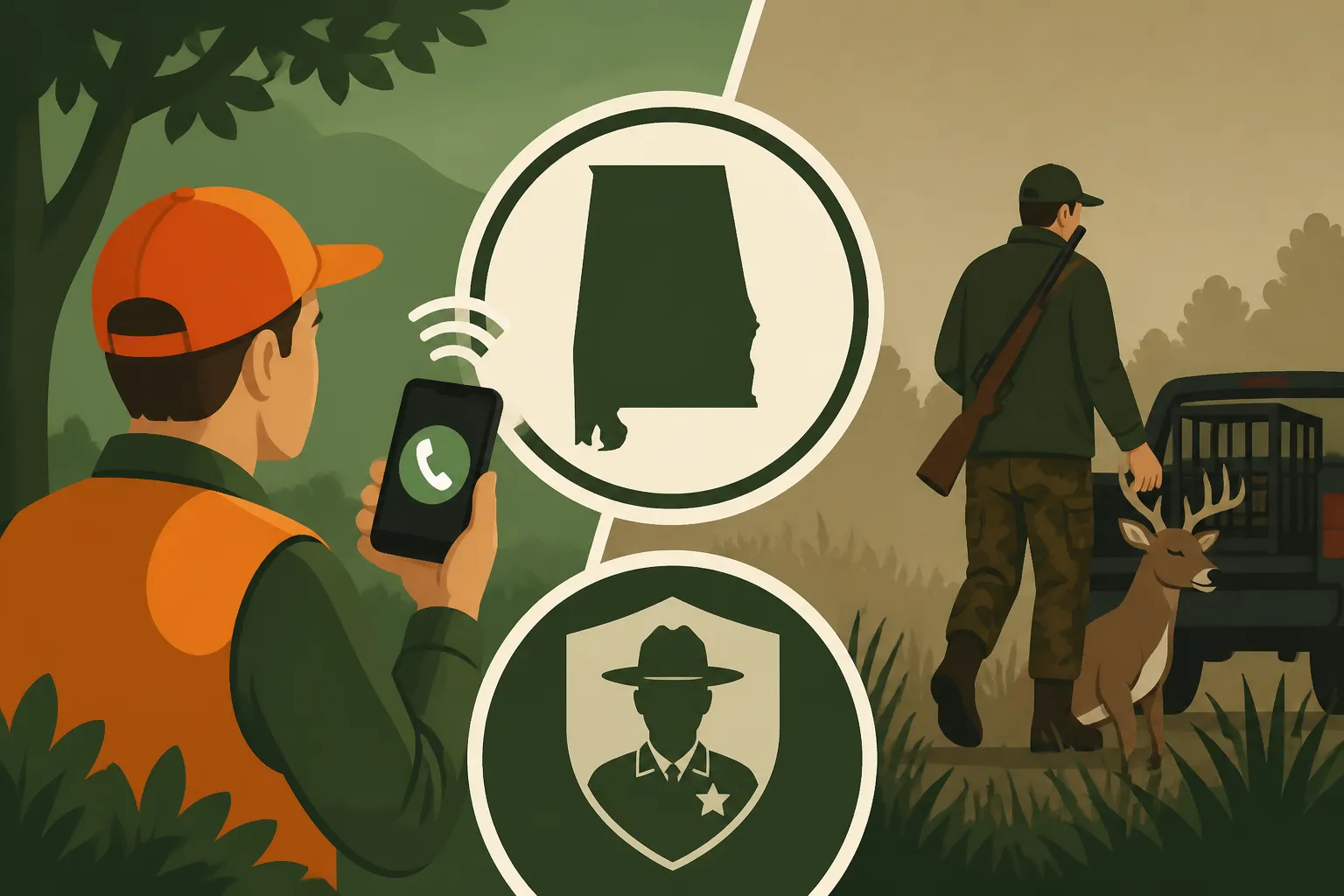
Okay, so you've seen something. Your gut is telling you it's wrong. Now what? The good news is that Alabama has very clear and effective ways for you to report wildlife violations. It's not about being a snitch; it's about being a steward. And remember, your safety always comes first – never confront a suspected poacher directly.
The Wildlife and Freshwater Fisheries Enforcement Section Hotline: 1-800-272-GAME
This is probably your most direct and often most effective method for reporting poaching in Alabama. The 1-800-272-GAME hotline (that's 1-800-272-4263) is operated by the ADCNR's Enforcement Section, specifically for reporting wildlife and freshwater fish violations.
- When to use it: This is ideal for situations you've observed recently or are actively witnessing. Whether it's illegal hunting, fishing, trapping, or commercial activities like selling game, this number connects you directly to the folks who can respond. If you're out Scouting Alabama Public Land Before Season and find evidence of an illegal stand or bait site, this is the number to call.
- What happens when you call: You'll typically speak with a dispatcher who will take down your information and the details of the incident. This information is then relayed to a local game warden or enforcement officer who can investigate. Don't worry about being anonymous – while you can choose to remain anonymous, providing your contact info allows officers to follow up if they need clarification, which can greatly aid their investigation. Your information is kept confidential.
- Beyond business hours: The hotline is monitored 24/7. So, if you witness something late at night, like shots fired during illegal hours or spotlighting activity, don't hesitate to call. Timeliness is often critical for catching offenders.
Online Reporting Through the ADCNR Website
For situations that aren't actively happening or don't require immediate emergency response, the ADCNR also provides an online reporting option. This is a great alternative if you're not comfortable speaking on the phone or if you have a lot of detailed information, including photos or videos, that you want to submit.
- How to find it: Just head over to the official Outdoor Alabama website (outdooralabama.com) and look for the "Report a Violation" section, often found under the "Law Enforcement" tab or through a quick site search. They usually have a dedicated form.
- When it's best used: This method is excellent for reporting suspicious long-term activities, finding evidence of past violations (like an illegal bait site on public land or a gut pile from an out-of-season deer), or providing tips about individuals who consistently disregard hunting regulations. If you're using a tool like GoHunt to mark potential stand locations and notice something amiss, you can quickly jump online to report it.
- Anonymity online: The online form also allows you to submit information anonymously. Again, providing contact details can be helpful for follow-up, but it's not mandatory.
Local Law Enforcement and When to Involve Them
While game wardens are the primary responders for wildlife violations, there are situations where contacting local law enforcement (sheriff's department or city police) might also be appropriate, or even necessary.
- Immediate danger or non-wildlife crime: If you witness a wildlife violation that also involves other serious criminal activity, such as armed trespass, property damage, or if you feel your personal safety is immediately at risk, don't hesitate to call 911 or your local sheriff's non-emergency number. For instance, if you're hunting within a Mobile-Tensaw Delta Public Hunting Ground and see someone acting aggressively while poaching, that crosses into a public safety issue.
- Coordination is key: Local law enforcement can often respond more quickly than a game warden if they are closer to the scene. They can secure the area and potentially detain suspects until a game warden arrives. It's always a good idea to inform them that it's a wildlife violation, so they can contact the ADCNR as well.
Here's a quick summary of your reporting options:
| Method | Best Use Case | Response Time Expectation | Anonymity Option | Key Information to Provide |
|---|---|---|---|---|
| ADCNR Hotline (1-800-272-GAME) | Active violations, immediate response needed | Immediate dispatch | Yes | Who, what, when, where, vehicle, suspect details |
| Outdoor Alabama Website Form | Non-urgent tips, historical violations, detailed info | Within 1-2 business days | Yes | Detailed narrative, photos/videos (if applicable) |
| Local 911 / Sheriff's Office | Immediate danger, public safety risk, serious crime | Immediate dispatch | No (typically) | Location, nature of threat, basic wildlife violation details |
Gathering the Crucial Details for Your Report
Making a report is great, but providing useful information is what really helps game wardens do their job. Think of yourself as a detective, observing and collecting facts. The more specific and accurate your report, the higher the chance of a successful investigation.
The "Who, What, When, Where" Framework
This classic journalistic framework is incredibly effective for reporting any incident, especially poaching.
- Who: Can you describe the individual(s) involved? Age, gender, hair color, build, clothing, any distinguishing features? Did you see their faces? If you know names, that's obviously a huge help, but even general descriptions are valuable.
- What: What exactly did you see? Was it shooting from a public road? Taking multiple deer outside the legal Alabama Three-Buck Season Limit? Using an illegal light at night? Retrieving game from posted land without permission? The specific violation is key. For example, Alabama Legal Firearms for Deer Hunting are clearly defined, so if you see someone using something explicitly illegal, that's important to note.
- When: The date and time are crucial. If it's an ongoing issue, provide a range of dates and times when you've observed the activity. Poachers often operate on a schedule, and knowing it helps wardens plan surveillance.
- Where: This is perhaps the most critical piece of information. Be as precise as possible. GPS coordinates, physical address, landmarks (e.g., "south side of Highway 157, approximately 2 miles east of the Jones Road intersection, near the old red barn"). Mentioning nearby Alabama Wildlife Management Areas or National Forests like Bankhead or Talladega can also help narrow down the location. Tools like GoHunt or your phone's GPS can provide exact coordinates.
Vehicle and Equipment Descriptions
Often, poachers use vehicles to access areas or transport illegal game. Getting a description of their vehicle is one of the most useful pieces of evidence you can provide.
- Make, Model, Color: "It was a dark blue Ford F-150."
- License Plate Number: This is gold. Even a partial plate (e.g., "starts with 32A") is better than nothing. Don't risk your safety trying to get it, but if you can safely get it, it's a game-changer for investigators.
- Distinguishing Features: Dents, custom wheels, lifted suspension, unique decals, toolboxes, anything that makes the vehicle stand out.
- Equipment: Did you see a spotlight, a specific type of firearm, an illegal trap? Any details about the tools of the crime are helpful.
Evidence and Documentation (Safely!)
If you can safely collect any form of documentation, it can significantly strengthen your report.
- Photos or Videos: If you can discreetly and safely take photos or videos from a distance without being detected or putting yourself in danger, this visual evidence is incredibly powerful. Just remember, your personal safety is paramount. Do not approach or confront anyone.
- Physical Evidence: Tire tracks, spent shell casings, bait scattered illegally, discarded parts of game animals, or even distinctive footprints can be helpful. Note the location, try to measure or photograph them for scale, and report them without disturbing them. This kind of detail can make the difference between a lead and a conviction.
Let's consider a scenario: You're walking on private land you have permission to hunt, and you stumble upon a fresh deer gut pile next to a pile of corn in late summer. You know Alabama Deer Reporting Rules clearly require harvest reporting, and baiting during deer season is generally prohibited. You also know that it’s not Hunting Alabama's Year-Round Feral Hogs because this is clearly a deer. You notice a beat-up silver pickup truck with a distinctive dented tailgate parked a few hundred yards away. You can snap a photo of the truck's rear and the bait pile, then quickly and safely leave the area before calling the hotline. That's an excellent report!
What Happens After You Make That Call or Click
So, you've done your part and reported the incident. What's next? It's natural to wonder if your report just disappears into a void, or if it actually leads to something. Rest assured, your report is taken seriously.
The Investigation Process by Alabama Game Wardens
Once you submit a report, it's routed to the appropriate game warden in the area where the incident occurred. These men and women are highly dedicated and skilled law enforcement officers, specifically trained in wildlife forensics and investigation.
- Initial Assessment: The warden will first assess the information provided. Is it detailed enough to act on? Is it a current event requiring immediate response or a historical tip that needs further investigation?
- Field Investigation: Depending on the nature and urgency of the report, the warden may immediately respond to the location, or plan a visit. This could involve looking for physical evidence (tire tracks, footprints, spent casings), interviewing witnesses (if identified), setting up surveillance, or running license plate numbers.
- Evidence Collection: If enough evidence is gathered, the warden will proceed with collecting it legally. This might involve seizing illegally taken game, firearms, or other equipment.
- Confrontation and Arrest: If probable cause is established, the warden will confront the suspect(s). This can lead to citations, arrests, or warnings, depending on the severity of the violation and prior history.
It's important to understand that not every report leads to an immediate arrest or visible action. Investigations can take time, sometimes weeks or even months, especially for repeat offenders or complex cases. Sometimes, your report is one piece of a larger puzzle, helping wardens build a case against someone they've been watching for a while. So even if you don't see flashing lights and sirens right after your call, know that your information is valued and acted upon.
Anonymity and Protection for Whistleblowers
One of the biggest concerns people have when reporting poaching is fear of retaliation. The ADCNR understands this completely. When you call the 1-800-272-GAME hotline or use the online form, you have the option to remain completely anonymous. If you do provide your name and contact information, it is kept strictly confidential and is not released to the public or the suspected poacher. Game wardens are adept at protecting their sources. Your identity is safe with them.
Penalties and Consequences for Wildlife Violators
The penalties for poaching in Alabama are not insignificant. They are designed to deter illegal activity and reflect the seriousness of the crime.
- Fines and Restitution: Poachers often face substantial monetary fines. These can range from a few hundred dollars for minor infractions to thousands for egregious violations, especially involving trophy animals. In addition, courts can order restitution, where the poacher must pay the state the economic value of the illegally taken animal. If you're curious about the legal repercussions, you can explore information like Alabama Wildlife Violation Penalties.
- Loss of Hunting/Fishing Privileges: One of the most impactful consequences for a poacher is the loss of their hunting, fishing, and trapping privileges. This can be for a specific period (e.g., one to five years) or, in severe cases, permanently. This means they cannot legally participate in any hunting, fishing, or trapping activity in Alabama, and often, this suspension is recognized by other states through interstate compacts.
- Jail Time: For felony-level poaching offenses, or for repeat offenders, jail time is a very real possibility. While less common for a first-time, minor violation, serious crimes like commercial poaching, taking endangered species, or acts of violence associated with poaching, can lead to incarceration.
- Forfeiture of Equipment: Vehicles, firearms, boats, traps, and other equipment used in the commission of a wildlife crime can be seized and forfeited to the state. This is a powerful deterrent, as it hits poachers where it hurts financially.
By making that report, you're not just complaining; you're initiating a process that holds criminals accountable, helps protect our precious wildlife resources, and ensures that Alabama remains a place where ethical hunting and conservation thrive. Every report, no matter how small it seems, contributes to the bigger picture of wildlife law enforcement.
Disclaimer
Please note that this guide provides general information based on current Alabama hunting regulations and best practices. Laws and regulations can change, so always refer to the official Alabama Department of Conservation and Natural Resources (ADCNR) website or contact them directly for the most up-to-date and specific legal information regarding hunting and wildlife violations in Alabama. This content is for informational purposes only and does not constitute legal advice.