Reporting a Deer Through Game Check
The moment you successfully take down a deer in Alabama, that rush of adrenaline is incredible. But right after the high, a little wave of anxiety can hit: "Okay, what do I do now with the reporting?" It's a common worry, especially for new hunters or those who haven't done it in a while. This guide is here to walk you through every step of reporting your deer harvest in Alabama's Game Check system, ensuring you stay legal and contribute to vital wildlife management efforts.
Why Reporting Your Deer Harvest is Non-Negotiable
For many hunters, the Game Check system might feel like just another piece of red tape. But truly, it's one of the most vital tools the Alabama Wildlife and Freshwater Fisheries Division (WFF) has to manage our deer herd effectively. Understanding why it's so crucial can make the process less of a chore and more of a contribution.
Supporting Wildlife Management and Conservation
Think of every reported deer as a data point in a massive, ongoing biological study. Each piece of information – the date, the county, whether it was a buck or a doe, how many points it had – paints a clearer picture for wildlife biologists. They use this data to understand population trends, monitor herd health, assess the impact of different hunting regulations, and ensure sustainable hunting opportunities for future generations. Without accurate reporting, the WFF would be flying blind, making it incredibly difficult to set appropriate season lengths, bag limits, and management zones. Your report directly informs the science that keeps Alabama's deer hunting strong.
For instance, if reports show a significant decline in antlerless deer harvests in a particular zone, biologists might recommend increasing antlerless days to help control the population and improve herd health. Conversely, if buck harvests are skewed heavily towards young bucks, they might investigate factors influencing antler development or hunter selectivity. This data is the backbone of informed decision-making.
Staying Compliant with Alabama Hunting Regulations
Beyond the biological importance, reporting your deer is a legal requirement. Failure to properly report a harvested deer is a violation of Alabama hunting law, which can lead to fines and even the suspension of your hunting privileges. It's not a suggestion; it's mandatory. The Alabama Department of Conservation and Natural Resources (ADCNR) takes this seriously, and ignorance of the law is generally not considered an excuse.
It's particularly important to remember this when hunting across different zones or on public land where rules might vary slightly. For instance, the bag limits for antlerless deer can differ between zones, and reporting helps ensure you don't inadvertently exceed those limits. You'll also want to keep an eye on specific requirements for public lands; for example, if you're hunting in the special public land antlered-only windows. Always check the latest regulations for the specific county or Wildlife Management Area (WMA) you're hunting in. Being diligent about reporting keeps you on the right side of the law and avoids unnecessary complications.
Navigating Alabama's Game Check System
Alabama offers a couple of straightforward ways to report your deer, making it accessible whether you're out in the wilderness or back home. Knowing your options and having the necessary information ready will make the process quick and painless.
Online Reporting Through Outdoor Alabama
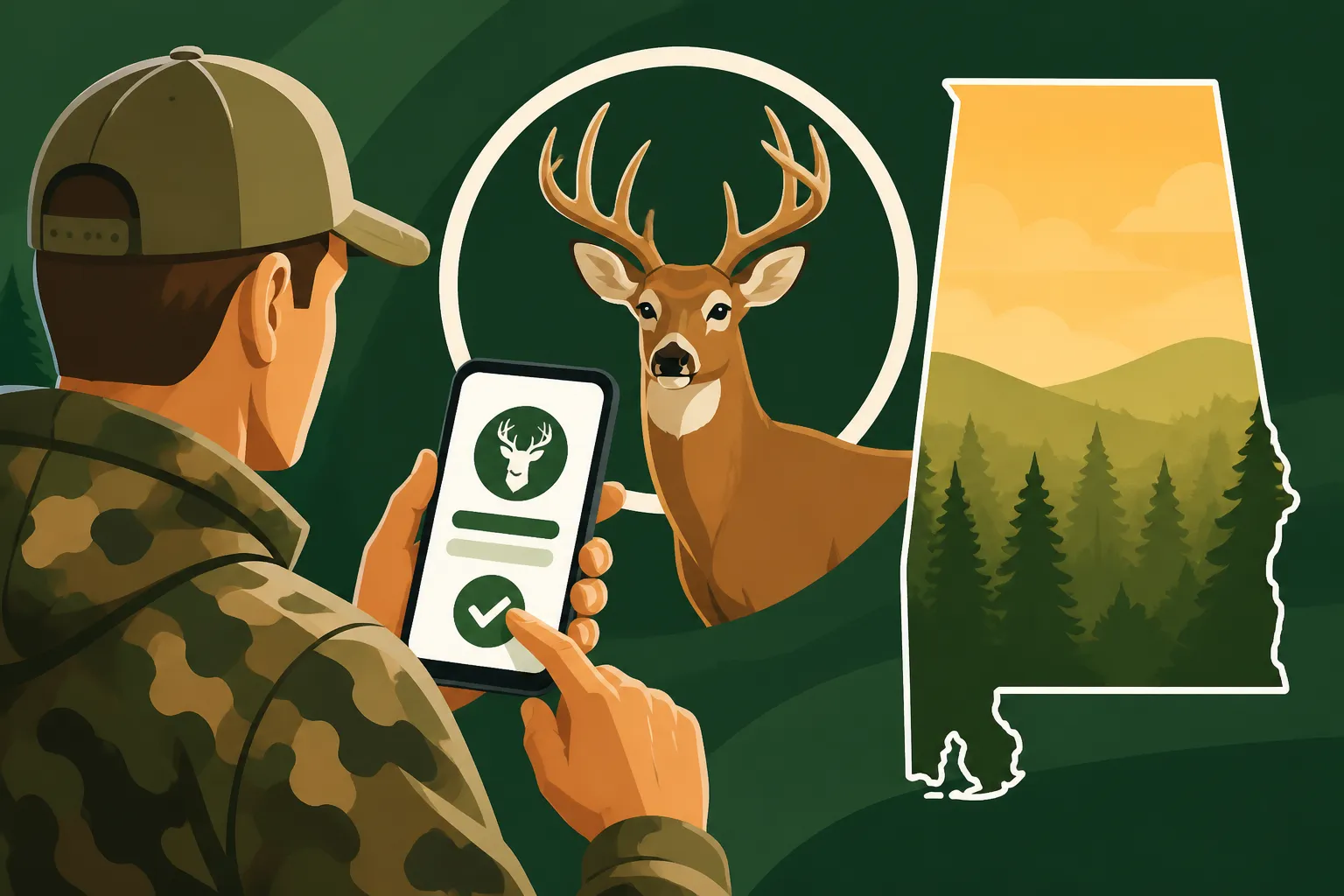
The most common and often preferred method for many hunters is the online Game Check system available through the Outdoor Alabama website. It's intuitive, user-friendly, and can be accessed from any device with internet connectivity.
Here's a step-by-step breakdown:
- Access the Portal: Head to the official Outdoor Alabama website and navigate to the Game Check portal. You'll typically find a prominent link for "Game Check" or "Report a Harvest."
- Login or Create Account: If you already have an Outdoor Alabama account (which you likely do if you've purchased licenses online), simply log in. If not, you'll need to create one. This usually involves entering some basic personal information.
- Enter Harvest Information: This is where you input all the critical details about your deer. You'll be asked for:
- Species: White-tailed deer.
- Date of Harvest: The exact date you took the deer.
- Time of Harvest: The approximate time.
- Sex of Deer: Buck or doe.
- County of Harvest: The specific county where the deer was taken. If you were hunting on a Wildlife Management Area, you'll select the WMA. If you're wondering how many deer have been harvested in your area, or about the Alabama Deer Population Estimate, this data is crucial.
- Method of Harvest: Archery (including crossbow), gun, or muzzleloader. This is important as it ties into specific season dates like Alabama Archery Season Dates or Alabama Gun Season Dates by Zone.
- Antler Points (if applicable): For bucks, you'll need to count the points that are at least one inch long. This is especially relevant if you're trying to meet specific antler restrictions or filling your Alabama's Three-Buck Season Limit with a legal buck.
- Confirmation: Double-check all the information for accuracy before submitting.
- Receive Confirmation Number: Once submitted, the system will generate a unique confirmation number. This number is vital! You must write it down, take a screenshot, or save it somewhere safe. This number legally replaces your physical tag and must remain with the deer until it reaches its final destination for processing or storage.
Many hunters find that using a hunting app like GoHunt to log their hunts in real-time can streamline this process. While GoHunt isn't the official reporting system, it's an excellent tool for keeping all your harvest details organized. You can quickly jot down the date, time, location, and antler points in the GoHunt app immediately after the harvest, making it super easy to transfer that accurate information to the official Game Check system when you have service. It acts as a personal digital logbook, so you're not scrambling to remember details later.
Phone Reporting and the Required Information
For those moments when internet access is spotty, or if you simply prefer a voice interaction, Alabama's Game Check also offers a phone reporting option. This is a lifesaver when you're deep in the woods or don't have a strong signal for online access.
- Dial the Number: Call the toll-free Game Check number: 1-800-888-7690.
- Follow the Prompts: An automated system will guide you through the reporting process. It's pretty straightforward, but you'll need to listen carefully and enter information using your phone's keypad.
- Provide Details: Just like the online system, you'll need to provide the same harvest information:
- Species (deer)
- Date and time of harvest
- Sex (buck or doe)
- County or WMA
- Method of harvest
- Antler points (if it's a buck)
- Get Confirmation Number: At the end of the call, the system will provide you with a Game Check confirmation number. Again, this number is critical. You need to immediately write it down on a piece of paper, a waterproof tag, or use a permanent marker directly on the deer's leg, ensuring it stays with the animal. This is your legal proof of harvest.
Using a system like GoHunt to pre-fill your harvest details can be incredibly useful here. Imagine you're out in a remote area and need to call in your deer. Having all the data already recorded in GoHunt on your phone means you can just read off the details clearly and quickly to the automated system, reducing the chance of error and speeding up the call. It makes sure you don't miss any crucial information when you're under pressure or in a hurry.
Mandatory CWD Testing Weekends
It’s crucial to be aware of the special reporting requirements if you’re hunting in the Chronic Wasting Disease (CWD) Management Zone (CMZ). The ADCNR has designated specific mandatory CWD testing weekends within this zone.
During these weekends, if you harvest a deer in the CMZ, you are legally required to bring the carcass (or at least the head) to an official CWD sampling station. After the deer is sampled, the station attendant will assist you with the Game Check process and provide your confirmation number. This is a direct measure to monitor the spread of CWD and ensure the health of the deer herd. You can find more details on which counties sit in Alabama's Chronic Wasting Disease Management Zone and specific dates for mandatory testing by checking the latest Outdoor Alabama regulations.
Common Game Check Hurdles and Solutions
Even with a straightforward system, things can sometimes go awry. From forgotten details to technical glitches, here are some common issues hunters face and how to navigate them.
Lost Confirmation Numbers
It happens to the best of us: you're excited about your harvest, you get your confirmation number, and then in the hustle and bustle of field dressing and loading, that little piece of paper disappears, or your phone battery dies before you can save the screenshot. Panic sets in. Don't worry, there's a solution.
If you lose your Game Check confirmation number, you can usually retrieve it by logging back into your Outdoor Alabama account online (if you reported online) or by calling the Game Check phone number again and following the prompts for "retrieve confirmation number." You'll likely need to provide your license number or other identifying information to access your harvest history. It's a good practice to always double-confirm the number and ideally record it in two separate places – perhaps a note on your phone and a physical piece of paper in your wallet. Some hunters even make it a habit to quickly record their confirmation number in their GoHunt digital log, ensuring they always have an easily accessible backup of this critical piece of information.
Reporting Deadlines and Timeframes
The biggest hurdle for many is simply remembering when to report. The rule is pretty clear: all deer harvested in Alabama must be reported within 48 hours of harvest. This isn't a suggestion; it's a firm legal deadline. It's designed to ensure timely data collection and prevent people from "back-dating" reports.
What if you're out on a multi-day hunt and don't get service for two days? This is where planning comes in. If you anticipate being out of service range for an extended period, try to report via phone at the first opportunity you get within that 48-hour window. If truly impossible (e.g., deep wilderness trip), you should report as soon as humanly possible upon regaining service. While strict, the intent is for timely reporting. Don't push the limit; report promptly. Many hunters use the GoHunt app to record the precise time of harvest, which then serves as a definitive timestamp, helping them keep track of that 48-hour window even if they can't report immediately.
What if You Make a Mistake in Reporting?
Let's say you miscounted antler points or accidentally selected the wrong county. It's a frustrating situation, but usually rectifiable. If you realize an error immediately after reporting online, there might be an option to edit the submission for a short window. If not, or if you reported via phone, your best bet is to contact the Alabama Wildlife and Freshwater Fisheries Division directly. Explain the situation clearly, provide your confirmation number, and they can often assist in correcting the information. Don't try to submit a second, incorrect report, as this can cause more confusion. Honesty and prompt communication are key.
Beyond the Report: What Happens Next?
Once you've successfully reported your deer and have your confirmation number, you're compliant with the law. But the journey of your harvested deer doesn't end there. Understanding the next steps is part of being a responsible hunter.
Attaching the Confirmation Number
As mentioned, that confirmation number is your temporary legal tag. It must remain with the deer until it reaches its final destination, whether that's your home for processing, a commercial processor, or a taxidermist. You can write it on a piece of paper and tie it to the deer's leg, or use a permanent marker directly on the hide. The main goal is for the number to be clearly visible and permanently affixed to the carcass.
This is especially important if you transport the deer across county lines, as game wardens may stop you to verify your harvest. Having that number readily available demonstrates your compliance. If you're utilizing the GoHunt app, you can easily pull up your harvest record and confirmation number if questioned, acting as a quick digital reference to complement the physical tag.
Processing Your Deer
After reporting and properly tagging, the next step is processing your deer. Many hunters enjoy the tradition of butchering their own deer, ensuring they get the cuts they prefer. If you're new to this, there are plenty of online resources and local mentors who can teach you the ropes of field dressing and butchering. For those who prefer professional help, Alabama has numerous reputable deer processors. They'll typically ask for your Game Check confirmation number when you drop off your deer.
Remember to handle your venison with care, especially in warmer Alabama weather. Proper cooling is crucial to prevent spoilage. If you're in the CWD Management Zone, be mindful of Alabama Carcass Movement Restrictions and ensure you're not transporting certain parts of the deer outside the zone unless they've been processed according to regulations.
Contributing to the Hunting Community
Every deer reported via Game Check contributes to the collective knowledge base that helps manage Alabama's deer herd. Your individual act of compliance feeds into a larger system that benefits all hunters. This shared responsibility helps maintain healthy populations and ensures that hunting remains a vibrant tradition in the state. So, the next time you're about to hit that submit button, remember you're not just fulfilling a legal obligation; you're actively participating in the future of Alabama hunting. Your data helps biologists understand everything from Alabama Deer Population Estimate to the impact of different hunting methods like Muzzleloader Deer Hunting in Alabama. It's all connected.
| Reporting Method | Pros | Cons | Best For |
|---|---|---|---|
| Online (Outdoor Alabama) | Convenient, visual interface, easy to review data, can save confirmation digitally. | Requires internet/cell service, need to create/log in to account. | Hunters with reliable cell service or Wi-Fi access, those who prefer digital records. |
| Phone (1-800-888-7690) | Accessible even with limited or no internet, good for remote areas. | Automated system can be tedious, must manually record confirmation number, prone to transcription errors. | Hunters in remote areas, those who prefer verbal interaction, or when digital options aren't available. |
| CWD Sampling Station | Mandatory for CMZ during specific weekends, station staff assist with Game Check. | Limited locations and specific dates, requires transporting deer to a station. | Hunters in the CWD Management Zone during mandatory testing weekends. |
Keeping Your Records Straight for Future Hunts
Beyond just the official reporting, many dedicated hunters find immense value in keeping detailed personal records of their harvests. This goes beyond what Game Check requires and can include information like specific stand locations, weather conditions, time of day, and even scent use. Apps like GoHunt are perfect for this, allowing you to create comprehensive digital journals of your hunts. You can map out your routes, drop pins for harvest sites, and log all the conditions that led to your success.
This kind of detailed personal record-keeping, separate from but complementary to the official Game Check system, helps you identify patterns, refine your strategies for subsequent seasons, and increase your overall success rate. Whether it's tracking when the Hunting the Rut in the Southern Zones peaks in your specific area or understanding how Wind and Thermals on a Piedmont Ridge affect deer movement, your personal data can be invaluable. It transforms each hunt into a learning experience, continually building your expertise as an Alabama hunter.
Disclaimer
The information provided in this guide is for general informational purposes only and is subject to change. Always consult the most current Alabama Department of Conservation and Natural Resources (ADCNR) regulations and official Outdoor Alabama website before engaging in any hunting activities. Laws and regulations can change, and it is the hunter's responsibility to stay informed and compliant.