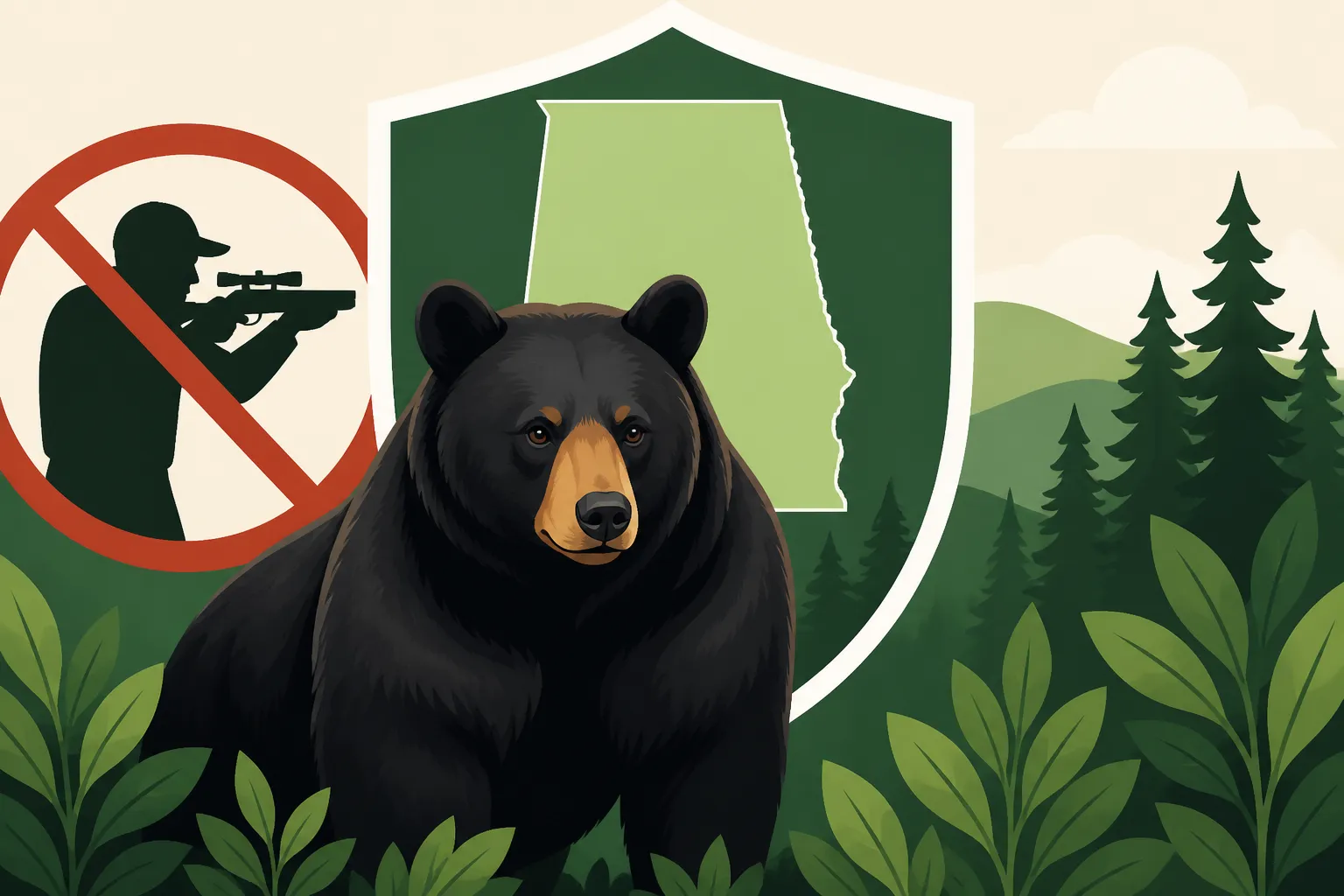
Why Alabama Protects Black Bears Statewide
It's a question many hunters, especially those new to Alabama or visiting from out of state, often ponder: "Why can't we hunt black bears here?" You might see news reports of a bear wandering through a suburban backyard, or hear tales of a friend spotting one in a remote part of the national forest, and think, "Surely there are enough for a season?" This guide will deep dive into the fascinating history and delicate current status of Alabama's black bear populations, explaining exactly why these magnificent creatures remain fully protected statewide, and what the future might hold.
The Long Road to Recovery: Alabama's Bear History
Black bears were once common across Alabama, just as they were throughout much of the Southeast. However, the story of their decline is a familiar and disheartening one, rooted deeply in the history of human settlement and resource exploitation. Understanding this past is crucial to grasping why they remain fully protected today.
Tracing Their Decline and Near Extirpation
Back in the pioneer days, black bears roamed virtually every county in Alabama. They were a significant part of the state's natural ecosystem, thriving in the vast, unbroken forests and river bottoms. But as settlers arrived, bringing with them a drive to clear land for agriculture and timber, the bears' pristine habitat began to shrink dramatically. Large-scale logging operations devoured ancient forests, and rich bottomlands were converted to farmland, leaving bears with fewer and fewer places to hide, forage, and raise their young.
Adding to the habitat destruction was relentless hunting pressure. Bears were viewed as competitors for resources, threats to livestock, or simply as valuable game for their meat and hides. There were no regulations, no bag limits, and certainly no thought of conservation for a creature perceived as limitless. This combination of unchecked hunting and widespread habitat loss pushed Alabama's black bear population to the brink of extinction. By the mid-20th century, many believed they were entirely extirpated from the state, a ghost of Alabama's wilder past. It's a sobering reminder of how quickly even robust wildlife populations can vanish without careful management.
Early Conservation Efforts and Reintroduction Attempts
The realization that Alabama had lost, or was about to lose, its black bears spurred some initial, albeit rudimentary, conservation efforts. In the mid-1900s, as wildlife management gained more scientific footing, biologists and conservationists began to recognize the severe impact humans had made. However, with populations so fragmented and low, the task was monumental. There weren't many bears left to protect, and the habitat that remained was often isolated and vulnerable.
Some early attempts were made to reintroduce bears, primarily in the Mobile River Basin area, using animals translocated from other states like Minnesota. These efforts faced significant challenges, including the bears' tendency to wander, a lack of contiguous protected habitat, and sometimes, lingering negative public perception. While not all early reintroductions were successful in establishing self-sustaining populations, they laid important groundwork and demonstrated a shift in attitude towards protecting these iconic animals. These initiatives highlighted the species' resilience, but also the deep commitment and long-term vision required to bring a large, wide-ranging animal like the black bear back from the brink.
Alabama's Unique Black Bear Populations Today
Today, Alabama is home to two primary, distinct black bear subpopulations, along with an increasing number of transient bears moving in from neighboring states. This unique distribution and the challenges it presents are central to why the species remains fully protected. Understanding these separate groups helps illustrate the delicate balance of their recovery.
The Mobile River Basin Subpopulation
Deep in the swampy, tangled river bottoms of southwest Alabama, primarily within counties like Baldwin, Washington, and Mobile, resides the state's most established black bear population. This area, with its extensive wetlands, dense hardwood forests, and relatively low human population density in some tracts, offers ideal habitat for bears. These are the bears that have likely been here the longest, a remnant population that somehow clung on through the tough times, supplemented by historical reintroduction efforts.
This subpopulation is often considered the stronghold of Alabama's black bears. Their habitat, while vast, is still susceptible to development pressures and fragmentation, particularly along the Mobile-Tensaw Delta. The bears here tend to be more elusive, preferring the cover of the dense riverine environments. Their numbers, though growing, are still relatively small, making every individual important for the long-term health and genetic diversity of the group. If you're interested in learning more, you can read about The Mobile River Basin Bear Population to understand their unique situation.
The Little River Canyon Subpopulation
In stark contrast to their swamp-dwelling cousins, Alabama's other core bear population calls the rugged, mountainous terrain of the Little River Canyon region in northeast Alabama home. Counties like Cherokee, DeKalb, and Etowah are where these bears are typically found. This habitat is characterized by steep slopes, rocky outcroppings, and expansive hardwood forests that are part of the Appalachian foothills. These bears likely migrated into Alabama from neighboring Georgia and Tennessee, where bear populations are healthier and more widespread.
The Little River Canyon population faces its own set of challenges. While the terrain offers excellent cover, the overall amount of truly wild, undeveloped land is smaller and more fragmented compared to some of the sprawling river systems in the south. Roads cut through their home ranges, and agricultural lands often border the forests, leading to potential human-bear conflicts. Despite these hurdles, this population is slowly growing, a testament to the resiliency of bears and the improving habitat conditions in that corner of the state. For further reading, check out The Little River Canyon Bear Population to explore the nuances of their environment.
Transient Bears and Expanding Range
Beyond these two core groups, Alabama is increasingly seeing "transient" bears – individuals, often young males, wandering into the state from Georgia, Florida, Mississippi, and Tennessee. These bears are on the move, searching for new territories, mates, and food sources. Their presence is a sign of healthy and expanding bear populations in neighboring states, and it's also an indicator that Alabama's own habitats are becoming more welcoming.
These transient bears are often the ones making headlines, appearing in unexpected places like suburban Birmingham or rural farm fields far from traditional bear country. While their arrival is exciting from a conservation standpoint, it also creates new challenges. They can sometimes lead to conflicts with humans or livestock, especially if they become habituated to human food sources. The Alabama Wildlife and Freshwater Fisheries Division (ADWFF) monitors these sightings closely, often working with local law enforcement to haze bears back into more suitable habitat or manage conflicts. The fact that Bears Moving Into North Alabama Suburbs is becoming a topic shows just how dynamic the situation is.
| Subpopulation | Primary Location (Counties) | Typical Habitat | Estimated Status |
|---|---|---|---|
| Mobile River Basin | Baldwin, Mobile, Washington | River swamps, bottomland hardwoods | Established, slowly growing, more isolated |
| Little River Canyon | Cherokee, DeKalb, Etowah | Mountainous hardwoods, Appalachian foothills | Recovering, expansion from neighboring states |
| Transient/Dispersing | Statewide (especially border regions) | Varied, moving through diverse landscapes | Increasing sightings, mainly young males seeking new range |
Why a Statewide Hunting Season is Not Feasible
The idea of a bear hunting season, even a highly regulated one, might seem appealing to some, especially given the occasional bear sighting. However, wildlife biologists and state officials are unanimous: Alabama's black bear populations are simply not robust enough to sustain any hunting pressure. This isn't a subjective opinion; it's a conclusion based on rigorous scientific data and a deep understanding of bear ecology.
Extremely Low Population Numbers
Let's be realistic: while we have bears, we don't have many bears. Compared to states like Florida, Georgia, or Arkansas, which have thriving bear populations numbering in the thousands and regularly hold managed hunts, Alabama's numbers are still critically low. Current estimates place our total statewide population in the low hundreds, possibly fewer. This includes both the Mobile River Basin and Little River Canyon subpopulations, along with those transient individuals passing through.
A population this small is extremely vulnerable. Even a modest hunting season, with permits numbering in the tens or twenties, could have a devastating impact. Bears have a slow reproductive rate; sows typically don't have cubs until they are 3-5 years old, and then only every two to three years. Losing even a few breeding females or mature males can set back recovery efforts by years, if not decades. The Alabama Wildlife and Freshwater Fisheries Division prioritizes the growth and expansion of these populations, and a hunting season would directly contradict that goal. This is why you'll find black bears on the list of Game You Cannot Hunt in Alabama.
Fragile Genetic Diversity and Recovery Status
Small populations aren't just vulnerable to direct mortality; they also face significant challenges with genetic diversity. When a population is very small and isolated, individuals are more likely to breed with close relatives, leading to inbreeding. This can reduce genetic "fitness," making the bears more susceptible to diseases, less adaptable to environmental changes, and less successful at reproduction. The goal of conservation is not just to have bears, but to have healthy, genetically robust bears.
Alabama's bear populations are still in the critical stages of recovery. The Mobile River Basin population, for instance, has long been somewhat isolated, and while new genetic input from Florida bears is helping, it's a slow process. The Little River Canyon bears benefit from influxes from Georgia and Tennessee, but their future is still dependent on expanding numbers within Alabama. Introducing hunting pressure now would jeopardize the delicate genetic foundation being rebuilt. The state is doing everything it can to ensure Alabama's Two Bear Subpopulations continue to grow and mix genetically, a process that requires patience and a hands-off approach to hunting.
Habitat Fragmentation and Road Mortality
Even without hunting, black bears face considerable challenges to their survival in Alabama. Habitat fragmentation is a major concern. As development encroaches, large tracts of contiguous forest are broken up by roads, subdivisions, and industrial areas. This forces bears to travel through human-dominated landscapes, increasing their risk of vehicle collisions. Road mortality is a significant cause of death for bears in many areas, acting as an unregulated form of "harvest" that disproportionately affects young, dispersing males.
The ADWFF recognizes these pressures and aims to mitigate them through habitat protection and public education. They focus on maintaining and connecting critical bear habitat, especially in areas where the populations are actively expanding. Losing bears to cars, disease, or illegal poaching already puts a strain on these fragile numbers. Adding legal hunting into that equation would simply be unsustainable. While we do not have specific CWD concerns for bears, general Alabama Wildlife Disease Monitoring is crucial for all species, including bears, to ensure population health.
The Role of Alabama Wildlife & Freshwater Fisheries (ADWFF)
The Alabama Wildlife and Freshwater Fisheries Division plays a monumental role in the ongoing recovery and management of the state's black bear populations. Far from being forgotten, these animals are a priority, and the ADWFF employs a range of scientific and educational strategies to ensure their continued growth and minimize conflicts with humans.
Monitoring and Research Programs
The ADWFF works tirelessly to monitor Alabama's black bear populations. This isn't a simple task; bears are elusive and cover vast territories. Biologists use a variety of techniques to gather data, including trapping and tagging individual bears, which allows them to track movements, estimate population size, and assess health. They also conduct den surveys, locating maternal dens to count cubs and evaluate reproductive success. These efforts provide crucial insights into the health, distribution, and growth patterns of both the Mobile River Basin and Little River Canyon subpopulations.
Public reports are also incredibly valuable to the ADWFF. When you report a bear sighting, especially one that includes location and date, it helps biologists map out bear movements and understand their expanding range. This data is fed into sophisticated models, often using tools similar to those a hunter might use for scouting, like advanced mapping on platforms such as GoHunt, to help predict where bears might be expanding and where potential human-bear conflicts could arise. This scientific approach ensures that management decisions are grounded in the most accurate, up-to-date information available. It's an ongoing, labor-intensive process, but absolutely essential for the future of Alabama's bears.
Public Education and Conflict Resolution
A critical part of bear management in a state like Alabama, where populations are sparse but expanding into more developed areas, is public education. Many people simply aren't accustomed to living near bears and don't know how to react if they encounter one, or how to prevent conflicts. The ADWFF invests heavily in educating the public on "bear smart" practices. This includes practical advice like securing garbage, cleaning outdoor grills, bringing pet food indoors, and removing bird feeders, all of which are potential attractants that can draw bears closer to homes.
When conflicts do arise, the ADWFF is on the front lines, responding to calls about nuisance bears. Their approach is almost always focused on non-lethal methods: hazing bears to encourage them to move on, providing advice to homeowners, and sometimes, in extreme cases, trapping and relocating a bear to a more remote area. The goal is to minimize risks to both humans and bears, fostering coexistence rather than conflict. Understanding What to Do If You See an Alabama Black Bear is vital for residents and visitors alike, and the ADWFF provides clear guidelines to ensure safety for everyone.
Penalties and Regulations for Taking a Bear
Given the critical status of black bears in Alabama, the regulations regarding them are crystal clear and strictly enforced. There is no open season, no permit system, and absolutely no legal way to hunt or intentionally take a black bear in the state. The penalties for violating these laws are severe and reflect the state's deep commitment to protecting its recovering bear populations.
Legal Consequences of Poaching
Anyone who intentionally harms, kills, or possesses an Alabama black bear without specific legal authorization (which is extremely rare and only for scientific or management purposes) is committing a serious offense. This isn't just a minor infraction; it's a significant wildlife crime, often categorized as poaching. The legal consequences can be extensive and life-altering. Fines can run into the thousands of dollars, coupled with court costs and restitution for the value of the animal. Beyond monetary penalties, individuals can face potential jail time or probation.
Perhaps one of the most impactful consequences for a true hunter is the mandatory loss of hunting and fishing privileges. This suspension can range from several years to a lifetime ban, depending on the severity and circumstances of the violation. These penalties are designed to be a strong deterrent, sending a clear message that Alabama takes the protection of its black bears very seriously. The state wants to avoid situations where hunters are tempted to shoot bears, which is why the ADWFF is very proactive about public information, including strict warnings about What Happens If You Shoot an Alabama Bear.
The Importance of Reporting Violations
For the conservation of black bears to be successful, everyone has a role to play. While the ADWFF does its best to monitor and protect wildlife, they can't be everywhere at once. That's why reporting suspected violations, such as poaching or illegal harassment of a bear, is incredibly important. Concerned citizens are often the first line of defense against those who would illegally harm wildlife.
When you witness a suspected violation, contacting Alabama's Conservation Enforcement Officers immediately can make a huge difference. Providing as much detail as possible – location, time, description of individuals or vehicles involved, and what you observed – helps officers investigate effectively. Your report, even if it feels small, contributes directly to protecting these vulnerable animals and ensuring that their populations can continue to recover. Knowing the Penalties for Shooting an Alabama Black Bear also reinforces why it's so critical to report any such illegal activity.
Future Prospects for Alabama's Black Bears
The story of Alabama's black bears is one of slow but steady recovery. While they are not out of the woods yet (pun intended!), the future looks brighter than it has in decades. Continued conservation efforts, wise land management, and public cooperation are all essential ingredients for their long-term success.
Continued Recovery and Habitat Protection
The ADWFF and its partners are committed to ensuring the continued recovery of black bears. This involves strategic habitat protection and restoration projects. Efforts focus on acquiring and conserving critical tracts of land, particularly those that connect existing bear habitats or allow for the expansion of their range. Prescribed burning, a common land management tool in Alabama, also plays a role in maintaining healthy forest ecosystems that provide food and cover for bears. You can often see such practices implemented on Public Hunting Land in Alabama and in various Alabama Wildlife Management Areas.
As bear populations in neighboring states grow, and as Alabama's own numbers slowly increase, we can expect more natural dispersal events. This is a positive sign, indicating that bears are finding suitable habitat and establishing new home ranges. The goal is to reach a point where Alabama has stable, self-sustaining populations in both core areas and a healthy interchange of transient bears that helps maintain genetic diversity across the region. This vision for the future emphasizes a truly wild Alabama, where black bears thrive once again. This long-term commitment highlights Why Black Bear Is a Species of Highest Concern for Alabama's conservationists.
When Could a Limited Season Become a Possibility?
This is the million-dollar question for many hunters: will Alabama ever have a black bear season? The short answer is: not anytime soon, and certainly not until very specific, rigorous scientific criteria are met. Wildlife management is a science, and decisions about hunting seasons are never made lightly, especially for a species still in recovery.
For a limited bear season to even be considered, Alabama's bear populations would need to grow significantly, reaching numbers that could sustain a regulated harvest without jeopardizing their long-term viability or genetic health. This would likely mean populations in the thousands, not hundreds, across multiple stable geographic regions. Biologists would need to see consistent growth, robust cub survival rates, and a healthy age structure within the populations. Furthermore, habitat connectivity would need to be well-established to ensure genetic exchange. Public opinion and sociological factors would also play a role, as the acceptance of a bear season would require broad public support. Even then, any season would likely start with extremely limited permits, focused on specific zones, and with strict quotas, much like a quota hunt for deer or turkey on some WMAs. For now, the focus remains entirely on conservation and allowing these magnificent animals to reclaim their historical place in Alabama's wild landscapes.
Disclaimer
Please remember that hunting regulations, wildlife populations, and environmental conditions can change. Always consult the latest official Alabama Department of Conservation and Natural Resources (ADCNR) regulations and advisories before planning any outdoor activity. This information is provided for general guidance and informational purposes only and should not be considered legal advice or a substitute for official sources.