How Much Blaze Orange Alabama Requires
It's a familiar scramble, isn't it? You're geared up, the coffee's hot, and you're about to head out for a deer hunt, when that nagging thought hits you: "Am I wearing enough blaze orange?" It's a common anxiety for hunters in Alabama, and getting it wrong isn't just a safety concern, it can land you a citation. This comprehensive guide will meticulously break down Alabama's blaze orange requirements, ensuring you're compliant, visible, and safe every time you step into the woods.
Understanding Alabama's Blaze Orange Requirements for Deer and Hog Hunting
Alabama's regulations regarding blaze orange aren't just suggestions; they're legal mandates designed to protect hunters in the field. The core idea is simple: make yourself as visible as possible to other hunters, especially when firearms are involved. We've all heard stories, or maybe even had a close call ourselves, where another hunter's lack of visibility created a tense moment. The rules are there to prevent those situations from escalating into tragedies.
The Minimum 144 Square Inch Rule
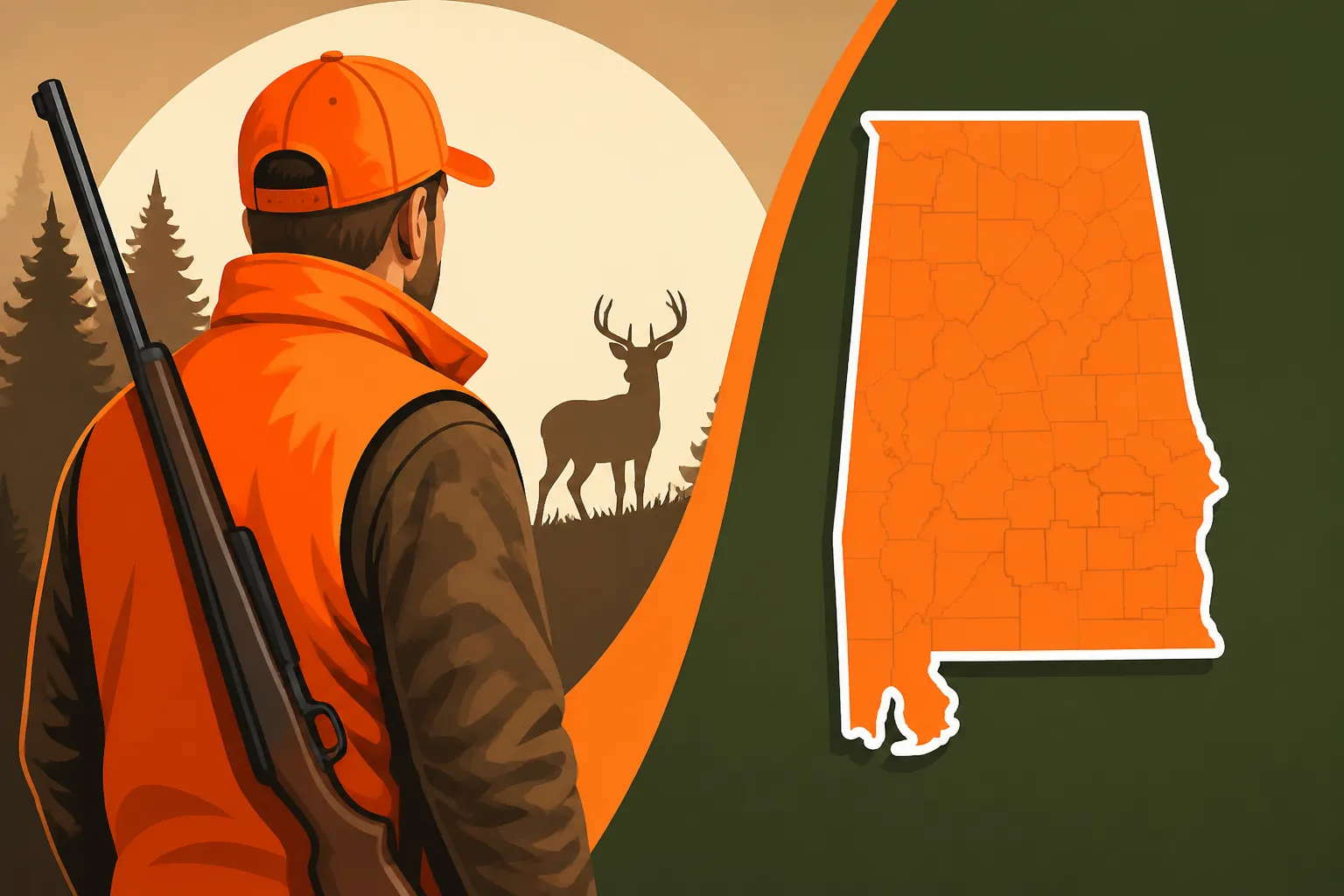
For anyone hunting deer or feral hogs with a firearm in Alabama, whether you're on a sprawling private lease or navigating public land, the law is quite specific. You must wear an outer garment above the waistline that contains at least 144 square inches of hunter orange, often referred to as blaze orange. This isn't just a small patch; it needs to be a substantial piece of clothing, like a vest or a jacket. The critical part is that this blaze orange must be visibly worn and seen from all angles – 360 degrees. This means it can't be covered by a backpack, tucked under a jacket, or obscured in any way.
Imagine you're walking through thick pine timber on a crisp November morning. A fellow hunter might only catch a glimpse of you through a small window in the brush. If your orange is partially covered, that crucial flicker of color might be missed. This rule ensures that as much of your upper body as possible is broadcasting your presence. It's about being unequivocally identifiable as a human, not mistaken for game. Many hunters opt for a full blaze orange vest or jacket to easily meet this requirement and maximize their visibility, often carrying a spare in their pack just in case their primary layer gets dirty or torn.
The Cap or Hat Alternative
Alternatively, if you're not wearing the full 144 square inches above the waist, you can satisfy the requirement by wearing a hunter orange cap or hat. This might seem like a simpler option, but it's important to ensure that the cap itself is solid blaze orange, not just a small stripe or logo. It needs to be the dominant color of the headwear. While a hat alone does meet the letter of the law in certain situations, many seasoned hunters will tell you it's often prudent to wear both a blaze orange vest and a hat for maximum safety.
Think about it: if you're hunkered down in a ground blind or sitting quietly on a stump, your vest might be partially obscured by your body position or surrounding cover. A brightly colored hat, however, often remains visible as you scan the woods, giving an extra layer of protection. This is especially true if you're still-hunting or stalking, where your movement through the woods might make your upper body dip and rise, but your head remains a consistent high point. Tools like the GoHunt app are excellent for double-checking these kinds of regulations on the fly, and they often show clear diagrams illustrating these requirements.
Blaze Orange Requirements in Different Alabama Hunting Scenarios
The world of Alabama hunting isn't just about deer and firearms. Depending on the game you're after and the weapon you're carrying, the blaze orange rules can shift, or even disappear entirely. It’s vital to understand these nuances to avoid inadvertently breaking a rule or, worse, compromising your safety.
Archery Season and Overlaps
When Alabama's archery season opens, often extending into February, bowhunters usually enjoy a period where blaze orange is not required. This makes sense; archery hunting is a close-quarters affair, often requiring camouflage to get within range of your target. However, this changes drastically when the gun deer season opens concurrently. During these overlapping periods, if you're archery hunting in an area where firearms are also permitted for deer or feral hogs, you must adhere to the same blaze orange requirements as firearm hunters.
This is a critical point that many hunters, especially those new to the sport or visiting from other states, sometimes overlook. You might be focused on Hunting Alabama's Long Archery Season with your bow, but if it's the middle of November, you're sharing the woods with rifle hunters. The logic is simple: if there are bullets flying, you need to be seen. A common scenario is a bowhunter sitting in a stand, wearing full camo. If gun season is open, they’re legally obligated to have that 144 square inches or a blaze orange cap. It’s always a good idea to pack a lightweight blaze orange vest that can easily slip over your camo, just in case you find yourself in an overlapping season. To learn more about specific dates, checking the Alabama Archery Season Dates is crucial.
Small Game and Muzzleloader Seasons
Similar to archery, small game hunting and muzzleloader season have their own considerations. If you're out chasing squirrels or rabbits with a shotgun during a time when firearm deer or hog season is also open, you'll need to wear blaze orange. The reasoning is the same: the presence of deer hunters using firearms dictates the safety protocols for everyone else in the woods. This also applies to those participating in Muzzleloader Deer Hunting in Alabama; if it's during the general gun season, blaze orange is a must.
Consider a crisp December morning. You're trying to fill your squirrel bag limit, moving quietly through a hardwood bottom. If deer season is also in full swing, other hunters might be nearby, focused intensely on deer movement. Your blaze orange is your best defense against being mistaken for something else. Conversely, if you're hunting small game during an archery-only deer season, or outside of deer/hog season altogether, blaze orange isn't typically required. It’s always best to consult the Alabama Small Game Season Rules and cross-reference them with the current deer and hog seasons to be absolutely certain.
Here’s a quick overview of common scenarios:
| Hunting Scenario | Minimum Blaze Orange Requirement | Notes |
|---|---|---|
| Firearm Deer/Hog Hunting | Outer garment above waistline with at least 144 square inches OR a blaze orange cap/hat. | Visible from 360 degrees. Applies to both private and public land. |
| Archery Deer/Hog Hunting | Required only during concurrent gun-deer/hog seasons. Same as firearm requirement. | Not required during archery-only season. |
| Small Game Hunting (with gun) | Required during concurrent gun-deer/hog seasons. Same as firearm requirement. | Check season overlap carefully with Alabama Deer Season Structure Explained. |
| Turkey Hunting | Not required (bright colors, especially red, should be avoided for safety). | Extreme caution advised due to calling tactics and potential for mistaken identity. |
| Waterfowl/Dove Hunting | Not explicitly required, but always recommended to wear some visible color when moving to and from stands. | Camouflage is primary during the hunt, but safety during transit is key. |
Turkey Hunting: A Unique Exception
Perhaps the most notable exception to the blaze orange rule is during turkey season. When you're Spring Turkey Hunting in Alabama, not only is blaze orange not required, but wearing bright colors like red, white, or blue is actively discouraged. Why the stark contrast? Turkey hunting relies heavily on camouflage and mimicry. You're trying to blend into the environment and call a wary gobbler into close range. Wearing blaze orange would defeat the entire purpose.
However, this freedom from blaze orange comes with a significant responsibility: extreme caution. Turkey hunting is statistically one of the more dangerous forms of hunting due to the nature of calling and decoys. A hunter might mistake movement or a flash of color for a turkey, especially if another hunter is trying to "sneak" in on a call. It's why many experienced turkey hunters advocate for identifying your target beyond any doubt, and never wearing colors that resemble a turkey's head (red, white, blue). Always scout carefully and be absolutely certain of your target before pulling the trigger.
Why Blaze Orange is Indispensable for Hunter Safety
Beyond simply being a legal requirement, blaze orange serves a profoundly important purpose: saving lives. It’s not just about avoiding a ticket; it's about making sure everyone who ventures into Alabama’s woods during hunting season comes home safe. The science behind blaze orange's effectiveness is fascinating, and understanding it can help reinforce why these rules are in place.
Enhancing Visibility and Preventing Accidents
The human eye is incredibly adept at picking up the color blaze orange, even in low light conditions or dense foliage. Unlike natural colors found in the woods (greens, browns, grays), blaze orange stands out starkly against almost any background. This high contrast is critical for preventing misidentification, which is the leading cause of hunting accidents. No matter how experienced you are, it's easy to get tunnel vision when you're focused on game. Blaze orange acts as an undeniable signal: "Human here! Not a deer!"
Think of a scenario where you're tracking a deer through a thicket. Your attention is fixated on the ground, scanning for sign. Another hunter, properly adorned in blaze orange, walks into your peripheral vision. That flash of vivid color immediately breaks your focus on the ground, drawing your eye up and signaling caution. Without it, in the same scenario, that hunter might be just another brown shape moving through the woods, dangerously similar to the game you're pursuing. This is why organizations like the National Shooting Sports Foundation (NSSF) and Alabama’s own Department of Conservation and Natural Resources (ADCNR) emphasize blaze orange as a cornerstone of hunter education and safety programs. For anyone planning to hunt Alabama’s public lands, understanding things like Hunting Pressure on Alabama Public Land becomes even more critical, as higher hunter density amplifies the need for maximum visibility.
The Science Behind the Color
Blaze orange isn't just "orange." It's a specific, highly fluorescent hue that is particularly visible to the human eye, even for individuals with some forms of color blindness. While deer see colors differently than humans, often perceiving the world in shades of yellow and blue, they are largely unable to distinguish blaze orange from the surrounding foliage. So, while it's a beacon to fellow hunters, it doesn't alert the game you're pursuing in the same way. This is a brilliant evolutionary adaptation, allowing hunters to remain safe without compromising their chances of success.
The effectiveness of blaze orange is maximized when it covers a significant portion of your visible outline and is not broken up by camouflage patterns. This creates a large, unambiguous signal that screams "person!" If you're considering your gear, remember that even small breaks in the orange can reduce its overall effectiveness, making you look less like a human and more like disparate patches of color that could be anything. Many quality hunting brands now offer gear specifically designed to integrate blaze orange effectively, ensuring comfort and compliance. You might even consider options like those discussed in Blaze Pink Options Under Alabama Law, which offers similar high visibility for those who prefer it.
Best Practices for Maximizing Blaze Orange Effectiveness
Simply meeting the minimum 144 square inches is one thing, but truly maximizing your safety and the effectiveness of your blaze orange is another. There are several considerations and best practices that can significantly enhance your visibility in the field, going above and beyond mere compliance.
Choosing the Right Gear
When it comes to blaze orange, quality matters. Look for vests, jackets, or hats made from durable, brightly colored fabric that won't fade quickly in the sun. Some cheaper materials can lose their vibrancy over time, reducing their effectiveness. Consider vests that fit comfortably over your hunting layers, allowing for full range of motion without bunching up or becoming obscured. For colder weather, you might opt for a blaze orange outer jacket, ensuring warmth and compliance. Always check the labels to ensure the garment meets the 144 square inch standard if you're not also wearing a cap.
Layering is key in Alabama, where temperatures can swing wildly. You might start a morning hunt needing a heavy coat, then shed layers as the day warms. Ensure that even your base blaze orange layer, if it’s the primary one meeting the requirement, remains visible from all angles after you’ve stripped down. A good quality vest, perhaps one with mesh for breathability, can be worn over any layer and is easy to pack. Don't forget that your choice of Alabama Legal Firearms for Deer Hunting or even opting for Alabama Muzzleloader and Air Rifle Tactics doesn't change the blaze orange requirement if you're out during gun season.
Strategic Placement and Maintenance
It's not just what you wear, but how you wear it. As mentioned, the blaze orange needs to be visible from 360 degrees. This means being mindful of your backpack straps, fanny packs, or even large binoculars obscuring the color on your back or sides. If you’re sitting in a ground blind, ensure a portion of your orange is still visible to the outside, perhaps through a mesh window or by hanging a vest strategically outside the blind. Many hunters will even tie a small piece of blaze orange flagging to their treestand or the base of the tree as an added visual marker for anyone approaching.
Regularly inspect your blaze orange gear for dirt, mud, or fading. A vest caked in mud from a muddy creek crossing will lose its reflective properties and vibrancy. Wash your gear according to the manufacturer's instructions to keep it clean and bright. Storing it away from direct sunlight can also help prevent fading. Ultimately, your blaze orange is a piece of safety equipment, just like your harness or first aid kit, and it deserves the same care and attention. Understanding the full range of safety measures, including Alabama Hunter Education Requirements, is critical for a responsible hunting experience.
Blaze Orange for Non-Hunters
While the regulations primarily apply to hunters, it’s a smart practice for anyone entering the woods during hunting season to wear blaze orange. Hikers, photographers, birdwatchers, or even those just out for a walk with their dog can significantly increase their safety by donning a blaze orange vest or hat. Wildlife areas and national forests are shared spaces, and while non-hunters aren't legally bound by the same rules, adopting this safety measure is a simple act of self-preservation. It helps prevent misunderstandings and keeps everyone safer in an active hunting environment. So, whether you're out for Shed Hunting on Alabama Public Land in the off-season or just enjoying a quiet hike, consider making blaze orange a part of your outdoor wardrobe during hunting season.
Disclaimer
The information provided in this guide is for general informational purposes only and does not constitute legal advice. Hunting regulations can change, and interpretations may vary. It is the sole responsibility of every hunter to review and understand the most current Alabama hunting regulations published by the Alabama Department of Conservation and Natural Resources (ADCNR) before engaging in any hunting activity. Always prioritize safety and compliance with all applicable laws.