Bowhunting Alabama’s Long Archery Season
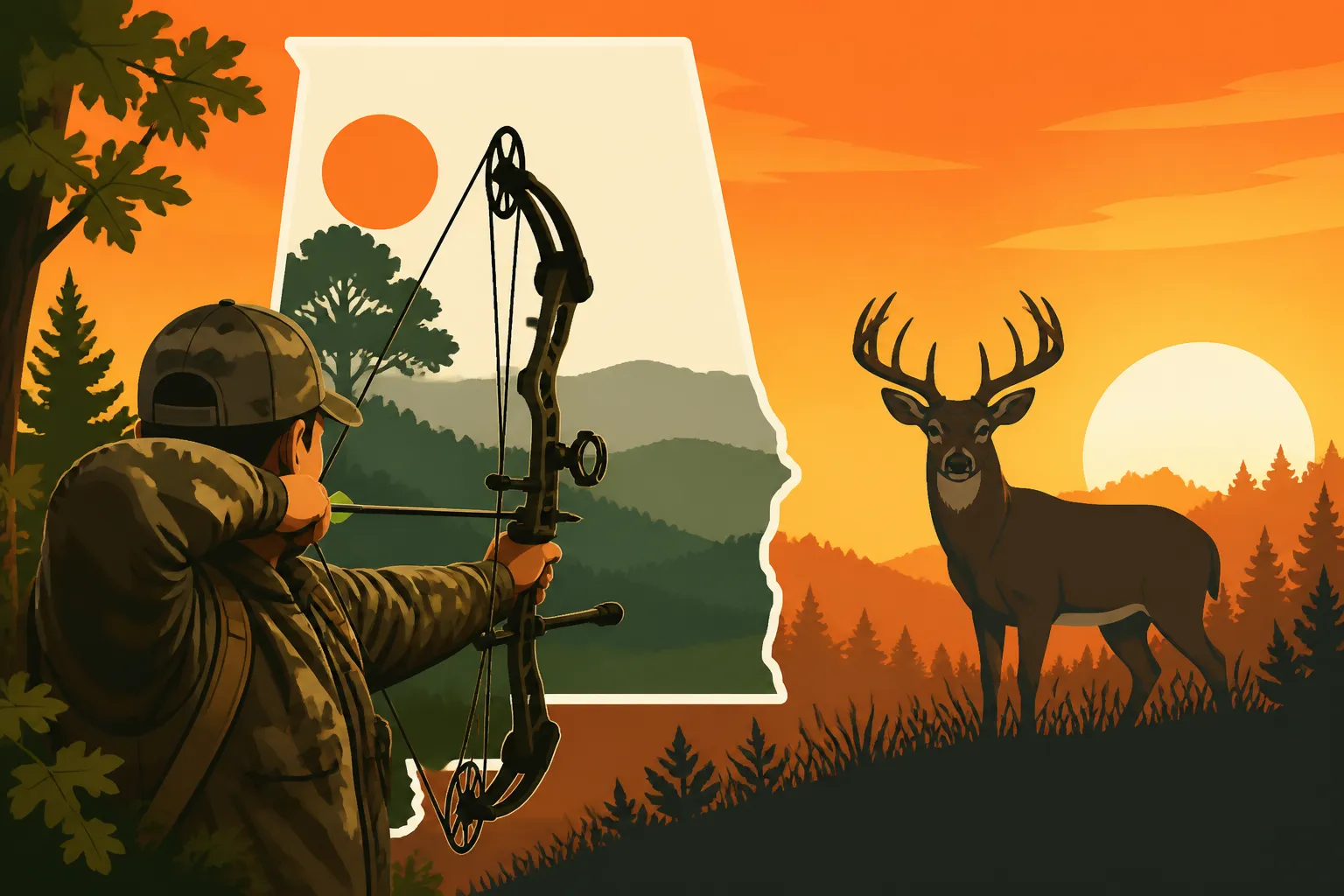
It's easy to look at Alabama's incredibly long archery season and feel a mix of excitement and overwhelm. With deer season kicking off in mid-October for most zones and running all the way through February, that's a lot of time in the woods! But this extended period also brings a ton of challenges, from unpredictable weather and shifting food sources to changing deer behavior. This comprehensive guide is here to help you navigate every phase of Alabama's archery season, providing the strategies, gear insights, and tactical advice you'll need to truly maximize your bowhunting success from opening day to the final bell.
Understanding Alabama's Archery Season Length and Structure
Alabama boasts one of the longest deer archery seasons in the entire country, a true gift for bowhunters. While other states see their archery opportunities dwindle by early winter, we're still out there, chasing whitetails well into February. This isn't just a few extra weeks; it's a fundamental aspect that shapes how we approach the hunt.
A Season Unlike Many Others
Imagine starting your deer season in mid-October with the leaves still mostly green, temperatures often feeling more like summer, and deer operating on a predictable pattern of food and cover. Then, picture yourself still in a treestand in late February, bundled against a crisp morning chill, snow (rarely, but it happens!) dusting the ground, and bucks still cruising for the last estrous does. That's the Alabama archery experience in a nutshell.
The sheer duration of our season offers unparalleled flexibility. It means if a particular weekend gets rained out, or if you mess up a hunt, you're not out of luck for the whole season. It means you can afford to learn, adapt, and refine your strategies over months, rather than weeks. This continuous opportunity allows for deep, intimate knowledge of your hunting grounds and the deer that inhabit them. However, it also demands adaptability, as deer behavior, food sources, and even the landscape itself will transform dramatically over these four-plus months. Hunters who truly thrive understand that Alabama's long season isn't one continuous hunt, but rather a series of distinct mini-seasons, each with its own challenges and rewards. It's a marathon, not a sprint, and requires a different kind of preparation and mindset. For those keen to understand the specifics, our guide on How Alabama's Archery Season Runs Into February dives deeper into these unique dynamics.
Navigating Zone-Specific Regulations
While the overarching archery season is long, it's crucial to remember that Alabama isn't a monolithic entity when it comes to deer hunting regulations. The state is divided into five distinct deer zones (A, B, C, D, and E), and while archery dates are generally consistent across these zones, understanding your specific zone is absolutely paramount. These zones primarily influence gun seasons and antlerless harvest limits, but they can subtly impact your archery strategy.
For instance, knowing which zone you're in helps you anticipate the general timing of the rut, even for archers. While the core archery season dates typically remain uniform, the pressures, the peak breeding activity, and even the legal specifics around antlerless harvest can vary. Some zones might have more restrictive antlerless bag limits, which affects how you manage the herd on private land or how you approach filling tags on public land. It's not just about the dates, it's about the bigger picture of deer management in that region. Always, always double-check the current year's regulations published by the Alabama Department of Conservation and Natural Resources (ADCNR) for your specific county. The "Outdoor Alabama" website is your best friend here. Understanding these nuances, especially when it comes to the legal framework, is the first step to a responsible and successful season. To verify the exact dates for your specific hunting area, consult Alabama Archery Season Dates.
Key Advantages of Bowhunting Alabama's Long Season
The extended bowhunting season in Alabama isn't just about more days in the woods; it presents some unique strategic advantages that dedicated archers can leverage to their full potential.
Unparalleled Opportunities for Scouting and Learning
One of the biggest frustrations in states with short hunting seasons is the pressure to "make it count" on every single outing. There's often no room for error, no time to learn from a mistake, and certainly not enough opportunity to truly understand how deer behave as the season progresses. Alabama flips that script entirely for bowhunters. Our long archery season provides an incredible, low-pressure window to scout, observe, and gain intimate knowledge of your hunting area and its deer population.
Think about it: you can go into the early season with one set of assumptions, perhaps targeting summer food sources. If those patterns shift due to acorn drop, weather changes, or pressure, you have weeks, even months, to adjust. You can identify new travel corridors, discover fresh scrapes, and pinpoint bedding areas as deer transition. You might even use your early season hunts not just to harvest, but as dedicated scouting missions for later in the rut. You can test out new stand locations, observe deer reactions to your presence (or lack thereof), and learn the subtle nuances of thermals and wind currents in different parts of your property or public land. This continuous learning cycle is invaluable. It transforms hunting from a series of isolated events into an ongoing, evolving strategy, where each sit, whether successful or not, contributes to your overall understanding and increases your odds for future success. This extended "classroom" in the woods is arguably the greatest advantage of Alabama's long archery season.
Experiencing Diverse Deer Behavior Throughout the Year
The deer you encounter in mid-October are rarely the same deer you'll be chasing in late January. Our lengthy season ensures you'll witness the full spectrum of deer behavior, from early-season patterns dictated by food and comfort, through the chaotic intensity of the rut, and into the survival mode of the late season. Each phase presents its own set of challenges and, more importantly, its own unique opportunities for the prepared bowhunter.
In October, you'll likely see deer on more predictable food-to-bed patterns, often still in bachelor groups or doe family units. Bucks are focused on building reserves. By November and early December, depending on your zone, the pre-rut kicks in, and those big boys start to get restless, expanding their search for does. Then comes the peak rut, a magical time when caution often takes a backseat to the primal urge to breed. Bucks will be cruising, scent checking, and challenging rivals, making them more vulnerable to aggressive calling or strategic setups along travel corridors. Finally, the late season brings a focus back to persistent food sources and heavy cover, as deer recover from the rut and face increasing hunting pressure. Understanding these distinct phases is critical. A tactic that works wonders in October might be completely ineffective in December, and vice versa. Being able to adapt your calling, your stand location, and even your hunting hours to match the current phase of the season is what separates consistently successful bowhunters from those who just get lucky. If you're looking to dive into the peak breeding activity, you'll find great insights in our article on Hunting the Alabama Rut by Zone.
Essential Gear for Alabama Bowhunting Success
Bowhunting in Alabama's varied climate demands thoughtful gear selection. From the scorching early season to the frosty late season, your equipment needs to be reliable, adaptable, and optimized for both performance and comfort.
Bow and Arrow Setup for Alabama Conditions
Your bow and arrow setup is the heart of your bowhunting success. In Alabama, where shots can range from close-quarters in thick pines to longer distances across a food plot, consistency and penetration are paramount. Most hunters will find a draw weight they can comfortably and accurately shoot repeatedly, typically between 50-70 lbs for adults, is ideal. What's often overlooked is the arrow itself. For whitetails, a heavier arrow (400-500 grains total weight) with a high front-of-center (FOC) balance point will significantly improve penetration, especially when encountering bone. This means less energy loss and a higher likelihood of a clean pass-through, which is absolutely critical for tracking in Alabama's often dense undergrowth.
When it comes to broadheads, the debate between fixed blade and mechanical rages on. For Alabama's whitetails, many seasoned hunters opt for sharp, robust fixed blades for their reliability and deep penetration, particularly for those tricky quartering-away shots or if you happen to hit a shoulder. Mechanical broadheads can also be devastating when deployed correctly, offering larger cutting diameters, but require good shot placement and sufficient kinetic energy from your bow. Regardless of your choice, ensure your broadheads are razor-sharp. Dull broadheads tear, sharp ones cut, and cutting causes more damage and a better blood trail. Regular tuning of your bow – checking cam timing, arrow rest alignment, and fletching clearance – is also non-negotiable. Humidity can wreak havoc on strings and serving, so inspect your equipment frequently. For those considering other options, it's worth noting the specific Crossbow Rules During Alabama Archery Season if you're thinking of making a switch.
Strategic Apparel and Stand Systems
Alabama's weather is notoriously fickle. You might start a morning hunt in October needing a light jacket, only to shed it an hour later as temperatures soar. By January, you could be shivering in single-digit wind chills. This demands a versatile approach to apparel. Layering is your best friend. Start with a good moisture-wicking base layer to manage sweat in warmer weather or to keep you dry under heavier insulation when it's cold. Follow with an insulating layer, and top it with a quiet, scent-controlled outer layer that offers good camouflage. Breathable fabrics are crucial for early season hunts, helping to prevent overheating and excessive sweating which can compromise your scent control. Don't forget quality rain gear, as sudden downpours are common.
For stand systems, safety is always first. A full-body safety harness is not optional; it's a life-saving piece of equipment you should wear from the moment your feet leave the ground until they're back on solid earth. When selecting a stand, consider your hunting style and location. Climber stands are fantastic for public land where you need portability and flexibility to move with deer patterns, allowing you to get into areas other hunters might overlook. Hang-on stands, especially with climbing sticks or a ladder, offer more setup stability and can be left in place (where legal on public land, or permanently on private). Ladder stands provide comfort and ease of access, often preferred for static private land setups. Ground blinds, whether pop-up or brushed-in, can also be incredibly effective, especially for youth hunters or in areas with limited tree cover. Remember, the best stand is one that's safely and strategically placed. For specific guidance on optimizing your elevated positions, check out Treestand Setups in Talladega National Forest. And hey, a little insider tip: using mapping apps like GoHunt can really help you scout potential stand locations, mark them, and even plan your entry and exit routes, making your stand setup much more strategic.
Strategic Scouting and Stand Placement for Archery
Effective scouting and smart stand placement are arguably more critical for bowhunters than for gun hunters due to the close-range nature of archery. It's not enough to just find deer; you have to find them, understand their movements, and then position yourself perfectly for a shot within bow range.
Reading the Land and Deer Sign
Before you even think about hanging a stand, you need to become a detective in the woods. Pre-season scouting, even in the off-season, is invaluable. Look for old rub lines, historical scrape areas, and well-worn trails from previous years. These often indicate consistent deer travel patterns. As the season approaches and ultimately opens, focus on fresh sign. New tracks, especially along creek beds, field edges, or logging roads, tell you deer are currently using that area. Droppings can give you clues about diet and recent presence. Fresh rubs – where bucks have stripped bark from saplings – signal active buck sign, while new scrapes indicate where bucks are checking for does.
Identifying natural pinch points and funnels is key. These are geographical features that naturally constrict deer movement, channeling them into predictable paths. Think about saddles in ridges, narrow strips of timber between open fields, creek crossings, or areas where thick cover meets more open terrain. Deer prefer the path of least resistance or the most secure route, and these funnels exploit that preference. Learning to interpret the subtle clues the land provides is an ongoing process, but with our long season, you have ample opportunity to refine these skills. To get a head start, consider learning more about Scouting Alabama Public Land Before Season. Understanding how deer use topography, like a funnel between two creek bottoms, can be a game-changer for your success, and our article on Hunting a Funnel Between Two Creek Bottoms offers specific advice. Many hunters also swear by mapping applications like GoHunt, which allow you to virtually scout, mark potential pinch points, and identify property lines from your couch, saving valuable time and boot leather in the field.
Optimizing Stand Location and Entry/Exit Routes
Once you've identified promising areas, the real chess match begins: choosing the exact tree and planning your approach. The most critical factor for any bowhunting stand location is wind direction. Deer rely heavily on their sense of smell, so consistently hunting with the wind in your favor (blowing from the deer to you, or across you, not from you to the deer) is non-negotiable. This often means having multiple stand locations for different wind scenarios. In hilly or river bottom terrain, also pay attention to thermals – the rising air currents in the morning and falling air currents in the evening – which can carry your scent in unexpected directions.
Beyond wind, consider visibility and cover. You want a clear shot lane to where you expect deer to pass, but enough cover around your stand to break up your silhouette. Think about the sun's position throughout your hunting window to avoid being silhouetted or having the sun glare directly into your eyes. Finally, and perhaps most overlooked, are your entry and exit routes. Can you get to and from your stand without spooking deer? This might mean using a creek bed, a ditch, or a dense fenceline for cover. Avoid walking directly through known bedding areas or across open fields. The quietest approach and departure often leads to the most consistent success. A well-planned entry and exit route ensures that your first sit in a location is just as effective as your last, because you haven't educated the deer to your presence.
Adapting Tactics Through Alabama's Diverse Season Phases
Alabama's lengthy archery season isn't a static environment; it's a dynamic progression through distinct phases, each demanding a shift in tactics. What works in October won't necessarily work in January, and understanding these shifts is crucial for consistent success.
Early Season: Food Sources and Thermals
When Alabama's archery season first opens, typically in mid-October, deer are still largely operating on summer patterns, though subtle changes are beginning. Temperatures can still be quite warm, even hot, and humidity is usually high. During this phase, deer are primarily focused on food, water, and security. Bucks might still be in bachelor groups, and doe family units will be prevalent. Your best bet for success is often to key in on primary food sources.
Early-dropping acorns are a magnet for deer, especially white oaks. If you find a patch of white oaks dropping, that's often where the deer will be. Beyond acorns, agricultural fields like soybeans or peanuts can be consistent draws, especially in the late evenings. Natural browse, like honeysuckle or greenbriar, also provides nutrition. Due to the heat, deer activity will usually be concentrated during the first hour or two of daylight and the last couple of hours before dark. Mid-day sits are often unproductive and can be uncomfortable. Pay close attention to thermals, which will rise in the morning as the sun warms the earth and fall in the evening. This means your scent can travel uphill in the morning and downhill in the evening, sometimes making traditional wind direction less reliable. Scent control is paramount in the heat and humidity, as you'll likely be sweating. Short, precise sits are often more effective than long, drawn-out ones during this period.
The Rut: Calling, Scrapes, and Cruising Bucks
As the calendar turns towards late November and into December (and even January in some southern zones), Alabama transitions into the exhilarating rut phase. This is the time when bucks, driven by the urge to breed, become significantly more vulnerable and less cautious. Their focus shifts from simply feeding to actively seeking estrous does. Understanding when the peak rut occurs in your specific zone is a critical piece of the puzzle. While there's variability, generally, the northern zones see earlier rut activity, often peaking in mid-November to early December, while southern zones can peak significantly later, sometimes into January.
During the rut, you'll want to pivot your strategy from food-focused to travel-corridor and doe-bedding-area focused. Bucks will be on the move, covering ground, checking for scent. This is the prime time for aggressive calling – grunts, snort-wheezes, and rattling can all be highly effective at drawing in curious or territorial bucks. Look for historical scrape lines that suddenly become active again, indicating a buck's presence. Set up along ridges, creek bottoms, or narrow strips of woods that serve as natural travel routes between bedding and feeding areas, or, more importantly, between areas where does congregate. Mid-day hunting also becomes highly productive during the rut; don't make the mistake of leaving the woods when the woods are still alive with activity. Our article on Hunting the Alabama Rut by Zone provides excellent detail on how to time your efforts with peak breeding.
Late Season: Cold Weather and Remaining Food
By late December and into January and February, Alabama's archery season enters its late phase. This can be one of the most challenging, yet rewarding, times to hunt. Deer have been pressured for months, food sources that were abundant earlier in the season have been depleted, and colder weather patterns begin to dominate. Deer are once again focused on survival: finding reliable food and seeking thermal cover to conserve energy.
Your strategy in the late season must shift back to food, but with a keen eye on quality and availability. Look for remaining hard mast, especially red oak acorns that drop later and are often overlooked by deer during the earlier feast. Green food plots, like winter wheat, oats, or brassicas, that can withstand colder temperatures become absolute magnets. Clearcuts with dense regrowth provide both food and thermal cover. Water sources, especially during dry spells, can also be key. Bucks, having exhausted themselves during the rut, are now looking to regain lost weight. Hunting during cold fronts, especially those following a period of mild weather, can be highly effective, as deer will need to feed heavily. Patience is crucial here, and longer sits, sometimes all day, are often necessary. Deer may become more nocturnal due to pressure, so catching them during brief daylight feeding windows is critical. For specific insight into what the deer are munching on during these colder months, explore Late-Season Food Sources for Alabama Whitetails.
Here's a quick look at how your tactics might evolve throughout the season:
| Season Phase | Primary Deer Behavior | Key Food Sources | Recommended Tactics | Ideal Conditions |
|---|---|---|---|---|
| Early Season | Still on summer patterns, often nocturnal, focused on food | Green browse, early acorns, agricultural fields (soybeans) | Morning/evening sits on food, minimal pressure, scent control | Warm, humid, light winds |
| Peak Rut | Bucks actively seeking does, less food-focused | Doe bedding areas, travel corridors, historical scrapes | All-day sits, aggressive calling, mock scrapes | Cooler, crisp mornings |
| Late Season | Seeking remaining reliable food, wary due to pressure | Hard mast (if available), green fields, clearcut regrowth | Focus on persistent food sources, long sits, patience | Cold, clear, post-front |
Hunting Public and Private Land with a Bow in Alabama
Whether you hunt public lands or have access to private property, bowhunting in Alabama presents different challenges and advantages. Understanding these distinctions is key to developing a successful strategy.
Bowhunting Public Lands: Strategies for Success
Alabama boasts a considerable amount of public hunting land, including National Forests and Wildlife Management Areas (WMAs), providing fantastic opportunities for bowhunters who don't have access to private tracts. However, public land often comes with increased hunting pressure, which can make success challenging but all the more rewarding. The biggest frustration for many public land hunters is encountering other hunters, especially on opening day.
The core strategy for bowhunting public land effectively is simple: go where others aren't willing to go. This usually means hiking deeper into the woods, navigating challenging terrain like steep ridges, dense thickets, or swampy bottoms. Deer on public land quickly learn to avoid areas with high human traffic and will seek refuge in the nastiest, hardest-to-reach places. Your gear needs to be portable; a lightweight climber stand or a saddle hunting setup is often preferred over a bulky ladder stand. Flexibility is also vital; don't be afraid to pick up and move if you're not seeing deer or if pressure becomes too high. Scouting is absolutely critical on public land. Use mapping tools to identify potential sanctuaries, natural funnels, and remote food sources far from roads and trails. Look for pinch points or small, overlooked pockets of cover that might hold deer seeking refuge. For a deeper dive into maximizing your chances, refer to our comprehensive guide on Public Hunting Land in Alabama. Using a tool like GoHunt can be incredibly beneficial here, as it allows you to overlay public land boundaries with satellite imagery and topographic maps, helping you identify those hidden gems and plan your deep woods excursions.
Maximizing Opportunities on Private Tracts
Private land bowhunting often offers a completely different experience. With less hunting pressure (though this varies greatly by landowner and club), deer can exhibit more natural movement patterns, and you have greater control over habitat management. The biggest advantage on private land is the ability to influence the environment. This means maintaining food plots, conducting prescribed burns, or strategically harvesting timber to create ideal deer habitat.
If you're hunting private land, leverage every advantage you have. If food plots are present, understand what's planted and when it's most attractive to deer. Position stands on the downwind edges of these plots, especially where trails enter from bedding areas. Identify key bedding cover – thickets, young clearcuts, or dense pines – and understand the travel routes deer use to get from bed to food. You can also implement more permanent stand setups, allowing you to prepare shooting lanes and ensure comfort. Building a strong relationship with the landowner is crucial; they might offer insights into deer movement they've observed, and good stewardship of their land will ensure continued access. Remember, just because it's private doesn't mean it's easy. Deer still have their inherent caution, and consistent pressure (even light pressure) can still make them wary. But with careful management and thoughtful strategy, private land can offer phenomenal bowhunting opportunities throughout Alabama's long season.
Overcoming Common Bowhunting Challenges in Alabama
Alabama's unique environment, while offering a fantastic long season, also presents its own set of frustrations and obstacles for bowhunters. Successfully navigating these challenges is key to consistent harvests.
Dealing with Heat, Humidity, and Insects
For a significant portion of Alabama's archery season, especially during October and even into November, you'll be battling Mother Nature as much as the deer. The heat and oppressive humidity are probably the most common complaints. This isn't just about comfort; it's a critical factor in scent control. When you're sweating profusely, your scent signature becomes much stronger and disperses more easily, making it harder to fool a deer's nose.
Hydration is paramount. Carry plenty of water and electrolytes to avoid fatigue and stay sharp in the stand. For scent control, invest in high-quality scent-eliminating sprays, washes, and clothing, and use them meticulously. Even then, acknowledge that in high humidity, scent is tough to beat entirely, so prioritizing wind direction becomes even more crucial. As for insects, particularly mosquitoes, they can drive a hunter absolutely mad. A Thermacell is a bowhunter's best friend in Alabama's early season. Position it correctly, and it can create a bubble of protection, allowing you to focus on the hunt rather than swatting bugs. Light, breathable clothing is also essential for comfort and to help your body regulate temperature. When scouting or setting up, look for stand locations that might offer a slight breeze, which can help with both comfort and scent dissipation. Don't let the weather dictate your hunt; adapt to it.
Navigating Changing Food Sources and Pressure
Another significant challenge, directly related to the length of our season, is the dynamic nature of food sources and the accumulation of hunting pressure. What deer are eating in October might be completely gone by December, and the once-secure bedding area might be blown out by constant intrusion. Deer are incredibly adaptable, and successful bowhunters must be too.
Food sources in Alabama are constantly in flux. Early acorns (white oaks) drop first and are quickly consumed. Later, red oaks provide food. Crop fields are harvested, and natural browse changes. Your scouting must be ongoing, not just pre-season. Pay attention to what deer droppings tell you they're eating, and visually verify what natural foods are available. Use trail cameras to monitor which food sources deer are currently utilizing. When food shifts, deer shift, so your stand locations might need to change as well.
As for pressure, every time a hunter steps into the woods, deer are educated. On public land, this pressure is often high from opening day. On private land, even light pressure can make deer more nocturnal or push them into thicker, harder-to-reach cover. The key is to anticipate how pressure will affect deer. If an area gets hit hard, those deer will likely move to a sanctuary. You might need to adjust your hunting times, focusing on mid-day activity during the rut, or only hunting the first hour of daylight and the last hour of legal shooting light when deer are most likely to move. Sometimes, finding ground that other hunters walk past – the nasty briar thickets, the swamp edges, the steep draws – is the best way to escape pressure and find a mature buck that's figured out how to survive. Staying informed, perhaps through community discussions on platforms like GoHunt, can sometimes give you a pulse on general hunting activity and help you anticipate shifts in deer behavior due to pressure.
Ethical Considerations and Post-Shot Protocol for Bowhunters
The shot is only part of the hunt. For bowhunters, the responsibility extends far beyond the release of the arrow, encompassing ethical shot placement, diligent tracking, and proper game recovery.
Shot Placement and Waiting Periods
As archers, we choose to hunt with a weapon that demands precision and close proximity. This means that ethical shot placement is not just important, it's paramount. The goal is always a quick, humane harvest. Practice, practice, practice cannot be stressed enough. Know your effective range and stick to it, regardless of the size of the buck or the excitement of the moment. The ideal shot for a deer is a broadside or slightly quartering-away shot that targets both lungs and ideally the heart. This vital area offers the largest margin of error and typically results in a swift kill and a good blood trail. Avoid quartering-to shots, straight-on shots, or shots at extreme angles that risk wounding the animal without a quick recovery.
After the shot, patience is a virtue, and often a necessity. Your immediate reaction to the deer can tell you a lot. A deer that mule-kicks, runs hard, and then slows down often indicates a heart or double-lung hit. A deer that humps up or walks off slowly might indicate a gut shot. A deer that hunches and runs away low could be liver. Based on the shot type and the deer's reaction, you must impose a waiting period. For suspected heart/lung shots, waiting 30 minutes to an hour before tracking is usually sufficient. For suspected liver shots, four to six hours is often recommended. For a gut shot, a minimum of eight to twelve hours, or even overnight, is typically advised to allow the deer to bed down and expire. Pushing a wounded animal too soon can cause it to run further, making recovery much harder, and can turn a recoverable deer into a lost one.
Tracking, Recovery, and Reporting Your Harvest
Once the waiting period is over, the diligent work of tracking begins. Start at the point of impact, marking where you last saw the deer and where your arrow hit. Look for blood, hair, bone fragments, or stomach contents. A systematic grid search is often the most effective way to find a blood trail, especially in Alabama's often thick underbrush. Follow every drop, taking your time, marking the trail with flagging tape as you go. Look for signs of direction, how the deer was moving, and any indications of it slowing down or bedding.
If the blood trail peters out, don't give up. Consider calling a licensed blood-trailing dog handler (where legal) if you have exhausted your efforts; these dogs have an incredible success rate. Be mindful of warm Alabama weather; meat can spoil quickly, so speedy recovery is important. Once you recover your deer, proper field dressing is essential to cool the carcass down, especially in the early season. Our guide on Field Dressing a Deer in Warm Weather can help you with this critical step. Finally, remember your legal obligations. All harvested deer in Alabama must be reported through the Game Check system within 48 hours. This is vital for wildlife management and helps ADCNR monitor the health of our deer herd. The specific deadline for this is outlined in The Alabama Deer Reporting Deadline. It’s a simple process, but one that every ethical hunter must adhere to.
Disclaimer
Please note: Hunting regulations and seasons can change. Always consult the official Alabama Department of Conservation and Natural Resources (ADCNR) regulations for the current year before engaging in any hunting activities. This guide is for informational purposes only and does not supersede state laws or regulations. Safety should always be your top priority in the field.