Hunting Longleaf Pine Savanna for Deer
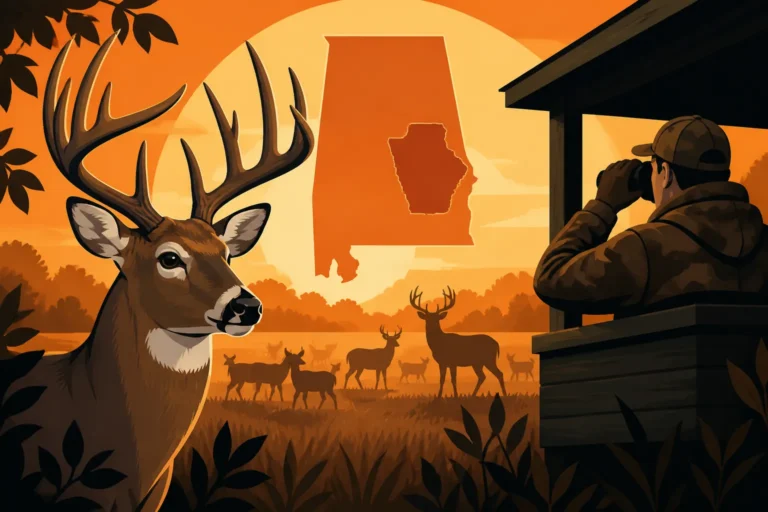
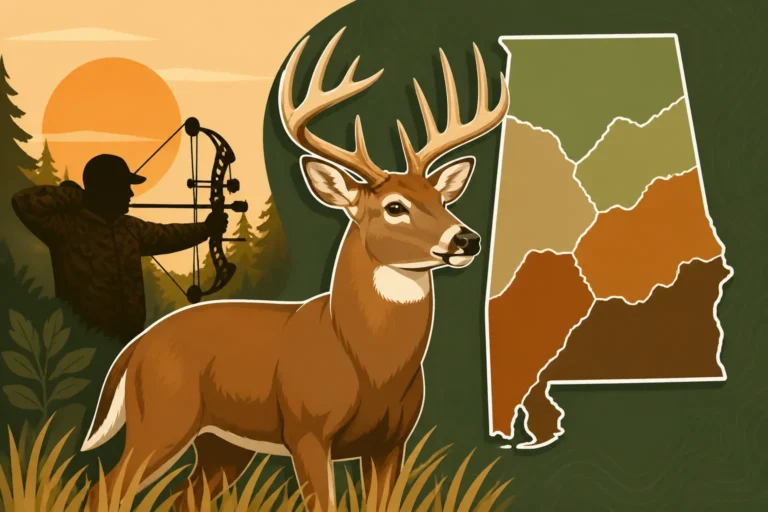
Hunting in longleaf pine savannas for deer can feel like a completely different ballgame compared to the dense timber or agricultural fields many of us are used to in Alabama. The wide-open, park-like landscape, shaped by fire and teeming with unique plant life, presents its own set of challenges, from finding deer sign to setting up a stand where you won't stick out like a sore thumb. This guide is all about helping you understand this incredible habitat and develop effective strategies to fill your tag when chasing whitetails in the longleaf.
Understanding the Longleaf Pine Savanna Ecosystem
Stepping into a true longleaf pine savanna, especially here in Alabama, is like taking a trip back in time. It's not your typical dark, needle-covered pine plantation or a dense mixed hardwood forest. This unique ecosystem, maintained by natural and prescribed fires, plays host to some incredible wildlife, including our beloved whitetail deer.
The Unique Habitat for Deer
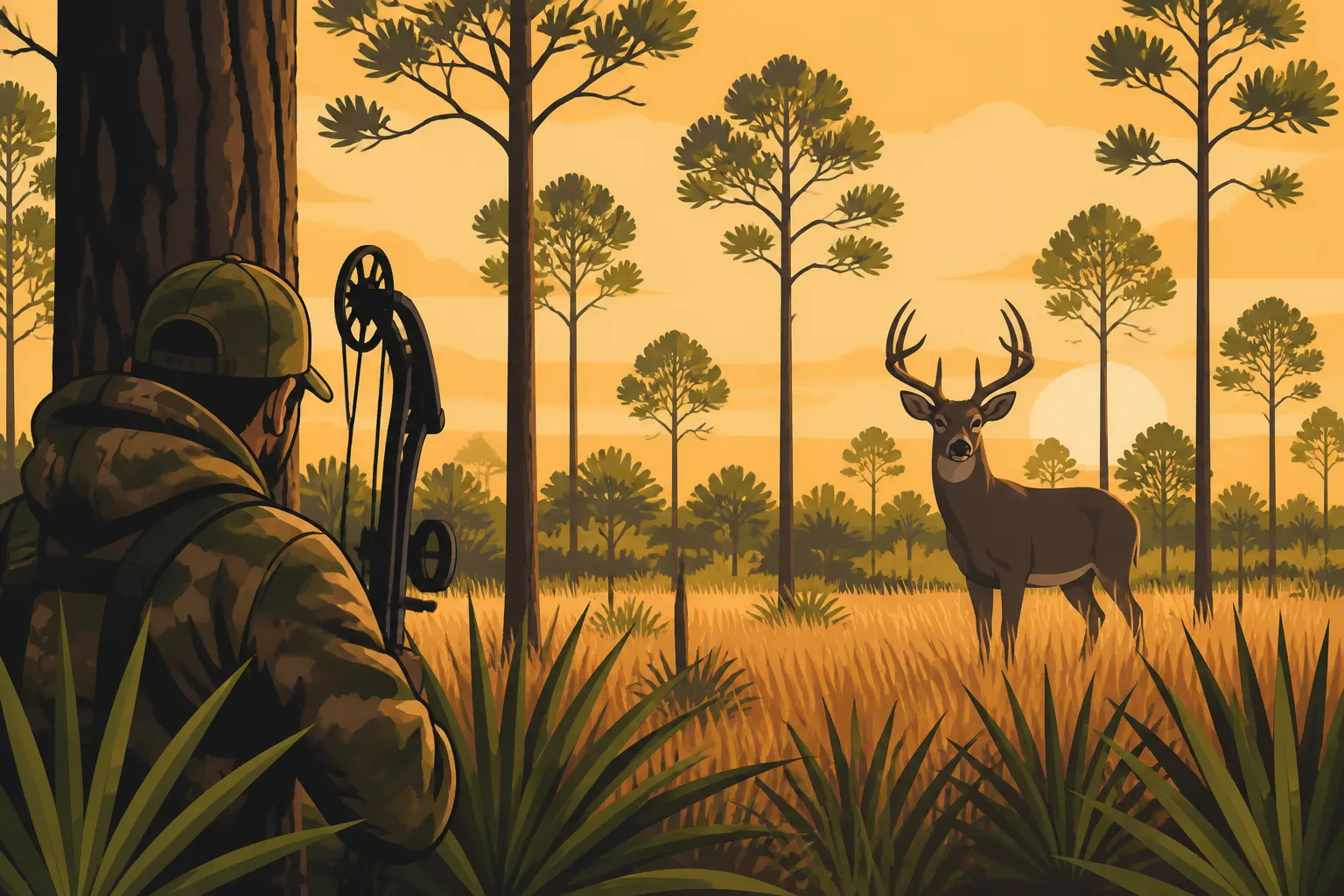
A longleaf pine savanna is characterized by widely spaced, mature longleaf pine trees with a remarkably open understory. Instead of thick briars and dense brush, you'll often find a diverse array of grasses, wildflowers, and forbs. Historically, these savannas covered vast stretches of the southeastern United States, including much of South Alabama's Wiregrass Region and parts of the Conecuh National Forest. Fire is not just a tool here; it's the lifeblood of the savanna. Regular, low-intensity fires clear out competing vegetation, prevent hardwood encroachment, and stimulate the growth of nutrient-rich forage that deer absolutely love. This creates a landscape that feels almost ethereal, with sunlight filtering through the tall pines and a clear view often stretching for hundreds of yards. It’s a completely different visual from the thickets many of us associate with deer cover, and understanding this difference is key.
Deer Behavior in Open Savanna
Because of the open nature of the longleaf savanna, deer here behave a little differently than their counterparts in more traditional habitats. While they still seek cover, it's often more subtle—a slight depression, a dense clump of palmettos, or a narrow creek bottom choked with hardwoods that escaped the last fire. They rely heavily on their senses, particularly sight and smell, in this environment where long-range visibility is common. Deer in savannas are often accustomed to scattered groups, moving through the open timber with a keen awareness of their surroundings. Their diets are diverse, shifting with the seasons. They'll browse on the tender new growth of grasses and forbs that emerge after a fire, gorge on acorns from any scattered oaks, and even nip at pine seedlings or fungi. Understanding these shifts in diet and how deer use these subtle cover elements is paramount to success. For a broader look at how deer generally behave throughout the state, check out our guide on Alabama Deer Population Estimate.
Scouting Strategies for Longleaf Pine Savanna
Successful deer hunting always starts with thorough scouting, and in the longleaf savanna, this often requires a bit of a different approach. The open nature means sign might be more spread out, and traditional travel corridors might not be as obvious.
Reading the Subtle Sign
Forget looking for those super-highway-like trails you might find leading to a food plot in a hardwood bottom. In longleaf savannas, deer movement can be more dispersed. You'll need to develop an eye for subtle clues. Look for faint trails winding through the wiregrass, often connecting islands of thicker cover, water sources, or patches of mast-producing trees. Rubs might be on smaller pine saplings or scattered hardwoods, and scrapes, while present, might not be as concentrated.
Focus your efforts on transition zones: where the savanna meets a creek bottom, a small block of hardwoods, or even a denser thicket created by a fire break. These are often high-traffic areas. Utilizing mapping applications like GoHunt can really give you an edge here. You can use aerial imagery to identify subtle elevation changes, isolated clumps of denser cover, and potential water sources that might not be visible from the ground. Layers that show property boundaries and terrain features are invaluable when trying to piece together a deer's movement patterns in such an expansive, visually uniform environment. Don't be afraid to put boots on the ground, even in the off-season. Learning to differentiate fresh sign from old is critical, especially when deer might be moving through an area but not consistently holding there. For more general advice on preparing for the season, consider revisiting Scouting Alabama Public Land Before Season.
Identifying Key Food Sources
The longleaf savanna is a dynamic environment, and food sources can change dramatically throughout the year and even after a prescribed burn. Deer are opportunists, and they'll quickly key in on the most nutritious and palatable forage available.
- Post-Burn Forage: One of the most significant attractants in a longleaf savanna is the fresh green-up after a prescribed fire. The fire clears out old, less nutritious vegetation and stimulates a flush of new growth, rich in protein and minerals. These areas will draw deer like a magnet, sometimes within days or weeks of a burn. Keeping track of burn schedules, if available for public lands, can be a game-changer.
- Mast Crops: While longleaf pines don't produce mast deer eat, scattered oaks (like turkey oak or scrub oak) and persimmon trees are often present, especially along the edges of the savanna or in areas that have escaped fire. These patches of hard or soft mast are gold mines when they're dropping.
- Forbs and Grasses: Deer will browse on a variety of native forbs and tender grasses. Learning to identify these, even casually, can help you understand what deer are currently eating.
When scouting, don't just look for tracks; look for evidence of browsing. Are the tips of young plants nipped off? Are there areas where deer have been digging for roots or tubers? All these small details contribute to painting a full picture of deer activity.
Effective Hunting Tactics for Longleaf Pine Savanna
Hunting in the longleaf savanna calls for a blend of patience, stealth, and adaptability. The open environment means deer are often more alert, and your opportunities might be fewer but potentially at longer ranges.
Stand Placement in Open Timber
Setting up a treestand or ground blind in a savanna requires careful consideration. The lack of dense cover makes it harder to disappear.
Treestands:
- Height is Your Friend: In open timber, getting higher in a tree can give you a better vantage point and help you avoid being silhouetted against the sky. Aim for setups that place you 20-25 feet up, if possible, to get above their primary line of sight.
- Background Cover: Look for a tree with some branches or a cluster of pines behind it to help break up your outline. Avoid solitary trees that stand out too much.
- Wind Direction is Critical: With fewer obstructions, your scent can carry far. Absolutely commit to hunting only when the wind is in your favor relative to known deer travel paths.
- Scattered Thickets: If you can find a small, denser patch of young pines or hardwoods that have grown up in an area that hasn't burned recently, this can be an excellent location to set a stand. Deer will often use these as sanctuary within the larger savanna. For more general advice on vertical concealment, check out Treestand Setups in Talladega National Forest.
Ground Blinds:
- Natural Brush-In: A ground blind can be highly effective, but it needs to be meticulously brushed in. Use local vegetation like palmetto fronds, pine branches, and wiregrass to make it blend seamlessly into the surroundings.
- Hidden Edges: Place your blind along the edge of a creek, a slight rise, or where the savanna transitions into a different habitat type. You might also want to set one up near a known travel corridor or a freshly burned area. Our guide on Using a Ground Blind on Alabama Public Land offers more tips.
Still-Hunting and Stalking Approaches
The open nature of longleaf savannas actually lends itself well to still-hunting and slow stalking, provided you have the right conditions and a keen eye.
- Patience and Observation: This isn't a race. Move incredibly slowly, pausing often (5-10 minutes at a time) to scan the terrain with binoculars. Let your eyes do the walking. Look for flicking ears, a horizontal backline, or movement that seems out of place.
- Utilize Cover: Even sparse cover can be used to your advantage. Step behind a pine, then scan. Work your way along a slight rise or through a patch of taller grass.
- Wind and Sun: Always hunt into the wind. If possible, try to keep the sun at your back in the morning or evening, making it harder for deer to see you and easier for you to see them.
- Soft Footing: The pine needle duff and wiregrass can make for relatively quiet walking, but be mindful of crunchier areas.
- Be Ready: When still-hunting, you need to be prepared for a shot at any moment. Keep your rifle or bow ready for quick deployment, as deer may appear quickly and unexpectedly in this open environment. This methodical approach is similar to tactics described in Still-Hunting Bankhead Forest Ridges, just adapted for a different forest type.
Utilizing Prescribed Burns to Your Advantage
Prescribed burns are an integral part of longleaf savanna management, and they create prime deer hunting opportunities.
- Fresh Green-Up: As mentioned earlier, deer are immediately attracted to the tender, nutritious new growth that emerges after a fire. These areas offer a buffet of high-quality forage. Keep an eye out for areas that have been recently burned, and focus your scouting there.
- Increased Visibility: While it can make you more exposed, a recent burn also increases your visibility, helping you spot deer at longer distances. This can be a double-edged sword, so adjust your tactics accordingly.
- Edge Effect: The edges of burned and unburned areas create a distinct transition zone that deer often use. They might bed in the unburned cover and feed in the fresh growth. These edges are excellent places for stand setups.
- Timing: The timing of a burn can influence its effectiveness. Early season burns might attract deer for the first few weeks, while late-season burns can provide crucial forage when other food sources are scarce. Knowing when and where burns occur can significantly improve your odds, particularly when thinking about Late-Season Food Sources for Alabama Whitetails.
Gear and Preparation for Savanna Hunting
Hunting the open longleaf savanna highlights the importance of specific gear choices that might not be as critical in denser woods.
Camouflage and Scent Control
In an environment where deer can see you from a long way off, your concealment becomes even more critical.
- Camo Pattern: A good breakup pattern that mimics natural forest elements (like pine bark, grass, or sparse hardwoods) is crucial. Avoid patterns that create a solid blob at a distance. Modern digital or naturalistic patterns often work best.
- Head-to-Toe Concealment: Don't forget your face, hands, and exposed skin. Face paint, a face mask, and gloves are non-negotiable.
- Scent Control Regiment: The wind carries scent far and wide in an open savanna. A meticulous scent control routine, including scent-free laundry detergent, showers, and sprays, is more important than ever. Store your hunting clothes in airtight bags or containers until you reach your hunting area. Even then, an unexpected wind shift can bust you, so layering your defense is key.
Optics and Long-Range Shooting Considerations
The open nature of the longleaf savanna often means longer shot opportunities and a greater need for reliable optics.
- High-Quality Binoculars: Investing in good binoculars (8×42 or 10×42 are excellent choices) is paramount. You'll spend a lot of time glassing for deer moving through the open timber, and clear, bright optics will make a huge difference, especially in low light conditions.
- Rangefinder: A rangefinder is almost a necessity. When shooting across open areas, distances can be deceiving. Knowing the exact yardage to your target and to landmarks around your stand will prevent misjudgments.
- Rifle Accuracy: If you're using a rifle, practice shooting at longer distances than you might typically expect. The average shot in a savanna might be 100-200 yards, rather than the 50-75 yards often seen in thick cover. Ensure your rifle is zeroed and you're comfortable with your shooting setup for these ranges.
- Archery Practice: For bowhunters, while a 200-yard shot is out of the question, the open nature might present slightly longer archery shots than in dense woods. Practice out to 40-50 yards to ensure you're confident if the opportunity arises.
| Feature / Consideration | Traditional Pine Plantation/Dense Hardwoods | Longleaf Pine Savanna |
|---|---|---|
| Visibility | Often limited to 50-75 yards | Often 100-300+ yards |
| Cover Density | Very thick, dense understory | Open, grassy understory, widely spaced trees |
| Deer Trails | Obvious, well-worn paths | Subtle, dispersed, harder to detect |
| Stand Placement | Easier to hide, focus on pinch points | Challenging to hide, requires careful breakup |
| Scouting Sign | Concentrated rubs/scrapes | Scattered, subtle, rely on broader patterns |
| Hunting Method | Still-hunting, stand hunting on trails | Still-hunting, slow stalking, stand hunting transition zones |
| Optics | Less critical for long-range | Essential for long-range glassing and ranging |
| Camouflage | Good, but movement forgiving | Paramount, minimal movement tolerated |
| Food Sources | Acorns, planted food plots, browse | Post-burn forage, scattered mast, diverse forbs |
Remember, understanding the regulatory framework is just as important as understanding the habitat. Always ensure you have your Alabama Hunting Licenses and What They Cost and are familiar with the Alabama Deer Season Structure Explained for your specific zone. And after a successful hunt, remember to comply with Alabama Deer Reporting Rules.
Disclaimer
Hunting is an inherently dangerous activity. Always prioritize safety, follow all local and state regulations, and obtain proper landowner permissions and licenses before hunting. This guide provides general information and recommendations and should not replace professional training, local laws, or personal judgment.