Setting Decoys on a Farm Pond
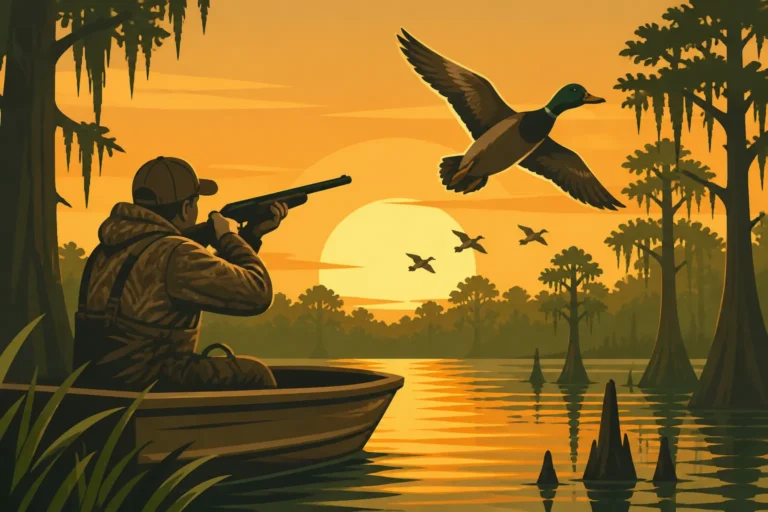
There's nothing quite as frustrating as spending hours meticulously setting up your duck spread on a promising Alabama farm pond, only to watch flock after flock flare off at a distance, completely uninterested. It's enough to make you wonder if you're doing something wrong, or if those birds just got their degrees in advanced decoy avoidance. This guide is here to unravel the mysteries of effective decoy placement on farm ponds, helping you understand how ducks see your setup and giving you the tools to draw them in close, every time.
Understanding Farm Pond Dynamics for Waterfowl
Farm ponds might seem like simple bodies of water, but to a duck, they offer a complex set of cues and signals. Successfully decoying them means understanding these nuances and using them to your advantage. It’s not just about throwing a few plastic birds out there; it’s about creating an illusion of safety, food, and companionship.
Reading the Water and Wind
The wind is arguably the most critical factor in setting up a duck decoy spread, especially on a farm pond. Ducks almost always land and take off into the wind, much like an airplane. This means your decoys need to be positioned so that arriving ducks will naturally land in front of your blind, into the wind, right where you want them. If the wind is blowing from left to right across your pond, you'll want your decoys to be positioned to the right of your blind, leaving an open landing zone directly in front of you.
Beyond landing, wind creates ripples and movement on the water, which helps your decoys look more alive. On a dead calm day, your stationary decoys can look incredibly fake, even to less-pressured birds. In these situations, adding motion through jerk strings or motorized decoys becomes even more critical. Understanding the prevailing wind direction on a given morning and how it interacts with the pond's shape and surrounding topography is the first step to a successful hunt.
Identifying Key Duck Hangouts
Before you even think about throwing out a single decoy, take the time to observe the pond. Do ducks consistently land in a particular corner? Are they always feeding along a certain shallow bank? Farm ponds often have distinct areas that ducks prefer for resting, feeding, or just hanging out. These "key hangouts" might be sheltered coves, shallow flats with submerged vegetation, or even just the lee side of a small point where the wind is less harsh. Observing these patterns can tell you where the ducks naturally feel safest and most comfortable.
Even if ducks aren't actively using the pond, look for signs. Dabbler ducks, like mallards and wood ducks, often leave tell-tale "mud trails" or dabbling marks in shallow areas where they've been feeding. Droppings on banks or floating vegetation can also indicate recent activity. Remember, ducks are creatures of habit. If they like a spot, they'll likely return, and placing your decoys in or near these established zones can significantly increase your chances of success. Scouting apps like GoHunt can be invaluable here, allowing you to mark these spots on a map and even analyze historical weather patterns for a clearer picture.
Water Depth and Bottom Composition
The depth of the water and what's on the bottom directly influences where certain duck species will feed and rest, and thus where you should place your decoys. Most farm pond ducks in Alabama are dabblers – think mallards, wood ducks, and sometimes gadwall or teal. These birds prefer shallow water where they can tip up to feed on submerged vegetation or invertebrates without fully diving. Ponds with shallow edges, muddy bottoms rich in seeds, or areas with lily pads or other aquatic plants are prime real estate for these species.
Diving ducks, while less common on typical farm ponds, require deeper water to forage. If your pond has deeper sections, it's less likely to attract dabblers unless there's an abundance of surface food. Knowing the typical depths of your pond helps you target the right areas. Avoid placing decoys in water that's too deep for dabblers to feed comfortably, as this won't mimic natural behavior. A good rule of thumb for dabblers is water between six inches and three feet deep. You can even use a long stick to gauge depths as you wade out to set your spread, ensuring your blocks are floating in realistic feeding zones.
The Art and Science of Decoy Spreads
Setting decoys is more than just scattering them randomly. It’s an art form backed by scientific observation of duck behavior. The goal is to create a visual invitation that screams "safety" and "food" to passing birds.
Basic Spreads for Dabblers
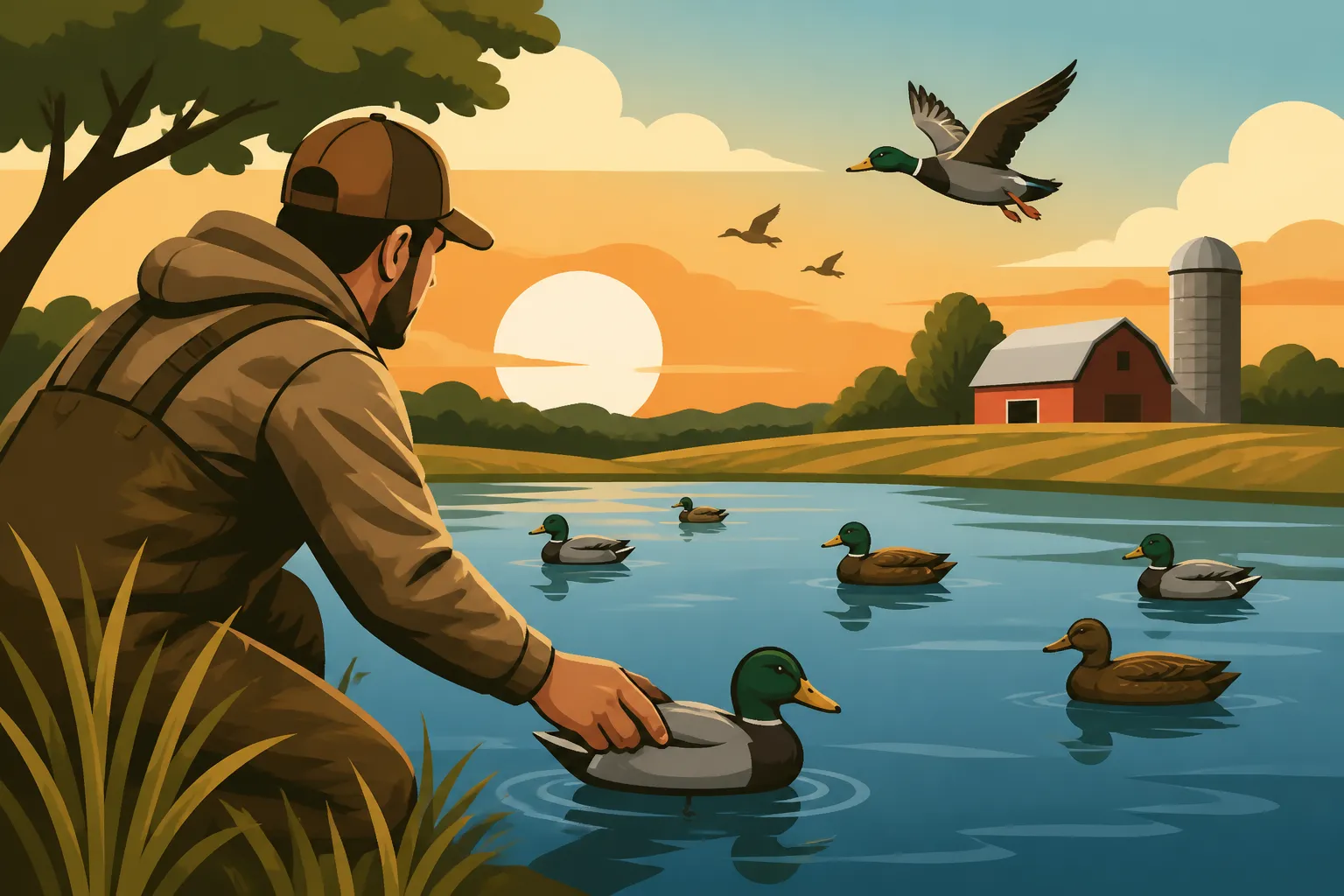
When hunting dabbling ducks on farm ponds, simplicity often reigns supreme. Unlike large open water, you don't need hundreds of decoys. A dozen or two well-placed blocks can be highly effective. The key is to create an inviting landing zone, usually within 20-30 yards of your blind, positioned into the wind.
One of the most popular and effective spreads is the "J-hook" or "U-shape." Imagine a J or U laid out on the water. The curved part of the letter is your main concentration of decoys, with the open end of the J or U facing your blind. The long tail of the J, or one arm of the U, extends downwind, drawing birds' attention. This creates a clear, unobstructed runway for ducks to land into the wind, guiding them directly into your desired shooting pocket. Another simple yet effective spread is the "loose cluster," where decoys are grouped somewhat naturally, but with ample open water in front of your blind. Ducks, especially on smaller waters, appreciate having room to land. Think about how real ducks interact; they don't land in the middle of a dense raft of birds. For example, when you're targeting early season wood ducks, remember that they often come in fast and commit quickly, so a less formal cluster can work wonders. Understanding specific species behavior can enhance your spread's effectiveness, much like tactics described in Hunting Flooded Timber for Mallards emphasize specific approaches for different duck types.
Here's a quick comparison of popular spreads for farm ponds:
| Spread Type | Description | Ideal for | Pros | Cons |
|---|---|---|---|---|
| J-Hook | Decoys form a "J" shape, with the open hook creating a landing zone. | Most dabblers, varying wind conditions, good for guiding birds. | Guides ducks directly to the desired landing zone, looks natural. | Requires careful consideration of wind direction. |
| U-Shape | Similar to J-hook but creates a larger, more defined landing pocket. | Larger groups of dabblers, steady winds, good for multiple shooting lanes. | Excellent landing zone, visually appealing to ducks from afar. | Can require more decoys, less effective in shifty winds. |
| Loose Cluster | Decoys grouped somewhat tightly but with open water in front of the blind. | Less pressured ponds, smaller groups of ducks (e.g., Wood Ducks in Alabama River Swamps). | Simple to deploy, mimics resting birds, good for tight spaces. | Less directional guidance for birds, might not work on wary birds. |
| V-Shape | Decoys spread in a "V" with the point facing upwind towards the blind. | Moderate winds, when ducks are approaching from a specific direction. | Creates a clear funnel, good for guiding birds on a steady approach. | Can look less natural if not executed well, limited landing area. |
Adding Motion and Realism
Still decoys can look lifeless, especially on a calm day. Ducks are constantly moving – preening, dabbling, swimming. Adding motion makes your spread exponentially more convincing. A simple jerk string, where a line runs from your blind to a few decoys, allowing you to tug them and create ripples, is incredibly effective and cost-efficient. Even slight movement can make a huge difference in drawing the attention of distant birds and convincing wary ones to commit.
Motorized flapping-wing decoys, often called "spinners" or "mojo decoys," have revolutionized duck hunting. While some argue they can spook heavily pressured birds if overused, on smaller, less-pressured farm ponds, they can be absolute magnets, especially for early season teal and mallards. Place them at the downwind end of your spread, as if a bird is landing, to create maximum visual appeal. Just be mindful of local regulations regarding motorized decoys, as rules can vary. A combination of static decoys, a jerk string, and perhaps one or two spinners can create a dynamic, lifelike scene that’s hard for passing birds to resist. Remember that the goal is not just movement, but natural movement, mirroring what a flock of resting or feeding ducks would actually do.
Decoy Species Selection
While many hunters default to mallard decoys, matching your decoy species to the birds you expect to hunt can be a game-changer. If your farm pond is consistently full of wood ducks, having a few wood duck decoys mixed in will look far more natural than an all-mallard spread. The same goes for teal or gadwall. You don't need a full spread of each species, but having a few "confidence" decoys – a pair of wood ducks, a couple of teal – can lend credibility to your overall setup.
It's also worth considering the mix of drakes and hens. A natural flock will have both. Overly drake-heavy spreads can look unnatural to smart birds. A good ratio is typically 60/40 drakes to hens. Finally, consider adding a few Canada goose decoys if geese frequent the pond. Ducks often feel safer with geese around, and a few goose blocks can make your spread look even more inviting and "safe." This strategy reflects a broader understanding of waterfowl interaction, which can also be applied when considering strategies like Waterfowl Hunting Alabama's River Deltas, where different species might coexist.
Advanced Tactics and Common Mistakes
Even with a solid understanding of basic decoy placement, there are always ways to refine your approach and pitfalls to avoid. Ducks get smarter with every passing week of the season, and adapting your tactics is crucial.
Scouting for Success Before Setting Decoys
The single most important factor in consistent duck hunting success, especially on farm ponds, isn't your expensive shotgun or the latest motion decoy; it's scouting. You absolutely must know where the ducks want to be before you set up. Don't just pick a pond you think looks good. Watch it at dawn and dusk for several days before your hunt. Where are the birds feeding? Where are they resting? What routes do they take flying in and out?
Observe how they react to different conditions – wind, sunlight, pressure. Are they using the pond every day, or only on certain days? What time do they typically arrive? This information is invaluable. If you can hunt a pond that ducks are actively using, your chances of success skyrocket, regardless of your decoy spread. Tools like GoHunt can help you mark specific flight paths, observe patterns over time, and even cross-reference with weather forecasts, which influence duck movement significantly. Without prior scouting, you’re just guessing, and farm pond ducks in Alabama are often too wary for guesswork.
Avoiding the "Too Many Decoys" Trap
On smaller farm ponds, more isn't always better when it comes to decoys. A massive spread of 50-plus decoys can actually look intimidating and unnatural on a small body of water. Imagine a small restaurant being completely overflowing; it might make you hesitate to go in. Ducks can perceive an overcrowded pond as a sign of danger or too much competition. For a typical Alabama farm pond, a dozen to two dozen decoys is often plenty. The goal is to create a realistic snapshot of a few contented ducks, not an entire convention.
Furthermore, too many decoys can leave too little open water for incoming birds. Ducks need a clear, unobstructed landing strip. If your spread is so dense they have nowhere to land without crashing into a plastic counterpart, they'll often just circle and leave. Focus on quality over quantity, making sure each decoy is clean, properly rigged, and contributing to the overall realistic picture. For hunters thinking about Hunting the Tennessee River Delta for Waterfowl, larger spreads might be appropriate for vast open water, but on smaller, intimate ponds, restraint is key.
Handling Pressure and Duck Shyness
Farm ponds, especially those that are easily accessible or near population centers, can quickly become pressured. Ducks learn incredibly fast from negative experiences. If they've been shot at over a spread that looks too symmetrical, too dense, or too fake, they'll become "decoy shy." This is where realism and subtlety become paramount. Instead of tight, artificial patterns, try looser, more natural groupings. Use more hen decoys to signal safety. Reduce the use of flashy motion decoys if birds are flaring, or use them sparingly.
Consider adding natural elements to your spread. A few pieces of floating vegetation or natural logs can blend your decoys into the environment better. Sometimes, less is truly more on pressured ponds. A simple spread of a few high-quality decoys with natural motion can outperform a massive, artificial-looking spread. Being hidden is also critical; ducks will ignore the best decoy spread if they spot you in your blind. Pay close attention to your camouflage and concealment when hunting wary birds.
Gear and Preparation for Farm Pond Decoying
Successful decoy deployment requires more than just the decoys themselves. The right rigging, proper concealment, and good planning make all the difference.
Essential Decoy Rigging
The way your decoys are rigged can significantly impact their performance and ease of use. While a basic Texas rig (a weight on a long line, typically 4-6 feet, with a loop for the decoy) is popular for its simplicity, on shallower farm ponds, a traditional cord and clip with a smaller mushroom or strap weight might be more appropriate. You want enough line to allow the decoy to move naturally but not so much that it drifts away or gets tangled.
Investing in high-quality lines that don't tangle easily is a wise choice. Dacron or braided nylon lines are excellent. Make sure your weights are sufficient to hold your decoys in place, especially on windy days. Nothing ruins a hunt faster than chasing after runaway decoys. Also, consider the anchor depth. For very shallow water, smaller, lighter weights are fine, but in deeper sections or stronger currents, you'll need something more substantial. Keeping your decoy lines tangle-free and organized, perhaps with a decoy bag that compartmentalizes them, will save you a ton of frustration in the pre-dawn darkness.
Camouflage and Concealment
Your decoys might be perfect, but if the ducks spot you, the hunt is over. Ducks have incredible eyesight. On a farm pond, natural cover might be sparse, making good concealment even more critical. Ground blinds brushed in with local vegetation (cane, cattails, cedar branches) are often necessary. If you're hunting from the bank, make sure you're behind a solid backdrop that breaks up your outline – not just a few wispy bushes.
Pay attention to your blind's silhouette against the sky, especially at dawn. If your blind stands out as a dark blob, ducks will see it. Using a layout blind, particularly in open fields adjacent to water, can be very effective, just like when Layout Blind Hunting Delta Farm Fields. Make sure your face is covered with a mask, and avoid shiny objects like phone screens or exposed skin. Even a slight movement or flash can send a flock spiraling away. Before the hunt, step back from your blind and look at it from the perspective of an incoming duck to spot any glaring hide imperfections.
Pre-Season Scouting with Tools like GoHunt
Effective farm pond hunting starts long before opening day. Pre-season scouting is non-negotiable, and modern tools can give you a significant edge. Applications like GoHunt provide invaluable satellite imagery, topo maps, and land ownership data, allowing you to identify potential farm ponds, scout access routes, and pinpoint natural cover without ever stepping foot on the property. You can use these features to mark shallow areas, potential roosting spots, and even predict flight paths based on surrounding agricultural fields.
Imagine being able to virtually "walk" around a dozen different ponds, identify the ones with the most promising habitat, and plan your approach before you ever spend a drop of gas. GoHunt can help you understand the lay of the land, find hidden honey holes that might be overlooked, and track how agricultural practices around the pond change over the year, influencing food sources. This foresight and planning can dramatically increase your chances of finding unpressured birds and setting up in the absolute best spot when the season finally arrives.
Disclaimer
Hunting is an inherently dangerous activity. Always prioritize safety, adhere to all local, state, and federal hunting regulations, and ensure you have the appropriate licenses, such as the Alabama Duck Daily Bag Limit and Alabama Federal Duck Stamp Requirement. This guide is for informational purposes only and does not substitute for proper hunter education or professional guidance. Be aware of your surroundings, respect private property, and know the capabilities of your equipment.