Building and Freshening a Hog Bait Site
Feral hogs are an absolute menace across Alabama, tearing up our beautiful landscapes, competing with native wildlife for food, and leaving a trail of destruction that frustrates landowners and hunters alike. These intelligent, prolific invaders are incredibly challenging to control, making strategic approaches essential. This comprehensive guide will equip you with the knowledge to effectively build and consistently freshen a hog bait site, offering a practical pathway to managing these destructive animals on your property.
The Strategic Role of Hog Baiting in Alabama
Dealing with feral hogs isn't just a nuisance; it's an ongoing battle for many Alabamians. Their presence impacts everything from agricultural yields to the health of our deer and turkey populations. Simply hoping they'll move on isn't a viable strategy, and baiting, when done thoughtfully and legally, becomes a cornerstone of any effective control effort.
Understanding the Hog Problem and Baiting's Purpose
Let's be real: feral hogs are a biological bulldozer. They root up fields, destroy food plots, contaminate water sources, and outcompete virtually every other game species for food, all while reproducing at an alarming rate. A sow can have two litters a year, with up to a dozen piglets each time, meaning a small population can explode into an unmanageable herd in short order. This makes them a top concern for wildlife managers and a constant headache for anyone trying to cultivate land or manage game.
Given this relentless pressure, baiting isn't just about bagging a hog; it's a critical management tool. By concentrating hogs in specific, predictable locations, bait sites allow hunters to exert sustained pressure on populations. Without a focal point, these animals are masters of evasion, constantly on the move, and incredibly difficult to ambush consistently. Baiting creates an opportunity, turning a widespread problem into a localized target. It’s about leveraging their natural foraging instincts against them to achieve a measure of control, especially when you consider Alabama's generous regulations regarding these non-native pests.
The reality is that traditional hunting methods alone often fall short against the sheer numbers and evasiveness of feral hogs. Baiting provides the consistency needed to remove multiple animals, not just one or two opportunistic encounters. It's an investment in time and resources that, when executed correctly, can yield significant results in protecting your property and native wildlife from the widespread damage these animals cause.
Legalities and Ethical Considerations of Baiting Hogs
One of the great advantages for those battling feral hogs in Alabama is the state's flexible regulations. Unlike deer, where baiting rules are very strict and season-dependent, Alabama's laws for feral hogs are much more permissive. Generally speaking, Alabama's Year-Round Hog Rule on Private Land allows you to hunt them 365 days a year, with no bag limit, and baiting is completely legal on private property. This provides a tremendous amount of freedom to implement effective control strategies without constant worry about violating game laws.
However, even with these relaxed rules, ethical considerations and responsible practices are paramount. The main concern when baiting for hogs is often the accidental attraction of non-target species, particularly deer. While deer might occasionally visit a corn pile, you want to minimize this. Some commercial hog baits are designed to be less appealing to deer, or you can use feeders that require a hog's strength to access the bait. It's also important to be mindful of your surroundings; if you're in an area where black bears are known to roam, baiting can attract them, creating potential conflicts. Always check local regulations or specific WMA rules if you plan to hunt public land, though this guide primarily focuses on private land baiting where the rules are more straightforward.
Beyond legality, consider the impact on your property. While rooting is inevitable where hogs congregate, choose bait site locations that minimize erosion or damage to sensitive areas. Proper shot placement is also key; when you do get a hog over bait, make every shot count to ensure a quick, humane harvest. This commitment to responsible hunting not only reflects well on our community but also makes your hog control efforts more efficient and effective in the long run.
Selecting and Preparing Your Ideal Bait Site Location
The success of your hog baiting efforts hinges almost entirely on location. You can have the best bait in the world, but if it's in the wrong spot, the hogs simply won't find it, or they'll be too wary to visit regularly. This isn't just about throwing corn out; it's about understanding hog behavior and strategically placing your site where they feel safe and comfortable.
Key Factors for Optimal Site Placement
When scouting for a bait site, think like a hog. What do they prioritize? Security, food, and water. Hogs are creatures of habit and prefer to move under the cover of darkness or in thick vegetation. Therefore, placing your bait site near dense cover – be it a thick pine plantation, an overgrown creek bottom, or a gnarly fencerow – is absolutely crucial. They need to feel like they can approach the bait, feed, and retreat back into safety without being exposed. This security makes them bolder and more likely to become regular visitors.
Accessibility is another huge factor, but not just for the hogs. You, the hunter, need to be able to access the site quietly and efficiently to check trail cameras, replenish bait, and, most importantly, retrieve your harvest. Don't put a bait site so deep in a swamp that it's a two-hour hike just to throw out a bucket of corn. Consider your approach and exit routes carefully, ensuring they allow you to move with minimal disturbance to the area. An app like GoHunt can be invaluable here, letting you mark your proposed bait sites, access routes, and potential stand locations, helping you visualize the setup and make smarter decisions before you even start baiting.
Finally, always, always, consider the wind and proximity to water. Hogs have an incredible sense of smell, arguably their strongest defense mechanism. Positioning your stand or blind consistently downwind of the bait site is non-negotiable. If they smell you, they're gone. Additionally, hogs love water. They wallow in it, drink it, and often travel along drainages. Bait sites near a reliable water source, like a creek or a slough, tend to be magnets for hog activity, especially during dry spells.
Scouting the Area and Identifying Hog Sign
Before you even think about dropping a single kernel of corn, you need to become a detective. Pre-baiting scouting is not just recommended; it's essential. You're looking for undeniable evidence that hogs are already in the area and, ideally, using the specific travel corridors or bedding areas you're considering for your bait site. Without existing hog activity, you're essentially trying to invent a new travel pattern, which is a much slower and less reliable process.
Look for the classic signs: heavy rooting in the dirt, indicating where they've been digging for grubs, roots, and tubers. Wallows, muddy depressions where they cool off and rid themselves of parasites, are another clear indicator. Pay close attention to tracks in soft earth, particularly along creek banks, logging roads, or damp spots. Fresh, distinct tracks mean recent activity. Also, don't overlook rub marks on trees or fences where they've scratched themselves, or scat, which can give you clues about their diet and passage. Learning to differentiate between fresh and old sign, much like Reading Alabama Mud for Fresh Deer Movement, will tell you if the hogs are currently using the area.
Once you identify an area with consistent sign, set up a few trail cameras before introducing any bait. This allows you to confirm their presence, get an idea of their numbers, and most importantly, establish their natural movement patterns. Are they nocturnal? Do they visit at odd hours? What's their preferred entry and exit? This intel is gold. A mapping tool, perhaps within the GoHunt platform you use, allows you to drop pins for every piece of sign you find and every camera you deploy, creating a comprehensive digital scout report that guides your final bait site decision. This diligent scouting minimizes wasted bait and maximizes your chances of quickly attracting hogs once you start.
Building Your Hog Bait Site for Success
Once you've diligently scouted and pinpointed your prime location, it's time to get down to the business of setting up your bait site. This isn't just about dumping food on the ground; it's about creating an irresistible invitation that keeps hogs coming back, day after day, through the year-round seasons.
Essential Materials and Bait Choices
When it comes to hog bait, shelled corn is king for a reason: it's cheap, effective, and readily available almost everywhere. Hogs absolutely love it. However, to really kick things up a notch, consider "souring" your corn. This involves soaking it in water, often with a packet of yeast or even a cheap beer, and letting it ferment for several days until it develops a strong, pungent odor. That fermented smell travels far and wide, cutting through the dense Alabama air to attract hogs from a distance. Just be aware, soured corn can be messy and spoils quicker in warm weather.
Beyond plain or soured corn, you can also experiment with enhancers. Sweet feed, often used for livestock, has a high sugar content and a strong aroma that hogs find irresistible. Many hunters also pour old cooking grease, used motor oil (ethically questionable due to potential environmental contamination, so stick to food-grade options if possible), or molasses over their corn to add an extra layer of scent and appeal. Commercial hog attractants, often cherry, anise, or peanut butter flavored, can also be effective when mixed with corn or used to refresh a site.
For bait dispersal, you have a few options:
- Open Pile: The simplest method. Just dump it on the ground. Hogs will find it and root around. Downside: quickly consumed by all critters, and can spoil fast.
- Hog Feeders: These range from basic gravity feeders (a barrel with openings at the bottom) to programmable spin feeders that broadcast corn at specific times. Spin feeders are excellent for conditioning hogs to a schedule, while gravity feeders are simpler and less prone to mechanical failure.
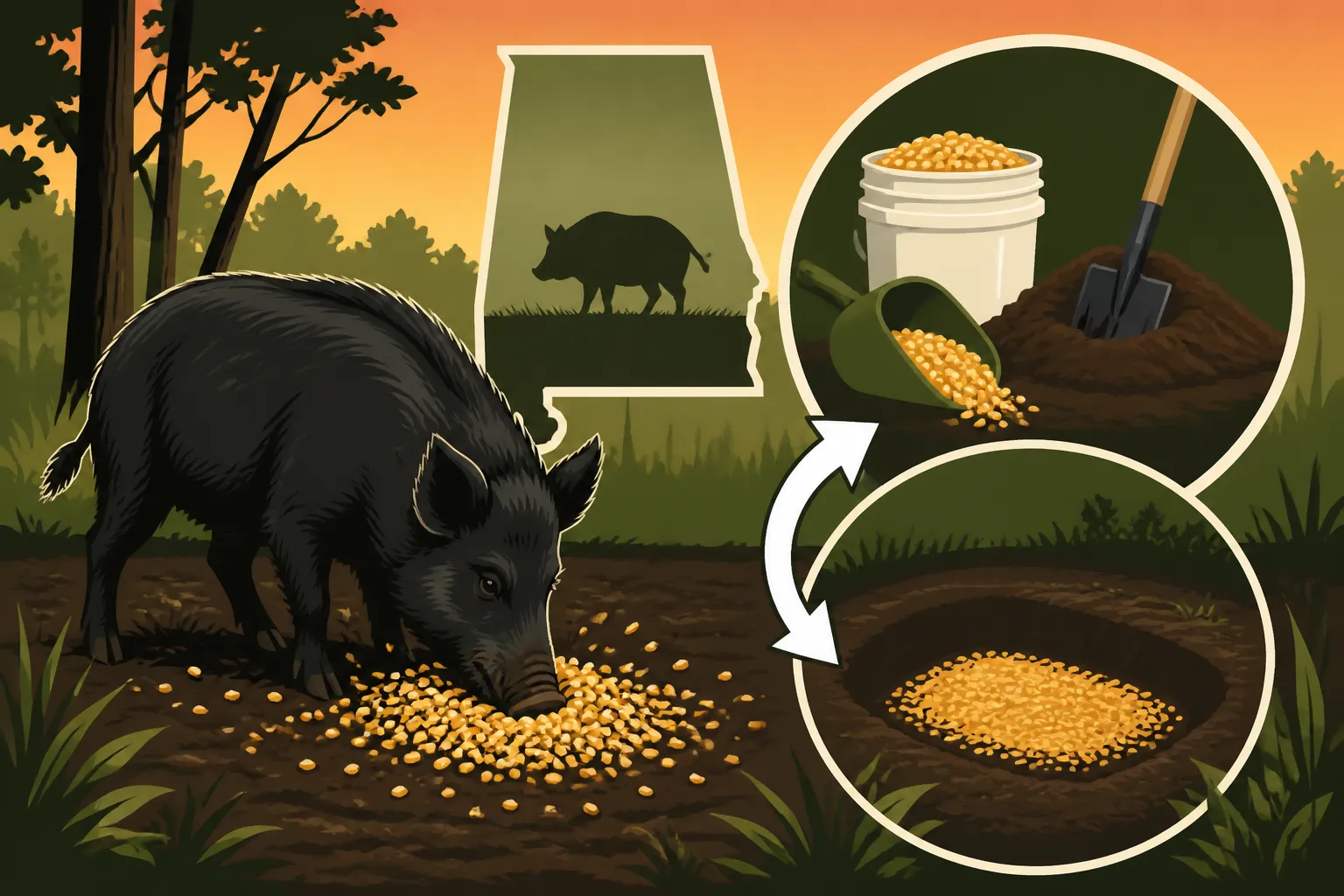
- Rooting Logs or Pipes: A more advanced method involves drilling holes in a heavy log and filling it with corn, or burying sections of PVC pipe with holes, allowing hogs to work for the bait. This can keep them at the site longer and make it more hog-specific, deterring other animals. If you opt for feeders, especially smaller ones, consider securing them to a tree with chains or heavy-duty straps. Hogs are incredibly strong and will happily knock over anything they can to get to the food. Using a reliable mapping application like GoHunt to plot your feeder locations and note bait levels after each visit ensures you maintain consistency and efficiency.
Step-by-Step Site Setup and Initial Baiting
Once you have your bait and dispersal method sorted, it's time for the physical setup. Begin by clearing a small, manageable area for your bait site. You don't need a huge open field; in fact, a slightly overgrown patch where you can clear a 10-15 foot diameter circle is often ideal. This gives the hogs enough room to mill around, but still provides them with surrounding cover for security. Remove any excessive brush or saplings directly where the bait will go, making it easy for you to replenish and for your trail cameras to get clear shots.
For your initial bait drop, be generous. You want to create an immediate, strong attractant signal. If you're using soured corn, this is the time to deploy its potent aroma. If you're using a feeder, fill it to capacity and scatter a good amount of corn around the base to draw them in quickly. Think of it as a grand opening for the hog buffet.
Immediately after setting up and baiting, deploy your trail cameras. This is arguably the most crucial step. Place cameras where they can get a good view of the entire bait site, ideally about 10-15 feet away and angled slightly downwards to capture both small and large hogs. These cameras are your eyes in the woods; they will tell you when the hogs find the bait, how often they visit, what time of day, and how many are in the sounder. This real-time intelligence is vital for determining your freshening schedule and your hunting strategy. As you set up these sites, noting their precise locations within your GoHunt account ensures you always know where your assets are and can plan your next visit effectively. Remember, even during setup, practice scent control as much as possible. Hogs are intelligent, and while they might tolerate some human scent, minimizing it from the start can help them feel more secure and become regular visitors faster.
Freshening and Maintaining the Bait Site for Consistent Activity
Building the bait site is only half the battle; maintaining it is where the real dedication comes in. Feral hogs are smart, and they'll quickly move on if the buffet runs dry or if they feel too much pressure. Consistent and strategic freshening is key to keeping them coming back.
Establishing a Regular Freshening Schedule
Your trail cameras are your best friend here. They're not just for counting hogs; they dictate your entire schedule. Rather than guessing, check your cameras regularly. See how quickly the bait is being consumed. Are the hogs cleaning it out every two days, or is it lasting longer? This intel allows you to establish a regular, but flexible, freshening routine. For example, if you see the bait is gone by day three, you know you need to be back out there on the third or fourth day to replenish.
Initially, you might need to replenish every 2-3 days, especially if you're using an open pile or a gravity feeder that gets hit hard. Once the hogs establish a pattern and become regular visitors, you might be able to stretch that out to 4-7 days, depending on how much bait they're consuming and the capacity of your feeder. The goal is to always have some bait available, even if it's just a little bit, to keep them habituated to the spot. Consistency is far more important than quantity. You don't want to over-bait and have corn spoil, which is not only wasteful but can also deter hogs if the bait turns too rancid. Using an app like GoHunt to log your camera checks and bait drops can help you visualize patterns and ensure you don't miss a replenishment.
If activity seems to drop off, sometimes simply changing up the bait can reignite interest. Maybe switch from plain corn to soured corn, or add a new commercial attractant. Hogs, like people, can get bored with the same old menu. Remember that baiting is a marathon, not a sprint. Be patient, be consistent, and let your cameras guide your decisions.
Adapting to Hog Behavior and Environmental Changes
Hogs aren't static creatures, and neither should your baiting strategy be. You'll need to adapt to their behavior and the environment to maintain consistent success. Sometimes, hogs might be shy, especially if they've been pressured elsewhere. In these cases, minimize your human scent and disturbance during visits. Gravity feeders, which are quieter than spin feeders, can also help maintain a low profile. If you're consistently spooking them, try changing your approach route or even waiting for a rainy day to visit, as the rain can wash away your scent.
Another common challenge is dealing with non-target animals. Deer, raccoons, and even squirrels can quickly deplete your bait intended for hogs. If this becomes a major issue, consider hog-specific feeders that require more effort to access, such as those with heavy lids hogs have to lift, or those that dispense bait only when rooted. You might also reduce the quantity of bait you put out, forcing the hogs to return more frequently for smaller meals.
Environmental factors like weather and seasonal food sources also play a significant role. Heavy rain can cause bait to spoil rapidly, especially soured corn, so consider covered feeders or smaller drops during wet periods. Conversely, during dry spells, hogs will naturally concentrate around water sources, making bait sites near creeks or ponds even more effective. Also, be aware of natural food cycles. When acorns drop in the fall, hogs might temporarily abandon your bait site for the abundant natural mast. Be patient during these times, continuing to bait consistently but understanding that their focus has shifted. This is also a good time to consider other methods, such as Trapping Alabama Feral Hogs, which can be particularly effective when natural food sources are plentiful. Using the tracking features in an app like GoHunt can help you note these environmental shifts and hog responses, building a valuable database of information over time to refine your strategy.
| Bait Type | Pros | Cons | Best Use |
|---|---|---|---|
| Whole Corn | Cost-effective, readily available, widely accepted | Attracts non-target species (deer, raccoons), can spoil | Primary bait, bulk feeding, maintenance |
| Soured Corn | Strong, far-reaching aroma; highly attractive | Messy to prepare, spoils quickly, short shelf-life | Initial attractant, boosting activity, wet conditions |
| Sweet Feed | Strong scent, quick attraction, sugary appeal | More expensive, spoils faster, attracts other critters | Supplement, quick draw, declining activity |
| Commercial Attractants | Specific appealing scents (cherry, anise) | Pricey, effectiveness varies, not always preferred alone | Enhancer, mixed with corn, scent boost |
| Old Grease/Molasses | Very strong, long-lasting scent; cheap | Messy, difficult to handle, can make a sticky mess | Pour over existing bait, strong long-range draw |
Finally, remember that baiting is often just one piece of the puzzle. If you’re seeing large numbers of hogs, or if your property is continuously re-invaded, combining baiting with other tactics like Night Hunting Hogs With Lights on Private Land or even organized Deer Drives on Alabama Public Land (though ensure you're following rules for hogs) can significantly increase your success in controlling these persistent pests. After you've successfully brought a hog to the bait site, knowing Shot Placement on a Feral Hog is critical for a humane harvest, and understanding Handling a Hog After the Shot will ensure you make the most of your efforts.
Disclaimer
Hunting regulations and best practices can change. Always consult the latest Alabama Department of Conservation and Natural Resources (ADCNR) guidelines before engaging in any hunting activities. This guide is for informational purposes only and does not supersede official regulations.