What Hog Trappers Use in Alabama
The relentless march of feral hogs across Alabama is a frustration every landowner and hunter understands all too well. These intelligent, destructive creatures decimate crops, destroy habitat, and compete with native wildlife for food sources, leaving a trail of costly damage in their wake. This guide is here to break down exactly what you need in your arsenal to effectively trap these wily beasts, covering everything from essential equipment to advanced strategies to reclaim your land.
The Foundation of Successful Hog Trapping in Alabama
Before you even think about setting steel, understanding the basic principles of hog behavior, habitat preferences, and the legal framework in Alabama is paramount. Trapping isn't just about throwing out some bait; it's a strategic game of chess against a smart and adaptable opponent.
Understanding Hog Behavior and Habitat
Feral hogs are creatures of habit, yet incredibly adaptable. They thrive in a diverse range of Alabama habitats, from the dense bottomland hardwoods along the Tombigbee River to the agricultural fields of the Black Belt and even the pine plantations of the Wiregrass Region. Their destructive rooting behavior is often the first clue they're in an area, turning lush fields into churned-up wastelands overnight. This damage is not just an eyesore; it can lead to significant financial losses for farmers, impacting everything from corn and soybean yields to peanut crops.
Hogs prefer areas with thick cover for bedding during the day, often moving to open areas to feed at night or during cooler parts of the day. They rely heavily on water sources, so creek bottoms, sloughs, and muddy wallows are prime locations to find consistent sign. Pay close attention to fresh tracks, rooting patterns, and rubs on trees, which indicate active travel corridors and feeding grounds. Understanding these patterns is your first step towards identifying optimal trap placement. They often travel in sounders, which are family groups, and their social structure means that if you catch one, there's a good chance more are close by. This knowledge directly influences the type of trap you'll choose, as you'll want something capable of holding multiple animals.
Legalities and Regulations for Trapping Hogs in Alabama
Alabama has some of the most liberal feral hog regulations in the country, recognizing the immense problem they pose. On private land, there's generally a year-round open season with no bag limit, and that applies to trapping as well. This means you don't need a specific season or tag to trap hogs, which is a huge relief for landowners desperate to control populations. However, it's not a complete free-for-all.
You must always have landowner permission to trap on private property. If you're not the landowner, ensure you have explicit consent. While state regulations are lenient, local ordinances in more suburban or populated areas might have specific rules regarding trapping, discharge of firearms for dispatch, or carcass disposal. It's always a good idea to check with your local sheriff's office or municipal authorities if you're unsure.
When dealing with public lands, the rules are much stricter, and trapping feral hogs is generally prohibited without specific permits or participation in ADCNR-managed programs. Always consult the Alabama Department of Conservation and Natural Resources (ADCNR) regulations for public lands. You can find more specific details about Alabama Feral Hog Regulations through the Outdoor Alabama website, which is an invaluable resource. Knowing these rules ensures you're trapping legally and responsibly.
Essential Trapping Equipment for Alabama Feral Hogs
With a solid understanding of hog behavior and regulations, it's time to dive into the tools of the trade. The right equipment can make all the difference between frustration and a full trap.
Trap Types and Designs
Choosing the right trap design is crucial, and it largely depends on the specific scenario, the number of hogs you expect to catch, and your budget. No single trap is perfect for every situation, but some designs have proven highly effective in Alabama.
-
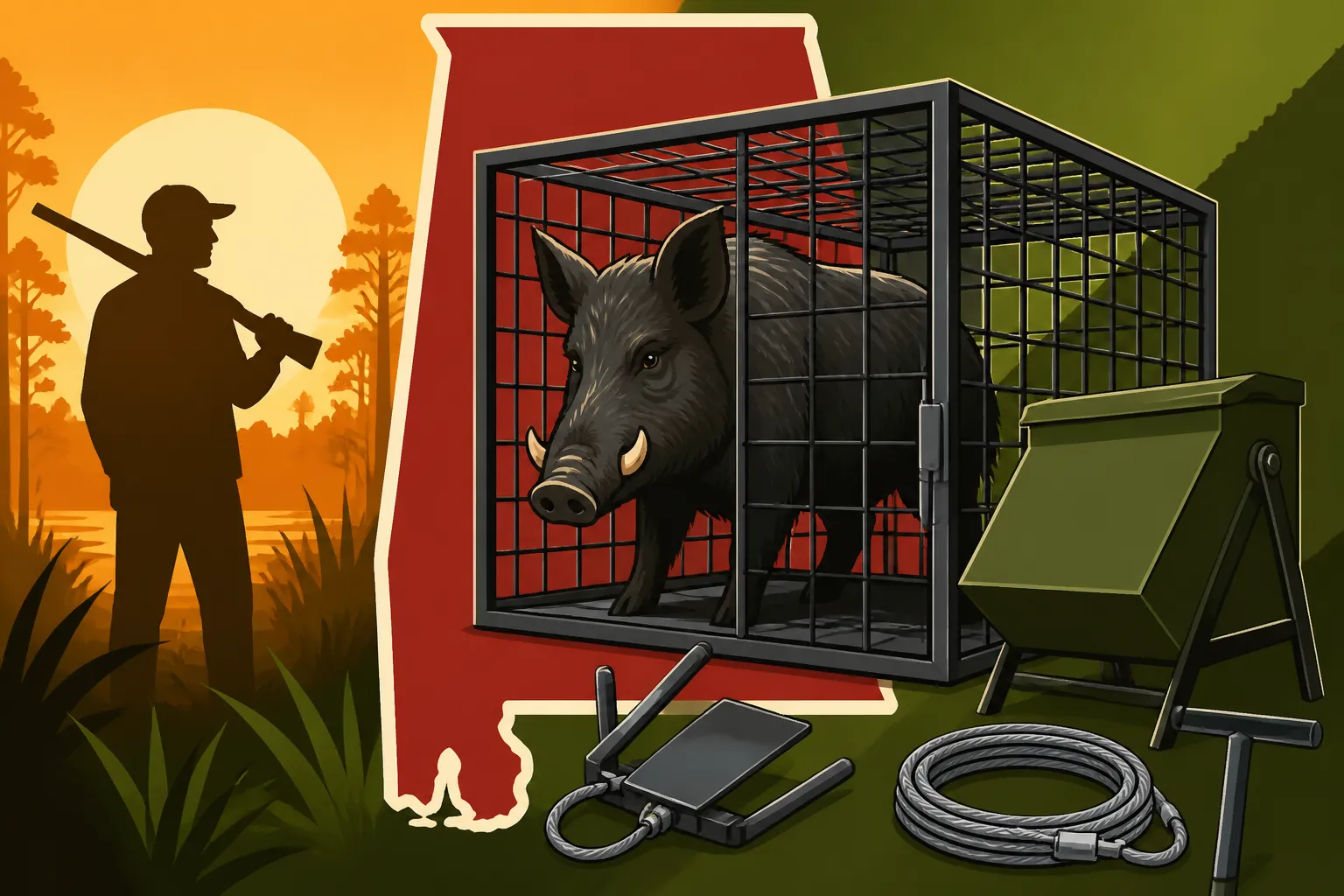
Box Traps: These are typically single-door traps, often made of heavy-gauge wire mesh or cattle panels, designed to capture one or two hogs at a time. They're usually rectangular or square, with a trip mechanism that drops the gate once a hog enters and pushes against a trigger plate or root stick.
- Pros: Relatively easy to move and set up, good for smaller areas or targeting specific hogs. Less visually intrusive than larger panel traps.
- Cons: Limited capacity. If a sounder comes in, only one or two hogs might get caught, making the rest trap-shy.
- Best Use: Smaller properties, targeting individual problem hogs, or when you only expect a few hogs in an area.
-
Panel Traps (Corral Traps): These are by far the most popular and effective type for large-scale hog control in Alabama. They consist of multiple heavy-duty panels (often cattle panels or hog panels) arranged in a circle or square, creating a large enclosure. They typically feature a "rooter door" or "guillotine gate" that swings inward, allowing hogs to enter but making it impossible to push out. Sometimes a "snare door" or "saloon door" with two inward-swinging panels is used.
- Pros: High capacity, capable of catching an entire sounder at once (sometimes 15-20+ hogs). Less intimidating to wary hogs due to the open top and large entry.
- Cons: Can be cumbersome to move and set up, requires more space. Higher initial investment in materials.
- Best Use: Larger properties, known hog travel routes, agricultural fields, or any location where you're targeting multiple hogs simultaneously. These are often considered the gold standard for Trapping Alabama Feral Hogs efficiently.
-
Boar Traps (Round Traps): These are a specialized type of panel trap, typically circular with a singular, often more robust, trip mechanism. They are designed to withstand the power of a large boar trying to escape.
- Pros: Extremely durable, excellent for large, aggressive hogs.
- Cons: Can be heavier and more expensive than standard panel traps.
- Best Use: When targeting particularly large, dominant boars that might destroy smaller traps.
Regardless of the type, look for sturdy construction. Hogs are incredibly strong, and a flimsy trap will quickly become a broken trap. Galvanized steel or heavy-gauge welded wire mesh is ideal. The door mechanism should be robust and reliable.
| Trap Type | Pros | Cons | Best Use Case |
|---|---|---|---|
| Box Trap | Portable, relatively inexpensive, simple | Low capacity, hogs can become trap-shy quickly | Small properties, targeting individual hogs |
| Panel Trap | High capacity, effective for sounders, versatile | Bulky, more expensive, requires more setup | Large properties, fields, targeting entire sounders |
| Boar Trap | Extremely durable, designed for large hogs | Heavy, specialized, higher cost | Targeting large, aggressive boars |
Effective Baiting Strategies
Bait is your primary lure, and getting it right is as important as the trap itself. Feral hogs are opportunistic omnivores, but certain baits are undeniably more effective in Alabama.
- Soured Corn: This is the undisputed king of hog baits. Take shelled corn, place it in a container (like a 5-gallon bucket or a barrel), add water and yeast, and let it ferment for several days to a week. The fermentation process creates a potent smell that hogs absolutely cannot resist. The strong aroma carries far and draws them in. You can learn more about this by looking into Building and Freshening a Hog Bait Site.
- Dry Corn: While less potent than soured corn, dry corn is still effective, especially if you're pre-baiting an area for an extended period. It's easier to handle and store.
- Commercial Hog Attractants: Many companies produce granular or liquid attractants that mimic the smell of fermented corn, sweet foods, or even sow urine. These can be sprayed around the trap area or mixed with corn to boost its appeal. Brands like Hog Wild, Wildgame Innovations, and Evolved Habitats offer various options.
- Sweet Treats: Doughnuts, pastries, and overripe fruit (especially melons) can be excellent secondary baits or used to add variety, though they spoil much faster.
Pre-Baiting is Key: Don't just set your trap and expect instant success. For at least 3-7 days before setting the trap door, scatter generous amounts of bait around the trap site and leading into the trap, ensuring the gate is propped open. This gets hogs accustomed to feeding in the area, building their confidence, and ensures the entire sounder enters the trap to feed without fear. Once they're consistently entering and cleaning out the bait, then you set the trap.
Advanced Trapping Systems
Technology has revolutionized hog trapping, making it more efficient and humane. These advanced systems are especially valuable for busy individuals or those managing large properties.
-
Smart Traps and Cellular Triggers: This is where modern innovation truly shines. Systems like Jager Pro, Pig Brig, or other similar remote-controlled trapping setups allow you to monitor your trap from your phone. A camera inside the trap sends live footage or photos to your device, letting you see exactly when an entire sounder has entered. Once you see all the hogs you want to catch are inside, you can remotely trigger the gate closure with a simple text or app command.
- Benefits: Maximizes catch rates by ensuring the entire sounder is inside before dropping the gate, minimizing trap-shyness. Reduces unnecessary trips to the trap, saving time and fuel. Allows for immediate notification of a catch.
- Cost: These systems represent a significant investment, often thousands of dollars, but for severe hog problems, the return on investment through reduced crop damage and successful removal can be substantial.
-
Remote Monitoring: Even without a remote trigger, a simple cellular trail camera facing into the trap can be a game-changer. This allows you to monitor hog activity, see when they're feeding in the trap, and plan your trips to check the trap more strategically.
- Brands: Companies like Browning, Reconyx, and Bushnell offer cellular trail cameras. You'll need a data plan for the camera, similar to a cell phone.
- Benefits: Alerts you to activity, helps confirm consistent feeding before setting the trap, and signals a successful capture without having to be physically present at the trap every day.
When scouting potential trap locations, tools like the GoHunt app can be invaluable for identifying property boundaries, topographic features, and even recent satellite imagery to pinpoint hidden travel corridors or feeding areas that might hold hogs. GoHunt also often provides excellent state-specific hunting information which can indirectly help understand broader hog trends.
Setting Up and Monitoring Your Hog Traps for Maximum Success
Once you have your equipment, proper setup and diligent monitoring are the next critical steps. This is where strategy meets execution.
Site Selection and Preparation
Choosing the perfect trap location is half the battle. Think like a hog.
- Travel Corridors: Hogs often use established trails, logging roads, or paths along creek bottoms. Place your trap near or directly on these routes.
- Feeding Areas: If hogs are actively rooting in a particular field (corn, peanuts, soybeans), placing a trap on the edge or even within the field can be highly effective. The smell of fresh bait will often pull them right off the existing food source.
- Water Sources: Hogs need water daily. Areas around ponds, creeks, and swampy sections are natural congregation points.
- Thick Cover: Hogs like to feel secure. Positioning your trap near dense brush or timber, where they feel less exposed, can increase their willingness to enter.
Preparing the Site:
Clear away any brush, weeds, or debris around the trap opening and inside. You want the area to look inviting and unobstructed. Consider building a small, subtle funnel out of fallen branches or natural debris leading to the trap entrance. This can subtly guide hogs towards the opening without making the trap itself look too obvious. Ensure the ground is relatively level to prevent the trap from tipping or the gate from malfunctioning.
The Importance of Consistent Monitoring
Trapping is not a set-it-and-forget-it endeavor. Consistent monitoring is vital for several reasons:
- Ethical Considerations: Trapped animals should not be left for extended periods without food, water, or protection from the elements or predators. Regular checks ensure their welfare.
- Maximizing Success: If a trap is sprung but no hogs are caught (perhaps a non-target animal tripped it, or a hog escaped), you need to reset it quickly. If a sounder is partially caught, you might need to make a swift decision to dispatch the trapped animals to prevent the others from becoming permanently trap-shy.
- Damage Control: A trapped hog can cause significant damage to the trap itself if left unchecked.
- Legal Compliance: While not usually specified for hogs, many general trapping regulations emphasize checking traps daily. Adhere to ethical trapping practices.
Remote monitoring systems, as mentioned before, are invaluable here. They allow you to know exactly when a hog enters the trap, letting you respond quickly. Even without them, aim to check your traps at least once every 24 hours, preferably in the early morning to deal with any nocturnal captures.
Processing and Handling Captured Hogs
Once you've successfully trapped hogs, the next step involves dispatch and processing. This is where a clear plan makes things much smoother.
- Humane Dispatch: For most trappers, dispatch involves a well-placed shot with a firearm. A .22 caliber rimfire rifle or handgun is usually sufficient for a headshot at close range, aiming for the brain. This is quick and humane. Always ensure a safe backdrop and adhere to all firearm safety rules. Some trappers prefer a shotgun with small game loads or even a crossbow. Understanding Shot Placement on a Feral Hog is crucial for a humane dispatch.
- Carcass Disposal/Utilization: Feral hogs provide excellent wild game meat. If you plan to utilize the meat, have a plan for field dressing and cooling the carcass quickly, especially in Alabama's warm climate. This means bringing ice chests, game bags, and sharp knives. Many processors in Alabama will handle feral hogs, so know your local options. If the meat is not desired or suitable (e.g., a large, old boar or a hog from a CWD-risk area), responsible disposal is necessary. This typically involves burying the carcass deeply enough to prevent scavenging, or taking it to a designated rendering facility if available.
- CWD Considerations: While CWD has primarily affected deer, the ADCNR monitors disease in all wildlife. If you're trapping near the CWD Management Zone (CMZ) in northwest Alabama, be aware of any specific guidelines for handling game. You can find more information about Handling a Hog After the Shot and CWD considerations through the ADCNR.
- Cleaning the Trap: After dispatch, clean any blood or debris from the trap. Hogs are smart, and the scent of death can make others wary of the trap. A quick rinse or sweep is often sufficient.
Troubleshooting Common Trapping Challenges
Even the best trappers encounter issues. Understanding how to adapt and overcome common challenges is part of the learning curve.
Dealing with Trap-Shy Hogs
Feral hogs are intelligent and quickly learn to associate traps with danger, especially if they've had a negative experience or seen other hogs caught. A "trap-shy" hog is notoriously difficult to catch.
- Pre-bait, Pre-bait, Pre-bait (Extended Period): If hogs are avoiding your set trap, go back to basics. Prop the door open, secure it so it cannot accidentally close, and pre-bait for a much longer period – sometimes two to three weeks. The goal is to get them to confidently walk in and out of the trap, eating bait without any negative consequence. You'll want to ensure you're Building and Freshening a Hog Bait Site consistently during this time.
- Camouflage: Hogs have excellent senses. While a metal trap is inherently unnatural, you can help it blend in. Cover the sides with natural vegetation like brush, palmetto fronds, or even camo netting. Place logs or stumps around the outside perimeter, making it look like a natural enclosure.
- Change Bait: Sometimes a change is all it takes. If soured corn isn't working, try a mix of dry corn and sweet pastries, or experiment with commercial attractants.
- Move the Trap: Hogs are creatures of habit, but they're also pressured animals. If a spot isn't producing, move the trap to a new, active sign area. Even a slight relocation can sometimes break their wariness.
- Different Trap Type: If you've been using a box trap with limited success on a sounder, consider investing in a larger, more open panel trap. The less enclosed feel can sometimes fool wary hogs.
Non-Target Animals and Incidentals
It's inevitable that you might catch animals other than hogs. This is a common concern for trappers.
- Raccoons and Opossums: These are frequent visitors to bait sites. They're usually harmless and can be released without issue. Simply open the trap door, and they'll typically scurry away.
- Deer: Catching a deer in a hog trap is a frustrating but not uncommon occurrence. Deer are attracted to corn. If a deer is trapped, approach calmly and slowly. Open the trap door and step back, allowing the deer to exit without panicking. A stressed deer can injure itself or you.
- Bears: While rare, Alabama does have a recovering black bear population, particularly in parts of Mobile and Washington counties, as well as the Little River Canyon area. If you trap a bear, do not approach the trap. Immediately contact the Alabama Wildlife and Freshwater Fisheries Division. They are equipped to handle bear removals safely and humanely. Remember, it's illegal to harm a black bear in Alabama. Why Alabama Has No Bear Season is an important read to understand these protections.
- Prevention: While you can't entirely eliminate non-target catches, focusing your baiting primarily on fermented corn (which deer are less interested in than sweet corn) and locating traps away from known deer bedding areas can help reduce incidents.
Always remember that trapping requires patience, observation, and a willingness to adapt your methods. The feral hog problem in Alabama is a significant one, and every hog removed helps protect our native ecosystems and agricultural interests. Your efforts are making a real difference.
Disclaimer
Hunting and trapping involve inherent risks. Always prioritize safety, understand and adhere to all local, state, and federal regulations. Consult with the Alabama Department of Conservation and Natural Resources (ADCNR) for the most current rules and requirements before engaging in any hunting or trapping activities. The information provided in this guide is for informational purposes only and should not be considered legal advice.