Hunting Hogs Without Bait or Dogs
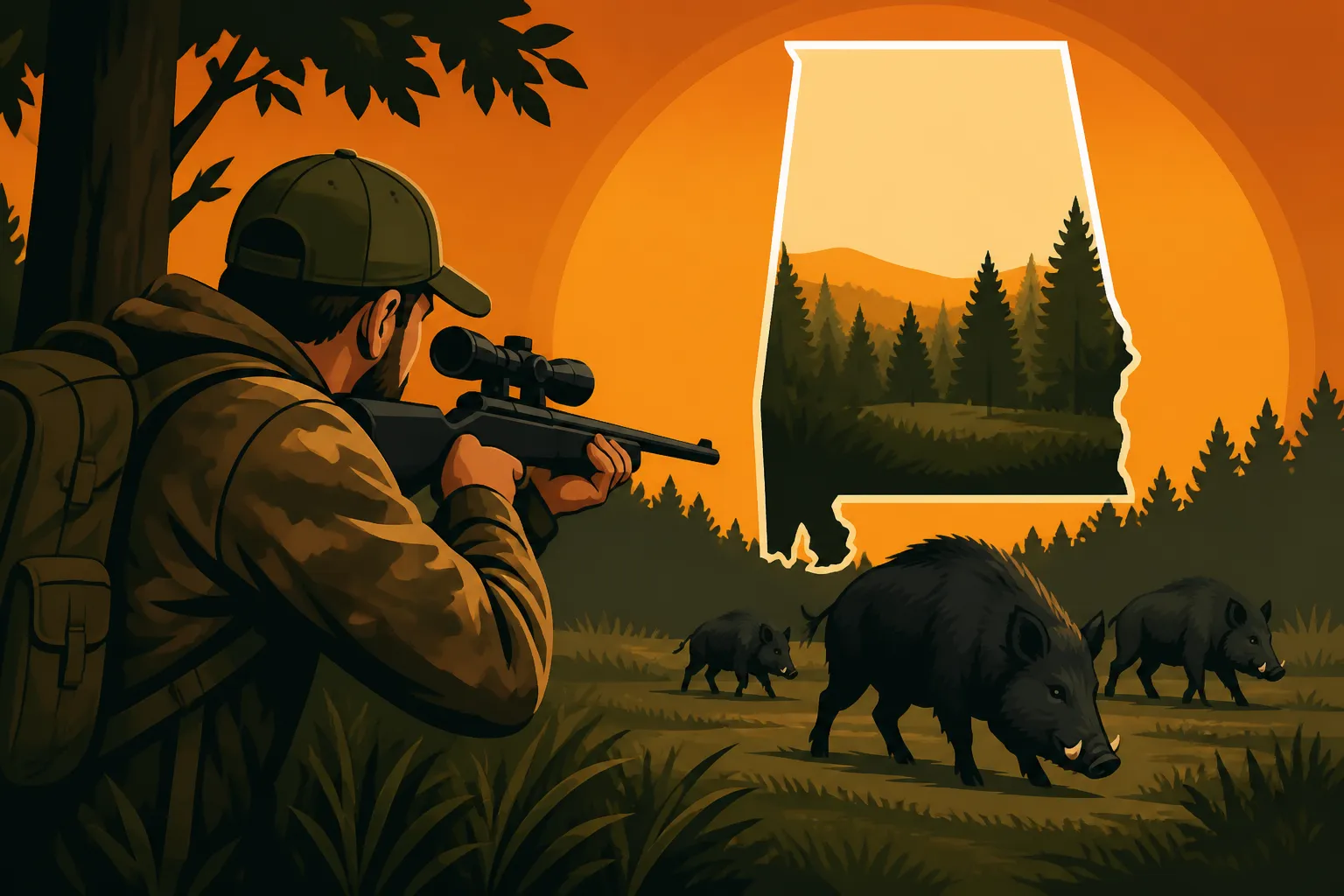
Feral hogs are a persistent problem across Alabama, causing immense damage to agriculture, destroying wildlife habitat, and competing with native species for food. While many hunters rely on baiting or dogs, these methods aren't always suitable, whether due to regulations on public lands, ethical preferences, or simply the desire for a different challenge. This guide dives deep into effective, fair-chase strategies for hunting hogs without the aid of bait or dogs, offering a truly rewarding experience for the dedicated hunter.
Understanding the Alabama Feral Hog
Before you can successfully hunt feral hogs without bait or dogs, you need to deeply understand their behavior, their preferred habitats, and why they're such a challenge to manage in our state. These aren't just big pigs; they're incredibly intelligent and adaptable animals that can make a mockery of a casual approach.
Hog Behavior and Biology
Alabama's feral hogs are highly intelligent and possess an incredible sense of smell, keen hearing, and surprisingly good eyesight, especially in low light. They are primarily nocturnal, particularly in areas with hunting pressure or during hot weather, though they can be active throughout the day in cooler temperatures or undisturbed areas. Their diet is incredibly varied, making them destructive omnivores that root for tubers, eat acorns, consume crops like corn and peanuts, and even prey on fawns and ground-nesting birds. This adaptability makes them thrive in nearly any environment.
One of the most significant factors contributing to their widespread presence is their prolific reproduction. Sows can breed as early as six months old and can have two litters a year, averaging 4-12 piglets per litter. This rapid breeding cycle means that even if you remove a few hogs, the population rebounds incredibly quickly. Understanding this biology underscores the year-round necessity of hunting them to try and keep their numbers in check, as detailed in our guide on Hunting Alabama's Year-Round Feral Hogs They often travel in family groups called sounders, which can range from a few individuals to dozens. Boars, especially older ones, tend to be more solitary, though they may associate with sounders for breeding.
Prime Alabama Habitat
Feral hogs can be found in all 67 counties of Alabama, but they thrive particularly in areas with dense cover, reliable water sources, and abundant food. Creek bottoms, river swamps, and dense pine plantations offer ideal bedding and escape cover. Agricultural fields, especially those growing corn, soybeans, or peanuts, provide irresistible feeding grounds. They'll often frequent the edges of these fields, especially where they meet thick woods or swamps.
In regions like the Mobile-Tensaw Delta, the Black Belt, and river drainages across the state, the combination of thick bottomland hardwoods, river cane, and adjacent agricultural areas creates perfect hog country. Even in more mountainous or pine-dominated areas, hogs will find the densest thickets and creek drainages to call home. When you're considering your hunt, think about where these elements converge. For a broader overview of their distribution, check out our piece on Feral Hogs Across Alabama.
The "Why" Behind No Bait or Dogs
Hunting hogs without bait or dogs is a challenging but immensely rewarding endeavor. On many public lands across Alabama, regulations prohibit the use of bait, and the use of dogs is often restricted to specific seasons or areas. This means if you're hunting places like Talladega National Forest or William B. Bankhead National Forest, you'll need to rely on your woodsmanship. Furthermore, some hunters simply prefer the pure challenge of fair chase, relying solely on their scouting skills and hunting acumen. It forces you to become a better tracker and woodsman, enhancing the overall hunting experience and offering a deeper connection to the wild. This method also aligns well with the spirit of reducing their impact through direct pressure, rather than relying on attractants or external assistance.
Mastering the Art of Hog Scouting Without Lures
When you take away bait piles and the tracking prowess of dogs, your success hinges almost entirely on your ability to scout effectively. This means learning to read the landscape like a book and identifying subtle signs that betray a hog's presence and patterns. It's a skill that pays dividends for any game animal, but it's absolutely crucial for unbaited, undogged hog hunting.
Identifying Fresh Sign
Hogs leave a lot of evidence of their passing, but distinguishing fresh sign from old is key to hunting them without bait. Look for these indicators:
- Tracks: Hog tracks are distinct, with two prominent toes and dewclaws that often register in soft ground, especially when they are running or walking in mud. Fresh tracks will have sharp edges, while older tracks will be rounded and weathered.
- Rooting: This is arguably the most obvious sign. Hogs use their powerful snouts to dig up soil, searching for roots, tubers, and insects. Look for disturbed earth, churned-up dirt, and even flipped-over sod. The freshness can be gauged by how moist or dry the exposed soil is, and whether any vegetation is still attempting to recover.
- Rubs: Hogs love to rub against trees, fence posts, or anything sturdy to remove mud, parasites, and shed hair. Look for mud smears and coarse hair stuck to trees, usually a few feet off the ground. Again, fresh rubs will have moist mud and clean-looking hair.
- Wallows: Hogs cool off and remove parasites by rolling in muddy puddles. These wallows will be distinct depressions in the mud, often with hair or dried mud along the edges. Recent activity will mean muddy, disturbed water.
- Scat: Hog droppings vary widely depending on their diet but are often dark, tubular, and segmented. Look for freshness by moisture and insect activity.
- Trails: Hogs create distinct trails, especially through dense cover, leading between bedding, feeding, and watering areas. These trails will be well-worn, often with rooting along the edges.
- Smell: If you have a good nose, you might even detect the musky, pungent odor of hogs, especially near bedding areas or fresh wallows. This is a very strong indicator of recent presence.
Learning to discern how fresh these signs are is a learned skill that comes with time afield. The fresher the sign, the closer you are to active hogs.
Leveraging Technology and Reconnaissance
Modern technology can be an invaluable asset for scouting hogs, even without bait. Mapping applications like GoHunt, onX Hunt, or the Outdoor Alabama app are fantastic tools. They allow you to study aerial photos and topographical maps, identifying key features from your couch. Look for:
- Dense Cover: Thick pine plantations, river cane thickets, clear-cuts with heavy regrowth, and deep creek bottoms. These are prime bedding areas.
- Water Sources: Ponds, creeks, sloughs, and muddy seepages are all attractive to hogs, especially in warmer months.
- Funnels and Pinch Points: Narrow strips of cover between open fields, creek crossings, or saddles on ridges where hogs are likely to travel.
- Food Sources: Identify agricultural fields, oak flats that are dropping acorns, or areas with wild fruit like muscadines or persimmons.
I personally like to use GoHunt to mark potential wallows or dense cover areas I've identified from satellite imagery. Then, I'll put boots on the ground to confirm the activity. For insights into general public land scouting, you might want to review Scouting Alabama Public Land Before Season. Remember, while these apps are powerful, they are no substitute for in-person reconnaissance. Walking these areas, especially before the season or during midday, allows you to find fresh sign, confirm travel routes, and plan your approach. Setting out a few non-baited trail cameras on active trails can also help you pattern their movements without attracting them.
Seasonal Patterns and Adaptability
Hogs, like any wild animal, adapt their behavior based on the season, weather, and available food. In the scorching Alabama summer, they'll be even more tied to water sources and dense, shady cover, often moving almost exclusively at night. During cooler fall and winter months, especially when acorns are dropping, they might be more active during the day. Following a big rain, you'll often find them rooting more heavily in softer ground. A cold snap might push them into thicker thermal cover. Your scouting efforts need to be dynamic, always considering these changing variables. If you've studied how to interpret aerial photos for deer movements, the same principles apply to hogs; take a look at Reading Aerial Photos for Piedmont Deer.
Stalking and Still-Hunting Tactics for Hogs
Once you've identified an area with fresh hog sign, the real work begins. Stalking and still-hunting require immense patience, stealth, and a deep understanding of the wind. These methods put you directly into their world, challenging you to outwit a highly perceptive animal on its own terms.
Wind, Scent, and Stealth
The hog's most potent defense is its nose. A hog's sense of smell is far superior to a deer's, and they will bust you every single time if they catch your wind. Therefore, playing the wind is non-negotiable. Always hunt into the wind or with a crosswind that carries your scent away from where you expect the hogs to be. Use a wind-checker puff bottle constantly to monitor shifting air currents, especially in variable terrain like creek bottoms or over ridges.
Scent control is also critical. While no product makes you invisible to a hog's nose, showering with scent-free soap, washing your hunting clothes in scent-free detergent, and storing them in airtight bags can reduce your human odor signature. Avoiding strong-smelling foods or drinks before a hunt is also wise. When moving, try to stay low, use natural cover, and minimize unnecessary movements. Every step should be deliberate and quiet.
The Silent Approach
Still-hunting is the art of moving slowly and deliberately through an area, stopping frequently to observe and listen. This is particularly effective in thick cover where hogs might be bedded or feeding. Take one or two steps, then pause for several minutes, scanning the area ahead with your eyes, not just looking for an entire hog, but for parts of one—a dark patch, a flicker of an ear, a moving branch. Listen for their distinctive sounds: rooting noises, grunts, squeals, or the rustle of leaves as they move.
Your footwear is crucial. Soft-soled boots or even moccasins can help you move silently, feeling for sticks and rocks underfoot before you put your full weight down. Focus on walking the path of least resistance, avoiding crunchy leaves, dry sticks, and noisy brush. When you spot a hog, the stalk begins. Plan your route carefully, staying downwind and using every bit of available cover. Move only when their heads are down, or they are otherwise distracted, freezing immediately if they look up in your direction. Patience is paramount; a good stalk can take hours for a close shot.
Reading the Terrain and Anticipating Movement
As you move through the woods, constantly read the terrain and try to anticipate where hogs might be. Are you approaching a dense thicket known for bedding? Slow down even more. Is there a creek crossing ahead that leads to an acorn flat? Be prepared. Hogs often travel along the path of least resistance but will duck into the thickest cover available when pressured or during midday.
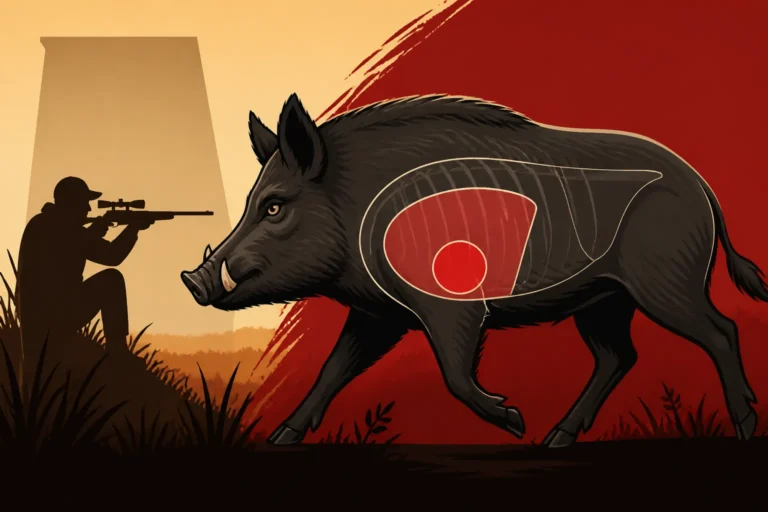
Use natural features to your advantage. Walk along the high side of a creek bank to get a better view into the bottom. Use the crest of a ridge to peer over without silhouetting yourself. If you're hunting during the day, focus on the shadiest, coolest, and densest areas. In the early morning or late evening, expand your search to the edges of feeding areas. For more details on the nuances of shot placement on these resilient animals, ensure you've familiarized yourself with Shot Placement on a Feral Hog.
Ambush and Observation Techniques
Sometimes, the best offense is a good defense – or, in hunting terms, a well-placed ambush. Setting up on a travel corridor, a water source, or an observation point can be incredibly effective when you know hogs are in the area but are proving difficult to stalk.
Natural Funnels and Travel Corridors
Just like deer, hogs use predictable travel routes between their bedding, feeding, and watering areas. These often include:
- Creek Crossings: Hogs will almost always follow a creek or stream and cross at the easiest points.
- Ridge Saddles: Low spots on a ridge that provide an easier path over elevation.
- Timber Edges: The line where a dense woodlot meets an open field or a different timber type.
- Fence Lines or Property Boundaries: Hogs often follow these linear features.
- Narrow Strips of Cover: Small patches of dense woods that connect larger tracts.
Scouting these areas for fresh sign is crucial. Once identified, set up your stand or ground blind downwind of the anticipated travel route, ensuring you have clear shooting lanes. Being a few minutes early is essential, as hogs can show up unexpectedly.
Water Sources and Wallows
In Alabama's typically warm climate, hogs need water. Setting up near a reliable water source, especially during dry periods, can be a highly effective strategy. Look for ponds, streams, muddy seepages, or even drainage ditches that hold water. Wallows are also prime spots; if you find a heavily used wallow with fresh mud, there's a good chance hogs will return.
When setting up near water, consider the approach routes hogs will use. They'll often approach from dense cover, so position yourself to intercept them before they reach the water or while they are at it. Again, wind direction is absolutely critical here. Remember, you're not trying to attract them to the spot; you're simply intercepting their natural patterns. After the shot, knowing how to properly handle the animal is critical, so be sure to read Handling a Hog After the Shot.
Elevated and Ground Blind Setups
For ambush hunting, both elevated treestands and natural ground blinds can be effective.
- Treestands: Provide an elevated vantage point, which helps with scent dispersal (though it doesn't eliminate it) and allows you to see over dense undergrowth. Place your stand in a tree that offers good cover and clear shooting lanes downwind of a funnel or active trail. Ensure your entry and exit routes are quiet and won't spook hogs.
- Ground Blinds: Can be extremely effective if well-constructed and camouflaged. Use natural materials like downed limbs, brush, and palmetto fronds to break up your outline. Set up in dense cover along a trail or at the edge of a feeding area. The key is to blend in completely and remain absolutely still. Since you're not using bait, the hogs won't be looking for a specific food source at your location, making your concealment even more vital.
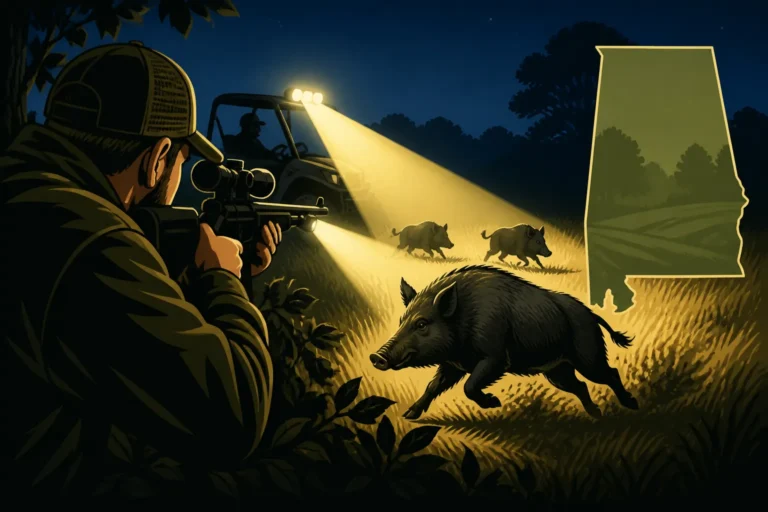
Choosing the right time to sit these spots is also important. Early morning and late evening are often prime times, but don't discount a midday sit during cooler weather or if you've patterned hogs moving during those hours. While this guide focuses on hunting without bait or dogs, it's worth noting that other methods like Night Hunting Hogs With Lights on Private Land, Running Dogs on Alabama Feral Hogs, or even Trapping Alabama Feral Hogs, exist and are useful depending on circumstances and regulations.
Key Hog Signs and Their Interpretation
| Sign | Description | Freshness Indicator | Best Time to Hunt | Notes |
|---|---|---|---|---|
| Rooting | Disturbed, churned-up soil; can range from small patches to large areas. | Exposed moist earth, recent plant damage. | Day or night, depending on weather and pressure. | Indicates active feeding. Follow the freshest sign. |
| Tracks | Two prominent toes, often with dewclaws visible in soft ground. | Sharp edges, no weathering. | Shortly after rain, morning, evening. | Reveals direction and size of travel. |
| Rubs | Mud and hair rubbed off on trees, posts, or rocks. | Moist mud, coarse hair, distinct odor. | Anytime, but activity peak after wallowing. | Indicates hogs use area for grooming/marking. |
| Wallows | Muddy depressions where hogs roll to cool off and remove parasites. | Muddy, disturbed water; fresh tracks nearby. | Hot weather, midday. | Direct indicator of resting/cooling areas. |
| Scat | Droppings vary by diet, usually dark, tubular, and segmented. | Moist, presence of insects. | Anytime. | Indicates recent passage, though less precise than other signs. |
| Trails | Well-worn paths through dense vegetation. | Fresh tracks, broken vegetation, rooting. | Morning/evening when hogs are traveling. | Connects bedding, feeding, and watering areas. Ideal for ambushes. |
| Smell | Strong, musky odor, especially near bedding areas or fresh wallows. | Potent, distinct. | Anytime, but strongest in dense, undisturbed areas. | Requires keen sense of smell, but a strong indicator of nearby presence. |
Disclaimer
Hunting is an inherently dangerous activity. Always prioritize safety, understand and adhere to all Alabama hunting regulations, and ensure you have proper training and equipment. The information provided here is for educational purposes only and should not replace professional guidance or official state regulations. Be aware of Alabama Feral Hog Regulations, as they can change.