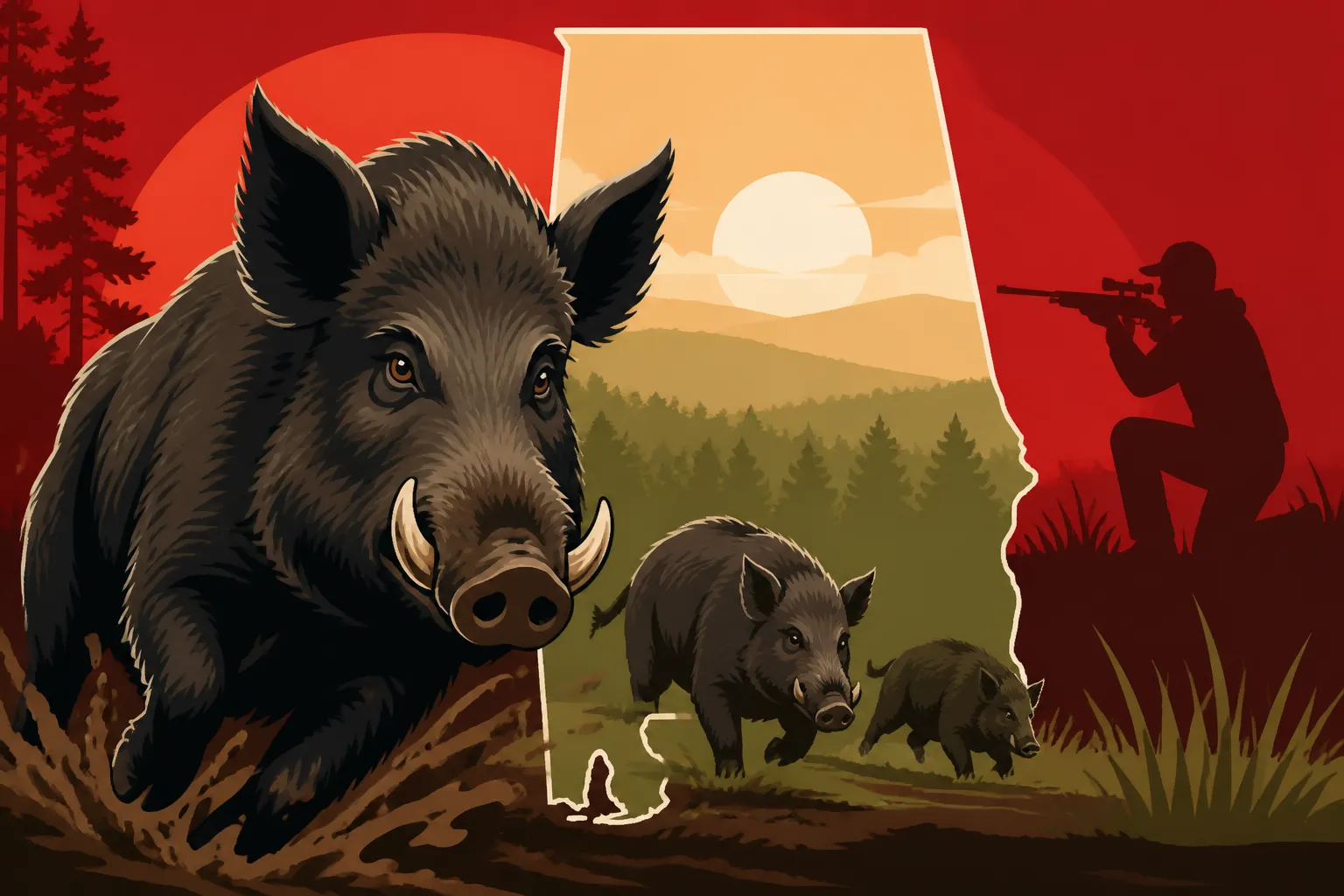
Feral Hogs Across Alabama
Alabama's landscape, rich in biodiversity and natural beauty, is unfortunately facing an unrelenting siege from an invasive species that challenges both our wildlife and our agricultural heritage: feral hogs. These incredibly adaptable and destructive animals cause millions of dollars in damage annually, disrupt delicate ecosystems, and present a persistent challenge for landowners and wildlife managers alike. This guide dives deep into the world of feral hogs in Alabama, exploring their biology, the severe problems they cause, effective hunting and trapping methods, and how you can join the fight against them.
The Feral Hog Problem in Alabama: A Growing Crisis
For anyone who spends time outdoors in Alabama, whether hunting, farming, or just enjoying nature, the presence of feral hogs is undeniable. What might have once been a scattered problem has now escalated into a full-blown crisis, impacting nearly every corner of our state. The sheer numbers and destructive habits of these animals make them one of the most pressing wildlife management issues we face, and understanding the scope of this problem is the first step toward effective mitigation.
How Wild Hogs Spread Across Alabama
The proliferation of feral hogs across Alabama is a complex story, rooted in a combination of historical factors and the hogs' incredible biological advantages. Historically, domestic pigs were brought to North America by early European settlers, and many escaped or were released to forage freely, eventually forming wild populations. Over time, these wild pigs interbred with European wild boar, introduced to parts of the U.S. for hunting, resulting in the hybrid "feral hog" we see today. In Alabama, their spread was exacerbated by illegal translocation – individuals catching hogs and releasing them in new areas to establish hunting opportunities, often without understanding the profound ecological consequences. This intentional, and highly detrimental, practice dramatically accelerated their dispersal, allowing them to colonize areas they might not have reached naturally for decades. Today, from the river bottoms of the Mobile-Tensaw Delta to the foothills of the Appalachians, you'd be hard-pressed to find a county unaffected by their destructive presence.
The hogs' innate ability to travel significant distances, coupled with their opportunistic nature, also contributes to their expansion. A sounder (a group of hogs) can move several miles in a single day, quickly spreading into new territories if undisturbed. Rivers and large creeks, which might act as barriers for other species, often serve as travel corridors for hogs, allowing them to infiltrate new drainages. As their population density increases in one area, younger boars and sows will naturally disperse, seeking new, less competitive territories with abundant food sources. This constant outward pressure ensures that once established, they are rarely contained to a single property or watershed.
Furthermore, their ability to thrive in diverse habitats is a key factor. Whether it's dense pine plantations, hardwood bottomlands, agricultural fields, or even suburban fringes, feral hogs adapt remarkably well. They utilize thick cover for bedding and farrowing (giving birth), open areas for rooting and foraging, and water sources for drinking and wallowing. This adaptability means there are few places in Alabama that offer a genuine refuge from their expansion, making their management a statewide endeavor.
Why Alabama Hogs Have No Natural Predator Check
One of the primary reasons for the uncontrolled explosion of feral hog populations in Alabama is the almost complete absence of effective natural predators. In their native ranges in Europe and Asia, wild boar face predation from large carnivores like wolves and bears, which help regulate their numbers. Here in Alabama, however, our ecosystem lacks predators capable of consistently preying on adult feral hogs, especially the large, tough boars. While coyotes and bobcats might occasionally take a very young piglet, they are simply not equipped, or numerous enough, to make a significant impact on the overall hog population.
This lack of natural population control means that without human intervention, feral hog numbers will continue to skyrocket. A single sow can have multiple litters of piglets per year, with each litter averaging 4-8 young, and sometimes more. Without substantial predation pressure, the vast majority of these piglets survive to adulthood and begin reproducing themselves. This exponential growth makes them incredibly challenging to manage, as hunters and trappers are essentially trying to play catch-up with an ever-expanding target. The mathematical reality is that to effectively reduce a hog population, an estimated 70% or more of the hogs must be removed annually, a figure that highlights the monumental task at hand.
The robust nature and formidable defenses of adult feral hogs further deter potential predators. Their thick hides, sharp tusks (on boars), and aggressive disposition make them dangerous opponents. A mature sow will fiercely defend her piglets, and a group of hogs can present a united front against perceived threats. This combination of high reproductive rates and low natural mortality creates an imbalance that allows hogs to dominate ecosystems, outcompeting native wildlife for resources and altering habitats with their destructive behavior.
Crop Damage Hogs Cause in Alabama
The economic toll inflicted by feral hogs on Alabama's agricultural sector is staggering. Farmers across the state routinely face substantial losses due to hogs rooting up fields, trampling crops, and contaminating feed. Imagine spending countless hours and significant financial resources planting a field of corn, soybeans, or peanuts, only to have a sounder of hogs move through overnight, turning neatly planted rows into a war zone of dug-up earth and destroyed vegetation. The frustration is immense, and the financial impact can be devastating for small and large operations alike. The U.S. Department of Agriculture estimates that feral hogs cause over $1.5 billion in damages nationwide each year, and Alabama certainly contributes a significant portion to that figure.
Beyond direct crop destruction, hogs also damage vital farm infrastructure. They'll tear up irrigation lines, break through fences, and create deep ruts in fields that can damage farm equipment during harvest. This secondary damage adds additional costs and headaches for farmers, who are already operating on thin margins. The relentless pressure from hogs forces many farmers to invest in costly mitigation strategies, such as electric fences, more intensive trapping efforts, or even hiring professional hog removal services, further eroding their profitability. These are costs that would be completely unnecessary if it weren't for these invasive animals.
The impact isn't limited to large-scale agriculture either. Small family gardens, pecan orchards, and even manicured lawns in rural and semi-rural areas are susceptible to rooting damage. The sight of a once-pristine yard or a meticulously tended vegetable patch torn to shreds by a sounder of hogs overnight is a common, and disheartening, experience for many Alabamians. The relentless nature of this damage means that merely removing a few hogs isn't enough; sustained, comprehensive management efforts are required to protect valuable crops and property.
Biology and Behavior of Alabama's Feral Hogs
To effectively combat the feral hog problem, it's crucial to understand the enemy. Feral hogs are not simply wild versions of farm pigs; they possess a unique blend of genetics and behaviors that make them incredibly resilient and challenging to control. Their biology and social structure are key factors in their success as an invasive species in Alabama.
Understanding Feral Swine Genetics and Origin
The term "feral hog" in Alabama typically refers to a descendant of domestic swine that have either escaped captivity or been intentionally released and adapted to survive in the wild. However, it's more complex than that. Many of Alabama's feral hogs are actually hybrids, carrying genetic material from both European wild boar (introduced for sport hunting over decades) and domestic swine. This genetic mix gives them the worst of both worlds, so to speak, in terms of their impact. From the domestic side, they retain the high reproductive rates and adaptability to various food sources. From the wild boar lineage, they often inherit traits like dense hair, larger tusks, camouflage coloration, increased wariness, and a more pronounced "razorback" profile.
This hybridization contributes to their success as an invasive species. The wild boar genetics can make them tougher, more elusive, and better equipped to handle the challenges of a truly wild existence, while the domestic genetics contribute to their incredible fecundity. It's a combination that allows them to outcompete and outmaneuver many native species, all while displaying behaviors honed over generations of survival in the wild. Knowing that you're dealing with a creature that has been shaped by both human selection and natural selection for toughness and prolific breeding helps frame the challenge of management.
Furthermore, understanding their origins helps explain why their appearance can vary so wildly across the state. You might encounter hogs that look almost identical to domestic pigs, with solid black, white, or spotted coats, particularly in areas where recent escapes are common. In other, more remote areas, you might find hogs with coarse, bristly, dark hair, often with a grayish undercoat, and sometimes featuring the classic "striped piglet" camouflage pattern typical of true wild boar. This genetic diversity, along with their physical hardiness, has allowed them to thrive in virtually every ecological niche across Alabama.
Reproduction Rates and Population Dynamics
If there's one factor above all that defines the feral hog problem, it's their astounding reproductive capacity. Feral sows can begin breeding as young as six months of age, and they can produce multiple litters per year, often two or even three under ideal conditions. Each litter typically consists of 4 to 8 piglets, but litters of 10 or 12 are not uncommon. This means a single sow can potentially add 8-24 new hogs to the population annually. When you consider that their offspring can also start reproducing within their first year, the population growth is truly exponential. It's an uphill battle for any management strategy.
This rapid turnover rate makes population control incredibly difficult. You could remove a significant number of hogs from an area, but if breeding-age sows remain, the population can rebound to its previous levels astonishingly quickly. Biologists often talk about "compensatory reproduction," where populations respond to high mortality rates by increasing their breeding efforts. This means sows might start breeding earlier, have larger litters, or breed more frequently if their numbers are being heavily culled. This biological resilience means that sustained, intensive efforts are always necessary to keep populations in check, let alone reduce them.
The social structure of feral hogs also plays a role in their population dynamics. They live in sounders, typically consisting of one or more sows and their offspring, often spanning several generations. Mature boars are usually solitary but will join sounders during breeding season. This sounder structure offers protection and helps ensure the survival of young. When attempting to trap or hunt, understanding these family units can be advantageous. For example, removing an entire sounder through trapping can be more effective than scattering them through hunting, as scattered individuals may simply regroup or form new breeding units elsewhere. The challenge is in trying to stay ahead of an animal whose biological imperative is to breed and spread.
Diet and Rooting Habits
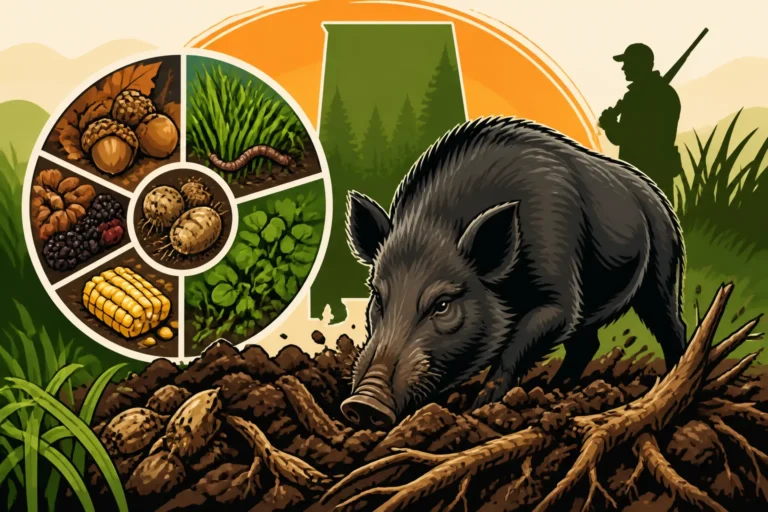
Feral hogs are opportunistic omnivores, meaning they'll eat just about anything they can get their snouts on. This incredibly varied diet is a major reason they are so successful and destructive. Their primary food source often consists of plant material: roots, tubers, bulbs, nuts (especially acorns and pecans), fruits, seeds, and green vegetation. They are particularly fond of mast crops, like the acorns that are so critical to native deer and turkey populations. When hogs root through a patch of woods, they're not just eating; they're actively competing with and diminishing the food supply for other wildlife.
Beyond plants, their diet also includes a significant amount of animal matter. They will readily consume insects, worms, eggs of ground-nesting birds (like quail and turkeys), fawns, and even small rodents and reptiles. This predatory behavior makes them a direct threat to many of Alabama's native species. Imagine a turkey hen's nest, meticulously built and containing a clutch of precious eggs, being discovered and devoured by a passing sounder of hogs. This is a common occurrence and a major factor in the declining populations of some of our most beloved game birds.
Their most visually striking and damaging behavior is rooting. Using their strong snouts, hogs dig extensively into the soil, tearing up vegetation as they search for roots, tubers, and invertebrates. This rooting activity churns the soil, destroys delicate plant communities, and causes significant erosion, especially on slopes or near water bodies. In agricultural fields, it completely devastates crops. In forests, it disrupts the natural seedbed, preventing the regeneration of native plants and trees. The aftermath of a sounder's rooting spree can look like a rototiller went wild, leaving behind a barren, disturbed landscape.
Signs of Feral Hog Presence and Scouting
Identifying the presence of feral hogs early is critical for effective management. They are often elusive and nocturnal, making direct sightings challenging. However, these destructive animals leave behind a clear trail of evidence. Learning to read these signs is like learning a new language – a crucial skill for any Alabama hunter or landowner trying to understand where, when, and how hogs are impacting their property.
Identifying Rooting and Wallowing Sign
The most obvious and unmistakable sign of feral hog activity is rooting. As mentioned, hogs use their powerful snouts to dig up the soil in search of food. This creates disturbed areas that can range from small, shallow scrapes to extensive, deep trenches that look like a plowing disc has passed through. You'll typically find rooting in soft, moist soil, often near water sources, in bottomland areas, or along field edges where food is abundant. The scale of the rooting can tell you a lot: widespread, deep rooting indicates a large sounder or prolonged activity in an area. Fresh rooting will have moist, exposed soil, while older rooting will be dry and might have some new vegetation attempting to sprout.
Wallowing is another clear indicator, especially during warmer months or in areas with soft, muddy soil. Hogs wallow in mud and water to cool down and to coat themselves in mud, which helps deter parasites like ticks and provides a protective layer against insects. These wallows are essentially muddy depressions, often bowl-shaped, with churned-up mud and sometimes hair rubbed off on nearby trees or stumps. If you find a wallow, it's a sure sign that hogs are frequenting the area, and it's likely part of their travel pattern between bedding areas and food sources. They'll often return to the same wallows, making these key scouting locations.
When you encounter rooting or wallowing, take note of the freshness. Damp, exposed soil or mud still wet to the touch indicates very recent activity, perhaps within the last 24 hours. This is prime time to consider a hunt or trap setup. Dried-out soil or mud with a crust on top means the activity is older, but still tells you hogs are using the general area. A good strategy is to use the GoHunt mapping tool, which many Alabama hunters find invaluable, to mark these locations and build a picture of hog movement patterns over time. Understanding these signs is step one in making a plan to intercept them.
Scouting for Hog Trails and Rubs
Just like deer, feral hogs create discernible trails as they move through their habitat, often connecting bedding areas to feeding grounds and water sources. These trails can be subtly different from deer trails; hog trails tend to be wider, more deeply worn, and often have a "churned" appearance, especially in softer ground, due to their short legs and powerful bodies. Look for these main travel corridors, particularly along creek bottoms, through dense thickets, and along property lines. Identifying these superhighways of hog movement is crucial for intercepting them.
Hogs also leave rubs, though they are different from deer rubs. Instead of antlers scraping bark, hogs will rub their bodies against trees, fence posts, or even power poles, leaving behind mud and hair. These "rub trees" are often found near wallows or along well-used trails. They serve a dual purpose: relieving itching and depositing scent as a form of communication. The height of the mud and hair can give you an idea of the size of the hogs using the area. Fresh, wet mud on a rub tree, coupled with coarse, dark hair, is a strong indicator of recent activity.
Tracks are another obvious sign. Feral hog tracks are often confused with deer tracks, but there are key differences. Hog tracks tend to be rounder, and the dewclaws (the two smaller toes at the back of the foot) usually register more clearly than on a deer track, especially in soft ground, appearing wider and further out from the main hooves. The best way to learn the difference is to study examples and compare them in the field. When scouting, pay close attention to the size and freshness of tracks, as this can give you insights into the number and size of hogs present. Combining observations of rooting, wallowing, trails, rubs, and tracks provides a comprehensive understanding of hog activity.
Using Trail Cameras for Hog Detection
Trail cameras are an invaluable tool for scouting feral hogs and can dramatically increase your chances of success. Unlike deer, which might appear somewhat predictably, hogs can be incredibly inconsistent in their timing. They might be nocturnal one week and diurnal the next, or disappear from an area for days only to reappear suddenly. Trail cameras provide continuous monitoring, allowing you to establish patterns you might otherwise miss. Place cameras on well-used trails, near fresh rooting, at known wallows, or over bait sites.
When using trail cameras for hogs, focus on settings that capture movement and provide good night vision. Hogs are often most active during low-light hours. A camera with a fast trigger speed and good recovery time is beneficial to capture multiple images or videos of a sounder moving through. Over time, your cameras will help you determine not only the presence of hogs but also their travel routes, the size of sounders, the ratio of boars to sows, and their general activity times. This intel is gold for planning your hunting or trapping efforts.
Many modern trail cameras offer cellular capabilities, allowing you to receive images directly to your phone. This means you can monitor hog activity in real-time without disturbing the area by physically checking cameras. For example, if you get a picture of a sounder hitting a bait site, you can plan an immediate trip to the stand or set a trap. This remote monitoring feature is especially useful when managing large properties or distant hunting spots. The data collected from your trail cameras will be the backbone of your strategy to effectively remove Alabama's Year-Round Feral Hogs.
Legal Hunting and Trapping Regulations for Hogs in Alabama
One of the unique aspects of dealing with feral hogs in Alabama is the relatively liberal regulations surrounding their take. Recognizing the immense damage they cause, the state has empowered landowners and hunters to actively pursue and remove these destructive animals with fewer restrictions than native game species. However, it's still crucial to understand the rules to ensure you're hunting and trapping legally and ethically.
Alabama's Year-Round Hog Rule on Private Land
Perhaps the most significant regulation regarding feral hogs in Alabama is that there is no closed season and no bag limit on private lands. This means that if you have permission to hunt on private property, you can hunt feral hogs year-round, day or night, and take as many as you can. This incredibly flexible rule reflects the state's aggressive stance against these invasive pests and empowers landowners to protect their property and crops without bureaucratic hurdles. It’s a powerful tool in the fight against their relentless spread and destruction.
However, this freedom comes with responsibility. Even though there's no closed season, you must still have a valid Alabama hunting license, unless you are exempt (e.g., hunting on your own land). All other general hunting safety laws and ethical considerations still apply. For instance, while hunting at night is permitted, you must be extremely mindful of your surroundings, ensure a safe backdrop, and positively identify your target. The goal is to remove hogs, not create unsafe situations for other hunters, property owners, or wildlife. The ability to hunt hogs outside of traditional deer or turkey seasons is a huge advantage, allowing dedicated efforts specifically aimed at hog eradication.
This year-round opportunity means that hog hunting can fill gaps in the hunting calendar, providing action when deer or turkey seasons are closed. It also means you can be highly responsive to hog activity. If you notice fresh rooting in your fields, you don't have to wait for a specific season to open; you can act immediately. This responsiveness is key, given how quickly hog populations can rebound. Utilizing this year-round access effectively, often by combining it with scouting and strategic planning, is vital for long-term control.
Night Hunting Rules for Alabama Coyotes and Hogs
Night hunting for feral hogs is a popular and often effective method, especially since hogs frequently become nocturnal due to hunting pressure or during warmer weather. Alabama law permits night hunting for feral hogs on private land with the aid of a light. This is a critical distinction from hunting most other game species, which typically have strict daylight-only regulations. The ability to use lights, including spotlights, thermal imaging, and night vision devices, gives hunters a significant advantage over these often-wary animals.
When engaging in night hunting, safety is paramount. The use of lights drastically changes visibility and target identification, so it's essential to have a clear understanding of your surroundings, the terrain, and what lies beyond your target. Always ensure you have a safe backstop and that you are absolutely certain of your target before taking a shot. While legal, responsible night hunting also means minimizing disturbance to neighbors and other wildlife if possible. Being aware of local ordinances regarding discharge of firearms at night is also a good practice.
The technology available for night hunting has advanced dramatically. Thermal scopes and binoculars, in particular, have revolutionized night hunting, allowing hunters to detect hogs at long ranges even in dense cover. Devices like those offered by Pulsar or ATN are popular choices among serious hog hunters. While these technologies represent a significant investment, they can be incredibly effective for targeting large sounders under the cover of darkness. Many dedicated hog hunters find that Night Hunting Hogs With Lights on Private Land is one of the most productive ways to thin out stubborn populations.
Alabama Feral Hog Trapping Rules
Trapping is often considered the most effective long-term strategy for reducing feral hog populations, especially when aiming to remove entire sounders. Alabama regulations are quite permissive when it comes to trapping feral hogs on private land. You do not need a special trapping license specifically for hogs, but general safety and ethical considerations still apply. The primary goal of trapping is typically to achieve "whole sounder removal," meaning capturing as many hogs from a family group as possible at one time, rather than just individual animals.
There are various types of traps commonly used, ranging from simple box traps to large, sophisticated corral traps with remote triggering mechanisms. The key to successful trapping lies in consistent baiting and patient observation. Hogs are smart and wary; they won't just walk into any trap. You need to pre-bait an area, allowing hogs to get comfortable feeding there, often for several days or even weeks, before setting the trap. This pre-baiting ensures that the entire sounder enters the trap enclosure to feed. When you're dealing with these intelligent creatures, patience truly is a virtue.
Proper trap placement and diligent monitoring are also essential. Place traps in areas of high hog activity, identified through scouting and trail cameras, and away from public access to prevent tampering or accidental capture of non-target animals. Check traps frequently to ensure any captured animals are handled humanely and promptly. The state's flexibility with Alabama Feral Hog Regulations underscores the severity of the problem and the need for comprehensive control measures. Learning What Hog Trappers Use in Alabama will give you a significant edge in your efforts.
Effective Strategies for Hunting Feral Hogs
Hunting feral hogs in Alabama can be an incredibly rewarding, albeit challenging, endeavor. Unlike traditional game animals, hogs don't adhere to strict seasonal patterns or bag limits on private land, offering continuous opportunities. Successfully hunting them requires a blend of stealth, strategy, and understanding their unpredictable nature. These strategies go beyond just being in the woods; they involve active participation and adaptation.
Still-Hunting and Stalking Tactics
Still-hunting and stalking are classic hunting methods that can be very effective for feral hogs, especially when combined with good scouting. This involves moving slowly and deliberately through the woods, stopping frequently to scan and listen. Hogs have an excellent sense of smell and hearing, but their eyesight is relatively poor. Use this to your advantage by hunting into the wind and moving quietly, paying close attention to every sound and movement. Focus on areas where you've seen fresh rooting, wallows, or heavy trails, particularly during cooler parts of the day or after a recent rain has softened the ground.
When stalking, use cover to your advantage, moving from tree to tree or using dense vegetation to obscure your approach. Look for hogs feeding in open timber, along the edges of fields, or moving through creek bottoms. Their dark coloration can make them surprisingly hard to spot, so look for movement, the tell-tale rooting action, or the shimmer of heat on a humid day. A good pair of binoculars is invaluable for picking them out before they detect you. The key is to be patient and make your move only when you have a clear, ethical shot opportunity.
Hogs are often most active during dawn and dusk, but can be found at any time, particularly if hunting pressure is low or food is abundant. If you're still-hunting, consider using calls sparingly. While some hunters use distress calls or hog grunts, hogs can be very sensitive to unfamiliar sounds. More often, the most effective approach is to simply be as quiet and unnoticeable as possible. This method allows you to cover ground and search for hogs directly, rather than waiting for them to come to you, making it a proactive way of Hunting Hogs Without Bait or Dogs.
Ambush Hunting Over Bait Sites
Ambush hunting over a bait site is one of the most popular and effective methods for taking feral hogs, especially on private land where baiting is legal. Hogs are incredibly attracted to readily available food sources, and a consistent bait site can draw them in from a wide area. Corn is the most common bait, but fermented grains, discarded fruit, or even commercial hog attractants can also be very effective. The key is to establish a regular pattern: bait the same spot consistently, often for several days or even a week, to get hogs comfortable visiting.
Once hogs are regularly hitting the bait, set up a stand or ground blind downwind of the site. Position your setup so you have a clear shot at the bait and a good view of the approach trails. Since hogs can be unpredictable in their timing, a well-placed trail camera is essential for monitoring activity. It will tell you when they are showing up, how many, and if any wary mature boars are involved. With this intel, you can time your hunt for optimal success. Patience is paramount, as hogs might not show up exactly when you expect them to.
For maximum effectiveness, consider building a protected feeder or a "hog pipe" out of PVC that slowly dispenses corn as hogs root around it. This prolongs the visit, giving you more time for a shot, and also forces them to spend more time at the site, increasing their commitment to it. Some hunters even dig a shallow pit and fill it with fermented corn, covering it lightly with dirt to encourage rooting. This method works day or night, and many hunters will combine baiting with night hunting using thermal or night vision optics for increased success.
Running Dogs on Alabama Feral Hogs
Running dogs for feral hogs is a deeply rooted tradition in many parts of Alabama, and it remains one of the most exciting and effective methods for locating and catching these elusive animals. This method typically involves a combination of "bay dogs" and "catch dogs." Bay dogs are used to locate hogs and "bay" them (hold them at bay by barking aggressively) until hunters can arrive. Catch dogs are then released to physically subdue the hog, allowing hunters to move in and dispatch it. This is a highly active and often intense form of hunting, requiring well-trained dogs, responsible dog handlers, and excellent communication within the hunting party.
This method is particularly effective in dense cover, such as thick swamps, cane breaks, or pine plantations, where still-hunting or baiting might be impractical. Dogs can penetrate these areas much more efficiently, rooting out hogs that would otherwise remain hidden. The adrenaline of hearing the dogs open up on a track and the subsequent baying of a hog is an experience unlike any other. However, it's important to be aware of the physical demands on both the dogs and the hunters, as well as the potential for injury to all involved.
Safety is paramount when Running Dogs on Alabama Feral Hogs. Dogs must be well-trained and conditioned, and hunters need to be prepared to move quickly through challenging terrain. Knowing your dogs' capabilities and limitations, understanding hog behavior, and having a plan for humane dispatch are all critical components. This method is often conducted by organized groups or clubs with extensive experience, as it requires specialized equipment, tracking collars, and a deep understanding of dog handling.
Night Hunting Hogs With Lights on Private Land
As previously touched upon, night hunting for feral hogs using lights is not only legal on private land in Alabama but also incredibly effective. Hogs are highly intelligent and adapt quickly to pressure; if hunted heavily during the day, they will often become almost entirely nocturnal. This makes night hunting an indispensable tool for consistent hog removal. The primary advantage is that hogs feel much safer under the cover of darkness and are often less wary, especially when feeding.
Hunters utilize a variety of lighting and optical systems for night hunting. Simple spotlights or weapon-mounted lights can be effective, but modern technology has brought thermal imaging and night vision to the forefront. Thermal optics detect heat signatures, allowing you to spot hogs even in thick brush where they would be invisible to the naked eye or even traditional night vision. Night vision enhances ambient light, providing a green-tinted view of the surroundings. Both systems offer distinct advantages and can be paired with appropriate firearms.
When setting up for a night hunt, consider known travel corridors, bait sites, or active rooting areas. A stationary approach from a blind or elevated stand overlooking a baited area is common. Given the reduced visibility, it is crucial to always have a clear understanding of your target and what lies beyond it. Using a red or green light filter can sometimes be less alarming to hogs than a bright white light, and it also preserves your night adapted vision better. For hunters serious about maximizing their hog removal efforts, especially during warmer months, mastering Night Hunting Hogs With Lights on Private Land is essential.
Advanced Trapping Techniques and Equipment
While hunting is an important part of feral hog control, trapping is often the most efficient and effective method for reducing large populations and achieving whole sounder removal. It's a strategic game of patience, observation, and understanding hog psychology. Advanced trapping techniques and the right equipment can significantly boost your success rates in Alabama.
Building and Freshening a Hog Bait Site
The foundation of any successful hog trapping operation is a well-established and consistently maintained bait site. Hogs have an incredible sense of smell, and a strong, alluring bait will draw them in from a considerable distance. The most common bait is whole kernel corn, often fermented or soured, which makes it even more attractive. You can achieve fermentation by soaking corn in water for several days, letting it get a bit sour. Some trappers add molasses, kool-aid, or commercial hog attractants to further enhance the appeal.
The key to successful baiting is consistency and patience. Start by broadcasting bait in a chosen area where you've seen hog activity. Continue baiting the same spot daily for several days, or even a week or two, without setting up any trap panels. The goal is to get the entire sounder completely comfortable visiting the site regularly, associating it only with a free meal and no threat. Use trail cameras to monitor their visits, confirming that all hogs in the sounder are coming in freely, without hesitation. Seeing them feed calmly and consistently on camera is your cue.
When you begin to introduce trap panels, start by just putting a few panels around the bait, leaving large openings. Slowly, over several days, close in the panels and narrow the entrance, still keeping the gate propped open. This acclimation process, where you're essentially "training" the hogs to enter the enclosure, is critical for catching an entire sounder. If you set the trap too quickly, wary hogs will avoid it, and you'll only catch a few individuals, educating the rest. A consistent Building and Freshening a Hog Bait Site routine is non-negotiable for success.
What Hog Trappers Use in Alabama
Modern hog trapping utilizes a range of specialized equipment designed for efficiency and humane capture. The most common types of traps are panel traps, often circular or rectangular, constructed from heavy-duty welded wire mesh panels. These panels are typically 4-6 feet high and strong enough to contain powerful hogs. Many trappers build their own systems, but commercial options like Hog Slammer or Jager Pro systems are also popular. The size of the trap should be sufficient to hold an entire sounder; bigger is often better.
The gate mechanism is crucial. Popular choices include rooter gates, guillotine gates, and drop gates. Rooter gates are activated by a hog rooting near a trigger plate, while guillotine and drop gates can be remotely triggered or set with a trip wire. Remote triggering systems, often controlled via cellular signal, allow trappers to monitor their bait site with a trail camera and drop the gate only when the entire sounder is inside the trap, maximizing the catch. This technology has revolutionized trapping and greatly improved success rates.
Beyond the main trap, ancillary equipment includes durable feeders for bait, trail cameras with cellular capabilities for remote monitoring, and sturdy tools for dispatching captured hogs humanely. Transportation for captured hogs or their carcasses is also a consideration. When considering different trap designs, think about ease of setup, durability, and effectiveness for catching multiple hogs. Investing in quality equipment appropriate for your specific needs will pay dividends in the long run. Understanding What Hog Trappers Use in Alabama can help you select the best tools for your personal fight against these pests.
Trap Placement and Monitoring
Strategic trap placement is almost as important as the trap itself. Place your trap in areas of consistent hog activity, as identified through scouting, trail camera surveillance, and observations of rooting and tracks. Ideal locations are often near water sources, along dense travel corridors between bedding and feeding areas, or on the edges of agricultural fields experiencing damage. Choose a relatively flat, stable spot that can accommodate the trap size and allows for easy access for servicing and removing hogs. Avoid placing traps directly on game trails if you want to avoid accidentally catching deer, though it's important to remember that most modern hog traps are designed to allow deer to jump out relatively easily.
Once the trap is set and the pre-baiting phase is complete, diligent monitoring is essential. This is where those cellular trail cameras really shine. They allow you to observe hog behavior inside and around the trap without disturbing the site. You can confirm when the entire sounder has entered, and then, if using a remote trigger, drop the gate. If you're not using a remote trigger, check the trap regularly (at least once every 24 hours, preferably more frequently) to ensure humane conditions for captured animals and to prevent them from becoming stressed or injuring themselves.
The objective is to catch as many hogs as possible in one event. If you only catch a few and scatter the rest, the remaining hogs will become "trap shy" and significantly harder to catch in the future. This is why patience during the pre-baiting and acclimation phases is so critical. The more comfortable the sounder is with the trap as just another feeding spot, the higher your chances of a full sounder capture. Remember, effective Trapping Alabama Feral Hogs requires dedication and a strategic approach that outsmarts these cunning creatures.
Processing and Handling Feral Hog Meat
For many hunters and trappers, taking a feral hog isn't just about control; it's also about harvesting a wild food source. Feral hog meat can be delicious, but proper processing and handling are absolutely critical, perhaps even more so than with deer, due to potential health concerns and the unique characteristics of the meat. Knowing the right steps from field to freezer ensures a safe and enjoyable meal.
Shot Placement on a Feral Hog for Meat Recovery
Ethical and effective shot placement is crucial for a quick, humane kill and for maximizing meat recovery. While the traditional "shoulder shot" common in deer hunting can be effective on hogs, it often destroys a significant amount of the prime shoulder meat, which is excellent on a hog. For meat recovery, many experienced hog hunters aim for the "earhole shot" or a shot directly behind the ear, angling slightly down towards the opposite shoulder. This targets the brain and spine, dropping the hog instantly and preserving all the muscle tissue. However, this is a very small target and requires precise shooting from a stable rest.
A more forgiving shot, and still excellent for meat recovery, is a quartering-away shot targeting the vitals (heart/lungs) behind the shoulder. This shot aims to exit through the opposite shoulder, ensuring a good blood trail and minimal damage to the hams. The "armpit shot," as it's sometimes called, involves placing the bullet directly into the crease behind the hog's front leg. This targets the heart and lungs directly and is less likely to damage the valuable hams and backstraps than a high shoulder shot. Unlike deer, a straight-on broadside shot into the shoulder can sometimes be thwarted by the "shield" – a thick layer of cartilage and scar tissue that mature boars develop. While modern high-powered rifle cartridges usually penetrate this, it's something to be aware of.
Regardless of the shot chosen, a strong understanding of hog anatomy is vital. Their vitals are situated slightly forward and lower than a deer's. Always use a firearm and ammunition adequate for the size of the hog, and prioritize a humane kill. Taking the time to understand optimal Shot Placement on a Feral Hog ensures a clean kill and a higher quality product for the table.
Field Dressing and Cooling in Warm Alabama Weather
Alabama's warm climate, which can persist well into the hunting season, presents unique challenges for field dressing and cooling feral hogs. Unlike deer, which have a relatively thin layer of fat, hogs often carry a thick layer of fat, and their internal organs can retain heat for a long time. Rapid cooling is paramount to prevent spoilage and ensure meat quality. The moment the hog is down, begin the field dressing process.
Immediately gut the hog, removing all internal organs. This allows the body cavity to begin cooling. If possible, rinse the cavity with clean water (though not always feasible in the field), and then prop it open to allow air circulation. If you can, quarter the hog in the field, separating the hams, shoulders, and backstraps. This reduces the mass of meat, allowing for faster cooling. Get the meat on ice as quickly as possible. This might mean having coolers filled with ice ready to go at your truck or camp. Don't simply throw a whole hog into the back of a truck in 80-degree weather; that's a recipe for spoilage.
If transportation is an issue, especially with large hogs, consider skinning the hog immediately after gutting. Removing the hide significantly aids in cooling. For hunters in remote areas or those without immediate access to a processor, a large cooler filled with ice water can serve as a temporary "ice bath" for quartered meat, pulling heat out quickly. Remember, the goal is to get the core temperature of the meat down as fast as possible, even in our hot Alabama climate. Proper Handling a Hog After the Shot in warm weather is the difference between delicious wild game and wasted effort.
Dealing with Trichinosis and Other Concerns
While feral hog meat can be delicious, it's crucial to be aware of potential health concerns, primarily trichinosis. Trichinosis is a parasitic disease caused by eating raw or undercooked meat from animals infected with the larvae of a roundworm called Trichinella spiralis. Feral hogs are known carriers of this parasite, as well as others like brucellosis. While not all hogs carry these parasites, it's impossible to tell by looking, so always assume they might be present.
The good news is that trichinosis and brucellosis are easily prevented by proper cooking. For trichinosis, cooking feral hog meat to an internal temperature of at least 160°F (71°C) will kill the larvae. For brucellosis, which can also be transmitted through contact with infected fluids, using gloves during field dressing is highly recommended, and cooking to safe temperatures is again the key. Never eat undercooked feral hog meat, and ensure any wild game sausages or processed meats are fully cooked.
Beyond parasites, consider the general health of the hog you're harvesting. While rare, if a hog appears visibly sick, emaciated, or has unusual lesions, it's best to err on the side of caution and avoid consuming the meat. Always practice good hygiene during field dressing and processing: wash your hands thoroughly, clean all knives and surfaces with hot, soapy water, and sanitize them afterwards. With proper care and cooking, feral hog meat is a fantastic, sustainable protein source.
The Broader Impact: Hogs, Wildlife, and Habitat
Feral hogs are not just an agricultural nuisance or a challenging game animal; they are an ecological wrecking ball, impacting nearly every aspect of Alabama's natural environment. Their destructive habits ripple through ecosystems, affecting native wildlife, altering habitats, and contributing to broader environmental problems. Understanding these wider implications underscores the urgency of effective management.
Alabama Songbird Nest Predation by Hogs
One of the less visible, but equally devastating, impacts of feral hogs is their predation on ground-nesting birds, including many of Alabama's cherished songbirds and game birds. As opportunistic omnivores, hogs readily consume eggs and even young chicks they encounter while rooting or foraging. Imagine a sounder of hogs moving through a field or a patch of woods, their sensitive snouts detecting the scent of a hidden nest. They will quickly dig it up, devouring the eggs or vulnerable nestlings, wiping out the reproductive efforts of an entire breeding pair.
This predation pressure is particularly harmful to species like bobwhite quail, wild turkeys, and numerous migratory songbirds that build their nests on or near the ground. Many of these species are already facing population declines due to habitat loss and other factors. The added, relentless pressure from an unchecked hog population significantly compounds these challenges, making it even harder for vulnerable bird populations to rebound. The continuous loss of nests and young directly impacts recruitment rates, leading to fewer adult birds in future seasons.
The scale of this predation is immense because feral hog populations are so widespread. Wherever hogs are present, ground-nesting birds are at risk. It's a silent threat, often unseen by human eyes, but the cumulative effect on bird populations across Alabama is profound. Managing hog numbers isn't just about protecting crops; it's also about conserving the biodiversity and natural heritage of our state, ensuring that the melodies of our native songbirds continue to fill our woods and fields. Their impact is a significant factor in Alabama Songbird Nest Predation by Hogs.
Predator Impact on Fawn Recruitment
While feral hogs aren't typically primary predators of adult deer, their presence has a significant indirect impact on deer populations, particularly on fawn recruitment. Fawns are incredibly vulnerable during their first few weeks of life, often lying still and camouflaged while their mothers forage nearby. This makes them easy targets for opportunistic predators. Hogs, with their omnivorous diet, will readily prey on fawns they stumble upon. A hungry sounder can quickly devour a young fawn, contributing to significant fawn mortality rates.
Beyond direct predation, hogs also compete with deer for critical food resources. Acorns, for instance, are a vital food source for white-tailed deer, especially during the fall and winter months. When large sounders of hogs move through an area, they can quickly consume vast quantities of acorns, leaving little to nothing for the deer. This competition forces deer to expend more energy searching for food, making them less healthy and potentially reducing their reproductive success. A doe that is undernourished is less likely to successfully carry and raise healthy fawns.
This pressure from hogs, combined with other factors like coyote predation, creates a challenging environment for deer populations, especially in areas with high hog densities. Wildlife biologists have noted that high hog numbers are often correlated with reduced fawn survival, indicating a clear negative impact on deer herds. Effective feral hog control can therefore have a positive ripple effect, allowing native deer populations to thrive by reducing both predation pressure and food competition.
Habitat Degradation and Erosion
The ecological footprint of feral hogs extends far beyond direct predation and competition; their rooting and wallowing habits cause extensive habitat degradation and contribute significantly to soil erosion. When hogs churn up the forest floor, they destroy delicate understory vegetation, including wildflowers, native grasses, and the seedlings of trees. This alters the plant community composition, often leading to a reduction in native species and an increase in invasive weeds that can tolerate disturbed soil. Over time, this rooting can completely transform a healthy forest understory into a barren, eroded landscape.
The erosion caused by rooting is particularly problematic on slopes, along stream banks, and in riparian zones. When hogs remove the protective layer of vegetation and expose bare soil, heavy rains can easily wash away topsoil, carrying sediment into streams and rivers. This increased sedimentation degrades water quality, harms aquatic insects and fish, and can alter stream morphology. Wallowing also contributes to this problem, creating muddy pits that expand and hold stagnant water, altering wetland hydrology and potentially spreading disease.
Furthermore, hogs can facilitate the spread of invasive plant species. As they move through different areas, seeds can adhere to their muddy bodies or be ingested and passed through their digestive system, effectively dispersing invasive plant seeds into new locations. This exacerbates the problem of habitat degradation, as invasive plants often outcompete native species, further reducing biodiversity. The cumulative impact of feral hog activity is a constant assault on Alabama's natural habitats, diminishing their quality and resilience. It's a sobering reminder that controlling these animals is not just about hunting; it's about ecological restoration and protection.
Disclaimer
Please remember that hunting and trapping regulations, as well as best practices, can change. Always consult the most current Alabama Department of Conservation and Natural Resources (ADCNR) regulations before engaging in any hunting or trapping activities. Safety should always be your top priority.