Wild Turkeys in Alabama
Hunting wild turkeys in Alabama can be an incredibly rewarding experience, but let's be honest, it's not always easy. From deciphering complex zone dates to understanding how changing weather impacts their gobbling, it often feels like you need a secret decoder ring just to get started. This guide aims to pull back the curtain on Alabama's wild turkey populations, offering deep insights into their history, habitats, seasons, and effective hunting strategies so you can chase those spring gobblers with confidence.
A Legacy Reborn: The Story of Alabama's Wild Turkey Restoration
For many of us, the sound of a gobbler echoing through the Alabama woods in spring is synonymous with tradition. But it wasn't always this way. The wild turkey population we enjoy today is a testament to one of the greatest wildlife success stories in North American conservation.
From Near Extinction to Abundance
At the turn of the 20th century, Alabama's wild turkey population, like much of the nation's, was in dire straits. Unregulated hunting during the market hunting era, coupled with widespread habitat destruction from logging and agricultural expansion, pushed these magnificent birds to the brink of extinction. Imagine a spring where the woods were silent, devoid of that thrilling morning serenade – it was a very real possibility. Thankfully, forward-thinking conservationists, led by agencies like the Alabama Department of Conservation and Natural Resources (ADCNR), recognized the crisis and sprang into action.
The arduous journey of restoration began with a focused effort: trap-and-transfer programs. This involved painstakingly trapping wild turkeys from isolated pockets where they still managed to cling on, primarily in remote, undisturbed areas, and then relocating them to suitable habitats across the state where populations had been decimated. It wasn't a quick fix, requiring immense patience and dedicated resources over many decades. These early pioneers literally drove birds in crates across the state, releasing them into new forests, hoping they would take root and reproduce.
The commitment paid off in spades. Bit by bit, these transplanted populations began to thrive, establishing new breeding grounds and expanding their range. What started as a desperate measure evolved into a remarkable triumph, transforming Alabama from a state with a handful of turkeys to one of the nation's premier turkey hunting destinations. It’s truly incredible to think about how much hard work went into bringing these birds back for us to enjoy today. The article, How Turkeys Were Restored to Alabama, offers an even deeper dive into these fascinating conservation efforts.
Current Population Trends and Distribution
Today, Alabama boasts a robust wild turkey population, but it's important to understand that their numbers and distribution aren't uniform across the state. We have incredible diversity in our landscape, and that plays a huge role in where turkeys thrive. The Black Belt region, with its rich soils, diverse hardwood bottomlands, and agricultural mosaics, often holds some of the highest turkey densities, known for producing older, larger gobblers. In contrast, the mountainous regions of North Alabama and the pine-dominated Wiregrass in the south present different challenges and opportunities for both birds and hunters.
Like any wildlife population, wild turkeys face a variety of pressures that influence their numbers. Habitat quality is always paramount, but factors such as predation (especially on nests and poults by raccoons, opossums, and coyotes), disease, and weather patterns during nesting and brood-rearing are significant. A cold, wet spring can devastate a hatch, leading to fewer young birds making it to adulthood, which can have ripple effects on hunting prospects years down the line. Monitoring these trends is a continuous effort by state biologists.
One critical metric biologists track is the "poult-to-hen ratio." This simple number gives us a window into nesting success and fawn survival. A higher ratio means more young birds are surviving to maturity, indicating a healthy, growing population and generally better hunting prospects a few years out. When these ratios are low for several years in a row, it’s a clear sign that the population is struggling and could impact future bag limits or season structures. It’s always smart to keep an eye on these reports from the ADCNR, as they directly inform management decisions that impact our hunting opportunities. You can learn more about these fascinating population dynamics in Alabama Turkey Population Trends.
Understanding Alabama's Turkey Zones and Seasons
Navigating Alabama's turkey seasons can feel a bit like trying to solve a puzzle, especially with the state split into different zones. But once you understand the logic behind it, it becomes much clearer and allows for a more strategic approach to your spring hunting plans.
Navigating the Split Seasons
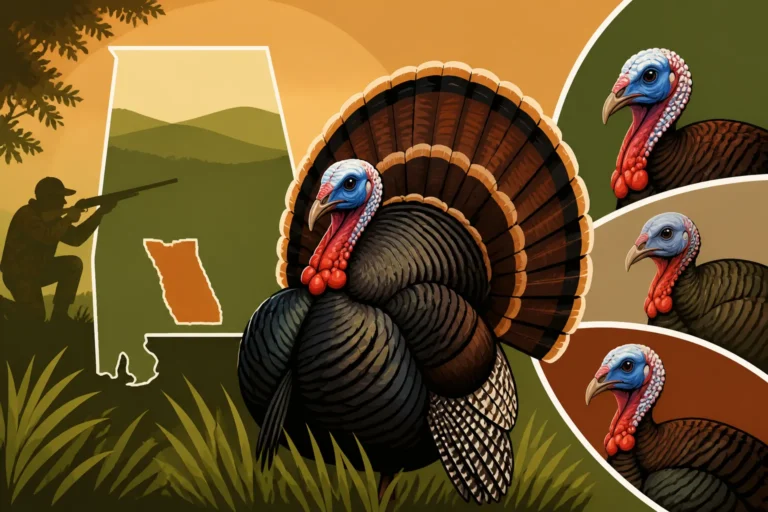
Alabama divides the state into two primary turkey zones: Zone 1 and Zone 2. This split isn't arbitrary; it's based on ecological factors like nesting chronology and habitat differences that influence when gobblers are most active. Generally, Zone 1, encompassing the southern and central parts of the state, tends to open earlier, reflecting an earlier "spring green-up" and a slightly earlier breeding cycle for the turkeys there. Zone 2, which covers the northern counties, opens a week later, aligning with the later onset of spring weather and turkey breeding activity in those cooler, higher elevations.
This staggered opening can be a real blessing for dedicated turkey hunters, effectively extending the season by offering two "opening days" if you're willing to travel. For example, you could hit the early opener in Zone 1, get some birds under your belt, and then shift your focus north to Zone 2 a week later when those gobblers are just starting to fire up. It requires careful planning and knowing your county lines, but it's a fantastic opportunity. Detailed information on Alabama Spring Turkey Zones and Dates is always available from ADCNR, and it's your go-to resource. Keep an eye out for specific dates like Alabama Zone 1 Spring Turkey Opening Day to mark your calendars.
Beyond the regular season, Alabama also offers special youth weekends in both zones. These weekends usually precede the general opening day, providing a fantastic, less-pressured opportunity for young hunters to get out in the woods with an adult mentor. It's an invaluable program that helps foster the next generation of conservationists and hunters, allowing them to experience the thrill of turkey hunting potentially before the heavier hunting pressure begins. Always double-check the exact dates for these youth weekends each year, as they can shift slightly. If you're looking to extend your season or target a specific area, understanding Hunting Alabama's Later Turkey Zone Opener can be a game-changer.
Bag Limits and Regulations You Must Know
Adhering to Alabama's turkey bag limits and regulations isn't just about following the law; it's about ethical hunting and ensuring the sustainability of our turkey populations for future generations. The statewide bag limit is typically one gobbler per day, with a maximum of five gobblers during the combined fall and spring seasons. However, there's also a significant detail to remember: only one of these five gobblers can have a 4-inch beard or less. The goal here is to encourage hunters to pass on jakes and target mature gobblers, which helps maintain a healthy age structure within the population.
Beyond bag limits, there are crucial regulations regarding legal hunting hours, which are typically from 30 minutes before sunrise until sunset. Equipment regulations are also vital. While shotguns (up to 10-gauge) are standard, rules cover legal shot sizes (typically lead-free shot for migratory birds if that applies, but lead is generally fine for turkeys), and the use of certain calls and decoys. For instance, the use of electronic calls is illegal. You'll find all the specifics detailed in Alabama Turkey Bag Limit Rules.
One of the most talked-about regulations is the "ten-day decoy restriction." For the first ten days of the spring turkey season in each zone, using decoys is prohibited. This rule is in place to reduce hunter interference with breeding hens during the early part of the season and to emphasize traditional calling strategies. Once that ten-day period lifts, however, decoys become a powerful tool in your arsenal. It's absolutely critical to know when this restriction ends in your zone, as it significantly impacts your hunting tactics. Understanding Alabama's Ten-Day Decoy Restriction is key to planning your approach later in the season.
| Feature | Zone 1 (Southern/Central) | Zone 2 (Northern) |
|---|---|---|
| Typical Opening | Earlier (e.g., mid-March) | Later (e.g., late March) |
| Primary Terrain | Mixed hardwoods, pine plantations, agriculture, Black Belt | Mountainous, rolling hills, mixed forests, agriculture |
| Breeding Cycle | Generally earlier | Generally later |
| Decoy Restriction | First 10 days of Zone 1 season | First 10 days of Zone 2 season |
| Youth Season | Specific dates prior to Zone 1 opener | Specific dates prior to Zone 2 opener |
| Counties | Most counties south of I-20, Black Belt, Wiregrass | Most counties north of I-20, Sand Mountain |
Prime Habitats and Where Alabama Gobblers Roost
Understanding turkey habitat is like having a roadmap to where the birds live, feed, and feel safe. Alabama's diverse landscapes offer a variety of prime spots, and knowing what to look for can drastically improve your odds of success.
Key Habitat Types for Turkeys
Wild turkeys are masters of adapting to their environment, but they thrive in specific types of habitat that provide a balance of food, cover, and roosting opportunities. In Alabama, you'll often find them in sprawling bottomland hardwoods, where acorns and other mast crops are abundant. These areas, particularly those near creeks and rivers, also provide dense cover and tall trees for roosting. Mixed pine-hardwood forests are another prime location, offering a blend of open pine stands that turkeys love for bugging and dusting, alongside hardwood drains and pockets that hold food and serve as travel corridors. Even agricultural edges, particularly those bordering dense timber, can be magnets for turkeys, providing easy access to waste grains and insects.
The ideal turkey habitat isn't just about tree types; it's about the structure of the forest. Turkeys prefer an open understory, where they can easily move, forage for insects, and detect predators. This is why areas managed with prescribed fire are often so good for turkeys. The fire reduces dense brush, promotes new green growth, and helps maintain a healthy, open forest floor. Mature trees, especially tall pines or large hardwoods with strong horizontal limbs, are absolutely critical for roosting. Turkeys like to roost near water sources, too, providing them with a drink first thing in the morning.
Land management practices play an enormous role here. Timber thinning, which reduces canopy cover, allows more sunlight to reach the forest floor, encouraging the growth of grasses, forbs, and insects – all vital food sources for turkeys. Conversely, overly dense, unmanaged forests can become less attractive to turkeys over time due to a lack of understory food and too much visual obstruction. Learning to "read" the woods for these signs of good habitat is an essential skill for any turkey hunter.
Scouting Roosting Areas and Daytime Patterns
Finding where a gobbler roosts is like discovering the starting line of your hunt. Turkeys typically fly up to roost in tall trees just before dark and fly down right around first light. Listening for those tell-tale gobblers at dawn or dusk can help you pinpoint their general location. Look for prominent, mature trees, often pines or large hardwoods, that stand out along a ridge, near a water source, or at a bend in a creek. These are often traditional roost trees that gobblers will use repeatedly throughout the season.
Modern tools can significantly aid your scouting efforts. Apps like GoHunt, which provide detailed aerial maps and topographic overlays, allow you to identify potential roosting and feeding areas without even stepping foot in the woods initially. You can mark prominent ridge lines, dense timber blocks adjacent to open fields, and creek bottoms – all areas where turkeys are likely to be found. By overlaying property boundaries, you can ensure you’re scouting accessible public land or authorized private tracts. This digital reconnaissance is a crucial first step.
Once you have potential areas identified, it's time for boots on the ground. Look for physical signs of turkey presence: scratch marks in the leaves where they've been feeding, distinct three-toed tracks in soft dirt or mud, and piles of droppings. Often, you'll find these signs concentrated around food sources like oak flats in the fall or green fields in the spring. Observing these patterns helps you understand their daily movements from roost to feeding areas and back again. Knowing Where Alabama Gobblers Roost is half the battle won, and dedicated scouting will give you an edge.
Effective Strategies for Hunting Alabama Turkeys
Successful turkey hunting isn't just about being in the right place; it's about understanding turkey behavior and knowing how to communicate with them effectively. Whether you're a seasoned veteran or just starting out, refining your strategies is an ongoing process.
Mastering the Art of Calling
Calling is, without a doubt, the cornerstone of turkey hunting. It's how we speak their language, convincing a wary gobbler to come within range. There are several types of calls, each with its own advantages. Friction calls, like slate calls or pot calls, are versatile and can produce a wide range of vocalizations with practice. Diaphragm calls, held in the roof of your mouth, allow for hands-free calling, which is crucial when a bird is close and you need to be still. Box calls are loud and carry well, perfect for locator calls or getting a distant gobbler's attention. Mastering even a few basic yelps, clucks, and purrs with one or two types of calls will get you far.
The real art, however, lies not just in how you call, but when and why. Learning the basic vocalizations is step one. The "yelp" is the primary turkey sound, used by hens to communicate. The "cluck" is a short, soft contact call, while "purrs" are even softer, indicating contentment. "Cutts" are sharp, excited yelps, often used to simulate a hen that's ready to breed or has just flown off the roost. The key is to listen to the birds and adapt your calling. If a gobbler is hot and responding aggressively, you might need to be more assertive. If he's hesitant, softer, more seductive calls might be the ticket.
Realistic scenarios dictate your calling cadence and volume. Early in the morning, when a gobbler is on the roost, soft tree yelps followed by some clucks can be incredibly effective, mimicking a hen just waking up. Once he's on the ground, your calling might become more frequent and varied. Always remember, the goal is to make him believe a real hen is waiting for him. Being able to Calling an Alabama Gobbler Off the Roost consistently is a skill that takes time and practice but is incredibly rewarding when it pays off.
Run-and-Gun vs. Static Setups
Turkey hunting tactics often boil down to two main approaches: the aggressive "run-and-gun" method or the patient, "static setup." Both have their place and are effective in different situations. The run-and-gun strategy involves covering a lot of ground, stopping frequently to call, and moving rapidly to a new location if no bird responds or if you're trying to cut off a distant gobbler. This is particularly effective on large tracts of public land, like those found in the Talladega National Forest, where birds might be more scattered or where you need to get away from other hunters. It requires good physical stamina and the ability to set up quickly and quietly. You can dive deeper into this energetic approach with Run-and-Gun Turkey Tactics on Public Land.
Conversely, static setups involve choosing a prime location, such as a known strutting zone, a field edge, or a creek bottom that turkeys frequently use, and patiently waiting for a bird to come to you. This can involve setting up a ground blind, using natural cover, or simply sitting against a large tree. This strategy is excellent for areas with higher hunting pressure, or when you know birds are using a specific pattern. It's also ideal when hunting with youth or less mobile hunters, as it minimizes movement.
The key to success often lies in balancing these two approaches and reading the bird's mood. If a gobbler is hanging up or refuses to come closer, a subtle change in your position – a small movement to simulate a hen walking away – can sometimes be enough to seal the deal. Understanding when to push the issue and when to exercise patience is a skill honed through experience and countless hours in the spring woods.
Decoy Usage and Placement
Decoys can be a powerful asset in the turkey hunter's toolkit, but they need to be used strategically. The type of decoy you choose and its placement can make or break your hunt. A single hen decoy is often sufficient, especially early in the season, mimicking a lone hen looking for companionship. A jake decoy, paired with a hen, can be incredibly effective in provoking a dominant gobbler into challenging the intruder. Full-strut gobbler decoys, especially when paired with a receptive hen, are perhaps the most aggressive setup, designed to trigger an immediate, jealous response from a territorial longbeard.
Strategic placement is paramount. Always set your decoy(s) within good shooting range (20-30 yards) from where you expect the gobbler to come from. Face the decoy away from you, so the approaching gobbler focuses on the decoy and presents a better shot angle when he circles around to face it. Position your setup so you have a clear shooting lane between you and the decoy. Consider topography; place decoys on slight rises for better visibility, or near natural funnels that force the gobbler to approach from a specific direction.
Safety is a critical consideration when using decoys, especially on public land. Always assume that another hunter might mistake your decoy for a real turkey. Never carry an exposed decoy when walking in the woods. Use a blaze orange bag or vest when moving your decoys, and consider tying a piece of blaze orange ribbon to the top of your decoy while setting it up, removing it once you're safely situated. And remember the rules around Alabama's Ten-Day Decoy Restriction; you can't use them at the very beginning of the season, but once that window lifts, they can certainly help.
Public Land Opportunities for Turkey Hunters
Alabama offers a wealth of public land for turkey hunters, providing access to vast tracts of timber and diverse habitats. While hunting public land often comes with unique challenges, it also presents incredible opportunities for those willing to put in the effort.
Navigating Wildlife Management Areas (WMAs)
Alabama's Wildlife Management Areas (WMAs) are managed specifically for wildlife and public recreation, including hunting. These areas are truly gems, offering some of the best public turkey hunting in the state. However, it’s crucial to understand that WMAs often have their own specific regulations that can differ from statewide rules. This might include different season dates, bag limits, equipment restrictions, or even mandatory sign-in/sign-out procedures. A WMA permit, purchased in addition to your regular hunting license, is typically required to hunt these lands.
Before heading to any WMA, your first step should be to thoroughly research its specific rules and maps on the Outdoor Alabama website. Pay close attention to any quota hunts or special restrictions. Utilizing the Outdoor Alabama interactive map tool or a mapping app like GoHunt can help you identify WMA boundaries, access points, and terrain features. This digital scouting is invaluable for planning your approach and finding less-pressured areas.
Hunting pressure can be a significant factor on WMAs, especially on opening weekends. To increase your odds, be prepared to walk further than most hunters. Focus on scouting remote corners, overlooked hollows, or areas with difficult access. These are often the places where gobblers can find refuge from constant pressure. Early season and mid-week hunts also tend to see fewer people. Taking the time to scout thoroughly before the season is paramount for success on WMAs. If you’re trying to find a spot, check out Finding an Alabama WMA Near You for a great starting point.
National Forests and Other Public Access
Beyond the WMAs, Alabama is home to several National Forests: the Talladega, William B. Bankhead, and Conecuh National Forests. These vast expanses offer incredible public land hunting opportunities, often covering hundreds of thousands of acres. Hunting in these areas provides a different experience than WMAs, often with fewer specific restrictions, but also requiring a greater degree of self-sufficiency. You can find detailed information on Talladega National Forest Hunting and its regulations on the National Forest Service website.
The advantages of hunting National Forests include the sheer scale of the land, which allows for extensive scouting and the ability to get far away from roads and other hunters. You can truly immerse yourself in the wilderness. However, this also means challenges like navigation (especially without cell service), finding water sources, and understanding forest service road rules. Camping is often allowed, making multi-day hunts feasible.
Utilizing aerial maps, such as those provided by GoHunt, is indispensable for hunting National Forests. These tools help you identify topographical features like ridges, creek bottoms, and saddles where turkeys might travel or roost. They also show public/private land boundaries, preventing accidental trespassing. Remember, National Forests are multi-use lands, so you might encounter hikers, campers, or other outdoor enthusiasts. Always be aware of your surroundings and prioritize safety.
Common Challenges and Overcoming Them
Even the most experienced turkey hunters encounter challenges. Whether it's a gobbler that just won't commit or unpredictable weather, knowing how to adapt can be the difference between success and a frustrating day in the woods.
Dealing with Hung-Up Gobblers
Ah, the infamous "hung-up" gobbler. It's a scenario every turkey hunter knows all too well: a big longbeard is gobbling his head off, responding to your calls, but refuses to take those last few steps into range. This can be infuriating! Gobblers often hang up for several reasons: there might be a visual barrier (a dense thicket, a creek, a fence line) preventing him from seeing the "hen" he hears, or he might simply be dominant and expects the hen to come to him. Sometimes, he's already with real hens, and he's just gobbling to round them up.
Overcoming a hung-up gobbler requires patience and often, a change in strategy. First, re-evaluate your setup. Is there something blocking his view? Can you reposition yourself slightly to eliminate the obstruction without being seen? Sometimes, going silent for a period can make him curious enough to take a few steps. Another tactic is to try a "fading" call – move a bit away from your initial position while calling softly, mimicking a hen that's losing interest and walking off. This can sometimes make a gobbler panic and rush in.
Don't be afraid to try different calls or change your cadence. If aggressive cutting isn't working, try soft clucks and purrs. If he's still hanging, sometimes you have to break the cardinal rule and make a move. If you know exactly where he is, a slow, quiet stalk to cut off his approach might be your only option. It's a gamble, but sometimes it's the only way to turn a frustrating "hang-up" into a successful harvest.
Post-Rainy Day and Cold Front Strategies
Weather plays a huge role in turkey behavior, and knowing how to adjust your tactics for post-rainy days or cold fronts can greatly improve your success. After a heavy rain, the woods can be noisy with dripping water and saturated leaves, making it harder to hear gobblers and for them to hear you. Turkeys might also be less inclined to gobble on the roost immediately after a downpour. On these days, focus your efforts on open areas like field edges, logging roads, or clear-cuts where birds will go to dry off and sun themselves. They'll also be actively foraging for worms and insects that come to the surface.
Cold fronts, especially those that bring significant temperature drops or high winds, can also impact gobbling activity. Gobblers might be less vocal on the roost and fly down later. On windy days, sound doesn't travel as well, so you'll need to use louder calls and rely more on visual scouting. In these conditions, focusing on sheltered areas, like the leeward side of a ridge or dense creek bottoms, might prove more fruitful. Turkeys will often seek refuge from the wind and might be more concentrated in these spots.
The key is adaptability. Don't expect turkeys to behave exactly the same way every day. If the morning is slow, don't give up. Mid-day hunting can be incredibly productive, especially if birds are grouped up after a tough morning. Often, later in the day, satellite gobblers or those that were with hens earlier will become more responsive. Persistence and flexibility are your best friends when dealing with unpredictable Alabama weather.
Staying Safe in the Spring Woods
Turkey hunting, while thrilling, demands extreme vigilance when it comes to safety. In the excitement of the moment, it's easy to forget that you're in the woods with other hunters, especially on public land. One of the most critical rules is positive identification of your target. Never shoot at sound or movement. Always clearly identify the head and beard of a gobbler before you pull the trigger. Mistaking a fellow hunter for a turkey is a tragic and preventable accident.
Wearing blaze orange when moving through the woods is highly recommended, even if not always legally required for turkey hunting (check current regulations, as rules can vary). Once you set up to call, you can remove it, but it’s invaluable when walking in or out. Be incredibly cautious when using decoys, as they can attract other hunters. Never carry an exposed decoy and try to set up your position so that you are behind the decoy from an approaching hunter's perspective.
Be aware of your surroundings beyond other hunters. Spring in Alabama means venomous snakes are active, especially cottonmouths in wet areas and rattlesnakes in drier, piney woods. Watch your step, particularly around logs, rock piles, and thick brush. Ticks and chiggers are also abundant, so proper clothing and repellents are essential. Carrying a basic first-aid kit, a fully charged phone, and letting someone know your hunting location and expected return time are simple but vital safety practices.
Conservation and the Future of Alabama Turkeys
The incredible turkey hunting we enjoy today is not by accident; it's the result of decades of dedicated conservation efforts. Understanding and contributing to these efforts is crucial for ensuring that future generations can experience the same thrilling spring mornings.
ADCNR's Role in Management
The Alabama Department of Conservation and Natural Resources (ADCNR) plays an indispensable role in managing our wild turkey populations. Their biologists conduct extensive research, monitoring population trends, nesting success, and harvest rates across the state. This data-driven approach allows them to make informed decisions about season dates, bag limits, and management strategies that ensure the long-term health and sustainability of the turkey resource. They are constantly studying factors like habitat quality, disease prevalence, and predator impacts to fine-tune their management plans.
Habitat improvement projects are another cornerstone of ADCNR's work. This includes efforts on public lands like WMAs and National Forests to create ideal turkey habitat through prescribed burning, timber thinning, and planting beneficial food plots. These projects not only benefit turkeys but also a wide array of other wildlife species that thrive in healthy, diverse forest ecosystems.
As hunters, our contributions are vital to these efforts. The purchase of hunting licenses, stamps, and permits directly funds wildlife management and conservation programs. Moreover, mandatory reporting through the Game Check system provides ADCNR with invaluable data on harvest numbers, location, and other critical information. Every time you report a turkey, you're directly aiding the biologists in their efforts to manage the resource effectively. It's a collective responsibility that we all share.
Habitat Preservation and Restoration Efforts
While ADCNR does incredible work on public lands, a vast majority of Alabama's land is privately owned. Therefore, private landowners are critical partners in turkey conservation. Programs exist to provide technical assistance and even cost-share incentives for landowners to implement habitat improvements on their property. This can include anything from establishing food plots, conducting prescribed burns, managing timber, or restoring native plant communities that benefit turkeys. Organizations like the National Wild Turkey Federation (NWTF) are also deeply involved, working with both public agencies and private landowners to enhance turkey habitat.
Prescribed fire, often seen as a destructive force, is in fact one of the most powerful and beneficial tools for creating and maintaining optimal turkey habitat in Alabama. Historically, natural fires shaped much of our landscape. Controlled burns reduce undesirable woody vegetation, stimulate new, nutritious growth for forage, control parasites, and create the open understory that turkeys need to thrive. Educating landowners and the public about the benefits of prescribed fire is an ongoing and essential part of restoration efforts.
Despite the incredible success story, wild turkeys still face threats. Habitat fragmentation due to development, the spread of invasive species, and even subtle changes in agricultural practices can all impact turkey populations. Continuous monitoring, adaptive management, and the collective commitment of hunters, landowners, and conservation agencies are all necessary to ensure that the thunderous gobble of a wild turkey remains a vibrant sound in Alabama's spring woods for generations to come.
Disclaimer
Please be aware that hunting regulations, season dates, and license requirements can change annually. Always consult the official Alabama Department of Conservation and Natural Resources (ADCNR) website or the current year's hunting regulations handbook before planning any hunt. This guide is for informational purposes only and should not be considered a substitute for official state regulations.