Run-and-Gun Turkey Tactics on Public Land
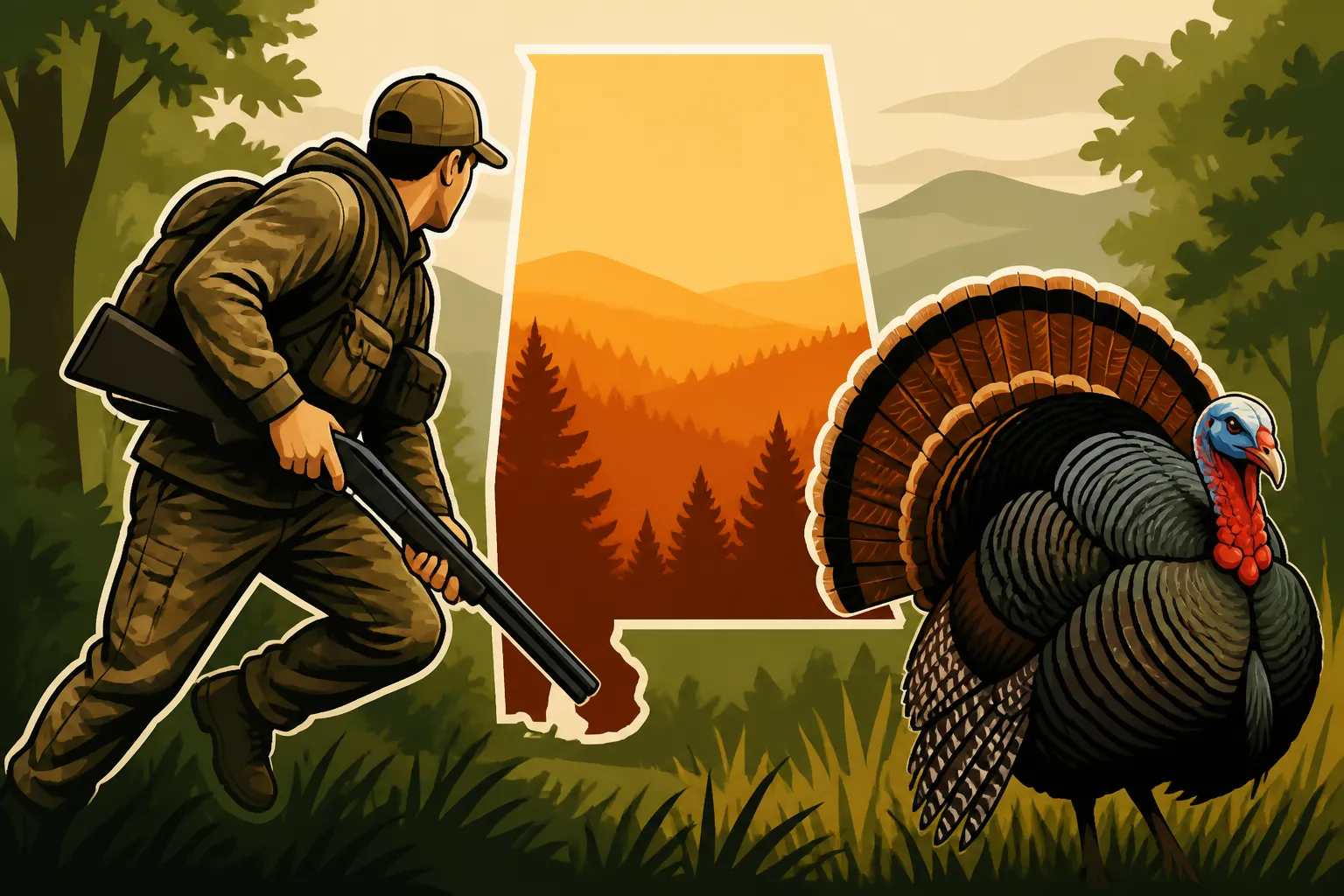
There's nothing quite like the sound of a gobbler hammering in the pre-dawn quiet of an Alabama spring morning, but sometimes those birds are tight-lipped, scattered, or just plain pressured, especially on public land. Trying to sit and wait them out in one spot often leads to frustration and an empty vest. This guide is all about embracing a more dynamic approach: the run-and-gun turkey tactics that can turn a silent morning into an unforgettable hunt on Alabama's public tracts.
What "Run-and-Gun" Really Means for Alabama Public Land
When folks talk about "run-and-gun" turkey hunting, it conjures images of hunters jogging through the woods, calling frantically. But in reality, it's a far more calculated and physically demanding approach, especially when you're navigating the vast, often rugged, terrain of Alabama's public hunting lands. It's about covering ground efficiently, listening intently, and being ready to set up and engage a gobbler at a moment's notice. It's an active, proactive strategy for when the birds aren't coming to you.
The Public Land Challenge
Let's be honest, hunting public land in Alabama brings its own set of unique headaches. You've got pressure from other hunters, birds that have been called to and spooked countless times, and often, less-than-ideal habitat management compared to some private tracts. A gobbler on a Wildlife Management Area (WMA) or National Forest has a PhD in hunter evasion. They're wary, they move a lot, and they don't often tolerate aggressive, prolonged calling from a stationary position. This means you have to be just as elusive and adaptable as they are. You can't just pick a spot and hope; you have to go find the fight.
The "Get After 'Em" Mentality
The core of run-and-gun is an aggressive, yet smart, pursuit. It's understanding that sometimes you need to walk miles to find a responsive bird, and when you do, you need to react fast. This isn't about aimless wandering; it's about systematically covering ground, hitting key listening points, and employing locator calls. Once you get a response, the "run" part isn't a sprint but a strategic, quick repositioning to cut off the bird, get ahead of it, or set up in a prime ambush location before it loses interest or another hunter moves in. It requires confidence in your scouting and calling abilities, and a willingness to put in the legwork.
Understanding Turkey Behavior on Pressured Ground
Turkeys on public land are different beasts. They've heard it all, seen it all, and probably dodged a few shot patterns in their day. Often, they won't gobble on the roost like their private-land cousins, or they'll only gobble once or twice before pitching down silently. They might be "henned up" with a flock of hens, making them incredibly difficult to pull away. Or, they might be loners, silently cruising ridges and creek bottoms, waiting to hear a real hen before ever making a peep. Your run-and-gun strategy needs to account for this elusiveness. It means more listening, more looking for subtle signs, and being prepared to make soft, non-committal calls rather than just cranking out aggressive yelps. Understanding how this pressure affects gobbling and movement patterns is critical to success, and often informs where you'll spend your time scouting Alabama public land before season.
Essential Gear for the Mobile Turkey Hunter
To effectively run-and-gun on Alabama public lands, you need to be light, agile, and prepared for anything. This isn't the hunt to bring your entire gear closet. Every ounce counts when you're covering several miles of varied terrain, from the rolling hills of the Piedmont to the swampy bottoms of the Coastal Plain.
Lightweight Calling and Decoy Systems
Leave the cumbersome full-strut decoys and the heavy, bulky box calls at home. For run-and-gun, you're looking for efficiency. A few versatile mouth calls (diaphragm calls) are paramount. They allow hands-free operation, which is crucial for staying ready to shoot or quietly maneuvering. A slate or pot call is also excellent, offering realistic hen sounds with minimal movement, and can be easily tucked into a vest pocket. A small, foldable fan decoy or even a simple hen head decoy can be devastating for drawing in a curious gobbler who hangs up just out of range, especially if you're quick to set it up. Think minimal, effective, and quick to deploy.
| Call Type | Primary Use | Pros | Cons |
|---|---|---|---|
| Diaphragm Call | Versatile, locator, soft calls, loud yelps | Hands-free, wide range of sounds, compact | Takes practice to master, can stick in mouth |
| Slate/Pot Call | Realistic hen sounds, purrs, clucks | Easy to use, great realism, good volume | Requires two hands, can be noisy if dropped |
| Locator Call | Crow, Owl, Gobble Shock Calls | Elicits shock gobble without attracting bird | Can spook birds if overused, less versatile |
| Box Call | Loud yelps, cuts, can carry far | Easy to use, excellent volume | Bulky, requires two hands, less subtle |
Comfortable, Durable Footwear and Apparel
You're going to walk, a lot. And Alabama terrain can be unforgiving, from thick briars to slick creek banks. A good pair of waterproof, comfortable boots with excellent ankle support is non-negotiable. Don't skimp here; blisters will end your hunt faster than anything. Your apparel should be lightweight, breathable, and durable enough to withstand snags and thorns. Camouflage is key, of course, but prioritize functionality. A well-designed turkey vest with plenty of pockets for calls, shells, water, and snacks, but without excessive bulk, will be your best friend. Remember, you're not sitting in a blind all day; you're moving and adapting to the situation, so your gear needs to move with you.
Navigation and Scouting Tools
On sprawling public lands, getting lost or wasting time in unproductive areas is a real concern. This is where modern navigation tools truly shine. A reliable GPS unit or a smartphone with a robust mapping app is absolutely essential. Many seasoned hunters swear by apps like GoHunt, which can show you property lines, topographic maps, satellite imagery, and even layers that highlight public land access points. Before you ever set foot in the woods, use these tools to identify potential roosting areas, pinch points, creek bottoms, and ridge lines that birds might use for travel. Understanding the lay of the land from an aerial perspective will save you countless steps and greatly increase your chances of finding productive ground. It also helps you understand specific public land rules, such as those governing treestand setups in Talladega National Forest or other WMAs. Don't forget a compass and a physical map as a backup, just in case technology fails you in the deep woods.
Reading the Woods: Finding Turkeys on the Move
Successfully running-and-gunning isn't just about walking until you hear a gobble; it's about intelligently navigating the landscape, understanding where turkeys should be, and interpreting the subtle clues they leave behind. Public land gobblers don't usually advertise their presence, so you need to be a detective.
Key Habitat Features and Travel Corridors
Turkeys, even on public land, are creatures of habit. They prefer certain habitat types for roosting, feeding, and strutting. Look for mature hardwood bottoms with large, open trees for roosting, especially near water sources. Creek and river bottoms often serve as natural travel corridors, providing cover and food. Ridge tops and saddles can be excellent places to intercept birds traveling between feeding and roosting areas, or simply searching for hens. Identify old logging roads, power lines, and natural clearings – these are often strutting zones. Use your mapping tools, like GoHunt's satellite imagery and topographical layers, to pinpoint these features before you even head out. The more you understand the terrain, the more efficiently you can cover it. Think about how hunting a funnel between two creek bottoms might apply to turkey movement as well as deer.
Listening for the Roost and Beyond
The classic turkey hunt starts by listening for gobblers on the roost, and it's still a critical component of run-and-gun. Get into position before first light, preferably on a high point or an open area where sound travels well. Use an owl hooter or a crow call to try and elicit a "shock gobble" before legal shooting light. Sometimes, they'll give you away even if they don't gobble on their own. Once birds pitch down, the real challenge begins. If they're silent, don't give up hope. Keep moving, stopping frequently to listen for subtle sounds: drumming, distant yelps, or even the telltale "thump-thump" of a turkey landing on the ground. Be patient, but also be willing to cover ground if nothing develops. Sometimes, the first gobble you hear all day will be at 10 AM, miles from where you started.
Interpreting Fresh Sign and Scratching
While listening is key, your eyes are just as important. Turkeys leave plenty of clues about their presence and recent movements. Look for fresh tracks in soft dirt or mud, especially along logging roads, trails, and creek beds. Pay close attention to turkey droppings – they can tell you if a bird is a gobbler (J-shaped) or a hen (spiral-shaped), and how recent the activity was. Fresh scratch marks in the leaves are a sure sign birds have been feeding in the area. Turkeys methodically rake through the leaves to find acorns, insects, and other forage. Look for tell-tale "V" patterns in the leaves where they've raked them backward. The fresher the scratch, the more likely you are to be close to the birds. Finding sign like this can give you confidence to slow down and work an area more thoroughly, even if you haven't heard a gobble in a while.
Mastering the Call: When and How to Strike
Calling is the heart of turkey hunting, and in a run-and-gun scenario, it becomes a nuanced art of locating, enticing, and closing the distance. You need to know when to be loud and aggressive, and when to back off and be subtle. Overcalling on public land is a common mistake that can educate birds quickly.
Aggressive Locating Calls
When you're covering ground, your primary goal is to get a gobbler to reveal his position. This is where loud, assertive locator calls come into play. Crow calls, owl hoots, and even hawk or coyote howls can often trigger a shock gobble without giving away your exact location or letting the bird know you're a "hen." If you're using turkey calls, sharp, loud cuts and yelps can also work. The key is to make a series of loud calls from one spot, listen intently for several minutes, and if no response, move to another vantage point and repeat. Don't sit in one spot and call endlessly; that's not run-and-gun. You're trying to locate, not necessarily bring them running to you right away. The goal here is information gathering: where is he, and is he interested?
Subtle Close-Range Enticement
Once you've located a gobbler, especially if he's close or has been pressured, a complete shift in calling strategy is often necessary. Ditch the loud cuts and yelps. Instead, opt for soft, seductive clucks, purrs, and maybe a few soft yelps. Mimic a contented hen, perhaps one that's feeding or just milling around. These subtle sounds are less threatening and more intriguing to a gobbler who might be wary of aggressive calling. If he's already gobbling his head off, he knows you're there. The challenge now is to make him believe you're a real hen not coming to him, but available if he makes the effort. Sometimes, the best call is no call at all once you're set up and he's heading your way. Patience and restraint are golden here, especially with birds that have heard every trick in the book.
Varying Your Calling Approach
No two gobblers are the same, and no two days are the same. What worked yesterday might not work today. This means you need a diverse arsenal of calls and the ability to adapt on the fly. Start with moderate calls, gauge the bird's reaction, and adjust. Is he gobbling hard at every call? Maybe hit him with a series of excited yelps and cuts. Is he distant and only gobbling faintly? Try a soft, drawn-out series of tree yelps as if you just woke up. Is he gobbling then shutting up? Hit him with a soft purr. Consider the time of day: birds tend to be more vocal earlier, and then go quiet later in the morning or into the afternoon. As the day progresses, your calling might need to become less frequent and more subtle. This adaptive strategy is crucial, particularly when you're hunting Alabama's later turkey zone opener or dealing with late-season birds that may have gone quiet in May.
Setting Up for the Shot: Quick Concealment Strategies
Hearing a gobble is only half the battle. The true test of run-and-gun skills comes in how quickly and effectively you can set up for a shot once a bird responds. Public land gobblers can close distances fast, or hang up just out of range, so your setup needs to be immediate and invisible.
Utilizing Natural Cover for Rapid Deployment
Forget trying to build an elaborate blind. When running-and-gunning, your blind is the woods itself. As soon as you hear a response, assess the terrain. Look for a tree trunk wider than your shoulders, a fallen log, a dense thicket, or a patch of cane that can break up your silhouette. Your back should be against a substantial piece of cover to prevent the gobbler from circling behind you and spotting you. Get down low, get still, and get ready. Every second counts. Practice this quick setup in your yard; it should be second nature to drop to a knee, shoulder your gun, and scan your shooting lanes in under ten seconds. On heavily hunted land, often finding ground others walk past and using its natural features for concealment is key to success.
The Art of the Sit-and-Wait Setup
Even in a run-and-gun scenario, there's an element of strategic waiting. Once you've set up, you might need to stay perfectly still for a surprising amount of time. Gobblers, especially wary ones, might approach silently, taking their time. They could be circling downwind to get a better scent or just taking their sweet time to feel safe. Resist the urge to fidget, check your phone, or make another call too soon. Often, the bird will appear when you least expect it. Have your gun shouldered or positioned to quickly bring it up, with your cheek firmly on the stock. Your eyes should be constantly scanning, not just ahead, but to the sides and even behind you if the terrain allows. The fewer movements you make, the better your chances.
Angles and Backgrounds for Success
When choosing your quick setup, consider the angle of the sun, the likely approach of the gobbler, and your background. Try to keep the sun at your back, if possible, to make it harder for the turkey to see you. Anticipate where the bird will come from based on his last gobble and the terrain; then pick a spot that gives you clear shooting lanes in that direction. Most importantly, ensure your background is solid. A mistake many hunters make is setting up with an open background, silhouetting themselves against the sky or a distant treeline. This makes you stick out like a sore thumb. A dark, dense clump of trees or a solid hillside behind you will absorb your outline and make you disappear into the woods. If you're hunting in areas with a lot of open pine forests, finding a thick cluster of young pines or a cluster of hardwoods is vital.
Common Pitfalls and How to Avoid Them
Run-and-gun turkey hunting, while effective, isn't without its challenges. There are common mistakes that can quickly turn a promising morning into a frustrating hike. Being aware of these pitfalls and actively working to avoid them will greatly increase your success rate.
Calling Too Much or Too Little
This is perhaps the most common mistake in turkey hunting, especially on public land where birds are often "call-shy." New hunters, in their excitement, tend to overcall, constantly yelping and cutting, thinking more sound equals more attraction. What often happens is the gobbler gets wise, realizing something isn't quite right. He knows where you are, but he expects the "hen" to come to him. Conversely, some hunters call too little, only making one or two soft calls and then giving up if they don't get an immediate response. The balance is critical: call to locate, then call just enough to keep the bird interested and coming your way, mimicking a realistic hen. Listen to the bird's response and adjust. If he's gobbling aggressively, he needs less encouragement. If he's distant and infrequent, more subtle, realistic calling might be needed. Sometimes, the best call is a well-timed moment of silence, letting his curiosity get the better of him.
Ignoring the Wind and Terrain
The wind can be a turkey hunter's best friend or worst enemy. A strong wind can make it impossible to hear gobblers, and it can carry your scent or sounds to the birds, spooking them before you even know they're there. When running-and-gunning, try to keep the wind in your face or quartering to you. This carries your sound forward while carrying your scent away from the bird. However, if the terrain forces you to set up with the wind at your back, be extra cautious, and focus on visual concealment. Similarly, ignoring the terrain is a huge mistake. Don't call a bird across an impassable creek, a fence line, or a dense thicket if you can help it. Position yourself to cut off the bird before he encounters these obstacles, or choose a setup that funnels him past you. Understanding the dynamics of wind and thermals on a Piedmont ridge is just as important for turkeys as it is for deer.
Underestimating Public Land Pressure
Public land gobblers are survivors. They've been hunted hard, they've seen other hunters, and they've likely been called to by everyone with a turkey vest. This means they are often less vocal, more cautious, and quicker to hang up or circle wide. Never underestimate their wariness. Avoid sky-lining yourself on ridge tops, avoid predictable paths, and always assume there might be another hunter in the area, or that the bird has been called to previously. Be extra cautious with decoys; sometimes a simple fan is enough, or no decoy at all. When you get a response, be prepared for him to circle wide to approach from a different direction than you expect. This means being still, and having clear shooting lanes in multiple directions, if possible. Adapting to the realities of hunting pressure on Alabama public land is central to run-and-gun success.
Disclaimer
Hunting is an inherently dangerous activity. Always prioritize safety, wear appropriate blaze orange when required, handle firearms responsibly, and be absolutely certain of your target and what lies beyond it. Always follow all Alabama hunting regulations, obtain the necessary licenses and permits, and respect private property boundaries. The advice provided here is for informational purposes only, and personal judgment and experience are always paramount in the field.