Entry Routes Through Standing Peanuts
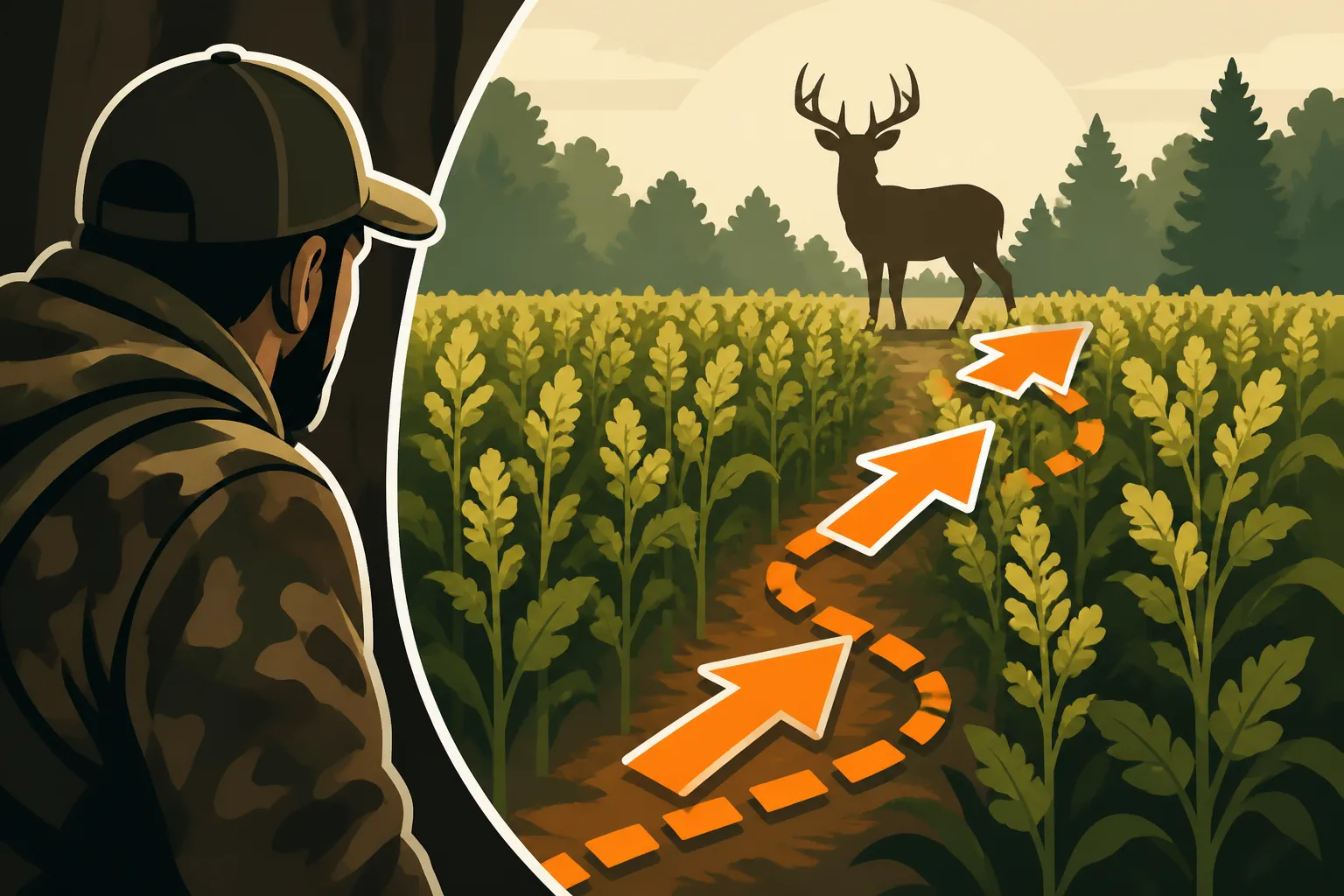
We've all been there: you've finally pinpointed that perfect peanut field where the deer are practically living, only to realize that getting to your stand or blind without blowing out every single animal in the vicinity feels like an impossible mission. The rustle of dry peanut leaves underfoot, the wide-open expanse, the deer's uncanny ability to spot you a mile away – it's enough to make you throw your hands up in exasperation. This guide is all about tackling that exact frustration, providing practical, real-world strategies for establishing stealthy entry and exit routes through standing peanut fields, so you can hunt these prime feeding areas effectively in Alabama.
Understanding Deer Movement in and Around Peanut Fields
When you're looking at a standing peanut field, you're not just seeing a crop; you're seeing a deer magnet. Whitetails absolutely adore peanuts, especially in the late season when other food sources might be dwindling or have lost their nutritional punch. But their love for these legumes also makes them incredibly wary, as they know exactly how exposed they can be while feeding.
Why Deer Favor Peanut Fields
Deer are drawn to peanut fields for a few key reasons. First and foremost, it's the high-energy food source. Peanuts are packed with protein and fat, offering a crucial caloric boost as deer prepare for or recover from the rut, and certainly as winter sets in. This makes them particularly appealing during the late season when acorns are gone and green-up hasn't begun. You'll often see them moving into these fields right at dawn and dusk, sometimes even lingering longer on cloudy, dreary days. The second reason is accessibility. Unlike some hard mast crops that require effort to process, peanuts are relatively easy to forage. Deer can browse the lush green foliage or, after harvest, paw up the remnants left behind.
However, this prime feeding ground also comes with inherent risks for the deer. They know they're exposed, which means their behavior in and around these fields is often highly calculated. Bucks, especially older ones, will rarely just waltz into the middle of a field in broad daylight. They'll skirt the edges, use available cover like ditch lines or timber fingers, and often wait for low light conditions to venture out. Understanding this innate caution is the first step in planning your entry. They are looking for cover, scent control, and an escape route, and so should you.
Typical Bedding and Travel Patterns Near Peanuts
Deer don't just magically appear in a peanut field; they're coming from somewhere, and they're going somewhere after they feed. Identifying these travel corridors is critical. Often, bedding areas will be relatively close to these prime food sources. Think thick pine stands, dense creek bottoms, or briar patches adjacent to the field. These areas offer security and thermal cover, allowing deer to rest and digest before their next meal.
Their travel routes will typically follow the path of least resistance while also maximizing cover. This could mean a thick hedgerow bordering the field, a creek bank lined with hardwoods, or even a logging road that's grown up with saplings. Bucks will often use the wind to their advantage, approaching the field from downwind to scent-check for danger before committing. They'll also use terrain features like subtle dips or rises that offer a momentary break in visibility. When you're scouting, look for well-worn trails leading from these thick bedding areas directly to the peanut field edges. These trails, combined with droppings, tracks, and rubs, will give you a clear picture of their preferred routes. Consider how these local movements impact your hunting strategy, especially if you're Hunting the Rut in the Southern Zones A buck hot on a doe's trail might be less cautious, but you still need to get there without being detected.
Scouting for the Quietest Entry Routes
You can't just pick a spot on the edge of a peanut field and expect to be successful. Thorough scouting is paramount, and it needs to be done with the specific goal of finding a quiet and undetected path in and out. This means putting boots on the ground long before opening day, and even using modern mapping tools to your advantage.
Using Aerial Imagery and Topo Maps
Before you ever step foot in the field, pull out your maps. Tools like GoHunt's mapping features or the Scouting With the Outdoor Alabama App are invaluable here. Look at aerial photos to identify natural funnels, pinch points, and cover along the field edges. Are there fingers of timber extending into the field? Any ditch lines, old fence rows, or overgrown power lines? These are all potential avenues of approach that offer at least some visual break.
Topographical maps can reveal subtle changes in elevation. Even a small dip in the terrain can provide a momentary advantage, allowing you to walk below the deer's line of sight for a short distance. If the peanut field is on a slight incline, for instance, approaching from the lower side might keep you silhouetted less against the sky. Pay attention to how the field relates to surrounding timber, water sources, and other potential food plots like a Hunting a Green Field Planted for Deer. Your goal is to find a route that utilizes existing cover and contours to minimize your exposure.
On-the-Ground Reconnaissance for Stealth
Once you have a few potential routes mapped out, it's time for some real-world investigation. Walk these routes, preferably in the middle of the day when deer activity is low. Simulate your entry. Listen to how loud your footsteps are. Are there dry leaves, crunchy weeds, or loose gravel that will announce your presence from a mile away?
- Evaluate Ground Cover: Look for areas with softer soil, moss, or thick grass that can muffle your steps. If a potential route is too noisy, can you trim back some briars or remove some particularly loud branches before the season starts? Be mindful of WMA rules if on public land, but on private land, a little pre-season "gardening" can go a long way.
- Identify Visual Obstructions: Note every tree, bush, or subtle rise that can break up your silhouette. Your route should aim to keep you behind as much natural cover as possible for as long as possible.
- Check Wind Eddies: Pay close attention to how the wind behaves in different parts of the field. Are there areas where the wind swirls or creates tricky eddies? These are spots to avoid, as your scent could be carried in unpredictable directions. Understanding Wind and Thermals on a Piedmont Ridge is crucial, even when dealing with relatively flat peanut fields, as thermals can still play tricks, especially at dawn and dusk.
- Find Natural Lanes: Sometimes, you'll find narrow strips of woods or tall grass that jut into the field, or even old crop rows that have been left untended and offer a slight height advantage. These are goldmines for stealthy entry.
Table: Entry Route Scouting Checklist for Peanut Fields
| Feature to Evaluate | Importance | Actionable Steps |
|---|---|---|
| Wind Direction | Critical | Always plan a route that keeps your scent out of the field and away from bedding areas. Have multiple routes for varying winds. |
| Topography | High | Look for low spots, depressions, or ditches that offer concealment below the field's horizon. |
| Natural Cover | High | Prioritize fence rows, creek banks, thick brush lines, or timber fingers that extend into the field. |
| Ground Noise | Very High | Walk potential routes during midday; listen for crunchy leaves, dry weeds, or loose soil. Mark noisy spots to avoid or clear (if on private land and legal). |
| Sun Position | Medium | Consider where the sun will be at your entry/exit times to avoid silhouetting yourself or having direct sun in your eyes. |
| Deer Activity | High | Look for fresh tracks, droppings, and browse. Confirm deer are using the specific field edge you plan to access. |
| Escape Routes | Medium | Note natural escape corridors deer use, and ensure your presence doesn't block them, potentially pushing deer into your path unintentionally. |
Tactics for Silent Entry and Exit
Once you've scouted your routes, the real challenge is executing them silently and effectively. This requires a combination of smart gear choices, careful movement, and an understanding of deer senses.
Gear and Clothing Choices for Stealth
Believe it or not, what you wear and carry can make or break your entry.
- Fabric Selection: Opt for quiet fabrics like fleece, wool, or soft micro-suede. Avoid anything that rustles loudly, like certain synthetics or stiff denim. Layering quiet clothing is key to managing temperature without creating noise.
- Footwear: This is paramount. Choose boots with soft, flexible soles that provide good ground feel. Avoid stiff, heavy boots that might clomp or create unnecessary noise. Some hunters even prefer soft-soled stalking boots or moccasins for the final approach, carrying their heavier boots in. The goal is to minimize sound and feel the ground beneath you to avoid stepping on sticks.
- Pack Management: Cinch down everything in your pack. Nothing should be rattling or clanking. Use soft cases for binoculars or rangefinders. If you carry a thermos, wrap it in a piece of fleece or an extra glove. Every little bit of metallic or plastic noise will carry in the still morning air.
- Bow/Rifle Sling: Ensure your sling doesn't allow your weapon to swing and hit against buckles or other equipment. A padded, quiet sling is a worthwhile investment.
Mastering the Art of Slow and Deliberate Movement
This is where most hunters fail. We're often in a hurry, eager to get to the stand and settle in. But through standing peanuts, hurry is your enemy.
- The "Half-Step" Method: Instead of taking full strides, take short, deliberate half-steps. Before committing your weight, test the ground with the leading foot. Feel for crunchy leaves, loose sticks, or soft spots. Once you confirm it's quiet, shift your weight. It's painstakingly slow, but effective.
- Heel-to-Toe vs. Toe-to-Heel: Some hunters swear by a "toe-first" approach, where you set your toes down and then slowly roll your foot, minimizing impact. Experiment to see what works best for your footwear and the specific ground cover.
- Stop, Look, Listen: Incorporate regular pauses into your movement. Stop for 30-60 seconds, or even longer, especially when moving through transition areas. During these pauses, scan for movement, listen for deer sounds (snorts, pawing, chewing), and try to pick up any new scents. Deer are accustomed to the sounds of nature, but a continuous, unvarying cadence of human footsteps is a dead giveaway.
- Use the Terrain: As you move, constantly utilize any available cover. Stay behind trees, hug the inside of thickets, and use those subtle depressions or high grass lines you identified during scouting. Even bending at the waist slightly can break up your silhouette against the horizon.
- Mind Your Shadows: Be aware of where your shadow is falling, especially during first and last light. You don't want to cast a long, human-shaped shadow across the field ahead of you.
Minimizing Scent and Sound Signature
Deer rely heavily on their sense of smell and hearing. You need to actively work to defeat both.
- Scent Control: This is non-negotiable. Shower with unscented soap, use scent-free laundry detergent for your hunting clothes, and store them in airtight containers or bags. Dress at the truck or just before your final approach. Use a quality scent eliminator spray on yourself and your gear. And always, always play the wind. If the wind isn't right for your chosen entry route, you need to have a backup plan or choose another spot. Sometimes, it's better to stay home than to blow out a prime hunting spot due to bad wind.
- Sound Discipline: Besides silent movement, think about all other sounds you make. Clicking a safety, scraping a zipper, coughing, or even a cell phone notification can alert deer. Practice opening your backpack silently, drawing your bow without any squeaks, or shouldering your rifle smoothly. If you need to make a sound, try to time it with a gust of wind, a passing car, or some other natural background noise.
- Using Natural Sounds: Sometimes, you can use the environment to your advantage. A light rain or a strong wind can mask your approach. However, don't rely solely on these; always move as if it's dead calm and silent. For tactics on dealing with different conditions, you might want to read up on Hunting Deer After a Cold Front, as cold, crisp air can carry sound even further.
Adapting to Conditions: Wind, Thermals, and Time of Day
Even with the best-scouted route and the most disciplined movement, deer hunting is all about adapting. The dynamic environment means you're constantly making judgment calls based on real-time conditions.
The Ever-Changing Wind and Its Impact
The wind is arguably the most critical factor when hunting deer, especially around open areas like peanut fields. Deer will almost always try to use the wind to their advantage, circling downwind of a food source or bedding area to pick up any approaching threats.
- Pre-Hunt Wind Check: Never leave home without checking the wind direction, and be prepared for it to shift. Use multiple weather apps and local forecasts.
- On-Site Wind Check: As you get closer to your hunting area, use a milkweed puff, string, or a commercial wind-checker to confirm the wind's actual direction and any swirling patterns. Subtle shifts can make a huge difference.
- Multiple Entry Routes: This is why having primary and secondary (or even tertiary) entry routes for different wind directions is essential. If your go-to route requires you to walk upwind of the field, and the wind has unexpectedly shifted, you need another option. Sometimes, the best option is to abandon the plan for that day if no safe route exists. Blowing out a hot field once can educate deer for weeks.
- Hunting the Edges: Often, the safest play is to hunt the downwind edge of the peanut field, where the wind is blowing your scent away from the primary feeding area. This might mean setting up further back in the timber, overlooking a travel corridor rather than right on the field itself.
Understanding Thermals at Dawn and Dusk
Thermals are localized air currents caused by temperature changes, and they play a massive role in scent movement, especially during the crucial first and last hours of light.
- Morning Thermals (Down Draft): As the sun rises and begins to warm the ground, air near the surface warms and begins to rise. This creates an upward thermal draft. However, in the very early morning, before the sun has truly warmed the air, cold air will often "drain" down into low-lying areas like creek bottoms and hollows. This means your scent can be carried downhill or into depressions for a short period before the thermals reverse. Plan your approach to avoid pushing scent into these low areas where deer might be moving to or from bedding.
- Evening Thermals (Up Draft): As the sun sets and the air cools, the ground releases heat, causing air to rise for a period (updraft). Then, as the ground cools further, cold air starts to sink, causing a downdraft into low areas. For an evening hunt, this means your scent will generally rise, then eventually fall into bottoms. Setting up on a ridge or elevated position can help keep your scent above the deer for longer, but eventually, as the cold air settles, your scent will too.
- Adapting Your Approach: For morning hunts, try to approach from higher ground if possible, allowing your scent to rise above the deer. For evening hunts, be mindful of how your scent will eventually fall into those creek bottoms or field depressions where deer might stage before entering the peanuts. Consider where to hang a camera on a logging road to monitor these subtle shifts in deer activity and movement patterns.
Timing Your Approach Perfectly
When you choose to enter and exit the field is almost as important as how you do it.
- Pre-Dawn Entry: For morning hunts, you want to be at your stand at least an hour before first light, if not more. This gives you time to make a slow, deliberate entry, settle in, and allow the woods to calm down before deer start moving. Entering in the dark reduces your visual signature, but increases the risk of making noise. Flashlights should be used sparingly and with a red or green filter to preserve night vision and avoid alarming deer.
- Late-Evening Exit: For evening hunts, stay put until full dark. Resist the urge to pack up and leave as soon as legal shooting light ends. Deer will often linger in the field or enter right after dark. Moving out while deer are still feeding is a surefire way to spook them, educating them for future hunts. Wait until you literally can't see the ground in front of you, and then make your slow, quiet exit, again using a filtered light if necessary. This might be especially important when Hunting Standing Cotton for Late Deer, where visibility can be limited even during the day.
- Mid-Day Strategy: If you're trying to hunt an all-day sit, or if you're still-hunting, planning your movements during the midday lull, when deer are typically bedded, can be effective. However, this often means sacrificing the prime movement times. In reality, for a peanut field hunt, focusing on dawn and dusk with perfectly timed entry/exit is usually your best bet.
Successfully hunting peanut fields in Alabama requires diligence, patience, and a deep respect for the deer's senses. By mastering your scouting, perfecting your silent movement, and always adapting to the conditions, you'll dramatically increase your chances of putting an Alabama whitetail on the ground from these prime food sources.
Disclaimer
The information provided in this guide is for educational purposes only and is not a substitute for professional advice. Always consult the latest Alabama Department of Conservation and Natural Resources (ADCNR) hunting regulations before heading afield, as rules and seasons can change. Ensure you have all necessary licenses and permits. Hunt ethically, safely, and be a responsible steward of Alabama's wildlife resources.