Crow Hunting Seasons and Tactics in Alabama
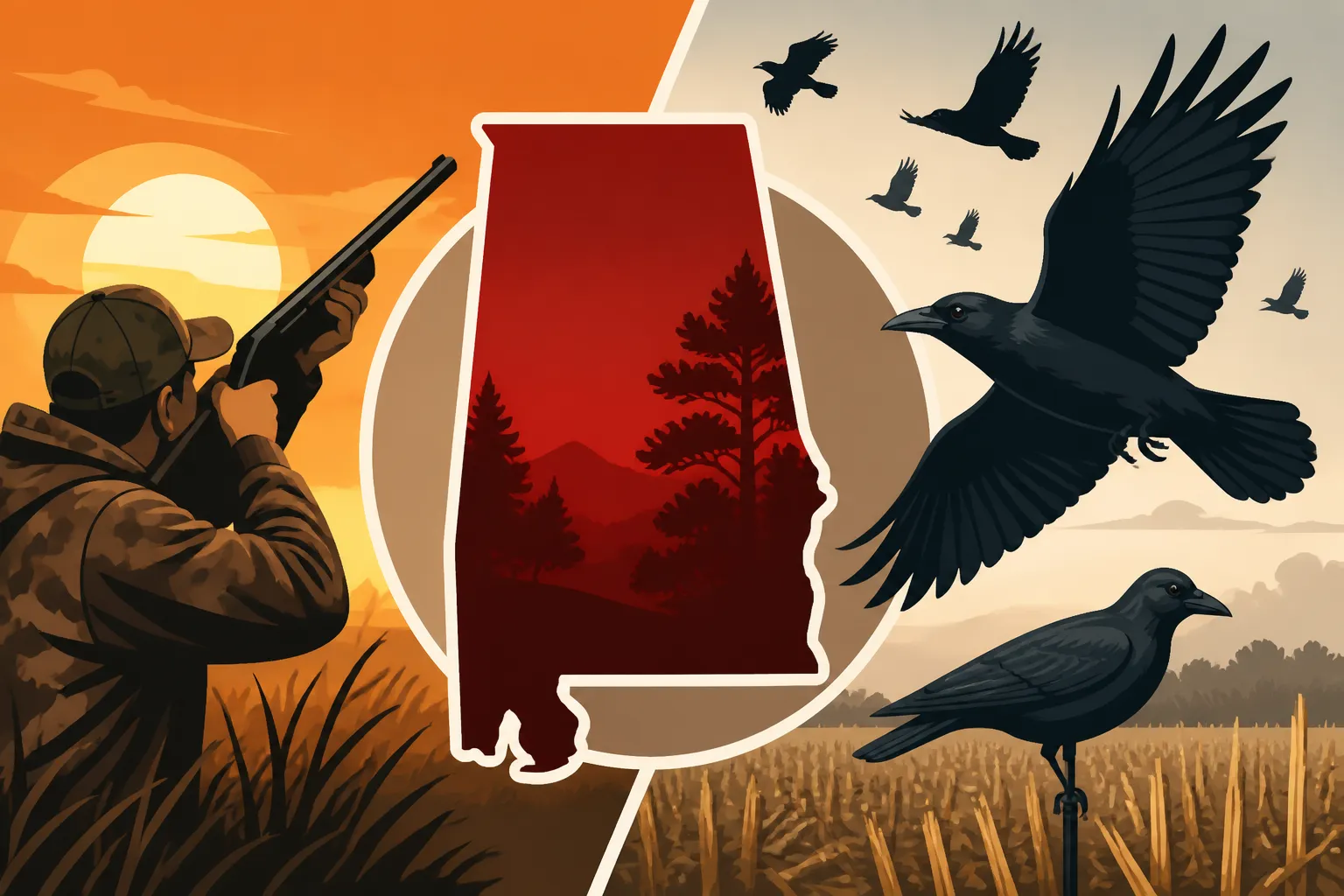
If you've ever felt a little overwhelmed trying to figure out the ins and outs of hunting less-common species in Alabama, you're certainly not alone. While deer and turkey get most of the spotlight, there's a world of exhilarating, year-round action to be had with our often-underestimated feathered friends: crows. This guide is all about demystifying crow hunting in Alabama, from understanding the seasons to mastering the tactics that will have them circling your setup.
Understanding Alabama's Crow Hunting Seasons
One of the biggest questions I hear about crow hunting is always about the season. Folks assume there must be a short window, much like deer or turkey. But that's where crows break the mold, offering fantastic opportunities throughout the year, with a few important considerations.
Year-Round Opportunities and Exceptions
In Alabama, American crows are classified as migratory birds, but they are also considered a nuisance species in many contexts. This means that unlike deer, turkey, or even squirrels, there isn't a traditional, restrictive "season" for crows in the same way. Generally speaking, crow hunting is permitted year-round for residents and non-residents alike. This open season reflects their prolific nature and the agricultural damage they can inflict, making them a target for control efforts.
However, "year-round" doesn't mean "anything goes." While you can legally pursue crows 365 days a year, you still need to be mindful of local ordinances, especially if you're hunting near populated areas or on properties where specific restrictions might apply. Always double-check with landowners if you're on private property. For those heading to public lands, like a Wildlife Management Area (WMA), it's crucial to consult the specific WMA regulations for any unique rules. Sometimes, during peak big game seasons, certain WMAs might have restrictions on general hunting activities or specific weapon types to minimize conflicts. It's rare for crows, but always worth a quick look at the regulations or checking the Alabama WMA Permit Requirement for the specific area you plan to hunt.
Legal Hunting Hours and Equipment
Just like any other hunting activity, there are rules around when and how you can hunt crows. In Alabama, the legal hunting hours for crows typically align with those for other game species: from one-half hour before sunrise to sunset. This means no night hunting for crows, which makes sense given the visual nature of most crow hunting tactics.
When it comes to equipment, crows are fairly liberal. You can use shotguns, rifles, air rifles, and even archery equipment. Shotguns are by far the most popular choice, especially those capable of shooting 2 ¾, 3, or even 3 ½ inch shells, loaded with anything from 7 ½ to 4 shot. For longer range shots when crows might hang up, or if you prefer a different challenge, small caliber rifles like a .22LR or even a .17 HMR can be effective, provided you have a safe backdrop and clear line of sight. Crossbows are also legal, falling under the Crossbow Rules During Alabama Archery Season if you're looking for an alternative. The key, as always, is ethical shot placement and ensuring you're using appropriate equipment for the range and conditions to ensure a quick, clean harvest.
Scouting and Locating Crow Roosts in Alabama
You can't just stumble into a productive crow hunt most of the time. Like any successful hunt, it starts with solid scouting. Crows are intelligent, social birds, and understanding their habits is the first step to putting together a game plan.
Identifying Key Roosting and Feeding Areas
Crows are creatures of habit, especially when it comes to their roosting and feeding patterns. They'll often feed in open agricultural fields – think corn, peanuts, soybeans – where they can easily spot food and potential threats. If you're scouting in areas known for Hunting Black Belt Prairie Farmland Deer or Hunting a Standing Soybean Field, you're likely in prime crow country. They'll also frequent pastures where they scavenge insects, grubs, and even carrion.
The key to finding them for a hunt, though, is locating their communal roosts. These can be massive, sometimes involving thousands of birds, and are often found in dense timber blocks, pine plantations, or even large shade trees on the edges of suburban areas. I often find them near water sources like creek bottoms or river banks. To locate a roost, start driving or walking around an hour before sunset, listening for their distinctive caws. You'll see streams of crows flying in from all directions, converging on a specific woodlot. This is your target. Conversely, in the mornings, they'll disperse from these same roosts to feed. Using mapping apps, like those available through GoHunt, can be invaluable for identifying potential timber blocks or isolated woodlots adjacent to agricultural land. You can mark these potential roost sites and then confirm them with on-the-ground observation.
Using Technology for Pre-Hunt Scouting
In this modern age, we have incredible tools at our fingertips to make scouting more efficient. Forget aimless wandering; you can narrow down your search considerably before you even step foot in the woods. GoHunt's mapping features, for example, allow you to layer satellite imagery with public land boundaries, helping you pinpoint likely roosting and feeding areas without trespassing. You can zoom in on timber edges adjacent to fields, identify dense stands of pines, or even mark specific groups of mature hardwoods that look like ideal roosting spots.
I always recommend spending time with an aerial map, looking for patterns. Crows prefer safety in numbers and elevation. Large, mature trees offer both. Look for dark green patches representing dense timber, especially those within a few miles of open feeding grounds. Rivers and large creeks often have associated timber corridors that act as highways for crows. Once you've identified a few promising spots virtually, then it's time to hit the field. A good pair of binoculars, combined with an understanding of Reading Aerial Photos for Piedmont Deer, can help you spot incoming crows from a distance as they begin to congregate for the night. Mark these confirmed roosts on your GoHunt app, along with potential setup locations for your next hunt.
Effective Crow Hunting Tactics in Alabama
Crows are smart, but they are also curious and highly territorial. This combination, when exploited correctly, can lead to some truly action-packed hunts. The key is understanding their communication and playing on their social instincts.
Decoying and Calling Strategies
This is where crow hunting gets really fun! Unlike deer, which might be spooked by aggressive calling, crows are often drawn in by it, especially distress or fighting calls. The goal is to make them believe there's a serious threat to one of their own, or a prime feeding opportunity being monopolized, which will draw them in for a closer look, or to join the fracas.
Calling: Electronic callers are incredibly effective. They can produce a wide range of realistic crow vocalizations at high volume, which is essential for attracting birds from a distance. Common calls include:
- Distress Calls: Simulates a crow in trouble, often attracting other crows to mob the perceived predator (you).
- Assembly or Come-Here Calls: A series of loud, continuous caws designed to gather the flock.
- Fighting Crows: Sounds like several crows squabbling, triggering their territorial instincts.
- Hawk/Owl Attack: Combining distress calls with calls of a predator can be deadly, making crows want to drive the predator away.
When using an electronic caller, start with a high-volume assembly call to grab attention, then switch to distress or fighting calls once birds are spotted. Vary the intensity and timing. You're trying to tell a story with your calls. Hand calls can also be used effectively, especially for fine-tuning your sounds or adding realism once crows are close. Think about how Predator Calling Alabama Pine Plantations involves similar principles of drawing in curious or territorial animals.
Decoys: Decoys are just as crucial, if not more so, than calling. Crows are very visual. If they hear calls but see nothing, they'll often "hang up" out of range.
- Full-Body Decoys: These are realistic and can be placed in trees, on fence posts, or on the ground. A common setup involves several decoys in a "mobbing" posture around an owl or hawk decoy. This visual representation of crows attacking a predator is a powerful attractant.
- Silhouette Decoys: More portable and affordable, these work best in higher numbers.
- Motion Decoys: Flapping wing decoys or those that simply move with the wind can add incredible realism and draw crows in when they might otherwise be wary. Crow GoHunt mapping allows you to mark successful decoy spreads so you can replicate them later.
- Spread: A good decoy spread often involves 6-12 (or more!) crow decoys, usually in a loose cluster. If using a predator decoy, place your crow decoys within 10-20 yards of it, positioned as if harassing it. Your shooting lane should be directly over or just past this cluster.
Timing your calling and decoying is key. Call aggressively when you spot crows in the distance, then back off slightly as they get closer, letting the decoys do the work. Be ready, because they often come in fast and hard!
Concealment and Shot Placement
Crows have incredible eyesight, perhaps even better than turkeys. They will spot the slightest movement or an unnatural shape. This means absolute concealment is non-negotiable.
- Clothing: Full camouflage, including face mask and gloves, is essential. Break up your outline as much as possible.
- Blinds: A pop-up ground blind is often the easiest and most effective way to achieve total concealment, especially if you're hunting in open fields or on a field edge. When setting up your blind, ensure you're aware of Using a Ground Blind on Alabama Public Land rules if you're on a WMA. Brush it in thoroughly with natural vegetation if possible.
- Natural Cover: If not using a blind, situate yourself against a large tree, in a thick hedgerow, or in dense brush. Break up your silhouette. Make sure you can shoot from your position without having to make excessive movements.
When crows commit and come into range, they can be surprisingly resilient. Aim for the vitals, generally the breast or head, for a quick, humane kill. Shotguns are usually aimed at the head and neck. For rifles, a headshot is preferred. Keep your shots clean and ethical.
Safety and Ethical Considerations
Hunting crows, like any other game, demands respect for the animal, the environment, and fellow outdoor enthusiasts. Always prioritize safety:
- Know Your Target and Beyond: This is paramount. Crows often fly over populated areas or near roads. Always be aware of your surroundings, know where your shot will go, and ensure there's a safe backdrop. The rules around Alabama Firearms Discharge Setback Rules apply universally.
- Landowner Permission: If hunting private land, always obtain explicit permission. Even for a nuisance species, respecting private property is crucial.
- Public Land Rules: If you're on public land, thoroughly review all regulations for that specific area, including Public Hunting Land in Alabama general rules, as well as any WMA-specific rules. Some WMAs might restrict certain types of calling or methods during specific big game seasons to prevent interference.
- No Waste: While crows aren't typically eaten by most hunters, it's still good practice to dispose of them respectfully. Many simply leave them as predator bait, others bury them.
Post-Hunt Practices and Considerations
So, you've had a successful crow hunt – perhaps your first! Now what? There are a few things to consider after the shot, both for managing the birds you've harvested and for setting yourself up for future success.
Handling and Disposal of Crows
Unlike deer or turkeys, there aren't specific legal requirements in Alabama for reporting crow harvests. There's no tag to attach, no Game Check system like for deer. However, you do have a responsibility to handle the birds respectfully. Most hunters don't consume crow meat, though some do consider it edible (often described as similar to duck, though quite dark). If you're not going to eat them, the most common practices for disposal include:
- Leaving them as carrion: In rural, isolated areas, leaving harvested crows can provide food for other scavengers and predators, returning nutrients to the ecosystem.
- Burying them: If you're concerned about aesthetics or attracting unwanted animals, burying them is a clean way to dispose of the carcasses.
- Adding to your decoy spread: While not a long-term solution, fresh crow carcasses can be positioned as additional, incredibly realistic decoys, especially useful for drawing in more wary birds. Just be prepared for them to get a bit messy!
Always be mindful of where you dispose of them, particularly near public access points or residential areas.
Continuing Pressure and Smart Management
Crows are intelligent and learn quickly. If you hunt the same roost or feeding area too frequently, using the exact same tactics, they will become "call shy" or "decoy shy." This means they'll associate your calling and decoys with danger and avoid the area.
- Rotate Locations: If you have access to multiple roosts or feeding areas, rotate your hunting spots. This prevents undue pressure on one specific population. Even scouting Finding Ground Others Walk Past can reveal less-pressured crow spots.
- Vary Tactics: Experiment with different calling sequences and decoy setups. Sometimes, a subtle approach works better than an aggressive one. Change up your blind location within a chosen area.
- Scout Continuously: Crows can shift their patterns based on food sources, weather, and even hunting pressure. Continuous scouting, perhaps with the help of your GoHunt app, will help you stay on top of their movements and keep your tactics fresh. Remember, the goal isn't just to shoot crows, but to enjoy the challenging and engaging experience that these clever birds offer year-round in Alabama.
| Tactic Category | Description | Key Considerations |
|---|---|---|
| Scouting | Locating daily flight paths, communal roosts (evening congregation), and feeding areas (open fields, pastures). | Observe 1-2 hours before sunset/after sunrise. Use aerial maps like GoHunt. |
| Concealment | Breaking up your human outline, minimizing movement, ensuring a clear shooting lane. | Full camo, face mask, gloves. Ground blind or dense natural cover (cedar thicket, heavy brush). |
| Calling | Mimicking various crow vocalizations to attract, infuriate, or alarm them. | Electronic callers for volume/variety, hand calls for realism. Distress, assembly, fighting calls. |
| Decoying | Creating a visual scenario (e.g., crows mobbing a predator) to draw birds into shooting range. | Full-body, silhouette, or motion decoys. Place around a hawk/owl decoy. More is better. |
| Shot Selection | Choosing appropriate firearms/ammo for effective and ethical harvest. | Shotguns (7.5 to 4 shot) most common. Small caliber rifles for wary birds. Aim for head/vitals. |
| Post-Hunt | Responsible disposal, managing hunting pressure to avoid educating birds. | Rotate hunt sites. Vary calls/setups. Respectful carcass disposal if not consumed. |
Remember, just because it's a "nuisance" species doesn't mean the hunt isn't challenging or rewarding. Crow hunting demands skill, patience, and a good understanding of wildlife behavior, making it an excellent way to hone your skills during the off-season for other game.
Disclaimer
Hunting regulations can change frequently. Always consult the latest Alabama Department of Conservation and Natural Resources (ADCNR) official regulations before heading afield to ensure compliance with all current laws and seasons. This guide is for informational purposes only and does not supersede official legal documents.