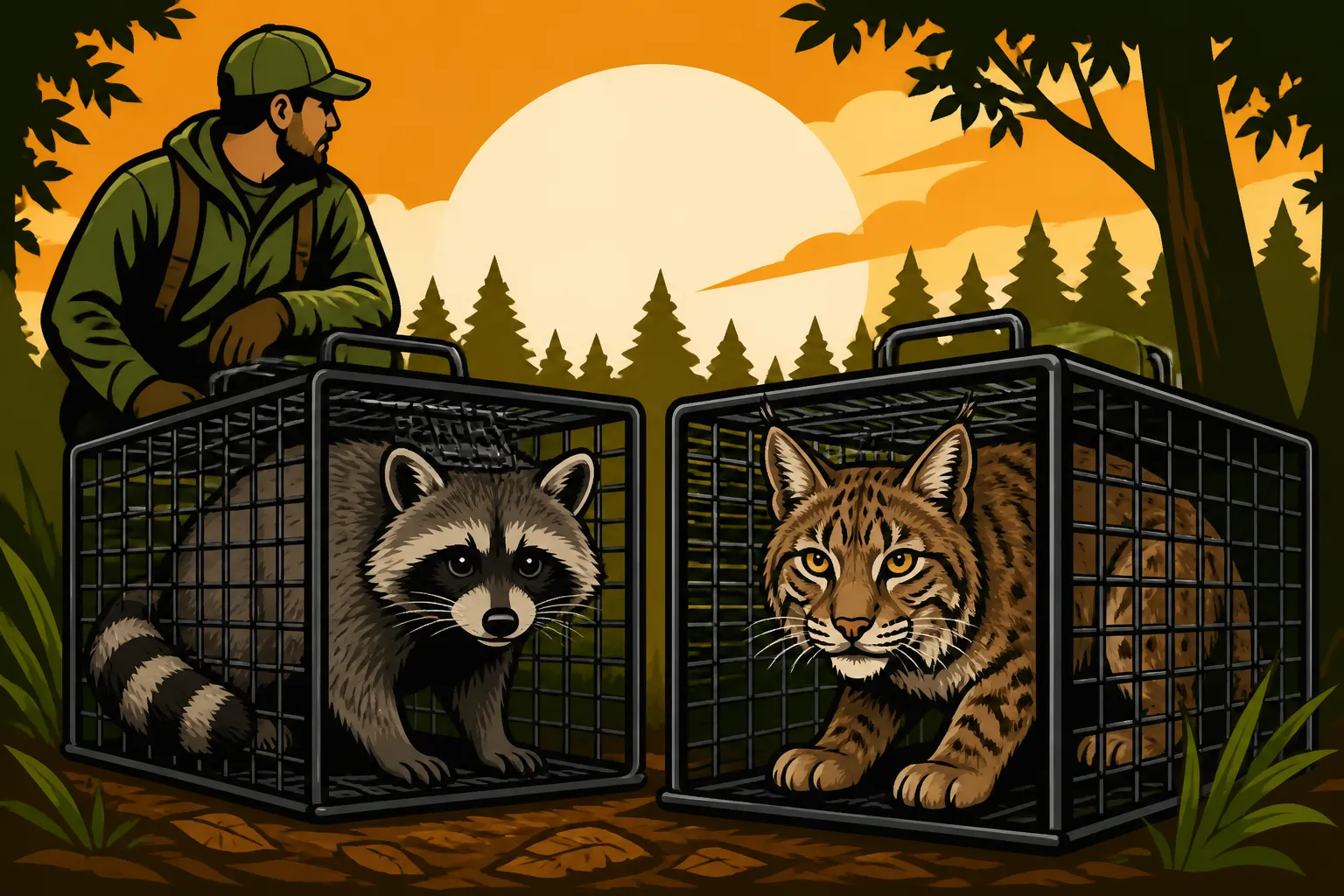
Trapping Alabama Raccoon and Bobcat
For many folks in Alabama, managing wildlife on their property can feel like a never-ending battle, especially when you're dealing with clever critters like raccoons and secretive bobcats. These animals, while fascinating, can cause issues for landowners, from raiding corn feeders and chicken coops to preying on small game. This guide is designed to walk you through the practical, ethical, and legal aspects of trapping raccoons and bobcats in Alabama, helping you understand their habits, select the right gear, and set effective traps while staying within state regulations.
Understanding Raccoon and Bobcat Behavior in Alabama
To successfully trap any animal, you first have to think like them. Raccoons and bobcats are distinct creatures with different behaviors, preferences, and ranges, even though they often share the same general landscape across Alabama. Knowing their daily routines, diet, and preferred hangouts is crucial for effective trapping.
Raccoon Habits and Habitat in Alabama
Raccoons are incredibly adaptable and opportunistic, which is a big part of why they thrive so well across the entire state of Alabama, from the dense bottomlands to suburban fringes. These masked bandits are primarily nocturnal, meaning they do most of their foraging and moving under the cover of darkness. They are omnivores, ready to eat just about anything they can get their paws on. Think about it: they'll feast on berries, nuts, corn from agricultural fields, insects, frogs, bird eggs, crayfish from creek beds, and even delve into your trash cans or pet food bowls if given the chance.
Their preferred habitat often includes areas with readily available water sources, like creeks, rivers, ponds, and swamps. These water features provide not only hydration but also a rich source of food. You’ll often find them denning in hollow trees, abandoned burrows, rock crevices, or even old sheds and attics. They’re excellent climbers and will use their nimble paws to scale trees or structures. When scouting for raccoons, look for tracks in mud along waterways, overturned rocks or logs where they've been foraging, or evidence of their nightly raids around food sources. Their intelligence and curiosity make them challenging but rewarding to trap.
Bobcat Preferences and Territories Across Alabama
Bobcats, on the other hand, are much more elusive and predatory than raccoons. While they also occur throughout Alabama, their presence is often less obvious. These wild cats are primarily crepuscular, meaning they are most active during dawn and dusk, though they can be seen at any time, especially when hunting or moving between territories. Their diet consists almost entirely of meat, with rabbits and rodents making up the bulk, but they won't hesitate to take squirrels, birds, and even young deer or turkeys if the opportunity arises.
Bobcats prefer areas with dense cover, such as thickets, brush piles, cut-over timber, and pine plantations, which provide excellent ambush points for hunting and safe havens for denning. Unlike raccoons, bobcats are more solitary and territorial. A male bobcat's territory can be quite large, spanning several square miles, while females typically have smaller, overlapping ranges. When scouting for bobcats, you'll need a keen eye. Look for tracks along logging roads, faint trails in dense cover, and scat on prominent rocks or logs that serve as territorial markers. They are masters of camouflage and stealth, making them a true test of a trapper's skill. Understanding their preference for secure, brushy areas and their predatory nature is key to setting effective bobcat traps. You might also consider their presence when thinking about Predator Calling Alabama Pine Plantations.
Essential Gear and Setup for Trapping Raccoon and Bobcat
Getting the right gear and knowing how to set it up properly is paramount to successful trapping. It's not just about having a trap; it's about having the right trap, the right bait, and placing it in the right spot.
Choosing the Right Traps for Each Species
Selecting the appropriate trap is critical for both effectiveness and humane treatment. For raccoons, the undisputed champion in recent years has been the dog-proof (DP) trap. These traps are designed with a small opening that raccoons can reach into, but their design makes it very difficult for non-target animals like dogs or even larger bobcats to trip them. Raccoons, with their dexterous paws, are perfectly suited to reach in and grab the bait, triggering the mechanism. Brands like Duke, Coon Dagger, and Z-Trap offer excellent dog-proof options. They are relatively compact, easy to conceal, and highly efficient. When you're dealing with raccoons that are notorious for raiding feeders or causing other mischief, these traps are a game-changer.
For bobcats, the game changes significantly. You'll typically be looking at foothold traps or cage traps. Foothold traps, also known as leghold traps, are very effective but require more skill in placement and bedding to ensure a solid, secure set. A #1.5 to #3 size foothold trap is usually appropriate for bobcats, depending on the jaw spread and specific model. Coil-spring traps are popular for their fast action and ease of bedding. It’s absolutely vital to use traps with smooth, laminated jaws and a swiveled chain to prevent injury to the animal. Cage traps, while less selective than DPs or footholds for bobcats, can be useful in certain situations, especially in areas where you might be concerned about non-target captures or where local regulations prefer them. They need to be large and sturdy enough to safely contain a bobcat. Always remember to check Alabama Trapping License Requirements and local ordinances, as specific trap types might have restrictions.
Effective Baits, Lures, and Scents
Once you have your traps, what do you put in them? Baits, lures, and scents are your primary tools for drawing animals to your sets. For raccoons, their omnivorous nature makes baiting fairly straightforward. They love anything sweet, oily, or fishy. Think marshmallows, sardines, canned cat food, sweet corn, or even commercial raccoon baits that often have a sweet, fruity, or aniselike smell. Placing a small amount of bait inside your dog-proof trap, just out of reach, forces the raccoon to work at it, increasing the likelihood of a catch. A good smear of a fishy lure on the outside of the trap can also help attract their attention.
Bobcats are a different story, as they are strict carnivores. You'll want to use baits that appeal to their predatory instincts. Fresh meat, such as rabbit, squirrel, or even venison scraps, is highly effective. You can also use commercial bobcat lures that are often made from gland secretions or curiosity scents designed to pique their interest. A "flag," which is a visual attractor like a feather or a piece of Mylar fluttering above the set, can also draw a bobcat's eye from a distance. The goal is to make your set look like an easy meal or an interesting territorial intrusion. It's not uncommon for trappers to enhance their sets with a "dirt hole" or "flat set" that mimics a natural animal dig site, further appealing to the bobcat's instincts.
Strategizing Your Set Locations
Where you place your trap is arguably the most important aspect of successful trapping. You can have the best traps and bait in the world, but if they're not where the animals are traveling, you won't catch anything.
For raccoons, focus on natural travel corridors near water. Creek banks, drainage ditches, and river edges are prime locations. Look for pinch points where natural features funnel animals into a narrower path. Under old bridges, along fencerows next to agricultural fields, or even near large culverts are all excellent spots. If you're trapping around a specific problem area, like a chicken coop or a corn feeder, place your traps along the most obvious access routes the raccoons are using. Remember, raccoons are curious, so placing a few visible attractors around the trap, like shiny objects, can sometimes help. Many trappers utilize mapping tools like GoHunt to identify potential pinch points, water sources, and cover on their property before ever stepping foot in the woods. This allows for more strategic and efficient placement.
Bobcat set locations require a deeper understanding of their movements. They often travel along ridges, old logging roads, and game trails that offer easy passage through dense cover. Look for intersections of trails or areas where different habitat types meet. Key locations often include the edges of clear-cuts, thick cedar breaks, and areas with heavy undergrowth where their prey species are abundant. Bobcats are attracted to visual stimuli, so a set placed near a prominent log, rock, or tree can be highly effective, especially if you add a visual flag. Dirt hole sets are popular for bobcats, mimicking a small animal digging, drawing in the curious cat. Using a backing (like a log or a stump) behind your set helps to guide the bobcat's approach directly over the trap. This kind of careful placement is what separates an occasional catch from consistent success.
Alabama Regulations and Ethical Trapping Practices
Trapping, like any other form of wildlife management, comes with a strict set of rules and ethical responsibilities. It’s not just about what you can do, but what you should do, to ensure humane treatment of animals and maintain a good relationship with landowners and the broader community.
Navigating Alabama's Trapping Seasons and Rules
First and foremost, you absolutely must know the current Alabama trapping regulations. The Alabama Department of Conservation and Natural Resources (ADCNR) sets specific seasons for furbearers like raccoons and bobcats. These seasons typically run through the fall and winter months. For instance, Alabama Raccoon Season Dates and Alabama Fox and Bobcat Trapping Season will give you the exact window during which you can legally set traps. Trapping outside these seasons is illegal and can result in significant penalties.
Beyond season dates, there are rules regarding trap types, trap tags, and daily trap checks. All traps must be tagged with your name and address or your ADCNR license number. This is crucial for identification if a trap is found or if there's ever a question about ownership. Furthermore, all traps must be checked at least once every 24 hours. This isn't just a rule; it's an ethical obligation to ensure that any captured animal is dealt with as quickly and humanely as possible, and to release non-target species unharmed. Before you even think about setting a single trap, verify the latest rules on the Outdoor Alabama website, and ensure you have all the necessary Alabama Trapping License Requirements. Using a resource like GoHunt can sometimes help you quickly access summarized regulations, but always double-check with the official ADCNR site for the most accurate and up-to-date information.
Responsible Trapping and Non-Target Catches
One of the biggest concerns for any responsible trapper is minimizing non-target catches. While dog-proof traps are excellent for raccoons, footholds set for bobcats can sometimes catch other animals. This is where trap selection, placement, and regular checks become critical.
When you do catch a non-target animal, such as a fox or opossum when aiming for a bobcat, it's your responsibility to release it unharmed if possible. Knowing how to safely handle and release these animals is a skill every trapper must possess. Often, a catch pole or specialized releasing tool can facilitate a quick, safe release for both you and the animal. Setting traps away from areas frequented by domestic animals, like trails near residential areas or livestock pastures, is another way to reduce unwanted captures. Furthermore, always obtain explicit landowner permission before setting traps on private property. This isn't just common courtesy; it's a legal requirement, just like understanding Do Feral Hogs Need Landowner Permission? before you pursue them. Neglecting these responsibilities can lead to Alabama Wildlife Violation Penalties and harm the reputation of trapping as a whole. Ethical trapping means understanding the ecosystem around you and doing your best to minimize impact while achieving your management goals.
Post-Catch Management and Fur Handling
Catching a raccoon or bobcat is only half the battle. What you do after the catch is just as important, especially if you intend to harvest the fur or meat. Proper post-catch management ensures humane treatment and maximizes the value of your efforts.
Dispatching and Handling Raccoon and Bobcat
When you arrive at a set and find a trapped animal, the first priority is humane dispatch. The method chosen should be quick, efficient, and minimize suffering. For raccoons and bobcats, a swift, well-placed shot from a .22 caliber firearm is a common and humane method. Some trappers also use a sharp blow to the head with a solid object, but this requires precision and experience. Always ensure you are operating safely, with a clear backdrop, and that no other people or animals are in danger.
Once dispatched, the animal should be handled carefully. If you plan to process the fur, keeping the carcass clean and cool is essential. Dragging an animal through mud or brush can damage the fur, reducing its value. In warm weather, it's crucial to get the animal cooled down as quickly as possible to prevent spoilage. This might mean placing it in a cooler with ice, especially if you're a long way from home or a skinning shed. You are also required to report your harvests for many species, so be aware of any Alabama Deer Reporting Rules or similar requirements for furbearers, though often furbearers don't have the same strict reporting as deer or turkey.
Skinning, Fleshing, and Drying the Fur
Preparing the fur for market is an art form that requires practice and proper technique. The process typically involves skinning, fleshing, and stretching/drying.
Skinning: This is the act of removing the hide from the carcass. For raccoons and bobcats, you’ll typically "case skin" them, meaning the hide is removed like pulling off a sweater, leaving a tube-like shape. Start with incisions from the heel of one hind leg, across the vent, to the heel of the other hind leg. Then, cut down the inside of each leg to the paw. Carefully peel and cut the hide away from the carcass, paying close attention around the head, ears, and eyes to avoid damaging the fur. Tools like a sharp skinning knife and a gambrel (to hang the animal) are essential.
Fleshing: Once skinned, the hide will have layers of fat and muscle attached to the underside. Fleshing involves meticulously scraping all this material off the hide. This is critical because any remaining fat will "burn" the fur, causing hair slip and ruining the hide's value. A fleshing beam and a dull fleshing knife are standard tools for this tedious but necessary step. The goal is to get the hide clean, thin, and ready to dry evenly.
Drying/Stretching: After fleshing, the hide is stretched onto a wooden or wire stretcher to dry. This gives the fur its final shape and allows it to air dry properly. Raccoon hides are typically stretched to an oval or round shape, while bobcats are usually stretched to a more elongated "case" shape. Hang the stretched hides in a cool, dry, well-ventilated area, away from direct sunlight or heat, which can damage the fur. Drying can take several days to a couple of weeks, depending on humidity and ventilation. Proper fur handling techniques ensure you get the best possible price for your hard-earned catches, allowing you to appreciate the full value of the Alabama Small Game and Furbearers you’ve harvested.
Raccoon vs. Bobcat Trapping Comparison
To help summarize the differences and key considerations when targeting raccoons versus bobcats, here's a quick comparison:
| Feature | Raccoon Trapping | Bobcat Trapping |
|---|---|---|
| Primary Goal | Population control, fur, meat, nuisance removal | Fur, population monitoring, nuisance removal |
| Preferred Trap | Dog-proof (DP) traps, small cage traps | Foothold traps (#1.5 – #3), large cage traps |
| Typical Bait | Sweet foods (marshmallows, corn), fish, cat food | Fresh meat (rabbit, squirrel, venison), gland lures |
| Lures/Scents | Sweet, fishy, anise | Gland, curiosity, urine |
| Set Locations | Waterways, creek banks, culverts, fencerows, feeders | Logging roads, dense thickets, trail intersections, rock piles |
| Scouting Sign | Tracks in mud, overturned objects, damaged feeders | Tracks on roads, scat on logs, faint trails in cover |
| Activity Peak | Nocturnal (night) | Crepuscular (dawn/dusk), sometimes day |
| Required Skill | Moderate, mostly about bait and location | High, requires precise trap bedding and concealment |
| Fur Value | Moderate, dependent on quality and market trends | High, often one of the most valuable furbearers |
Disclaimer
This guide is intended for informational purposes only and is not a substitute for professional advice or current legal regulations. Always consult the latest Alabama Department of Conservation and Natural Resources (ADCNR) hunting and trapping regulations before engaging in any trapping activities. Laws and regulations can change, and it is the individual's responsibility to ensure full compliance. Safe and ethical practices should always be a top priority.