Alabama Fox and Bobcat Trapping Season
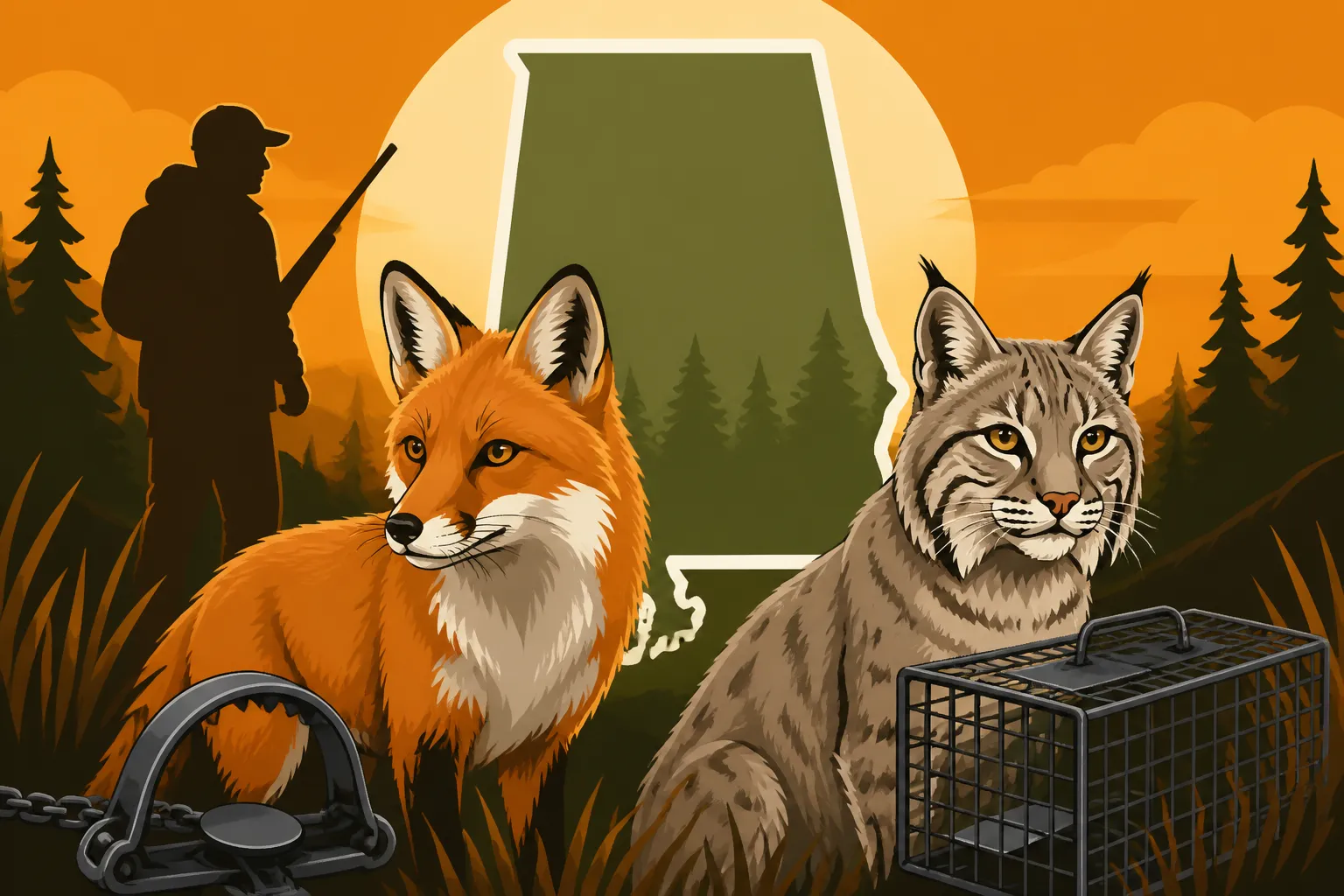
There's a unique challenge and deep satisfaction that comes with trapping, especially when you're targeting wily furbearers like foxes and bobcats here in Alabama. For folks just getting started, or even seasoned veterans looking for a refresher, figuring out all the rules, the best spots, and the most effective methods can feel like wading through thick kudzu. This guide is here to untangle the complexities, offering a realistic look at the Alabama fox and bobcat trapping season so you can pursue these fascinating animals ethically and successfully.
Understanding Alabama's Trapping Regulations for Fox and Bobcat
Trapping is a regulated activity for good reason – it ensures fair chase, conserves wildlife populations, and maintains public safety. When it comes to fox and bobcat, Alabama sets clear guidelines that every trapper needs to know inside and out before ever setting a foothold. Ignoring these rules isn't just irresponsible; it can lead to hefty fines and loss of trapping privileges.
General Season Dates and Zones
The good news for trappers pursuing fox and bobcat in Alabama is that the season dates are generally uniform statewide, making it a bit simpler than some of our more segmented deer or turkey seasons. Typically, the statewide furbearer trapping season, which includes both fox species (red and gray) and bobcats, opens in early November and runs all the way through the end of February. This generous window, often from the first Saturday in November until February 28th (or 29th in a leap year), gives you ample time to get out on the trap line, adjust to conditions, and hone your skills.
It's important to remember that these dates are for trapping on both private and most public lands. Always double-check the current year's Alabama Department of Conservation and Natural Resources (ADCNR) regulations, as slight shifts can occur. For instance, sometimes opening day might shift by a day or two depending on the calendar, or a specific Wildlife Management Area (WMA) might have unique rules for certain furbearers, though this is less common for fox and bobcat compared to deer. This consistency across the state means you don't have to worry about different zones for fox or bobcat like you do for deer, simplifying planning whether you're trapping in the piney woods of South Alabama or the rolling hills of the North.
Permitting and Licensing Requirements
Before you can even think about setting your first trap, you absolutely must have the proper licensing. In Alabama, a standard hunting license isn't enough; you'll need a specific trapping license. For residents, this typically falls under the "All Game" hunting license that also covers furbearers, or sometimes a standalone furbearer license is available. Non-residents have options too, usually involving an annual non-resident hunting license or a specific 10-day furbearer license if you're just visiting.
For a detailed breakdown of what you need, check out our guide on Alabama Trapping License Requirements. It's not just about having the license; you need to carry proof of it with you while you're tending your traps. This can be a physical copy or stored digitally on your phone via the Outdoor Alabama app. Many experienced trappers even keep a laminated copy in their trap bag. There are no additional special permits needed specifically for fox or bobcat beyond the general trapping license, but it's crucial to understand that trapping on certain public lands, like WMAs, often requires an additional WMA permit. Always confirm these requirements before venturing out.
Legal Trapping Methods and Equipment
Alabama has clear rules about the types of traps you can use and how they must be deployed. Generally, most common furbearer traps are legal, including foothold traps, body-gripping traps (like Conibears), and snares, but each comes with specific stipulations.
For foothold traps, which are very popular for fox and bobcat, there are usually no strict size limits, but trappers are strongly encouraged to use padded or laminated jaw traps to minimize injury to non-target animals. All traps must be tagged with your name and address, or your ADCNR GO Outdoors Customer ID number. This is vital for identification and accountability.
Body-gripping traps, often called Conibears, have size restrictions when used on land. In Alabama, body-gripping traps with a jaw spread greater than 5 inches are generally restricted to fully submerged sets in water or elevated sets where the trap is at least 5 feet off the ground. This restriction is primarily to prevent incidental catches of larger non-target animals like deer. However, smaller body-gripping traps (5 inches or less) can be used on land if placed in a covered cubby-type set, which further reduces non-target catches by making the trap inaccessible to larger animals.
Snares are also legal for furbearers but often have the most stringent regulations, especially concerning public vs. private land. On private land, snares are typically allowed with fewer restrictions, but on public land, they often require breakaway devices to allow larger animals to escape and may have specific loop sizes or height off the ground requirements. Always consult the current regulations for exact snare specifications, as these can change. You can find more information about general trapping methods, including snares, by checking out Running a Trapline in Rural Alabama.
A crucial regulation for all trap types is the daily trap check. All traps must be visited and checked at least once every 24 hours. This rule is non-negotiable and is in place to ensure any caught animal is handled as humanely and quickly as possible, and to release non-target species unharmed. Failing to check your traps daily is a serious violation.
| Trap Type | Legal Use for Fox/Bobcat | Key Regulations |
|---|---|---|
| Foothold | Yes, common | Must be tagged with ID, padded jaws recommended. |
| Body-Gripping (Conibear) | Yes, with size/placement restrictions | Max 5" jaw spread on land in cubby; >5" must be submerged or >5' high. |
| Snares | Yes, with specific requirements | Breakaway devices often required, especially on public land; specific loop size/height. |
| All Traps | N/A | Must be checked at least once every 24 hours. |
Identifying and Targeting Fox and Bobcat in Alabama
Successful trapping isn't just about setting a legal trap; it's about understanding the animals you're pursuing. Foxes and bobcats are intelligent, elusive creatures with distinct habits, and knowing how to find them and what makes them tick is half the battle.
Fox Species in Alabama and Their Habits
Alabama is home to two primary fox species: the Red Fox and the Gray Fox. While both are opportunists, they have different habitat preferences and often occupy slightly different niches, which can inform your trapping strategy.
Red Foxes are often associated with more open, agricultural landscapes, farmlands, and forest edges, though they can adapt to a variety of environments. They tend to be larger and more comfortable in areas with a mix of fields, pastures, and scattered woodlands. Their diet is incredibly varied, including rodents, rabbits, birds, insects, and even fruits and berries, making them adaptable hunters. They're primarily crepuscular (active at dawn and dusk) and nocturnal, often seen crossing fields in the early morning or late evening. If you're trapping near areas with mixed agriculture and woodland, you're more likely to encounter reds. You might find their scat containing berries or seeds, alongside fur or bone fragments, often deposited on elevated spots like logs or rocks as a territorial marker.
Gray Foxes, on the other hand, are typically associated with denser, more mature woodlands and heavily timbered areas. They are unique among canids for their semi-arboreal habits, meaning they can actually climb trees, often escaping predators or seeking refuge. They tend to be smaller than red foxes and prefer areas with thick undergrowth, rocky outcrops, and creek bottoms. Their diet is also diverse, but they rely heavily on small mammals like rabbits and rodents, along with insects and plant matter. Gray foxes are also primarily nocturnal, and finding their sign in thick woods requires keen observation. Their tracks are often more elongated than a red fox, and you might find claw marks on trees where they've climbed.
Understanding these subtle differences in behavior and habitat can significantly increase your success rate. For example, a wide-open dirt hole set in a field edge might be perfect for a red fox, while a cubby set tucked deep into a brushy creek bottom might be better suited for a gray fox.
Bobcat Behavior and Preferred Habitats
Bobcats are magnificent, solitary predators, and trapping them is often considered a pinnacle for many furbearer enthusiasts. These elusive felines are found throughout Alabama, from the mountainous regions to the coastal plain. They prefer dense cover, often associated with thickets, swamps, rocky bluffs, and heavily wooded areas that provide plenty of hiding spots and ambush opportunities.
Bobcats are primarily nocturnal and crepuscular, though they can be active during the day, especially in colder weather or during periods of high prey availability. Their diet consists mainly of rabbits, rodents, and birds, but they are powerful enough to take down small deer, especially fawns or sick adults. Bobcats are highly territorial, and adult males will roam large areas. They mark their territory through scent (urine, scat), claw marks on trees, and scrapes.
When scouting for bobcat sign, look for these tell-tale markers. Scratches on trees (especially softer wood like pine) can indicate a bobcat sharpening its claws or marking territory. Their tracks are typically round with no visible claw marks, unlike canids, and are often found along game trails, logging roads, or the edges of dense cover. Locating areas with high prey density, such as thick rabbitat or areas known for abundant squirrels, will also be key, as bobcats will naturally gravitate to food sources. For broader scouting tips that apply to all species, you might find our guide on Scouting Alabama Public Land Before Season helpful, as many of the principles for finding game sign apply directly to furbearers.
Scouting and Location Selection for Trapping
Effective trapping begins long before you set your first trap, with thorough pre-season scouting. You can't just throw traps out randomly and expect success. You need to read the landscape, understand animal movement, and identify key locations.
Start by looking for natural funnels and travel corridors. These are places where the terrain naturally constricts animal movement, forcing them into a smaller area. This could be a narrow strip of woods between two large fields, a draw leading into a creek bottom, or a bottleneck created by thick brush and a road. Creek bottoms and logging roads are often highways for furbearers, offering easy travel routes and consistent access to different habitat types. Consider checking out Reading Alabama Mud for Fresh Deer Movement for general tips on interpreting animal sign, which is highly applicable to furbearers.
Look for specific sign:
- Tracks: Fresh tracks in mud, sand, or snow (if we get it in Alabama!) are a clear indicator of recent activity. Learn to differentiate fox, bobcat, coyote, and domestic dog tracks.
- Scat: Fox scat often contains fur, bone fragments, or berry seeds. Bobcat scat will primarily consist of fur and bone and is often "segmented."
- Rub/Scratch Marks: Bobcats will often scratch trees, especially small pines, to mark their territory.
- Dens/Bedding Areas: While difficult to find, identifying potential den sites or preferred bedding cover can lead you to productive areas. For foxes, this might be an old culvert or a burrow under a fallen log. For bobcats, rocky crevices or dense thickets.
Food sources are also critical. While bobcats are obligate carnivores, foxes are omnivores. Early season trapping might benefit from looking near persimmon trees or areas with abundant wild grapes for foxes. Later in the season, when natural food sources are scarcer, focusing on areas with high concentrations of small game (like rabbits or rodents) becomes even more important for both species. Places where different habitat types converge, like where a pine plantation meets a hardwood bottom, are often excellent transition zones that furbearers utilize heavily.
Effective Trapping Strategies and Best Practices
Once you've done your scouting and understand the local furbearer habits, it's time to put steel in the ground. But even with the perfect spot, an improperly set trap or the wrong lure can mean the difference between a successful catch and an empty set.
Trap Set Types and Placement
The art of trapping lies in deceiving an animal's keen senses and instincts. This means using the right trap set for the situation and blending it seamlessly into the environment.
- Dirt Hole Sets: This is arguably the most versatile and popular set for foxes and coyotes, and it can be effective for bobcats too. It mimics an animal burying food. You dig a small, angled hole about 6-8 inches deep, 2-3 inches wide, near a prominent object like a clump of grass, a log, or a fence post. The trap is bedded (secured and leveled) a few inches in front of the hole, then covered with sifted dirt. Lure and bait are placed in the hole. The idea is that the animal will investigate the hole, stepping on the trap in the process. This set appeals to a canid's natural curiosity and desire to scavenge or cache food.
- Flat Sets: Simpler than a dirt hole, a flat set usually involves placing a trap near a natural object (a log, rock, or stump) with bait and lure directly on the ground or lightly covered. The trap is bedded nearby, slightly off to one side of the bait, and blended in. This set relies on the animal's natural tendency to investigate new smells and objects in its territory without necessarily digging. It's excellent for bobcats and gray foxes, which might be less inclined to dig a hole but will readily inspect a visual or scent attractant.
- Cubby Sets: These are particularly effective for bobcats and often used for foxes, especially where you want to minimize non-target catches. A cubby is essentially a small, three-sided enclosure made from logs, rocks, or even manufactured materials. The bait and lure are placed at the back of the cubby, and the trap is bedded at the entrance. The enclosed nature makes the animal feel secure while approaching the bait and helps guide them over the trap. If using body-gripping traps on land, they must be used in cubbies (and adhere to the 5-inch jaw spread rule) to be legal.
When placing your traps, always think about the animal's approach. Use natural barriers like logs, dense brush, or even strategically placed rocks to "funnel" the animal's movement directly over your trap. Ensure your trap is bedded firmly, meaning it won't wobble or click when stepped on, which can spook a cautious furbearer. Finally, blend everything in perfectly. Use local dirt, leaves, and pine needles to make your set look as natural as possible. Any unnatural disturbance can be a red flag to a wary fox or bobcat.
Lures, Baits, and Attractants
This is where you truly tap into the animal's instincts. Effective lures and baits are critical to drawing furbearers to your sets.
- Lures: These are potent scents designed to mimic other animals, invoke curiosity, or trigger territorial responses.
- Gland Lures: Made from the glands of the target animal (e.g., fox gland lure, bobcat gland lure). These are very effective for attracting members of the same species, often invoking a territorial response.
- Call Lures: Strong, long-range odors like skunk essence, castor, or synthetic smells designed to pique curiosity and draw animals from a distance. These are similar in principle to some of the attractants used in Coyote Calling in Alabama Farm Country, though applied differently for trapping.
- Food Lures: Scents that smell like food, such as fruit essences for foxes or fish oil for both.
- Baits: These are actual food items used to entice the animal.
- Meat Scraps: Beaver, deer scraps, rabbit, or even aged chicken can be very effective. Fresh meat can attract scavengers, while slightly "tainted" meat might be more appealing to canids and felines.
- Fish Oil: A universal attractant that many furbearers can't resist.
- Commercial Baits: Many companies, like those found through platforms such as GoHunt, offer specially formulated baits that combine various appealing scents and flavors. These are often highly refined and tested for effectiveness.
- Urine: Predator urine (fox urine for foxes, bobcat urine for bobcats) can be a powerful attractant, signaling the presence of another animal and often triggering a territorial investigation. A few drops around the set can work wonders.
The key is often a combination of these elements. A good strategy might be to use a strong call lure for long-range attraction, a specific gland lure closer to the set for targeted appeal, and a food bait at the business end to seal the deal. Remember, a little goes a long way with strong lures. Too much can sometimes overwhelm or spook an animal. It’s a delicate balance. Many trappers swear by particular brands of lures and baits, and exploring options on sites like GoHunt can help you find proven products specifically designed for Alabama's furbearers.
Trap Checking, Handling, and Release
The most critical rule of trapping, both legally and ethically, is the daily trap check. As mentioned, Alabama law requires all traps to be checked at least once every 24 hours. This means every single day, rain or shine, even Christmas Day or New Year's Day. This is paramount for the welfare of any caught animal, ensuring it doesn't suffer unnecessarily from exposure, injury, or predation. Neglecting a trap line is not only inhumane but a serious violation of regulations.
When you approach a set with an animal, do so cautiously. Wild animals are naturally stressed when caught and can be dangerous. Have your dispatch tool (a .22 caliber pistol or rifle, or a swift, humane blow with a stout stick) ready. Dispatch should be quick and humane, causing as little suffering as possible.
For non-target animals, such as opossums, raccoons, or domestic animals caught by mistake (though proper set placement minimizes this), the goal is safe and immediate release. Carry a catch pole or heavy-duty gloves for safe handling. Familiarize yourself with how to safely restrain and release common non-target species without harming yourself or the animal. This is a crucial skill for any responsible trapper.
After an animal has been dispatched, proper handling for pelt preparation is important if you intend to sell or keep the fur. This includes cooling the carcass quickly, skinning cleanly, and fleshing/stretching the pelt correctly. Good pelt handling maximizes the value and integrity of the fur. Platforms like GoHunt sometimes offer resources or forums where trappers share tips on pelt preparation and market trends.
Responsible Trapping and Conservation in Alabama
Trapping is more than just catching animals; it's an active form of wildlife management and conservation. Responsible trappers understand their role in maintaining healthy ecosystems and fostering a positive public image for their pursuit.
Ethical Considerations and Public Perception
As trappers, we have a responsibility not only to the animals we pursue but also to the wider public. Ethical trapping practices are the cornerstone of public acceptance and the continued existence of trapping as a legitimate outdoor activity.
- Minimizing Non-Target Catches: This starts with proper set selection and placement. Using cubby sets in areas with high deer traffic can prevent unintended catches. Understanding the specific behaviors of fox and bobcat (e.g., foxes are more prone to curiosity sets, bobcats to visual attractants) helps narrow down the species that are likely to interact with your traps. Using appropriate trap sizes and modifications (like padded jaws) also reduces injury to non-target animals.
- Humane Treatment: The 24-hour trap check rule exists for this very reason. It ensures any animal caught is not left to suffer. Swift and humane dispatch is a moral imperative.
- Respect for Landowners and Other Users: If you're trapping on private land, ensure you have explicit, clear permission, preferably in writing. Our guide on Getting Private Land Permission in Alabama offers excellent tips. If on public land, be mindful of other users (hikers, dog walkers, hunters) and place traps in discreet, out-of-the-way locations to avoid conflicts or startling incidents. Always mark your traps clearly as required.
Maintaining a positive public image for trapping means being transparent, ethical, and knowledgeable. A single irresponsible trapper can tarnish the reputation of the entire community.
Furbearer Management and Population Trends
Trapping plays a vital role in furbearer management in Alabama. Regulated seasons and bag limits (though typically no daily bag limit for foxes and bobcats, only a season limit on bobcats if you’re selling pelts commercially) help maintain healthy, sustainable populations.
Trappers contribute valuable data to these efforts, often by reporting catches or participating in surveys, which helps biologists make informed decisions about future management strategies.
Safety First: Avoiding Hazards and Staying Prepared
Running a trap line, while rewarding, isn't without its risks. Being prepared and prioritizing safety is crucial for both you and anyone else who might encounter your sets.
- Personal Safety: You'll be spending time outdoors, often in remote areas, and sometimes in inclement weather. Dress appropriately for the conditions. Carry a GPS or use a reliable mapping app (like those found on GoHunt's platform or onX Hunt) to avoid getting lost, especially on large tracts of public land like those covered by Alabama Wildlife Management Areas. Be aware of venomous snakes (cottonmouths, rattlesnakes) during warmer parts of the season or in their typical habitats (swamps, rocky areas). Inform someone of your trapping plans and expected return time.
- Handling Traps and Animals: Traps are designed to hold animals, and they can certainly hold a human hand or foot if you're not careful. Always handle traps cautiously, using safety setters for body-gripping traps. When dealing with a caught animal, maintain a respectful distance until you are ready to act. Even a small fox can inflict a nasty bite.
- Public Land Awareness: If trapping on public land, be extra vigilant. While legal, a trap set on a well-used hiking trail or too close to a popular fishing spot can lead to negative encounters. Consider marking your presence with "Trapper Present" signs if allowed, though most trappers prefer discretion. Always ensure your sets are well off the beaten path and not easily stumbled upon by an innocent passerby. Be clear on local regulations for public land use, which might include specific public land hunting hours or rules on where you can park.
Carrying essential gear is non-negotiable: a small backpack with water, a first-aid kit, a knife, sturdy gloves, a trap setter, a small shovel, and your license. Being prepared means you can handle most situations that arise on the trap line, ensuring a safe and successful season.
Disclaimer
The information provided in this guide is for general informational purposes only and does not constitute legal advice. Hunting and trapping regulations in Alabama are subject to change. It is the sole responsibility of the individual hunter or trapper to consult the most current Alabama Department of Conservation and Natural Resources (ADCNR) regulations and local ordinances before engaging in any hunting or trapping activities. Always prioritize safety and ethical practices.