Alabama Legal Firearms for Deer Hunting
Navigating the specific legal requirements for deer hunting firearms in Alabama can sometimes feel like deciphering a cryptic code, especially for those new to the state or just getting into hunting. You want to make sure you're doing everything by the book, not just for legal reasons, but for ethical hunting practices too. This comprehensive guide is here to unravel the complexities, giving you a clear understanding of what’s allowed, what’s not, and how to make the best choices for your deer hunting adventures in the Heart of Dixie.
The Foundation: Legal Firearm Types for Alabama Deer Hunting
Alabama offers a pretty generous framework when it comes to the types of firearms you can use for deer hunting, which is great for hunters with diverse preferences. However, "generous" doesn't mean "unrestricted." It's crucial to understand the categories and any specific limitations within them to ensure a legal and responsible hunt.
Centerfire Rifles and Their Cartridges
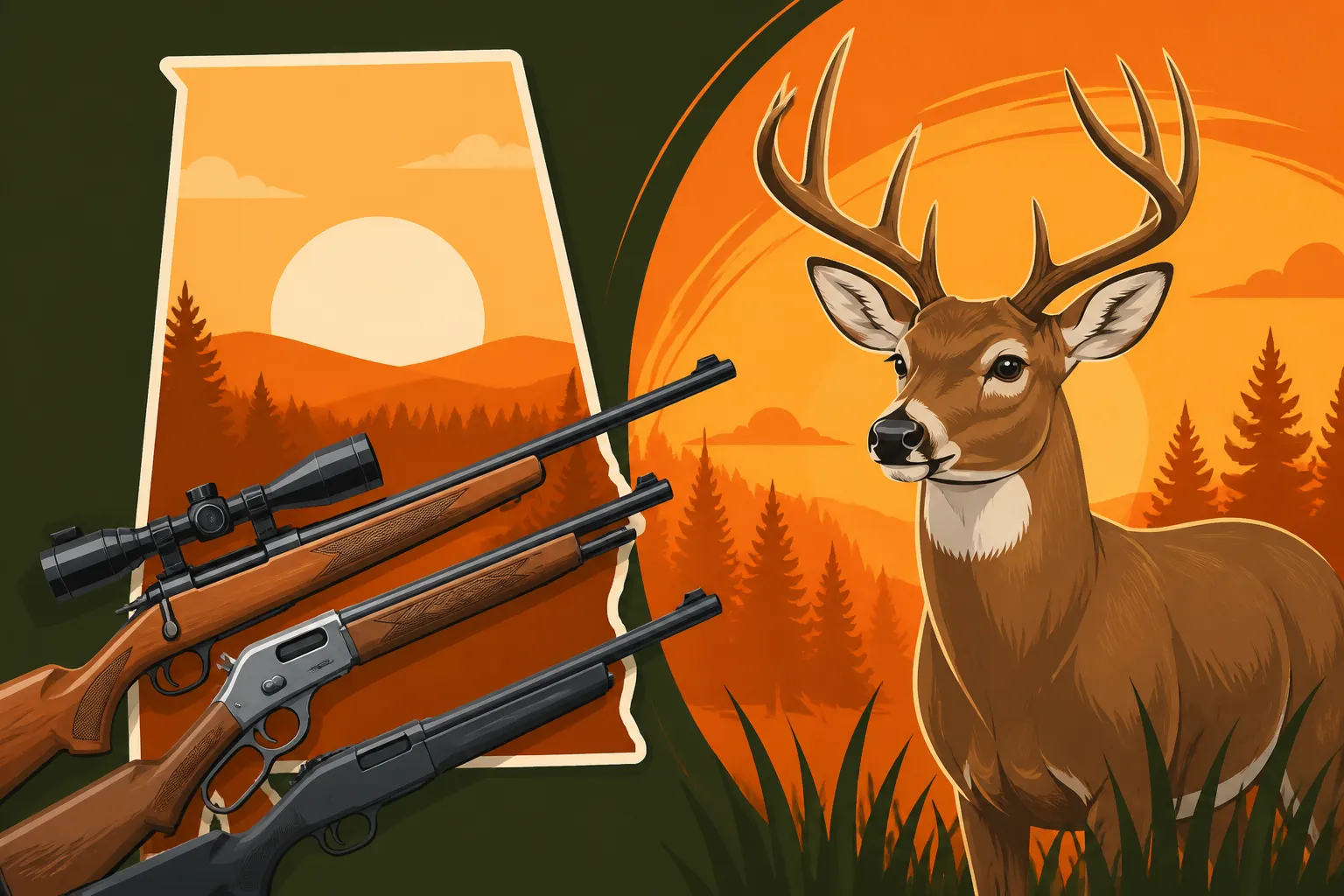
When most folks think about deer hunting in Alabama, a centerfire rifle is usually the first thing that comes to mind, and for good reason. They are by far the most popular choice, offering excellent range and knockdown power. Generally speaking, Alabama is quite accommodating here, allowing most common centerfire rifle calibers.
The state's regulations, as outlined by the Alabama Department of Conservation and Natural Resources (ADCNR), specify that rifles must be chambered in a cartridge with a minimum bullet diameter of .22 caliber and capable of firing a bullet weighing at least 55 grains. This essentially means popular cartridges like the .223 Remington (if using heavy enough bullets), .243 Winchester, .270 Winchester, .30-06 Springfield, .308 Winchester, and even newer favorites like the 6.5 Creedmoor are all perfectly legal. The key is meeting that minimum bullet weight and diameter. You won't find specific restrictions on bullet construction like solid copper or lead core, as long as it's a suitable hunting projectile. However, always prioritize ethical hunting; just because a caliber is legal doesn't mean it's ideal for every situation or for reaching out to longer ranges. For an in-depth look at specific requirements, checking the Alabama Minimum Rifle Caliber Rules can clear up any lingering questions.
Shotguns and Slugs
Don't count out shotguns for deer hunting in Alabama! While often associated with bird hunting, a shotgun loaded with slugs can be incredibly effective, especially in dense cover where shots are typically close-range. Alabama allows the use of shotguns 10-gauge or smaller, provided they are loaded with slugs. This means your trusty 12-gauge or 20-gauge will do just fine.
The use of slugs, rather than buckshot, is non-negotiable for deer. Slugs are single, large projectiles designed to deliver significant energy to the target. You have options here: traditional rifled slugs, which are effective in smoothbore barrels, and sabot slugs, designed for rifled shotgun barrels to improve accuracy at longer distances. Many hunters who frequent areas with restricted firearm use (sometimes due to proximity to residential areas, though this is less common for general deer season) or simply prefer the versatility of a shotgun will opt for a slug gun setup. This can be particularly effective during a Deer Drives on Alabama Public Land scenario, where quick, close shots are common.
Muzzleloaders and Air Rifles
For those who enjoy a more traditional or specialized hunting experience, Alabama also permits muzzleloaders and air rifles for deer. These weapons often have their own dedicated seasons or can be used during the general gun season, adding another layer of versatility for hunters.
Muzzleloaders, for example, evoke a sense of history and challenge. Alabama regulations state that legal muzzleloaders for deer must be at least .40 caliber. This includes both traditional flintlock and percussion cap rifles, as well as the more modern in-line muzzleloaders. You'll typically be using black powder or a black powder substitute, and projectiles can range from patched round balls to saboted bullets. Many hunters appreciate the simplicity and effectiveness of a well-placed muzzleloader shot, and there's a whole season dedicated to them. To learn more about specific tactics and opportunities, exploring resources like Muzzleloader Deer Hunting in Alabama is a great next step.
Air rifles are a newer addition to the legal deer hunting lineup in Alabama, reflecting advancements in airgun technology. For deer, air rifles must be .30 caliber or larger and capable of producing at least 200 foot-pounds of energy at the muzzle. This isn't your average backyard BB gun; these are powerful, precision-engineered hunting tools. They offer a quieter alternative and can be a fantastic option for hunters who are sensitive to recoil or muzzle blast. Just like with any firearm, understanding the capabilities and limitations of your air rifle, and practicing extensively, is paramount for ethical hunting. For more details on this specific hunting method, check out Alabama Muzzleloader and Air Rifle Season and Hunting Alabama's Muzzleloader and Air Rifle Tactics.
Unpacking Nuances and Essential Restrictions
While Alabama generally offers a broad palette of legal firearms, there are always finer points and specific restrictions that hunters need to be aware of. Overlooking these details could lead to legal trouble or, worse, an unethical hunting situation.
Public Land Versus Private Land Rules
One common misconception is that hunting regulations are uniformly applied across all land types. While core statewide regulations for legal firearms remain consistent, certain specific rules or recommendations can vary when you move between private and public land. For example, on many Wildlife Management Areas (WMAs), you might encounter additional restrictions on certain types of ammunition or specific hunting methods, even if the firearm itself is generally legal statewide.
It's crucial to always check the specific regulations for the WMA or National Forest you plan to hunt. The ADCNR's website and the Outdoor Alabama app are invaluable tools for this. A resource like Scouting With the Outdoor Alabama App can help you navigate these specific area rules, ensuring you're compliant down to the last detail. For instance, while air rifles are broadly legal, a particular WMA might have specific criteria for their use or even designated areas where they are permitted. Always assume that public lands might have tighter constraints.
Prohibited Firearms and Ammunition
Alabama's regulations are pretty clear about what's not allowed. Fully automatic firearms are, unsurprisingly, illegal for deer hunting. Likewise, any firearm that cannot be lawfully possessed under state or federal law is out. When it comes to ammunition, there are no specific blanket prohibitions against certain bullet materials like steel core or armor-piercing, as long as they meet the caliber and weight requirements and are designed for hunting. However, using tracer rounds or incendiary ammunition is strictly forbidden due to fire risk and safety concerns.
The core principle here is ethical harvest and public safety. Your firearm and ammunition choice should reflect these values. Sticking to commercially produced hunting ammunition from reputable brands ensures you're using projectiles designed for clean, humane kills. Always verify that your chosen round is specifically designed for deer-sized game and that you're not inadvertently using something intended for target shooting or other purposes that might compromise ethical hunting standards.
Crossbows and Archery Equipment as Alternatives
While this article focuses on firearms, it’s worth noting that Alabama offers extensive archery seasons, which often run longer and provide unique hunting opportunities. For many, a bow or crossbow is the preferred method, offering a quieter, more intimate hunting experience. Crossbows are legal throughout the entire archery season for all hunters in Alabama, provided they meet specific draw weight and bolt length requirements.
This is a fantastic option for hunters who might be recoil-sensitive, enjoy a challenge, or simply want to extend their time in the woods. The longer archery season means you can hunt deer before and after the general gun seasons, providing more chances to fill your tags. If you're considering this route, make sure you understand all the specifics around equipment and season dates. Delving into Crossbow Rules During Alabama Archery Season is highly recommended if you're thinking about picking one up.
Making Smart Choices: Practical Considerations for Hunters
Beyond simply "what's legal," choosing the right firearm involves practical considerations that enhance your effectiveness and ensure an ethical hunt. It's about matching your gear to your hunting style, the terrain, and your personal abilities.
Selecting the Right Caliber for Alabama Deer
Alabama's diverse landscape, from dense pine plantations and creek bottoms to open agricultural fields and rolling hills, means that a "one-size-fits-all" approach to caliber selection isn't always optimal. While most common deer calibers are legal and capable, considering your specific hunting environment can help you make a more informed choice.
If you primarily hunt thick Alabama woods where shots are generally under 100 yards, a faster-handling rifle in a moderate caliber like .30-30 Winchester, .35 Remington, or even a heavy-for-caliber .223 (meeting the 55-grain minimum) can be excellent. In these scenarios, quick target acquisition and adequate stopping power for brush penetration are key. However, if you're frequently hunting over large green fields or powerline cuts, where shots might extend to 200 yards or more, a flatter-shooting caliber like the .270 Winchester, .30-06 Springfield, .308 Winchester, or 6.5 Creedmoor truly shines. These cartridges offer superior ballistic performance at longer ranges, reducing bullet drop and wind drift.
Ultimately, the "right" caliber is the one you shoot most accurately and confidently. An ethical kill is always paramount, and a smaller caliber placed precisely is far more effective than a larger caliber poorly aimed. Consider the various Alabama Deer Season Structure Explained and decide what works best for your specific hunts.
Sighting In and Practice: Non-Negotiable Steps
Having a legal firearm is just the beginning. The most crucial part of responsible hunting is knowing your weapon inside and out. This means meticulous sighting-in and consistent practice at the range. Every firearm and ammunition combination behaves differently. What might shoot accurately in one rifle could be off the mark in another.
Take the time to properly zero your rifle or shotgun at a suitable range, typically 100 yards for most centerfire rifles. Test different brands or bullet weights of ammunition to see what your firearm prefers. Once sighted in, practice shooting from various positions you might encounter in the field – offhand, kneeling, sitting, or using a rest. Simulating real hunting scenarios will build muscle memory and confidence. There's no worse feeling than missing a deer because you weren't prepared. Using resources like GoHunt or local shooting ranges can help you find places to practice and even connect with experienced mentors. Remember, practice not only makes you a better shot but also helps reinforce safe firearm handling habits, which are fundamental to all hunting activities.
Staying Updated with Regulations
Hunting regulations, while generally stable, can and do change. New legislation, biological findings, or public safety concerns can all lead to modifications in what's legal or how it's applied. It's the hunter's responsibility to stay informed.
The ADCNR website, specifically the Wildlife and Freshwater Fisheries division, is your primary and most authoritative source for current regulations. They typically publish a new hunting digest annually, which is available online and at license vendors. Many hunters also rely on digital platforms like GoHunt, which often integrates up-to-date regulations and mapping features, making it easier to see how rules apply to specific areas. Before each season, and especially if you plan to hunt a new area or use a new method, always double-check the latest digest. Never rely on hearsay or outdated information. This diligence ensures you're always hunting legally and responsibly. Knowing, for example, the specific Alabama Gun Season Dates by Zone is just as important as knowing your legal firearm.
Summary of Legal Deer Hunting Firearms in Alabama
To help you keep track, here's a quick overview of the main legal firearm types and their general requirements for deer hunting in Alabama:
| Firearm Type | Caliber/Gauge Requirements | Ammunition Requirements | General Season Legality | Key Considerations |
|---|---|---|---|---|
| Centerfire Rifle | .22 caliber or larger | Bullet weight 55 grains or more (hunting bullets) | General Gun Season | Most common choice; excellent range; choose caliber appropriate for terrain. |
| Shotgun | 10-gauge or smaller | Single slugs only (no buckshot) | General Gun Season | Effective in thick cover; good for close-range shots; use appropriate slugs. |
| Muzzleloader | .40 caliber or larger | Black powder/substitute & projectile (e.g., sabot, round ball) | Muzzleloader Season & General Gun Season | Traditional option; often has dedicated season; requires specific loading. |
| Air Rifle | .30 caliber or larger, 200 ft-lbs energy | Hunting pellets/projectiles | General Gun Season | Quieter option; requires specific power levels; new to legal lineup. |
| Crossbow | Minimum 100 lbs draw weight, 14" bolt | Hunting broadheads | Archery Season | Legal during archery season; great alternative for hunters seeking longer season. |
It's important to remember that while this table provides a general summary, always consult the current Alabama Hunting and Fishing Digest for the most up-to-date and specific regulations.
Disclaimer
The information provided in this guide is for general informational purposes only and is not intended as legal advice. Hunting regulations can change, and it is the hunter's sole responsibility to consult the most current Alabama Department of Conservation and Natural Resources (ADCNR) regulations, local ordinances, and any specific Wildlife Management Area (WMA) rules before engaging in any hunting activity. Always prioritize safety and ethical hunting practices.