Alabama Muzzleloader and Air Rifle Season
Navigating the myriad of regulations for hunting in Alabama can sometimes feel like trying to untangle a stubborn fishing line – especially when you're looking into more specialized methods like muzzleloaders or the increasingly popular air rifles. It's easy to get lost in the details, wondering when these seasons are truly open, what equipment is actually legal, and how to make the most of your time afield with these unique tools. This comprehensive guide is designed to cut through that confusion, giving you a clear, detailed understanding of Alabama's muzzleloader and air rifle deer seasons, helping you prepare for a rewarding hunt.
Understanding Alabama's Muzzleloader Season
For many, the crack of a muzzleloader firing on a crisp Alabama morning evokes a strong sense of tradition and challenge. It’s a way to slow down, connect with a simpler style of hunting, and truly earn your deer. But before you dust off that smoke pole, it's crucial to understand how Alabama's regulations handle this classic weapon.
When and Where You Can Hunt Muzzleloader
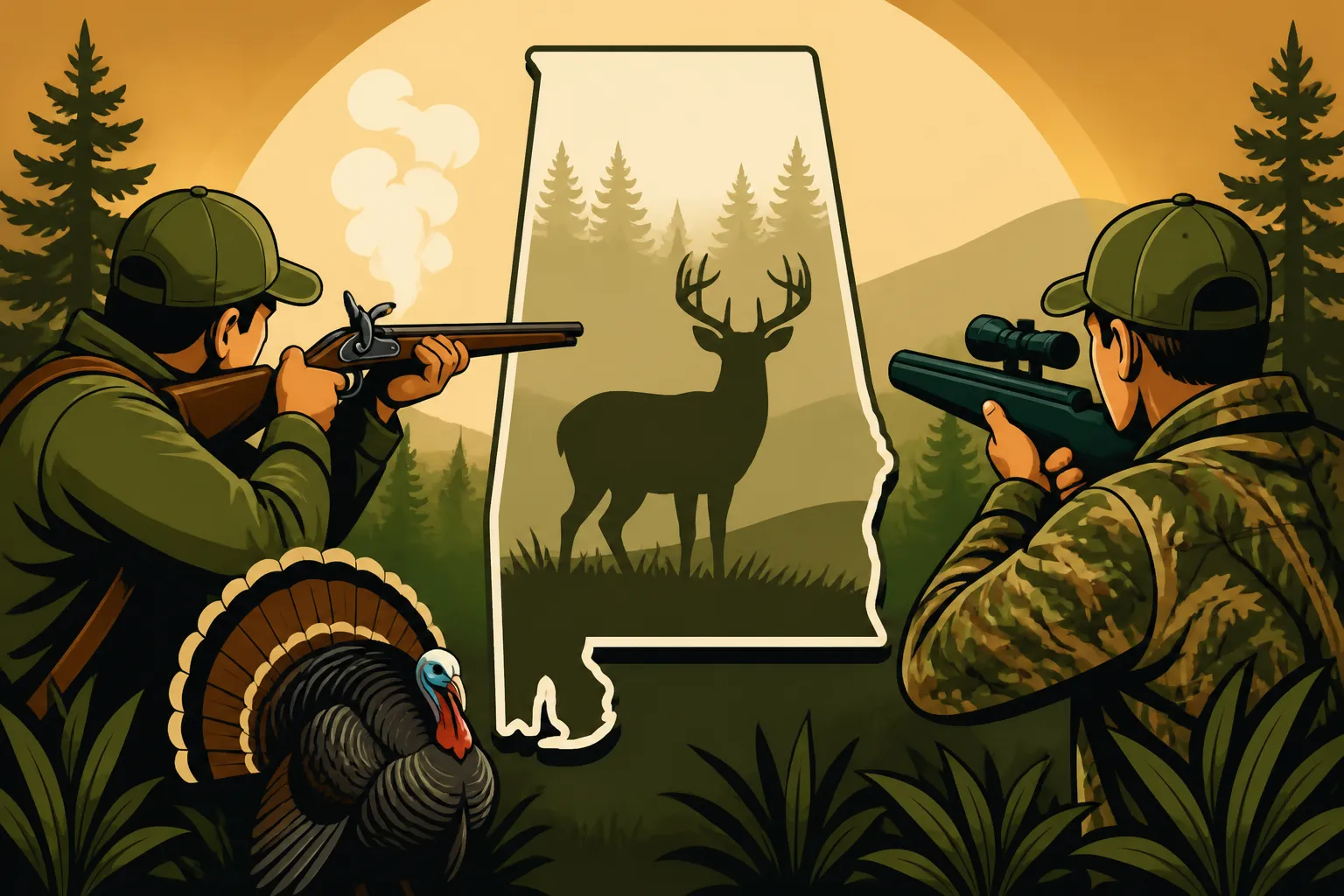
Alabama's approach to muzzleloader season is pretty straightforward, but it's often misunderstood. Unlike some other states that have exclusive "primitive weapons" seasons, Alabama largely integrates muzzleloaders directly into the existing gun deer season framework. This means that if it's legal to hunt deer with a firearm in your specific deer zone, it's generally legal to do so with a muzzleloader. This flexibility allows hunters who prefer muzzleloaders to participate throughout the majority of the conventional firearms season, which can vary significantly depending on which of Alabama's Five Deer Zones you're hunting in. For instance, in Zone A, the gun season, and thus the muzzleloader season, typically opens earlier and runs longer than in some other zones.
The key takeaway here is that your muzzleloader typically falls under the "firearms" category for season dates. So, if you're planning your hunt, you'll need to check the specific gun season dates for your zone and county. This means you might be hunting alongside modern rifle hunters, or you could find yourself in a special public land window that favors more primitive weapons. Always double-check the current regulations set by the Alabama Department of Conservation and Natural Resources (ADCNR) to confirm the exact dates for your intended hunting area, especially on Wildlife Management Areas (WMAs), which sometimes have their own unique rules.
Legal Muzzleloader Equipment and Ammunition
When it comes to what constitutes a legal muzzleloader in Alabama, the rules are fairly broad, allowing for a good bit of personal preference. Generally, any muzzleloading rifle, shotgun, or pistol that is loaded through the muzzle is permissible. This includes percussion cap rifles, which were the workhorses of the 19th century, and the more modern inline muzzleloaders that use 209 shotgun primers for ignition. Flintlocks, though less common in Alabama deer camps, are also perfectly legal and offer an even deeper dive into hunting history.
For projectiles, you have a few options. Saboted bullets, which allow you to shoot smaller diameter rifle bullets encased in a plastic sleeve, are extremely popular for their accuracy and ballistic performance. Conical bullets, which are solid lead projectiles designed specifically for muzzleloaders, are also widely used. And, of course, the classic patched round ball is still a viable option, particularly for those who cherish traditional hunting methods. Regardless of your choice, ensure your projectile is legal for deer hunting (e.g., no birdshot in muzzleloading shotguns for deer). When it comes to powder, black powder, Pyrodex, and other black powder substitutes like Triple Seven are all acceptable. The important thing is to use the correct load for your specific firearm and projectile to ensure both safety and accuracy. Always follow the manufacturer's recommendations for powder charges and components.
Strategic Advantages of Muzzleloader Hunting
Choosing to hunt with a muzzleloader in Alabama isn't just about tradition; it can offer some distinct strategic advantages and a deeply rewarding experience. One of the most significant aspects is the inherent challenge it presents. With a single shot, perhaps a slower reload, and often a more limited effective range compared to modern centerfire rifles, muzzleloader hunting forces you to be a more deliberate and patient hunter. You really have to focus on getting closer to your target, mastering wind and thermals, and making that first shot count. This often translates into a deeper understanding of deer behavior and habitat.
Many muzzleloader hunters find that the reduced noise signature (compared to a high-powered rifle, though still loud enough for hearing protection) allows them to feel more connected to the environment. While the range may be shorter, modern inline muzzleloaders are incredibly accurate out to 150-200 yards with the right load and optics, making them formidable tools. This deliberate approach often means you're not just "hunting," but truly experiencing the hunt, from the smoky aroma of black powder to the anticipation of a close-range encounter. It’s a fantastic way to extend your season and enjoy the outdoors, perhaps even finding success during crowded periods by utilizing quieter, more stealthy approaches. This patient mindset is often key to Hunting the Antlered-Only Public Land Window which demands precise shot placement.
Navigating Alabama's Air Rifle Deer Season
The world of air rifles has come a long way from the pump-up BB guns of our childhood. Today, high-powered, big-bore air rifles are perfectly capable of ethically harvesting deer and other large game, and Alabama has recognized this by establishing a legal air rifle deer season. This burgeoning segment of hunting offers a unique set of opportunities and demands its own specific understanding of regulations and ethics.
Legal Dates and Approved Calibers for Air Rifles
Just like with muzzleloaders, Alabama allows air rifles for deer hunting primarily during the established gun deer seasons for each zone. This means you'll be checking the same calendar for your county's deer zone to know when you can legally pursue deer with an air rifle. However, unlike muzzleloaders which are broadly defined, air rifles for big game have specific caliber and energy requirements to ensure humane harvests. According to ADCNR regulations, an air rifle must be .30 caliber or larger and must produce at least 200 foot-pounds of energy (FPE) at the muzzle. This minimum energy requirement is critical, as it ensures the projectile has enough power to penetrate effectively and create a clean kill.
Meeting these criteria typically means you'll be looking at Pre-Charged Pneumatic (PCP) air rifles, which are designed for high power and consistent shot delivery. These aren't your typical backyard plinkers; they are serious hunting tools requiring careful selection and maintenance. Always verify that your specific air rifle model and chosen ammunition meet both the caliber and FPE requirements before heading into the field. This attention to detail is paramount to being an ethical hunter and avoiding potential legal issues.
The Rise of Air Rifles in Deer Hunting
The increasing popularity of air rifles for deer hunting is no accident; it’s driven by significant advancements in airgun technology. Modern air rifles, especially high-pressure PCP models, offer a compelling package for hunters. One of the most frequently cited advantages is the reduced recoil compared to traditional firearms. This makes them more comfortable to shoot for extended practice sessions and can lead to greater accuracy for hunters sensitive to recoil. Another draw is their quieter operation. While still certainly loud enough to warrant hearing protection, they often produce less report than a centerfire rifle, which can sometimes result in less disturbance to other game animals in the vicinity.
The precision offered by many modern air rifles is also a huge draw. With the right pellet or slug, and proper tuning, these guns can be incredibly accurate, putting shot after shot into a tight group. This precision, combined with the often shorter effective range, reinforces the importance of ethical shot placement and knowing your equipment's capabilities inside and out. It's a different challenge than long-range rifle hunting, requiring careful stalking and patience, much like archery. As you explore the market for these tools, a resource like GoHunt can be invaluable for researching different models, comparing specifications, and reading reviews from other hunters who have experience with air rifles in the field. They offer a perspective on practical use that you might not find elsewhere.
Ethical Considerations and Shot Placement with Air Rifles
Hunting with an air rifle demands an even greater emphasis on ethical shot placement and understanding your equipment's limitations. Because air rifle projectiles typically carry less energy than centerfire rifle bullets, shot placement becomes absolutely critical for a humane harvest. A well-placed shot in the vitals (heart/lungs) is paramount, ensuring quick incapacitation. Practice is non-negotiable. You need to spend significant time at the range, not just punching paper, but understanding how your rifle performs at various distances, in different wind conditions, and with different ammunition types.
Knowing your effective range is perhaps the most important ethical consideration. While an air rifle might be accurate at 75 or 100 yards, is that your effective ethical range? Most experienced air rifle deer hunters advocate for shots generally under 75 yards, often much closer, to maximize the projectile's energy and minimize external factors affecting accuracy. This means you’ll need to hone your stalking skills or become proficient at drawing deer into closer ranges, much like a bowhunter would. This focused approach on close-range, high-precision shots ensures that when you take an animal, it’s done swiftly and humanely.
General Regulations for Both Muzzleloader and Air Rifle Hunters
Beyond the specific rules for your chosen weapon, there are overarching regulations that every hunter in Alabama must adhere to, regardless of whether they’re carrying a modern rifle, a muzzleloader, or an air rifle. Understanding these foundational rules is critical for a legal and enjoyable hunting experience.
Licenses, Tags, and Reporting Requirements
Before you even step foot in the woods, ensuring you have the proper Alabama hunting licenses is your first and most important step. For deer hunting, this typically means a valid All-Game Hunting License for residents or a relevant non-resident license. On top of that, you'll need a Deer Privilege license. These licenses confirm your legal right to hunt. It’s also crucial to remember the statewide bag limit, which for deer is generally three antlered bucks per season. However, one of those antlered bucks must have at least four points on one side, or a main beam of 3 inches or longer. This rule helps promote a healthy age structure in the deer herd.
Perhaps equally important is the Alabama Deer Reporting Rules, often referred to as Game Check. This system is mandatory for all harvested deer and turkeys. Every deer taken, whether with a muzzleloader, air rifle, bow, or modern firearm, must be reported to the ADCNR within 48 hours of harvest or prior to processing or leaving the state. You can report online, through the Outdoor Alabama app, or by phone. This data is invaluable to wildlife biologists for managing the deer population, so it's not just a formality—it's a critical part of conservation efforts in Alabama.
Public vs. Private Land Restrictions
The rules of engagement can shift depending on whether you're hunting on public or private land in Alabama. On private land, once you have the landowner's permission, you generally follow the statewide regulations regarding seasons, bag limits, and legal equipment. This is where most hunters enjoy the most flexibility. However, when you venture onto Public Hunting Land in Alabama, particularly Wildlife Management Areas (WMAs), the rules can become more specific and often more restrictive.
WMAs are managed intensively to provide quality hunting opportunities, which often means special regulations tailored to that specific area. For instance, some WMAs might have different season dates, reduced bag limits, or even special "primitive weapons only" hunts where only muzzleloaders (and sometimes air rifles) are allowed, providing a unique window of opportunity. It's not uncommon for WMAs to have specific rules about what types of stands can be used, vehicle access, or even sign-in/sign-out procedures. Before planning a hunt on a WMA, always consult the WMA regulations for that particular area on the Outdoor Alabama website or app. Never assume that statewide rules apply uniformly on WMAs; always check for WMA-specific amendments.
| Aspect | Muzzleloader Hunting | Air Rifle Hunting |
|---|---|---|
| Season Dates | Generally concurrent with statewide gun deer season. | Generally concurrent with statewide gun deer season. |
| Legal Equipment | Muzzleloading rifle, shotgun, or pistol. | Air rifle, .30 caliber or larger. |
| Energy Requirement | N/A (inherently high enough) | At least 200 FPE at the muzzle. |
| Projectile Type | Sabots, conical bullets, patched round balls. | Pellets or slugs. |
| Effective Range | Typically 75-200 yards (modern inline). | Typically under 75-100 yards (ethical). |
| Recoil | Moderate to significant, depending on load/caliber. | Minimal to low. |
| Noise Level | Significant, requires hearing protection. | Quieter than firearms, requires hearing protection. |
| Reload Speed | Slow, single-shot capability. | Often single-shot, can be slow depending on model. |
| Learning Curve | Moderate (loading, cleaning, ballistics). | Moderate (PCP system, air tank, specialized ammo). |
| Cost (Equipment) | Moderate to high. | High (especially for high-power PCP systems). |
Safety First: Best Practices in the Field
Regardless of the weapon you choose, safety must always be your top priority in the field. For muzzleloader hunters, this means meticulously following loading procedures, ensuring you don't double-charge your powder, and understanding how to safely clear a misfire. Black powder can be finicky, and moisture is its enemy, so keeping powder and primers dry is essential. Always wear appropriate eye and ear protection when shooting. For air rifle hunters, understanding your air system is critical. Maintaining proper air pressure, handling compressed air tanks safely, and knowing how your specific rifle operates under various conditions are paramount.
Beyond weapon-specific safety, general hunting safety rules apply to everyone. Always treat every firearm (or air rifle) as if it's loaded. Be absolutely sure of your target and what is beyond it. Wear blaze orange during gun seasons, as required by Alabama law, to ensure you're visible to other hunters; How Much Blaze Orange Alabama Requires covers these requirements in detail. Tree stand safety is also non-negotiable; always use a full-body harness when hunting from an elevated position. Completing an Alabama Hunter Education Requirements course is an excellent way to refresh your knowledge on all these critical safety aspects, even for experienced hunters.
Gear and Preparation for a Successful Hunt
Hunting with specialized equipment like muzzleloaders or air rifles requires a bit more intentionality in your gear choices and preparation. It's not just about picking up a gun and heading out; it's about matching your equipment to your hunting style and the unique demands of these weapons.
Choosing the Right Muzzleloader Setup
The world of muzzleloaders offers a wide array of choices, each with its own charm and practical considerations. For most modern hunters looking for ease of use and accuracy, an inline muzzleloader is the way to go. These typically use 209 primers, which are reliable and hot, ensuring consistent ignition even in less-than-ideal weather. Brands like CVA, Traditions, and Thompson/Center are popular choices and offer excellent performance. If you're looking for a deeper connection to history, a traditional percussion cap rifle or even a flintlock might be more your speed, though they demand more skill and maintenance.
Beyond the rifle itself, you'll need specific components: black powder or a suitable substitute (Pyrodex or Triple Seven are common), appropriate primers (209s for inline, percussion caps for traditional), and your chosen projectiles. Don't forget cleaning supplies—muzzleloaders, especially those using true black powder, are notoriously dirty and require diligent cleaning after every use to maintain accuracy and prevent corrosion. A good optic, often a fixed power or low magnification variable scope, can greatly enhance your accuracy without detracting from the "primitive" feel too much. Consider a compact spotting scope to check your shots without disturbing your setup, especially on the range.
Selecting a High-Performance Air Rifle
When it comes to air rifles for deer hunting, the field is dominated by Pre-Charged Pneumatic (PCP) systems. These rifles use a tank of compressed air (often filled to 3,000-4,500 psi) to propel heavy pellets or slugs at high velocities, generating the necessary foot-pounds of energy for big game. Brands like FX Airguns, Benjamin (particularly their Bulldog line), and Seneca are well-regarded for their power and accuracy. When selecting a rifle, pay close attention to its caliber (remembering Alabama's .30 minimum) and published muzzle energy figures, making sure it meets or exceeds the 200 FPE requirement with your chosen projectile.
Beyond the rifle, you'll need a way to fill its air reservoir. This can be a hand pump (a great workout, but slow), a dedicated high-pressure air compressor (convenient but expensive), or a SCUBA tank/carbon fiber tank (requires an adapter and fills at a dive shop or with a personal compressor). Ammunition selection is critical; heavy, well-designed pellets or slugs are necessary for deep penetration. Many air rifle hunters swear by specific slug designs that expand or mushroom reliably on impact. Just like with a muzzleloader, optics are important, but you might find that air rifles pair well with scopes designed for rimfire or even centerfire rifles, as they typically don't suffer from the "double recoil" sometimes associated with spring-piston airguns. For hunters looking to optimize their air rifle setup, GoHunt often features articles and product reviews from experts in the airgun hunting community, providing valuable insights on selecting the best gear and fine-tuning performance.
Scouting and Strategy for Specialized Seasons
Regardless of whether you're carrying a muzzleloader or an air rifle, effective scouting and adaptive strategies are paramount. Both weapons require you to get closer to your target than many modern rifle hunters might be accustomed to. This means focusing your scouting efforts on identifying pinch points, dense bedding areas, and prime food sources that funnel deer within your effective range. Look for natural funnels between cover and feeding areas, or distinct travel corridors. Scouting Alabama Public Land Before Season is always a good idea, but it’s especially vital when you know you need to shrink your shot distances.
During the actual season, pay close attention to late-season food sources for Alabama whitetails, especially as other food sources might become scarce. This could be remaining acorns, planted winter food plots on private land, or green browse in sheltered areas. Your strategy should revolve around stealth and patience. Consider using a ground blind or a carefully concealed treestand to minimize your silhouette and scent. With a single-shot weapon, you often don't get a second chance, so waiting for the perfect, ethical shot is key. This might mean letting smaller deer pass or holding out for a better angle, even if a deer is within range.
Common Challenges and Troubleshooting
Even with the best gear and preparation, hunting with muzzleloaders and air rifles can present unique challenges. Knowing how to troubleshoot common issues and adapt to the limitations of your equipment can make the difference between a frustrating day and a successful hunt.
Muzzleloader Misfires and Maintenance
A muzzleloader misfire can be one of the most disheartening experiences in the field, especially if it happens when a prime buck is in your sights. Common causes include a damp primer, wet powder, or a fouled barrel that prevents ignition. To minimize misfires, always keep your powder and primers completely dry. Use waterproof containers for powder and carry extra primers in a sealed pouch. After each shot, and especially after a day in the field, meticulously clean your muzzleloader. Fouling can build up rapidly, hindering subsequent shots and potentially causing reliability issues.
If you do experience a misfire, remember proper safety protocols: keep the muzzle pointed in a safe direction, wait a minimum of 30-60 seconds (some advocate longer) before attempting to recock and refire, and if it still doesn't fire, safely discharge the load into the ground or a suitable backstop following manufacturer instructions. Never assume a "hangfire" won't eventually go off. Regular cleaning and proper storage are your best defenses against these issues. A good quality desiccant in your gun safe can help prevent moisture issues, and always use a high-quality muzzleloader solvent to keep your bore pristine.
Air Rifle Pressure Management and Accuracy Issues
Air rifles, particularly PCP models, rely on precise air pressure to maintain consistent velocity and accuracy. Fluctuations in pressure can lead to significant shifts in point of impact. Always monitor your rifle's pressure gauge and ensure you're within its optimal operating range for accuracy, often referred to as the "sweet spot." Cold weather can also impact air pressure and performance, so be mindful of temperature drops. Another common challenge is inconsistent pellet or slug performance. Even within the same tin, variations in weight, shape, or skirt integrity can affect accuracy. Experiment with different brands and types of ammunition to find what your rifle prefers.
Accuracy can also be affected by improper technique, such as loose grips, inconsistent cheek welds, or trigger pull issues. Spend time practicing from field positions, not just off a bench rest. Environmental factors, especially wind, play a more significant role with lighter air rifle projectiles. Understanding wind drift and making appropriate corrections is crucial for ethical long-range (for an air rifle) shots. For hunters looking to diagnose and solve accuracy problems, GoHunt's forums or expert articles often provide community insights and technical advice on optimizing air rifle performance, from tuning regulators to selecting the perfect slug, offering a valuable resource for troubleshooting your setup.
Dealing with Limited Shot Opportunities
Both muzzleloader and air rifle hunting inherently impose a limitation: typically a single, unhurried shot. This means that every shot opportunity must be carefully considered and executed. The psychological aspect of knowing you might only get one chance can be intense, but it also cultivates extreme patience and discipline. It's about waiting for the animal to present the perfect ethical shot, not just a shot. This often means passing on marginal opportunities that a rapid-fire rifle hunter might take, choosing instead to wait for the animal to turn or move into a more ideal position.
If, despite your best efforts, a shot doesn't immediately drop the deer, the work truly begins. Knowing how to Track a Deer Through Alabama Pine Straw or through thick briar patches is a skill every hunter needs, but it's especially vital for single-shot methods. Pay close attention to the deer's reaction, the sound of the hit, and immediately mark the spot of the shot. Take your time before beginning the track; often, a wounded deer will bed down nearby if not pressured. This patience can lead to a successful recovery, even if the initial shot wasn't perfect.
The Experience of Muzzleloader and Air Rifle Hunting
Beyond the technicalities and regulations, hunting with a muzzleloader or an air rifle offers a distinct experience. It’s a return to certain fundamentals, a commitment to precision, and a way to deepen your connection to the hunt itself.
Connecting with Hunting Heritage
For many, pulling the trigger on a muzzleloader is more than just harvesting an animal; it's a profound connection to hunting heritage. It's walking in the footsteps of frontiersmen and pioneers, experiencing a taste of how our ancestors put food on the table. The process of loading, the cloud of smoke, and the delayed report all contribute to a sense of tradition that modern firearms, for all their efficiency, simply can't replicate. It forces a slower pace, a more deliberate approach, and a heightened appreciation for the entire process, not just the outcome. It's about the journey, the challenge, and the quiet satisfaction of a hard-earned reward. This ethos is deeply embedded in Alabama Deer Camp Traditions, where stories of old hunts and traditional methods are often shared around the campfire.
Similarly, while air rifles are a newer development, they embody a similar spirit of precision and thoughtful hunting. They often appeal to hunters who enjoy a technical challenge and who appreciate the unique ballistic properties of pellets and slugs. It's a modern twist on the primitive ethos, demanding the same close-range skill and ethical focus. Both methods, in their own ways, encourage a mindful engagement with the act of hunting, fostering skills that transcend the weapon itself, such as tracking, stealth, and deep woods wisdom.
The Quiet Advantage and Disadvantage
The noise factor is an interesting dynamic for both muzzleloaders and air rifles. Muzzleloaders, particularly traditional black powder guns, produce a significant cloud of smoke and a distinct roar, often louder than modern smokeless powder rifles. While this adds to the traditional charm, it's certainly not "quiet" in the traditional sense. However, the single-shot nature ensures there's no rapid follow-up shot, forcing a different kind of discipline.
Air rifles, on the other hand, are generally much quieter than firearms, though powerful big-bore models are still quite loud and require hearing protection. This relative quietness can be an advantage, potentially disturbing less game in the immediate vicinity or making you less conspicuous to other hunters. The reduced noise can contribute to a more serene hunting experience, allowing you to hear more of the natural world around you. However, it's also a single-shot affair, meaning the pressure to make that first shot count is always present. The lack of a quick follow-up is a disadvantage that demands a more disciplined approach and an unwavering commitment to ethical shot placement.
Finding Community and Resources
Venturing into specialized hunting methods like muzzleloading or air rifle hunting can sometimes feel like a solo journey, but there's a vibrant community out there waiting to share knowledge and experiences. Online forums and social media groups dedicated to muzzleloading or airgun hunting are excellent places to ask questions, share tips, and learn from seasoned veterans. You'll find passionate individuals discussing everything from the best powder loads and cleaning techniques to specific air rifle tunes and ethical projectile choices.
Local hunting clubs, even if not exclusively focused on these methods, often have members with a wealth of experience in diverse hunting styles. Don't be shy about reaching out and learning from others. Resources like GoHunt can also be a hub for connecting with fellow specialized hunters. Their platform often includes forums, articles, and even videos that delve deep into these niche areas, helping you refine your skills and find the specific information you need to excel. Engaging with this community not only enhances your knowledge but also enriches your overall hunting experience, making you feel more connected to the broader hunting tradition in Alabama and beyond.
Disclaimer
Please remember that hunting regulations can change. Always consult the most current Alabama Department of Conservation and Natural Resources (ADCNR) regulations and local WMA rules before heading into the field. This guide is for informational purposes only and should not be considered a substitute for official legal guidelines.