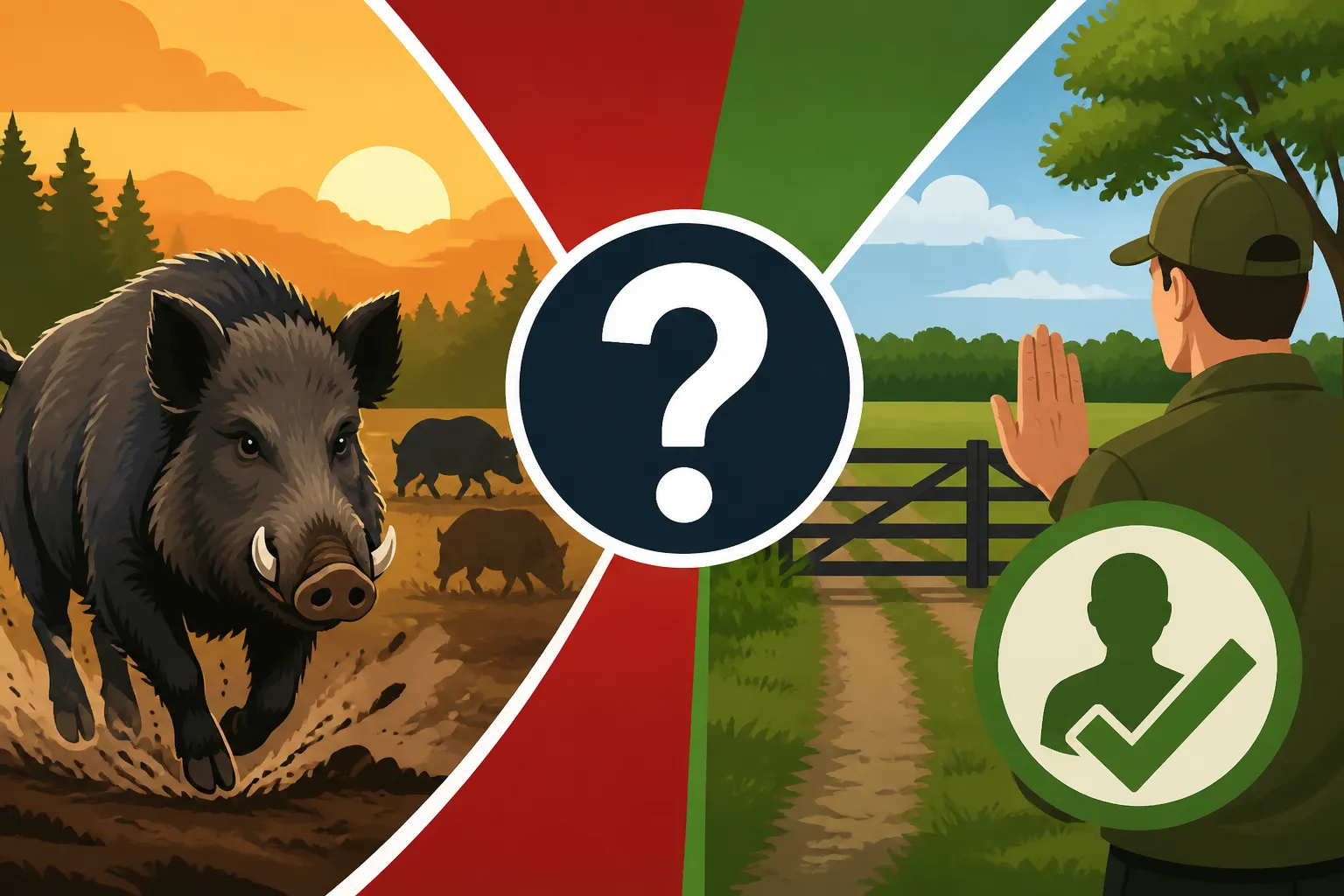
Do Feral Hogs Need Landowner Permission?
It’s a tale as old as time in the Alabama woods: you’re out hunting deer, maybe scouting for turkeys, and you stumble upon a sounder of feral hogs tearing up a pristine creek bottom. Your heart races, the adrenaline kicks in, and the immediate thought is, "Finally, a chance to thin the herd!" But then a nagging question surfaces: given that hogs are considered a nuisance, do you really need specific landowner permission to hunt them, especially if you’re already on private land with permission for other game, or even on public land? The confusion is real, and the consequences of getting it wrong can be steep. This guide will cut through the misinformation and lay out exactly what Alabama law says about hunting feral hogs and the absolute necessity of permission, ensuring you stay on the right side of the law and respect the land.
The Unregulated Status of Feral Hogs in Alabama
Let’s get one thing straight right from the start: feral hogs in Alabama are not considered game animals. This isn't just a semantic difference; it's a fundamental distinction that shapes all the rules around hunting them. Unlike our beloved white-tailed deer or wild turkeys, which have specific seasons, bag limits, and legal hunting hours, feral hogs are classified as a nuisance species. This means they are largely unregulated in terms of seasons and limits, but it doesn't mean you can just go after them wherever and whenever you please without proper authorization.
Why Hogs Are Treated Differently from Game Animals
The Alabama Department of Conservation and Natural Resources (ADCNR) views feral hogs as a severe threat to the state’s agricultural industry, natural ecosystems, and native wildlife. These aren't creatures native to our landscape; they're an invasive species that can cause widespread devastation in a very short amount of time. Think about it: a sounder of hogs can completely decimate a farmer's soybean field overnight, costing them thousands of dollars in lost crops. Beyond agriculture, their rooting behavior can destroy sensitive habitats, disrupt the foraging patterns of native wildlife, and even prey on fawns and turkey poults.
Because of this immense ecological and economic damage, the ADCNR’s primary objective when it comes to feral hogs is control and eradication, not management as a renewable resource. They are actively trying to reduce populations, and they encourage hunters to participate in this effort. This is why you won't find specific hunting seasons for hogs. They are fair game year-round, which is a significant difference from how we approach species like deer or ducks. This aggressive stance on control is central to understanding the leniency in some regulations, but it never overrides fundamental property rights.
The Year-Round, Any-Time Reality of Hog Control
The lack of a closed season or bag limit on private land makes feral hog hunting incredibly appealing and often a priority for landowners struggling with infestations. This means if you have permission to hunt on private land, you can pursue hogs pretty much any day of the year, at any time of day or night, with a wide variety of legal weapons. This flexibility is a direct reflection of the state's urgent need to reduce their numbers. When you're out there, whether you're deer hunting or just scouting, if you see a hog and you have permission, it's open season.
However, it's crucial to understand that "year-round, any-time" primarily applies to the species itself, not necessarily the location or method of hunting without specific permission. While the animal itself is always legal to take, where and how you do it are still subject to property laws and, on public lands, specific agency regulations. For instance, even with the year-round allowance, if you're on a wildlife management area (WMA) during a deer season, you still need to adhere to the WMA's specific rules for that season, including permissible weapons and hunting hours, unless hog-specific rules state otherwise. This nuance is where many hunters get tripped up, assuming the "nuisance" status grants them carte blanche.
Understanding Landowner Permission: A Crucial Distinction
This is the absolute cornerstone of hunting feral hogs in Alabama, or frankly, hunting anything in Alabama. While the species is largely unregulated, the land is always regulated by ownership. Regardless of how much of a pest a feral hog is, you simply cannot step foot on someone else's property, private or public, without the appropriate permission. This isn't just a suggestion; it's the law, and violating it can lead to serious legal repercussions, from fines to jail time, and certainly the loss of your hunting privileges.
Private Land: Permission is Always King
On private land, the rule is crystal clear: you absolutely need permission from the landowner or their authorized agent to hunt feral hogs, just as you would for deer, turkey, or any other game animal. The fact that hogs are a nuisance doesn't create a "loophole" for trespassing. Imagine your neighbor's dog digging up your garden; you wouldn't just march onto their property and shoot the dog without talking to them, right? The same principle applies to hogs, albeit on a larger scale.
Obtaining permission can take various forms. The most common is a verbal agreement with a landowner, especially if you know them personally. However, it's always a good idea to seek written permission, especially if you don't have a long-standing relationship. A simple note with the landowner's name, your name, the dates of permission, and a signature can save a lot of headaches if a game warden or another interested party questions your presence. Some landowners might offer hunting leases, which grant you exclusive or shared rights to hunt their property for a fee, a common practice for Finding an Alabama Hunting Lease. These formal agreements are the gold standard for clarity and protection for both parties.
When you're trying to find new ground, especially if you're scouting, tools like GoHunt can be invaluable. Their mapping features often include property lines and landowner information, which can help you identify who to contact. This makes the often-daunting task of Asking an Alabama Farmer for Permission a bit easier by giving you a starting point. Always approach landowners respectfully, explain your intentions clearly, and offer to share any harvested meat or help with other farm chores as a gesture of goodwill. Building these relationships is key to long-term access.
Public Land: Rules Still Apply
Hunting on Alabama's extensive public lands, like Wildlife Management Areas (WMAs) or National Forests, is a fantastic opportunity for many hunters. However, even on these tracts, the "free-for-all" misconception about hogs needs to be dispelled. While you generally don't need individual landowner permission (since the state or federal government is the "landowner"), you absolutely must adhere to the specific regulations set forth by the managing agency.
Every WMA has its own set of rules regarding seasons, legal weapons, hunting hours, and often, specific permit requirements. For example, while hogs might be present, you can't just hunt them with a rifle during archery-only deer season on a WMA unless the WMA's specific regulations allow for it. You'll typically need an Alabama hunting license and a WMA permit to access these areas. For detailed information, you'll want to check the ADCNR's official Outdoor Alabama website or consult their annually published regulations booklet. The key takeaway here is that you're operating under the agency's permission, which comes with its own set of stipulations. These rules are designed to manage hunter pressure, ensure safety, and protect other game species. It's not about permission for the hog, but permission to access and utilize the public resource according to its designated purpose. Be sure to check into the requirements for an Alabama WMA Permit Requirement before heading out.
Practical Implications for Alabama Hog Hunters
Understanding the legal framework is one thing, but putting it into practice out in the field requires a bit of savvy and respect for both the law and other people. Hunting feral hogs often puts you in situations that differ from traditional deer or turkey hunting, especially given their year-round presence and destructive nature.
Navigating Private Property Lines
This is arguably one of the trickiest aspects of hog hunting, especially if you're hunting near agricultural fields or suburban edges where property boundaries can be less defined. Hogs don't respect property lines, and a sounder tearing up a field edge might be just a few yards from where your permission ends. It's your responsibility to know exactly where you are at all times. Using a reliable GPS app on your phone with property line overlays, such as those offered by GoHunt, is almost essential these days. Don't rely on old fences or tree lines, as boundaries can shift or be unclear.
The legal consequences of accidentally trespassing, even by a few feet, can be severe. Landowners are often (understandably) protective of their property, and an unknown hunter, especially one pursuing a "nuisance" animal, can be perceived as a threat. Always err on the side of caution. If you're unsure, don't cross the line. If you wound a hog and it crosses onto land where you don't have permission, you are legally obligated to seek permission to retrieve it. This is where a good relationship with neighboring landowners can truly pay off, as it allows for open communication in such scenarios. Remember, Alabama Trespass and Permission Law is clear on these matters.
Best Practices for Ethical and Legal Hog Hunting
Beyond simply avoiding legal trouble, being an ethical and responsible hog hunter helps maintain the positive image of hunters in Alabama. Here are some best practices:
- Always Get Permission, Preferably in Writing: This cannot be stressed enough. Even a text message or email can serve as written proof. If you're hunting with an established hunting club, ensure you understand the boundaries of the lease and that the club has a solid agreement with the landowner.
- Communicate Clearly: When asking for permission, explain that you're targeting feral hogs due to their destructive nature. Offer to help control their numbers. Landowners are often desperate for help.
- Respect the Land and the Landowner: Leave gates as you found them (open or closed), don't litter, avoid driving off established trails if possible, and be mindful of noise, especially near residences. Share your success stories with the landowner, perhaps even offer some processed meat if you're comfortable. This builds goodwill and makes future access much easier.
- Know Your Regulations (Public Land): If hunting a WMA or National Forest, carry a copy of the specific regulations for that area and consult them frequently. Adhere to all rules regarding weapons, hunting hours, and seasons, even when targeting hogs. Just because it's open season on hogs doesn't mean you can use a rifle during an archery-only period if the WMA rules prohibit it.
- Be a Good Steward: Clean up any bait sites you might use, and dispose of carcasses respectfully and legally. Alabama has a Year-Round Hog Rule on Private Land that gives flexibility, but this doesn't excuse irresponsible behavior.
| Scenario | Land Type | Permission Required? | General Rules for Hogs | Notes |
|---|---|---|---|---|
| Hunting Hogs (Any Method) | Private | YES | Year-round, no limit | Verbal is common, written is best. |
| Hunting Hogs (Any Method) | WMA | YES (Agency Rules) | Follow WMA regulations | Requires WMA permit; specific weapon/hour rules apply per WMA. |
| Retrieving a Wounded Hog | Private | YES | N/A | Must obtain permission from that landowner, even if you had it on adjacent land. |
| Night Hunting Hogs w/ Lights | Private | YES | Year-round, no limit | Specific rules for lights/thermal generally apply to private land with permission. |
| Accidental Encounter (Other Season) | Private/Public | Already have permission | Year-round, no limit | Adhere to weapon/hour rules of the specific area/season you are primarily hunting. |
Common Scenarios and Misconceptions
Despite the clear legal framework, myths and misunderstandings persist, especially regarding the nuisance status of feral hogs. Let's tackle some of these head-on to prevent potential issues in the field.
The "Nuisance Animal" Loophole Myth
This is perhaps the most common misconception. Many hunters hear "feral hogs are a nuisance animal" and mistakenly infer that this status somehow grants them an implicit right to hunt them without explicit permission. This is simply not true in Alabama, and it’s a dangerous assumption to make. While the ADCNR has liberalized the rules regarding taking feral hogs (no closed season, no bag limit on private land), this refers to the animal itself, not the access to land.
The legal protection of private property rights is paramount. A landowner's right to control who enters their property, and for what purpose, is fundamental. Even if feral hogs are destroying a landowner's crops, you cannot step onto their land without their consent. The state's classification of hogs as a nuisance facilitates landowners' efforts to control them, and it encourages hunters to help, but it doesn't give hunters an automatic pass to trespass. The responsibility still falls squarely on the hunter to secure the necessary permission before engaging in any hunting activity. Trying to use the "nuisance animal" argument as an excuse for trespass will not hold up in court and can lead to charges under Alabama Wildlife Violation Penalties.
Night Hunting and Equipment Considerations
Night hunting feral hogs is incredibly effective, especially with the aid of thermal optics or night vision. Hogs are often nocturnal, moving and feeding primarily under the cover of darkness, particularly in areas with high human pressure. Alabama law does allow for night hunting of feral hogs on private property, and it permits the use of artificial lights, including thermal and night vision devices. This is a significant advantage for hog control efforts.
However, the "private land with landowner permission" caveat is more critical here than ever. These specialized rules for night hunting and advanced equipment are explicitly tied to obtaining that prior permission. You absolutely cannot engage in Night Hunting Hogs With Lights on Private Land or use thermal optics on public land unless the specific WMA or National Forest regulations explicitly state it's allowed for hog hunting (which is rare). On private land, it's also a good idea to discuss your intentions for night hunting with the landowner. They might have neighbors who could be alarmed by lights or gunshots in the dark, and a heads-up can prevent misunderstandings or even calls to law enforcement. Clear communication ensures everyone is on the same page and helps maintain those vital landowner relationships.
Remember, the flexibility in Alabama's hog regulations is a tool for control, not a license to disregard property laws. Always prioritize getting permission, whether it's from a private landowner or by understanding and following the rules for public hunting areas. It ensures a safe, legal, and ultimately more successful hunt for everyone involved.
Disclaimer
The information provided in this article is for general informational purposes only and does not constitute legal advice. Hunting regulations can change, and interpretations may vary. Always consult the official Alabama Department of Conservation and Natural Resources (ADCNR) regulations and local ordinances, and if in doubt, contact the ADCNR directly or seek legal counsel. Hunters are responsible for knowing and adhering to all applicable laws and regulations.