Hunting Black Belt Prairie Farmland Deer
Hunting the vast, often open landscapes of Alabama's Black Belt Prairie can feel like an entirely different ballgame than stalking deer in the dense pine forests or rolling hills of other regions. You’re often dealing with huge agricultural fields, limited traditional timber cover, and deer that are incredibly wary due to consistent exposure to farming operations and, let’s be honest, hunting pressure. This guide is all about equipping you with the knowledge and strategies to successfully pursue white-tailed deer in these unique, fertile farmlands, transforming those open spaces into your hunting advantage.
Understanding the Black Belt Prairie Deer Habitat
The Black Belt region of Alabama is truly a jewel, defined by its distinctive dark, fertile soil that historically supported cotton plantations and today fuels a diverse agricultural industry. This unique landscape directly shapes how deer live, move, and behave, presenting both challenges and incredible opportunities for hunters.
Unique Characteristics of Black Belt Farmland
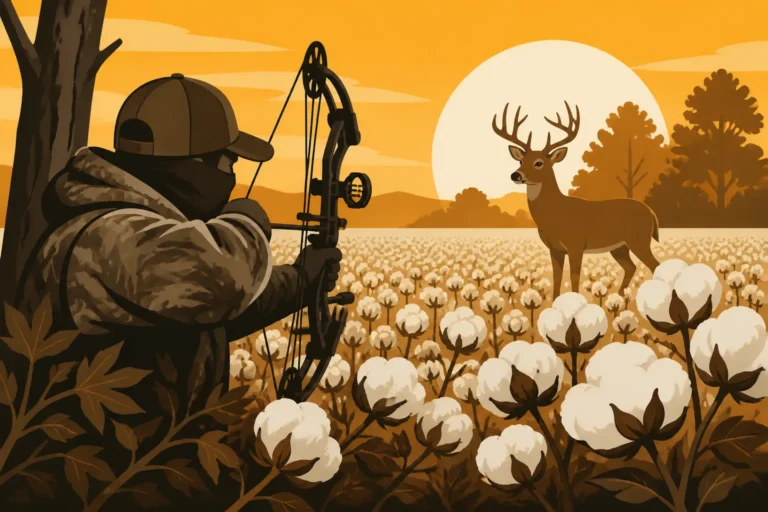
Imagine vast, flat to gently rolling fields stretching for hundreds of acres, broken up by thin lines of timber along creek bottoms, drainage ditches, and fencerows. That's the Black Belt. These soils are incredibly productive, leading to extensive cultivation of crops like soybeans, corn, wheat, peanuts, and even cotton. This agricultural abundance is the primary draw for deer. Unlike heavily timbered areas where acorns or natural browse dictate movement, here, the crops are king for a significant portion of the year. Deer use these fields as giant dinner plates, moving from bedding cover to feed, often under the cloak of darkness.
What makes it unique is the sheer scale and the often-sparse distribution of traditional "woods." Deer become highly adapted to using even the smallest pockets of cover – a brushy fencerow, a thicket around an old homestead, or dense river cane along a creek – as sanctuaries. Their travel patterns are less about traversing large tracts of forest and more about navigating linear features like those fencerows and creek bottoms, creating predictable travel corridors that can be key for successful hunting.
Deer Behavior in Agricultural Landscapes
Deer in the Black Belt are incredibly pattern-oriented, their lives revolving around the rhythm of the crops. When corn is tall, it offers unparalleled cover and food, making deer almost invisible. As soybeans mature, they provide rich protein, drawing deer in. After harvest, the gleanings can still be a significant food source. This constant shift in food availability and cover means deer behavior is highly dynamic throughout the season. A hot spot in September might be completely barren by December.
They become extremely sensitive to human intrusion. With less widespread dense cover, deer often bed in smaller, thicker patches of timber or even standing crops, making them acutely aware of approaching threats. Daylight movement can be scarce, especially in the open fields, with the bulk of their activity occurring at night or in the very early and late hours of the day. Understanding this nocturnal bias is crucial. Mature bucks, in particular, become masters of stealth, using every dip, swell, and line of cover to avoid detection. They know where the pressure points are, and they'll adjust their movements accordingly.
Scouting Strategies for Farmland Deer
Effective scouting in Black Belt farmlands goes far beyond just walking the woods. It requires a blend of technological savvy, an understanding of agricultural practices, and good old-fashioned boot-on-the-ground investigation.
Reading the Landscape and Agricultural Patterns
Before you ever step foot on the property, leverage aerial photography and topographic maps. Tools like GoHunt are invaluable here, allowing you to scrutinize every field edge, every drainage ditch, and every isolated timber patch. You'll want to identify the types of crops planted, understand their typical growth cycles, and predict harvest dates. For instance, a standing soybean field in early bow season will draw deer like a magnet, but once it’s cut, their patterns will shift. Learning to interpret these agricultural patterns is akin to reading a topo map in mountainous terrain; it tells you where the deer should be.
Look for "soft edges" – areas where dense cover gradually transitions into an open field. These are often preferred travel routes compared to hard, abrupt edges. Identifying pinch points created by intersecting fencerows, small woodlots jutting into a field, or narrow strips of timber along a creek can highlight key travel corridors. This forensic-level analysis of the land will save you countless hours of blind walking. Remember, the Black Belt is flat, so even a slight elevation change or ditch line can be a significant travel artery for deer.
Locating Prime Bedding and Feeding Areas
Once you've done your homework with aerials, it's time to get boots on the ground, but do so strategically and with minimal intrusion. Focus your efforts on the limited cover available: creek bottoms, old grown-up hedgerows, and small, isolated timber blocks. These areas are goldmines for bedding sign. Look for well-worn trails entering and exiting these thickets, rub lines on saplings, and scrape lines along the edges, especially closer to the rut. These scrapes and rubs indicate where bucks are actively marking their territory and searching for does.
Feeding areas are generally easier to identify – they're the active agricultural fields. However, the trick is to pinpoint where deer are entering and exiting these fields, and which parts of the field they prefer to feed in. Sometimes deer will stage in a small patch of timber before entering a field at dusk. Other times, they'll favor specific corners or sections of a field that offer a quicker escape to cover. Pay attention to deer droppings and tracks along field edges; fresh sign indicates recent activity. For instance, finding a well-used trail leading from a dense bottomland into a freshly cut peanut field is a strong indicator of a prime evening feeding spot. This kind of careful observation helps you piece together the puzzle of deer movement, just like you would when trying to locate where Bankhead Forest bucks bed.
Trail Camera Placement in Farmland
Trail cameras are your best friends in the Black Belt, helping you scout remotely without pressuring deer. The key is strategic placement. Focus cameras on those identified travel corridors: fence lines, ditch crossings, pinch points where cover narrows, and the most active entry/exit points to major food sources. Think about a game trail paralleling a standing cornfield, or a narrow strip of hardwoods between two bean fields.
It's often more effective to place cameras just inside the cover or along the edges rather than directly in the wide open field. This allows you to capture deer entering and exiting while minimizing the chance of spooking them. Consider using cellular cameras if budget allows, as this reduces the need for frequent checks and further minimizes disturbance. Keep your human scent to an absolute minimum during setup and retrieval. Check cameras during the middle of the day, or ideally, during a rain event when your scent will be washed away quickly. You can learn a lot from a single camera showing you when Alabama bucks shed antlers, or when the rut peaks by zone, providing invaluable intel without constant intrusion.
Effective Hunting Tactics in Black Belt Farmland
Hunting Black Belt farmlands often requires a different tactical approach than dense woodlands. You’ll need to master stealth, understand wind, and be prepared for shots across open spaces.
Stand Placement for Field Edges and Travel Corridors
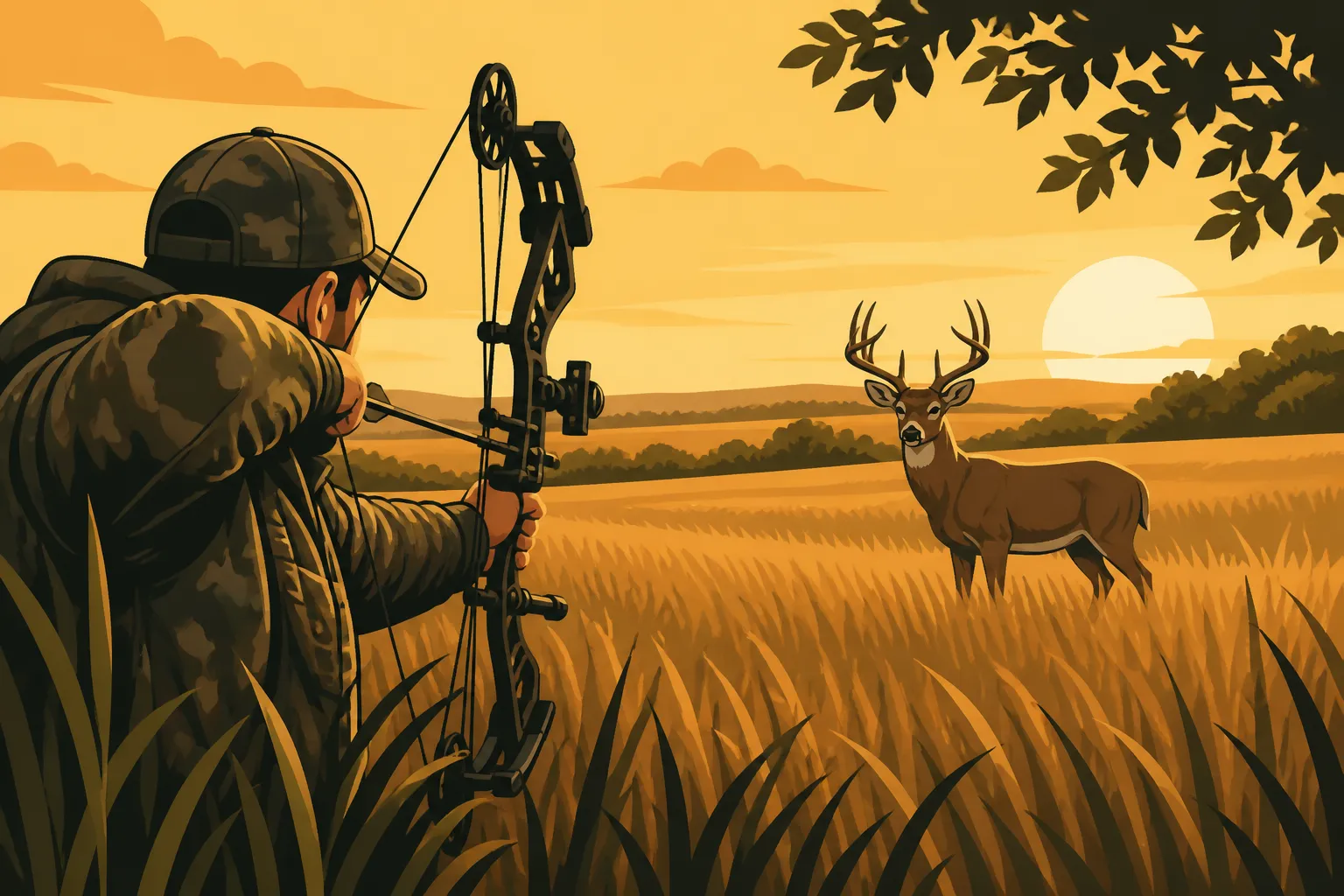
In this landscape, your stand setup is paramount. Elevated stands are almost always the most effective choice for field edges, offering a panoramic view and helping your scent disperse above deer level. Look for mature trees that offer good concealment and a clear shooting lane into the field and along the edges. When Setting Up on a Black Belt Field Edge, consider the prevailing wind direction and how it might swirl near cover lines. Deer will often approach a field with the wind in their face, trying to smell danger, so try to position yourself downwind of their most likely entry points.
Ground blinds are also incredibly effective, especially when brushed into a fencerow, hedgerow, or at a strategic pinch point. A well-constructed and properly brushed-in ground blind can offer fantastic concealment and is perfect for areas with limited suitable trees. Remember, you want your blind to blend seamlessly with the natural surroundings. I've had great success with blinds that were brushed in days or even weeks before I hunted them, allowing deer to get accustomed to their presence. Consider the specific challenges of Using a Ground Blind on Alabama Public Land and apply those lessons to private ground where deer are equally wary.
Still-Hunting and Stalking in Farmland Cover
While stand hunting dominates in open farmland, there are situations where still-hunting or stalking can be highly effective, especially when deer are pressured or when moving between small pockets of cover. This tactic shines in creek bottoms, narrow strips of timber, or dense brushy areas that connect larger fields. It requires immense patience, quiet movement, and an acute awareness of the wind. Walk slowly, pausing frequently to glass ahead and observe your surroundings. Use every bit of natural cover – a large oak, a tangle of vines, a small rise in the ground – to break up your silhouette.
This method works best when you can anticipate deer movement between bedding and feeding areas. For example, if you know deer are bedding in a dense creek bottom and feeding in an adjacent soybean field, you might still-hunt the timber strip between them during midday. The goal isn't to walk directly up on deer, but to slowly cover ground, find fresh sign, and ideally, slip into a position for a shot on a moving animal. It's a challenging but rewarding method that demands total focus, similar to the precision needed when Still-Hunting Bankhead Forest Ridges.
Utilizing Rattling and Grunting for Farmland Bucks
Rattling and grunting can be highly effective in Black Belt farmlands, particularly during the peak of the rut. The relatively open nature of these areas means sound can travel further, and bucks might be more inclined to investigate what they perceive as a rival. When Rattling and Grunting in Alabama, consider your timing and volume. Early in the rut, light rattling and soft grunts might be enough to pique a buck's curiosity. As the rut intensifies, more aggressive rattling can simulate a full-blown fight, often bringing in bucks looking for a challenge or an easy doe.
Set up near cover, even if you’re overlooking a field. Bucks will often circle downwind before committing to an open area, so having shooting lanes in all directions, especially downwind, is critical. Use a doe bleat or a estrus call occasionally to add to the realism. I've seen bucks come charging across vast open fields to the sound of a rattling sequence, but just as often, they'll sneak in quietly, so always be ready. The key is to paint a convincing auditory picture and give the buck a reason to show himself.
Equipment and Gear Considerations
Hunting in the Black Belt's open agricultural landscapes demands specific gear choices to maximize your chances of success and ensure ethical shots.
Firearm and Ammunition Choices for Open Fields
Given the potential for longer shots across vast fields, choosing the right firearm and ammunition is critical. While any legal deer caliber will work, flatter-shooting cartridges really shine here. Calibers like .270 Win, .30-06, 6.5 Creedmoor, or even something like a 7mm Rem Mag offer excellent ballistics for distances over 150 yards, which are common shots on a Black Belt field edge. The goal is to minimize bullet drop and wind drift at extended ranges.
Pair your chosen caliber with high-quality, dependable ammunition designed for deer. Look for bullets that retain energy well and offer controlled expansion for clean, ethical kills. Bullet construction is key for accuracy and terminal performance. Practice shooting at various distances – 100, 200, and even 300 yards – to become proficient with your chosen setup. Knowing your rifle and ammunition intimately will instill confidence when that trophy buck steps out at the far end of the field.
Optics and Rangefinding Essentials
Good optics are non-negotiable for hunting Black Belt farmlands. A high-quality binocular (10×42 or 10×50) will allow you to pick apart distant field edges, spot bedded deer in sparse cover, and identify antler characteristics at range. Don't skimp on glass; clear, bright optics make a world of difference in low-light conditions – those critical first and last minutes of legal shooting light.
Equally important is a reliable rangefinder. In open country, judging distance by eye can be incredibly deceiving, leading to missed shots or, worse, unethical hits. Always range landmarks around your stand before legal shooting light, noting distances to key trees, fence posts, or changes in terrain. When a deer appears, a quick range will confirm the exact distance, allowing you to make precise holdover adjustments if necessary. Many hunters also choose riflescopes with higher magnification (e.g., 3-9x, 4-12x, or even 4-16x) to aid in precise shot placement at longer distances.
Clothing and Scent Control for Farmland Hunting
While camouflage is important, blending with the specific backdrop of a field edge is often more critical than intricate patterns. Consider camo that mimics sparse vegetation, brown earth, or even the patterns of cut crops. During late season, when fields are barren and trees are bare, lighter-colored "snow camo" or muted grays/browns can surprisingly offer better concealment against sky-lining than dark patterns. Always aim to break up your human silhouette.
Scent control is paramount, especially when crossing open ground or setting up near a bedding area. Deer in these agricultural areas are often more wary of human scent due to constant exposure to farmers and equipment. Employ a rigorous scent control regimen: wash clothes in scent-free detergent, shower with scent-free soap, use scent-eliminating sprays, and store hunting clothes in airtight containers. Pay extra attention to your boots, as you'll likely be walking across open ground or field edges where deer will cross. The less scent you leave behind, the more comfortable deer will be moving in daylight, and the higher your chances of success.
Overcoming Challenges and Maximizing Success
Hunting the Black Belt is rewarding, but it comes with its own set of unique challenges that savvy hunters learn to navigate.
Dealing with Hunting Pressure and Property Lines
One of the biggest frustrations in any productive deer country, and certainly in the Black Belt, is hunting pressure. Prime farmland often means sought-after leases, and deer can quickly become nocturnal or shift their patterns due to constant disturbance. Respecting property lines is non-negotiable; always know exactly where you stand, especially with aerial mapping tools like GoHunt, which can show you property boundaries in detail. This diligence helps avoid inadvertent trespassing.
To counter pressure, focus on finding those less-pressured pockets within larger areas. This might be a small, overlooked woodlot that's too much trouble for most hunters, or a dense thicket that's hard to access. Often, deer will retreat to the thickest, nastiest cover available when pressured. Consider hunting midweek when other hunters are at work, or focusing on midday sits when many hunters have left their stands. Learning Finding Ground Others Walk Past is a skill that pays dividends in these areas. Sometimes, knocking on doors in Black Belt farm country and getting explicit permission to hunt a small, isolated parcel can yield amazing results precisely because it sees less pressure.
Adapting to Changing Food Sources and Harvest Schedules
The dynamic nature of agricultural fields means deer patterns are constantly in flux. As crops are planted, grow, and are harvested, deer shift their feeding and bedding routines dramatically. This requires constant adaptation from the hunter. For example, deer might be hammering a cornfield in late summer, but once it's cut in early fall, they'll immediately switch to the remaining soybeans or newly planted winter wheat. Knowing when to hunt the rut in the Southern zones or when the rut peaks by zone is important, but if the primary food source disappears, deer will still move with the availability of forage.
Your scouting efforts need to be continuous, not just pre-season. Pay attention to local farming reports, drive around to observe crop stages, and use your trail cameras to monitor these shifts. If you know a farmer is cutting a particular field next week, you can anticipate deer movement to nearby standing crops or natural food sources. This adaptability, recognizing that what worked last week might not work today, is crucial for consistent success in farmland environments.
Maximizing Your Chances for a Black Belt Trophy
The Black Belt is renowned for its potential to produce mature, heavy-bodied bucks. These deer benefit from excellent nutrition from agricultural crops and often have the age structure to grow impressive antlers. However, hunting these wary animals requires patience, persistence, and often, a willingness to play the long game. Focus on targeting specific mature bucks you've identified through trail camera photos or scouting. Understanding their nocturnal tendencies is key; aim to catch them during those brief windows of daylight activity at dawn and dusk.
Consider longer sits, especially during the rut. A mature buck might only make one mistake during daylight hours, and you need to be in the stand when he does. Hunting the Rut in the Northern Zones or any zone requires being present during peak activity. Don't be afraid to hunt less conventional times or places if they offer a strategic advantage, such as a ground blind deep in a thicket that most hunters would overlook. Above all, maintain a positive attitude, learn from every outing, and understand that hunting these intelligent, well-fed Black Belt deer is a challenge worthy of your best efforts.
Black Belt Deer Hunting Field Checklist
Here’s a quick overview of essential items and strategies for hunting Black Belt farmlands:
| Category | Essential Item/Strategy | Why it's Important |
|---|---|---|
| Scouting | Aerial Maps (e.g., GoHunt) | Identify travel corridors, crop types, bedding cover, property lines |
| Trail Cameras | Monitor deer movement without intrusion, adapt to food changes | |
| Optics | High-Quality Binoculars (10x) | Spot distant deer, evaluate antlers in low light |
| Rangefinder | Accurate distance measurement for ethical shots in open areas | |
| Firearm | Flatter-Shooting Caliber | Minimize bullet drop and wind drift for longer shots |
| Appropriate Ammunition | Ensures accuracy and effective terminal performance | |
| Concealment | Elevated Stand or Brushed-in Ground Blind | Vantage point for fields, or ultimate concealment at ground level |
| Field-Specific Camouflage | Blend with agricultural backdrops (e.g., bare fields, dried crops) | |
| Scent Control | Full Scent Regimen | Minimize human odor, especially when traversing open ground |
| Calling | Rattling Antlers & Grunt Tube | Effective for aggressive rutting bucks in open country |
| Knowledge | Crop Rotation Calendar | Anticipate deer shifts as food sources change |
| Wind Direction Awareness | Essential for stand placement and still-hunting |
Disclaimer
Hunting is an activity that carries inherent risks, including but not limited to injury or death. Always prioritize safety, adhere to all Alabama hunting regulations, and respect private property. The information provided in this guide is for educational purposes only and should not replace professional advice, hunter education courses, or local wildlife agency guidelines. Always check the current Alabama Department of Conservation and Natural Resources (ADCNR) regulations before heading afield, as rules and seasons can change.