Setting Up on a Black Belt Field Edge
Hunting the edges of agricultural fields in Alabama's storied Black Belt can be incredibly productive, but it often leaves hunters scratching their heads. You see all that deer sign, the fresh tracks, the rub lines leading into the timber, but getting set up effectively without spooking deer can feel like threading a needle in the dark. It’s frustrating when you spend hours perched in a stand, only to watch a magnificent buck slip into the field from an angle you never anticipated. This guide is all about demystifying that challenge, offering practical, on-the-ground advice for successfully setting up on a Black Belt field edge, ensuring your efforts lead to more consistent encounters and, hopefully, a full freezer.
Understanding Black Belt Field Edge Dynamics
The Black Belt region of Alabama is renowned for its fertile soils and abundant wildlife, especially deer. Field edges here aren't just transition zones; they're bustling highways and feeding grounds that deer utilize constantly. To truly succeed, you need to think like a deer and understand why these specific areas are so attractive.
Why Deer Use Field Edges
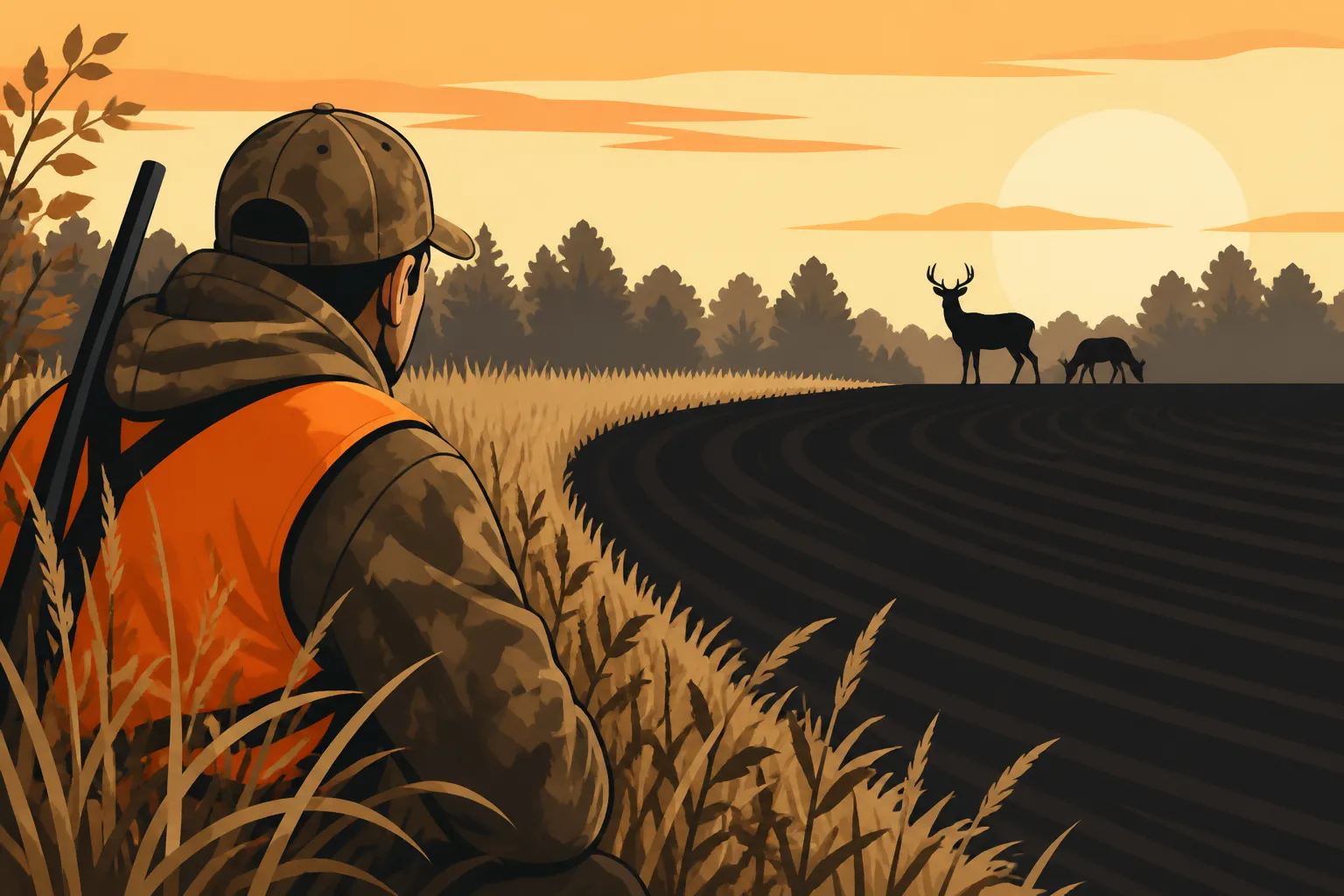
Deer, by nature, are creatures of the edge. They crave security, readily available food, and efficient travel corridors, and a field edge provides all three in spades. Imagine a dense patch of timber bordering a lush soybean field. During daylight hours, deer will often bed down in the thick cover just inside that timber. As evening approaches, their internal clocks tell them it’s time to eat, and that soybean field is a five-star buffet. They’ll stage themselves in the shadows, waiting for the perfect moment to step out.
In the Black Belt, agricultural fields often consist of crops like standing soybeans, corn, or peanuts. These are huge draws for deer, providing essential nutrients and calories, especially as the season progresses. The deer aren't just walking into the middle of the field; they're working the edges, browsing on fallen grains or succulent plants before committing fully to the open expanse. The dense timber that typically borders these fields offers them immediate escape cover, creating a psychological comfort zone. If you’re trying to understand how deer move around these valuable resources, checking out a piece on Hunting a Standing Soybean Field or Entry Routes Through Standing Peanuts can offer even more specific insights into their behavior around different crops.
Reading the Landscape for Entry and Exit Points
Deer are creatures of habit, and their movement patterns often reveal themselves if you know what to look for. When you scout a Black Belt field edge, don't just look for tracks where they enter the field. Instead, search for the more subtle clues that indicate their preferred entry and exit routes. Look for natural funnels, saddles, or pinch points along the timber line. These could be narrow strips of woods between two fields, a dip in a ridge that allows for easier passage, or even a thick fencerow that provides cover from one woodlot to another.
A well-used deer trail isn't just a faint impression in the dirt; it's a superhighway. You'll see multiple tracks, often worn smooth, sometimes with exposed roots or rocks. Pay attention to how these trails lead into and out of the fields. Do they come from a specific bedding area uphill? Do they follow a creek bottom that offers concealed movement? Identifying these primary crossings is paramount, as this is where you’ll want to focus your stand placement. The deer here, particularly the mature bucks, are notoriously wary. They don't just wander out; they'll often skirt the edge, using every bit of available cover before exposing themselves. Understanding these distinct movement patterns can be the difference between a sighting and a harvest, especially when considering the difference in behavior between Black Belt Versus Piedmont Deer.
Strategic Stand Placement and Wind Consideration
Once you've identified those key entry and exit points, the next step is perhaps the most critical: placing your stand or blind effectively. This isn't just about getting high in a tree; it's about being invisible, scentless, and positioned for a shot, all while battling the ever-present challenges of wind and thermals.
Ideal Stand Types and Heights for Field Edges
When it comes to stand types for field edges, you've got a few options, each with its own merits. Ladder stands are great for ease of access and comfort, often allowing for quick setup and stable shooting platforms. Hang-on stands, while requiring more effort to install, offer maximum flexibility for precise placement, allowing you to get into just the right tree. And let’s not forget ground blinds, which can be incredibly effective, especially if natural cover is sparse or if you prefer hunting from the ground.
The key here is concealment. Don't just pick the tallest tree; pick the tree that offers the best backdrop and breaks up your silhouette. A mature oak with plenty of limbs can be a perfect hide. When considering height, aim for enough elevation to see over immediate brush but not so high that you become silhouetted against the sky. For ladder and hang-on stands, 15-20 feet is often a good starting point, providing a decent vantage point while keeping your profile low. If you’re opting for a ground blind, brush it in heavily. Don't just pop it up; spend time breaking up its outline with local vegetation. You want it to look like it's been there for months. I've seen countless hunts ruined by blinds that stick out like a sore thumb. For more detailed advice on setting up ground blinds, especially in areas with limited trees, you might find some useful tips in Using a Ground Blind on Alabama Public Land.
Mastering Wind and Thermals in Open Terrain
This is where many hunters stumble, and it's particularly challenging when hunting open field edges. Deer have an incredible sense of smell, and a misplaced stand on the wrong wind can blow your hunt before it even begins. You absolutely must play the wind. This means checking weather forecasts religiously and being prepared to adjust your plans. Don't hunt a stand if the wind isn't right; it's better to sit at home than to educate the deer.
Thermals are another sneaky factor, especially at dawn and dusk. In the mornings, as the sun warms the ground, air currents rise, carrying your scent upwards. In the evenings, as the ground cools, air currents fall, carrying your scent downwards into the field. This means an evening stand might require a different approach or even a different tree than a morning stand, even on the same field edge. For instance, if you're hunting an evening hunt, your scent will likely drift down into the field. If deer are going to be coming from deeper in the woods, you'd want the wind blowing from the field into the woods, or parallel to the field, away from their approach.
It’s not just about the predominant wind direction; it’s about micro-thermals and swirling winds caused by terrain features like creek bottoms or small hills. Even a light breeze can swirl unexpectedly right at the timber line. Always consider your entry and exit routes in relation to the wind, too. You don't want to walk in or out of your stand with your scent blowing directly into the area you expect deer to be. Understanding Wind and Thermals on a Piedmont Ridge can provide a good foundation for these principles, even if the terrain is slightly different.
| Stand Type | Pros | Cons | Ideal Use Case on Field Edge |
|---|---|---|---|
| Ladder Stand | Comfortable, stable, easy to access, good visibility | Less portable, limited tree options, can be bulky to deploy | Long-term stand in a proven spot with good cover |
| Hang-On Stand | Very versatile, allows precise tree selection, lightweight | Requires climbing sticks, less comfortable, more effort to set up | Adapting to specific deer trails, mobile hunting |
| Ground Blind | Concealment at eye level, comfortable, weather protection, mobile | Can block visibility, requires heavy brushing-in, scent can pool | Sparse tree cover, early season when leaves are thick, youth hunters |
Stealthy Access and Exit Strategies
You've picked the perfect spot, got the wind right, and your stand is brushed in. But all that meticulous planning can be undone in moments if you don't approach and exit your stand with the utmost stealth. Deer on a Black Belt field edge are keenly aware of their surroundings, and any unnatural movement or scent can send them packing.
Minimizing Your Footprint
Scent control isn't just a fancy phrase; it's a fundamental pillar of successful deer hunting. Before you even leave the house, shower with scent-free soap, wash your clothes in scent-free detergent, and store them in an airtight container. When you get to your hunting area, don't wear your hunting clothes until you're near your access point. Every human scent you leave behind—from the oil on your skin to the scent of your vehicle—is a neon sign to deer.
Beyond scent, focus on quiet movement. Every twig snap, every rustle of leaves, sends a warning. Plan your entry and exit routes meticulously, using natural terrain features to your advantage. Can you walk a ditch line? Is there a creek bed that offers a silent, low-profile approach? Perhaps a dense thicket you can skirt that will muffle your footsteps. Sometimes, the "long way around" is the shortest path to success. Don't be afraid to walk an extra quarter-mile if it means approaching from a direction that keeps the wind in your favor and minimizes noise. Mapping tools, like those found on GoHunt, can be a game-changer for identifying these low-impact routes, allowing you to mark obstacles and optimal paths beforehand.
Timing Your Movements
Timing is everything, especially on field edges. The golden hours of dawn and dusk are when deer are most active, transitioning between bedding and feeding. You want to be in your stand well before daylight breaks, giving the woods time to settle down after your disturbance. This often means leaving your vehicle in the pitch black, navigating by headlamp, and slowly, quietly climbing into your stand. Similarly, don't rush out of your stand the moment legal shooting light ends. Give the deer time to clear the field. Often, the biggest bucks will come out right at last light, or even after, and if you're clambering down your stand, you'll educate them.
A common mistake is getting down too early and bumping deer that are just starting to venture out. If you’re hunting a particular field edge, especially one where you expect deer to emerge from a specific timber patch, resist the urge to leave until you're absolutely certain the coast is clear. Using optics to scan the field and the timber edge before you make any movement is crucial. For early morning setups, consider the guidance on Hunting a Clover Plot at First Light, and for those crucial evening moments, insights from Glassing a Powerline Cut at Last Light can be invaluable. The patience here is immense, but the payoff can be a memory that lasts a lifetime.
Adaptability and Scouting for Success
Hunting a Black Belt field edge isn't a one-and-done proposition. The landscape changes, deer patterns shift, and successful hunters are those who are constantly observing, adapting, and refining their approach.
The Evolving Field Edge and Scouting
The field edge you scouted in August might look completely different by October, and again by December. Crops get harvested, leaving behind different food sources or exposing ground that was once covered. As the season progresses, deer behavior evolves, too. Early season, they might be all about fresh greens. Mid-season, they might be keying in on acorns just inside the timber. Late season, they could be desperate for any remaining crop residue or a newly planted cool-season food plot.
This means constant scouting is non-negotiable. Don't just rely on pre-season scouting. Make quick checks before each hunt. Look for fresh tracks along the edge. Are there new rubs or scrapes indicating recent buck activity? What about fresh droppings? Trail cameras are your best friends here, acting as silent sentinels that record movement patterns when you're not there. They can tell you not just what deer are using the edge, but when and how they're using it, helping you pinpoint those crucial ambush times. You might learn a buck prefers to enter a particular field after dark, signaling you need to shift your strategy or find a different stand location. The depth of your scouting efforts can significantly improve your odds, and tips on Scouting Alabama Public Land Before Season can apply to private land too.
Leveraging Technology and Experience
In today's hunting world, technology can be a powerful ally. GPS devices, mobile mapping apps, and detailed weather apps are essential tools. Apps like GoHunt, for instance, allow you to overlay property lines, topo maps, and aerial imagery, helping you visualize terrain, identify funnels, and plan discreet entry and exit routes before you ever step foot in the woods. You can mark specific rub lines, bedding areas, or even the exact location of a promising acorn flat, building a comprehensive understanding of your hunting area over time. This is especially useful for understanding patterns during critical times like Hunting the Rut in the Southern Zones.
But technology is only as good as the hunter wielding it. The best maps and apps can't replace hours spent in the woods, learning the nuances of deer behavior in your specific area. Combine your digital tools with old-fashioned woodsmanship. Keep a hunting journal, noting conditions, deer sightings, and what worked (or didn't). Over seasons, you’ll build an invaluable library of knowledge specific to your hunting grounds. The experience of "reading the land," understanding how deer react to pressure, and anticipating their next move comes from time spent observing and learning. Whether it's interpreting satellite imagery or recognizing a faint trail, combining digital tools with your growing experience will make you a much more effective hunter. Sometimes, simply learning to Reading Aerial Photos for Piedmont Deer can dramatically improve your scouting efficiency for your Black Belt hunting.
Disclaimer
Please remember that hunting regulations and land access rules can change. Always consult the latest Alabama Department of Conservation and Natural Resources (ADCNR) regulations before heading into the field. Ensure you have all required licenses and stamps, and always prioritize safety.