Black Belt Versus Piedmont Deer
Navigating Alabama's deer woods can feel like stepping into entirely different worlds, depending on where you hang your stand. Hunters often talk about "Black Belt deer" and "Piedmont deer" as if they're different subspecies, and while genetically they're all white-tailed deer, the reality on the ground is that the regions produce very different animals and demand distinct hunting approaches. This guide will dive deep into the fascinating contrasts between deer hunting in Alabama's iconic Black Belt and its rugged Piedmont regions, helping you understand what makes each unique and how to adapt your strategies for success.
Understanding Alabama's Geographic Divisions for Deer
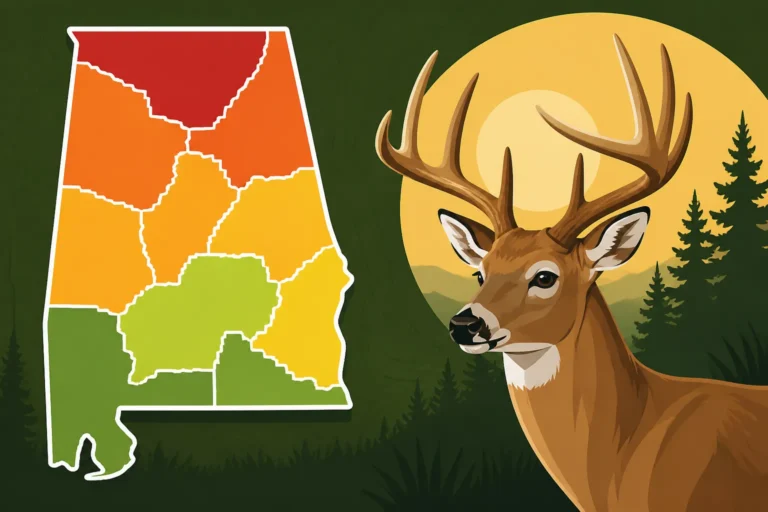
Alabama is a state of incredible diversity, not just in its landscapes but in how those landscapes shape its wildlife, particularly white-tailed deer. If you've hunted both the rolling hills of north-central Alabama and the flat, fertile plains of the central-west, you already know the profound differences. These aren't just arbitrary lines on a map; they represent fundamental variations in geology, soil, agriculture, and land use that dictate everything from antler size to deer behavior.
What Defines the Black Belt Region
The Black Belt is legendary among deer hunters, and for good reason. Stretching across central Alabama, roughly from Montgomery west toward the Mississippi border, this crescent-shaped band of land gets its name from its incredibly rich, dark topsoil. This soil, derived from Cretaceous chalk deposits, is unlike anything else in the state. It's historically been prime agricultural land, and that legacy continues today. We're talking about vast expanses of soybeans, corn, cotton, and peanuts, often interspersed with mature hardwood bottoms and smaller pine plantations.
What this means for deer is a consistent, high-quality food source. Imagine endless buffet lines for deer, packed with protein and nutrients. This isn't just about food plots; it's about agricultural crops that cover thousands upon thousands of acres, offering year-round sustenance. The flat to gently rolling topography also means different bedding and travel patterns compared to hillier regions. Access is predominantly private, often managed by large landowners, hunting clubs, or even commercial outfits. This private land control has a massive impact on deer management, leading to stricter regulations and often, older, bigger deer. If you're looking for Why the Black Belt Grows Big Bucks, it starts with these rich soils and abundant nutrition.
Characteristics of the Piedmont Plateau
Shift your focus northeast, into the foothills of the Appalachian Mountains, and you're squarely in Alabama's Piedmont region. This area encompasses much of north-central and eastern Alabama, characterized by its rolling hills, steeper terrain, and more heavily timbered landscapes. Here, the soils are generally thinner, rockier, and less fertile than the Black Belt. While agriculture exists, it's often smaller-scale and interspersed with vast tracts of pine and mixed hardwood forests.
The Piedmont is home to significant portions of Alabama's public hunting lands, including parts of the Talladega National Forest. This immediately introduces a different dynamic: more hunting pressure, more fragmented habitat, and often, deer that are more accustomed to human activity. Deer in the Piedmont rely more heavily on natural browse, acorns, and whatever limited agricultural opportunities they can find. Their diet is typically less protein-rich than their Black Belt counterparts, which affects growth rates and antler development. Understanding Reading a Ridge for North Alabama Deer becomes absolutely crucial here, as topography dictates deer movement in a way that flat Black Belt fields simply don't.
Deer Genetics and Physical Traits: A Tale of Two Regions
While every white-tailed deer in Alabama shares the same species classification, the environmental factors within the Black Belt and Piedmont have, over generations, fostered distinct observable differences in physical characteristics. These aren't genetic mutations, but rather expressions of genetic potential influenced heavily by diet, age structure, and population density.
Body Size and Antler Quality in the Black Belt
When hunters dream of "Alabama giants," they're usually picturing a Black Belt buck. The sheer volume of high-quality forage available in this region directly translates into larger body weights and superior antler development. Deer here simply have access to more protein, minerals, and calories for a longer portion of the year. This allows bucks to put more energy into antler growth, often resulting in wider spreads, more points, and greater mass. It’s not uncommon to see a 3.5-year-old Black Belt buck with a rack that would be considered exceptional for a 5.5-year-old in a less fertile region.
Beyond the nutrition, the intensive management practices on many Black Belt properties play a critical role. With larger, often contiguous tracts of private land, landowners and hunting clubs can implement rigorous age structures, letting younger bucks walk and allowing them to reach their full potential. This combination of abundant nutrition and disciplined management means that a buck surviving to maturity in the Black Belt has a much higher chance of becoming a true trophy, often landing in the discussions of Best Alabama Counties for Big Bucks. These factors contribute to the region's reputation for producing impressive deer year after year.
Piedmont Deer: Adaptability and Population Density
Piedmont deer, while still healthy and robust, generally exhibit smaller body sizes and less impressive antler development compared to their Black Belt cousins. This isn't a knock against them; it's simply a reflection of their environment. With thinner soils, more reliance on natural browse, and often higher population densities, the competition for food is stiffer, and the nutritional intake is often lower. Bucks may still achieve good antler growth, especially in areas with better food sources or lower hunting pressure, but they rarely reach the sheer size and mass seen in the Black Belt.
One defining characteristic of Piedmont deer is their incredible adaptability. They thrive in rugged terrain, navigate dense timber, and often become masters at eluding hunters on public lands. While their antlers might not score as high, these deer are often harder earned, making the success all the sweeter. The population density in many Piedmont areas, especially on public lands, can be quite high, leading to more encounters with deer, but often younger animals. Hunters here learn to appreciate the challenge and the opportunities presented by a robust deer population, even if the individual deer might not be record-book contenders every time out. This requires a different kind of skill set, focusing on stealth and understanding how Hunting Pressure on Alabama Public Land influences movement.
Habitat and Food Sources: Fueling Regional Differences
The very ground beneath your boots, and what grows from it, are the primary drivers behind the differences in deer quality and abundance between Alabama's Black Belt and Piedmont regions. It's all about the grocery store for deer, and these two regions offer entirely different menus.
Black Belt's Rich Soils and Agricultural Bounty
The Black Belt's unique geology — specifically its Selma Chalk bedrock — has created some of the most fertile soils in the Southeast. This isn't just good for farmers; it's fantastic for deer. The high pH of the soil leads to a greater availability of essential minerals, which are then absorbed by plants and ultimately consumed by deer. This mineral-rich diet is a key factor in growing large body frames and impressive antlers. When you combine this natural fertility with widespread agricultural practices, you get an unparalleled food source.
Imagine miles of soybean fields providing high-protein forage throughout the summer and early fall, followed by abundant corn during the late season. Peanuts offer a rich, fatty food source, and winter wheat and clover plots are often planted specifically for deer. This constant cycle of nutrient-dense food means Black Belt deer don't experience the "hard times" that deer in less fertile areas might face. They maintain excellent body condition year-round, which allows bucks to dedicate more energy to antler development during the growing season and recover quickly after the rut. This abundance also often influences deer movement, making Setting Up on a Black Belt Field Edge a prime tactic.
Piedmont's Varied Terrain and Timberland Forage
In contrast, the Piedmont region presents a more challenging nutritional landscape for deer. The soils, while supporting a diversity of plant life, are generally less fertile and more acidic. Large-scale agriculture is less common, giving way to vast timberlands dominated by pines, mixed hardwoods, and understory browse. Deer in the Piedmont rely heavily on natural food sources like acorns (when available), honeysuckle, greenbrier, various forbs, and fungi. While these provide necessary sustenance, they often don't offer the same high-protein, high-calorie punch as Black Belt agricultural crops.
The availability of food sources in the Piedmont can also be more sporadic. A poor acorn crop year can significantly impact deer health and antler growth, forcing deer to browse less palatable options. Timber management practices, such as clear-cutting and controlled burns, can temporarily create excellent new browse, but these are often localized and cyclical. Deer here become experts at finding what's available and adapting their diets. Understanding Where Bankhead Forest Bucks Bed or where natural food sources are most abundant requires extensive scouting and knowledge of forest ecology. This reliance on varied natural forage means Piedmont deer must work harder for their food, contributing to their generally smaller stature compared to their Black Belt counterparts.
Hunting Pressure and Management Philosophies
Beyond habitat and food, one of the most significant differentiators between hunting in the Black Belt and the Piedmont is the human element: how land is owned, managed, and hunted. This influences everything from deer behavior to the availability of mature animals.
Private Land Dominance and Quality Management in the Black Belt
The Black Belt is primarily a private land domain. Large tracts are owned by individuals, families, or corporations, and many are leased to exclusive hunting clubs or operated as commercial hunting lodges. This concentration of private ownership allows for highly controlled and often aggressive deer management strategies. Many landowners and clubs in the Black Belt prioritize quality deer management (QDM) principles, focusing on:
- Strict Age Structures: Passing on younger bucks to allow them to reach maturity.
- Antlerless Harvest: Strategically harvesting does to balance the deer population with the habitat's carrying capacity.
- Habitat Improvement: Actively managing timber, planting food plots, and creating bedding areas to enhance deer habitat.
- Reduced Pressure: Limiting the number of hunters and hunts to minimize disturbance and prevent deer from becoming overly nocturnal.
The result of this intensive management is often a deer herd with a healthier age structure, better buck-to-doe ratios, and a higher proportion of mature bucks with larger antlers. While this can lead to incredible hunting opportunities, access is often a significant barrier for the average hunter. Securing a spot in a reputable Black Belt club or booking a hunt with an outfitter like the ones found through GoHunt can be costly, reflecting the investment in land and management. This approach allows these areas to consistently produce impressive Alabama Deer Harvest Records year after year for trophy bucks.
Public Land Challenges and Opportunities in the Piedmont
The Piedmont region, by contrast, features a much greater proportion of public hunting lands, including extensive Wildlife Management Areas (WMAs) and National Forests. This immediately translates to a different hunting experience. Public lands are open to anyone with a valid license and any necessary permits, leading to higher hunter densities and, consequently, increased hunting pressure.
On public lands, deer management aims to provide recreational opportunities for a broad base of hunters while maintaining healthy deer populations. However, individual hunter decisions and cumulative pressure mean that deer on public land often become warier, more nocturnal, and more prone to seeking refuge in thick, inaccessible areas. It's common to find younger bucks, as they are more likely to be harvested before reaching older age classes.
Hunting the Piedmont, especially on public land, demands a different skill set. It requires extensive Scouting Alabama Public Land Before Season, a willingness to walk further and deeper than other hunters, and a keen understanding of how deer use topography and thick cover to evade pressure. While trophy bucks are less common, they are certainly present, often found by those who put in the extra effort to find ground others walk past. The Piedmont offers fantastic opportunities for those seeking a more challenging, self-guided hunt, often with a greater sense of accomplishment when a hard-earned deer is finally tagged.
Strategies for Hunting Each Region Successfully
Given the stark differences in deer behavior, habitat, and hunting pressure, successful hunting in the Black Belt and Piedmont requires distinctly different strategies. What works like a charm in one region might be a waste of time in the other.
Black Belt Tactics: Spotting, Still-Hunting, and Stand Selection
Hunting the Black Belt often revolves around understanding open-land deer movement and capitalizing on predictable food sources. Here, it's less about finding a subtle rub line in deep timber and more about observing broad patterns.
One of the most effective tactics in the Black Belt is spotting and stalking or using long-range observation stands. With vast agricultural fields and open timber, you can often see deer at considerable distances. Hunters will set up in box blinds or elevated stands overlooking large fields, logging roads, or transition areas between agriculture and cover. Early morning and late afternoon are prime times for deer to move out into these feeding areas. Patience is key, as deer can often appear suddenly from cover or slowly filter into a field. Using powerful optics, such as binoculars or a spotting scope (a good investment, and you can find many options on sites like GoHunt), is essential for identifying legal bucks at a distance.
Still-hunting can also be effective in the Black Belt, particularly in the sprawling hardwood bottoms and smaller timber blocks that connect major feeding areas. Moving slowly, stopping frequently, and using the wind to your advantage allows you to cover ground while potentially intercepting deer transitioning between bedding and feeding. Stand selection, whether for an elevated box blind or a mobile treestand, focuses on proximity to prime food sources, pinch points, and established travel corridors between bedding thickets and fields. Knowing the Alabama Deer Season Structure Explained and specifically the dates for Alabama's Five Deer Zones can further inform when and where deer are most likely to be moving in the open.
Piedmont Tactics: Scouting, Pressure, and Topography
Hunting the Piedmont demands a more intimate knowledge of the land, especially on public ground where deer are wary. Success hinges on meticulous scouting, understanding how deer react to pressure, and deciphering topographic maps.
Aggressive scouting is non-negotiable in the Piedmont. Before the season, spend countless hours hiking, looking for natural funnels, saddlebacks, creek crossings, and bedding areas. Rather than vast fields, look for smaller, diverse food sources like white oak groves, persimmon trees, or patches of honeysuckle. Pay close attention to subtle deer sign: small rub lines, fresh droppings, and faint trails that might indicate less-pressured travel routes. Utilizing mapping tools, perhaps through the GoHunt platform, to analyze topography and identify potential pinch points can save you miles of walking.
Understanding pressure is paramount. On public lands, deer quickly learn to avoid easy-to-access areas. This means being willing to hike further, climb steeper hills, and get into areas that most other hunters overlook or are unwilling to tackle. Focus on thick cover, remote ridges, and secluded bottoms that offer sanctuary. During gun season, deer drives by other hunters can actually push deer into these thick areas, creating unexpected opportunities for a patient stand hunter.
Topography as your guide is crucial. In the rolling hills of the Piedmont, deer use terrain to their advantage. They'll often travel along ridge lines, drop into saddles, or skirt the edges of steep ravines. Identifying these natural travel corridors and setting up a well-placed treestand or ground blind along them is a classic and effective strategy. Always consider the wind and thermals, which can be far more complex in hilly terrain, to ensure your scent isn't blowing into your kill zone. Still-Hunting Bankhead Forest Ridges is a perfect example of a tactic tailored for this challenging yet rewarding environment.
Here's a quick comparison of the two regions to help put things in perspective:
| Feature | Black Belt Region | Piedmont Region |
|---|---|---|
| Primary Landscape | Flat to gently rolling, fertile plains, agriculture | Rolling hills, mountainous foothills, timberlands |
| Soil Fertility | High (rich, dark soils) | Moderate to low (thinner, rockier soils) |
| Dominant Land Use | Large private farms, timber, hunting leases/lodges | Mix of public forests/WMAs, private timber/small farms |
| Deer Body Size | Larger average body weights | Smaller average body weights |
| Antler Quality | Higher potential for large, heavy antlers (Boone & Crockett class) | Good antlers, but less likely to be trophy-class |
| Primary Food | Agricultural crops (soybeans, corn), rich natural forage | Natural browse, acorns, limited small-scale agriculture |
| Hunting Pressure | Generally lower on private land, high on public WMAs (if any) | Generally higher, especially on public land |
| Access | Predominantly private, often through leases or outfitters | Mix of public and private, public access more common |
| Hunting Style | Stand hunting over food, spotting & stalking, still-hunting | Extensive scouting, still-hunting thick cover, public land strategies |
This table illustrates the fundamental differences you'll encounter and why preparing for a hunt in one region won't fully prepare you for the other. Each offers unique challenges and rewards, making Alabama a truly diverse state for deer hunting.
Disclaimer
Hunting is an inherently dangerous activity. Always prioritize safety, understand and follow all Alabama hunting regulations, and obtain appropriate licenses and permits. This guide is for informational purposes only and does not substitute for personal research, preparation, or professional guidance. Rules and regulations can change, so always check the latest Alabama Department of Conservation and Natural Resources (ADCNR) guidelines before heading afield.