Alabama CWD Prevalence in the High-Risk Zone
The news of Chronic Wasting Disease (CWD) reaching Alabama has, understandably, sent ripples of concern and confusion through our hunting community. Many of us are grappling with what this means for our cherished traditions, especially those of us who hunt in or near the areas designated as "high-risk." This guide aims to pull back the curtain on CWD prevalence within Alabama's high-risk zone, helping you understand the current situation and how to adapt your hunting practices safely and responsibly.
Understanding Alabama's CWD High-Risk Zone
When CWD was first detected in Alabama, it was a gut punch. Suddenly, this disease that felt far away was right here on our doorstep, particularly in the northwestern part of the state. The Alabama Department of Conservation and Natural Resources (ADCNR) moved quickly to establish what they call the CWD Management Zone (CMZ), and within that, a more restrictive "High-Risk Zone." It's critical for every deer hunter in Alabama, and especially those in or near these areas, to understand what these designations mean.
Defining the High-Risk Zone's Boundaries
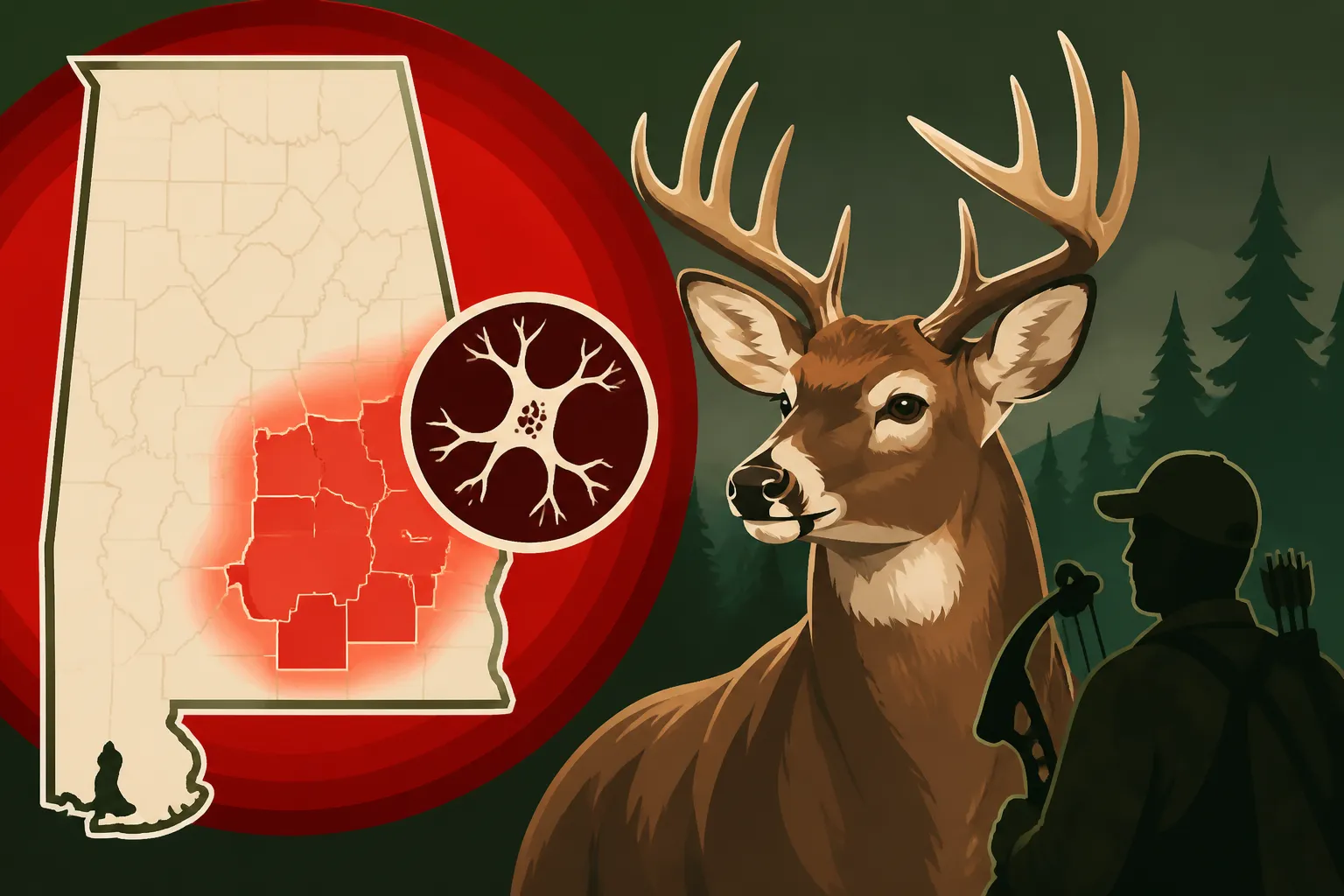
The High-Risk Zone isn't just a random circle on a map; it's a carefully defined area based on where CWD-positive deer have been confirmed. Currently, this zone is primarily centered around Lauderdale and Colbert counties. If you're hunting within these specific areas, or even in adjacent areas that form the broader CWD Management Zone, you're directly impacted by these regulations. Knowing your exact location is more important than ever. You can often find detailed maps from the ADCNR or use tools like the Scouting With the Outdoor Alabama App to pinpoint your exact location relative to these zones. It takes a little extra homework, but it's essential for compliance and for protecting our deer herd.
Why This Designation Matters for Hunters
The reason for establishing a High-Risk Zone is straightforward: to contain the disease and gather crucial data. For hunters, this translates into specific rules and responsibilities that aren't optional. We're talking about things like mandatory CWD testing for harvested deer during certain periods, and strict limitations on how deer carcasses can be transported out of the zone. It's not just about avoiding a fine; it's about being a responsible steward of the land and the wildlife we pursue. These regulations are designed to minimize the spread of CWD to new areas, protecting the health of the entire state's deer population, which directly impacts our hunting future.
The Reality of CWD Prevalence Within the Zone
Let's be honest, hearing "high-risk zone" can sound pretty alarming. It conjures images of widespread infection, but the reality is a bit more nuanced. Prevalence refers to the proportion of a population that has a disease at a specific time. In the High-Risk Zone, this means focusing on how many deer, out of those tested, are showing positive for CWD. It's not about every deer being infected; it's about understanding the localized intensity of the disease.
Observed Patterns and Concentration of Cases
When we talk about the prevalence in Alabama's High-Risk Zone, the data generally shows a localized concentration of CWD-positive cases, primarily in Lauderdale County, which has unfortunately driven the state's CWD count. The numbers, while concerning, haven't indicated a runaway epidemic across the entire deer population within the zone. Instead, the cases tend to be found in specific pockets. This suggests that while CWD is present, it's not uniformly distributed, and its detection is often tied to targeted surveillance efforts and mandatory testing weekends. The efforts put into Mandatory CWD Testing Weekends are critical in providing this clearer picture.
Factors Influencing CWD Prevalence
Several factors can influence how CWD manifests and spreads within a deer population, even within a defined High-Risk Zone. Deer density, for instance, plays a significant role. Areas with higher deer populations can see faster transmission rates because deer interact more frequently. Habitat also comes into play; certain landscapes might favor deer congregation, increasing contact. Genetic susceptibility within the deer herd can also be a factor, though this is a complex area of ongoing research. Human activities, particularly the movement of deer carcasses, are also a major concern, which is why Alabama Carcass Movement Restrictions are so vital. It’s a dynamic situation, and understanding these influences helps us appreciate why specific rules are in place.
What Hunters Need to Know and Do in the High-Risk Zone
Hunting within a CWD High-Risk Zone requires diligence and adherence to specific guidelines. It’s not just business as usual. You're part of the solution, and your actions directly contribute to monitoring and hopefully mitigating the spread of this disease. This isn't meant to scare you away from hunting; rather, it's to empower you with the knowledge to hunt responsibly and safely for yourself and the herd.
Mandatory Testing and Reporting Requirements
During specific periods, often around opening weekends or peak rut, mandatory CWD testing is required for all harvested deer within the High-Risk Zone. This means taking your deer to an official CWD sampling station. It might add a step to your hunt, but it's crucial data collection. You'll also still need to follow standard Alabama Deer Reporting Rules through the Game Check system. Keep an eye on ADCNR announcements for exact dates and locations of these testing stations. Missing this step isn't just a minor oversight; it's a violation and a lost opportunity to gather vital information about disease prevalence.
Carcass Movement Restrictions
This is perhaps one of the most impactful rules for hunters. You simply cannot move a whole deer carcass out of the High-Risk Zone. This regulation is designed to prevent the physical spread of CWD prions, the infectious agents, to uninfected areas. If you harvest a deer in the High-Risk Zone, you'll need to bone it out there. Only deboned meat, clean skull plates, and cleaned hides can leave the zone. This often means bringing extra gear – boning knives, game bags, coolers – into the field or having access to processing facilities within the zone. Planning ahead for Handling Venison From the CWD Management Zone is essential, especially if you usually process your deer at home a few counties away.
Safe Handling Practices for Harvested Deer
When handling any harvested deer, but especially one from the High-Risk Zone, it's always wise to practice common-sense precautions. Wear gloves when field dressing. Minimize contact with brain and spinal tissue, as these are known to harbor the highest concentrations of CWD prions. While there's no evidence of CWD affecting humans, it's always best to be prudent. Once processed, always cook venison thoroughly. If you ever harvest a deer that appears unusually sick or behaves abnormally, it’s imperative to contact the ADCNR immediately to Reporting a Sick Animal in Alabama. This vigilance from hunters is one of our best defenses.
Here’s a quick overview of key actions for hunters in the High-Risk Zone:
| Action Item | Description | Importance |
|---|---|---|
| Verify Location | Use reliable maps (like the Outdoor Alabama app or a GoHunt mapping tool) to confirm if your hunting spot falls within the High-Risk Zone or the broader CWD Management Zone. | Crucial for understanding specific regulations. |
| Check Mandatory Testing Dates | Stay informed about ADCNR announcements for specific weekends or periods when mandatory CWD testing is required for all harvested deer in the zone. | Essential for compliance and disease monitoring. |
| Locate Sampling Stations | Know where the official CWD sampling stations are located within or near your hunting area. Plan your route to ensure you can get your deer tested. | Facilitates compliance with testing requirements. |
| Plan for Carcass Transport | Be prepared to debone your deer in the field or at a local facility within the zone. Only deboned meat, cleaned skull plates, and hides can leave the High-Risk Zone. | Prevents potential spread of CWD prions to uninfected areas. |
| Practice Safe Handling | Always wear gloves when field dressing. Avoid contact with brain and spinal tissue. Thoroughly clean all tools and surfaces. | Minimizes potential exposure and ensures hygiene. |
| Report Sick Deer | Immediately contact the ADCNR if you observe any deer exhibiting signs of illness (e.g., emaciation, neurological issues). | Critical for early detection and containment of potential new cases. |
| Stay Informed | Regularly check the ADCNR website for updates on CWD regulations, new positive cases, or changes to zone boundaries. | Regulations can change; staying informed ensures you're always in compliance. |
The Ongoing Fight Against CWD in Alabama
The discovery of CWD in Alabama has undoubtedly brought new challenges, but it has also galvanized the hunting and wildlife management communities. It's an ongoing battle, one that requires continuous effort, adaptation, and collaboration from everyone who cares about Alabama's deer herd. The state is committed to fighting this, and as hunters, we're on the front lines.
Surveillance and Research Efforts
The ADCNR, along with partners like universities and federal agencies, is continually engaged in robust surveillance programs. This includes not just mandatory testing in the High-Risk Zone, but also voluntary sampling outside of it, and testing of road-killed deer. This extensive monitoring helps biologists track the disease's spread and prevalence. Additionally, research efforts are ongoing to better understand CWD itself – how it's transmitted, how it impacts deer populations, and what management strategies are most effective. Every deer tested helps contribute to this growing body of knowledge, painting a clearer picture of How Many Deer Have Tested CWD-Positive Since 2022 and where they are located.
Management Strategies and Their Evolution
Managing CWD isn't a static process; it's constantly evolving as new information comes to light. Initial strategies often focus on containment and surveillance, as seen with the creation of the CWD Management Zone and its High-Risk counterpart. Future management might include targeted herd reduction in affected areas, continued public education, and adaptation of hunting season frameworks. For example, understanding Alabama Deer Season Structure Explained is more important than ever as seasons and limits might be adjusted in response to disease prevalence. This is a long-term challenge, and the strategies will adapt as we learn more about CWD within our state.
The Hunter's Role in Long-Term CWD Management
As hunters, our role extends far beyond just following the rules. We are the eyes and ears in the field, often the first to notice something amiss. Our active participation in testing, adherence to carcass movement restrictions, and commitment to ethical hunting practices are paramount. Educating ourselves and our fellow hunters about CWD is also key. Tools like the GoHunt app can help us stay informed about regulations and even plan hunts in accordance with zone rules. Our collective efforts can make a real difference in the long-term health of Alabama's deer, ensuring that future generations can continue to enjoy the rich hunting traditions we hold dear. This is our shared responsibility, and by working together, we can face this challenge head-on.
Disclaimer
This article is for general informational purposes only and does not constitute professional advice. Laws, prices and regulations vary by location and change over time. Consult a qualified professional for guidance on your specific situation.