Alabama Carcass Movement Restrictions
It’s a tough pill to swallow when you've finally tagged a beautiful Alabama whitetail, the culmination of scouting, early mornings, and patient waiting, only to realize that new rules might complicate how you get your prized harvest home. The emergence of Chronic Wasting Disease (CWD) in our state has brought with it a necessary but often confusing set of regulations, particularly concerning how and where you can move deer carcasses. This guide aims to cut through the noise and equip you with clear, actionable information on Alabama's carcass movement restrictions, helping you stay legal and protect our precious deer herd.
Understanding Alabama's CWD Challenge
Chronic Wasting Disease is more than just a buzzword; it’s a very real and serious threat to our deer populations, and by extension, to our hunting heritage. When you're out there chasing whitetails, it's easy to feel a world away from these big-picture problems, but the truth is, we all have a role to play in keeping CWD from taking a stronger foothold.
The Threat of Chronic Wasting Disease
Imagine a disease that slowly and inevitably wastes away the deer you love to pursue. That’s CWD in a nutshell. It’s a neurological disease affecting deer, elk, and moose, caused by abnormal proteins called prions. These prions accumulate in the brain and other tissues, causing the animal to lose weight, develop abnormal behaviors, and eventually die. The scariest part? CWD is always fatal, and there's no known cure or vaccine. It spreads through direct contact between animals, but also indirectly through contaminated environments – things like soil, plants, and even feed can harbor these hardy prions for years.
The impact of CWD extends far beyond just individual deer. In areas with high prevalence, CWD can significantly reduce deer populations, alter herd dynamics, and make hunting a much less rewarding experience. For us hunters, it’s not just about declining numbers; it's about the health of the game we consume and the future of our sport. Understanding how CWD reached Northwest Alabama helps put these restrictions into perspective, showing just how easily diseases can travel across landscapes.
The CWD Management Zone (CMZ) and High-Risk Zone (HRZ)
To combat the spread of CWD, the Alabama Department of Conservation and Natural Resources (ADCNR) has established specific geographical areas with stricter regulations. These are the CWD Management Zone (CMZ) and, within it, the High-Risk Zone (HRZ). Knowing your location relative to these zones is absolutely critical.
Currently, the CWD Management Zone encompasses all of Lauderdale, Colbert, and Franklin counties. This is where confirmed CWD cases have been detected, and where the risk of spread is highest. Within this CMZ, there's an even more tightly regulated High-Risk Zone, specifically designated where CWD prevalence is highest or where the initial cases were found. For instance, sections of Lauderdale County have been particularly identified, driving many of the CWD counts. These zones aren't arbitrary; they’re based on scientific data and surveillance efforts to contain the disease where it's known to exist and prevent it from spreading to other parts of our beautiful state. If you plan to hunt anywhere in this region, a tool like GoHunt or the official Outdoor Alabama app can be incredibly useful for pinpointing precise boundaries.
Navigating Carcass Movement Restrictions
Once you’ve successfully harvested a deer within the CMZ or HRZ, the rules for getting it out of the area are strict, but understandable. The goal is to prevent the physical transport of CWD prions into uncontaminated areas. It’s not about making things harder for you; it's about safeguarding the health of the entire state's deer population.
What You Cannot Move Out of the CMZ/HRZ
This is the part that can catch hunters off guard. The core principle is simple: you cannot move whole deer carcasses, or any parts that are known to concentrate CWD prions, out of the designated CWD Management Zone or High-Risk Zone. This includes:
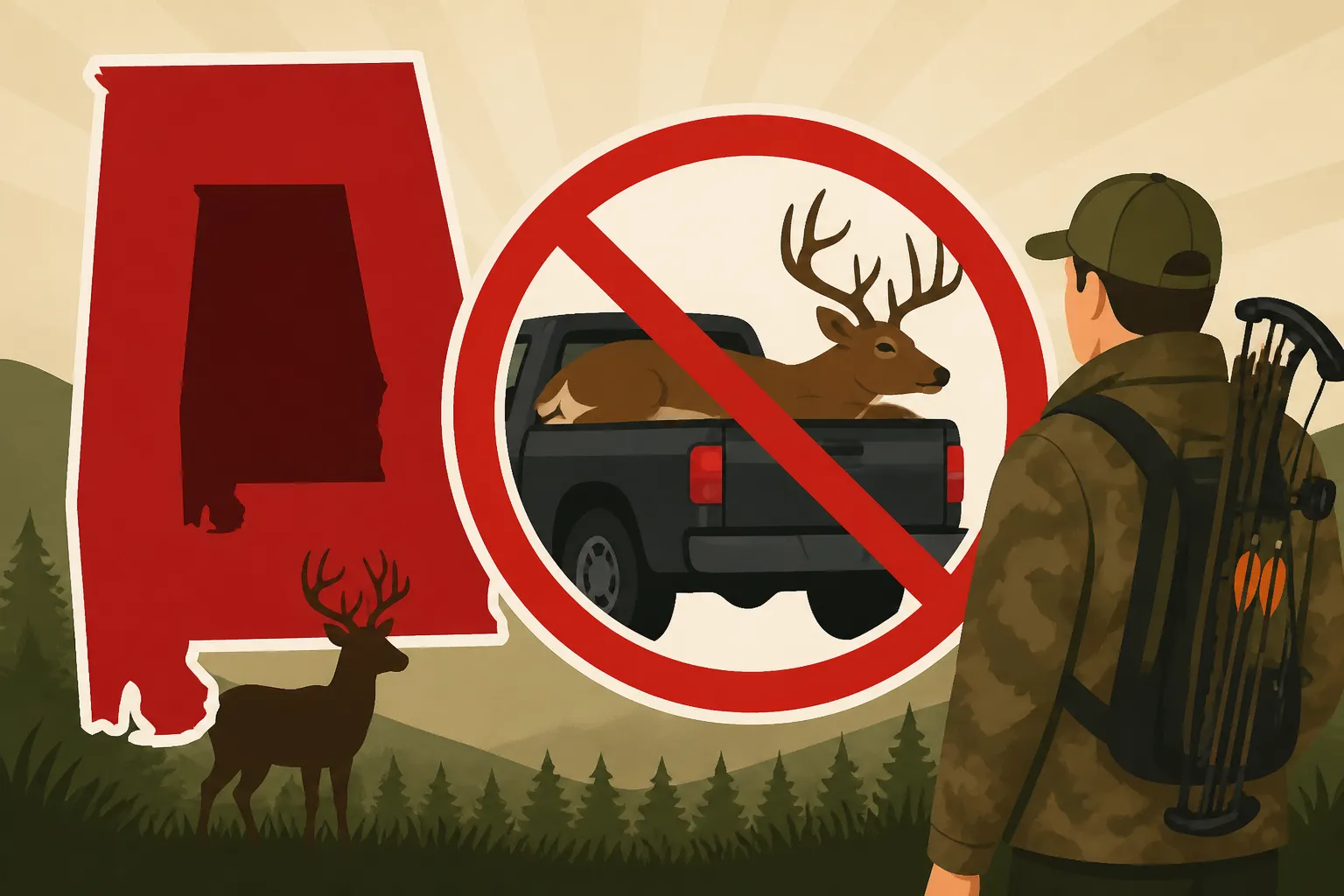
- Whole Carcasses: This means exactly what it sounds like – you can't just throw a field-dressed deer in the back of your truck and drive it across the county line out of the CMZ.
- Heads: Deer heads, especially the brain and spinal column, are among the tissues where CWD prions accumulate in the highest concentrations.
- Spinal Columns: The backbone contains spinal cord tissue, another high-risk component.
- Organs (except digestive): While digestive organs are often removed during field dressing, other organs like the spleen, lymph nodes, and brain are considered high-risk.
- Antlers still attached to skull plates that haven't been cleaned: If a skull plate has brain matter or other tissue still attached, it's a no-go.
These restrictions are in place because studies have shown that these specific tissues hold the highest concentrations of CWD prions. By preventing their movement, we reduce the chances of inadvertently spreading the disease to new areas. Ignoring these rules, even unknowingly, can lead to significant penalties, and more importantly, jeopardize future hunting opportunities for everyone. The rule about moving a deer carcass out of the CMZ is very clear: these specific parts must stay within the zone.
What Can Be Moved: Processed Carcasses and Exceptions
The good news is that these rules don't mean you can't harvest and enjoy your deer from the CMZ/HRZ. They simply mean you need to process it differently. The ADCNR has made exceptions for parts of the deer that are considered low-risk for CWD transmission, provided they are prepared correctly.
You can move the following out of the CMZ/HRZ:
- Deboned meat: This is the most common and safest way to transport your harvest. All meat must be deboned from the carcass, leaving no visible bone or spinal tissue.
- Clean antlers: If your buck has a beautiful rack, you can take it home as long as it's completely free of any meat, tissue, or brain matter. Often, this means removing the antlers from the skull plate entirely or ensuring the skull plate is thoroughly cleaned.
- Clean skull plates: If you want to keep the skull plate with the antlers attached, it must be completely free of all brain and soft tissue. A good boil and scrape is usually sufficient to ensure compliance.
- Hides and capes: As long as there's no visible brain or spinal tissue attached, hides and capes for taxidermy are permissible.
- Finished taxidermy products: Once your mount is complete, it's good to go.
- Teeth: If you want to keep deer teeth, they are considered low-risk once cleaned.
The key here is "clean." Any remaining soft tissue, especially neurological tissue, is what poses the risk. This table summarizes what can and cannot be moved:
| Carcass Part | Allowed Movement Out of CMZ/HRZ | Notes |
|---|---|---|
| Whole Carcass (field-dressed) | NO | Must be processed within the CMZ/HRZ before transport. |
| Deboned Meat | YES | Must be completely removed from the bone. |
| Head (with brain/spinal tissue) | NO | Brain and spinal cord are high-risk. |
| Spinal Column | NO | Contains high concentrations of prions. |
| Clean Antlers (no skull plate attached) | YES | Must be entirely free of tissue. |
| Clean Skull Plate (with antlers attached) | YES | Skull plate must be thoroughly cleaned of all brain and soft tissue. |
| Hides/Capes (no brain/spinal tissue) | YES | Must be free of all visible soft tissue, especially around the neck and head. |
| Finished Taxidermy Products | YES | Once fully processed by a licensed taxidermist, they are safe to transport. |
This careful approach allows hunters to still enjoy their successful hunts while actively participating in the crucial effort to contain CWD.
Practical Steps for Hunters in Restricted Zones
So, you're hunting in the CWD Management Zone, or even the High-Risk Zone. Don't fret! With a little planning and understanding of the rules, you can still have a successful and legal hunt. It really comes down to being prepared to process your deer differently than you might have in the past.
Field Dressing and Processing on Site
The most straightforward way to comply with carcass movement restrictions is to process your deer sufficiently in the field or at a temporary setup within the CMZ/HRZ. This means taking more than just the gut pile out. You'll need to focus on deboning the meat and properly handling the skull and antlers.
Here’s a practical approach: After you’ve successfully harvested your deer and performed a standard field dressing, consider setting up a clean work area. This might be a tarp on the ground or a small, portable processing table. You'll need sharp knives, a game bag, and a way to store the deboned meat (coolers with ice are essential, especially in Alabama’s warm weather). Start by carefully deboning the backstraps, hindquarters, and shoulders. Take your time to remove all the meat from the bone, making sure no bone fragments or spinal column pieces end up with your meat.
If you want to keep the head for a skull mount or taxidermy, you'll need to separate the skull plate from the rest of the skull, ensuring all brain and soft tissue is removed. Alternatively, you can take the entire head to a local taxidermist within the CMZ/HRZ for proper cleaning. Remember to properly dispose of the remaining carcass parts (bones, spinal column, brain material) within the CMZ/HRZ, ideally by burying them or using an approved disposal method if available, to prevent further environmental contamination. This extra effort on-site is a small price to pay for the long-term health of our deer herd.
Utilizing Local Processors and Taxidermists
Sometimes, field deboning isn't practical or preferred, especially for those who want a professional cut on their venison or a full shoulder mount. This is where local processors and taxidermists within the CWD Management Zone become invaluable. These businesses are familiar with the regulations and equipped to handle your deer properly.
Before your hunt, research and identify certified processors and taxidermists located within the CMZ/HRZ. Call ahead to confirm their services and CWD protocols. When you harvest a deer, you can transport the whole carcass directly to one of these facilities, as long as the entire process, including disposal of restricted parts, occurs within the CWD zone. They will be able to debone your meat, clean skull plates, and prepare capes for future taxidermy, ensuring that only permissible parts leave the zone. This is often the easiest route for many hunters, especially those traveling from outside the CMZ. Websites like GoHunt or even a quick search on the Outdoor Alabama app can help locate these critical local resources, along with details like their operating hours and specific instructions for dropping off deer.
Mandatory CWD Testing and Reporting
Beyond carcass movement, hunters in the CMZ and HRZ have a critical role to play in the ADCNR's CWD surveillance efforts: mandatory testing. This isn't just a suggestion; it's a requirement designed to help biologists understand the prevalence and spread of the disease.
Understanding Mandatory Testing Weekends
The ADCNR periodically designates specific "Mandatory Testing Weekends" within the CWD Management Zone, especially in the High-Risk Zone. During these periods, all deer harvested by hunters must be brought to designated sampling stations for CWD testing. These weekends are crucial for gathering the data needed to monitor the disease, track its spread, and inform future management strategies. It's a collective effort, and your participation directly contributes to the conservation of Alabama's deer herd.
The dates and locations for these mandatory testing weekends are widely publicized by the ADCNR through their website, social media, and local news outlets. It's vital to check the latest regulations before heading out to hunt, especially if you're targeting deer in Lauderdale, Colbert, or Franklin counties. These weekends ensure a statistically significant sample size, giving biologists the clearest picture of CWD activity. When it comes to mandatory testing inside the High-Risk Zone, compliance is paramount for the health of the entire state's deer population.
Submitting Samples and Awaiting Results
When you harvest a deer during a mandatory testing weekend, you'll need to transport the head of the deer (or the entire deer, if you prefer, but remember the carcass movement rules for leaving the zone) to an official CWD sampling station. These stations are typically staffed by ADCNR personnel who will collect the necessary tissue samples – usually from the brain stem or lymph nodes. They will also collect important harvest information, which helps track deer populations and CWD trends.
After submitting your sample, you'll typically be given a tag or reference number. It's important to understand that getting the test results takes time. While awaiting CWD results from Alabama samples, hunters can generally proceed with processing and consuming the meat, as long as it has been deboned and handled according to the carcass movement restrictions. However, the ADCNR recommends that hunters in the CWD Management Zone consider waiting for a negative test result before consuming venison from a CWD-positive area, particularly if the deer appears sick. The average wait time for results can vary, but generally, it's a few weeks. You can usually check the status of your sample online using the reference number provided. This entire process, from finding an Alabama CWD sampling station to submitting your deer, is a testament to the proactive measures our state is taking.
Why These Rules Matter: Protecting Alabama's Deer Herd
These regulations, while sometimes inconvenient, are not arbitrary. They are a direct response to a significant ecological and recreational threat. Understanding the underlying reasons can help foster greater compliance and a sense of shared responsibility among hunters.
Preventing Further Spread of CWD
The primary goal of Alabama's carcass movement restrictions and mandatory testing is to prevent the further spread of CWD within the state. Each time a prion-carrying part of a deer carcass is moved, there's a risk that those prions could contaminate new soil, new water sources, or be ingested by other deer, establishing new infection sites. We've seen how quickly CWD can take hold in other states, and Alabama is working hard to avoid that scenario.
These measures are about containment. By limiting the movement of high-risk tissues, we reduce the potential for CWD to jump from the CMZ/HRZ to other regions of Alabama where it currently doesn't exist. This is a battle that requires every hunter to be a vigilant partner. The long-term implications of widespread CWD are stark: declining deer populations, reduced hunting opportunities, and significant economic impacts on rural communities that rely on hunting tourism. That's why every single hunter's adherence to these rules is so crucial.
The Role of Hunters in Conservation
Hunters have always been at the forefront of conservation, and our response to CWD is no different. The ADCNR can set regulations, but it's the individual hunter's actions in the field and after the harvest that truly make the difference. By understanding and following these carcass movement restrictions, and by participating in mandatory testing, you are actively contributing to the health and future of Alabama's deer herd.
It's a testament to our community's commitment that hunters are willing to adapt. This situation underscores the fact that hunting is not just a recreational activity; it's a vital part of wildlife management. By being informed, responsible, and proactive, we ensure that future generations can enjoy the same rich hunting traditions we cherish today. Report any sick animals in Alabama that exhibit CWD-like symptoms, as this helps wildlife managers track potential new outbreaks. It's all part of our shared responsibility.
Frequently Asked Questions About Carcass Movement
Navigating new regulations can be tricky, and it's natural to have questions, especially when you're preparing for a hunt or have just harvested an animal. Let's clear up some common points of confusion.
Non-Resident Hunters and CWD Rules
If you're a non-resident hunter coming to Alabama, particularly to hunt in or near the CWD Management Zone, these rules apply to you just as they do to residents. In fact, non-residents might face additional considerations, especially if they plan to transport deer back to their home state.
First and foremost, check Alabama's CWD regulations before you arrive, paying close attention to Alabama's Chronic Wasting Disease Management Zone. Secondly, be aware of the CWD regulations in your home state. Many states have their own carcass import restrictions, especially concerning deer harvested in CWD-positive areas like Alabama's CMZ. This means that even if you legally debone your meat in Alabama, your home state might have further requirements or prohibitions on certain parts. Always err on the side of caution: plan to process your deer completely to deboned meat and cleaned skull plates before leaving the CMZ, regardless of your final destination. Consider using one of the local processors mentioned earlier, as they can help ensure your harvest is compliant for both Alabama and potentially your home state's regulations.
Transporting Carcasses Through the CMZ
A common question arises when hunters, whose harvest originated outside the CWD Management Zone, need to travel through the zone to get home. For example, if you harvested a deer in Tuscaloosa County (outside the CMZ) but your route home takes you through Colbert County (inside the CMZ), what are the rules?
The good news is that Alabama's carcass movement restrictions primarily concern deer harvested within the CWD Management Zone. If you have legally harvested a deer outside the CMZ and are merely passing through the zone, you are generally permitted to do so with your whole carcass, provided it was legally taken and checked in according to Alabama deer reporting rules. However, to avoid any confusion or potential misunderstandings with law enforcement, it's highly recommended to have your harvest information readily accessible (e.g., your game check confirmation). While passing through is generally allowed, it's always best practice to ensure your deer is properly tagged and covered to prevent any misinterpretation of its origin. This distinction is important for hunters who might live or hunt close to the CMZ but outside of it.
Disclaimer
The information provided in this guide is for general informational purposes only and is subject to change. Hunting regulations, including those pertaining to CWD, are updated periodically by the Alabama Department of Conservation and Natural Resources (ADCNR). It is the hunter's responsibility to consult the most current official ADCNR regulations and proclamations before engaging in any hunting activities. Always refer to the official Outdoor Alabama website or contact the ADCNR directly for the latest and most accurate information.