Penalties for Shooting an Alabama Black Bear
It's an unfortunate truth that accidents happen in the field, or sometimes, out of pure negligence, someone makes a terrible choice. When it comes to black bears in Alabama, understanding the severe legal consequences of an illegal harvest is paramount for every hunter. This guide will walk you through what happens when a black bear is shot in Alabama, outlining the hefty penalties, the importance of immediate reporting, and how to avoid such a devastating mistake.
Understanding Alabama's Black Bear Status
Alabama's black bear population is a conservation success story, slowly but surely making a comeback in specific regions. However, unlike many other states, Alabama does not have a legal hunting season for black bears. This means any harvesting of a black bear is illegal and carries significant repercussions.
Why Alabama Protects Black Bears Statewide
The story of black bears in Alabama is one of resilience. Historically, these magnificent animals were widespread across the state. However, habitat loss, unregulated hunting, and human encroachment led to a drastic decline in their numbers, pushing them to the brink of extirpation in many areas by the early 20th century. Recognizing this critical situation, the Alabama Wildlife and Freshwater Fisheries Division (AWFF) has implemented strict protections to aid their recovery.
Today, black bears are classified as a protected species, meaning there is no open season for hunting them anywhere in the state. This protection is vital for allowing their populations to grow and expand naturally. We've seen positive signs of their recovery, particularly in the Mobile River Basin in the southwestern part of the state and the Little River Canyon area in northeast Alabama. These areas represent key strongholds where bear numbers are slowly increasing and occasionally dispersing into new territories. For those interested in the broader picture, understanding why Alabama Protects Black Bears Statewide offers deeper insights into these conservation efforts. This careful management is about more than just numbers; it's about restoring a crucial part of Alabama's natural heritage and maintaining ecological balance. Every individual bear contributes significantly to this fragile recovery, which is why the state takes illegal harvests so seriously.
Alabama's Recovering Black Bear Population
While not boasting the massive bear populations found in some western states, Alabama's black bears are a testament to dedicated conservation. The current population is primarily divided into two distinct groups. The larger, more robust population resides in the Mobile River Basin, encompassing counties like Washington, Clarke, and Mobile. These bears often utilize dense swamps and river bottoms, finding refuge and ample food sources. The smaller, more isolated population is found in the Little River Canyon National Preserve area, specifically around Cherokee and DeKalb counties. These bears tend to be more elusive, inhabiting the rugged terrain and dense forests of the Appalachian foothills.
These two distinct populations are a key focus for biologists. The goal is to see these populations grow and, eventually, perhaps even connect. Tracking the population requires careful monitoring, research, and public cooperation. Hunters encountering a black bear, while rare for many, should appreciate the significance of this recovering species. It’s a privilege to share the woods with them, not an opportunity for harvest. Learning more about Alabama's Recovering Black Bear Population can really drive home the importance of these conservation efforts. Knowing where these bears are, even if you never see one, helps reinforce the importance of understanding and adhering to the strict hunting regulations that apply to them.
The Legal Ramifications of an Illegal Bear Harvest
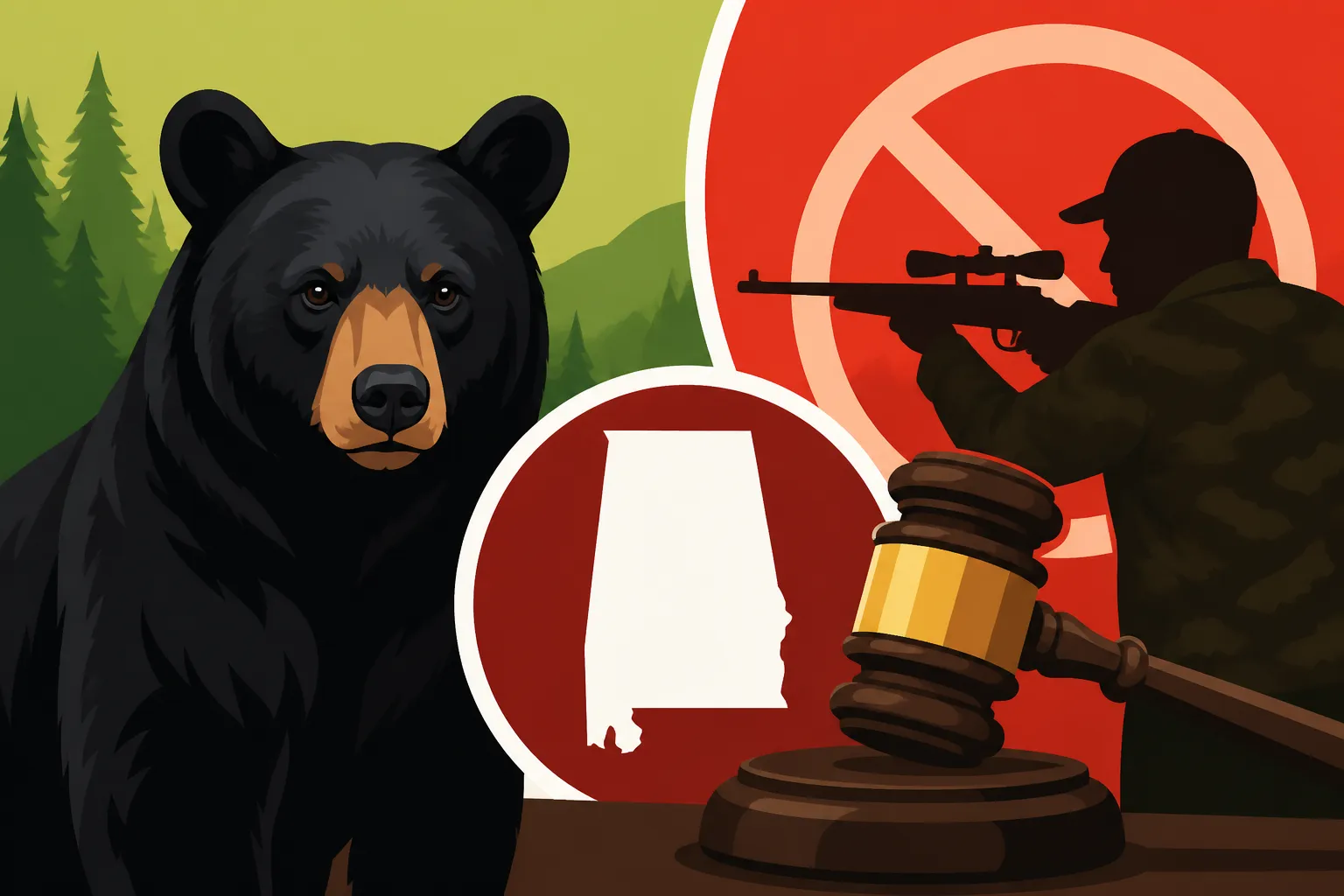
Let's not mince words: shooting a black bear in Alabama is a serious felony offense. It's not just a slap on the wrist or a minor fine. The legal consequences can be life-altering, impacting your freedom, your finances, and your ability to hunt for a very long time.
Fines and Imprisonment
The immediate aftermath of an illegal bear harvest can lead to significant criminal charges. Under Alabama law, specifically targeting protected species, the fines can be substantial. We're talking about thousands of dollars, easily reaching into the five-figure range, not including court costs and legal fees. Beyond the financial penalties, individuals convicted of illegally shooting a black bear face potential imprisonment. This isn't just a threat; it's a very real possibility. Sentences can range from months to several years in state prison, depending on the specifics of the case, any prior offenses, and the discretion of the court. Imagine losing your freedom, your job, and your standing in the community, all for a single, irreversible mistake.
The state views these acts not as simple errors but as direct threats to conservation efforts. When you understand the fragility of Alabama's black bear population, the severity of these penalties becomes clear. The legal system aims to deter future poaching and reinforce the critical importance of wildlife protection. It's a stark reminder that ignorance of the law is no excuse, and the consequences for violating these protections are designed to be severe enough to discourage anyone from considering such an act. For broader understanding, it's worth reviewing Alabama Wildlife Violation Penalties, as they cover a range of offenses and illustrate the state's commitment to protecting its natural resources.
Restitution and Civil Penalties
Beyond the criminal fines and potential jail time, there's another layer of financial penalty: restitution. Alabama law allows the state to seek civil restitution for the value of illegally taken wildlife. For a black bear, this amount is substantial. Wildlife agencies assign monetary values to game animals based on factors like rarity, conservation status, and reproductive potential. For a black bear, this can easily add another several thousand dollars to the financial burden. This restitution isn't just a fee; it's compensation to the state for the loss of a valuable public trust resource. It essentially seeks to recoup the "cost" of the animal to the state's natural heritage and ongoing conservation programs.
This civil penalty is separate from the criminal proceedings, meaning you could be facing simultaneous legal battles. It’s a double whammy that can quickly bankrupt an individual. The idea is to make the act so financially punitive that it removes any potential incentive for poaching. It also helps fund the very programs dedicated to protecting and restoring these species, turning a negative act into a source of support for future conservation.
Loss of Hunting Privileges
Perhaps one of the most devastating consequences for any true hunter is the loss of hunting privileges. A conviction for illegally taking a black bear almost invariably results in a lengthy suspension or permanent revocation of all hunting and fishing licenses in Alabama. This isn't just about losing your right to hunt in Alabama; many states are part of an interstate wildlife violator compact. This means that if your privileges are revoked in Alabama, they will likely be revoked in dozens of other states as well. Imagine being passionate about hunting, maybe even having planned trips out of state, only to find yourself completely barred from participating for years, or even for life.
This compact makes it incredibly difficult for a convicted poacher to simply move to another state and continue hunting. It’s a powerful deterrent, hitting hunters where it truly hurts their outdoor passion. The thought of never being able to buy another license or step into the woods with a firearm for deer or turkey, or even cast a line, is a heavy burden. It serves as a clear message: responsible hunting means respecting all wildlife and all regulations, especially when it comes to protected species. It highlights the importance of every hunter knowing the rules, regardless of whether they actively pursue a certain species.
Distinguishing Bears from Other Game
Mistaken identity, while rarely an acceptable excuse in court, is something hunters worry about. However, black bears are distinct enough from other game animals in Alabama that a genuine mistake is highly improbable for anyone familiar with the state's wildlife.
Visual Identification
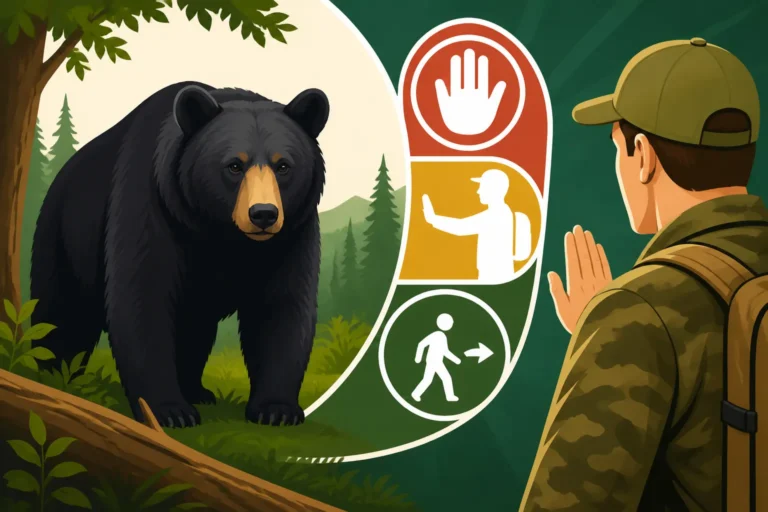
A black bear in Alabama is unmistakable. They are large, typically ranging from 150 to 350 pounds, with some individuals growing even larger. Their fur is almost universally black in the Southeast, though some may have a white patch on their chest. They walk on four legs, possess a short, stubby tail, and have a distinct muzzle and rounded ears. Crucially, their gait is a lumbering walk, and when they stand, they often stand tall on two legs, unlike any other animal you'll encounter in the Alabama woods.
Compare this to the white-tailed deer, the primary large game animal in Alabama. Deer are slender, reddish-brown to grayish-brown, with a prominent white tail (the "flag") and, for bucks, antlers. Their movement is agile and often characterized by bounds or quick sprints. There is simply no reasonable way to confuse a mature black bear with a deer, especially at a distance where positive identification is required before taking a shot. Even a very large feral hog, while stocky, has coarse hair, often tusks, and a different body profile and movement pattern. The key is always to make absolutely positive identification before putting your finger on the trigger. If there's any doubt, whatsoever, don't shoot. Using a good set of binoculars and taking your time are essential steps in this process. Apps like GoHunt can also provide valuable information on typical habitat and sightings, helping hunters be more aware if they're in a known bear area.
Tracks and Sign
Beyond visual confirmation, black bears leave distinct tracks and signs that are unlike any other animal in Alabama. Bear tracks are relatively easy to identify. Their front paw print often looks like a human hand with short fingers and prominent claws, while the hind paw print is longer and flatter, resembling a human foot. Both sets of prints show five toes, distinct from the cloven hooves of deer or the four distinct toes of feral hogs. A mature bear track can be significantly larger than a human hand.
Furthermore, bears leave other tell-tale signs. They often scratch trees, marking territory or reaching for insect nests. They will tear apart logs or stumps looking for grubs, leaving behind significant disturbances in the forest floor. You might find bear scat, which can vary greatly depending on their diet, but often contains berries, seeds, or insect remains, and is generally much larger than deer droppings. Their feeding habits might also involve turning over rocks or pulling down branches to access fruits and nuts. Learning to read these signs can not only alert you to the presence of a bear but also help you avoid misidentifying another animal's sign. Understanding these nuances makes it even harder to claim accidental shooting, emphasizing the importance of detailed scouting and awareness in your hunting area.
Reporting and What to Do After an Accidental Harvest
Even with the best intentions and the most careful identification, a truly accidental shooting can occur, though it is exceedingly rare with black bears in Alabama. What you do immediately after such an event is critical and can significantly impact the legal outcome.
Immediate Actions
If, by some incredibly unfortunate and truly unforeseen circumstance, you accidentally shoot a black bear, your immediate actions are paramount. First and foremost, do not move the animal. Do not attempt to conceal it, butcher it, or leave the scene. These actions will escalate an accidental incident into a full-blown poaching case with far more severe penalties. Your very next step should be to contact the Alabama Wildlife and Freshwater Fisheries Division (AWFF) or your local conservation enforcement officer immediately. Speed is crucial here. Use your cell phone and be prepared to provide your exact location, a detailed account of what happened, and your contact information.
Being proactive and transparent is key. Explain the situation clearly, even if you are shaken. The authorities will respond, investigate, and determine if the shooting was indeed accidental or if there was intent to violate the law. While "accident" is rarely a complete defense for taking a protected species, your cooperation and immediate reporting can show good faith and may be considered during the legal process. Any attempt to hide the evidence or flee will only compound your problems and remove any benefit of the doubt. This moment of truth requires honesty and courage, no matter how daunting it feels. You can also refer to our guide on Alabama Hunter Education Requirements, which stresses the importance of ethical behavior and knowing how to report violations.
Cooperating with Authorities
Once you've made that initial contact, your continued cooperation with law enforcement is essential. They will likely come to your location, ask you to show them the animal, and take a detailed statement. Be honest, calm, and provide all requested information. They will examine the scene, the animal, and perhaps even your equipment to piece together the events. This might include checking your license with an app like GoHunt, verifying your location, and looking for other signs of unlawful activity. Remember, their job is to investigate and enforce wildlife laws. They are not there to immediately judge you but to gather facts.
Avoid speculating or trying to create a story. Stick to the facts as you remember them. If you hired a guide, ensure they are also aware of the situation and cooperative. It's a stressful situation, but maintaining your composure and fully cooperating can make a significant difference in how your case is handled. While you have the right to legal counsel, cooperating with the initial investigation does not waive that right. Often, conservation officers are experienced and can discern genuine accidents from intentional acts. Your demeanor and willingness to help them understand the situation can be a powerful factor.
The Broader Impact of Poaching
An illegal bear harvest isn't just about an individual animal or the penalties faced by one person. It has far-reaching consequences that ripple through the ecosystem, conservation efforts, and the hunting community as a whole.
Ecological Impact
Every black bear in Alabama represents a vital thread in the delicate tapestry of its recovering population. When one is illegally killed, it's not just the loss of an individual; it's a blow to the genetic diversity, the reproductive potential, and the overall stability of the local bear population. Bears play a crucial role as apex omnivores in their habitats. They help control smaller mammal populations, disperse seeds through their scat, and scavenge carrion, contributing to the health and cleanliness of the ecosystem. The removal of even one breeding female, for instance, can have a disproportionate negative impact on future generations, setting back years of conservation work.
Furthermore, poaching can create fear and distrust among local communities towards wildlife agencies, making it harder to gather data, implement management plans, and foster a spirit of conservation. It also sends a message that wildlife laws can be flouted without consequence, undermining the very foundation of wildlife protection. The ripple effect extends far beyond the immediate moment, affecting everything from food chains to seed dispersal, demonstrating how interconnected every species is within its environment.
Community and Conservation Trust
The act of poaching erodes the trust that wildlife agencies and the broader public place in the hunting community. Most hunters are ethical, law-abiding individuals who deeply respect wildlife and follow regulations. Poaching, especially of a protected species like a black bear, casts a shadow on all hunters, fueling negative stereotypes and providing ammunition for anti-hunting sentiments. It makes it harder for wildlife agencies to gain public support for hunting initiatives and conservation funding, as the perception might be that hunting is poorly regulated or rife with illegal activity.
Conservation is a collective effort, relying on the cooperation of hunters, landowners, and the general public. When a significant wildlife crime occurs, it damages the collaborative spirit, making people less likely to report suspicious activities or participate in conservation programs. The trust built over decades of responsible hunting and wildlife management can be undone by a few irresponsible acts. This makes every hunter an ambassador for the sport, reinforcing the need for everyone to uphold the highest ethical and legal standards in the field. If you ever witness suspicious activity, knowing how to act is crucial; our guide on Reporting a Poacher in Alabama can provide valuable direction.
Preventative Measures and Ethical Hunting
Avoiding the severe penalties for shooting an Alabama black bear boils down to two main principles: meticulous preparation and unwavering ethical conduct in the field.
Education and Awareness
The first and most important step to prevent an illegal bear harvest is to be thoroughly educated about Alabama's wildlife regulations. This means not just reading the hunting digest for deer or turkey, but truly understanding the status of all species you might encounter. Every hunter has a responsibility to know what they are legally allowed to hunt and, just as crucially, what they are not allowed to hunt. This includes identifying protected species like black bears, certain migratory birds, or even non-game animals.
Attend hunter education courses, even if you're an experienced hunter. Regulations can change, and a refresher course can highlight new rules or remind you of crucial identification tips. Utilize resources from the Alabama Wildlife and Freshwater Fisheries Division website, which provides up-to-date information on species, seasons, and zones. Knowledge is your most powerful tool in preventing mistakes. Being aware of the local wildlife and their behaviors, especially if you're hunting in a less familiar area, is non-negotiable. Always double-check regulations before heading into the woods, perhaps even bookmarking critical pages on your phone for quick reference, and don't rely solely on word-of-mouth information.
Habitat Awareness and Scouting
Understanding the habitat preferences of black bears in Alabama can also serve as a preventative measure. While bears are occasionally seen outside their primary ranges, they generally favor dense, remote areas, often with abundant water sources and a mix of hardwoods for mast crops. If you're hunting in a known bear habitat, such as parts of the Mobile River Basin or the Little River Canyon area, your vigilance should be even higher. Scouting effectively means not just looking for deer sign, but also being aware of any bear activity.
Using tools like mapping applications, such as GoHunt or the Outdoor Alabama app, can help you identify public lands like Wildlife Management Areas (WMAs) or National Forests, and overlay information about known bear sightings or conservation areas. Being familiar with the topography, vegetation, and food sources in your hunting area helps you anticipate what wildlife you might encounter. For instance, knowing where large acorn-producing oaks are can indicate potential bear foraging areas. Combine this with keen observation skills while scouting for deer or turkey. Look for tracks, scat, and other signs we discussed earlier. The more informed you are about the natural environment and its inhabitants, the less likely you are to make a costly error. Remember, responsible hunting begins long before you ever step into the stand or blind; it starts with thoughtful preparation and respect for all living things in the wild. If you're heading to areas like Talladega National Forest Hunting or William B. Bankhead National Forest Hunting, these are places where, while not primary bear habitat, encounters are possible, and vigilance is always advised.
Disclaimer
The information provided in this guide is for informational purposes only and does not constitute legal advice. Hunting regulations and penalties can change, and interpretations of laws can vary. Always consult the official Alabama Department of Conservation and Natural Resources (ADCNR) regulations and, if necessary, seek legal counsel for specific legal questions. Compliance with all state and federal wildlife laws is the responsibility of each individual hunter.