Reading a Ridge for North Alabama Deer
Those sprawling, broken ridges in North Alabama can feel like a labyrinth, can't they? You scout endlessly, find a promising rub line or a well-worn trail, but connecting those scattered pieces of evidence into a clear picture of deer movement and consistently pinpointing where that trophy buck will actually appear is a challenge that often leaves even seasoned hunters scratching their heads. This guide is all about helping you systematically unravel the mysteries of these ridgelines, understanding the subtle nuances of how deer navigate them, and ultimately, putting you in the optimal position to tag that elusive whitetail.
Decoding North Alabama's Ridge Country for Whitetails
North Alabama's landscape is a patchwork of the rugged Appalachian foothills and the rolling Piedmont region, characterized by its diverse timber and, you guessed it, a whole lot of ridges. These aren't your flatland deer; they are creatures of contour, using elevation changes to their advantage for cover, travel, and thermoregulation. Understanding this unique environment is the first step to truly "reading" a ridge.
Understanding the Topography and Deer Adaptation
The ridges in areas like the Talladega National Forest or sections of the William B. Bankhead National Forest aren't uniform. You'll encounter everything from steep, rocky faces to more gradual slopes that transition into creek bottoms or wide, flat ridgetops. Deer, being highly adaptable, utilize these variations in specific ways. During the early season, when temperatures are still high, deer might favor the cooler, shaded north-facing slopes or seek out dense cover along creek drainages that cut through the ridges. As the season progresses and cold fronts become more frequent, those sunny south-facing slopes, which absorb more heat, become prime bedding areas, especially after a frosty night.
The type of timber also plays a massive role. In areas dominated by mature hardwoods, acorns become a critical late-season food source, and deer will often move up and down ridges from bedding areas to feed. Conversely, in pine plantations or areas with thick clear-cuts, the dense cover itself becomes the draw, and deer might move shorter distances within these areas, only venturing out to adjacent open timber to feed. The key is recognizing that a ridge isn't just a physical barrier; it's a dynamic habitat that shifts its utility to deer with changing conditions and seasons.
Deer Behavior and Movement Patterns on Ridges
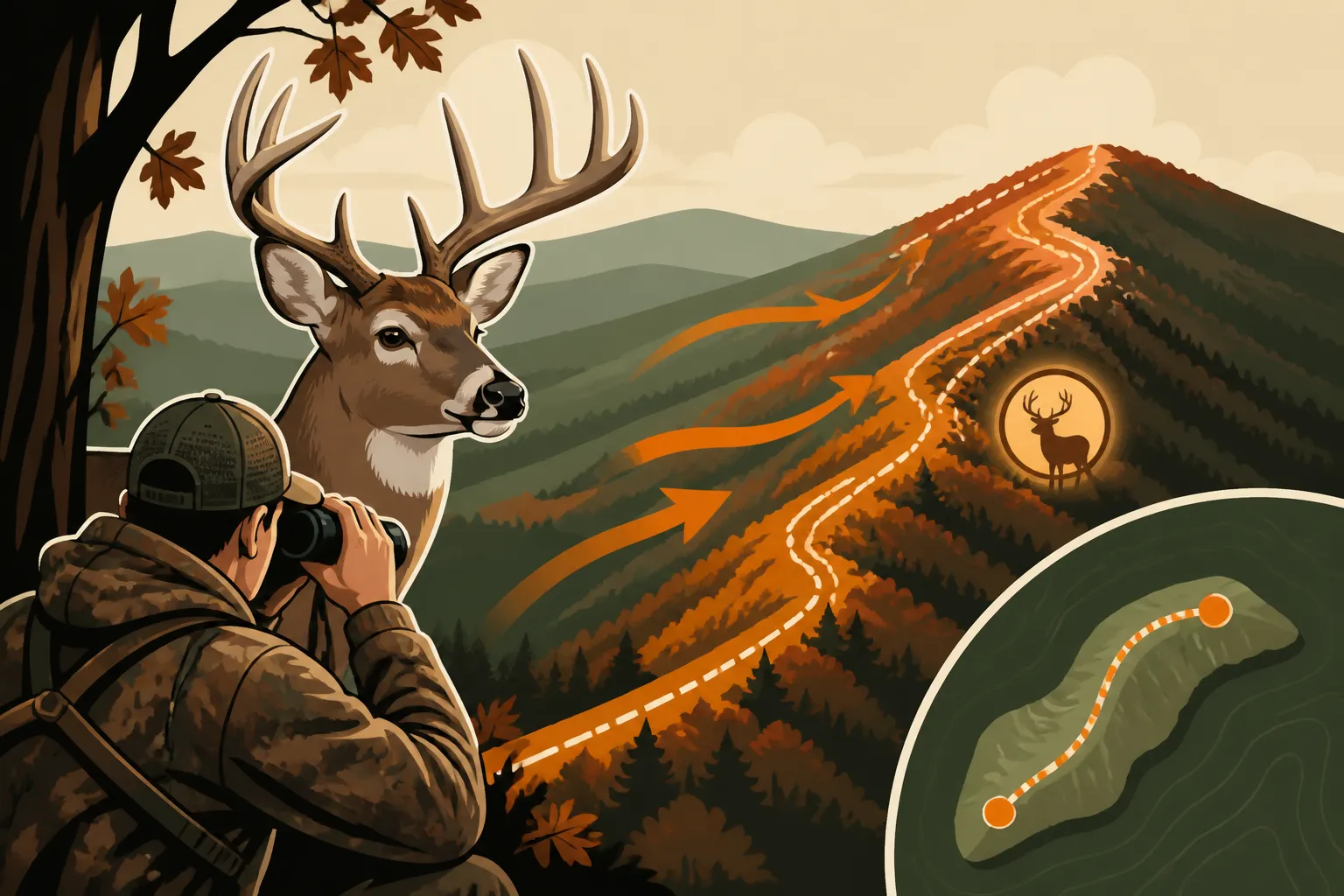
Deer are masters of efficiency, and ridgelines often offer the path of least resistance for travel, especially between different elevation points. They’ll use the top of a ridge as a primary travel corridor, particularly if it's broad and offers good visibility. These "ridge runners" are often bucks cruising during the rut, scent checking for does. However, don't overlook trails that run just off the top, slightly down the leeward (downwind) side. These "bench trails" offer deer better cover and a slight advantage for smelling approaching danger from below.
Furthermore, deer will often utilize the "spine" of a ridge to move from one drainage or watershed to another. Imagine a highway connecting two towns; for deer, that's often the main ridge. Off-ramps are saddles, finger ridges, or subtle benches that lead down into thicker cover or food sources. Bucks will often bed on points or benches that offer them a commanding view down into a valley while the prevailing wind carries scent up from behind, giving them a multi-directional alarm system. During the peak of Hunting the Rut in the Northern Zones, these travel patterns become even more pronounced, as bucks become less cautious and more focused on finding receptive does.
Key Features to Look For When Reading a Ridgeline
Successfully hunting a ridge isn't just about finding a deer trail; it's about understanding why that trail is there and where it's going. You need to become a detective, piecing together the subtle clues the deer leave behind.
Locating Funnels and Bottlenecks
On a ridge, funnels and bottlenecks are your golden tickets. These are natural constrictions in the terrain that force deer movement into a predictable pathway.
- Saddles: These are depressions in a ridge that connect two higher points. They are essentially low-spots that deer use to cross from one side of a ridge to the other with minimal elevation change. Think of them as deer highways, especially when moving between different drainages or bedding areas on opposite sides of the ridge. A saddle can concentrate deer movement significantly, making it an excellent ambush point. I've found that focusing on Hunting a Ridge-Top Saddle for Rutting Bucks can be incredibly effective when scouting new ground.
- Pinch Points: These can be created by a thick stand of pines that narrows a ridgetop trail, a steep drop-off on one side of a finger ridge, or even a rock outcrop. Anything that funnels deer from a broader area into a tighter space is a pinch point. These areas reduce the deer's options, making their travel more predictable. When using a mapping tool like GoHunt, look for areas where contour lines squeeze together or where changes in vegetation type create natural bottlenecks.
- Intersection Points: Where two or more trails converge, especially at a saddle or a prominent point, you’ve found an intersection point. These are high-traffic areas where deer from multiple directions might meet or pass through. Look for heavy sign here: multiple worn trails, fresh rubs, and scrapes, especially during the pre-rut and rut.
Identifying Primary and Secondary Food Sources
Deer use ridges not just for travel, but for sustenance. Understanding the available food sources and how they relate to the ridge's contours is crucial.
- Acorn Flats: On broad ridgetops or gentle slopes, you'll often find mature oak stands. White oaks, red oaks, and pin oaks drop their acorns at different times, providing a prolonged food source. Deer will often bed on a bench nearby and feed their way up or down to these acorn flats. Identifying these specific oak species and when they're dropping can make all the difference in where you set up. Even after a poor acorn year, deer will seek out other browse options. Hunting After a Poor Acorn Year requires different scouting tactics, often focusing on greenbriar, honeysuckle, or other available forage along the ridge.
- Browse and Forbs: Even without a heavy acorn crop, ridges provide abundant browse. Young saplings, various forbs, and persistent green vegetation can be a consistent food source. Look for areas where deer have been browsing heavily, indicated by nipped twigs and trampled vegetation. These areas might not be as obvious as a clear-cut, but they can be vital, especially in areas with limited agricultural fields.
- Edges: Any edge habitat, such as where a clear-cut meets mature timber, or where a logging road cuts along a ridge, can be a magnet for deer. These edges offer both cover and food. The young growth in a clear-cut provides abundant browse, while the mature timber offers bedding and security. Deer will often travel these edges, especially in low light. Hunting a Clear-Cut Regrowth Edge can be a highly productive strategy, as deer often feel secure in the young pines but can quickly duck back into the thicker stuff.
Recognizing Bedding Areas and Escape Routes
Deer prioritize security, and ridges offer excellent vantage points and escape options.
- Ridge Points and Benches: Deer, especially mature bucks, love to bed on ridge points or benches that allow them to see downhill and downwind. This setup gives them an early warning system. They can spot predators approaching from below and smell anything coming from behind. Look for areas of dense cover on these points – thick briars, downed timber, or dense cedar thickets. Where Bankhead Forest Bucks Bed often involves these types of secluded points.
- Thick Cover Pockets: Don't just look for high ground. Thick, impenetrable cover, often found in regenerating clear-cuts or dense pine thickets along a ridge, can serve as bedding areas. These areas provide visual security and make it difficult for predators (or hunters) to move silently. Deer might be just feet inside these thickets, moving very little during daylight hours.
- Escape Corridors: Every bedding area has an escape route. On a ridge, this might be a steep drop-off into a creek bottom, a hidden trail through a dense laurel thicket, or a path that quickly leads to another ridge. When you jump a deer, pay attention to the direction it takes. This can reveal its preferred escape corridor, offering clues for future stand placement or still-hunting routes. Understanding Wind and Thermals on a Piedmont Ridge is absolutely crucial here, as deer will almost always favor an escape route that takes advantage of the prevailing wind to carry their scent away from danger or allows them to circle back downwind of a perceived threat.
| Ridge Feature | Primary Deer Usage | Key Scouting Sign | Ideal Hunting Conditions |
|---|---|---|---|
| Saddle | Travel corridor, crossing point | Heavy trails, rubs, scrapes | Any wind, especially for cruising bucks |
| Bench | Secondary travel, bedding, feeding | Worn trails, browse, beds | Light wind, during feeding times |
| Ridge Point | Bedding, vantage point | Beds, rubs (perimeter) | Strong wind (deer face wind), still-hunting |
| Steep Side | Escape route, minimal travel | Intermittent trails, bedding in thickets | Extreme pressure, when deer seek refuge |
| Gentle Slope | Feeding, travel, bedding (cover) | Browsing, scattered trails, beds | Feeding times, early/late season |
| Clear-cut Edge | Feeding, security, travel | Heavy browse, trails, beds along edge | Feeding times, transition periods |
Strategic Scouting and Hunting Strategies for Ridgelines
You've learned to read the ridge, now it's time to apply that knowledge on the ground. This involves careful scouting, smart stand placement, and adapting your tactics throughout the season.
Pre-Season Scouting and Using Mapping Tools
Your scouting begins long before you set foot in the woods. Aerial maps are invaluable for identifying ridge systems, saddles, benches, and potential bedding areas. Tools like GoHunt or other mapping applications allow you to mark waypoints, measure distances, and analyze terrain features from the comfort of your home. You can identify historical timber cuts, locate mature oak stands, and plan your approach routes before ever disturbing the forest floor.
When you do hit the woods for Scouting Alabama Public Land Before Season, focus on confirming what you saw on the map. Walk the ridge tops, especially around saddles and points. Look for old rub lines, which indicate recurring buck travel, and check for consistent bedding sign. Don't be afraid to venture down the sides, checking benches and potential escape routes. Pay close attention to subtle terrain changes – a slight rise, a change in vegetation, or a rock outcrop can all funnel deer. Remember that Reading Aerial Photos for Piedmont Deer is just the first step; ground-truthing is essential to understand the real-world conditions.
Timing Your Hunts and Entry/Exit Routes
Hunting a ridge successfully heavily depends on your timing and, critically, your approach and departure.
- Wind Direction: This is non-negotiable. Always hunt with the wind in your favor, positioning yourself downwind of where you expect deer to approach. On a ridge, wind can be tricky, often swirling in saddles or changing directions with thermals. Use a wind checker constantly.
- Thermals: As the sun rises, warm air flows up the ridge. In the evening, as the air cools, it flows down. Deer use these thermals to their advantage, often bedding high and dropping down to feed in the evening, and vice versa in the morning. Plan your stand placement and entry/exit routes to avoid bumping deer based on these predictable thermal shifts. If you're going to set up a Treestand Setups in Talladega National Forest, understanding thermals is paramount.
- Entry/Exit: The biggest mistake hunters make is blowing out deer on their way in or out. Plan your route to be as quiet and scent-free as possible. Use creek bottoms, thick cover, or reverse slopes to hide your approach. If you're walking along the top of a ridge, stay just off the side, especially if there's a strong crosswind that will carry your scent away from the ridgetop. Hunting Pressure on Alabama Public Land means deer are highly sensitive to intrusion, so a stealthy entry can make or break your hunt.
Adapting to Pressure and Seasonal Shifts
Deer hunting, especially on ridges, is rarely static. You have to be willing to adapt to changing conditions and deer behavior.
- Hunting Pressure: If you're hunting public land or a heavily hunted private tract, deer will quickly adjust their patterns to avoid hunters. They might become more nocturnal, or they might seek out the densest, steepest, most overlooked pockets of cover on a ridge. When this happens, consider Still-Hunting Bankhead Forest Ridges, moving slowly and deliberately, taking advantage of terrain features to stay hidden.
- Food Availability: As the season progresses, food sources change. Early season acorns might be gone by late fall, forcing deer to shift to secondary browse or green fields if available. Always be scouting for fresh sign around the current dominant food source along the ridge. For example, Late-Season Food Sources for Alabama Whitetails might mean finding isolated patches of clover or winter wheat that are tucked away on a lower bench.
- Weather Changes: A cold front can completely change deer movement. After a bitter cold snap, deer might move more in daylight to feed and warm up. A warm spell, on the other hand, might make them more nocturnal. Hunting Deer After a Cold Front often means targeting south-facing slopes in the morning or food sources in the afternoon. Pay attention to how deer react to different weather patterns and adjust your strategy accordingly.
Ultimately, reading a ridge for North Alabama deer is an ongoing process of learning, observation, and adaptation. With patience and persistence, you'll start to see not just trees and dirt, but a detailed map of how deer live, travel, and thrive in this challenging yet rewarding terrain.
Disclaimer
Hunting is an inherently dangerous activity. Always prioritize safety, understand and follow all Alabama hunting regulations, and obtain proper landowner permission or permits before venturing afield. This guide is for informational purposes only and does not substitute for hands-on experience or professional guidance.