Rabbit Hunting Thick Alabama Brush
Trying to hunt rabbits in Alabama can sometimes feel like you're playing hide-and-seek with a pro, especially when those cottontails bury themselves deep in thick, nasty brush. It's frustrating to know they're there, maybe even hear them rustling, but never get a clear shot or even a glimpse. This guide is all about tackling those dense thickets, fencerows, and overgrown areas where rabbits thrive, giving you the strategies and insights to fill your game vest even when the cover is seemingly impenetrable.
Understanding Alabama's Rabbit Habitat and Behavior in Thick Cover
Rabbits aren't just looking for a cozy spot; they're looking for survival. In Alabama's diverse landscapes, from the Black Belt to the northern foothills, thick cover offers everything a cottontail needs to thrive. Understanding why they choose these spots and what those spots look like is your first step to a successful hunt.
Why Rabbits Seek Out Dense Brush
Think about it from a rabbit's perspective: everything out there wants to eat you. Hawks, owls, coyotes, bobcats, foxes, even feral hogs – the list goes on. Dense brush, whether it's a thorny briar thicket, a sprawling honeysuckle tangle, or a field of young, regenerating pines, provides an incredible sanctuary. It's their fortress, a place where they can vanish in an instant, making it incredibly difficult for predators (and hunters) to get to them. Beyond protection, these thick areas often provide a consistent food source. Rabbits browse on tender shoots, leaves, and bark, and many of the plants that form dense cover also offer tasty morsels. Consider a dense creek bottom, for example, a classic rabbit haven that offers both cover and water.
Furthermore, thick cover provides essential thermal regulation. In the scorching Alabama summer, those dense tangles offer shade and cooler ground to escape the heat. Conversely, during a cold snap in winter, the insulating qualities of a briar patch or a dense stand of cedars can be a lifesaver, protecting them from chilling winds and freezing temperatures. It's a year-round shelter that perfectly suits their needs. If you're out Rabbit Hunting Thick Alabama Brush in any season, understanding this core need for security and comfort will guide your scouting efforts.
Key Indicators of Rabbit Activity in Heavy Cover
Even the thickest brush can't completely hide the signs of a busy rabbit population. Learning to read these subtle clues is crucial. The most obvious, yet often overlooked, sign is droppings. Rabbits leave small, round, pellet-like droppings, often concentrated in areas where they feed or rest. The fresher the droppings, the more recent the activity. Look for these especially under dense cover or along the edges of trails. Another tell-tale sign is clipped vegetation. Rabbits have sharp incisors that leave a clean, angled cut on stems, unlike the ragged tear of a deer or other browsers. Scan low-lying plants for these precise cuts, indicating recent feeding.
As rabbits move through their dense homes, they create distinct runways. These are narrow, often barely visible paths through the undergrowth, worn smooth by countless tiny paws. You might see subtle depressions in the leaves or a slight parting of the brush that forms a tunnel. After a rain, these runways might even hold fresh tracks, giving you an undeniable indicator of activity. Don't be afraid to get on your hands and knees and really examine the base of thickets. Sometimes, the most obvious signs are found where you least expect them, deeper inside the tangled mess. Using a mapping tool like the Outdoor Alabama App can help you identify areas with potential thick cover to investigate further.
Essential Gear and Tactics for Pushing Thick Alabama Brush
Hunting rabbits in dense cover isn't like sitting in a deer stand. It's active, sometimes grueling work that demands the right gear and a solid strategy. You'll be crashing through briars, scrambling over downed logs, and taking quick, instinctive shots. Be prepared for a workout!
Protecting Yourself and Staying Mobile
Your clothing is your first line of defense against the relentless Alabama briars and thorns. Forget flimsy jeans or thin hunting pants; you need heavy-duty briar pants or chaps made from tough materials like canvas, Cordura, or even specialized briar-proof weaves. These aren't just about comfort; they prevent painful scratches and punctures that can quickly end a hunt. Eye protection is non-negotiable – a good pair of shooting glasses will save your eyes from snapping branches and whipping thorns. Sturdy, waterproof boots with good ankle support are also critical for navigating uneven, often wet, terrain.
For firearms, a shotgun is almost universally preferred for rabbits in thick cover. The spread of shot allows for quick, close-range shots at fast-moving targets. A 12-gauge or 20-gauge with #6 or #7.5 shot is typical, providing enough pellets for a clean kill without over-penetrating in dense brush. Many hunters prefer open chokes (like improved cylinder or modified) to maximize pattern spread at short distances. If you're hunting with a partner, ensure you're both wearing How Much Blaze Orange Alabama Requires to maintain visibility. A good game vest with a large, blood-proof pouch on the back is essential for carrying your rabbits, and extra shell loops on the front keep your ammunition handy for those quick reloads.
Effective Flushing Strategies Without Dogs
If you don't have the luxury of a beagle, you'll need to become the "dog" yourself. Solo hunting in thick brush requires a methodical approach. Start by working in a systematic pattern, perhaps a zig-zag through the cover, or a slow grid pattern. Pause frequently, often for 10-15 seconds, and listen. Rabbits often hold tight, but a sudden pause can make them nervous enough to bolt, offering you a shot. Kick every brush pile, stomp on every dense clump of weeds, and be ready when something bursts out. Patience and a willingness to work slowly are key.
Hunting with a partner or two can be incredibly effective. One common strategy is a "staggered line" where hunters walk a few yards apart, one slightly ahead of the other, pushing through the cover. This helps cover more ground and keeps rabbits from slipping between hunters. Another excellent tactic is to "drive" a piece of cover. Identify a thicket or fencerow and have one or two hunters walk through it, making noise and kicking brush, while another hunter (or hunters) posts up on a likely escape route, such as a field edge, a logging road, or a narrow opening. This can be especially productive when working thick Alabama fencerows. Communication is absolutely vital in group hunts to maintain safety and maximize opportunities.
The Role of Dogs in Thick Cover
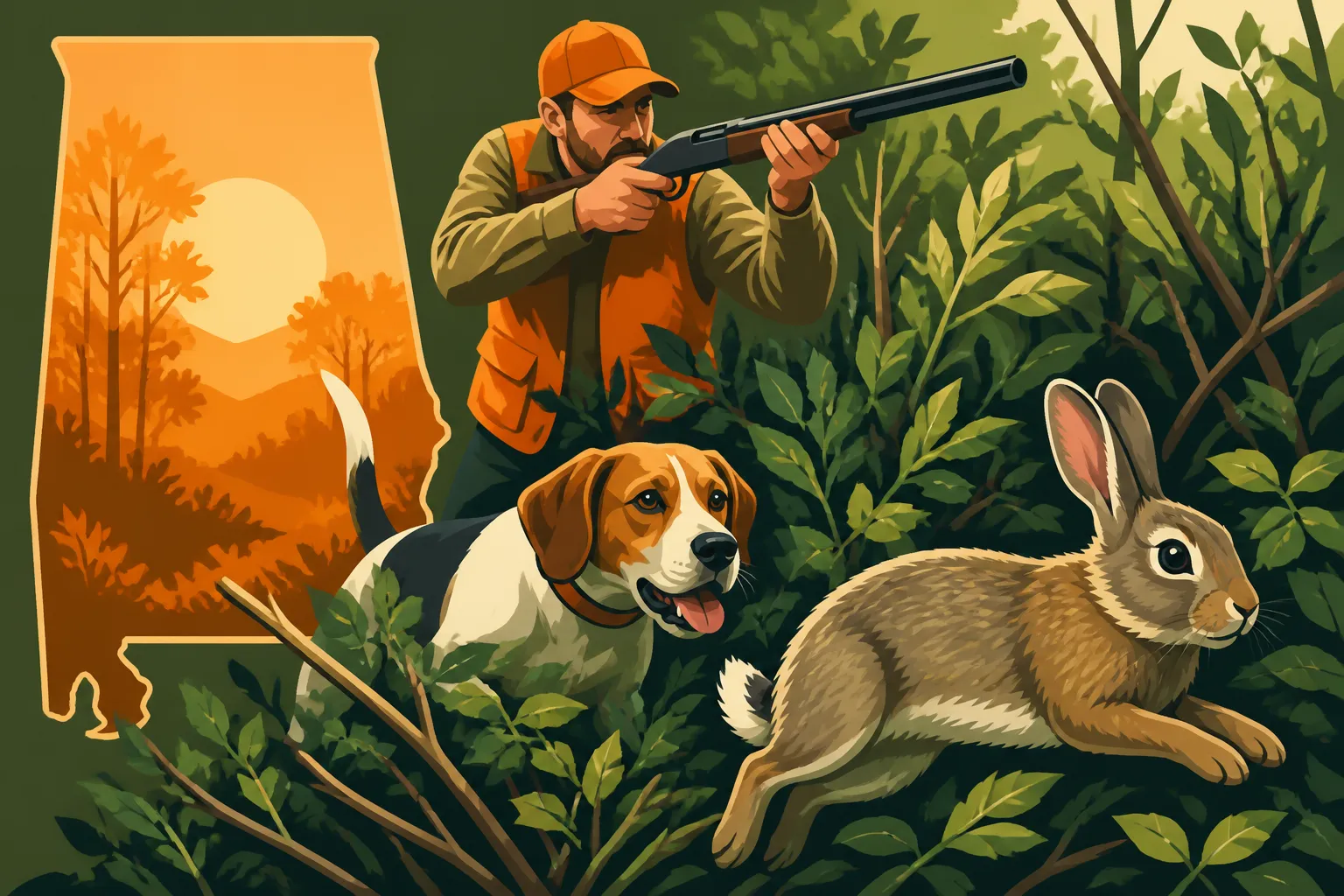
Let's be honest, nothing beats a well-trained beagle for rabbit hunting in dense Alabama brush. Beagles are born for this. Their keen noses allow them to follow a rabbit's scent trail through the thickest tangles, and their relentless baying keeps the rabbit moving in a circle, often bringing it right back past the hunters. When a beagle strikes a track and starts singing, it's music to a rabbit hunter's ears. The dogs do the heavy lifting of flushing and pushing, allowing hunters to position themselves on anticipated escape routes or in openings.
A good pack of Running Beagles on Alabama Cottontails can transform a frustrating hunt into a highly productive one. The key is understanding how rabbits behave when pursued by dogs. They rarely run in a straight line for long; instead, they circle back to their familiar territory, using their knowledge of the cover to their advantage. Hunters position themselves along these likely circles, waiting for the rabbit to come into view. It's less about spotting the rabbit yourself in the dense brush and more about trusting your dogs to push it to you. Different dogs will work thick cover differently; some will dive in headfirst, while others prefer to work the edges. Learning your dog's style, or the style of your hunting partner's dogs, is part of the fun and strategy.
Finding Productive Thick Brush Spots Across Alabama
Alabama is blessed with an abundance of diverse landscapes, many of which offer fantastic rabbit habitat. From the rolling hills of the Piedmont to the rich soils of the Black Belt, knowing where to focus your scouting efforts is paramount.
Identifying Potential Rabbit Havens on Public and Private Land
On public land, focus on areas that have undergone recent timber management. Clear-cuts, especially those that are a few years old and have dense regrowth of briars, young pines, and hardwoods, are rabbit magnets. Look for the edges of these areas where they transition into mature timber, as rabbits will often feed in the young growth and retreat to the taller trees for security. Old logging roads or fire breaks that are starting to grow up can also be incredibly productive. Wildlife Management Areas (WMAs) often conduct prescribed burns and timber operations that create ideal rabbit habitat. Scouting with tools like GoHunt, or simply using satellite imagery from the Outdoor Alabama App, can help you pinpoint these areas before you ever set foot on the ground. Look for patches of different vegetation types, areas where fields meet woods, and especially creek or river bottoms, which always seem to hold dense cover.
Private land offers even more opportunities, often with less hunting pressure. Farmers are generally not fans of rabbits, as they can cause crop damage, and many are willing to grant permission, especially for small game. Focus on abandoned farmsteads, which inevitably become overgrown with briars, honeysuckle, and discarded machinery, creating perfect rabbit dens. Fence rows, especially those neglected for years and choked with multiflora rose and various vines, are superhighways for cottontails. Overgrown pastures, particularly those transitioning back to forest, are goldmines. Field edges, especially where crops meet a dense wood line or thicket, provide both food and cover. If you're having trouble finding spots, consider knocking on doors in rural areas; a friendly approach and an offer to share some of your harvest can go a long way in securing permission.
Seasonal Considerations for Brush Hunting
The best time to hunt rabbits in thick Alabama brush really depends on the season, as rabbit behavior and habitat use change with the weather and vegetation. In the fall, after crops are harvested and leaves start to drop, rabbits become more visible, but still rely heavily on dense cover for safety. Focus on those recently cut corn or soybean fields that border thickets. As winter approaches and temperatures drop, rabbits will concentrate in the thickest, most protective cover available. This is often the prime time for running dogs, as the lack of dense leaf cover makes it easier to spot rabbits once they're flushed from their hiding spots.
Winter is arguably the best time for hunting rabbits in thick brush. With less foliage on trees and bushes, visibility improves significantly, and rabbits are forced into the densest available cover for warmth and protection from predators. Look for areas with evergreen components like cedars, dense privet hedges, or thick stands of young pines. These spots become critical thermal cover during cold snaps. Remember, when you're thinking about Hunting After a Cold Front for deer, those rabbits are also seeking shelter, often in the very same dense areas. The Alabama Squirrel and Rabbit Season Rules allow for a generous season, typically from early fall through early spring, giving you plenty of opportunities to target these thick-cover havens. Spring and summer hunting for rabbits is generally closed, allowing for breeding and population recovery, but even during open seasons, the dense summer foliage can make hunting incredibly challenging.
Safety and Ethical Considerations in Dense Rabbit Cover
Hunting in thick cover presents unique challenges, especially when it comes to safety. The close quarters, reduced visibility, and often uneven terrain demand extra vigilance and a commitment to ethical hunting practices.
Navigating Tricky Terrain Safely
When you're pushing through a briar-choked creek bottom or a dense, tangled clear-cut, footing can be incredibly treacherous. Hidden stumps, slick mud, unseen holes, and fallen logs are all potential hazards. Always watch your step, and consider using a sturdy walking stick or trekking poles for added stability. Communicate constantly with your hunting partners, especially if you're in a line or driving cover. Know where everyone is at all times. This means loud, clear calls like "Hunter left!" or "I'm pushing ahead!" Having a small, lightweight first-aid kit in your pack is also a wise precaution for minor scrapes and cuts that are almost inevitable in this type of hunting.
Firearm safety is paramount. Keep your gun's muzzle pointed in a safe direction at all times, especially when climbing over obstacles or pushing through heavy brush. It's easy for a barrel to get snagged or pointed inadvertently. Always know your target and what's beyond it. In thick cover, this can be extremely difficult. Only take shots when you have a clear view of the rabbit and a safe background. When hunting with dogs, be extra careful to identify the rabbit clearly before shooting, ensuring you don't accidentally hit a dog. Remember the importance of bright colors, and check the regulations on Alabama blaze orange requirements to ensure you and your party are visible.
Responsible Harvest and Game Handling
Ethical hunting dictates that we strive for quick, clean kills to minimize suffering. In thick cover, shots often happen fast and at close range. Practice snap shooting and be confident in your ability to make a lethal shot. If you wound a rabbit, it's your responsibility to pursue it diligently and recover it, even if it means crawling through more briars. This is where good dogs really shine, as they can track wounded game in places a human might miss.
After a successful harvest, proper field dressing is crucial, especially in Alabama's often warm weather. Get the entrails out quickly to allow the carcass to cool, which helps preserve the meat. Carrying a small pair of game shears or a sharp knife specifically for field dressing is a good idea. While rare, be aware of tularemia (rabbit fever), a bacterial disease that can affect rabbits and be transmitted to humans. If a rabbit appears sluggish, sick, or has noticeable lesions, it's best to avoid handling or harvesting it. Always wear gloves when field dressing and wash your hands thoroughly afterward. Finally, be mindful of the Alabama Small Game Season Rules regarding daily bag limits and possession limits. Knowing your limits helps ensure sustainable populations for future hunting opportunities, maintaining the healthy Alabama Cottontail Population Trend.
Disclaimer
Please note: Hunting regulations and seasons can change. Always consult the latest Alabama Department of Conservation and Natural Resources (ADCNR) regulations before planning any hunt. This guide is for informational purposes only and does not supersede state law.