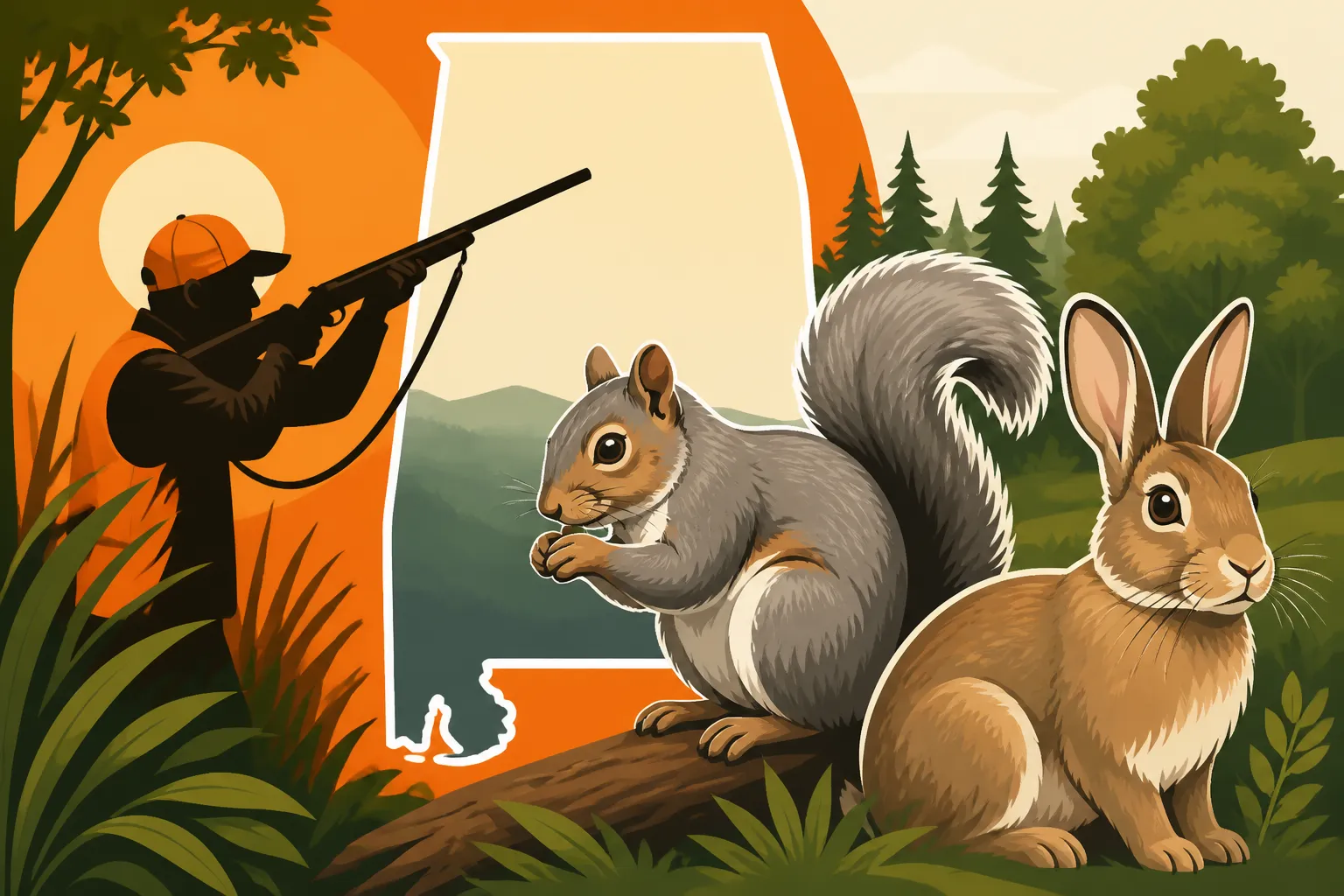
Alabama Squirrel and Rabbit Season Rules
It can feel like navigating a legal jungle just to figure out when you can chase squirrels or rabbits in Alabama, let alone what rules you need to follow once you’re out there. Many of us just want to enjoy a simple day in the woods, putting some tasty small game in the freezer, but the regulations can seem a bit opaque. This comprehensive guide is here to clear the fog, breaking down everything you need to know about Alabama’s squirrel and rabbit season rules so you can hunt with confidence and stay on the right side of the law.
Understanding Alabama's Small Game Seasons: An Overview
Small game hunting holds a special place in the hearts of many Alabamians. It’s often how we got our start in the outdoors, learning the ropes from a parent or grandparent, or just by exploring the woods on our own. There's a certain nostalgia and a deep connection to tradition when you're out chasing squirrels and rabbits, a simpler form of hunting that still provides immense satisfaction and delicious table fare.
Why Small Game Hunting Matters in Alabama
Beyond the pure enjoyment, small game hunting is a vital part of Alabama's hunting heritage and ecosystem management. It introduces new hunters, especially youth, to the ethics and responsibilities of the sport without the sometimes overwhelming intensity of deer or turkey hunting. Think about the joy on a young hunter's face after bagging their first squirrel; it's an experience that truly ignites a lifelong passion for the outdoors. Furthermore, it provides an accessible and affordable hunting opportunity across much of the state, regardless of whether you have access to a sprawling private lease or rely on public lands. It's a fantastic way to extend your time afield outside of the primary big game seasons, keeping your skills sharp and your freezer stocked.
General Season Dates and Zones for Squirrels and Rabbits
The good news for small game enthusiasts in Alabama is that both squirrel and rabbit seasons are quite generous, typically running for several months. While deer and turkey seasons are meticulously split into different zones with varying dates, squirrels and rabbits generally follow a statewide calendar.
For squirrels, the season typically opens in early October and runs all the way through February, giving hunters a long window to pursue these agile tree-dwellers. There's usually a short period in October for dog hunting only before firearms are allowed, but check the current year's regulations on the Outdoor Alabama website, or use a tool like GoHunt, to confirm. The extended season means you can hunt squirrels in the crisp autumn leaves, through the cold bare branches of winter, and even into the very early signs of spring.
Rabbits also enjoy a lengthy season, often kicking off in early November and extending through the beginning of March. This wide window allows hunters to pursue cottontails and swamp rabbits through different habitat conditions, from thick fall cover to more open winter landscapes. Again, always double-check the exact dates for the current hunting year as they can shift slightly. These long seasons are a blessing, offering ample opportunities to get out there. For more specific details, you can always refer to the official Alabama Small Game Season Rules.
Key Regulatory Agencies to Know
In Alabama, the primary authority overseeing all hunting regulations, including those for small game like squirrels and rabbits, is the Alabama Department of Conservation and Natural Resources (ADCNR), specifically its Wildlife and Freshwater Fisheries (WFF) Division. These are the folks who set the season dates, bag limits, and legal methods based on scientific data, population assessments, and public input.
It's crucial to understand that their website, Outdoor Alabama, is your go-to source for the most up-to-date and official regulations. While blogs like this one aim to be helpful, regulations can change, and you should always verify the information directly with the ADCNR. Ignoring these rules, even unintentionally, can lead to fines, confiscation of game, and even loss of hunting privileges. So, before you head afield, make it a habit to check the Outdoor Alabama website or grab a copy of the current regulations digest from your local license vendor. They really do work hard to manage these resources for all of us.
Detailed Look at Alabama's Squirrel Hunting Rules
Squirrel hunting is a cherished tradition for many, and Alabama offers fantastic opportunities to pursue both gray and fox squirrels. Knowing the specific rules ensures a smooth and legal hunt.
Daily Bag Limits and Possession Limits for Squirrels
One of the most important regulations to commit to memory for squirrel hunting is the daily bag limit. In Alabama, the daily bag limit for squirrels (which includes both gray and fox squirrels combined) is eight animals per hunter, per day. This means that once you've harvested eight squirrels, you must cease hunting for squirrels for the remainder of that calendar day.
Now, let's talk about the possession limit. Generally, the possession limit refers to the maximum number of a certain game species you can have in your possession at any one time, whether in the field, at home, or in transit. For squirrels in Alabama, the possession limit is typically 16 squirrels. This means if you hunt for two consecutive days and bag eight squirrels each day, you could theoretically have sixteen squirrels in your cooler or freezer. However, it’s always smart practice to process your game promptly to avoid exceeding this limit if you plan to hunt multiple days in a row without consuming or distributing your harvest. Always remember these numbers to avoid any accidental violations; wardens do check.
Legal Hunting Methods for Squirrels
Alabama offers a good degree of flexibility when it comes to methods for harvesting squirrels, which is great because it caters to different hunting styles and preferences. The most common and widely accepted methods include:
- Firearms: Small caliber rifles, typically .22 caliber rimfire, are extremely popular for squirrel hunting due to their accuracy and low noise. Shotguns, usually in 20 gauge or .410 bore with small shot sizes (like 6s or 7.5s), are also very effective, especially in dense canopy where a moving target is hard to hit with a rifle. Air rifles, often high-powered models designed for hunting, are also legal and increasingly popular for their quiet operation.
- Archery Equipment: For those who enjoy a greater challenge, hunting squirrels with a bow and arrow is perfectly legal. This requires a high degree of stealth and precision.
- Slingshots: Believe it or not, slingshots are a legal method for taking squirrels in Alabama, though this is definitely a method for the highly skilled and patient hunter!
- Dogs: Hunting squirrels with dogs is a time-honored tradition in Alabama. A good squirrel dog can tree multiple squirrels in a day, making the hunt incredibly exciting and efficient. As mentioned earlier, there is often a special dog-hunting-only season for a short period in October before general firearms season opens, so check the dates carefully if you plan to use your canine companion.
It's important to note that while these methods are generally allowed, there might be specific restrictions on certain public lands or Wildlife Management Areas (WMAs). For example, some WMAs might have "still hunting only" periods or restrictions on certain firearms. Always consult the specific WMA regulations if you plan to hunt public ground.
Common Squirrel Habitat and Hunting Strategies
Understanding where squirrels live and what they eat is key to successful hunting. In Alabama, you'll primarily find squirrels in areas with mature hardwood trees, especially those that produce nuts, their primary food source. Think oak, hickory, pecan, and beech trees.
-
Gray Squirrels: These are the most common squirrels you'll encounter. They thrive in mature oak-hickory forests, river bottoms, and suburban woodlots. Look for them foraging on the ground, scurrying up tree trunks, or nesting in leaf nests high in the canopy. Good hunting strategies include still-hunting, which involves slowly moving through the woods, stopping frequently to scan for movement. Another effective method is sitting quietly near a prime food source, like a large oak dropping acorns, at dawn or dusk when squirrels are most active. For deep dives into habitat, consider how Squirrel Hunting Alabama Bottomland Hardwoods or Squirrel Hunting Alabama Hickory Groves can be especially productive.
-
Fox Squirrels: These are larger, often more boldly colored (varying from gray to reddish to black), and generally less numerous than gray squirrels. They prefer more open, mature pine-hardwood forests, often found along the edges of fields or in older stands of longleaf pine. They tend to be more solitary and spend more time on the ground. When hunting fox squirrels, broader scouting and patience are often required. They can be incredibly elusive.
When hunting, pay attention to the time of day. Squirrels are most active during the early morning and late afternoon hours. During midday, they often retreat to their nests or dens, especially on cold or rainy days. Also, watch for "sign" – chewed nut shells on stumps or fallen logs, fresh tracks in mud or snow, or even the sound of falling nuts. If you're wondering how to spot them, think about How Early Season Squirrels Give Themselves Away through their movements and chatter. Using a mapping application like GoHunt can help you identify areas with dense hardwoods and potential feeding zones, even before you step foot in the woods.
Navigating Alabama's Rabbit Hunting Regulations
Rabbit hunting, particularly for cottontails, is another fantastic small game pursuit in Alabama, offering fast-paced action and often a good amount of meat for the pot. Just like squirrels, understanding the rules is crucial for a legal and enjoyable hunt.
Daily Bag Limits and Possession Limits for Rabbits
Similar to squirrels, there are specific daily bag limits and possession limits for rabbits in Alabama. The daily bag limit for rabbits (which typically includes cottontail and swamp rabbits combined) is usually eight animals per hunter, per day. This means, much like squirrels, once you've harvested your eight rabbits, you're done for the day with that species.
The possession limit for rabbits generally mirrors that of squirrels, set at 16 rabbits. Again, this allows for multi-day hunting trips where you might accumulate a couple of days' worth of limits before needing to process or consume your harvest. Always keep these numbers in mind, especially if you're planning a trip where you'll be staying out for several days. Ethical hunters manage their take to stay within these limits and ensure a sustainable resource for future seasons.
Legal Hunting Methods for Rabbits
Rabbit hunting in Alabama is incredibly versatile, allowing for a variety of methods that cater to different terrain and personal preferences.
- Firearms: Shotguns are by far the most popular choice for rabbit hunting. Small gauges like 20 gauge or .410, loaded with 6 or 7.5 shot, are highly effective for taking fast-moving rabbits in thick cover. Small caliber rimfire rifles (.22 LR) can also be used, especially for still-hunting in more open areas, but shotguns offer a much wider margin for error on a moving target.
- Dogs: Running rabbits with beagles is arguably the most popular and traditional method for hunting rabbits in Alabama. The melodic baying of a pack of beagles on a hot trail is music to many hunters' ears. Dogs are excellent at flushing rabbits from dense cover and pushing them in a circle, often back towards the hunter. This method is highly effective and incredibly social. For more on this, check out Running Beagles on Alabama Cottontails.
- Archery Equipment: Like squirrels, rabbits can be hunted with archery equipment, providing a significant challenge and a more intimate hunting experience.
- Slingshots: Again, for the truly dedicated, a slingshot is a legal option, though probably not the most efficient!
As always, be aware of any local restrictions, especially on public lands. Some WMAs might restrict dog hunting or have specific firearm regulations. Consult the ADCNR WFF regulations for the WMA you plan to visit.
Ideal Rabbit Habitat and Effective Hunting Techniques
Rabbits, particularly cottontails, are creatures of the edge. They thrive in areas where thick cover meets open feeding grounds. This includes:
- Fencerows and Hedgerows: These are prime rabbit highways, providing cover, food, and travel corridors. Hunting along fencerows can be incredibly productive, especially if they are overgrown with briars, honeysuckle, or other dense vegetation. Learn more about Rabbit Hunting Alabama Fencerows.
- Briar Patches and Thick Brush: Rabbits will hide deep within these impenetrable areas during the day. This is where a good dog or a determined hunter pushing through the cover can shine. If you are looking for them, consider Rabbit Hunting Thick Alabama Brush.
- Young Clear-cuts and Pine Plantations: Areas with young, dense pine growth or recently cut areas with regenerating hardwoods offer excellent escape cover and tender new growth for food.
- Agricultural Field Edges: The borders of corn, soybean, or hay fields, particularly where they transition into wooded areas or brush, are often rabbit magnets.
Hunting Techniques:
- Still Hunting/Stalking: Slowly moving through promising habitat, pausing often to scan for rabbits flushing from cover. This requires a keen eye and quick reflexes.
- Driving: A group of hunters can strategically walk through thick cover to push rabbits towards other hunters positioned at the edges of the cover. This is especially effective in larger briar patches or overgrown fields.
- Hunting with Dogs (Beagles): As mentioned, this is a classic and highly effective method. The dogs do the hard work of finding and flushing rabbits, allowing the hunters to position themselves for a shot as the rabbits circle back.
- Brush Piles: Don't overlook brush piles! Rabbits love to hide in and under them. A well-placed kick or poke with a stick can often send a rabbit bolting out.
Hunting rabbits is often about moving and making some noise to get them up and running. Unlike squirrel hunting where stealth is key, with rabbits, you're often actively pushing them out of their hiding spots. Pay attention to weather patterns too; rabbits tend to be more active and easier to push on cooler, overcast days.
Essential Gear and Ethical Considerations for Small Game
Beyond just knowing the rules, having the right gear and a strong ethical compass makes all the difference for a successful and responsible small game hunt.
Recommended Firearms and Ammunition
Choosing the right firearm for squirrel and rabbit hunting can greatly enhance your experience and effectiveness.
For squirrels, precision is often preferred:
- .22 LR Rifle: This is arguably the most popular choice. It's accurate, quiet (especially with subsonic ammunition), and the ammunition is inexpensive. It allows for headshots, preserving more meat. Brands like Ruger, Marlin, and Savage offer excellent, affordable .22 rifles.
- Shotgun (20 gauge or .410 bore): If you're hunting in dense canopy or prefer shooting at moving targets, a shotgun with small shot (6 or 7.5) is very effective. It offers a wider pattern, making hits easier. Just be mindful of shot distance to avoid damaging too much meat.
- Air Rifle: High-powered pellet guns are becoming increasingly popular. They are quiet, offer good accuracy, and are legal for small game in Alabama. Look for models designed for hunting, not just plinking.
For rabbits, quick shots in dense cover are common:
- Shotgun (12 gauge, 20 gauge, or .410 bore): A shotgun is king for rabbit hunting. The larger gauges (12 or 20) with 6 or 7.5 shot provide ample power and pattern density for rabbits flushing from cover. The .410 can work, but its smaller pattern requires more precision. Brands like Mossberg, Remington, and Browning make reliable field shotguns.
- .22 LR Rifle: While less common than shotguns, a .22 can be used for rabbits if you're still-hunting in more open areas and can get a clear, stationary shot.
Always ensure your firearm is in good working order, and practice regularly. Knowing your firearm and its capabilities is paramount for safe and ethical hunting.
Safety First: Hunter Education and Blaze Orange
Safety is non-negotiable in any hunting scenario, and small game hunting is no exception.
- Hunter Education: In Alabama, anyone born on or after August 1, 1969, must complete an approved hunter education course before purchasing a hunting license. This course covers firearm safety, hunting ethics, wildlife identification, and conservation principles. Even if you're exempt, taking a course is a great refresher. You can find more information on Alabama Hunter Education Requirements.
- Blaze Orange: Alabama law requires hunters to wear specific amounts of blaze orange during gun deer season on public land, and it's always a smart idea to wear it when hunting small game, especially if there are other hunters around or if you're hunting with dogs. The requirement states a minimum of 144 square inches of hunter orange above the waist, or a hunter orange cap. Even when not legally required, a blaze orange vest or hat significantly increases your visibility to other hunters, which is critical for preventing accidents. For specific requirements, refer to How Much Blaze Orange Alabama Requires. Remember, it’s not just about what’s legally mandated, but what makes you and your hunting companions safest.
Ethical Hunting Practices and Respect for the Resource
Ethical hunting goes beyond simply following the law. It's about demonstrating respect for the animal, the land, and fellow hunters.
- Fair Chase: This principle dictates that hunters should not take unfair advantage of game animals. This means no shooting from vehicles, no chasing animals with motorized vehicles, and generally giving the animal a reasonable chance to escape.
- Shot Placement and Retrieval: Strive for clean, humane kills by taking shots within your effective range and aiming for vital areas. If an animal is wounded, make every effort to track and recover it, even if it takes considerable time and effort. Leaving wounded game in the field is a profound ethical failure.
- Respect for Private Property: Always obtain explicit permission before hunting on private land. If you're granted access, treat the landowner's property with utmost respect, leaving no trash, closing gates, and avoiding damage. Ignoring this fundamental rule can jeopardize access for all hunters. For help navigating this, check out Getting Private Land Permission in Alabama.
- Conservation Mindset: Understand that bag limits are set to ensure sustainable populations. Don't take more than you need, and don't waste any part of the animal. Consider sharing your harvest with friends or family. Small game populations, while generally robust, still benefit from responsible hunting practices.
Licensing and Reporting Requirements for Small Game Hunters
Before you even step foot in the woods, you need to make sure your paperwork is in order. Hunting licenses are fundamental to legal and responsible hunting in Alabama.
Alabama Hunting License Essentials
Every hunter in Alabama, with a few specific exemptions, is required to possess a valid hunting license. This isn't just a formality; the revenue generated from license sales directly funds wildlife conservation efforts in the state, including habitat management, law enforcement, and research that benefits squirrel and rabbit populations.
- Residents: Alabama residents have several license options. The most common is the All-Game Hunting License, which covers all game species including small game. There's also a Small Game Hunting License specifically for species like squirrels, rabbits, doves, etc. Make sure you get the one that fits your hunting plans. You can often purchase these licenses online through the Outdoor Alabama website, at probate offices, or from various retail agents like sporting goods stores. For a detailed breakdown, look into Alabama Resident Hunting License Options.
- Non-Residents: If you're visiting Alabama to hunt small game, you'll need a non-resident license. These are typically more expensive than resident licenses and come in various durations (e.g., annual, 10-day, 3-day).
- Exemptions: There are specific exemptions, such as those under 16 years of age (who still need to be accompanied by a licensed adult unless they've completed hunter ed and are 10 or older) or senior residents over 64. However, even if exempt from purchasing a license, all individuals must still adhere to bag limits, season dates, and legal hunting methods. When carrying proof of your license, keep in mind that Carrying Proof of License on Your Phone is usually acceptable in Alabama.
It's a small price to pay for the privilege of hunting and contributing to conservation, so make sure your license is current and on your person while hunting.
Special Permits and Federal Stamps
For most small game hunting in Alabama, such as squirrels and rabbits, you won't need any additional special permits or federal stamps beyond your standard state hunting license. This simplifies things considerably compared to migratory bird hunting or big game quota hunts.
However, it's worth noting the exceptions just for clarity, as these might apply if you expand your hunting horizons:
- Migratory Bird Hunters: If you decide to pursue doves, ducks, geese, or other migratory birds, you will need a Harvest Information Program (HIP) certification in addition to your state license. For ducks and geese, a Federal Duck Stamp is also required. These are specific to migratory species and do not apply to squirrels or rabbits.
- WMA Permits: If you plan to hunt on one of Alabama's Wildlife Management Areas (WMAs), you may need to purchase an additional WMA License or Permit. This permit helps fund the management of these public lands. Always check the specific regulations for the WMA you intend to visit, as they often have unique rules.
For squirrels and rabbits, though, it’s usually just your basic state hunting license, which is a welcome simplification.
Understanding Game Check
Alabama's Game Check system is a mandatory harvest reporting system primarily for deer and turkey. Hunters are required to report their deer and turkey harvests within 48 hours of taking the animal.
Currently, squirrel and rabbit harvests are NOT required to be reported through the Game Check system. This means you don't have to log your squirrel or rabbit kills. This simplifies the process for small game hunters considerably. While you don't have to report individual harvests, the ADCNR does conduct hunter surveys to gather data on small game harvest numbers, which helps them manage populations effectively. If you receive one of these surveys, participating helps biologists make informed decisions. Although not applicable to small game, understanding The Alabama Deer Reporting Deadline for deer is still important for any Alabama hunter.
Finding Public and Private Land for Small Game
Once you understand the rules, the next big question is: where do I go? Finding good hunting ground for squirrels and rabbits in Alabama is often easier than for big game, but it still requires some research and effort.
Public Land Access for Squirrels and Rabbits
Alabama boasts a significant amount of public land that offers excellent small game hunting opportunities.
- National Forests: The state's four National Forests—Talladega, William B. Bankhead, Conecuh, and Tuskegee—all permit small game hunting. These vast tracts of land often feature diverse habitats, from mature hardwoods to pine plantations, perfect for squirrels and rabbits. While deer hunters often focus on specific areas, small game hunters can find success throughout these forests. For example, areas of Still-Hunting Bankhead Forest Ridges can yield both deer and squirrels.
- Wildlife Management Areas (WMAs): Alabama's extensive system of WMAs is specifically managed for wildlife and public recreation, including hunting. Many WMAs have excellent squirrel and rabbit populations. Remember, as mentioned earlier, you'll likely need an additional WMA permit to hunt these areas, and specific rules (like those for dog hunting) can vary by WMA. Always check the regulations digest for the specific WMA before heading out. Using tools like the Outdoor Alabama app or GoHunt can help you visualize WMA boundaries and regulations, even when you're Scouting Alabama Public Land Before Season.
- National Wildlife Refuges: Refuges like Wheeler National Wildlife Refuge and Eufaula National Wildlife Refuge sometimes offer limited public hunting opportunities, though these are often through quota hunts or have very specific rules. Check their websites directly for current hunting seasons and regulations.
When hunting public land, it's essential to understand that you'll likely encounter other users – hikers, bird watchers, and other hunters. Being courteous, wearing blaze orange, and respecting shared spaces is paramount. Look for areas away from easily accessible roads; often, a little extra walk will get you into undisturbed spots. You can find more comprehensive information on Public Hunting Land in Alabama.
Securing Private Land Permission
While public lands are a great resource, many of Alabama's best small game opportunities are found on private land. Gaining permission to hunt private property can unlock prime areas with less hunting pressure and often more abundant game.
- Asking Landowners: The most direct way is simply to ask. Knock on doors, introduce yourself, explain your intentions, and be polite and respectful. Farmers and timberland owners might be more amenable to small game hunting requests than deer hunting requests, especially if squirrels or rabbits are causing minor agricultural damage. Offer to share your harvest or help with small chores as a gesture of goodwill.
- Building Relationships: If you gain permission, be an exemplary guest. Leave no trash, respect property boundaries, drive carefully, and always thank the landowner. A good relationship can lead to long-term access.
- Hunting Clubs/Leases: While more common for big game, some smaller hunting clubs or leases might allow small game hunting. This typically involves an annual fee but provides guaranteed access.
- Always Get Permission: Regardless of whether land is posted or not, Alabama law dictates that you must have permission to hunt on private land. Don't assume you can hunt unposted land; it's still trespassing. For more specific details on this, refer to Do You Need Written Permission in Alabama?.
Tools and Resources for Locating Hunting Grounds
Modern technology has made finding and navigating hunting grounds much easier.
- Outdoor Alabama Website and App: The ADCNR's official website and its companion mobile app are indispensable. The app, in particular, often features interactive maps that show public land boundaries, WMAs, and even specific regulations for those areas.
- Mapping Software (GoHunt, onX Hunt): These powerful mapping applications are worth their weight in gold. GoHunt, for example, allows you to view property boundaries, landowner names (in some cases), public vs. private land distinctions, and various habitat layers (like timber types, elevation contours, and satellite imagery). This is invaluable for identifying potential squirrel and rabbit hotspots before you ever leave home. You can mark waypoints, measure distances, and understand access points. While often associated with Western big game, GoHunt's mapping features are just as useful for local Alabama hunting.
- Google Earth/Satellite Imagery: Before committing to a trip, use satellite imagery to scout for promising habitat features like mature hardwood ridges, overgrown fencerows, clear-cut edges, and creek bottoms. Look for areas that offer both food and thick cover.
- Local Knowledge: Don't underestimate the power of talking to locals. Visit small-town diners, feed stores, or local sporting goods shops. Sometimes, a friendly chat can yield invaluable tips about local hotspots or even leads on private land permission.
By combining traditional scouting with modern mapping tools like GoHunt, you can significantly increase your chances of finding productive small game hunting spots and ensure you're always hunting legally and responsibly.
| Game Species | Typical Season Dates (Approx.) | Daily Bag Limit | Possession Limit | Common Legal Methods | Primary Habitat |
|---|---|---|---|---|---|
| Squirrel | Oct 1 – Feb 28 | 8 | 16 | .22 Rifle, Shotgun, Archery, Dogs, Air Rifle | Mature Hardwood Forests (Oak, Hickory, Pecan) |
| Rabbit | Nov 1 – Mar 5 | 8 | 16 | Shotgun, Archery, Dogs, .22 Rifle | Brushy Edges, Fencerows, Briar Patches, Young Clear-cuts |
Disclaimer
The information provided in this guide is intended for informational purposes only and serves as a general overview of Alabama’s squirrel and rabbit season rules. Hunting regulations can and do change. It is the responsibility of every hunter to consult the most current official Alabama Department of Conservation and Natural Resources (ADCNR) regulations and local ordinances before engaging in any hunting activity. Failure to do so may result in penalties.