Alabama Dark Goose Bag Limit
Navigating the specific regulations for waterfowl hunting in Alabama can sometimes feel like deciphering a secret code, especially when it comes to the different species and their individual limits. Many hunters get understandably confused about what constitutes a "dark goose" and how many they can actually harvest. This guide is here to untangle all that, providing clear, in-depth information on Alabama's dark goose bag limits, essential permits, and practical advice to ensure your hunting trips are both successful and fully compliant with state and federal laws.
Understanding Alabama's Goose Hunting Framework
Hunting migratory waterfowl in Alabama, including our various goose species, isn't just about what the state says. It's a fascinating blend of federal oversight and localized state management that creates the rules we all follow. If you've ever felt a bit overwhelmed by the different limits, seasons, and requirements, you're certainly not alone. It’s a complex system designed to protect populations while still providing hunting opportunities.
Distinguishing Dark Geese from Other Waterfowl
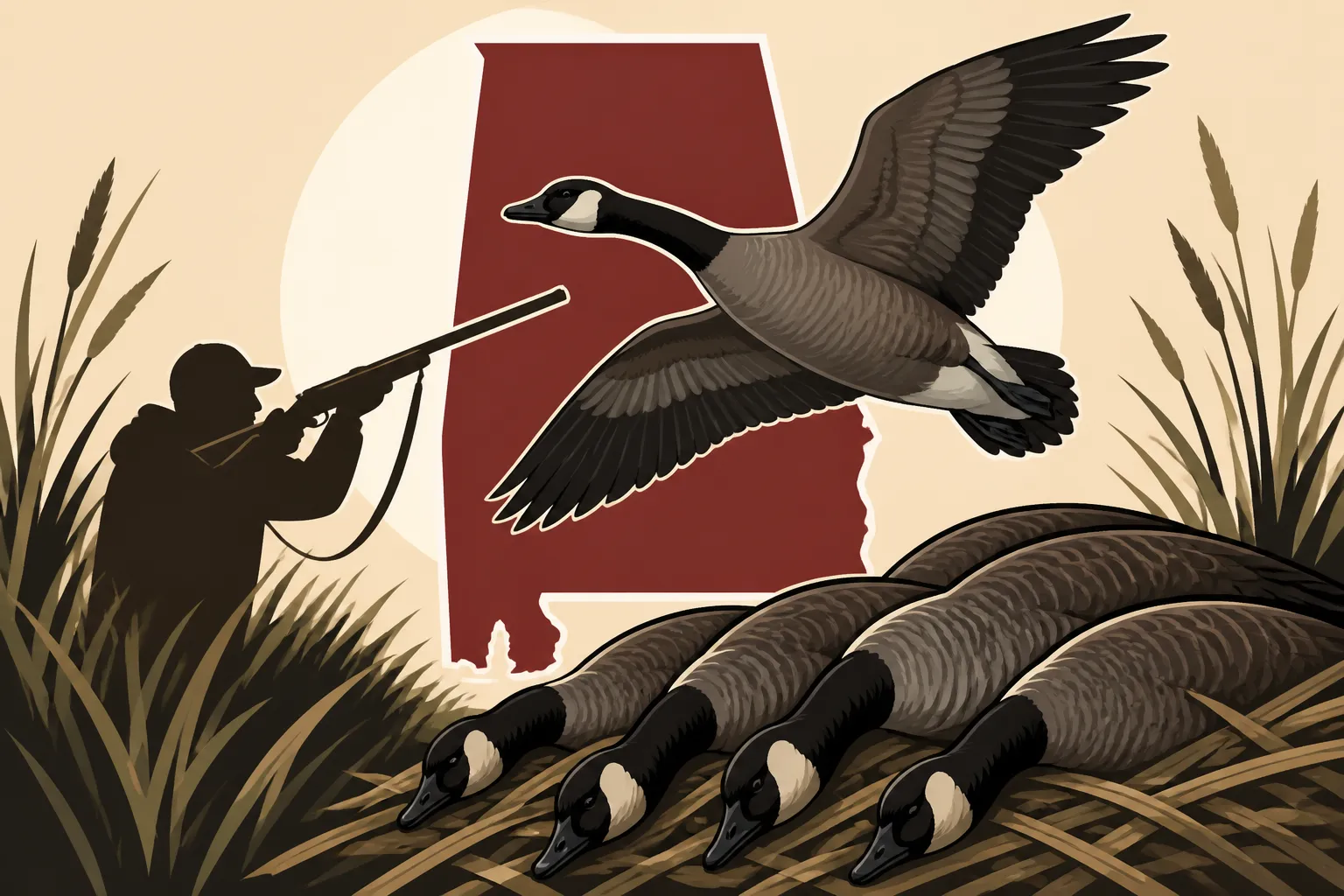
When we talk about "dark geese" in Alabama, we're primarily referring to Canada geese. These are the large, familiar geese with black heads and necks, white "chinstraps," and grayish-brown bodies. While other dark-bodied geese like Brant and White-fronted Geese (often called Specklebellies) are also migratory game birds and can occasionally be found in Alabama, the Canada goose is the main species managed under the "dark goose" category here. They're distinct from "light geese," which primarily consist of Snow and Ross's geese, both of which often have much more liberal bag limits and special conservation seasons due to their abundant populations. Understanding this distinction is crucial, as misidentification can lead to inadvertently exceeding a limit.
It's not uncommon for hunters, especially those new to waterfowl, to mistake certain ducks or even sandhill cranes for geese at a distance or in poor light. However, geese are generally much larger, have longer necks, and a more uniform, often darker, body coloration compared to most ducks. Their flight patterns, often in V-formations or straight lines, are also characteristic. Always take the time to positively identify your target before pulling the trigger – it's not just about ethics, it's about legality and responsible hunting.
The Role of Federal and State Regulations
The management of migratory birds like geese falls under a cooperative framework between the U.S. Fish and Wildlife Service (USFWS) and individual states. The USFWS sets the overarching federal guidelines, frameworks for season lengths, and maximum bag limits for various waterfowl species, including geese. They do this based on extensive population surveys and scientific data collected across flyways. Alabama, through the Department of Conservation and Natural Resources (ADCNR) Wildlife and Freshwater Fisheries Division, then establishes its specific hunting seasons, bag limits, and other regulations within those federal guidelines.
This dual regulatory system ensures that goose populations are managed sustainably across their entire migratory range, not just within Alabama's borders. It means that while the federal government might say you can hunt geese for X number of days with a maximum bag of Y, Alabama might choose to have a shorter season or a more conservative bag limit to address local population dynamics or hunter pressure. Therefore, always prioritize the specific Alabama regulations, which can be found on the Outdoor Alabama website or through their app. Reputable hunting resources like GoHunt often compile these regulations in user-friendly formats, but cross-referencing with the official state source is always a good idea.
Alabama's Dark Goose Bag Limits Explained
When you're out there, shivering in a layout blind, watching those big Canada geese cup their wings to commit to your spread, the last thing you want to worry about is whether you're about to break the law. Knowing your limits beforehand is essential. Alabama's regulations are designed to provide fair chase opportunities while also ensuring sustainable populations for future generations of hunters.
Daily Bag and Possession Limits for Canada Geese
For Canada geese, which are the primary "dark goose" species pursued by hunters in Alabama, the daily bag limit is typically set at five (5) birds. This means that in any single hunting day, you are allowed to harvest a maximum of five Canada geese. It's a fairly generous limit, especially when compared to some other waterfowl species, reflecting the healthy population numbers of Canada geese, particularly resident populations that don't migrate far.
However, the daily bag limit is only part of the equation. You also need to be aware of the possession limit. The possession limit for Canada geese in Alabama is generally 15 birds. This limit applies to all geese you have in your immediate possession, in cold storage at home, or in transit. For example, if you hunt for three days and shoot five geese each day, you can legally have fifteen geese in total. If you were to shoot five on a fourth day, you would need to have consumed or given away at least five of your previously harvested geese to stay within the possession limit of fifteen. This rule prevents the accumulation of large numbers of birds over multiple hunting trips without proper consumption or distribution. These limits are put in place to manage the total harvest pressure over the season, and it's a vital part of responsible waterfowl hunting.
Special Considerations for Other Dark Geese
While Canada geese are the dominant "dark goose" in Alabama, other species like White-fronted Geese (often called Specklebellies due to their distinctive white front and speckled belly) do migrate through the state. Their appearance is more sporadic, and their populations are managed with slightly different limits. Generally, Alabama's daily bag limit for White-fronted Geese is three (3) birds. This is a more conservative limit than for Canada geese, reflecting their different population dynamics and migratory patterns. The possession limit for White-fronted Geese is typically nine (9) birds, which follows the common pattern of being three times the daily bag limit.
It's rare to encounter Brant geese in Alabama, as they are primarily a coastal species of the Atlantic Flyway, but if one were to be legally harvested, its limits would be dictated by federal frameworks and specific state rules. However, for most Alabama hunters, focusing on distinguishing Canada geese from White-fronts and staying within their respective limits is the key to compliance. Always double-check the latest ADCNR regulations before each season, as these limits can occasionally be adjusted based on population assessments and federal guidelines. Keeping up-to-date with the Alabama Goose Season Rules is paramount.
Here's a quick reference table for the common dark goose species in Alabama:
| Goose Species | Daily Bag Limit | Possession Limit | Typical Season Timing (Check Official Regs) |
|---|---|---|---|
| Canada Goose | 5 | 15 | Late November – January (varies by zone) |
| White-fronted Goose | 3 | 9 | Late November – January (varies by zone) |
| Snow Goose (Light) | 50 | No Limit | November – January, plus Conservation Order |
| Ross's Goose (Light) | 50 | No Limit | November – January, plus Conservation Order |
Note: This table provides general guidance. Always consult the official Alabama Department of Conservation and Natural Resources (ADCNR) regulations for the most current and precise information, as season dates and specific rules can change annually and by zone.
Navigating Seasons, Zones, and Required Permits
It's not just about knowing how many geese you can shoot, but also when and where you can do it, and what paperwork you need to have in your pocket. Alabama's waterfowl hunting framework is structured to manage hunter access and minimize disturbance during critical times for migratory birds. Failing to understand these elements can lead to a ruined hunt, or worse, legal trouble.
Dark Goose Season Dates by Zone
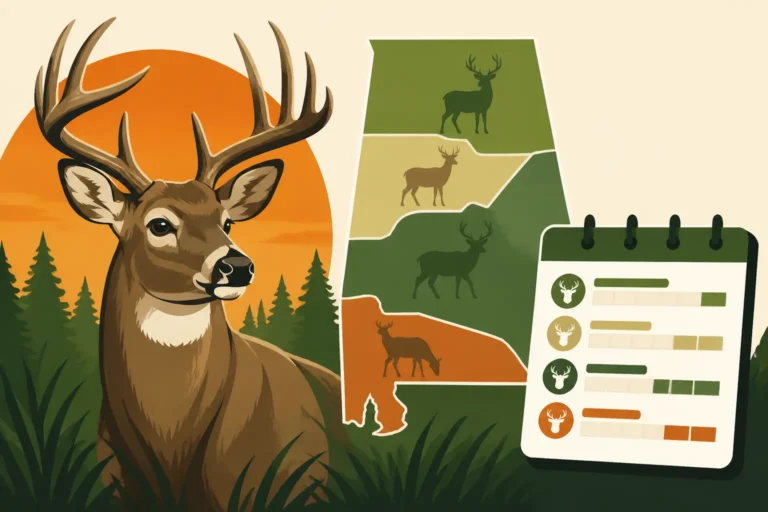
Alabama is part of the Mississippi Flyway, and its waterfowl zones and season dates are carefully established within federal frameworks. Unlike deer or turkey hunting, which have specific zones across the state, waterfowl seasons are often defined by a broader "North Zone" and "South Zone" or sometimes even more granular zones specifically for ducks and geese. For dark geese, the season typically runs during a split period in the late fall and winter, generally opening in late November and continuing through parts of January. However, these dates are not static and often shift slightly year to year.
It's absolutely critical to consult the most current ADCNR Migratory Bird Hunting Seasons & Bag Limits pamphlet or the Outdoor Alabama website each season. For instance, the Alabama Waterfowl Zones and Seasons might delineate specific periods when Canada geese are open for harvest in the Tennessee River Valley compared to the delta region near Mobile. Public lands, especially Wildlife Management Areas (WMAs) or federal refuges like Wheeler National Wildlife Refuge or Eufaula National Wildlife Refuge, may have their own specific quota hunts or even more restrictive seasons within the general state framework. Always check for specific rules related to these areas, as they often deviate from statewide regulations.
Essential Licenses and Certifications
Before you even think about setting foot in a goose blind, you need to ensure all your licensing and certification is in order. This isn't just a formality; it's a legal requirement that funds conservation efforts across the state and nation. You wouldn't want to get caught without the proper paperwork after a successful morning of Canada Geese on Alabama Farmland.
Here's what you'll typically need:
- Alabama Hunting License: This is your foundational license. Whether you're a resident or non-resident, you'll need a current all-game hunting license. You can easily purchase these online through the Outdoor Alabama website, via the Outdoor Alabama app, or from license vendors. Many hunters find using platforms like GoHunt helpful for managing all their licensing needs and checking regulations, though direct purchase through ADCNR is always foolproof. Information on various options is available in the Alabama Resident Hunting License Options article.
- Alabama State Duck Stamp: This is a state-specific requirement for hunting ducks, geese, and other migratory waterfowl. The funds generated from this stamp directly support waterfowl habitat projects within Alabama.
- Federal Duck Stamp: This is a federal requirement for all waterfowl hunters 16 years of age or older. The Federal Migratory Bird Hunting and Conservation Stamp, as it's formally known, is a vital component of wetland conservation across the United States. You can purchase these at post offices or through various license vendors. More details can be found in the Alabama Duck Stamp Requirement article.
- Harvest Information Program (HIP) Certification: Every migratory bird hunter, regardless of age, must be HIP certified annually. This involves answering a few short questions about your previous year's migratory bird hunting success (or lack thereof). This data is used by the USFWS to better estimate harvest numbers and manage populations. This certification is usually free and can be obtained when you purchase your hunting license. Learn more about it in Alabama Migratory Bird Certification.
Make sure you carry physical or electronic proof of all these licenses and certifications while hunting. A game warden can and will ask for them. A quick check before each season via the Outdoor Alabama app or a platform like GoHunt can save you a lot of headache.
Practical Tips for Ethical and Legal Dark Goose Hunting
Beyond understanding the rules, there are practical steps every hunter can take to ensure their goose hunting experience is both ethical and legally compliant. It's about being prepared, being observant, and always putting conservation first. After all, we want these opportunities to last for generations.
Identifying Goose Species in the Field
Accurate identification in the field is paramount, especially with varying bag limits for different goose species. It's easy to get excited when a big flock works your decoys, but taking that extra second to confirm the species can prevent a violation.
- Canada Geese: Look for the distinctive black head and neck with a clear white "chinstrap" or patch. Their bodies are typically brownish-gray. They are large birds, and their calls are a familiar honk.
- White-fronted Geese (Specklebellies): These are smaller than most Canada geese, with a pinkish-orange bill, orange legs, and, most notably, irregular black bars or "speckles" on their white belly. Adults also have a distinct white band at the base of their bill. Their call is often described as a high-pitched laugh or "wink-wink."
- Snow and Ross's Geese (Light Geese): These are almost entirely white, often with black wingtips. Ross's geese are noticeably smaller and have a shorter bill than snow geese. Their calls are high-pitched yelps or barks.
Practice identifying these birds through binoculars, field guides, or online resources before you even step foot in the blind. Pay attention to size, color patterns, bill shape, and vocalizations. This skill develops over time, and the more you learn, the more confident and successful you'll be. It's especially important if you're Hunting the Tennessee River Delta for Waterfowl, where a diverse array of species can be present.
Staying Compliant and Avoiding Violations
Compliance isn't just about knowing the rules; it's about applying them consistently. The thrill of the hunt can sometimes lead to rushed decisions, but taking a moment to ensure you're within the law is always worth it.
- Count Your Harvest: Keep a running tally of how many geese you've harvested throughout the day. It’s easy to lose track when multiple birds are shot, especially if you're hunting in a group. A simple counter or even a mental note can prevent you from exceeding the daily bag limit.
- Proper Tagging and Transport: When transporting harvested geese, ensure they are properly tagged or identifiable according to Alabama regulations. Often, one fully feathered wing must remain attached until the bird reaches its final destination (your home or a processing facility) to aid in species identification and enforce bag limits.
- Know Your Zones and Dates: Always verify the specific season dates for the zone you are hunting in. These can vary significantly, even for the same species. What's legal on one side of a county line might be illegal on the other. This is crucial for successful outings, whether you're using Layout Blind Hunting Delta Farm Fields or hunting flooded timber.
- Report Your Harvest (if required): While deer and turkey typically have mandatory harvest reporting via Game Check in Alabama, migratory birds generally do not require individual reporting beyond the initial HIP certification. However, always be aware if any new reporting requirements are introduced.
- Use Reliable Resources: The official Outdoor Alabama website and app are your best friends. They provide the most up-to-date regulations. Websites and apps like GoHunt can also be fantastic supplemental resources for scouting and understanding regulations, but always defer to the official state guidelines.
- When in Doubt, Don't Shoot: This is the golden rule of ethical hunting. If you can't positively identify a bird, are unsure about the legality of the shot, or suspect you might be approaching your limit, hold off. There will always be another opportunity.
By diligently following these guidelines, you not only protect yourself from potential penalties but also contribute to the responsible stewardship of Alabama's incredible waterfowl resources. Happy hunting, and make sure those honkers fill your freezer (within limits, of course)!
Disclaimer
Please remember that hunting regulations are subject to change. While every effort has been made to provide accurate and up-to-date information, it is the hunter's responsibility to consult the current Alabama Department of Conservation and Natural Resources (ADCNR) official regulations for the most precise and legally binding details before engaging in any hunting activity.