Alabama Waterfowl Zones and Seasons
Trying to make sense of Alabama's waterfowl regulations can feel like trying to hit a green-winged teal at 60 yards in a crosswind – exhilarating, but often frustratingly complex. Between the varying season dates, zone lines, and species-specific bag limits, it’s easy to feel lost. This comprehensive guide is here to untangle the confusion, helping you understand Alabama's waterfowl zones and seasons so you can spend less time scratching your head and more time in the blind.
Understanding Alabama's Waterfowl Landscape
Alabama might not be the first state that comes to mind when you think of epic duck and goose hunting, but trust me, we’ve got some incredible opportunities. The state's geographical location, crisscrossed by major river systems and blessed with diverse wetland habitats, makes it a vital wintering ground and migration corridor for countless waterfowl. It’s a dynamic environment where success often hinges on understanding these unique conditions.
The Mississippi Flyway Connection
Our place in the grand scheme of North American waterfowl migration is defined by the mighty Mississippi Flyway. This aerial highway stretches from the Arctic breeding grounds all the way down to the Gulf Coast, funneling millions of birds right over and into Alabama. While we're on the eastern edge of it, many species of ducks and geese utilize our state's rich resources during their long journey south, or choose to spend their entire winter here. This connection means we get a diverse array of birds, but it also means our hunting success can be heavily influenced by weather patterns and hunting pressure further north. A big cold front sweeping through the Midwest, for example, can push a fresh wave of birds right into our waiting marshes and flooded timber. Understanding this broad migratory pattern is key to anticipating when the "new" birds might arrive and how long they might stay. You can dive deeper into how these seasonal movements affect your hunt by checking out Alabama Waterfowl Migration Timing.
The major river systems, like the Tennessee River in the north and the expansive Mobile-Tensaw Delta in the south, act as magnets for these migrating birds. These waterways provide crucial resting, feeding, and roosting habitat that sustains waterfowl populations throughout the colder months. Areas surrounding these rivers, including numerous oxbow lakes, flooded agricultural fields, and brackish marshes, become prime waterfowl real estate. Knowing these major hubs of activity helps hunters focus their scouting efforts and understand why certain areas consistently hold birds, especially during peak migration.
Key Waterfowl Species Hunters Target
When you’re tucked into a blind in Alabama, you could see a real mixed bag of species. Our state is known for its diverse duck hunting, offering shots at everything from puddle ducks to diving ducks. Mallards, of course, are often the holy grail for many duck hunters, and we do get good numbers of them, especially in the northern parts of the state and on flooded fields. Wood ducks, with their incredible iridescent plumage, are also a huge draw, and they're often found in abundance in our timbered swamps and beaver ponds. Other common puddle ducks include gadwall, wigeon, shovelers, and various species of teal. These birds tend to feed in shallower waters, dabbling for seeds and aquatic vegetation.
On the diving duck front, hunters might encounter ring-necked ducks, scaup (bluebills), canvasbacks, and redheads, particularly on larger bodies of water like the Tennessee River reservoirs or coastal bays. These ducks prefer deeper water where they can dive for submerged vegetation and invertebrates. Mergansers, with their distinctive saw-bill, and coots, often mistaken for small ducks, are also frequently harvested and included in overall migratory bird limits. The variety truly adds to the excitement of an Alabama waterfowl hunt, as you never quite know what might cup its wings and commit to your spread. If you're curious about population trends for some of these birds, especially our local favorites, you might find the information on Alabama Mallard and Wood Duck Numbers particularly insightful.
Beyond ducks, geese also offer exciting opportunities. Canada geese are prevalent, especially around larger agricultural areas and reservoirs. While we have both resident populations and migratory birds, hunters primarily focus on the migratory influx that pushes down from further north. More recently, hunters have also seen increasing numbers of white-fronted geese, often called "specklebellies," particularly in the southern agricultural regions. Snow geese also make an appearance, though less consistently. Each species presents its own unique challenge and requires different calling and decoy strategies, making goose hunting a rewarding pursuit in its own right.
Deciphering Alabama's Waterfowl Zones
Navigating Alabama's waterfowl regulations can sometimes feel like you need a degree in cartography just to figure out what season you're actually in. But once you understand the logic behind the zones, it starts to make a lot more sense. The state is divided into distinct waterfowl zones, and knowing which one you're in is absolutely critical for staying legal and maximizing your hunting opportunities.
Why Zones Exist: A Biological and Geographical Necessity
The primary reason for dividing Alabama into waterfowl zones boils down to biology and geography. Alabama is a long state, stretching from the temperate mountains in the north down to the subtropical Gulf Coast. This vast difference in climate, habitat, and latitude means that migratory waterfowl arrive, stay, and depart at different times throughout the state. Birds might be staging and feeding heavily in northern Alabama while conditions further south are still too warm, or vice versa. To effectively manage these dynamic populations and provide fair hunting opportunities across the state, wildlife agencies create zones with staggered seasons.
This approach allows managers to set season dates that align with peak waterfowl presence in different regions, responding to the specific migratory patterns and wintering habits of birds. It also helps distribute hunting pressure, preventing overharvest in one area while birds are still scarce in another. I know it can be a headache trying to figure out which county falls into which zone, especially when county lines are the dividing factor, but these zones are genuinely designed with the birds' well-being and hunter success in mind. It's not just to make our lives harder, I promise!
The North Zone: A Closer Look
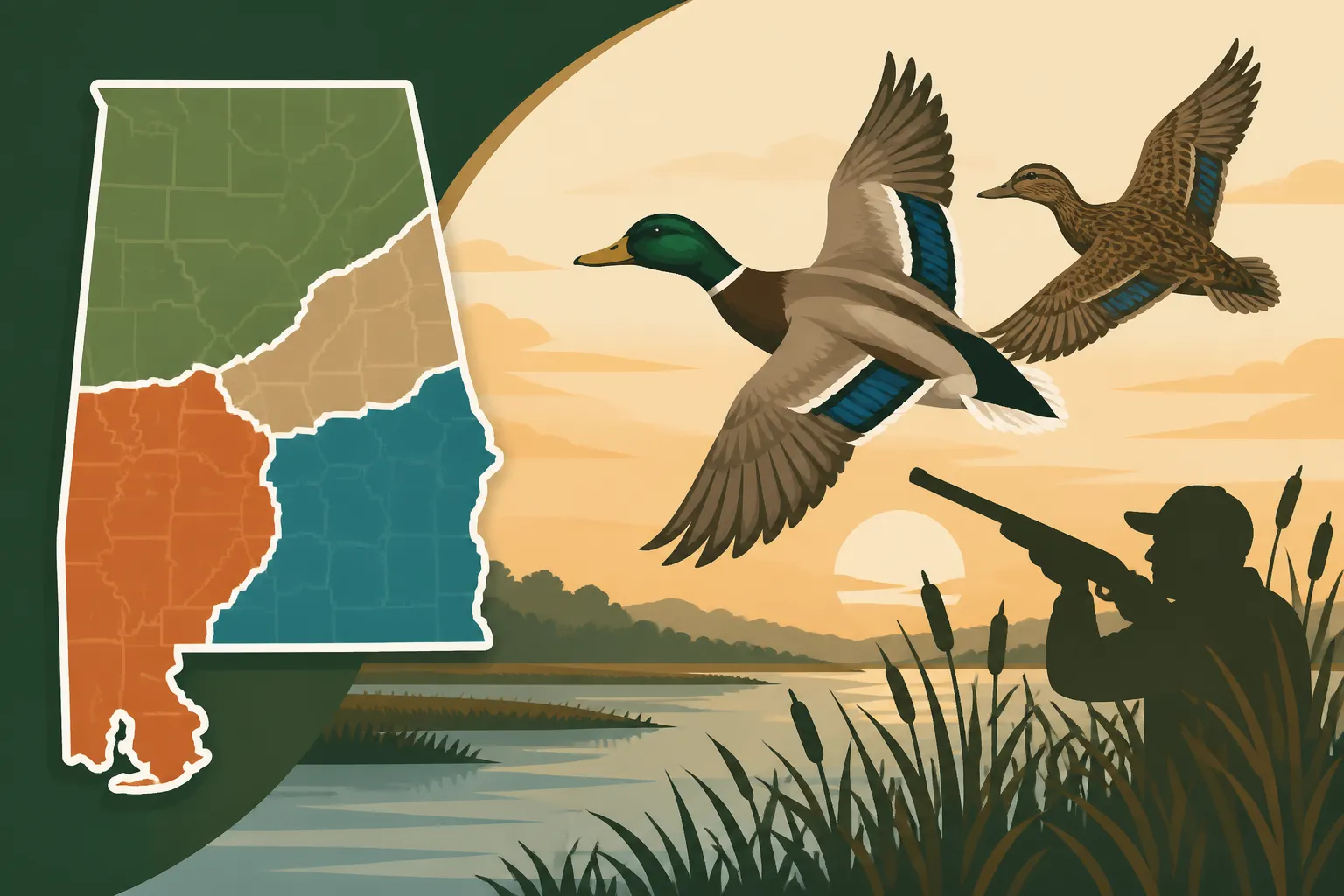
The North Zone generally encompasses the northern half of Alabama, typically defined by a specific line that runs across the state. In recent years, this line has followed U.S. Highway 84 from the Mississippi state line to the Alabama River at Claiborne, continuing east along the northern border of Clarke, Monroe, Conecuh, Covington, and Geneva counties. However, always double-check the current regulations, as these lines can occasionally shift. This zone is heavily influenced by the Tennessee River system, including major reservoirs like Guntersville, Wheeler, and Pickwick. Here, you'll find extensive flooded timber, large open water areas, and significant agricultural lands, especially corn and soybean fields, that attract high numbers of ducks and geese.
Hunting in the North Zone often sees the earliest arrivals of northern-pushed birds, especially after cold fronts move through the Midwest. Mallards, gadwall, and various diving ducks are common targets on the big water, while wood ducks and mallards frequent the smaller timber holes and beaver ponds. The season in the North Zone often opens a bit earlier or has different split dates compared to the South Zone, aiming to catch those initial waves of migrating waterfowl before they push further south. Hunters in this region often focus on large, accessible water bodies or secure leases on agricultural fields. For those specifically interested in northern Alabama's premier waterfowl destinations, the guide on Hunting the Tennessee River Delta for Waterfowl offers fantastic insights.
The South Zone: Distinct Conditions and Opportunities
The South Zone covers the southern portion of Alabama, including its extensive coastal and delta regions. This zone picks up where the North Zone leaves off, stretching down to the Gulf of Mexico. It encompasses the Mobile-Tensaw Delta, a vast wetland complex, as well as numerous coastal bays, estuaries, and agricultural fields in the Wiregrass and Black Belt regions. The hunting environment here is distinctly different from the north, characterized by brackish marshes, cypress-tupelo swamps, and smaller, often isolated, farm ponds.
The South Zone typically experiences a later arrival of the full migratory push, as birds follow the warmth south. Its season dates are often adjusted to reflect this, providing opportunities later in the winter. While mallards are certainly present, wood ducks are incredibly popular here, along with gadwall, wigeon, and various species of teal. Specklebelly geese are also becoming an increasingly important target in the agricultural lands of this zone. Hunting conditions can range from warm, humid days early in the season to crisp, cold mornings during the latter splits. Access often involves boat travel through intricate bayou systems or securing private land permissions. To truly understand the unique challenges and rewards of hunting this region, be sure to read Coastal Alabama Delta Waterfowl Access.
Navigating Alabama Duck Seasons
Once you understand the zones, the next hurdle is the season dates themselves. Alabama’s duck season isn't a continuous stretch; it's typically broken into multiple "splits," designed to align with different phases of migration and provide diverse hunting opportunities throughout the fall and winter. This structure can be a little tricky to follow, but it's crucial for planning your hunts.
Early Teal Season: A Quick Dash
Before the main duck season even kicks off, Alabama offers a special, brief early teal season. This is usually a short, fast-paced window, often lasting about two weeks in September. The primary targets are blue-winged teal, which are among the earliest migratory ducks to move south. Green-winged and cinnamon teal might also be present, but blue-wings dominate this early migration. The season is specifically timed to coincide with their southward movement before other duck species have arrived in significant numbers.
Hunting early teal is a completely different experience from mid-winter duck hunting. It's often hot and humid, meaning you'll need lighter gear, plenty of water, and an early start before the heat sets in. Teal are incredibly fast fliers and often decoy readily if you can get them to commit. Small spreads of teal decoys, sometimes with a spinning-wing decoy, are very effective. The daily bag limit for this season is usually more generous for teal specifically, but it's essential to check the current regulations, as dates and limits can vary slightly year to year. This quick sprint for teal offers a fantastic warm-up to the regular season and is a great way to scratch that duck hunting itch early in the fall.
Regular Duck Season Splits: Managing Expectations
Alabama's main duck season is almost always divided into multiple segments, or "splits." For example, you might have an initial split in November, followed by a closure, and then a longer second split that runs from early December through late January. These splits are carefully planned by the Alabama Department of Conservation and Natural Resources (ADCNR) in conjunction with federal guidelines. The reasoning behind them is multifaceted. First, they aim to coincide with different migration waves, allowing hunters to target birds that might be moving through during early, mid, and late season pushes.
Second, splits can help reduce hunting pressure during periods when birds might be vulnerable, or to allow them to rest and feed undisturbed for a time. This can actually concentrate birds and improve hunting opportunities once the season reopens. For hunters, these splits mean you need to be constantly aware of the current dates for your specific zone. Planning multiple trips that span these splits can allow you to experience different hunting conditions and target a broader range of species as the winter progresses. Hunting the early split might mean more local birds and less competition, while the late split often brings the coldest weather and the biggest push of northern birds. Understanding these nuances is key to a successful season. You can often find the full schedule in the annual regulations booklet.
Daily Bag Limits and Possession Limits
The excitement of seeing ducks commit to your spread is unmatched, but it's absolutely vital to know and respect the daily bag and possession limits. These limits are set annually by the U.S. Fish and Wildlife Service, in cooperation with state agencies like ADCNR, based on population data, breeding success, and harvest estimates. The daily bag limit refers to the maximum number of ducks (and sometimes specific species within that total) you can harvest in a single day. For instance, the total daily duck limit might be six, but within that six, there could be sub-limits, such as no more than two mallards (only one of which can be a hen), one pintail, one canvasback, etc. These species-specific limits are put in place to protect populations of less abundant or more vulnerable species.
Possession limits, on the other hand, refer to the maximum number of migratory game birds that an individual may possess at any one time, including those in the field, in transit, or at your home. This limit is typically three times the daily bag limit. This means if the daily limit is six ducks, your possession limit might be eighteen. These rules are serious business, and violating them can lead to hefty fines and loss of hunting privileges. Before every hunt, especially if you're targeting different species, refresh your memory on the current season's specific regulations. It’s better to be safe than sorry! The Alabama Duck Daily Bag Limit article provides an excellent breakdown of these numbers for the current season.
Geese and Other Migratory Birds
While ducks often steal the spotlight, Alabama offers compelling opportunities for goose hunting, particularly for Canada geese and increasingly for specklebellies. These birds require different strategies, but they can provide some incredibly memorable hunts, especially when the duck action is slow.
Canada Goose Seasons and Bag Limits
Canada geese are a common sight in Alabama, whether you're seeing resident populations on local ponds or large flocks of migratory birds descending on agricultural fields. Hunting them presents a unique challenge, as they are intelligent birds with excellent eyesight. Their seasons are often structured differently than ducks, sometimes opening later in the fall and potentially running into colder months. This is partly due to their differing migratory patterns and population dynamics compared to ducks.
The bag limits for Canada geese are typically more generous than ducks, often allowing for multiple birds per day, especially in zones with higher populations. However, it's crucial to distinguish between resident geese, which breed and live in Alabama year-round, and migratory geese, which travel south for the winter. Both contribute to the hunting opportunities. Successful Canada goose hunting often involves large decoy spreads, realistic flagging, and precise calling, usually in wide-open fields where they prefer to feed. Understanding their habits and scouting their feeding and roosting locations is paramount. For a deeper dive into the populations you'll be hunting, you might find Alabama Canada Goose Population very informative.
Specklebelly White-Fronted Goose and Snow Goose Opportunities
Over the past decade or so, we've seen a noticeable increase in the presence of white-fronted geese, affectionately known as specklebellies, in Alabama. These beautiful birds offer fantastic hunting, particularly in the state's southern agricultural regions. Their season often runs concurrently with the regular duck season, but it's important to check specific dates and bag limits, as they can sometimes differ. Specklebellies are known for their distinctive high-pitched calls and their tendency to decoy extremely well if you have the right setup. Many hunters find them to be one of the best-eating waterfowl species, too!
Snow geese also pass through Alabama, though their numbers are generally less consistent and widespread than specklebellies or Canada geese. When they do show up, often in massive flocks, they can provide an exhilarating hunt, albeit a challenging one. Their sheer numbers and wary nature demand a massive spread of decoys, often hundreds, and specialized calling. The bag limits for snow geese can be quite liberal, sometimes in the double digits, reflecting their healthy populations. Tracking the movements of these specific goose species can be challenging, but using a robust platform like GoHunt can really help you stay informed on their migratory patterns and historical presence in different areas, which is invaluable for planning a successful hunt. For specific bag limits on these and other geese, refer to Alabama Dark Goose Bag Limit.
Other Migratory Game Birds: Coots and Mergansers
Beyond ducks and geese, Alabama's waterfowl regulations also cover coots and mergansers. While they might not be the primary target for every waterfowler, they are legal game and contribute to the overall migratory bird experience. Coots, often seen paddling in large rafts on open water, are typically found in greater numbers than many duck species. Their season dates and bag limits often mirror the regular duck season, with a generally generous daily limit. They can provide additional shooting opportunities on days when ducks are scarce, and many hunters enjoy them on the dinner table.
Mergansers – including common, hooded, and red-breasted varieties – are fish-eating ducks known for their distinctive thin, serrated bills. They are also included in the migratory bird regulations, with seasons often coinciding with ducks and specific bag limits. While not as sought after for their table fare by some, their swift flight and often beautiful plumage make them a welcome addition to the day's bag. Knowing that these birds are also fair game means you're prepared for any migratory bird that comes into range, and it broadens the scope of what you can legally and ethically harvest during your waterfowl outings.
Essential Licenses and Regulations for Waterfowlers
Alright, let's talk brass tacks: licenses and regulations. Nothing will ruin a waterfowl hunt faster than realizing you don't have the proper paperwork or are inadvertently breaking a rule. Alabama has a layered system for migratory bird hunting, and it's essential to get every piece of it right before you even think about setting foot in the marsh or blind.
State Hunting License and Waterfowl Privilege
The very first step for any hunter in Alabama, regardless of whether you're chasing deer, turkeys, or ducks, is to purchase a valid Alabama hunting license. This is your base permit to participate in any hunting activity in the state. For Alabama residents, there are various options, including annual licenses, all-game licenses, or even lifetime licenses. Non-residents also have a range of choices, from annual permits to shorter 3-day or 10-day options, depending on the length of your trip. Don't assume your license from another state covers you here; it doesn't.
Once you have your base hunting license, to hunt waterfowl specifically, you'll need to add the Alabama Migratory Bird Hunting Privilege. This is an additional permit that signifies you intend to hunt migratory birds, allowing the state to track participant numbers and manage these specific resources. Both the base hunting license and the migratory bird privilege can typically be purchased online through the Outdoor Alabama website, at probate offices, or from licensed retailers. It’s always a good idea to purchase these well in advance of your hunt. You can get a detailed breakdown of all the available options and their costs by reviewing Alabama Hunting Licenses and What They Cost.
Federal Duck Stamp and HIP Certification
Beyond the state requirements, there are federal mandates that all waterfowl hunters in the United States must adhere to. The most well-known of these is the Federal Migratory Bird Hunting and Conservation Stamp, universally known as the Federal Duck Stamp. This small stamp, typically purchased at a post office, online, or from major sporting goods retailers, is more than just a permit; it's a vital tool for conservation. Ninety-eight percent of the revenue generated from Duck Stamp sales goes directly to acquiring and protecting wetland habitats for the National Wildlife Refuge System. This means every stamp you buy directly contributes to the habitat that ducks and geese need to survive and thrive, not just in Alabama, but across the country. Anyone aged 16 or older must possess a valid Federal Duck Stamp to hunt waterfowl. Understanding this critical requirement is easy if you check out Alabama Federal Duck Stamp Requirement.
The second federal requirement, and one that sometimes slips through the cracks for less experienced hunters, is the Harvest Information Program, or HIP certification. This is a mandatory program for anyone hunting migratory game birds in the U.S. It involves answering a few brief questions about your migratory bird hunting activity from the previous year. This information is collected by state agencies and then forwarded to the U.S. Fish and Wildlife Service, providing crucial data for migratory bird management and population assessments. It's usually free and can be obtained quickly when you purchase your state hunting license or migratory bird privilege online. Think of it as your way of giving back to the data pool that helps keep waterfowl populations healthy. Staying on top of all these necessary permits and certifications can be made simpler with a dedicated hunting app, and tools like GoHunt can often help you keep track of what you need.
Crucial Gear Restrictions and Hunting Hours
Beyond licenses, there are specific rules about how you can hunt waterfowl that are non-negotiable. First and foremost are hunting hours. In Alabama, similar to many states, legal shooting hours for migratory birds typically begin one-half hour before sunrise and extend until sunset. This is a strict rule, and being caught shooting before or after legal hours is a serious offense. Always check a reliable sunrise/sunset table for your specific location on the day of your hunt.
Next, let's talk about ammunition. It is federally mandated that only non-toxic shot (such as steel, bismuth, or tungsten alloy) can be used for hunting waterfowl. Lead shot is strictly prohibited to prevent lead poisoning in birds that ingest spent pellets from the environment. This means leaving those old lead loads for upland birds or deer. Finally, your shotgun must be "plugged" to limit its capacity to no more than three shells: one in the chamber and two in the magazine. Most shotguns come with a plug from the factory, but if yours doesn't, you'll need to insert one. These rules are in place for safety and conservation, and they are rigorously enforced by Alabama game wardens. Ignorance of the law is not an excuse, so make sure you're compliant down to every last detail.
Strategies for Success in Alabama's Waterfowl Zones
Alright, you've got your licenses, you know your zone, and you've got the regulations memorized. Now comes the fun part: strategizing for a successful hunt. Waterfowl hunting in Alabama is incredibly rewarding, but it demands more than just showing up and throwing out a few decoys. It requires a keen understanding of bird behavior, local conditions, and a willingness to adapt.
Scouting Your Chosen Zone
Effective scouting is, without a doubt, the number one factor in consistent waterfowl hunting success. You simply cannot expect to have a good hunt if you don't know where the birds are, what they're eating, and where they're roosting. Pre-season scouting, before any shots are fired, is invaluable. This involves driving roads, using binoculars and spotting scopes to observe fields, ponds, and river sections for bird activity. Look for birds feeding in agricultural fields, resting on open water, or flying distinct patterns between roosting and feeding areas.
During the season, daily scouting is just as important. Waterfowl are highly mobile and their patterns can change rapidly due to hunting pressure, food availability, or weather. If you're targeting public land, identifying areas that are less accessible or that hold overlooked pockets of habitat can pay huge dividends. Tools like aerial maps, often found in advanced hunting apps such as GoHunt, are incredibly useful for identifying potential bottlenecks, isolated water sources, or overlooked corners where birds might find refuge. Knowing how to read these maps for potential hotspots is a skill every serious waterfowler should develop. For a detailed guide on how to approach this, don't miss Scouting Alabama Public Land Before Season.
Adapting to Weather and Water Levels
Waterfowl hunting is inherently tied to the weather. Cold fronts, in particular, are a duck hunter's best friend in Alabama. A significant drop in temperature and accompanying north winds often push new birds down the flyway, replenishing local populations and increasing activity. Pay close attention to long-range forecasts and plan your hunts around these weather events. Conversely, warm spells can make hunting tougher, as birds become less active and may spread out more.
Water levels are another critical factor, especially in river bottomlands and delta systems. Heavy rains can flood new areas, creating fresh feeding opportunities and scattering birds. Conversely, droughts can leave traditional hunting spots dry and inaccessible, forcing birds to concentrate on remaining water sources. Always check current water conditions before heading out. This might involve calling local outfitters, checking gauge readings, or simply driving by known spots. Adapting your strategy to these changing conditions – whether it's moving your decoys to a newly flooded field or targeting a smaller, deeper slough during a drought – is crucial for consistent success.
Decoy Spreads and Calling Techniques
Decoy spreads are an art form, not a science, and they need to be adaptable. There’s no single "best" spread; what works one day might not work the next, and what works for mallards might not work for diving ducks. Generally, for puddle ducks, a loose, natural-looking spread mimicking birds feeding and resting is effective. Common patterns include a "J-hook" or "U-shape," creating an inviting landing zone in front of your blind. Adding motion decoys, like spinning-wing decoys or swimmers, can significantly enhance realism and grab birds' attention from a distance. For geese, much larger spreads are usually required, often with dozens or even hundreds of full-body or shell decoys to replicate a large feeding flock.
Calling is another critical skill. It’s not just about making noise; it’s about communicating with the birds. You need to know when to call aggressively, when to soft-call, and most importantly, when to shut up. Early in the morning or on bluebird days, aggressive calling might work. But as the sun gets higher or birds get pressured, subtle feed calls and contented quacks are often more effective. Learning to read the birds' reactions to your calls is paramount. If they’re flaring, you might be calling too much or too aggressively. If they’re showing interest but not committing, a little coaxing with soft clucks and quacks might be all it takes. Practice makes perfect, and listening to live birds is the best teacher.
Important Considerations for Alabama Waterfowlers
Hunting waterfowl in Alabama isn't just about the birds and the seasons; it's also about where you hunt and how you engage with the broader hunting community and environment. Whether you choose public lands or private leases, and how you approach conservation, all play a role in your experience and the future of the sport.
Public Land Access: WMAs and National Wildlife Refuges
Alabama offers a decent amount of public land accessible to waterfowlers, primarily through its Wildlife Management Areas (WMAs) and portions of National Wildlife Refuges (NWRs). WMAs, managed by ADCNR, often have specific waterfowl hunting sections with designated access points and sometimes even developed blinds. These areas can provide excellent hunting, especially early in the season or after fresh pushes of birds. However, public land often comes with increased hunting pressure, so getting there early, being willing to walk (or paddle) further, and finding overlooked spots are key strategies. Information on Alabama Wildlife Management Areas is a must-read for any public land hunter.
National Wildlife Refuges, such as the famous Wheeler National Wildlife Refuge near Decatur or Eufaula National Wildlife Refuge, also offer significant waterfowl hunting opportunities. However, these areas typically have highly regulated seasons, often involving quota hunts, limited access, or specific application periods. The regulations for NWRs can be more stringent than general state regulations, so always check the specific refuge's rules and permit requirements well in advance. For example, Wheeler National Wildlife Refuge Hunting Rules would be essential reading if you plan to hunt there. While public lands can be challenging, they offer accessible and affordable hunting for those willing to put in the effort.
Private Land Opportunities and Leases
For many dedicated Alabama waterfowlers, private land offers the most consistent and often highest-quality hunting opportunities. This can range from gaining permission to hunt a farmer's flooded soybean field to leasing a significant tract of land with established waterfowl habitat. Private land often provides greater control over hunting pressure, the ability to manage habitat for waterfowl (e.g., planting specific food crops, maintaining water levels), and potentially less competition. The trade-off, of course, is the cost and effort involved in securing and maintaining these leases or relationships.
Developing relationships with landowners, offering to help with farm chores, or being a reliable, respectful hunter can open doors to prime private land. Hunting clubs are also a popular way to pool resources and lease larger tracts. These opportunities often involve carefully managed food plots, established blinds, and specific rules for members. While the financial investment can be substantial, the quality of hunting and the camaraderie often make it worthwhile for those who can afford it.
Conservation and Ethical Hunting
As waterfowlers, we stand on the shoulders of giants – the conservationists who fought tirelessly to protect these incredible resources. Our role in conservation is paramount, and it extends beyond buying a duck stamp. Ethical hunting practices are fundamental:
- Know Your Limits: Always abide by daily bag and possession limits.
- Species Identification: Be sure of your target before you shoot. Misidentifying a protected species or shooting too many of a restricted species is illegal and harmful to conservation efforts.
- Clean Harvest: Strive for clean, ethical shots that result in a quick kill and minimize suffering.
- Retrieve All Birds: Make every effort to retrieve every bird you shoot. Wounded birds left in the field are a waste of a resource. A good retriever dog is an invaluable asset.
- Respect Property and Landowners: Whether on public or private land, always leave no trace, respect property boundaries, and be a good ambassador for hunting.
- Report Violations: If you witness illegal activities, report them to game wardens. Poaching undermines everyone's efforts.
Understanding and following all regulations, especially with the complexity of different zones and seasons, is not just about staying legal; it's about being a responsible steward of the resource. A reliable resource like GoHunt can make it easier to keep up with the myriad of rules and season changes, ensuring you're always hunting ethically and legally. Our dedication to these principles ensures that future generations will also have the chance to experience the thrill of an Alabama waterfowl hunt.
Alabama Waterfowl Season Overview (Example Dates)
Please remember that these dates are examples and are subject to change annually based on federal and state regulations. Always consult the current Alabama Department of Conservation and Natural Resources (ADCNR) hunting regulations for the official and most up-to-date information before planning your hunt.
| Species/Season | Zone | Typical Season Start | Typical Season End | Daily Bag Limit (Example) | Notes |
|---|---|---|---|---|---|
| Early Teal | Statewide | Early September | Mid-September | 6 Teal | Blue-winged, Green-winged, Cinnamon Teal |
| Ducks (1st Split) | North Zone | Mid-November | Late November | 6 Ducks (species specific) | Mallard (2), Wood Duck (2), Pintail (1) etc. |
| Ducks (1st Split) | South Zone | Late November | Early December | 6 Ducks (species specific) | Mallard (2), Wood Duck (2), Pintail (1) etc. |
| Ducks (2nd Split) | North Zone | Early December | Late January | 6 Ducks (species specific) | Longest split, covers peak migration. |
| Ducks (2nd Split) | South Zone | Mid-December | Late January | 6 Ducks (species specific) | Often extends slightly later in the year. |
| Canada Geese | Statewide | Mid-November | Late January | 5 Geese | Check for specific zone variations. |
| White-Fronted Geese | Statewide | Mid-November | Late January | 3 Geese | Often aligns with duck season. |
| Snow/Ross' Geese | Statewide | Mid-November | Late January | 20 Geese | Liberal limits due to high populations. |
| Coot | Statewide | Aligns with Duck Splits | Aligns with Duck Splits | 15 Coots | Often an overlooked hunting opportunity. |
| Mergansers | Statewide | Aligns with Duck Splits | Aligns with Duck Splits | 5 Mergansers | Total limit, not species-specific. |
All hunters 16 years or older must possess a valid Alabama hunting license, Alabama Migratory Bird Hunting Privilege, and a Federal Duck Stamp. HIP Certification is also required.
Disclaimer
The information provided in this guide is for general informational purposes only and is subject to change. Hunting regulations, season dates, and bag limits are set annually by the Alabama Department of Conservation and Natural Resources (ADCNR) and the U.S. Fish and Wildlife Service. While we strive to provide accurate and up-to-date information, it is the sole responsibility of the hunter to consult the official, current Alabama hunting regulations before participating in any hunting activity. Failure to do so could result in fines, penalties, or loss of hunting privileges. Always prioritize safety, ethical hunting practices, and compliance with all applicable laws and regulations.