Alabama Goose Season Rules
Figuring out the ins and outs of Alabama's goose season can feel like trying to solve a puzzle blindfolded. Between differentiating dark geese from light geese, understanding the specific zones, and keeping up with the special rules of the Conservation Order, it's easy to get overwhelmed and worried about accidentally breaking a regulation. This guide is here to untangle all that confusion, giving you a clear, comprehensive look at Alabama's goose season rules so you can hunt confidently and successfully.
Navigating Alabama's Goose Hunting Zones and Dates
The first hurdle many hunters face when chasing geese in Alabama is understanding that our state isn't just one big hunting ground. For waterfowl, including geese, Alabama is divided into distinct zones, and these zones dictate when you can hunt and sometimes even how many birds you can take. It’s a system designed to align with the migratory patterns of different species, but it certainly keeps us on our toes trying to remember what applies where.
Understanding the Geographic Divisions for Waterfowl
Alabama actually has three distinct waterfowl zones: the North Zone, the Middle Zone, and the South Zone. These boundaries aren't just arbitrary lines on a map; they're carefully drawn to reflect the varying arrival and departure times of migratory birds as they journey down the Mississippi Flyway. For goose hunters, this means your hunting calendar largely depends on which side of those lines your favorite hunting spot falls. Imagine the frustration of planning a trip only to realize you're a week too early or too late because you didn't double-check the zone map.
The North Zone generally covers the upper third of the state, often including areas around the Tennessee River Valley, which is a significant wintering ground for many waterfowl. The Middle Zone cuts across the central part of the state, encompassing a large portion of the Black Belt and Piedmont regions. Finally, the South Zone takes in the southern counties, extending down to the Gulf Coast and the Mobile-Tensaw Delta. Each zone typically has its own set of opening and closing dates, as well as split seasons, for various waterfowl species. It's a critical detail to master, especially if you hunt in counties that border these zones. To make sure you're always squared away, tools like the GoHunt app can be invaluable, offering detailed boundary overlays right on your map.
Key Season Dates for Dark Geese (Canada Geese)
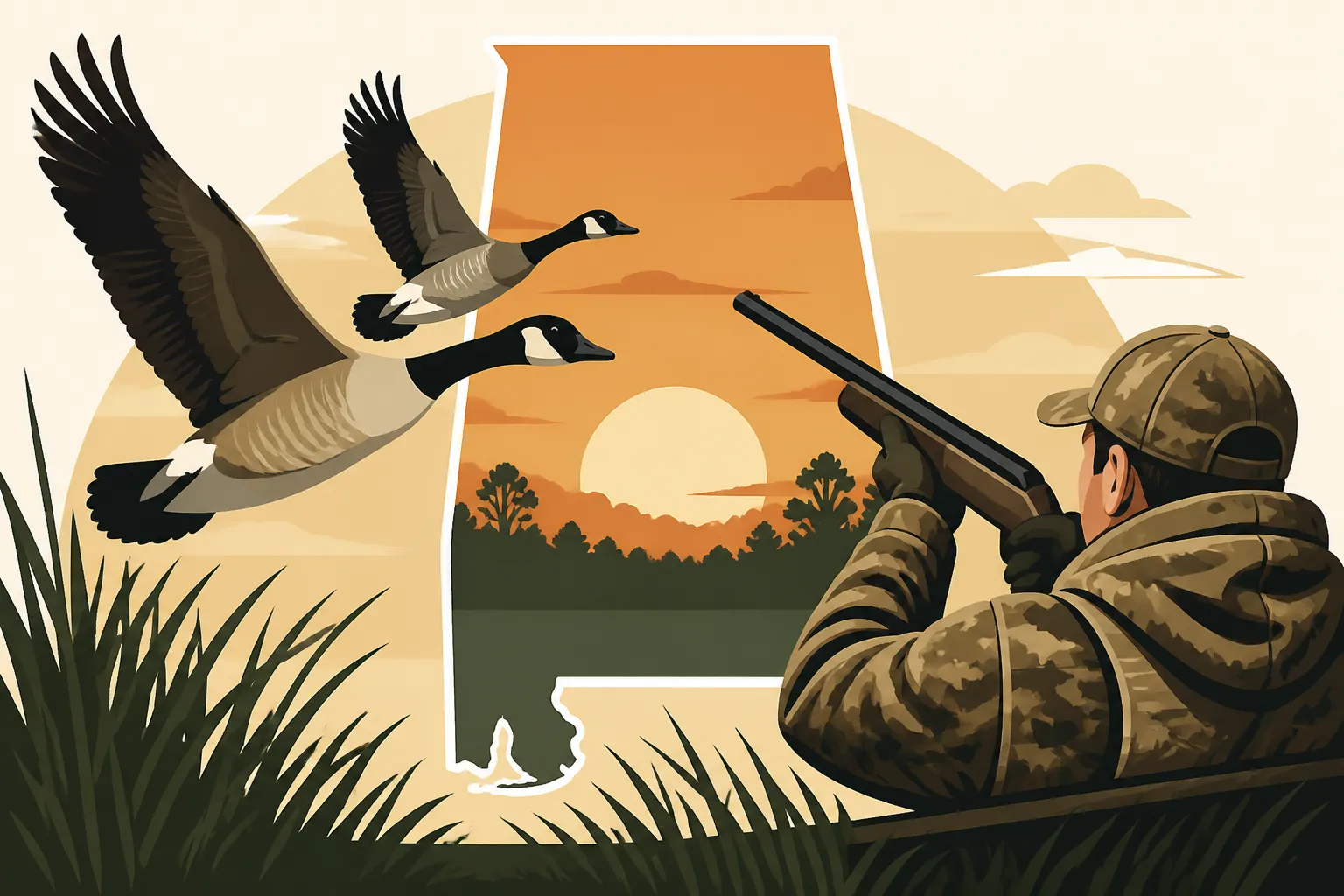
When we talk about "dark geese" in Alabama, we're primarily referring to Canada geese. These are the big, familiar birds with the black neck and white chinstrap. Their season often runs in a "split" format, meaning there's an early short season, a break, and then a longer, main season. This split structure is designed to capitalize on different waves of migration. For instance, the early split might target resident Canada geese or early migrants, while the later, longer segment aims for the larger influx of birds that arrive as winter deepens.
For example, in recent years, the North Zone might see an early segment for Canada geese in early October, followed by a much longer season from late November through late January. The Middle and South Zones will have their own specific dates, often opening a bit later than the North Zone to account for the later arrival of migrating birds further south. It’s crucial to remember that these dates can shift slightly year to year based on federal frameworks and state biological assessments, so always consult the current Alabama Waterfowl Hunting Regulations. Knowing these dates is half the battle won, preventing that sinking feeling of showing up to the blind only to realize the season isn't open yet.
Light Goose Season and the Conservation Order
Now, here's where things get really interesting – and often confusing – for many hunters: the light goose season, which specifically targets Snow and Ross's geese. Unlike Canada geese, light geese in North America have seen population booms that, in many areas, are causing significant damage to their Arctic breeding grounds. To address this, the U.S. Fish and Wildlife Service, in cooperation with states like Alabama, implemented the Light Goose Conservation Order. This isn't your typical hunting season; it's a special management tool.
The Conservation Order usually runs for an extended period, often from late January or early February well into March, beyond the regular waterfowl season. The rules are much more liberal than standard hunting regulations. For instance, you can use electronic calls, unplugged shotguns (meaning no three-shot limit), and there are extremely generous, often unlimited, bag limits. The goal is to maximize harvest to help reduce the population pressure on their fragile Arctic habitats. It's a fantastic opportunity for hunters to experience high-volume shooting and contribute to a vital conservation effort, but it's important to understand these are special rules that only apply to Snow and Ross's geese during the Conservation Order period, and not to other goose species or during regular waterfowl seasons. It’s truly a different ballgame than typical waterfowl hunting, offering a unique challenge and reward.
Deciphering Bag Limits for Different Goose Species
Once you've got a handle on the zones and dates, the next big piece of the puzzle is understanding how many geese you're actually allowed to harvest. Like seasons, bag limits are designed to manage populations sustainably, and they vary significantly between dark geese and light geese. Overlooking these limits can quickly turn a successful hunt into a legal headache, so pay close attention.
Daily Bag and Possession Limits for Canada Geese
For Canada geese, which fall under the "dark goose" category, the daily bag limit is pretty straightforward, but the possession limit adds another layer to consider. In Alabama, the daily bag limit for Canada geese is typically 5 birds. This means you can harvest up to five Canada geese in any single day of hunting. Simple enough, right? The trick comes with the possession limit, which is usually three times the daily bag limit – so, 15 Canada geese.
What does this mean in practice? Let's say you're hunting near the Tennessee River for waterfowl, and on Monday, you bag five Canada geese. You take them home, clean them, and store them. On Tuesday, you go out again and bag another five. You now have ten geese in your possession (five from Monday, five from Tuesday). You can do this one more time, hunting and taking five on Wednesday, bringing your total to fifteen in possession. However, if you already have 15 whole or processed geese from previous hunts stored in your freezer at home, you cannot legally harvest any more until some of those birds are consumed, gifted, or otherwise disposed of, bringing your possession total below the limit. This rule prevents hunters from stockpiling large quantities of game beyond what's deemed reasonable, ensuring fair chase and resource distribution. It's a common point of confusion, so always keep your total number of unconsumed birds in mind.
Generous Limits for Snow and Ross's Geese
Now, remember how we talked about the Light Goose Conservation Order? This is where those generous limits really come into play. Because Snow and Ross's goose populations are so high, threatening their Arctic breeding grounds, the bag limits during the Conservation Order are designed to encourage maximum harvest. We're talking seriously high numbers here.
During the Conservation Order, the daily bag limit for Snow and Ross's geese is often 25 birds, and there is no possession limit. That's right, no possession limit. You can shoot 25 birds today, 25 tomorrow, and 25 the next day, and legally keep every single one of them. This is a stark contrast to the Canada goose limits and underscores the urgency of the conservation effort. It's not uncommon for hunters to participate in large-scale hunts, sometimes organized by outfitters specializing in these events, where dozens, even hundreds, of light geese might be taken over a few days. It's an intense, action-packed form of hunting that directly contributes to managing an overabundant species. However, always double-check the current year's regulations because, while these liberal rules are generally consistent, specific details can be adjusted.
The Role of the Alabama Dark Goose Bag Limit in Management
The establishment of limits, particularly for dark geese like Canada geese, is a sophisticated process involving both state and federal agencies. The Alabama Department of Conservation and Natural Resources (ADCNR) works closely with the U.S. Fish and Wildlife Service to set these regulations based on annual population surveys, migration patterns, and overall health of the flyway. The Alabama Dark Goose Bag Limit isn't just a random number; it's a carefully considered management tool.
These limits aim to provide ample hunting opportunities for sportsmen while ensuring the long-term sustainability of the Canada goose population. If populations are trending downward, limits might be reduced; if stable or increasing, they might be maintained or even slightly expanded. This adaptive management approach is critical for the health of the resource. As hunters, respecting these limits isn't just about avoiding a ticket; it's about being responsible stewards of the wildlife we cherish. It’s part of the broader conservation ethic that defines ethical hunting.
| Goose Species | Zone Application | General Season Dates (Example) | Daily Bag Limit | Possession Limit | Special Rules/Notes |
|---|---|---|---|---|---|
| Canada Goose (Dark) | North, Middle, South | Split season (e.g., Oct & Nov-Jan) | 5 | 15 | Standard migratory bird rules apply |
| Snow/Ross's Goose (Light) | Statewide | Extended (e.g., Feb-Mar) | 25 | None | Light Goose Conservation Order: Electronic calls, unplugged guns, extended hours |
Essential Licenses, Stamps, and Certifications
You can have all the season dates and bag limits memorized, but without the proper paperwork, you’re not ready to hit the field. Alabama has a specific set of licenses, stamps, and certifications that are absolutely mandatory for anyone hunting migratory birds, including geese. It’s easy to forget one small detail, but doing so can result in hefty fines and the loss of hunting privileges. Don't let a simple oversight ruin your hunt!
State and Federal Requirements for Waterfowlers
To legally hunt geese in Alabama, you'll need several key pieces of documentation. First and foremost, you'll need a valid Alabama hunting license. For residents, this could be an annual All-Game license or a Small Game license if you're only hunting small game and migratory birds (though most goose hunters opt for all-game). Non-residents will need a non-resident hunting license, which can be purchased for different durations like 3-day, 10-day, or annual. Beyond the basic hunting license, you'll need a state-specific waterfowl stamp – the Alabama State Duck Stamp. This stamp contributes directly to waterfowl habitat conservation within Alabama.
But wait, there's more! Because geese are migratory birds, federal regulations also apply. This means you must purchase a Federal Duck Stamp (often called a Migratory Bird Hunting and Conservation Stamp). These stamps are valid nationwide and are crucial for funding wetlands conservation across the country. You can typically purchase both state and federal stamps online through the ADCNR website, at probate offices, or from authorized license agents. Always make sure you have proof of purchase on your person while hunting, whether it's a physical stamp or an electronic copy on your phone.
The Importance of HIP Certification
The Harvest Information Program, or HIP, is another non-negotiable requirement for anyone hunting migratory birds in Alabama, including geese, doves, woodcock, and more. Even if you've got all your licenses and stamps lined up, forgetting HIP certification can land you in trouble. It’s one of those things that seems small, but it’s mighty important for wildlife management.
HIP is essentially a survey program. When you register for HIP, you'll be asked a few simple questions about your migratory bird hunting success from the previous season. This data is collected by the U.S. Fish and Wildlife Service and helps biologists estimate the harvest of various migratory game bird species. This information is vital for setting future season lengths and bag limits, ensuring that populations remain healthy. The good news is that obtaining your Alabama Migratory Bird Certification (HIP) is incredibly easy and usually free after you purchase your hunting license. You can typically do it online, over the phone, or at a license vendor. It usually involves answering a couple of short questions about what you hunted last year. Even if you didn't hunt migratory birds last year, you still need to register and report that fact. Just remember to do it before you head out, and you’re good to go.
Legal Methods and Special Regulations for Goose Hunting
Beyond the paperwork, knowing how you can legally hunt geese in Alabama is just as important. Regulations govern everything from the type of firearm you can use to when you can shoot and even what kind of decoys are allowed. While some rules are standard across all waterfowl, the Light Goose Conservation Order once again introduces some unique liberties that are critical to understand.
Permitted Firearms, Ammunition, and Shooting Hours
For goose hunting in Alabama during the regular season, the standard rules for migratory birds apply to firearms and ammunition. You are generally restricted to shotguns that are 10-gauge or smaller, and they must be plugged to hold no more than three shells (one in the chamber, two in the magazine). This three-shot limit is a long-standing federal regulation for migratory birds. As for ammunition, only non-toxic shot is allowed for all waterfowl hunting. This means lead shot is absolutely prohibited. Common non-toxic alternatives include steel, bismuth, or tungsten alloys. This rule is in place to protect waterfowl from ingesting spent lead shot, which can cause lead poisoning.
Shooting hours are also strictly regulated. For geese, just like other waterfowl, legal shooting hours typically begin one-half hour before sunrise and end at sunset. Using a reliable app or watch that automatically calculates sunrise and sunset times for your specific location is highly recommended to avoid any accidental violations. Showing up too early or staying too late, even by a few minutes, can result in a citation, which is a miserable end to any hunt.
Decoys, Electronic Calls, and Liberal Rules for Light Geese
During the regular Canada goose season, hunters can use traditional decoys, like full-body or silhouette spreads, to attract birds. Motion decoys are generally allowed, but there are usually restrictions on live decoys (they are almost universally prohibited for migratory birds) and baiting. Artificial lures or calls that imitate goose sounds are also perfectly legal.
However, the Light Goose Conservation Order is where the rules really loosen up to facilitate higher harvest rates. For Snow and Ross's geese during this special period, several methods that are typically illegal for other migratory birds become permissible:
- Electronic Calls: You can use electronic calling devices to broadcast goose sounds, which is extremely effective for attracting large flocks.
- Unplugged Shotguns: The three-shot limit is lifted, allowing you to use shotguns with their full magazine capacity, increasing your firepower.
- Extended Hours: While still starting one-half hour before sunrise, shooting hours can sometimes extend beyond sunset, sometimes even until one-half hour after sunset, though this specific detail can vary, so always check the current regs.
- No Daily/Possession Limits: As mentioned earlier, during the Conservation Order, there are no daily or possession limits on light geese.
These liberal rules make light goose hunting during the Conservation Order a unique experience, often involving large spreads of hundreds of decoys and high-energy shooting. It's a fantastic opportunity, but it’s critical to remember that these exceptions only apply to Snow and Ross’s geese during the Conservation Order and not to Canada geese or other waterfowl during regular seasons.
Private vs. Public Land Considerations
Where you choose to hunt geese will also impact your specific rules and considerations. On private land, you'll need explicit permission from the landowner. Always get this permission in advance, and ideally, in writing to avoid any misunderstandings about Alabama Trespass and Permission Law. If you're hunting on private farmland, especially in areas where Canada geese often feed, such as fields of cut corn or winter wheat, your setup and tactics will differ from hunting on public waterways.
Alabama offers numerous public land opportunities for waterfowl hunters, including Wildlife Management Areas (WMAs) and National Wildlife Refuges. However, these areas often have their own specific rules on top of statewide regulations. For instance, some WMAs might have special sign-in/sign-out procedures, restrictions on vehicle access, or designated hunting zones. Federal lands like the Wheeler National Wildlife Refuge or Eufaula National Wildlife Refuge have very specific regulations, often requiring quota permits or daily drawings, and might have stricter rules regarding blinds or decoy placement. Always check the specific regulations for any WMA or refuge you plan to hunt well in advance. Resources like GoHunt can help you scout and understand land ownership and public access boundaries, which is crucial for public land hunting.
Practical Tips for a Successful Goose Season
Understanding the rules is the foundation, but applying that knowledge effectively in the field is what leads to success. Goose hunting can be incredibly rewarding, but it often requires dedication, scouting, and the right approach. Let's talk about some practical strategies to make your Alabama goose season a memorable one.
Scouting for Goose Hotspots
You can have the best gear and the perfect call, but if you're not where the geese are, you're just sightseeing. Effective scouting is paramount for goose hunting. Geese are creatures of habit; they need food, water, and safe roosting areas. In Alabama, this often means focusing on large agricultural fields, especially those with corn, soybeans, or winter wheat stubble. Canada Geese on Alabama Farmland are a common sight, making these areas prime hunting locations.
Start by driving rural roads at dawn and dusk, looking for concentrations of birds flying to and from feeding areas. Pay attention to fields where geese are already present – these are your hotspots. Look for signs like droppings and tracks. If you’re scouting public lands like the Tennessee River Delta for Waterfowl, focus on large open water areas or adjacent agricultural fields. Using mapping apps like GoHunt can help you identify potential feeding grounds and roosting lakes, allowing you to mark waypoints and plan your approach long before opening day. A few hours of dedicated scouting can save you days of fruitless hunting.
Setting Up for Success: Blinds and Decoy Spreads
Once you've found your geese, the setup is critical. Geese have excellent eyesight and are notoriously wary, so concealment is key. Depending on your hunting location, you might use different types of blinds. In open agricultural fields, a layout blind is often the most effective. These low-profile blinds allow you to lie flat, covered by stubble or brush, disappearing into the field until it's time to shoot. For hunting near water, or along field edges with taller cover, a panel blind or an A-frame blind brushed in with natural vegetation can work well. The goal is to blend seamlessly with your surroundings.
Decoy spreads are equally important. For Canada geese, a spread of a few dozen full-body or shell decoys, perhaps with a few feeder decoys, can be very effective. Positioning them to mimic a flock that has just landed and is feeding comfortably can draw in passing birds. If you're targeting light geese during the Conservation Order, you might deploy hundreds, sometimes thousands, of decoys, including white rags or silhouettes, to create a massive, highly visible spread. Sometimes adding a few motion decoys or fliers can add realism. Understanding how geese approach and land into the wind is also crucial for decoy placement – always position your landing zone so birds are working into the wind and finishing over your blinds. Check out tips for Layout Blind Hunting Delta Farm Fields for specific setup strategies in different terrain.
Staying Informed with ADCNR and Online Resources
The world of hunting regulations is dynamic, and what was true last year might have minor, but critical, changes this season. It's not enough to just remember general rules; you must commit to staying informed. The Alabama Department of Conservation and Natural Resources (ADCNR) website is your absolute best source for the most current and official regulations. They publish an annual Waterfowl Hunting Guide that details all season dates, bag limits, and special rules for each zone. Download it, print it, read it thoroughly, and keep it handy.
Beyond official sources, various online communities and forums for Alabama hunters can be great for sharing information and asking questions. Just be sure to cross-reference any advice with the official ADCNR regulations. Tools like GoHunt are also excellent for staying up-to-date, as they often integrate regulation changes and boundary updates directly into their mapping platforms, giving you real-time information at your fingertips. Make it a habit to check for updates a few weeks before the season opens, and even periodically throughout the season, just in case any emergency closures or changes are announced. This diligence ensures you're always hunting legally and ethically.
Disclaimer
Please be aware that hunting regulations, season dates, and bag limits are subject to change. While this guide provides comprehensive information, it is crucial to consult the most current official Alabama Department of Conservation and Natural Resources (ADCNR) hunting regulations before heading afield. This content is for informational purposes only and does not constitute legal advice. Always prioritize safety and ethical hunting practices.