Alabama Feral Hog Trapping Rules
Feral hogs are a scourge on Alabama’s landscape, causing untold damage to crops, timber, and native wildlife habitat. If you're tired of seeing your fields rooted up or worried about deer fawn predation, trapping can be one of the most effective, year-round strategies to get these destructive critters under control. This guide will walk you through the specific rules and practical advice for trapping feral hogs in the Yellowhammer State, helping you understand how to legally and effectively combat this persistent nuisance.
Understanding Alabama's Feral Hog Status and General Rules
Feral hogs are an invasive species, considered nuisance animals in Alabama, which means they come with a unique set of regulations compared to traditional game animals. This status is critical because it dictates how and when you can hunt or trap them, largely freeing them from the strict season dates and bag limits applied to deer or turkeys. The state views them as an animal that needs to be removed, not managed for population growth.
The "Nuisance Animal" Designation
Unlike a white-tailed deer or a wild turkey, which have designated hunting seasons, specific bag limits, and often weapon restrictions, feral hogs are classified as a nuisance species. This isn't just a label; it's a legal framework that allows for more aggressive management strategies. Essentially, the Alabama Department of Conservation and Natural Resources (ADCNR) wants you to take as many hogs as you can, whenever you can, using legal means. This is a crucial distinction that many new hunters or landowners sometimes misunderstand. It means that on private land, you don't need to worry about open seasons for hogs; they're fair game all year long. This provides immense flexibility for landowners trying to mitigate damage.
General Year-Round Opportunities
Because of their nuisance status, feral hogs can be trapped year-round across Alabama. There are no closed seasons for hogs, and no daily or seasonal bag limits. If you have permission on private land, you can set traps any day of the year and keep every hog you catch. This continuous opportunity is vital because hogs reproduce incredibly fast. A sow can have multiple litters in a year, with each litter averaging 4-8 piglets. If left unchecked, a small group of hogs can explode into a massive problem in just a few seasons. The year-round nature of hunting and trapping is a direct response to this rapid reproductive rate, acknowledging that without constant pressure, their numbers will quickly overwhelm any control efforts. This aligns perfectly with the state's Alabama's Year-Round Hog Rule on Private Land.
Licensing Requirements for Feral Hog Trapping
When it comes to trapping hogs, the question of licensing can sometimes be a bit murky, especially if you're primarily a deer hunter used to strict requirements. For residents, if you're trapping on your own private property, you generally don't need a hunting license. The property owner or their immediate family members can trap hogs without a license. However, if you are trapping on private land that you don't own, or on public land, you will need a valid Alabama hunting license. This ensures you're legally authorized to engage in hunting or trapping activities across the state. Non-residents always need an Alabama hunting license to trap hogs, regardless of whether it's on private land they have permission for or public land. It's always a good idea to double-check the latest regulations on the Outdoor Alabama website or through resources like GoHunt, as rules can sometimes be updated.
Specific Trapping Regulations for Private Land
Trapping on private land offers the most flexibility when it comes to feral hogs in Alabama. Landowners have significant leeway to protect their property from the extensive damage caused by these animals. This freedom is essential, as the financial and ecological impact of hogs on agriculture and natural resources can be devastating.
Landowner Permission and Trap Setting
The absolute first rule for trapping on private land, if it's not your own, is securing explicit permission from the landowner. This isn't just a courtesy; it's a legal requirement in Alabama. You should always have clear, documented permission, especially if you're not an immediate family member. Many landowners are desperate for help with hog control, so don't be shy about asking. Once you have permission, you can generally set traps anywhere on that private property. There are no state-mandated setbacks from property lines or roads for hog traps on private land, though it's always wise to place traps in discreet locations away from high-traffic areas or areas where non-target animals (like domestic pets) might wander. Remember to always know your property boundaries, and a mapping app or a tool like GoHunt can be invaluable for pinpointing these lines precisely. Understanding Do Feral Hogs Need Landowner Permission? is paramount before you even consider setting a trap.
Legal Trap Types and Construction
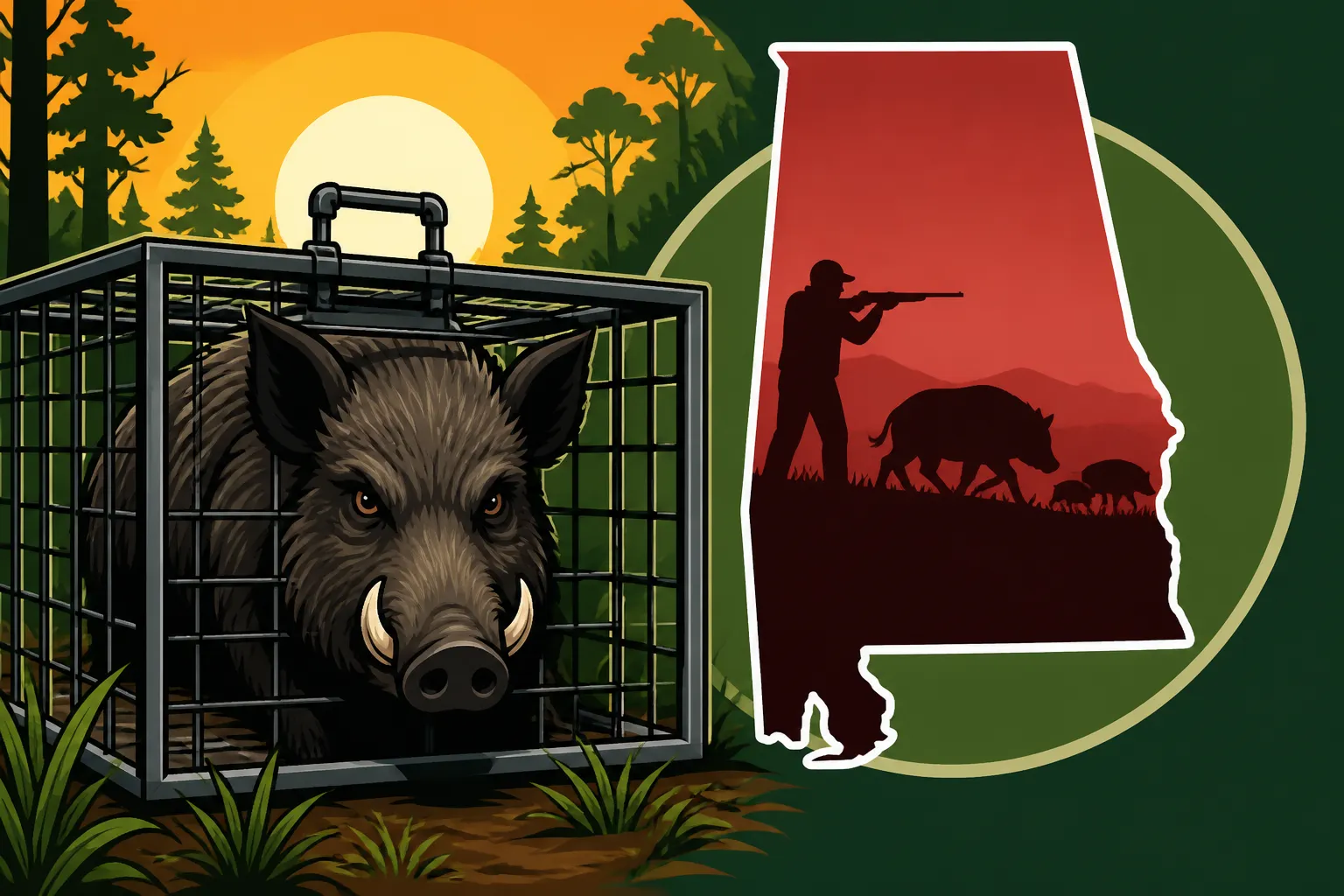
Alabama regulations are fairly broad when it comes to the types of traps you can use for feral hogs on private land. The most common and effective traps are large, sturdy "corral traps" or "box traps" made of heavy-gauge wire mesh or livestock panels. These are designed to capture multiple hogs at once. There are no specific dimensions or materials mandated by the state, but common sense and effectiveness dictate the design. The key is that the trap must be humane and allow for the safe containment of the animals. Snares, while legal in some contexts for furbearers, are generally not recommended for feral hogs due to the risk of injury to non-target animals and the difficulty in safely dispatching a snared hog. The focus should be on traps that capture hogs alive, allowing for identification and proper dispatch. When thinking about Trapping Alabama Feral Hogs, the type of trap you choose will directly impact your success.
Baiting Regulations and Trap Monitoring
Baiting is an integral part of successful hog trapping, and on private land in Alabama, the rules are very permissive. You can use almost any bait you find effective. Sour corn is a classic choice, fermenting quickly and attracting hogs with its strong smell. Other options include commercial hog attractants, feed grains, or even old pastries. The key is consistency in your baiting strategy to establish a reliable feed source that hogs will frequent. You can learn more about Building and Freshening a Hog Bait Site to maximize your success.
Once traps are set, they must be monitored regularly. While there isn't a specific state-mandated check interval for hog traps on private land (unlike some furbearer trapping laws), ethical trapping dictates checking traps at least every 24 hours. This minimizes stress on trapped animals, allows for timely dispatch, and reduces the chance of non-target animals being held for too long. If you catch a non-target animal, such as a deer or a domestic animal, it must be released unharmed immediately.
Trapping Hogs on Alabama Public Lands and WMAs
Trapping feral hogs on public lands in Alabama, including Wildlife Management Areas (WMAs) and National Forests, comes with a much stricter set of rules and limitations than on private property. This is primarily due to the need to manage public resources for a variety of users and to ensure safety and conservation for all wildlife. Many hunters rely on these lands, so understanding Public Hunting Land in Alabama is crucial.
Public Land Restrictions and Permits
While hog hunting with firearms is often permitted on WMAs and National Forests during designated seasons, trapping hogs on these public lands is generally much more restrictive, if not outright prohibited, for the average citizen. Each WMA has its own specific set of regulations, and some National Forests may have specific rules regarding the placement and use of traps. In most cases, if trapping is allowed at all, it's typically done by ADCNR staff or authorized contractors as part of specific wildlife management objectives, rather than by individual hunters.
If you are considering any form of trapping on public land, you must first consult the specific WMA regulations or National Forest rules, usually available on the Outdoor Alabama website or through the district Ranger office. These rules often require special permits, specify trap types, and dictate monitoring schedules. Simply holding a valid Alabama WMA Permit Requirement for hunting does not automatically grant you permission to trap. It's never safe to assume that because you can hunt hogs, you can also trap them without explicit permission.
Why Public Land Trapping is Different
The rationale behind the stricter rules on public land is multifaceted. Firstly, public lands see a high volume of recreational users beyond just hunters – hikers, campers, birdwatchers, and equestrian riders. Large, unattended hog traps can pose a safety hazard to people and their pets. Secondly, public lands are home to a wider array of non-target wildlife that could be accidentally trapped, including endangered species or protected animals. The risk of unintended capture and harm is much higher without careful management. Thirdly, the ADCNR employs its own strategies, like Deer Drives on Alabama Public Land or targeted removal operations, to manage hog populations on public property, which might conflict with individual trapping efforts.
Furthermore, public land regulations often require adherence to more stringent rules regarding baiting, especially if it could attract other wildlife, or if traps might be considered "abandoned property" if not clearly marked and permitted. For specific WMAs like Skyline Wildlife Management Area or Barbour Wildlife Management Area, these rules are clearly outlined. Always do your homework thoroughly.
Practical Considerations for Successful Hog Trapping
Successfully trapping feral hogs is a mix of understanding the regulations, applying effective fieldcraft, and having the right equipment. It’s an ongoing battle, and consistency is often the most important factor for long-term control.
Choosing the Right Location and Bait
Location is king when it comes to hog trapping. You need to identify areas with fresh hog sign: rooted-up ground, rubs on trees, distinct hog trails, and wallows. Look for transition areas, like where woods meet agricultural fields, or along creek bottoms and dense cover. Hogs love thick cover for bedding and will travel to open areas to feed, especially at night. Setting your trap along these travel corridors or near known feeding sites significantly increases your chances of success.
For bait, sour corn (corn soaked in water for several days to ferment) is arguably the most common and effective. Its strong, pungent odor travels far and is highly attractive to hogs. Start by pre-baiting an area for several days without setting the trap, letting the hogs get comfortable feeding at the site. Once they are regularly visiting, then set your trap. Remember, Building and Freshening a Hog Bait Site consistently is crucial. You might also consider using a remote camera, like those often tracked with apps like GoHunt, to monitor activity and confirm hog presence before setting your trap.
Trap Construction and Management
Effective hog traps need to be robust. Hogs are incredibly strong and intelligent animals. A flimsy trap will quickly be destroyed or circumvented. Use heavy-gauge hog panels or cattle panels, securely fastened together. The gate mechanism is critical – a root-style gate that swings inward and locks, or a saloon-door style gate, are common and effective. Ensure the trap is large enough to hold multiple animals, as hogs often travel in sounders (groups).
Once a hog is trapped, you'll need a plan for dispatch. A .22 long rifle or handgun to the head is typically recommended for a humane, quick dispatch. Always prioritize safety for yourself and any others present. Ensure a clear backdrop and proper firearm handling. After dispatch, you'll need to decide what to do with the carcass. Hogs can carry diseases like brucellosis, so proper handling is important. Wear gloves and take precautions. Some hunters process the meat, while others dispose of the carcass responsibly, often through burial or by contacting local rendering services. For practical advice on post-shot handling, refer to Handling a Hog After the Shot.
Ethical Considerations and Disease Prevention
Ethical trapping means checking your traps regularly, dispatching animals humanely, and releasing non-target animals unharmed. This isn't just about following rules; it's about responsible wildlife management. Hogs can be stressed when confined, and prolonged captivity can lead to injury or death from dehydration or exposure.
Regarding disease, feral hogs are known carriers of several diseases that can affect humans, livestock, and other wildlife, including brucellosis and pseudorabies. Always wear gloves when handling hogs, their carcasses, or trap components that have been in contact with them. Avoid direct contact with blood and other bodily fluids. Cook pork thoroughly to an internal temperature of 160°F (71°C). If you notice any signs of disease in a trapped hog, such as lesions or abnormal behavior, it's best to dispose of the carcass without consuming it and report your observations to the ADCNR. This is particularly relevant with the ongoing concerns about Chronic Wasting Disease Risk in Alabama in deer, reminding us that monitoring wildlife health is a critical part of hunting and trapping.
| Aspect | Private Land Trapping | Public Land Trapping (WMAs/National Forests) |
|---|---|---|
| Permission | Landowner permission required (explicit, preferably written). | Special permit or authorization almost always required. |
| Licensing | Residents: Not needed on own land. Needed on others' private land. Non-residents: Always needed. | Hunting license + any specific trapping permits required. |
| Season/Limits | Year-round, no bag limits. | Highly restricted, often prohibited for individuals, or specific authorized periods. |
| Trap Types | Generally open (corral, box traps recommended). No snares for hogs. | Highly specific, often limited to ADCNR or contractor use. |
| Baiting | Permitted, wide variety of baits effective (sour corn popular). | Highly restricted, often prohibited due to impact on other wildlife. |
| Monitoring | Ethical to check every 24 hours (not legally mandated for hogs). | Strict check intervals, often legally mandated (e.g., 24 hours). |
| Carcass Disposal | Process for meat, or responsible burial/rendering. | Specific disposal requirements by managing agency. |
| Purpose | Damage control, meat harvest. | Wildlife management, disease control by agency. |
Disclaimer
Please remember that hunting and trapping regulations can change. While this guide provides a comprehensive overview of Alabama's feral hog trapping rules, it is your responsibility to consult the most current regulations published by the Alabama Department of Conservation and Natural Resources (ADCNR) before engaging in any trapping activities. Always prioritize safety, ethical practices, and respect for wildlife and private property.