Which Counties Sit in Alabama’s CWD Zone
Finding out your favorite hunting grounds, or even just your home county, falls under a Chronic Wasting Disease (CWD) management zone can be a real punch to the gut. It creates instant anxiety, confusion about new rules, and worry about the health of the deer herd you cherish. This guide is here to untangle the complexities of Alabama's CWD zones, specifically clarifying which counties are currently affected, why these decisions were made, and what it means for every hunter and landowner.
Understanding the CWD Threat in Alabama
Chronic Wasting Disease is a nasty, always-fatal neurological disease that affects cervids – that's deer, elk, moose, and caribou. It's caused by abnormal proteins called prions, and once an animal gets it, there's no recovery. The biggest worry is its highly contagious nature, spreading through direct animal-to-animal contact or indirectly through contaminated environments like soil and vegetation. For us hunters, it’s a terrifying prospect because it can decimate deer populations and, even more concerning, scientists are still studying any potential risks to humans.
What is CWD and Why It Matters
Imagine a disease that slowly, agonizingly, takes away a deer's ability to function. That's CWD. Deer infected with CWD might appear healthy for an extended period, sometimes up to two years, which makes detection incredibly difficult until the disease is quite advanced. Symptoms eventually include drastic weight loss, stumbling, listlessness, neurological signs, excessive salivation, and behavioral changes. It's truly heartbreaking to witness. The sheer gravity of CWD lies in its persistence and long-term implications for wildlife management. It can contaminate soil for years, potentially affecting future generations of deer even if infected animals are removed. This isn't just about losing a few deer; it's about safeguarding the entire white-tailed deer population, which is a cornerstone of Alabama's natural heritage and hunting tradition. The prospect of losing the healthy, vibrant deer herd we've worked so hard to maintain is a frustrating thought for every Alabamian hunter.
Alabama's First Cases and Initial Response
The news hit Alabama like a cold front in early 2024: CWD had officially been detected in the state. Specifically, the first confirmed cases were identified in hunter-harvested deer in Lauderdale County. This wasn't something that just popped up overnight; wildlife agencies like the Alabama Department of Conservation and Natural Resources (ADCNR) had been actively monitoring for CWD for years, implementing proactive testing programs and preparing for this very scenario. Once those first positive samples came back from the lab, an immediate and robust response was triggered. This involved establishing a CWD Management Zone, which included not just the county where the cases were found but also adjacent areas deemed at high risk for spread due to deer movement. The swift action was critical to try and contain the disease and prevent it from becoming more widespread across the state. This initial period was a whirlwind of information, often confusing for hunters trying to understand the new mandates.
Distinguishing the High-Risk Zone from the Management Zone
When you hear about CWD zones, it's important to understand there are often different tiers of designation based on the level of risk and detection. In Alabama's case, the ADCNR established a broader "CWD Management Zone" to encompass all areas where heightened surveillance and specific regulations are applied. Within this larger management zone, there's often an even more concentrated "High-Risk Zone" (HRZ), which pinpoints the immediate vicinity of known positive cases or areas with a higher prevalence of the disease. The High-Risk Zone typically has the most stringent rules, reflecting the urgent need to control the spread in those specific areas. Think of it like concentric circles: the HRZ is the bullseye, and the CWD Management Zone is the larger target around it. The specific regulations, such as mandatory testing and carcass movement rules, can differ slightly between these zones, which is why paying close attention to the ADCNR's announcements is crucial.
The Counties Making Up Alabama's CWD Zone
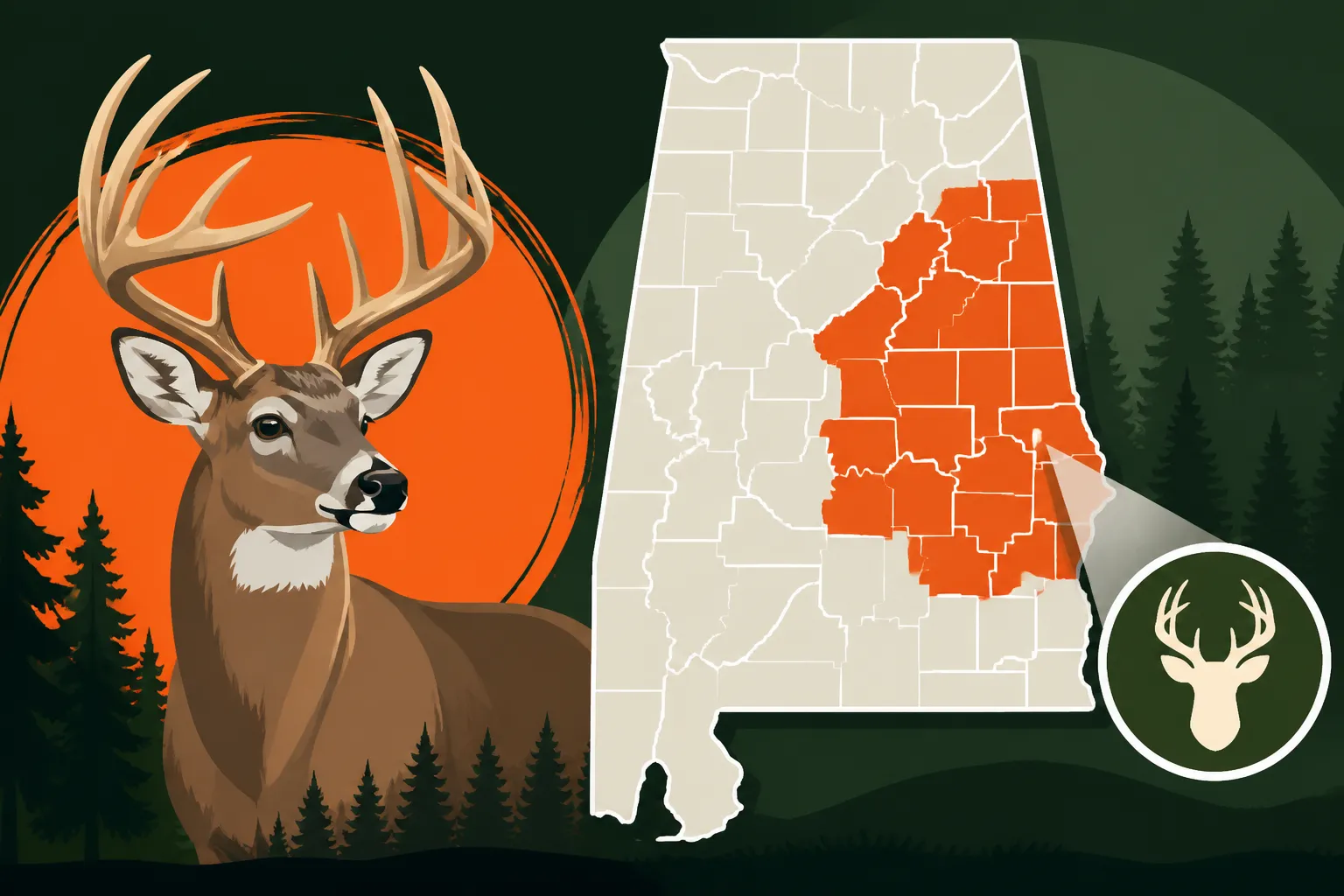
Currently, Alabama's CWD Management Zone is focused in the northwest corner of the state, directly impacting three counties. This designation isn't arbitrary; it's based on confirmed cases and the geographical proximity and deer movement patterns that could facilitate disease transmission. Knowing these counties is the first step for any hunter planning to pursue deer in that region.
Lauderdale County: The Epicenter
When CWD was first detected in Alabama, Lauderdale County became the undeniable epicenter. All initial positive CWD samples were collected from hunter-harvested deer within its borders. This isn't to say Lauderdale County is "blighted" or that its deer herd is doomed, but rather that it's the primary area where the disease has manifested. As such, Lauderdale County is entirely included within the CWD Management Zone. This means anyone hunting, harvesting, or even just transporting deer in or through Lauderdale County needs to be intimately familiar with the new regulations. Local hunters have had to quickly adapt their routines, from where they process deer to how they report their harvests. If you're hunting in Lauderdale, assume all CWD protocols apply directly to you.
Colbert County's Inclusion
Immediately adjacent to Lauderdale County is Colbert County, which was also fully included in the CWD Management Zone. Even if no positive cases had been identified within Colbert's borders at the initial detection, the sheer proximity and the natural movement patterns of deer necessitated its inclusion. Deer don't recognize county lines, and a buck crossing the border from Lauderdale into Colbert could easily introduce the disease. Therefore, treating Colbert County with the same level of caution and regulation as Lauderdale is a proactive measure to prevent CWD from establishing itself more broadly. Hunters accustomed to pursuing deer in Colbert County now face the same set of new rules and responsibilities as their neighbors in Lauderdale. For those who use resources like GoHunt to scout and plan, understanding these contiguous zone boundaries is absolutely critical.
Franklin County's Role as a Buffer
The third county to be included in Alabama's CWD Management Zone is Franklin County. Unlike Lauderdale and Colbert, Franklin County's inclusion is primarily as a "buffer zone." The northern portion of Franklin County shares a border with Colbert County, making it a natural next line of defense against the potential spread of CWD. While no positive CWD cases have been found in Franklin County itself, its strategic location means it's considered at a higher risk than counties further south or east. By including it in the management zone, the ADCNR can implement heightened surveillance, carcass restrictions, and mandatory testing protocols, ensuring that if CWD does move into this area, it can be detected and addressed quickly. This proactive approach aims to create a larger containment area, giving wildlife biologists a better chance to manage the disease.
Here's a quick look at the counties in the CWD Management Zone:
| County Name | CWD Management Zone Status | Primary Reason for Inclusion | Key Implications for Hunters |
|---|---|---|---|
| Lauderdale County | Full Inclusion | First confirmed CWD positive cases identified here. Center of initial detection. | All deer harvested must follow CWD protocols, including mandatory testing and carcass restrictions. |
| Colbert County | Full Inclusion | Directly adjacent to Lauderdale County. High risk due to natural deer movement across county lines. | Same CWD protocols apply as Lauderdale County; increased surveillance. |
| Franklin County | Partial Inclusion | Shares border with Colbert County; designated as a buffer zone to prevent further southward spread. Higher risk area. | Portions of the county are under CWD regulations; strict adherence to carcass movement and testing. |
Note: While Franklin County is listed here for its role in the CWD Management Zone, always check the latest ADCNR maps for precise boundaries, as zones can be updated.
Why These Specific Counties?
The decision to include specific counties in the CWD Management Zone isn't arbitrary, nor is it meant to inconvenience hunters. It's a calculated strategy based on science, geography, and the proven patterns of disease spread. The ADCNR, in collaboration with national wildlife health experts, uses data to make these critical decisions, aiming to protect the health of Alabama's entire deer herd.
Geographic Proximity and Deer Movement
Deer are not static animals; they move. Bucks, especially, can travel significant distances during the rut, crossing multiple property lines and even county borders in search of does. If CWD is detected in one area, it's a near certainty that deer from that infected area have been interacting with deer in adjacent regions. This is precisely why Lauderdale, Colbert, and the northern part of Franklin County were selected. They form a contiguous block, a natural corridor for deer movement. By including these neighboring counties, wildlife managers create a larger area for intensified surveillance, increasing the chances of detecting early spread and implementing control measures before the disease can jump to more distant, unaffected areas. It's a common-sense approach to a complex problem, acknowledging that invisible political lines mean nothing to a wild deer.
Data-Driven Decisions by ADCNR
The ADCNR doesn't just draw lines on a map on a whim. Their decisions are heavily rooted in scientific data, epidemiological models, and extensive surveillance efforts. When the first CWD positive deer samples were confirmed in Lauderdale County, it wasn't a surprise to the department, as they had been monitoring and conducting CWD testing in Alabama for years. Every deer harvested during sampling weekends, every report of a sick deer, every piece of research on deer behavior in the region contributes to a comprehensive understanding of risk. This data-driven approach allows the ADCNR to make informed choices about where to focus their resources, where to impose regulations, and how to best manage a potential outbreak. This means the counties included in the CWD Management Zone are there because the data unequivocally points to them as the highest risk areas for detection and spread. For instance, knowing How Many Deer Have Tested CWD-Positive Since 2022 in specific areas directly informs these boundary decisions.
Preventing Further Spread
The ultimate goal behind establishing these CWD zones is simple: prevent further spread of the disease. CWD is incredibly difficult, if not impossible, to eradicate once it becomes established in a wild deer population. Therefore, containment is the primary strategy. By restricting the movement of deer carcasses, mandating testing, and discouraging practices like supplemental feeding that can concentrate deer, the ADCNR hopes to slow down or even stop the prions from moving into new territories. It's an uphill battle, and every hunter's cooperation is vital. Imagine a wildfire: you don't just put out the flames where they started; you also create firebreaks and manage the surrounding fuel to prevent it from jumping. The CWD Management Zone acts as that firebreak, an attempt to isolate the "hot zone" and protect the rest of the state's healthy deer population. This kind of proactive management, while sometimes inconvenient, is crucial for the long-term health of our wildlife.
Rules and Regulations Within the CWD Zone
Hunting within Alabama's CWD Management Zone comes with a specific set of rules and regulations designed to help contain the disease. These aren't suggestions; they are mandatory requirements that every hunter and landowner must follow. Understanding and adhering to these rules is your responsibility and a critical part of the statewide effort to combat CWD.
Mandatory CWD Testing Weekends
One of the most significant changes for hunters in the CWD Management Zone is the implementation of Mandatory CWD Testing Weekends. During these specified periods, any deer harvested within the zone must be submitted for CWD testing. This is a crucial surveillance tool for the ADCNR, providing vital data on the prevalence and geographic spread of the disease. Hunters will need to take their deer (specifically the head with at least 4 inches of neck attached) to designated sampling stations. These stations are typically staffed by ADCNR personnel who will collect the necessary tissue samples. It's a bit of extra work, certainly, but it's absolutely necessary for the long-term health of the herd. The ADCNR usually provides maps and lists of these stations, and if you use a planning tool like GoHunt, you can often overlay these locations with your hunting spots. Getting these samples is how wildlife biologists track the disease and adjust their strategies.
Carcass Movement Restrictions
Perhaps the most impactful regulation for many hunters, especially those who travel, are the Alabama Carcass Movement Restrictions. To prevent the inadvertent spread of CWD prions to unaffected areas, there are strict rules about what parts of a deer can be moved out of the CWD Management Zone. Generally, only deboned meat, clean skull plates, hides, and taxidermied mounts are allowed to leave the zone. This means you can't just throw a whole deer in the back of your truck and drive it home if "home" is outside the CWD Zone. This can be a significant logistical challenge, especially for nonresident hunters or those who process their deer at home. Hunters must field-dress their deer thoroughly and either process it completely within the CWD Zone or take it to a certified processor within the zone. This rule might seem excessive, but it's a direct response to how CWD has spread in other states, often through the movement of infected carcasses. It's a frustration, no doubt, but a necessary one to protect the wider state.
Special Baiting and Feeding Rules
Beyond harvest and carcass rules, CWD zones often come with special regulations regarding baiting and feeding deer. While Alabama has varying rules for baiting in general, in a CWD Management Zone, the prohibition of supplemental feeding and baiting is often absolute. Why? Because these practices unnaturally concentrate deer in small areas, increasing direct nose-to-nose contact. This direct contact is one of the primary ways CWD prions are transmitted between animals. Removing bait and feed sites, including mineral licks and food plots where deer are accustomed to gathering in high numbers, is a key strategy to reduce opportunities for disease transmission. It's a tough pill to swallow for many hunters who rely on these methods, but the goal is to naturally disperse the deer population, reducing close-quarter interactions that can lead to CWD spread. Always check the current regulations with the ADCNR or the Outdoor Alabama App to ensure you're compliant, as these rules can change based on disease prevalence.
Impact on Hunters and Landowners
The establishment of a CWD Management Zone brings undeniable challenges and changes for everyone involved with deer hunting and land management in the affected areas. It's a new reality that requires adaptation, education, and a collective commitment to long-term wildlife health.
Changes to Hunting Practices
For many, hunting is a tradition, a routine, and a cherished part of their annual calendar. The CWD Management Zone disrupts these routines significantly. Hunters now have to factor in mandatory testing, learn new carcass handling procedures, and be aware of restricted areas for certain activities. This isn't just an inconvenience; it can mean completely rethinking how you approach a hunt. For instance, if you usually quarter your deer at home, but home is outside the zone, you'll need to find a processor within the zone or learn to debone meat in the field. This might also mean adjusting your hunting pressure or even your target animals, focusing on harvesting more does if that's part of the management strategy to reduce deer density. The shift is not just tactical but also philosophical, moving from purely recreational hunting to a more active role in wildlife disease management. Hunters must educate themselves on the updated rules, such as those covered in Hunting the CWD Management Zone Under New Rules, to avoid unintended violations.
Challenges for Landowners and Wildlife Managers
Landowners in the CWD Zone face their own set of unique challenges. Those who lease out hunting land might see a dip in interest due to the added complexities. Farmers might worry about the health of the deer on their property and the potential impact on their land value or hunting lease income. Wildlife managers, particularly those with the ADCNR, are tasked with the immense responsibility of monitoring the disease, enforcing regulations, educating the public, and developing long-term strategies. They must navigate public perception, manage resources, and conduct extensive research to understand the disease's spread and its ecological impacts. This involves continuous Alabama Wildlife Disease Monitoring and often difficult decisions that may not be popular but are necessary for the health of the deer herd. The challenge extends to managing deer densities, which might involve encouraging hunters to harvest more deer to reduce population numbers and thereby reduce the potential for disease transmission.
The Importance of Cooperation and Reporting
Ultimately, the success of CWD management in Alabama hinges on the cooperation of hunters, landowners, and the general public. The ADCNR can set regulations, but without buy-in from those on the ground, enforcement becomes nearly impossible, and the disease can spread unchecked. It's crucial for hunters to view themselves as frontline partners in this effort. If you see a deer exhibiting signs of CWD, it's vital to report it immediately to the ADCNR. Don't approach or harvest sick animals without guidance from wildlife officials. Participating in mandatory testing weekends, even if it's inconvenient, provides invaluable data. Educating your hunting buddies, club members, and fellow landowners about the importance of these measures is also critical. We're all in this together, and the future of Alabama's deer hunting tradition depends on our collective responsibility and vigilance.
Looking Ahead: CWD Management and Future Implications
CWD is a long-term challenge, and its management in Alabama is an ongoing process. There's no quick fix or simple solution. The ADCNR, with the support of hunters, will continue to adapt strategies based on new scientific understanding and the evolving situation on the ground.
Ongoing Monitoring and Research
The fight against CWD isn't a one-and-done deal. It requires continuous, diligent monitoring and scientific research. Biologists are constantly studying how the disease spreads, its impact on deer populations, and potential management techniques. This means ongoing CWD testing, even outside mandatory weekends, and the collection of data on deer populations, movement, and health indicators. Research into things like disease resistance, environmental contamination, and effective culling strategies is vital. The ADCNR will also be keenly observing CWD Prevalence in the High-Risk Zone to understand how successful their current efforts are. As hunters, supporting these efforts, whether through participation in voluntary testing or simply by staying informed, contributes directly to the larger knowledge base that will guide future decisions. It’s an investment in the future of our hunting heritage.
Potential Expansion or Contraction of Zones
The boundaries of Alabama's CWD Management Zone are not set in stone. As more data is collected, and as the understanding of CWD in Alabama evolves, these zones could potentially expand or contract. If new positive cases are detected in adjacent counties, it's highly likely those counties would be brought into the management zone to contain the spread. Conversely, if surveillance shows sustained low or absent prevalence in certain areas over a long period, it's conceivable that some restrictions might eventually be relaxed. However, CWD is a persistent disease, so any relaxation of rules would likely be a very slow and cautious process. The dynamic nature of these zones means hunters and landowners must stay continually updated on the latest ADCNR announcements and maps. Resources like GoHunt are invaluable for keeping up with these changes. This constant state of flux can be unsettling, but it’s part of effective disease management.
The Role of Hunters in Long-Term Management
The future of Alabama's deer herd, especially concerning CWD, rests heavily on the shoulders of its hunters. We are the eyes and ears in the woods, often the first to observe unusual deer behavior or to harvest an animal for testing. Our commitment to responsible hunting practices, adherence to regulations, and active participation in monitoring efforts are paramount. This includes proper carcass disposal, reporting sick deer, participating in mandatory testing, and supporting ADCNR initiatives. Think of it as being a steward, not just a consumer, of our natural resources. Understanding the local Deer Density by Alabama Region and participating in ethical harvest management can also play a crucial role. It's about preserving the privilege of hunting for future generations and ensuring that Alabama's white-tailed deer remain a healthy and robust population, a sentiment that resonates deeply with every passionate outdoors person.
Disclaimer
Please remember that hunting regulations, especially concerning disease management zones, can change rapidly. Always consult the official Alabama Department of Conservation and Natural Resources (ADCNR) website, current hunting guides, or the Outdoor Alabama mobile app for the most up-to-date and accurate information before planning your hunt in any CWD Management Zone. This article is intended for informational purposes and should not be considered a substitute for official legal guidance.