Alabama Hog Hunting Permit Requirements
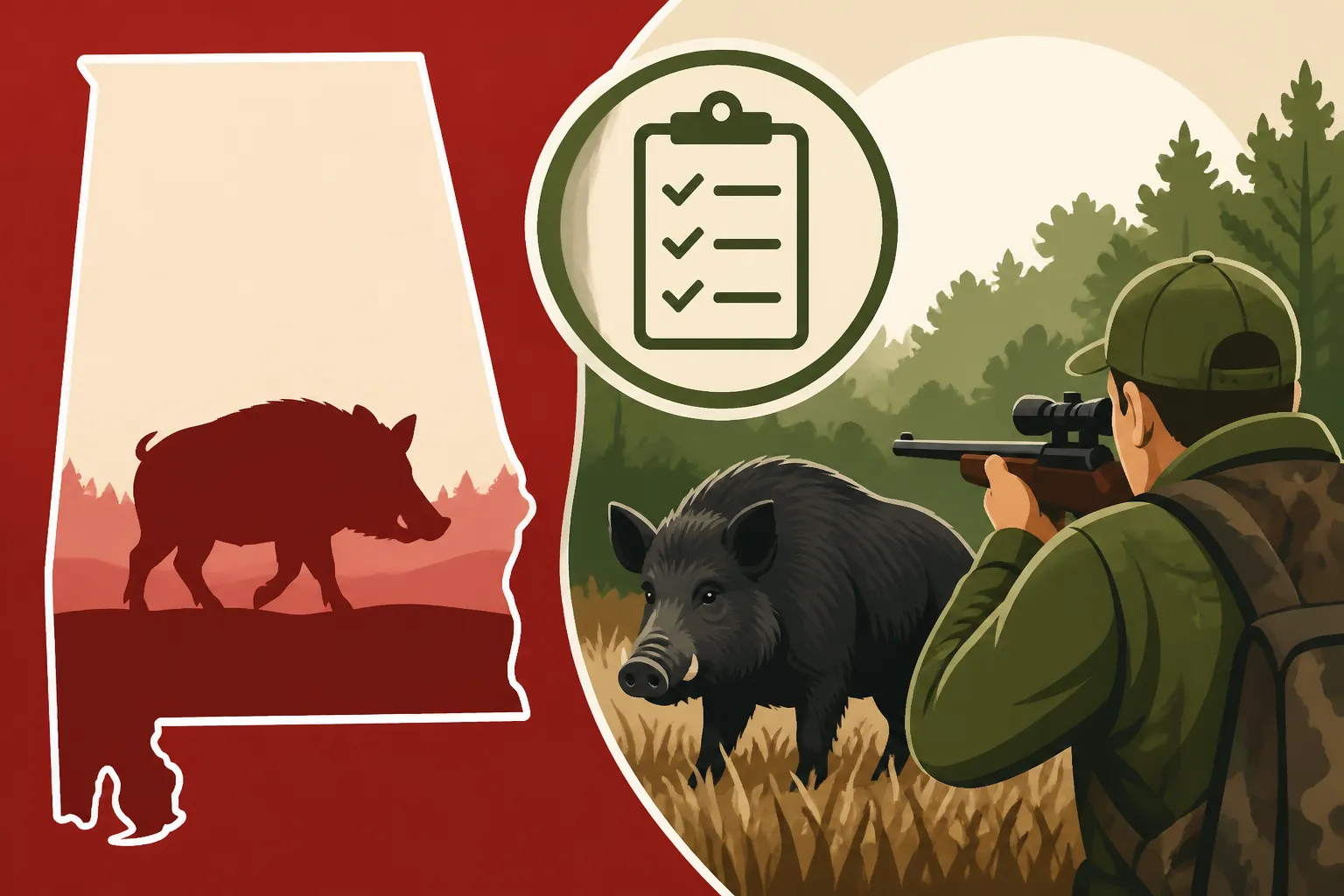
If you're an Alabama hunter, especially one new to targeting feral hogs, you've probably wondered about all the specific paperwork and permits required. It’s a natural assumption, given how regulated deer and turkey hunting can be. The good news is, for wild hogs, the rules are surprisingly straightforward and much less restrictive than for other game species. This guide will cut through the confusion and explain exactly what you need (and don't need!) to legally hunt feral hogs in the Yellowhammer State.
The Surprising Truth About Alabama Hog Hunting Permits
Many hunters, seasoned and novice alike, naturally assume that any animal you pursue in Alabama's woods or fields would require some kind of specific permit or tag, beyond a general hunting license. After all, we have separate tags for deer, specific seasons for turkey, and even different migratory bird certifications. But when it comes to feral hogs, Alabama's approach is distinctly different, and understanding why can help clarify the regulations.
Why Many Expect a Permit and Why They're Wrong
It's completely understandable to think you'd need a special permit for hog hunting. We're used to a system where each game animal has its own set of rules, bag limits, and often, an associated tag or permit fee. This helps state wildlife agencies manage populations, collect data, and fund conservation efforts. When you buy your Alabama Resident Hunting License Options or Alabama Nonresident Hunting License Options, you're often given the option to add deer tags, turkey stamps, and so on. So, when the topic of hogs comes up, it just feels like there should be another box to check.
However, feral hogs are not classified as game animals in Alabama. This is a critical distinction. Unlike white-tailed deer or wild turkeys, which are native species managed for sustainable populations, feral hogs are considered an invasive pest. They are non-native, highly destructive, and their presence causes immense ecological and agricultural damage across the state. This classification fundamentally changes how they are regulated, or rather, not regulated, in terms of harvest limits and special permits.
Alabama's Stance on Feral Hogs: Eradication, Not Management
The Alabama Department of Conservation and Natural Resources (ADCNR) views feral hogs not as a resource to be managed, but as a severe threat to be controlled and, ideally, eradicated. These animals reproduce at an astonishing rate, can quickly colonize new areas, and devastate crops, timberlands, and native wildlife habitats. They directly compete with deer and turkeys for food, destroy nesting sites for ground-nesting birds like quail and turkeys, and contribute to water quality issues.
Because of this stance, the state actively encourages hunters to remove as many feral hogs as possible, whenever possible. This means there are no closed seasons on hogs on private land, no bag limits, and no size restrictions. The primary goal is population reduction, not maintaining a healthy herd. This is a stark contrast to how we approach our cherished deer and turkey populations, where strict limits and seasons are in place to ensure long-term sustainability. This aggressive approach is clearly outlined in the broader Alabama Feral Hog Regulations.
Understanding Alabama's Year-Round Hog Regulations
While the idea of a specific "hog hunting permit" is a myth, it doesn't mean hog hunting is entirely unregulated. There are still essential rules and considerations, particularly regarding where you hunt and what licenses you possess. The key is understanding the difference between hunting on private land versus public land.
Private Land: The Wild West of Hog Hunting
This is where the lack of specific hog permits truly shines. If you're hunting feral hogs on private land in Alabama, and you have legitimate permission from the landowner, you generally do not need any special permits or tags for the hogs themselves. Your general hunting license is usually all that's required, and even that can be exempted in specific circumstances (like a resident hunting on their own land).
On private land, the rules for how you hunt hogs are incredibly flexible. You can hunt them 365 days a year, 24 hours a day, with no bag limits. This means you can pursue them with almost any legal weapon, including centerfire rifles, shotguns, archery equipment, crossbows, and even air rifles. Want to hunt at night with lights? That's perfectly legal on private land. Looking to use bait to draw them in? Go right ahead. Running dogs to catch them? That's a common and effective method. This level of freedom is practically unheard of for other species. For more detailed information, check out resources like Night Hunting Hogs With Lights on Private Land or Running Dogs on Alabama Feral Hogs. The key, above all else, is securing explicit permission from the landowner. Without that, you're trespassing, which is a serious offense, even if you're not technically breaking a "hog permit" rule.
Public Land: Where the Rules Get a Little Tricker
Hunting hogs on public land, such as Wildlife Management Areas (WMAs) or National Forests, introduces a different layer of regulation. While you still don't need a specific "hog permit," you will need to ensure you have the appropriate general hunting licenses for Alabama, and potentially specific permits for the public land area you're hunting.
For most public lands, a valid Alabama hunting license is mandatory. This is your baseline requirement for hunting any species, including nuisance animals like hogs, on state or federal lands. Beyond that, many Wildlife Management Areas require an additional WMA license or permit. These permits help fund the management and maintenance of these crucial public hunting grounds. It's vital to check the specific regulations for the WMA or National Forest you plan to visit, as they can vary slightly regarding equipment allowed, open hunting days, and other restrictions. You can find more information about these requirements in our guide on the Alabama WMA Permit Requirement. It’s a good idea to use mapping apps, like those provided by GoHunt, to verify land boundaries and ensure you're within designated public hunting areas before you even step foot in the woods. These tools can also help you scout for potential hog activity by showing you terrain features and proximity to agricultural fields.
General Hunting License Requirements
Regardless of whether you're on private or public land, if you are actively hunting and not exempt, you'll need a general Alabama hunting license. This isn't a hog-specific permit, but rather your fundamental permission to hunt in the state.
Here's a quick rundown of who needs a license:
- Alabama Residents: Generally, if you're an Alabama resident and hunting on land you own, you (and your immediate family living with you) are exempt from needing a hunting license. However, if you hunt on someone else's private land (even with permission) or any public land, you'll need a valid resident hunting license. There are various options, from annual licenses to lifetime permits, as detailed in Alabama Resident Hunting License Options.
- Non-Residents: If you're not an Alabama resident, you absolutely need a valid non-resident hunting license to hunt hogs, even on private land with permission. Alabama offers various non-resident license options, including annual and short-term choices, which you can explore further in Alabama Nonresident Hunting License Options.
- Youth & Seniors: Alabama has specific rules and exemptions for younger hunters and senior citizens. Generally, youth under 16 may hunt without a license if accompanied by a licensed adult, or under the Alabama's Under-16 and Senior License Exemption if certain criteria are met. Seniors also have discounted or lifetime license options. It’s always best to check the current regulations with the ADCNR for the most up-to-date information regarding these specific groups.
The table below summarizes the key differences in general requirements for hog hunting:
| Requirement | Private Land (with permission) | Public Land (WMA/National Forest) |
|---|---|---|
| Hog-Specific Permit | Not required | Not required |
| General AL Hunting License | Required (unless landowner exemption applies) | Always Required |
| WMA Permit | Not applicable | Required for WMAs (often in addition to AL license) |
| Season Dates | Year-round | Year-round (check specific WMA exceptions) |
| Bag Limits | None | None |
| Hunting Hours | 24 hours (with lights at night is legal) | Daylight hours for most (check WMA rules) |
| Baiting | Legal | Generally prohibited (check WMA rules) |
| Dog Hunting | Legal | Check specific WMA/Forest rules |
Essential Considerations Beyond the "Permit" Question
So, while the permit issue for hogs is refreshingly simple, there are still crucial aspects of hog hunting that demand your attention. These ensure not only your legality but also your safety and ethical conduct in the field.
Equipment and Methods Permitted for Hogs
Alabama's flexible approach to hog hunting on private land extends to the methods and equipment you can use. This means you have a wide array of choices, allowing you to tailor your hunt to your preference and the specific hunting situation. For most hunters, standard deer hunting equipment is perfectly suitable for hogs. This includes:
- Firearms: Most popular deer calibers are effective for hogs. This can range from popular AR-15 platforms in .223/5.56 to larger calibers like .30-06, .270, .308, and even pistol calibers in carbines. Shotguns loaded with slugs are also highly effective at closer ranges. Just make sure your chosen firearm is legally owned and used.
- Archery Equipment: Traditional bows, compound bows, and crossbows are all legal and highly effective for hog hunting. The primary consideration is shot placement and using broadheads that can penetrate the tough hide and bone structure of a hog. For those new to archery or seeking a different challenge, crossbows offer excellent accuracy and accessibility, and their rules are generally the same as traditional archery equipment.
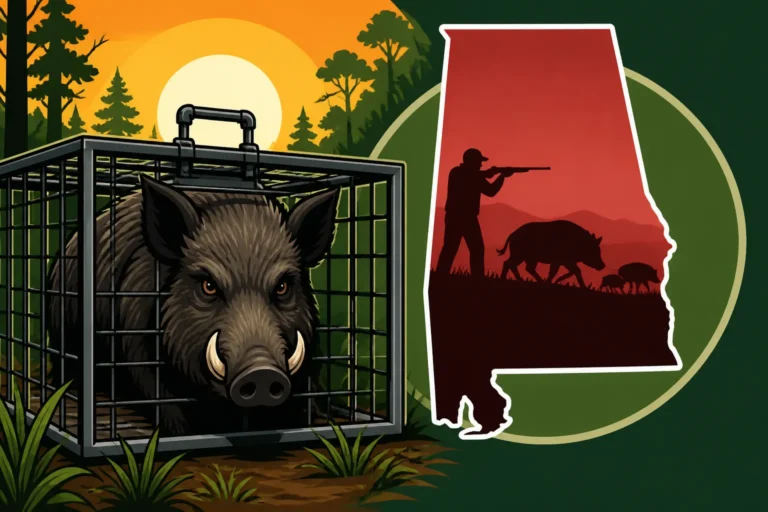
- Trapping: Feral hogs are prolific, and trapping is often the most efficient method for removing multiple animals, especially for landowners suffering crop damage. Large corral traps or box traps are commonly used. There are specific rules regarding trap design and checking requirements, but no hog-specific trapping permit. To learn more, delve into Trapping Alabama Feral Hogs.
- Dogs: Running dogs on hogs is a deep-rooted tradition in Alabama and a highly effective method. This involves using bay dogs to locate and corner hogs, and catch dogs to secure them. As mentioned, this is perfectly legal on private land with permission and in some designated public areas. For insights into this method, you can read more in Running Dogs on Alabama Feral Hogs.
Remember, while the equipment options are broad, ethical hunting practices dictate using gear that allows for a quick, humane kill. Always prioritize shot placement and understanding the anatomy of a hog.
Carcass Disposal and CWD Concerns
After a successful hog hunt, especially if you're targeting them for population control, you'll need a plan for carcass disposal. Hogs can be heavy, and simply leaving them where they fall isn't always feasible or appropriate, particularly on public lands or near populated areas.
For hogs harvested on private land, burying them deeply or transporting them to an approved disposal site are common practices. If you plan to process the hog for meat, great! Just be mindful of proper field dressing and cooling, especially in Alabama's often warm climate, as outlined in Handling a Hog After the Shot.
While feral hogs are not known to carry Chronic Wasting Disease (CWD), Alabama does have a Alabama's Chronic Wasting Disease Management Zone in the northwest part of the state for deer. It’s always wise to be aware of general disease prevention measures, such as avoiding contact with visibly sick animals and ensuring proper handling of any wild game. Although CWD is deer-specific, maintaining good biosecurity practices helps protect all wildlife.
The Importance of Landowner Permission Even Without a Permit
We've touched on it already, but it bears repeating: landowner permission is absolutely paramount when hunting feral hogs on private property. Just because you don't need a specific "hog permit" doesn't mean you can disregard property lines. Hunting without permission is trespassing, a legal offense that can lead to fines, confiscation of equipment, and loss of hunting privileges.
Always secure explicit permission before you hunt. A simple conversation, or even a written agreement, can save you a lot of trouble. Building a good relationship with landowners is key, especially when they're eager for hog removal. Often, offering to help with hog control is an excellent way to gain access to private land. Hunters who take the time to build these relationships often find consistent opportunities. For more on this crucial topic, read Do Feral Hogs Need Landowner Permission?. Responsible hunters respect land rights as much as wildlife regulations.
Disclaimer
The information provided in this guide is for general informational purposes only and does not constitute legal advice. Hunting regulations can change, and it is the hunter's responsibility to review and comply with all current Alabama Department of Conservation and Natural Resources (ADCNR) laws and regulations before hunting. Always check the official ADCNR website or contact them directly for the most up-to-date and specific legal requirements.