Why Alabama Splits the State Into Turkey Zones
It's a common head-scratcher for many turkey hunters in Alabama: why do we have different spring turkey season dates depending on where you are in the state? You're geared up, ready for opening day, only to realize the birds just a few counties north or south are operating on a completely different calendar. This guide is here to unravel that mystery, explaining the biological and practical reasons behind Alabama's split turkey zones so you can plan your spring hunts with confidence and clarity.
The Science Behind Splitting Turkey Zones
The idea of having different season dates for different regions might seem like an unnecessary complication at first glance. However, there's solid science behind why the Alabama Wildlife and Freshwater Fisheries Division (ADCNR) has structured our turkey season this way. It all comes down to understanding the wild turkey itself and the diverse landscapes it inhabits across our beautiful state.
Regional Differences in Turkey Biology
Think about it: Alabama is a pretty long state, stretching from the Gulf Coast to the foothills of the Appalachians. That's a huge variety in climate and habitat. Just like the trees leaf out earlier in the Mobile-Tensaw Delta than they do up near the Tennessee border, wild turkeys in different parts of Alabama have different biological clocks. Their breeding cycles, when they start strutting, when hens begin nesting, and when poults typically hatch are all influenced by local environmental cues like temperature, daylight hours, and food availability.
For example, a gobbler down in Baldwin County might be full into his strutting and breeding prime weeks before his counterpart in Lauderdale County is even starting to think about it. This isn't just a slight difference; it can be significant enough to warrant distinct management strategies. If the season opened statewide at the earliest possible date for the southern birds, it could be far too early for the northern birds, potentially disrupting their crucial pre-nesting activities. Conversely, opening too late statewide would mean southern hunters miss out on peak gobbling activity. This regional variability in turkey biology is the primary driver behind the zone system.
Managing for Sustainable Populations
Ultimately, the ADCNR's job is to ensure healthy, sustainable wild turkey populations for future generations of hunters. Splitting the state into zones allows them to fine-tune management strategies to better suit the specific needs of regional turkey populations. It's not a one-size-fits-all approach. If one area shows signs of declining poult survival or lower overall turkey numbers, ADCNR can adjust season lengths or bag limits within that specific zone without unfairly impacting populations that are thriving elsewhere.
This granular management helps prevent overharvest in vulnerable areas while still providing ample hunting opportunities where populations are robust. By monitoring turkey populations, hen nesting success, and poult-to-hen ratios across different parts of the state, biologists can make informed decisions. A tool like GoHunt, for example, can give you a lot of information, but understanding the underlying biological reasons helps you appreciate why the regulations are the way they are. It’s a proactive approach to conservation, ensuring that the thrill of a spring gobbler hunt remains a strong tradition in Alabama.
Understanding Alabama's Distinct Turkey Zones
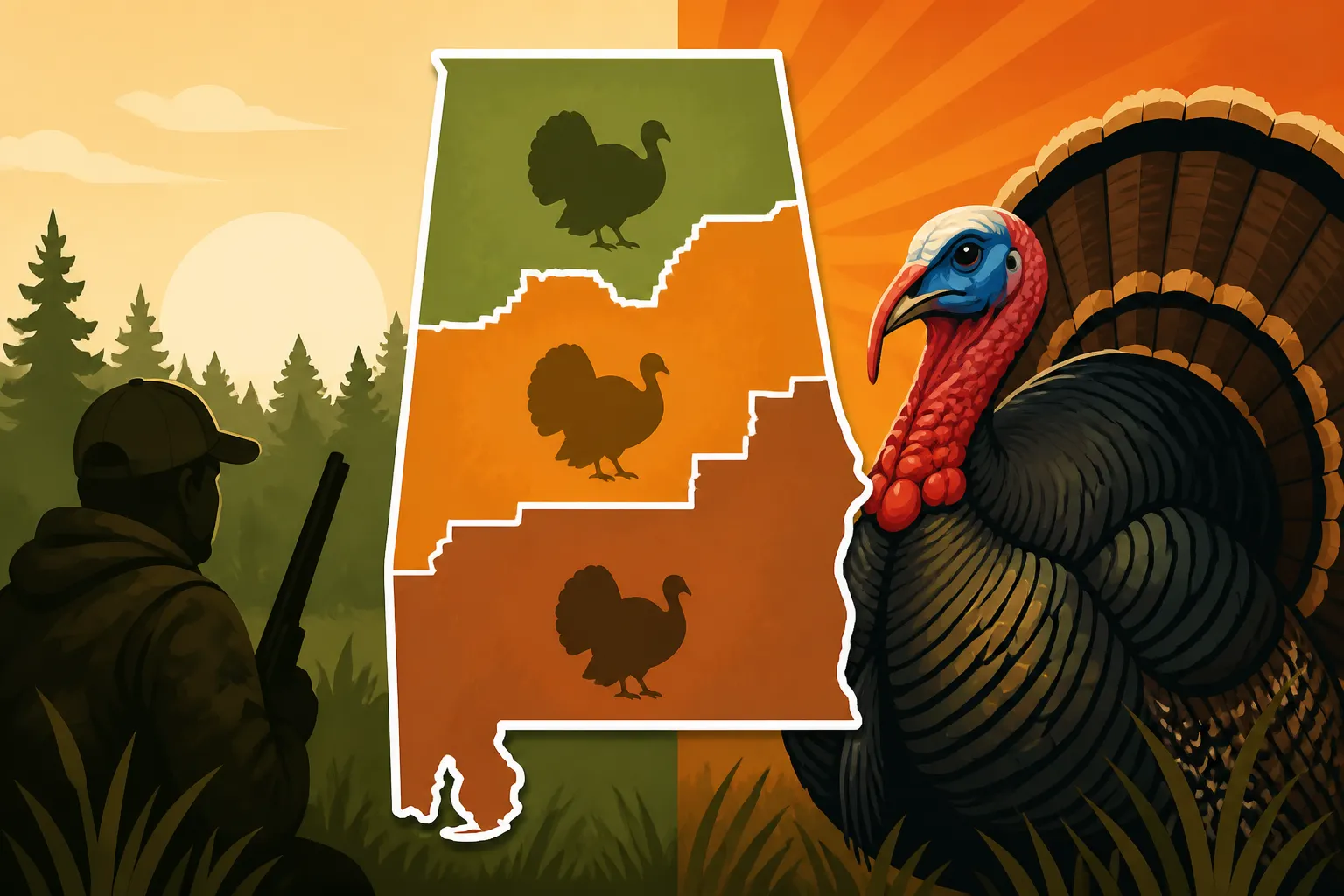
Now that we know why the zones exist, let's dive into what they actually are and how they affect your hunting plans. Alabama typically operates with two primary turkey hunting zones for the spring season, each with its own distinct opening and closing dates.
Zone 1: The Early Birds
Zone 1 generally encompasses the southern and central portions of Alabama. This is where spring arrives earlier, where the weather warms up sooner, and where wild turkeys typically begin their breeding rituals well before their northern cousins. Consequently, the spring turkey season in Zone 1 tends to open earlier. You'll find many of the rich agricultural counties and extensive timberlands that comprise the Black Belt and coastal plain regions fall into this zone. For hunters who live or have access to land in this area, you'll often be hitting the woods for gobblers while much of the country is still waiting for spring to truly arrive. Knowing these specific dates is critical, and you can always check Alabama Zone 1 Turkey Season Rules for the most current information. This earlier opener capitalizes on the peak gobbling and breeding activity of the turkeys in these warmer climates.
Zone 2: The Later Bloomers
Moving northward, you'll encounter Zone 2. This zone typically covers the northernmost counties of Alabama, an area characterized by more rugged terrain, higher elevations, and a climate where winter's chill lingers a bit longer. Because spring weather and turkey breeding cycles are naturally delayed here, the season in Zone 2 opens later than in Zone 1. This staggered approach ensures that hunters in Zone 2 are also getting to hunt during the prime breeding period for their local birds, rather than trying to call in gobblers that haven't even fully started their courtship dances yet. Many hunters in the higher elevations or further north might be frustrated watching their southern friends hunt, but trust me, waiting for those northern birds to really get going often pays off. If you're planning a hunt in the northern counties, make sure you're up to date on Alabama's Later Spring Turkey Zone Opener.
Navigating the Zone Map
It's one thing to know that zones exist, but it's another to confidently determine which zone your specific hunting property or public land falls into. The ADCNR provides detailed maps on the Outdoor Alabama website, which is your go-to official source. These maps clearly delineate the county lines that mark the transition between Zone 1 and Zone 2.
Sometimes, a county might be split, or it might be located right on the cusp, so it's absolutely crucial not to guess. Don't rely on old maps or hearsay. Always consult the most current official information. Many reputable hunting apps and platforms, like GoHunt, integrate these zone boundaries into their digital mapping tools, which can be incredibly helpful when you're scouting or even just planning a trip from home. Using an app to overlay these zones on your hunting grounds, especially if you hunt near a boundary, can save you a lot of headache and ensure you're hunting legally. This also helps in understanding Alabama Spring Turkey Zones and Dates in detail.
Practical Implications for Hunters
Understanding the "why" and "where" of Alabama's turkey zones is only half the battle. The real impact is how these zones influence your actual hunting strategy, planning, and overall approach to the spring season. It's not just about different dates; it can open up or close off certain opportunities.
Planning Your Spring Season
For many dedicated turkey hunters, the existence of two distinct zones is a fantastic opportunity to extend their season and maximize their time afield. Imagine this scenario: you might hunt Zone 1 during its earlier opener, capitalize on those eager gobblers, and then, as the season winds down there, shift your focus to Zone 2 for its later start. This allows you to chase gobblers for a longer period, enjoying two "opening days" in a sense.
However, this requires careful planning. You need to know the exact dates for each zone and ensure your licenses and permits are in order. For instance, if you have land in Butler County (Zone 1) and another lease in Madison County (Zone 2), you could potentially hunt several weeks in one area before the season even starts in the other. It's a strategic chess game, and knowing your zone and the corresponding Alabama Turkey Bag Limit Rules for each is paramount. For public land hunters, this might mean Scouting Alabama Public Land Before Season in both zones to identify prime spots for different stages of the spring.
License and Regulation Awareness
It's critical to remember that while the opening and closing dates differ between zones, most other statewide turkey hunting regulations remain consistent. This includes things like legal hunting hours, methods of take, and the all-important turkey reporting requirements. You still need your valid Alabama hunting license and Harvest Information Program (HIP) certification if you're hunting migratory birds (though turkeys aren't migratory, HIP is often part of a general small game license).
The state's overall bag limit of a maximum of four gobblers for the combined fall and spring seasons still applies, regardless of which zone you harvest them in. If you're a non-resident, your Alabama Hunting Licenses and What They Cost will grant you access to hunt in either zone, but you must adhere to the specific season dates of the zone you're actively hunting in. Always, always check the current year's regulations on the Outdoor Alabama website or a reliable source like GoHunt before you head out. These rules can sometimes have subtle changes from year to year, and ignorance is no excuse for a violation.
Adapting Your Hunting Strategy
The difference in season dates also means that the turkeys themselves might be in different phases of their breeding cycle when you're hunting. In an early Zone 1 opener, birds might be less pressured and more eager to respond to calls, as hens may not be fully committed to nesting yet. This could be a prime time for Calling an Alabama Gobbler Off the Roost or aggressive calling.
Conversely, a later Zone 2 opener might mean the birds have already been hunted for a few weeks in other areas, or hens are already on their nests, making gobblers sometimes harder to entice. You might need to shift to more subtle calling, extensive Run-and-Gun Turkey Tactics on Public Land, or focus on patterns rather than just raw gobbling. Knowing your zone can help you anticipate turkey behavior and adjust your tactics accordingly. For instance, Roost Hunting Alabama Gobblers might be a better tactic early in the season before birds are widely dispersed.
| Feature | Zone 1 (Southern/Central) | Zone 2 (Northern) |
|---|---|---|
| Typical Opening | Earlier (often mid-March) | Later (often late March/early April) |
| Season Length | Standard spring season duration | Standard spring season duration |
| Climate | Warmer, earlier spring green-up | Cooler, later spring green-up |
| Primary Reason | Aligns with earlier turkey breeding cycles | Aligns with later turkey breeding cycles |
| Key Advantage | Potentially less pressured birds early on | Allows extended hunting by shifting locations |
| Counties Included | Check current ADCNR map; generally south of I-20 | Check current ADCNR map; generally north of I-20 |
Staying Informed and Making the Most of Zone Differences
The world of hunting is always evolving, and staying on top of regulations, zone changes, and best practices is part of being a responsible and successful hunter. Alabama's turkey zones are a perfect example of how informed preparation can lead to a more rewarding experience.
Utilizing Resources for Zone Information
The absolute best place to start for official and up-to-date zone information is the Alabama Department of Conservation and Natural Resources (ADCNR) website, specifically the Outdoor Alabama section. They publish the annual Turkey Regulation Summary, which includes detailed maps of the zones, specific opening and closing dates, bag limits, and any other relevant regulations or notices. Don't skip reading this every year, even if you think you know it all! Regulations can change due to Alabama Turkey Population Trends or other management decisions.
Beyond the official source, modern technology offers fantastic tools. Many hunters swear by mapping applications that integrate hunting zone boundaries. Services like GoHunt are excellent for this, allowing you to visually see where the zones split and how your specific hunting property or public land access falls within those boundaries. These apps often combine public land layers, private property lines, and current regulations, providing a powerful planning resource that can be accessed right on your phone in the field. It’s definitely worth the investment to avoid any confusion or accidental violations.
Strategic Hunting Across Zones
For those fortunate enough to have hunting access in both Zone 1 and Zone 2, the staggered seasons present a unique opportunity. You can effectively "extend" your spring turkey season by planning hunts in the earlier zone first, then transitioning to the later zone as their season opens and birds become active. This strategy requires careful coordination and often involves traveling, but it allows for continuous hunting opportunities over a longer period.
Just remember that you'll need to adjust your expectations and tactics as you move from one zone to another. The birds in Zone 2 might be reacting to different levels of pressure or be in a different phase of their breeding cycle than the birds you just left in Zone 1. What worked last week in a southern field might not work this week in a northern timber stand. It’s a dynamic challenge that tests your versatility as a turkey hunter. You're essentially dealing with a Alabama Turkey Population Estimate that behaves differently based on location and season timing.
The Importance of Reporting Harvests
Finally, a crucial, often overlooked aspect of why these zones exist and how they are maintained is hunter participation in harvest reporting. When you successfully harvest a turkey in Alabama, you are legally required to report it through the Game Check system. This isn't just a bureaucratic hoop to jump through; it's vital for wildlife management.
The data collected from harvest reports – including the date, county, and zone of harvest – provides ADCNR biologists with essential information about turkey populations. It helps them understand harvest rates, monitor trends, and assess the effectiveness of their management strategies, including the zone system itself. Without accurate reporting, biologists have less information to make sound decisions about future season dates, bag limits, and overall conservation efforts. So, every time you fill out that report, you're contributing directly to the future of turkey hunting in Alabama, ensuring that these distinct zones continue to serve their purpose in sustaining our incredible wild turkey resource. Don't forget, if you're new to this, Alabama Hunter Education Requirements will cover the basics of ethical hunting and reporting.
Disclaimer
Please be aware that hunting regulations, season dates, and zone boundaries are subject to change. Always consult the official Alabama Department of Conservation and Natural Resources (ADCNR) website or their current annual hunting guide for the most up-to-date and accurate information before planning any hunt. This article is intended for informational purposes only and does not substitute for official regulations.