Alabama Dove Field Baiting Rules
One of the trickiest parts about getting ready for dove season in Alabama isn't just scouting out the best fields or even getting your shotgun patterned right; it's making absolutely sure that beautiful sunflower patch or cut-corn field you're planning to hunt isn't illegally baited. The rules around dove field baiting are notoriously complex and can cause a lot of stress for even experienced hunters and landowners. This guide is going to walk you through the nitty-gritty of Alabama's dove baiting regulations, helping you understand what's legal, what's definitely not, and how to avoid costly mistakes.
Understanding the Core Baiting Regulations in Alabama
The world of migratory bird hunting, especially when it comes to doves, is governed by a blend of federal and state laws that can feel like a minefield. Many hunters, eager to secure a good spot, can inadvertently fall foul of baiting regulations because they just don't fully grasp the nuances. It's not always about intentionally trying to cheat; sometimes, it's simply a misunderstanding of what constitutes "normal agricultural practice" versus an illegal attractant. This confusion is widespread, and it's a valid concern for anyone who wants to hunt legally and ethically in the Yellowhammer State.
What Constitutes "Baiting" for Doves?
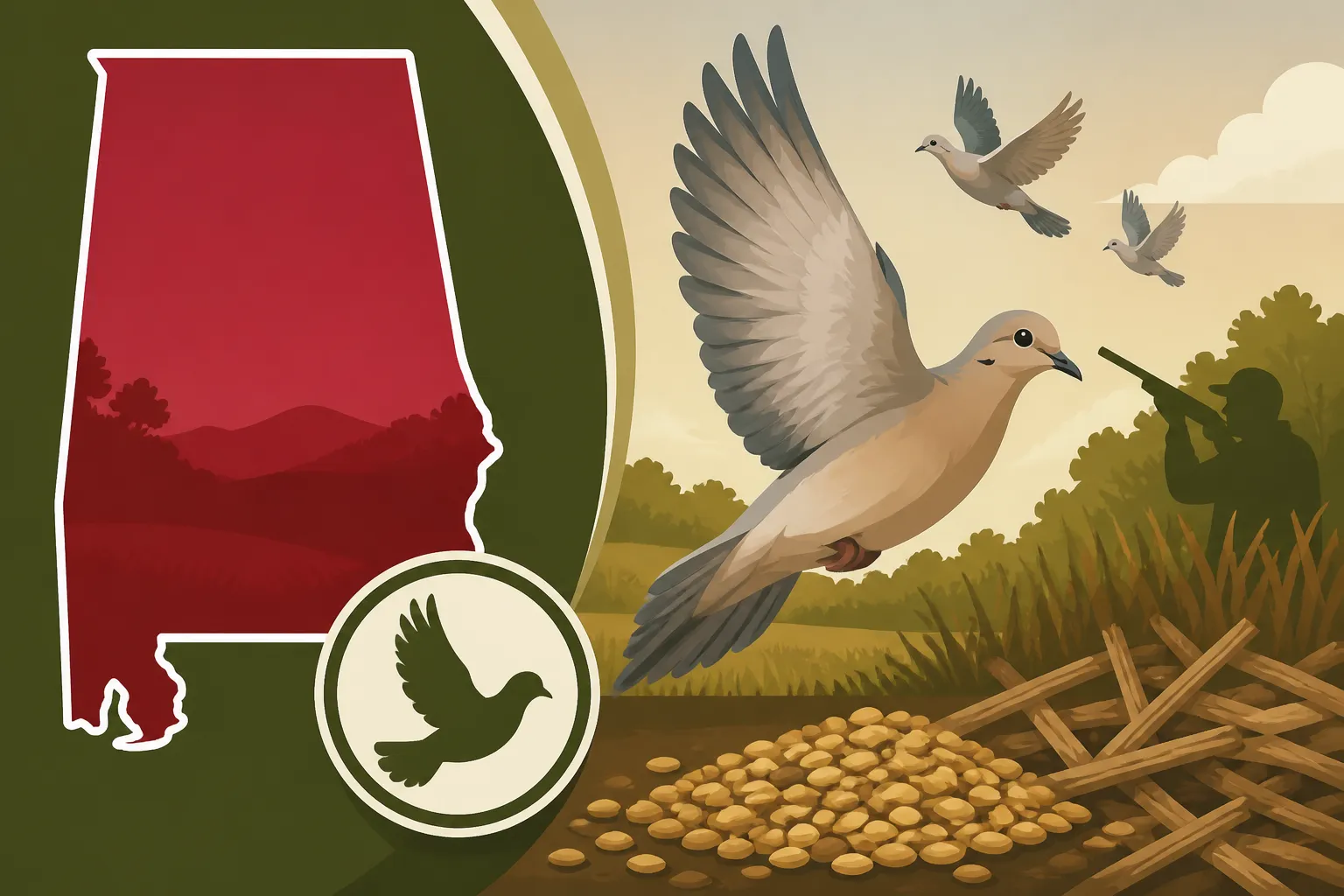
Let's get straight to the heart of it: federal law, which Alabama adheres to for migratory bird hunting, defines "baiting" as the "placing, exposing, depositing, distributing, or scattering of shelled, shucked, or unshucked corn, wheat or other grain, salt, or other feed, that could lure or attract migratory game birds to, on, or over any areas where hunters are attempting to take them." This isn't just about throwing out a pile of corn in the middle of a field. It's much broader.
Think about it this way: if a reasonable person would conclude that the primary purpose of distributing grain or feed in a particular way is to attract birds specifically for hunting, then it's likely baiting. This could involve spreading seed after a crop has been harvested, but in a manner that doesn't follow typical farming practices for that specific crop or region. For example, if you see a freshly disked field with perfectly clean wheat or milo seeds scattered uniformly on top, but there's no logical reason for that seed to be there from a normal planting cycle, that's a huge red flag. The law is designed to prevent hunters from gaining an unfair advantage by luring birds with unnaturally available food sources. This is distinct from food plots planted and grown for deer, which are generally legal for deer hunting but not automatically legal for dove hunting if birds are attracted to grains that were not naturally present or grown.
Legal Normal Agricultural Operations
Now, this is where it gets a little more complex and often causes the most confusion. Not all exposed grain is considered bait. The law specifically allows hunting over fields where grain or feed is present "as the result of normal agricultural planting or harvesting." This means that if a farmer plants a crop, grows it, and then harvests it in a standard way, and there's residual grain left on the ground, that field is perfectly legal to hunt.
Consider a classic scenario: a farmer harvests a corn field or a sunflower field. Some kernels or seeds naturally fall to the ground and are left behind. Doves will absolutely be attracted to this natural waste grain, and hunting over it is completely legal. The same goes for fields planted in wheat, milo, or millet that are mature and standing, or even fields that have been mowed or disked after maturity as part of standard agricultural practices. For instance, if a farmer mows down a mature wheat field to prepare it for the next crop rotation, and doves come in to feed on the exposed grain, you're good to go. The key is "normal agricultural operations." This includes methods like row planting, top-sowing, or broadcasting if it's done during the appropriate planting season, with the correct seed rates, and for a legitimate agricultural purpose, even if some of that seed becomes available to birds. For more details on preparing your own land, you might check out articles on how to set up a dove field before opening day.
Let's look at a table to help visualize the difference:
| Practice | Legal Status for Dove Hunting | Explanation |
|---|---|---|
| Normal Harvesting | Legal | Grain scattered due to standard combine/harvesting operations. |
| Post-Harvest Disking | Legal (if crop was mature) | Mature crop disked under, exposing remaining grain. Part of preparing the field for next season. |
| Standing Crops | Legal | Doves feeding on naturally occurring grain from a mature, standing crop (e.g., sunflowers, corn, wheat). |
| Planting for Agriculture | Legal (if normal) | Seed planted for a legitimate agricultural purpose (e.g., wheat planted in fall for spring harvest), even if doves eat some. |
| Top-Sowing After Harvest | Illegal Baiting | Scattering fresh seed on top of the ground after a harvest, specifically to attract birds. |
| Broadcasting Out-of-Season | Illegal Baiting | Broadcasting grain when there's no agricultural reason to plant that crop at that time. |
| Piling or Mounding Grain | Illegal Baiting | Any accumulation of grain in piles, rows, or other non-natural concentrations. |
| Salt or Mineral Blocks | Illegal Baiting | Placing salt or mineral licks to attract doves. |
Navigating the Complexities: Specific Scenarios and Common Mistakes
Understanding the basic definitions is a great start, but real-world scenarios can still be baffling. It's not always black and white, and well-intentioned actions can sometimes stray into illegal territory without careful consideration. Many landowners simply want to do right by their hunters and their land but struggle with exactly how to manage their fields while remaining compliant.
Top-Sowing and Broadcast Planting
This is perhaps one of the trickiest areas. Top-sowing, which is simply scattering seed on the surface of the soil, or broadcasting, which is similar but often done with equipment over a wider area, can be perfectly legitimate agricultural practices. For instance, broadcasting wheat seed in the fall for a winter cover crop or a spring harvest is a common and legal farming method. If doves are attracted to that legally broadcasted wheat, it's a legal hunt.
However, where it becomes illegal baiting is when these methods are used outside of normal agricultural intent, specifically to attract game. Imagine a scenario where a field is harvested in August, and then, a week before dove season opens in September, someone broadcasts a fresh load of millet or wheat on the bare ground. Even if they claim it's for "soil enrichment" or a "cover crop," the timing and the lack of proper planting depth (the seed is just lying on top) make it highly suspect. The intent, in the eyes of the law, appears to be to attract doves. This is a common pitfall. The key question is: "Would a farmer normally do this at this time of year, in this manner, for a legitimate agricultural purpose other than attracting game?" If the answer is no, then it's baiting. You might want to consider articles like Hunting the Zone 1 Turkey Opener for context on how regulations vary by species and zone, but for doves, the federal migratory bird regulations are paramount.
Manipulating Crops Post-Harvest
After a crop has matured and been harvested, landowners often manipulate the field in various ways to prepare for the next planting or to make use of the remaining biomass. These actions, when performed as part of genuine agricultural practice, are generally permissible for dove hunting. This means you can hunt over a field where a mature crop has been:
- Harvested: Any grain left over after combining corn, sunflowers, wheat, or other crops.
- Mowed: A mature standing crop like millet or sunflowers can be mowed down. Doves feeding on the exposed seeds are fair game.
- Disk: A field with a mature crop can be disked under. This exposes seeds and waste grain, and hunting over it is legal.
- Burned: Burning a mature crop field to remove stubble is also a legitimate agricultural practice.
The critical distinction here is that the crop must have been mature before the manipulation. You cannot, for example, mow down an immature crop of sunflowers or millet just to expose the seeds early to attract doves. That would be considered baiting because the manipulation is designed solely to make food available that wouldn't normally be there at that stage, and not part of a natural agricultural cycle. Understanding these nuances is crucial, and utilizing resources like the Alabama Cooperative Extension System or even the GoHunt platform (which offers detailed land mapping tools) can help landowners plan legitimate agricultural activities that also enhance wildlife habitat without violating baiting laws.
Hunter Responsibility and Due Diligence
Even if you're hunting on someone else's property, you as the hunter are ultimately responsible for ensuring the field is legal. Ignorance of the law is not an excuse. This can feel unfair, especially if you've paid for a hunt or trusted a friend, but federal law places the onus on the hunter. This makes scouting and asking the right questions absolutely critical.
Before You Hunt: Checking a Field for Bait
So, how do you protect yourself? It's all about observation and asking probing questions. When you're scouting a field, or before you even step foot in it to hunt, do a thorough check.
- Look for Uniformity: Is the grain scattered evenly as if it fell naturally from a plant, or is it in clumps, rows, or unusually dense patches? If it looks like someone manually dumped or scattered it, be wary.
- Examine the Seed: Does the seed appear fresh and clean, as if recently purchased and spread? Or does it look like waste grain, often a bit dirty, broken, or weathered? Fresh, clean seed scattered on top of the ground with no signs of planting can be a major red flag.
- Check the Context: What's the surrounding vegetation like? Is there any evidence of actual planting (e.g., drill marks, rows)? If it's a freshly disked field, was there a mature crop there before disking? If it's just bare dirt with scattered seed, that's highly suspicious.
- Ask Questions (and keep asking): Don't be afraid to ask the landowner or hunt manager exactly what agricultural practices were performed on the field. "Was this field harvested?" "What crop was here, and when was it harvested?" "Was anything planted here recently, and if so, what and how?" If their answers are vague or don't make sense from an agricultural perspective, it's a sign to proceed with extreme caution or find another spot.
- Utilize Tools: Websites and apps like GoHunt offer detailed satellite imagery and property line information which can be invaluable for understanding the history and layout of a field. You can often see historical aerial views to understand prior planting patterns or changes. For more general guidelines, check out the Alabama Small Game Season Rules.
Remember, if something feels off, trust your gut. It's better to walk away from a potential hunt than to face federal charges.
Penalties and Consequences
The consequences for hunting over bait are severe, and they are not taken lightly by wildlife enforcement officers. Since these are federal violations, penalties can include significant fines (often in the thousands of dollars), confiscation of firearms and hunting equipment, and loss of hunting privileges for extended periods, not just in Alabama but federally. This means you could lose the ability to hunt any migratory birds anywhere in the U.S. for years.
Imagine getting caught on a field you thought was legitimate. You could face a fine, lose your shotgun, and be barred from dove hunting, potentially even general hunting, for years. This isn't just a slap on the wrist. It's a serious criminal offense. For landowners who actively bait, the penalties are even more stringent and can include imprisonment. It's simply not worth the risk for a few extra doves. Always ensure you're squared away with your licenses, including the Alabama Migratory Bird Certification and the Federal Duck Stamp Requirement, even if you're not targeting ducks. Being compliant with all regulations shows due diligence and can sometimes reflect positively even if an accidental violation occurred, though baiting is rarely seen as accidental.
Planning Your Dove Hunt Legally
Beyond just avoiding bait, planning a legal and successful dove hunt in Alabama involves a proactive approach, both in communication and in leveraging available information. A well-planned hunt not only keeps you on the right side of the law but also tends to be more enjoyable and productive.
Working with Landowners and Field Managers
Open and honest communication is paramount when hunting on private land. As a hunter, it's your right—and frankly, your responsibility—to understand how a field has been prepared. Don't be shy about asking direct questions. A reputable landowner or hunt manager will appreciate your concern for legality and be happy to explain their agricultural practices.
Here are some good questions to ask:
- "What crop was grown in this field?"
- "When was it harvested, and how?"
- "Has anything been done to the field since harvest (mowed, disked, replanted)?"
- "If anything was planted, what was it, and when was it put in the ground?"
- "Can you show me documentation of seed purchases or planting dates if I need reassurance?"
For landowners, transparency is your best defense. Keep records of planting dates, seed types, and agricultural activities. If you're managing a field for doves, do so by planting legitimate agricultural crops like sunflowers, wheat, or millet at appropriate times, letting them mature, and then harvesting or manipulating them in ways that align with standard farming practices. This could involve simply letting a portion of your field stand, then mowing strips for access and shooting lanes, as discussed in "Working a Dove Field on Opening Day." These are legal and effective ways to create attractive dove hunting opportunities.
Resources for Staying Informed
Staying up-to-date with Alabama's hunting regulations is an ongoing process. Laws and interpretations can change, so always consult the most current official sources.
- Outdoor Alabama Website: This is your primary resource. The Alabama Department of Conservation and Natural Resources (ADCNR) publishes the official hunting regulations annually. You can find digital copies of the regulations booklet, specific migratory bird rules, and often, news releases detailing any changes.
- Federal Regulations: Since dove hunting falls under migratory bird laws, the U.S. Fish and Wildlife Service (USFWS) regulations are also crucial. They have detailed guidance on baiting specifically. A quick search for "Migratory Bird Hunting and Baiting" on the USFWS website will yield valuable interpretive documents and FAQs.
- ADCNR Enforcement Officers: If you have specific questions about a particular field or practice and can't find clear answers, contact your local Alabama Wildlife and Freshwater Fisheries Enforcement office. They are the experts, and getting clarification directly from them is always the safest bet. They'd much rather answer your questions beforehand than deal with a violation after the fact.
- Local Agricultural Extension Offices: These offices can provide information on what constitutes "normal agricultural practices" in your area for various crops, which can indirectly help you determine the legality of a dove field.
- Hunting Apps and Platforms: While GoHunt is excellent for mapping and planning, remember that it's a tool, not a regulatory authority. Always cross-reference any information or assumptions with official state and federal sources. However, tools that show property lines and topography can definitely help you understand the context of a field and its surrounding area when scouting for legal spots. Don't forget to review specifics like the Alabama Dove Season Bag Limit before your hunt.
By actively utilizing these resources and maintaining clear communication, both hunters and landowners can ensure their dove hunting experiences are legal, ethical, and enjoyable.
Disclaimer
This article is for general informational purposes only and does not constitute professional advice. Laws, prices and regulations vary by location and change over time. Consult a qualified professional for guidance on your specific situation.