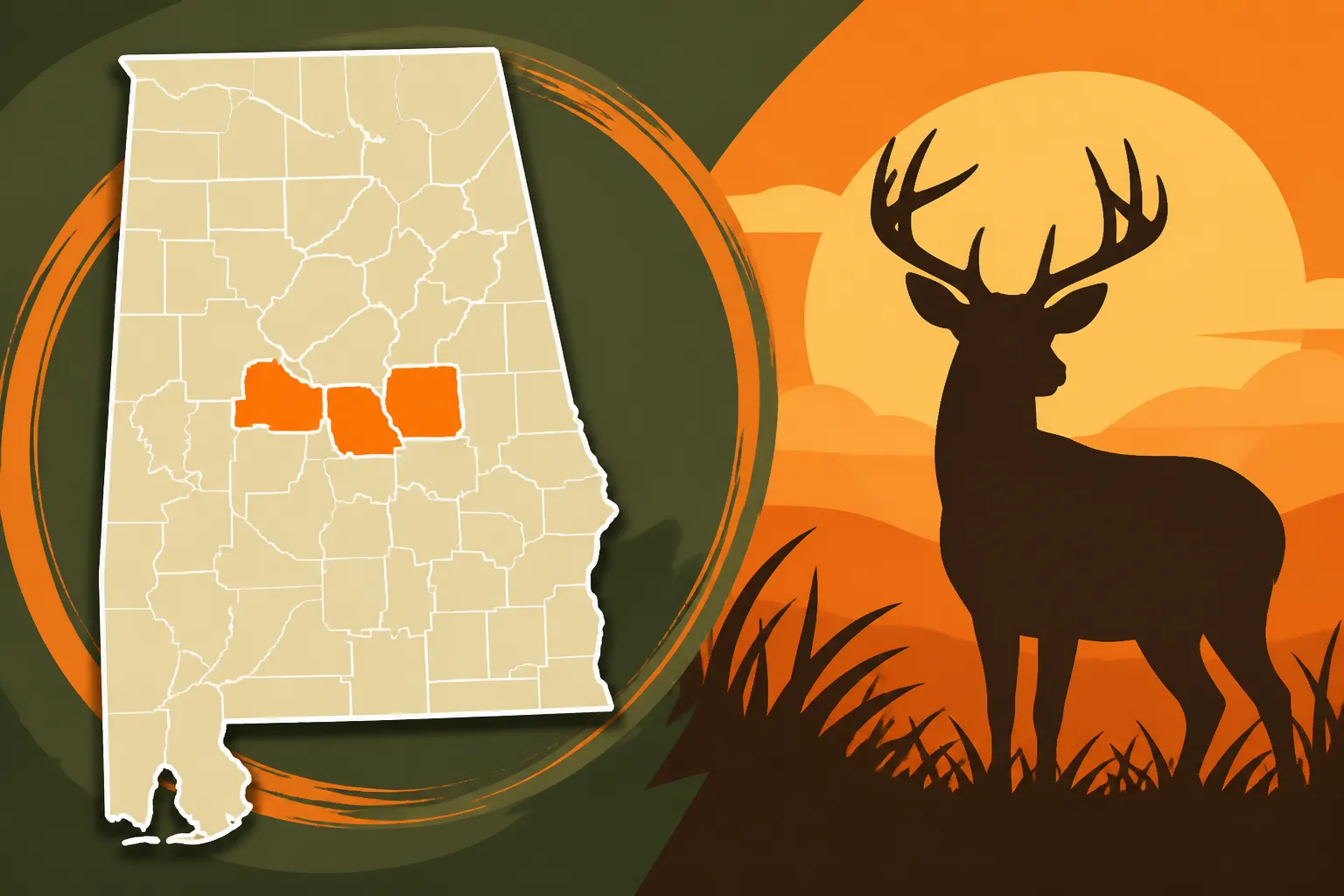
Which Three Counties Sit in Alabama’s CMZ
Navigating the ever-changing landscape of hunting regulations can feel like trying to hit a moving target, especially when new challenges like Chronic Wasting Disease (CWD) emerge. It's perfectly understandable to feel a bit lost or frustrated when the rules shift, particularly concerning where you can hunt and how you handle your hard-earned harvest. This comprehensive guide is here to cut through the confusion, clearly outlining which three counties currently make up Alabama's CWD Management Zone (CMZ) and what that means for hunters.
Understanding Alabama's CWD Management Zone (CMZ) and Its Purpose
When CWD first arrived in Alabama, it sent ripples of concern through the hunting community. For many of us, deer hunting isn't just a pastime; it's a deep-rooted tradition, a source of sustenance, and a connection to the wild. The idea of a disease threatening our deer herd, and subsequently our traditions, is a serious one. That's why the Alabama Department of Conservation and Natural Resources (ADCNR) moved quickly to establish the CWD Management Zone (CMZ).
Why the CMZ Was Established
CWD is a fatal neurological disease affecting deer, elk, moose, and caribou. It's caused by misfolded proteins called prions, and unfortunately, there's no known cure or vaccine. Once it takes hold in a deer population, it's incredibly difficult to eradicate. The disease can spread through direct animal-to-animal contact or indirectly through environmental contamination, as infected deer shed prions through saliva, urine, and feces. The prions can persist in the soil for years, potentially infecting other deer.
The first confirmed case of CWD in Alabama was detected in Lauderdale County in February 2022. This discovery was a sobering moment for the state's wildlife management. Recognizing the potential for widespread devastation to our cherished deer herd, the ADCNR acted decisively. The CMZ wasn't created lightly; it was a crucial, science-backed step to contain the disease, monitor its spread, and protect the health of Alabama's deer for future generations of hunters. It's a proactive measure designed to slow down CWD's insidious march and gather vital information to manage the disease.
The Core Counties: Officially in the Zone
Alright, let's get down to brass tacks. As of the most recent updates, there are indeed three counties that officially sit within Alabama's CWD Management Zone. These are:
- Lauderdale County
- Colbert County
- Franklin County
These three counties form the heart of the CMZ, primarily because CWD has been detected within their borders. For hunters operating in these areas, this designation carries significant implications. It means you're operating under a specific set of rules designed to help the state monitor and contain the disease. This isn't just a suggestion; these are mandatory regulations that every hunter must understand and follow to prevent further spread.
Being in the CMZ affects everything from how you process your deer to how you transport it. It's a critical area for surveillance, and every deer harvested within these counties becomes part of the larger data collection effort. Hunters who routinely use digital scouting tools like GoHunt will find it invaluable for cross-referencing property lines with CMZ boundaries, ensuring they're always aware of their location and the specific regulations that apply. This geographic precision is paramount when hunting near or within these sensitive areas.
Navigating the Regulations within Alabama's CMZ
The new reality of CWD in Alabama means that hunting isn't quite business as usual, especially in the designated CMZ. While the spirit of the hunt remains the same, the practical steps before, during, and after your harvest require closer attention to detail and a commitment to following regulations. It's a shared responsibility to protect our deer herd.
Mandatory Testing and Reporting Requirements
One of the most significant changes for hunters in Lauderdale, Colbert, and Franklin counties is the implementation of mandatory CWD testing. The ADCNR needs to know how prevalent the disease is and where it's spreading, and hunters are their primary partners in collecting this crucial data. This isn't just about random sampling; there are specific periods when hunter cooperation is essential.
During certain designated weekends, especially early in the gun season, hunters harvesting deer within the CMZ are required to submit their deer for CWD testing. This involves taking the head (with at least two inches of neck attached) to an established sampling station. These stations are typically set up at various accessible locations within the CMZ, like check stations, local fire departments, or specific drop-off points. The process is usually straightforward: you provide your harvest record number, the location of the harvest, and the deer's head. Wildlife biologists or trained personnel will then collect the necessary tissue sample. It's a quick process, but it's vital for understanding the disease's distribution. You can find up-to-date information on exact dates and locations for Mandatory CWD Testing Weekends on the Outdoor Alabama website or by contacting your local wildlife office. Without this data, the state is essentially flying blind in its efforts to manage CWD.
Carcass Movement Restrictions: What You Can and Can't Do
Perhaps the most impactful regulation for hunters, particularly those traveling from outside the CMZ or planning to take their deer elsewhere for processing, involves carcass movement restrictions. The core idea here is simple: if a deer is infected, its carcass contains prions that could contaminate new areas. To prevent this, strict rules are in place regarding what parts of a deer can leave Lauderdale, Colbert, or Franklin counties.
You cannot transport a whole deer carcass out of the CMZ. This means if you harvest a deer in one of these three counties, you must either process it within the zone or ensure that only specific, low-risk parts are removed. What is allowed to leave the CMZ? Generally, these include:
- Deboned meat
- Clean skulls or skull plates (with no brain tissue attached)
- Antlers (cleaned of any tissue)
- Hides (free of visible tissue)
- Finished taxidermy mounts
So, if you shoot a buck in Franklin County and want to take it to your processor in Tuscaloosa County, you must debone the meat and clean the skull before crossing county lines. This might mean extra work in the field or at a temporary processing station, but it's a necessary step to protect other areas of the state. The regulations around Alabama Carcass Movement Restrictions are designed to minimize the risk of inadvertently spreading prions to new, uninfected areas. It's a change that requires planning, but it's a small price to pay for the health of our larger deer population.
Hunting Pressure and Changes for Hunters in the CMZ
The establishment of the CMZ has, understandably, introduced new dynamics for hunting pressure and overall hunter behavior in the affected counties. For many years, hunters in these areas enjoyed relatively standard regulations. Now, with the added layers of mandatory testing and carcass restrictions, some hunters have found themselves re-evaluating their strategies or even their hunting locations.
On one hand, the increased scrutiny and public awareness around CWD might lead some hunters to avoid the CMZ, potentially reducing localized pressure in certain areas. Conversely, those committed to hunting their traditional grounds in Lauderdale, Colbert, or Franklin counties must adapt. They might invest in portable processing equipment, learn new field dressing techniques, or make arrangements with local processors who understand the CMZ rules. Landowners in these areas are also keenly aware, and some may adjust their deer management practices to align with CWD mitigation strategies. This could include focusing more on herd health assessments or even participating in specialized state-sponsored sampling programs. Understanding how to continue Hunting the CWD Management Zone Under New Rules becomes a critical skill set, emphasizing flexibility and adherence to conservation efforts.
Beyond the Core: Understanding the Buffer Zones and Monitoring Efforts
While Lauderdale, Colbert, and Franklin counties are the defined CMZ, the fight against CWD isn't confined to arbitrary lines on a map. Wildlife diseases don't respect borders, and so the state's efforts extend beyond these core areas to monitor, educate, and prevent wider spread. It's a dynamic situation that requires constant vigilance and broad participation.
The High-Risk Zone and Surrounding Buffer Areas
It's important to understand that disease management often involves concentric circles of concern. While the three counties are the official CMZ, there are often surrounding areas designated as "High-Risk Zones" or buffer areas. These zones might not have the same mandatory testing requirements as the core CMZ, but they are under heightened surveillance and may have strong recommendations for hunters.
For instance, counties immediately adjacent to Lauderdale, Colbert, and Franklin might be considered High-Risk due to their proximity. This means that while deer harvested there don't require mandatory testing, hunters are strongly encouraged to submit samples voluntarily. This broader sampling effort helps biologists understand if the disease is spreading into neighboring populations. The boundaries and recommendations for these buffer zones can change based on new findings, so staying informed is key. Resources like the GoHunt app are excellent for quickly checking property lines and overlaying them with official ADCNR maps to ensure you're aware of the latest regulations, whether you're in the CMZ or a surrounding buffer area like the one described for The High-Risk Zone Inside the CMZ. It's about being a responsible hunter and contributing to the bigger picture of wildlife health.
The Role of Hunters in CWD Surveillance
Frankly, without hunters, the ADCNR's ability to monitor CWD would be severely limited. We are the eyes and ears in the field, the first line of defense. Every hunter who submits a sample, reports a sick deer, or simply follows the carcass movement rules is playing a vital role in protecting Alabama's deer herd. It's a direct contribution to conservation that goes beyond ethical harvesting.
If you observe a deer exhibiting signs of CWD—such as extreme weight loss, stumbling, drooling, or a general lack of fear of humans—it is absolutely critical to report it to the ADCNR immediately. Do not attempt to harvest or handle a visibly sick deer. The state relies on these reports to investigate potential new cases and track the disease's progression. This active participation in Alabama Wildlife Disease Monitoring is paramount. By working together, we can ensure that our wildlife agencies have the most up-to-date information to make informed management decisions and refine their strategies. Every bit of information helps paint a clearer picture of CWD's presence and impact in our state.
Long-Term Outlook and Management Strategies
Managing CWD is not a short-term fix; it's a long-term commitment that will require adaptive strategies and ongoing vigilance. The ADCNR, in collaboration with national wildlife health experts, is continuously evaluating data, researching new methods, and adjusting its management plan. The goal is not necessarily eradication, which is often impossible with CWD, but rather containment and mitigation to keep prevalence rates as low as possible.
This includes public outreach and education, working with landowners, and continued surveillance across the state. Hunters can expect to see CWD-related regulations evolve as scientists learn more and the situation changes. Staying informed through official ADCNR channels, attending public meetings, and engaging with local wildlife biologists will be crucial for all hunters, regardless of whether they hunt directly within the CMZ. It's a marathon, not a sprint, and our collective dedication to responsible hunting practices will determine the health of Alabama's deer for decades to come.
Here's a quick reference table for the CWD Management Zone counties and key regulations:
| County Name | Official CMZ Status | Mandatory Testing During Designated Weekends | Carcass Movement Restrictions Out of County | Primary Rationale |
|---|---|---|---|---|
| Lauderdale County | YES | Required | Applies | First confirmed CWD case in Alabama |
| Colbert County | YES | Required | Applies | Proximity and confirmed CWD cases |
| Franklin County | YES | Required | Applies | Proximity and confirmed CWD cases |
| Surrounding Counties (e.g., Lawrence, Limestone, etc.) | NOT CMZ, but typically High-Risk Zone | Encouraged (voluntary) | Recommended (voluntary) | Buffer for surveillance, potential spread |
Disclaimer
Please remember that hunting regulations and CWD management protocols are subject to change. Always consult the latest official regulations from the Alabama Department of Conservation and Natural Resources (ADCNR) or Outdoor Alabama website before planning your hunt. This guide is for informational purposes only and should not be considered a substitute for official legal guidance.