Alabama Deer Tag Transfer Rules
It can feel like you need a law degree just to understand all the nuances of hunting regulations, especially when it comes to something as specific as deer tag transfer rules in Alabama. Many hunters, myself included, have stood around a fresh kill with friends, scratching our heads and wondering if it's okay for someone else to tag it if we've already filled our limit, or if a youth hunter's harvest can go on an adult's tag. The truth is, these rules are designed to maintain integrity in harvest reporting and manage deer populations effectively, and misunderstanding them can quickly lead to trouble. This guide is here to clear up that confusion, explaining exactly what's allowed and what's definitely not when it comes to Alabama's deer tags.
Understanding Alabama's Deer Tagging System
Before we can even talk about transferring tags, it's absolutely crucial to understand how Alabama's deer tagging system works at its core. Gone are the days of physical paper tags you attach to an animal. Today, it's all digital, which has its benefits but also introduces new questions about accountability and responsibility. Every deer you harvest in Alabama, whether antlered or unantlered, must be immediately reported through the state's Game Check system. This isn't just a suggestion; it's a legal requirement that helps wildlife biologists manage the deer herd and ensures you're staying within your personal bag limits.
The Basic Rule: Hunter-Specific Tags
At the heart of Alabama's regulations is the principle that each hunter is responsible for their own harvest and operates under their own license and bag limits. When you purchase your Alabama Resident Hunting License Options or non-resident equivalent, it grants you the privilege to harvest a certain number of deer, typically within the Alabama Deer Season Structure Explained and zone-specific limits. For example, Alabama allows a three-buck season limit, and additional unantlered deer depending on the zone you're hunting in, such as How Many Antlerless Deer Zones A and B Allow. These limits are strictly tied to your individual hunter number.
This means that if you, as an individual hunter, kill a deer, it must be reported under your name and count towards your personal bag limit. You cannot, under any circumstances, harvest a deer and then have a buddy, spouse, or child who hasn't killed a deer tag it under their license to "save" your tag. That's a direct violation of state law, as the act of killing and the act of reporting are intrinsically linked to the individual hunter who pulled the trigger or released the arrow. Imagine the chaos and lack of accurate data if hunters could just swap tags willy-nilly! The system relies on accurate individual harvest data to make informed management decisions.
Reporting Requirements and the Game Check System
Alabama's Game Check system is your primary method for reporting deer harvests. You can do this quickly and easily via the Outdoor Alabama mobile app, online through their website, or by phone. The moment you harvest a deer, you're legally required to report it within 48 hours, though most experienced hunters will tell you it's best to do it immediately while the details are fresh and before you've moved the animal significantly. This immediate reporting ensures that the kill is associated with the correct hunter, date, time, and county.
When you report your deer, you'll receive a confirmation number. This number acts as your digital tag and must remain with the deer until it reaches its final destination for processing or storage. While you don't physically attach a paper tag, having that confirmation number readily available, perhaps even written on a zip-tie attached to the deer, is a smart practice. It's your proof of legal harvest. Failing to report a deer by the Alabama Deer Reporting Deadline or failing to have proper documentation can lead to significant penalties. Many hunters also leverage apps like GoHunt to scout areas and cross-reference regulations, which can help ensure they are always compliant and informed about their location and current rules.
Navigating Deer Tag Transfer Questions
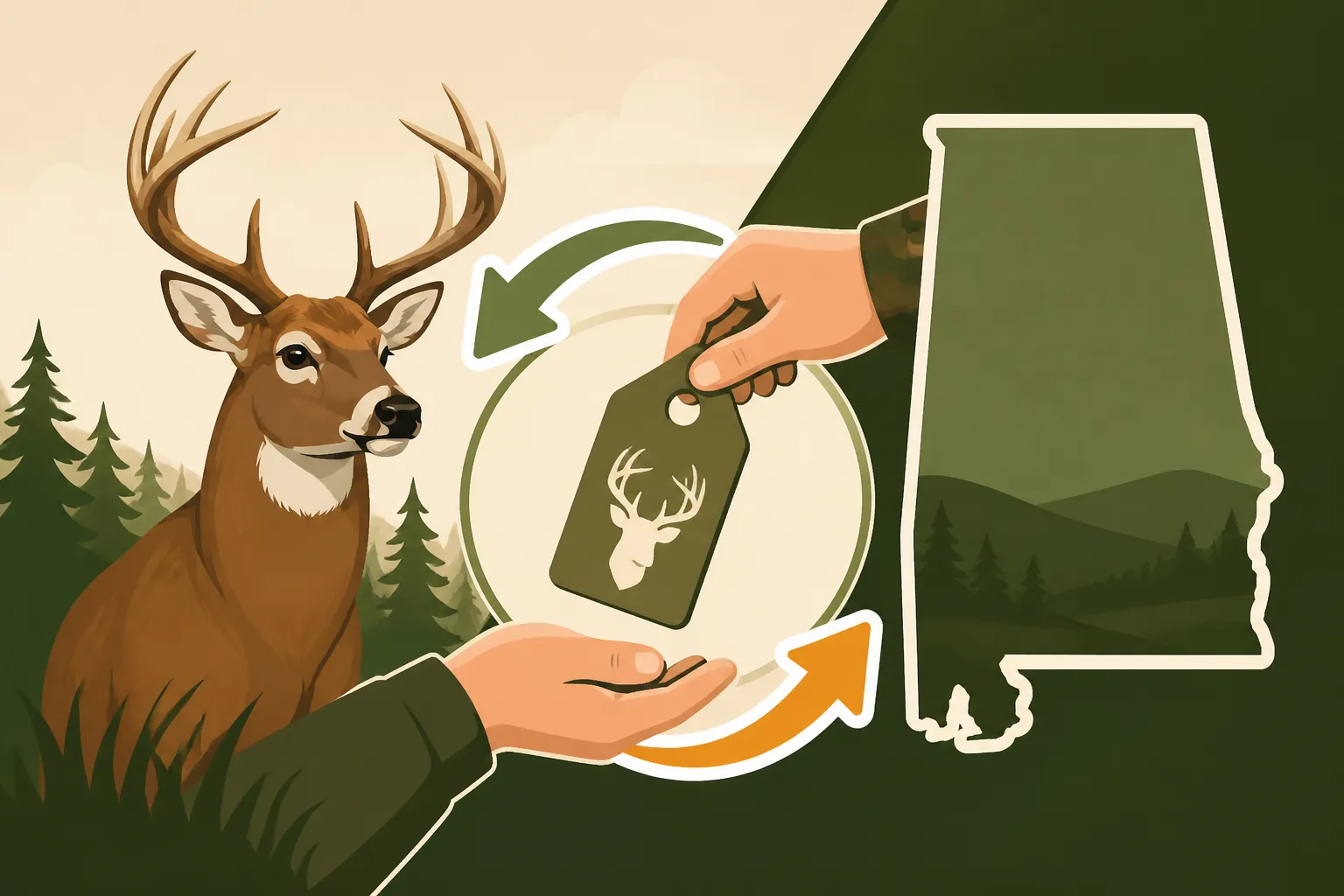
This is where the rubber meets the road for many hunters. The question isn't usually about maliciously trying to break the law, but rather about confusion stemming from wanting to help a friend, or perhaps a youth hunter. Let's be unequivocally clear: in Alabama, you cannot transfer an unused deer tag to another hunter for them to use on a deer they kill. The tags (represented by your individual bag limit allowances) are non-transferable before the act of harvesting.
"Loaning" Tags to Other Hunters: Why It's Illegal
The concept of "loaning" a tag to another hunter is a common misconception, and it's absolutely illegal in Alabama. Here's how it often plays out: two buddies are hunting, and one hunter fills their buck limit. Later that day, the second hunter, who still has a buck tag remaining, sees and harvests a trophy buck. The first hunter, having already filled their limit, cannot use their friend's remaining tag to cover their additional kill. The deer must be tagged by the hunter who actually harvested it.
Trying to circumvent this rule, perhaps by filling out a Game Check report under someone else's name for a deer you killed, is a serious violation. Game wardens are highly trained and experienced in detecting such practices, and the penalties can include hefty fines, loss of hunting privileges, and even confiscation of equipment. These rules are in place not to make hunting difficult, but to ensure fair chase, accurate harvest data, and to prevent overharvesting by individuals who might otherwise exceed their legal limits. Always remember, the person who made the kill is the person whose license and bag limit must cover that animal.
Youth Hunters and Mentored Hunting Exceptions
Youth hunting often brings up questions about tag transfers. Alabama is a strong proponent of youth hunting, offering specific Alabama Mentored Youth Hunting Rules to encourage new hunters. Generally, a youth hunter who is of legal hunting age and has their own license and HIP certification (if applicable for birds) must tag their own deer. If a youth hunter is hunting under the direct supervision of an adult mentor, and the youth makes the kill, that deer should still be reported under the youth's Game Check. This helps track youth participation and harvest rates.
However, there's a nuance with very young, often unlicensed, hunters. For children under the Minimum Age for Unsupervised Alabama Hunting who might not yet possess their own license, the mentor's license and tags would typically cover any animal harvested, but the mentor would technically be the "hunter" in the eyes of the law, even if the youth pulled the trigger under their direct supervision. For all practical purposes, if a youth is capable of acquiring and holding their own license, they should do so, and all animals they harvest should be attributed to them. This ensures their participation is properly recorded and that they learn the full responsibilities of being a hunter from a young age. Always clarify with the ADCNR if you're unsure about specific youth hunting scenarios.
What Happens After a Deer is Harvested
While you can't transfer a tag before the kill, there's often confusion about what happens after a deer has been legally harvested and reported. This is where the physical animal itself can be "transferred" in terms of possession and processing, which is perfectly legal and common.
Physical Possession and Transport After Legally Tagging
Once a deer has been harvested, legally reported through Game Check, and you have that crucial confirmation number, the physical possession of the deer can indeed be transferred. Let's say you've downed a nice buck, and your buddy comes to help you drag it out of the woods. That's not a tag transfer; that's just good teamwork! Your friend can help you load it into your truck, transport it to camp, or even drive it back to your house for you if you're unable to. The key here is that the deer is already legally "tagged" (via the Game Check confirmation).
The confirmation number from Game Check is what proves the deer's legality. It needs to accompany the deer. So, if your friend is transporting it for you, make sure they have a copy of that confirmation number, either physically or digitally on their phone, in case they are stopped by a game warden. This scenario is no different than someone else picking up your groceries for you – once you've paid for them, they're yours, and anyone can transport them on your behalf. Just ensure the deer has been properly dressed in the field if it's going to be in warm weather, as detailed in guides like Field Dressing a Deer in Warm Weather. Once at camp, you might even have a group effort for Butchering a Deer at Camp, which is also perfectly fine.
Donating Venison or Sharing Meat
The most common and encouraged form of "transferring" a deer is after it has been fully processed into venison. Once that deer meat is in your freezer, it becomes your property, just like any other food item. You are absolutely allowed to share venison with friends, family, or even Donating Venison in Alabama to food banks or programs like Farmers and Hunters Feeding the Hungry. In fact, sharing wild game meat is a cherished tradition among hunters and a wonderful way to introduce others to healthy, organic food.
This post-processing transfer is completely different from the pre-kill tag transfer. At this stage, the deer is no longer a regulated "wild animal" but rather a food product. You don't need special permits to give away venison steaks, ground meat, or roasts. The hard work of hunting, harvesting, and processing is done, and now it's time to enjoy the fruits of your labor and share the bounty with your community. This final step truly embodies the spirit of hunting – sustenance and sharing.
Common Misconceptions and Avoiding Violations
Despite the clear rules, some misconceptions persist, often leading hunters into unintentional trouble. Knowing these pitfalls can save you a lot of headache and keep you on the right side of the law.
Landowner Tags vs. Hunter Tags
A common area of confusion involves landowners and their family members. While Alabama law does have provisions for landowners hunting their own property, these generally relate to license exemptions for residents hunting on their own land, not a separate set of "landowner tags" that can be freely transferred. For example, resident landowners (and immediate family residing with them) don't need a hunting license to hunt on their own property. However, they still must adhere to bag limits and reporting requirements. If a deer is killed, it must be reported under the name of the individual who killed it, and it counts towards their bag limit. The notion of specific, transferable "landowner tags" that allow someone to exceed their personal bag limit or cover another hunter's kill is generally a myth and a dangerous one at that. For specific details, it's always best to consult the Alabama Landowner Deer Permit Rules directly, but assume individual accountability is always paramount.
The Importance of a Digital Record and Proof
In our digital age, the burden of proof often falls on the hunter. While game wardens are fair, they rely on verifiable information. That Game Check confirmation number isn't just a formality; it's your lifeline. Always make sure you complete your Game Check immediately after harvesting a deer. Keep a screenshot of the confirmation on your phone, write it down, or even attach it to the deer. This ensures that if you're ever questioned, you have immediate, undeniable proof that your harvest is legal.
Tools like the Outdoor Alabama app or even third-party apps such as GoHunt can help you keep track of your license, certifications, and harvest history, making it easier to stay organized. Think of it as your digital hunting diary and legal record combined. Being able to quickly show a game warden your license, bag limits for the zone you're in, and the Game Check confirmation for the deer in your possession demonstrates responsible hunting and can prevent a minor inquiry from escalating into a serious situation. Remember, Alabama Wildlife Violation Penalties can be severe, so proactive record-keeping is your best defense.
Here's a quick summary of legal versus illegal "tag transfers":
| Scenario | Legality in Alabama | Explanation |
|---|---|---|
| Hunter A kills a deer, Hunter B tags it | ILLEGAL | The hunter who makes the kill must report it under their own Game Check and license. |
| Giving your unused tag to a friend | ILLEGAL | Tags (bag limits) are hunter-specific and cannot be transferred before a kill. |
| Youth kills deer, adult tags it | ILLEGAL | Youth (if licensed) must report their own kill. Mentor covers if youth is unlicensed & hunting under rules. |
| Friend helps transport a reported deer | LEGAL | Once legally reported via Game Check, the physical deer can be transported by others (with confirmation). |
| Sharing processed venison meat | LEGAL | Once processed, venison is property and can be freely shared or donated. |
| Landowner "giving" a tag to a guest | ILLEGAL | Landowner exemptions pertain to license requirements on their land, not transferable deer tags/limits. |
Always err on the side of caution and consult the Alabama Department of Conservation and Natural Resources (ADCNR) official regulations if you have any specific doubts. Happy and safe hunting!
Disclaimer
The information provided in this guide is for general informational purposes only and does not constitute legal advice. Hunting regulations can change, and interpretations may vary. It is the responsibility of each individual hunter to thoroughly review and understand the most current Alabama Department of Conservation and Natural Resources (ADCNR) regulations and laws before hunting. Always check the official Outdoor Alabama website or contact the ADCNR directly for the most up-to-date and accurate information.