Alabama Turkey Checking Requirements
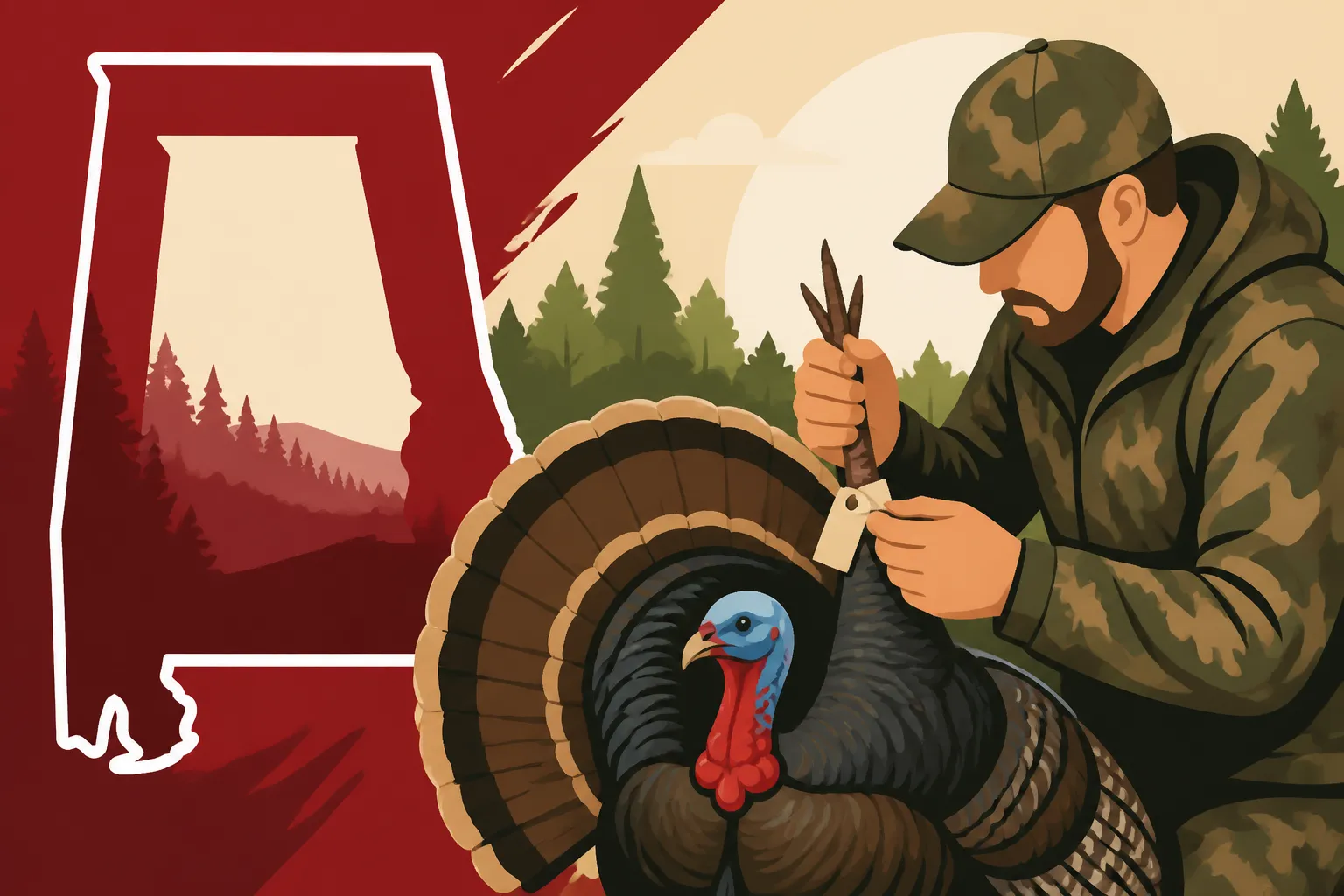
You've just called in a wary tom, the air vibrating with his thunderous gobble, and finally, after what feels like an eternity, you’ve sealed the deal. Your heart is pounding, the bird is on the ground, and that rush of accomplishment is incredible. But amidst the excitement, a little voice in the back of your head pipes up: "Did I remember all the rules? What about checking this bird in?" It’s a common moment of anxiety, and in Alabama, making sure your harvest is properly reported is a crucial, non-negotiable step. This guide will walk you through everything you need to know about Alabama's turkey checking requirements, so you can focus on enjoying your successful hunt without any lingering worries.
The Alabama Game Check System: What You Need to Know
Alabama's approach to harvest reporting for deer and turkey is built around its "Game Check" system. This isn't just a suggestion; it's a mandatory requirement for every hunter who successfully harvests a wild turkey in the state. The primary goal is straightforward: to gather essential data that helps wildlife biologists manage the turkey population effectively. Without accurate harvest numbers, it's incredibly difficult to make informed decisions about season lengths, bag limits, and habitat management strategies.
Imagine the frustration of wildlife managers trying to understand population trends or gauge the impact of a harsh winter if they only had partial data. That's why your participation in the Game Check system is so vital. It transforms each individual harvest into a valuable data point, contributing to the health and future of Alabama's turkey hunting tradition. This system has evolved over the years, moving from physical check stations to a more convenient digital approach, reflecting a statewide effort to streamline the process while still maintaining data integrity.
Understanding the Mandatory Reporting Requirement
Let's be crystal clear: every wild turkey harvested in Alabama, regardless of whether it's an adult gobbler, a jake, or an unantlered bird taken during a specific deer season if allowed (though for spring turkey, it's usually gobblers), must be reported through the Game Check system. This isn't a rule that applies only to certain zones or specific times; it's universal. Many hunters get caught up in the moment, especially if they're deep in the woods or far from cell service, and sometimes think they can "get to it later." However, the regulations are pretty firm about the timeframe for reporting.
You might be thinking, "What's the big deal if I forget one bird?" The big deal is that collective "forgetting" skews the data. Biologists look at metrics like total harvest, harvest by county, and harvest by zone to track population health. If a significant number of birds go unreported, it could lead to incorrect assumptions about the health of local turkey populations, potentially affecting future season frameworks or management decisions. It's a small step that has a significant impact on the bigger picture of conservation and sustainable hunting.
Methods for Reporting Your Turkey
The Alabama Wildlife and Freshwater Fisheries Division (AWFF) has made the Game Check system as accessible as possible, offering a few convenient ways to report your harvest. Gone are the days of driving miles out of your way to a physical check station, often with a tired bird and even more tired hunters. Now, it's mostly digital, which means you can often complete the process right from the field, assuming you have a signal.
The most popular methods include:
- The Outdoor Alabama App: This is by far the most user-friendly option for many hunters. Available for both iOS and Android devices, the app allows you to enter all the necessary information directly from your smartphone. It’s designed to be intuitive, walking you through each step. Many hunters, myself included, rely on modern tools like the GoHunt app for planning, and the Outdoor Alabama app for checking in game, making sure all bases are covered. Having these digital resources at your fingertips can make a world of difference when you're miles from the nearest town.
- The Outdoor Alabama Website: If you prefer a larger screen or are back at camp with laptop access, the Outdoor Alabama website offers the same Game Check functionality. You'll navigate to the "Game Check" section, log in with your license information, and proceed with reporting. This is a reliable backup if your phone battery dies or you simply prefer using a computer.
- Toll-Free Phone Number: For those who might not have smartphone access or reliable internet, there's still a good old-fashioned phone number you can call. This option ensures that everyone has a way to comply, regardless of their tech capabilities. It’s comforting to know that even if technology fails, there’s a human on the other end to help you fulfill your obligation.
Why Game Check Matters: Beyond Just a Tag
It’s easy to view checking your turkey as just another bureaucratic hurdle after a long morning in the woods. You’re tired, you're hungry, and you just want to get your bird cleaned. But the truth is, the Game Check system is far more than just a formality; it's a cornerstone of responsible wildlife management in Alabama. It’s the primary way the state gathers the data needed to ensure healthy and sustainable turkey populations for future generations of hunters.
Think about it this way: every time you successfully report a turkey, you’re essentially casting a vote for better management. You're providing biologists with real-time, ground-level information that helps them understand patterns, track population health, and make critical decisions that directly impact hunting opportunities down the line. It's a fundamental part of the scientific approach to wildlife conservation that hunters have championed for over a century.
Crucial Data for Turkey Population Management
The data collected through Game Check is invaluable. Biologists use it to monitor several key indicators of turkey population health:
- Overall Harvest Numbers: This tells them how many birds are being taken each season, which is crucial for determining if harvest levels are sustainable relative to the estimated population. If the numbers start trending in an unhealthy direction, it signals that adjustments might be needed, such as changes to the Alabama Turkey Bag Limit Rules or season lengths.
- Harvest by County and Zone: Alabama is divided into distinct turkey zones, and knowing where birds are being harvested helps identify regional population hotspots and areas that might be struggling. For instance, comparing harvest data from Zone 1 to Zone 2 helps fine-tune management strategies for specific ecological regions. This is especially important for understanding the nuances of how the Alabama Spring Turkey Zones and Dates impact localized populations.
- Sex and Age Data: While primarily focused on gobblers, sometimes jakes are harvested, and knowing the ratio can offer insights into recruitment rates and overall population dynamics.
- Harvest Method Data: Knowing how birds are harvested (e.g., shotgun, bow) isn't always a required field, but it can contribute to a broader understanding of hunting pressure and methods if specific studies are being conducted.
This detailed breakdown allows biologists to see not just how many birds are harvested, but where and when. This geographic and temporal specificity helps them identify potential issues early on, rather than waiting for a noticeable decline in the overall Alabama Turkey Population Estimate.
Contributing to Conservation Efforts
When you check your turkey, you're directly participating in the conservation model that makes hunting in North America so successful. The Pittman-Robertson Act, funded by excise taxes on firearms and ammunition, channels money into wildlife conservation. But for that money to be used effectively, states need data to justify projects and demonstrate needs. Your Game Check submission is a small but mighty piece of that puzzle.
Furthermore, accurate harvest data helps validate the role of hunters as conservationists. When hunting populations are questioned, solid data from systems like Game Check provides the evidence needed to demonstrate sustainable management. It shows that hunters are not just participants in the outdoor tradition, but active contributors to the health and vitality of the wildlife they pursue. It’s a shared responsibility, and every report reinforces that commitment.
Step-by-Step Guide to Reporting Your Alabama Turkey
Okay, so you've got your bird, you're back at the truck, and it's time to make it official. The process is pretty straightforward, but a little preparation can save you a lot of headache. The goal is to get it done quickly and accurately, allowing you to get back to celebrating your successful hunt.
Remember, the moment you tag your turkey (which is a separate, immediate requirement), the clock starts ticking for Game Check. You need to report it before it’s moved more than negligibly from the kill site, and definitely before you process it for consumption or taxidermy. This is a common point of confusion, but the spirit of the law is to get that information into the system as close to the harvest event as possible.
Using the Outdoor Alabama App
The Outdoor Alabama app is generally the easiest and quickest method. Here's a typical flow:
- Open the App and Log In: Make sure you have the latest version of the "Outdoor Alabama" app installed on your smartphone. You’ll need to log in using your license number and date of birth, which should already be linked to your Outdoor Alabama account. If you’re using a planning tool like GoHunt, you probably already have your license number handy.
- Navigate to Game Check: Once logged in, look for the "Game Check" or "Report Harvest" section. It's usually prominently displayed.
- Select Species: Choose "Wild Turkey" from the list of available species.
- Enter Harvest Details: This is where you input all the critical information. Be prepared with:
- Date of Harvest: The specific day you shot the bird.
- County of Harvest: The county where the turkey was taken. Accuracy here is vital for localized data.
- Harvest Zone: Which of Alabama’s turkey zones the harvest occurred in. Knowing this is critical for understanding Alabama's Five Deer Zones and turkey zones.
- Sex of Bird: Usually "Gobbler" or "Jake" for spring season.
- Weapon Used: (e.g., shotgun, bow, crossbow). If you're a bowhunter, you'd select that option, just like when you're hunting during Bowhunting Alabama's Long Archery Season.
- Public or Private Land: Indicate whether the harvest occurred on private land or a public area like a WMA or National Forest. This data helps assess public land hunting pressure and success rates.
- Review and Submit: Double-check all your entries for accuracy. It’s easy to tap the wrong county or date if you’re rushing. Once confirmed, hit "Submit."
- Receive Confirmation Number: The app will immediately generate a confirmation number. This is your proof of compliance. It’s a good idea to take a screenshot or write this number down in case you need it later. Many hunters will even tie it to the bird itself.
Reporting Online or by Phone
If the app isn't an option, the website or phone method works just as well.
- Outdoor Alabama Website: Navigate to the Alabama Department of Conservation and Natural Resources (ADCNR) website, find the "Hunting" section, and then locate "Game Check." The fields to fill out will be identical to the app. You'll log in, enter the details, and receive your confirmation number electronically. This is also a good place to review other regulations, like those for Alabama Legal Turkey Hunting Hours.
- Toll-Free Phone: Dial the number provided by ADCNR for Game Check (this number can be found on the Outdoor Alabama website or in the hunting regulations digest). A representative will guide you through the process, asking for the same information as the app or website. Have your license handy, and be ready to clearly state the harvest details. The representative will provide you with a confirmation number.
Here's a quick reference for the information you'll need:
| Information Required | Description | Importance |
|---|---|---|
| Harvest Date | The exact day the turkey was harvested. | Critical for season analysis and timing. |
| Harvest County | The specific county where the turkey was taken. | Essential for localized population data. |
| Harvest Zone | The turkey hunting zone (e.g., Zone 1, Zone 2) for the harvest location. | Helps track regional trends and manage Alabama's Five Deer Zones and turkey zones. |
| Sex of Bird | Whether it was a gobbler (male) or jake (young male). | Contributes to reproductive success and age structure data. |
| Weapon Used | How the turkey was harvested (shotgun, archery, etc.). | Provides insight into hunting methods and pressure. |
| Land Type | Public or Private Land. | Aids in understanding harvest distribution. |
| Confirmation Number | Generated upon successful submission, your proof of reporting. | Mandatory record, must be retained. |
Avoiding Common Pitfalls and Ensuring Compliance
Even with a streamlined digital system, hunters can run into issues or make mistakes. Understanding these common pitfalls and knowing how to prevent them can save you a lot of stress and potential legal trouble. The goal isn't just to report, but to report correctly and on time.
It’s easy to get complacent, especially if you’ve been hunting for years and "know the ropes." But regulations can change, and it’s always on the hunter to stay informed. A quick check of the Outdoor Alabama website or the current year's hunting digest before you head out, perhaps while scouting with the Scouting With the Outdoor Alabama App, can prevent most problems.
What to Do If You Don't Have Cell Service
This is probably the most common frustration for hunters in Alabama's vast public lands or remote private tracts. You're deep in the Talladega National Forest, you've just taken a beautiful gobbler, and… no signal. What then?
The key here is understanding the "before it's moved more than negligibly" rule. This means you can't just drive out of the woods, go home, and report it later that night. The best practice is to move your turkey to a location where you can get cell service as soon as reasonably possible. This might mean driving a few miles down the nearest forest road or heading back towards a main highway.
Crucially, do not begin processing the bird (cleaning, gutting, plucking) until it has been legally reported and you have your confirmation number. If a game warden encounters you with an unreported, processed bird, you could face penalties. It's a tough situation, but planning for potential signal loss is part of being prepared. Many veteran hunters will make a mental note of known cell service spots on their Hunting Alabama's Year-Round Feral Hogs or turkey routes, just in case.
Dealing with Technical Difficulties
Technology, bless its heart, sometimes fails us. The app might crash, the website might be down for maintenance, or your phone battery might choose that exact moment to give up the ghost.
If you encounter technical difficulties with the app or website:
- Try the other digital method: If the app isn't working, try the website on a laptop or tablet, if available.
- Use the phone number: This is your reliable backup. The toll-free number is always an option if the digital platforms are failing. Keep it programmed into your phone.
- Document everything: If you've tried multiple methods and still can't report, document your attempts. Take screenshots of error messages, note the time and date of your attempts, and perhaps even call a friend or family member who can verify your efforts. While not a guaranteed defense, demonstrating a good faith effort to comply is always better than doing nothing.
Consequences of Non-Compliance
Ignoring the Game Check requirement is a serious offense, and it can carry penalties just like other hunting violations. These penalties aren't just slaps on the wrist; they can include significant fines, revocation of hunting privileges, and even confiscation of your harvested game.
The ADCNR takes harvest reporting seriously because it's foundational to their conservation efforts. A game warden isn't going to be impressed if you "forgot" or "didn't know." The responsibility to know and follow the rules, including Alabama Hunter Education Requirements, lies squarely with the hunter. It's simply not worth the risk to skip this step. Imagine the frustration and embarrassment of having a hard-earned turkey confiscated, or facing fines, all because of a missed five-minute report.
By understanding the "what," "why," and "how" of Alabama's turkey checking requirements, you can ensure that your successful hunt is fully compliant and contributes positively to the state's wildlife management. Happy hunting, and may your gobbler season be filled with success, and smooth Game Check experiences!
Disclaimer
Please note that hunting regulations, including those related to harvest reporting, can change. While this guide provides comprehensive and up-to-date information, it is always the hunter's responsibility to consult the current Alabama Department of Conservation and Natural Resources (ADCNR) hunting regulations digest or website before heading afield. This content is for informational purposes only and should not be considered legal advice.