Alabama Mentored Youth Hunting Rules
It's incredibly exciting to introduce a young person to the traditions and joys of hunting, but let's be honest, trying to navigate all the rules and regulations can feel like trying to untangle a fishing line after a big backlash. Many parents and mentors often worry about making a mistake or not knowing the exact requirements for taking a child afield safely and legally in Alabama. This comprehensive guide is here to untangle that line for you, meticulously detailing Alabama's mentored youth hunting rules, covering everything from license exemptions to supervision requirements, and offering practical tips to ensure a safe, memorable, and successful experience for your young hunter.
Understanding Alabama's Mentored Youth Hunting Program
Bringing new hunters into the fold is vital for the future of our outdoor heritage, and Alabama's Mentored Youth Hunting Program is a cornerstone of that effort. It's designed to make it easier for adults to share their passion and knowledge with the next generation, without immediately overwhelming them with a stack of paperwork. This isn't just about getting a kid a gun or a bow; it's about fostering a deep respect for wildlife, land, and the traditions that bind us to the natural world.
The Philosophy Behind Mentored Youth Hunting
At its heart, mentored youth hunting is built on the principle of responsible mentorship. The Alabama Department of Conservation and Natural Resources (ADCNR) recognizes that the best way to teach safe and ethical hunting practices is through hands-on guidance from experienced hunters. It's about slowly introducing children to the complexities of hunting, from scouting and tracking to proper shot placement and game recovery, all under the watchful eye of an adult who’s already walked that path. This program actively seeks to reduce common barriers, like immediate hunter education certification requirements, for youngsters, allowing them to gain practical experience first.
This model is critical for recruitment and retention in our hunting community. By removing some of the initial hurdles, we encourage more families to participate, ensuring that the skills and values of hunting—patience, observation, conservation—are passed down. It cultivates a sense of stewardship early on, teaching children not just how to hunt, but why we hunt, instilling a deep appreciation for wildlife management and habitat conservation. It’s a foundational step, building a pipeline of future conservationists who understand the importance of healthy ecosystems.
Who Qualifies as a Mentored Youth Hunter?
In Alabama, a "mentored youth hunter" generally refers to anyone under the age of 16. This age threshold is important because it's where many of the licensing and hunter education exemptions come into play. These young hunters are specifically allowed to participate in hunting activities under the direct supervision of a licensed, adult mentor. The program essentially acts as a temporary learner's permit, allowing practical experience before formal certification.
The beauty of this program is that youth hunters under 16 are not required to possess an Alabama hunting license or even to have completed a hunter education course, provided they are directly supervised by a licensed hunter who is 21 years of age or older. This direct supervision is key – it's not a free pass for a child to go hunting alone, but rather an opportunity for them to learn hands-on. They can participate in hunting for various game species, from deer and turkey to small game, as long as their mentor is legally licensed for those species and is physically with them. This arrangement allows mentors to focus on teaching responsible firearm handling and ethical hunting behavior without the added pressure of immediate certification for the child.
License Requirements and Exemptions for Young Hunters
Navigating the various licenses and permits can be one of the trickiest parts of hunting in Alabama, especially when you throw youth into the mix. However, the state has done a good job of simplifying things for our youngest hunters to encourage participation. Understanding these rules is crucial to ensure a legal and stress-free hunt, allowing you to focus on the experience rather than worrying about compliance.
The "Under 16" Exemption
One of the most significant advantages of Alabama's mentored youth hunting program is the "under 16" exemption. Simply put, if a youth is under 16 years of age, they are generally exempt from needing to purchase a state hunting license to hunt game species in Alabama. This is a huge benefit, as it removes a significant cost and administrative hurdle for families looking to introduce their kids to hunting. The exemption covers a wide array of game, including deer, turkey, small game like squirrels and rabbits, and even furbearers.
However, it's important to understand the limits of this exemption. While they don't need a state hunting license, there are a few exceptions. For instance, if a youth is hunting migratory birds like ducks, geese, or doves, they will still need to comply with federal requirements, such as purchasing a Federal Duck Stamp if they are 16 or older (though not usually under 16) and having their HIP (Harvest Information Program) certification. Additionally, some specific public lands, like certain Wildlife Management Areas (WMAs), might have separate permit requirements that apply regardless of age, though often youth are still exempt or pay a reduced fee. Always double-check the specific regulations for the WMA you plan to visit, using resources like the Outdoor Alabama website or a mapping tool like GoHunt. You can learn more about Alabama's Under-16 and Senior License Exemption for a broader context.
The Mentor's Role in Licensing
While the youth themselves enjoy license exemptions, the burden of responsibility and proper licensing falls squarely on the mentor. The mentor, who must be 21 years of age or older, must possess all the necessary and valid Alabama hunting licenses for the species being hunted and the location of the hunt. This is non-negotiable. If you're hunting deer, you need an Alabama All-Game hunting license. If you're on a WMA, you'll likely need an Alabama WMA Permit. For migratory birds, don't forget your state waterfowl stamp (if applicable) and HIP certification, in addition to the Federal Duck Stamp if you are 16 or older.
Furthermore, the mentor must also have completed an approved hunter education course, unless they are exempt from hunter education themselves (for example, if they were born before August 1, 1971, or hold a lifetime hunting license issued prior to August 1, 1971). This ensures that the person doing the teaching is thoroughly versed in safety, ethics, and regulations. It’s not just about having the paperwork; it’s about embodying the responsible hunter persona. Always carry your physical or digital proof of license and hunter education with you, as wardens can and will check. For more on what licenses you might need, refer to our guide on Alabama Resident Hunting License Options. Checking your Carrying Proof of License on Your Phone can make this easier.
Supervision Requirements: How Close is "Close Enough"?
This is often the most critical and misunderstood aspect of mentored youth hunting. The concept of "direct supervision" isn't just a suggestion; it's a legal requirement designed to ensure safety and proper instruction. Getting this wrong can not only put your young hunter at risk but could also lead to legal trouble. It's about being present, engaged, and ready to intervene at a moment's notice.
Proximity and Direct Supervision Rules
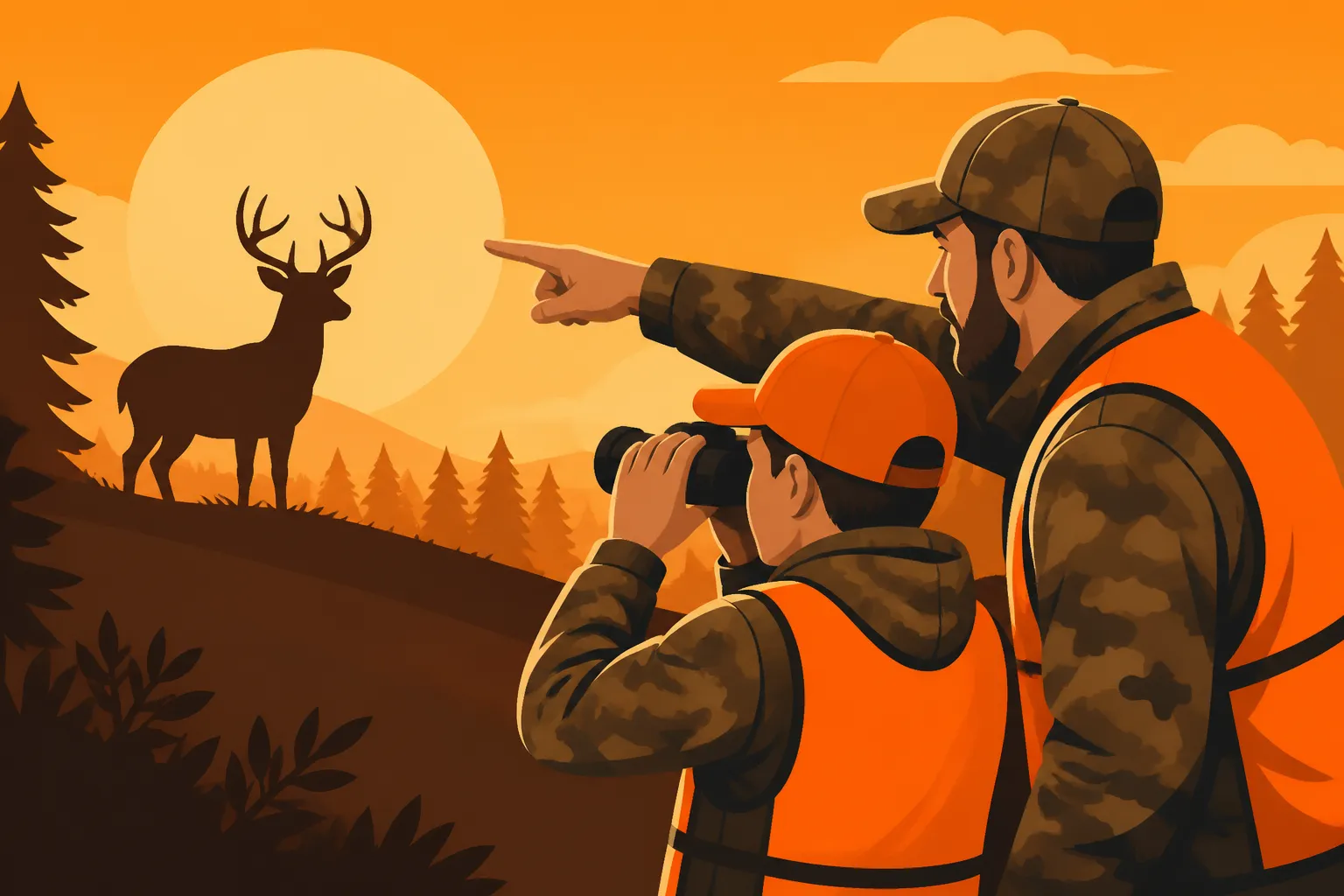
Alabama regulations clearly state that a mentored youth must be under the direct control and immediate presence of their licensed mentor. What exactly does "immediate presence" mean? It implies being close enough to verbally communicate, physically assist, and immediately take control of the situation if needed. For most hunting scenarios, this means the mentor and youth should be in the same ground blind, tree stand, or walking immediately beside each other. You shouldn't be hunting separate stands 100 yards apart or letting the youth wander off alone to "still hunt" while you sit and wait.
Consider a deer hunt: if you're in a two-person ladder stand, the youth should be right there with you, allowing you to guide their shot, identify legal game, and ensure safe firearm handling. In a ground blind, they should be seated next to you, with you able to observe their actions and the surroundings. This rule is designed to prevent accidents and ensure that every action, from identifying the target to making the shot and tracking the animal, is done with an experienced hand guiding the way. Separating yourself from the youth, even by a short distance, can compromise this critical supervision and create unsafe conditions or legal infractions. This is especially pertinent when discussing tactics like Deer Drives With Three or Four Hunters, where communication and close proximity are paramount.
Mentor Qualifications and Responsibilities
Beyond just having the right licenses, the mentor carries a significant weight of responsibility. As mentioned, the mentor must be 21 years of age or older and possess valid hunter education certification (unless exempt). But it goes beyond just meeting these baseline qualifications; it's about active mentorship. The mentor is solely responsible for ensuring the youth's adherence to all hunting laws and for the youth's safety throughout the hunt. This includes teaching and enforcing safe firearm or bow handling practices, ensuring proper target identification, and making sure the youth only takes ethical shots at legal game.
The mentor must be prepared to intervene if the youth makes a mistake, whether it's identifying a non-legal buck, having unsafe muzzle control, or making a questionable shot choice. This active role is why "immediate presence" is so critical. The mentor also has the responsibility for any game harvested by the youth, including ensuring it is properly tagged and reported through Alabama's Game Check system. Essentially, the youth's hunting actions are an extension of the mentor's, making the mentor ultimately accountable for the entire experience. This foundational responsibility is a core part of Alabama Hunter Education Requirements.
| Aspect | Youth Hunter (Under 16) | Mentor (21+) |
|---|---|---|
| Hunting License | Generally Exempt (for state license) | Required (All-Game, WMA, Migratory Bird, as applicable) |
| Hunter Education | Not Required (under direct supervision) | Required (unless born before Aug 1, 1971) |
| Minimum Age | No specific minimum (must be capable) | 21 years old |
| Supervision | Must be in direct control and immediate presence | Must provide direct control and immediate presence |
| Bag Limits | Counts toward youth's bag limit | Mentor ensures youth follows limits |
| Game Check | Mentor reports harvested game on behalf of youth | Mentor's responsibility to report |
Equipment, Safety, and Ethical Considerations
Beyond the legalities, ensuring a positive and safe experience for a young hunter involves careful consideration of equipment and a strong emphasis on safety and ethics. This isn't just about following rules; it's about laying the groundwork for a lifelong passion for the outdoors, instilled with responsibility and respect.
Appropriate Equipment for Youth Hunters
Choosing the right equipment for a youth hunter is paramount for safety, comfort, and success. For firearms, this means selecting a gun with manageable recoil and proper fit. A .223 Remington or a 6.5 Creedmoor might be better choices for deer than a hard-hitting .30-06 for a smaller-statured individual. Youth-model rifles and shotguns often come with shorter stocks and lighter designs, which can make a world of difference in handling and accuracy. For archery, a compound bow with adjustable draw weight is ideal, allowing the bow to grow with the child as they get stronger. Over-bowing a child can lead to poor form, frustration, and even injury. You can find more specific guidelines regarding Alabama Legal Firearms for Deer Hunting.
Equally important are accessories that enhance safety and comfort. Always ensure the youth wears proper hearing protection, especially when shooting firearms. Ear muffs or plugs are non-negotiable. Eye protection, such as shooting glasses, should also be worn at all times while handling or discharging a firearm. Blaze orange is a legal requirement during certain seasons and in specific areas for both the youth and mentor, typically covering 144 square inches visible from all sides. The goal is to make the hunt as comfortable and safe as possible, allowing the youth to focus on learning and enjoying the experience, not battling ill-fitting gear or discomfort. Apps like GoHunt can sometimes offer gear recommendations specific to youth sizes.
Emphasizing Safety and Ethics
Before ever stepping foot in the woods, the most critical aspect of mentored youth hunting is a thorough review of firearm and hunting safety rules. This isn't a one-time conversation; it's an ongoing dialogue and practice. The basic tenets of hunter safety—T.A.B. + 1 (Treat every gun as loaded, Always point the muzzle in a safe direction, Be sure of your target and what's beyond it, and Keep your finger outside the trigger guard until ready to shoot)—should be drilled repeatedly. Spend time at the range practicing with the chosen equipment, reinforcing safe handling, aiming, and shooting fundamentals. Mock scenarios in the woods can help prepare them for real-life situations, such as how to approach a game animal, where to place the shot, and what to do after the shot.
Beyond safety, instilling a strong ethical foundation is crucial. This includes teaching respect for wildlife, understanding bag limits, and the importance of ethical shot placement to ensure a clean, quick harvest. Discussions about fair chase, conservation, and the role of hunters in wildlife management are invaluable. Teach them the importance of Tracking a Deer Through Alabama Pine Straw diligently, even if the shot seemed perfect. If a game animal is harvested, involve the youth in the process of Field Dressing a Deer in Warm Weather (if age-appropriate) and show them the respect due to the animal, emphasizing the journey of field to table. This holistic approach ensures that mentored youth become not just proficient hunters, but responsible and ethical stewards of Alabama's natural resources.
Special Opportunities: Youth-Specific Hunting Events
Alabama's commitment to youth hunting extends beyond just the mentored program; the state also offers specific hunting weekends and opportunities tailored exclusively for young hunters. These events are fantastic ways to get kids excited about hunting, often with less pressure from adult hunters and sometimes with unique regulations designed to boost success rates for the younger generation.
Alabama Youth Gun Weekend
One of the most popular special opportunities is the Hunting the Alabama Youth Gun Weekend for deer. This special weekend, typically held a week or two before the regular statewide gun deer season opens, allows properly supervised youth (under 16) to hunt antlered and unantlered deer with a firearm. The key here is youth only for the primary hunter, though the mentor still needs to be present and properly licensed. It's a fantastic chance for young hunters to get out there and experience the excitement of gun season without competing with the larger crowds that often accompany the general opener.
These weekends are a big deal across the state. They provide a focused window where the woods are relatively quieter, and deer may be less pressured, increasing a young hunter's chances of success. It's an excellent opportunity for mentors to truly focus on teaching tactics, deer behavior, and tracking skills without the added pressure of their own hunt. Make sure to check the ADCNR regulations each year for the exact Alabama Youth Gun Season Dates, as they can vary slightly. Many clubs and private landowners also specifically set aside this weekend for their youth members or family, creating a safe and supportive environment.
Other Youth-Focused Hunts
Beyond the gun deer season, Alabama offers other youth-focused hunting opportunities, particularly for spring turkey season. There's often an Hunting the Zone 1 Youth Turkey Weekend that opens earlier than the general season, giving young turkey hunters a head start. These early youth weekends are invaluable for introducing kids to the thrilling world of turkey hunting, where calling and stealth are key. Just like the deer weekend, the mentor must be licensed and supervise the youth closely.
Some Wildlife Management Areas (WMAs) and National Wildlife Refuges also host special quota hunts or designated youth days for various species. These managed hunts often provide higher success rates due to controlled hunter numbers and actively managed habitats. It's worth keeping an eye on the Outdoor Alabama website, WMA brochures, and checking resources like the GoHunt app for notifications about these specific opportunities. They are truly golden chances to immerse youth in a focused hunting experience, often with expert staff on hand to assist and educate. These events are designed to be positive, educational, and fun, fostering a deeper connection to the outdoors and the hunting tradition.
Navigating Public and Private Land with Mentored Youth
Once you understand the licensing and supervision rules, the next big question is often: where can we actually go hunting? Alabama offers a wealth of public and private land opportunities, but each comes with its own set of considerations, especially when bringing a mentored youth hunter along. Planning ahead is key to a smooth and enjoyable outing.
Public Land Considerations WMAs, National Forests
Alabama boasts a considerable amount of public hunting land, including numerous Wildlife Management Areas (WMAs) and National Forests like Talladega, Bankhead, and Conecuh. These lands are generally open to mentored youth hunting, provided the mentor has the appropriate licenses and permits. While youth are exempt from the state hunting license, if you plan to hunt a WMA, the mentor will almost certainly need an Alabama WMA Permit. This permit helps fund the management and maintenance of these crucial public hunting grounds. It's critical to understand the specific rules for each individual WMA or National Forest, as they can have unique regulations regarding season dates, bag limits, allowed equipment, and even vehicle or camping rules.
For example, on National Forest lands, you might encounter specific rules about tree stand setups or the use of ATVs. On WMAs, you might find certain areas designated as "still hunt only" or specific sign-in/sign-out procedures. Before heading out, always consult the current Alabama Hunting & Fishing Digest and the specific WMA regulations. Apps like GoHunt are invaluable here, as they often have layers showing public land boundaries and can help you verify specific regulations. Hunting public land with a mentored youth can be a fantastic learning experience, teaching them about navigating varied terrain, scouting effectively, and respecting shared resources. Make sure to review the requirements for an Alabama WMA Permit Requirement before planning your trip.
Hunting Private Land with Youth
Private land offers a different set of opportunities and challenges. If you have access to private land through ownership, a lease, or permission from a landowner, it often provides a more controlled and potentially less pressured hunting environment, which can be ideal for introducing a youth to hunting. However, the cardinal rule for private land is always, always obtain explicit permission from the landowner before hunting. This is not just a courtesy; it's a legal requirement to avoid trespassing charges. Make sure that permission is clear about who is hunting, what species, and for how long.
When hunting private land with a mentored youth, it’s a good idea to discuss the presence of the youth with the landowner, even if they're covered under your general permission. This fosters good relationships and ensures everyone is on the same page. Ethical considerations are also paramount. Respect property boundaries, leave no trace, and ensure the youth understands the importance of being a good guest. Private land often allows for greater flexibility in setting up stands, blinds, and managing food plots, which can be advantageous for a young hunter. It's a perfect setting to practice silent movement, patience, and shot placement in a familiar and controlled environment. If you're wondering about the legalities, a good resource is Do You Need Written Permission in Alabama?. Building strong relationships with landowners is a vital skill for any hunter, and it’s a great lesson to pass on to the next generation.
Disclaimer
Please remember that hunting regulations can change. While every effort has been made to provide accurate and up-to-date information, it is your responsibility to always consult the current Alabama Department of Conservation and Natural Resources (ADCNR) regulations and local ordinances before hunting. This guide is for informational purposes only and should not be considered legal advice.